 Search
 English
 中文简体
中文简体 Deutsch
 Español
Content
- 1 What Makes Air Blowing Guns Indispensable in Modern Industry?
- 2 The B300 Air Blowing Gun: A Deep Dive into Its Core Features
- 3 How Does the B300 Outperform Competitors?
- 4 Behind the B300: Advanced Manufacturing Processes & Company Strengths
- 5 Real-World Applications & Case Studies
- 6 Q&A Section
- 6.1 Q1: What is the maximum air pressure the B300 can handle?
- 6.2 Q2: How does the B300 compare to conventional air blowing guns?
- 6.3 Q3: What certifications does the B300 have?
- 6.4 Q4: Is the B300 compatible with standard air compressors?
- 6.5 Q5: What is the warranty period for the B300?
- 6.6 Q6: Can the B300 be used for delicate surfaces?
- 6.7 Q7: How often does the B300 need maintenance?
- 6.8 Q8: Can the B300 be customized?
- 6.9 Q9: Where is the B300 manufactured?
- 6.10 Q10: What is the lead time for ordering the B300?
- 7 References
- 8 Conclusion
In the fast-paced world of modern manufacturing, maintenance, and construction, efficiency and precision are non-negotiable. Tools that can deliver consistent performance, reduce downtime, and enhance worker safety are the backbone of any successful operation. Among these essential tools, air blowing guns stand out as versatile workhorses—used for everything from cleaning debris from machinery and workpieces to drying surfaces before painting or coating. However, not all air blowing guns are created equal. The B300, a leading model in the industrial air tool market, has emerged as a game-changer, combining cutting-edge design, robust manufacturing, and unrivaled performance. This article explores the B300’s core features, how it outperforms competitors, the advanced processes behind its production, and its real-world applications across diverse industries.
Air blowing guns have come a long way from their rudimentary origins. Early models were often bulky, had limited flow control, and were prone to wear and tear. Today, industrial users demand tools that are lightweight, ergonomic, durable, and capable of precise air flow adjustment to suit a wide range of tasks. The B300 meets and exceeds these demands, making it a top choice for professionals in automotive, woodworking, aerospace, and general manufacturing sectors.
What Makes Air Blowing Guns Indispensable in Modern Industry?
Air blowing guns are more than just tools for blowing air—they are critical for maintaining operational efficiency and product quality across multiple industries. Let’s break down their key roles:
1. Cleaning Debris from Workpieces & Machinery
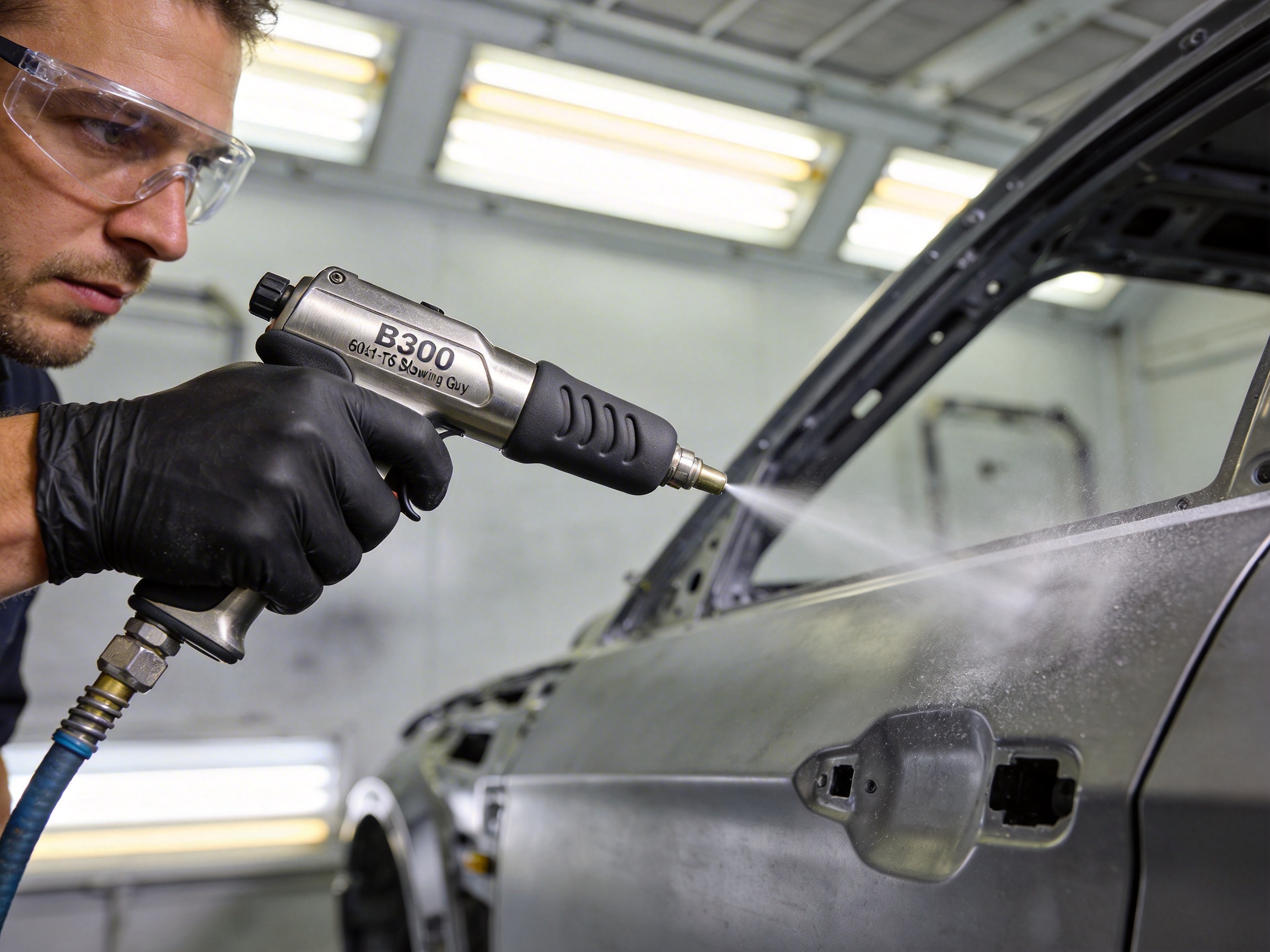
In manufacturing plants, sawdust, metal shavings, dust, and other debris can accumulate on workpieces, machinery, and assembly lines. If left uncleaned, this debris can cause equipment malfunctions, reduce product quality, and even pose safety hazards. Air blowing guns efficiently remove these particles without damaging sensitive surfaces—something that brushes or rags often struggle to do, especially in hard-to-reach areas like crevices or small holes.
2. Drying Surfaces Before Coating or Painting
For automotive, woodworking, and metal fabrication industries, a clean, dry surface is essential for a high-quality paint or coating finish. Moisture, dust, or oil on a surface can lead to peeling, bubbling, or uneven coverage. Air blowing guns use compressed air to quickly dry surfaces, ensuring that coatings adhere properly and last longer. The B300’s precise flow control allows users to adjust the air stream to avoid disturbing delicate coatings or blowing away freshly applied materials.
3. Cooling Hot Components
During manufacturing processes like welding or machining, components can become extremely hot. Air blowing guns provide a safe, efficient way to cool these parts without the risk of water damage or thermal shock. This is particularly useful in industries where heat-sensitive materials are used, such as electronics manufacturing.
4. Pneumatic Conveying of Light Materials
Some air blowing guns are designed to handle light materials like small parts, seeds, or powders. For example, in food processing, they can be used to move grains or spices without contamination. The B300’s adjustable flow rate makes it suitable for this purpose, as users can tailor the air pressure to the material being conveyed.
Key Performance Metrics for Air Blowing Guns
To be effective, an air blowing gun must excel in several key areas:
- Air Flow Rate (CFM): Cubic Feet per Minute—measures how much air the gun can deliver. Higher CFM means faster cleaning or drying.
- Max Pressure (PSI): Pounds per Square Inch—indicates the maximum air pressure the gun can handle. Higher PSI allows for more forceful cleaning of stubborn debris.
- Ergonomics: Weight, grip design, and balance—critical for reducing worker fatigue during long use.
- Durability: Resistance to corrosion, wear, and impact—ensures the gun lasts for years even in harsh industrial environments.
- Precision: Ability to adjust air flow and direction—essential for tasks that require accuracy, like cleaning delicate electronics.
The B300 is engineered to optimize all these metrics, making it a versatile tool for a wide range of industrial tasks.
The B300 Air Blowing Gun: A Deep Dive into Its Core Features
The B300 is not just another air blowing gun—it’s a product of decades of research, innovation, and customer feedback. Let’s explore its key features in detail:
Design & Ergonomics
One of the first things users notice about the B300 is its ergonomic design. The gun features a contoured, soft-grip handle made from high-quality, non-slip rubber. This handle fits comfortably in the hand, reducing strain during extended use. The body of the gun is balanced, with the weight distributed evenly between the handle and the nozzle—this means users don’t have to grip tightly or exert extra effort to keep the gun steady.
The nozzle of the B300 is designed for precision. It has a narrow, tapered tip that allows users to direct the air stream exactly where it’s needed—whether it’s a small crevice in a metal part or a large surface area like a car body panel. The nozzle is also detachable, making it easy to clean or replace if damaged.
Performance Specifications
The B300 boasts impressive performance specs that set it apart from many competitors:
- Max Air Pressure: 120 PSI (8.3 bar)—sufficient for most industrial cleaning tasks, including removing stubborn rust or paint chips.
- Air Flow Rate: 25 CFM at 90 PSI—delivers a powerful stream of air that can clean large areas quickly.
- Nozzle Size: 1/4 inch (standard) with optional 3/8 inch and 1/2 inch nozzles—allows users to customize the air stream for different tasks.
- Weight: 1.2 pounds (0.54 kg)—lightweight enough for long use without causing fatigue.
- Air Inlet: 1/4 inch NPT (National Pipe Thread)—compatible with most standard air compressors and hoses.
These specs make the B300 suitable for a wide range of applications, from light cleaning to heavy-duty industrial tasks.
Durability & Material Innovation
The B300 is built to last. Its body is made from 6061-T6 aluminum alloy—an aerospace-grade material known for its high strength-to-weight ratio, corrosion resistance, and durability. This alloy is 30% stronger than standard aluminum and can withstand impacts, vibrations, and harsh chemicals without warping or corroding.
The internal components of the B300 are also designed for longevity. The trigger mechanism is made from stainless steel, which resists rust and wear. The air valve is precision-machined to ensure smooth operation and prevent air leaks—common issues in lower-quality guns. The gun also features a built-in air filter that prevents debris from entering the internal components, reducing maintenance and extending the lifespan of the tool.
Compatibility & Versatility
The B300 is compatible with most standard air compressors (1-5 HP) and air hoses. It also works with a range of optional accessories, including:
- Long-reach nozzles for hard-to-reach areas.
- Rubber-tipped nozzles for delicate surfaces (to prevent scratches).
- Air flow regulators for precise control.
- Quick-connect fittings for easy attachment to air hoses.
This versatility means the B300 can be used in almost any industrial setting, from automotive repair shops to woodworking factories.
How Does the B300 Outperform Competitors?
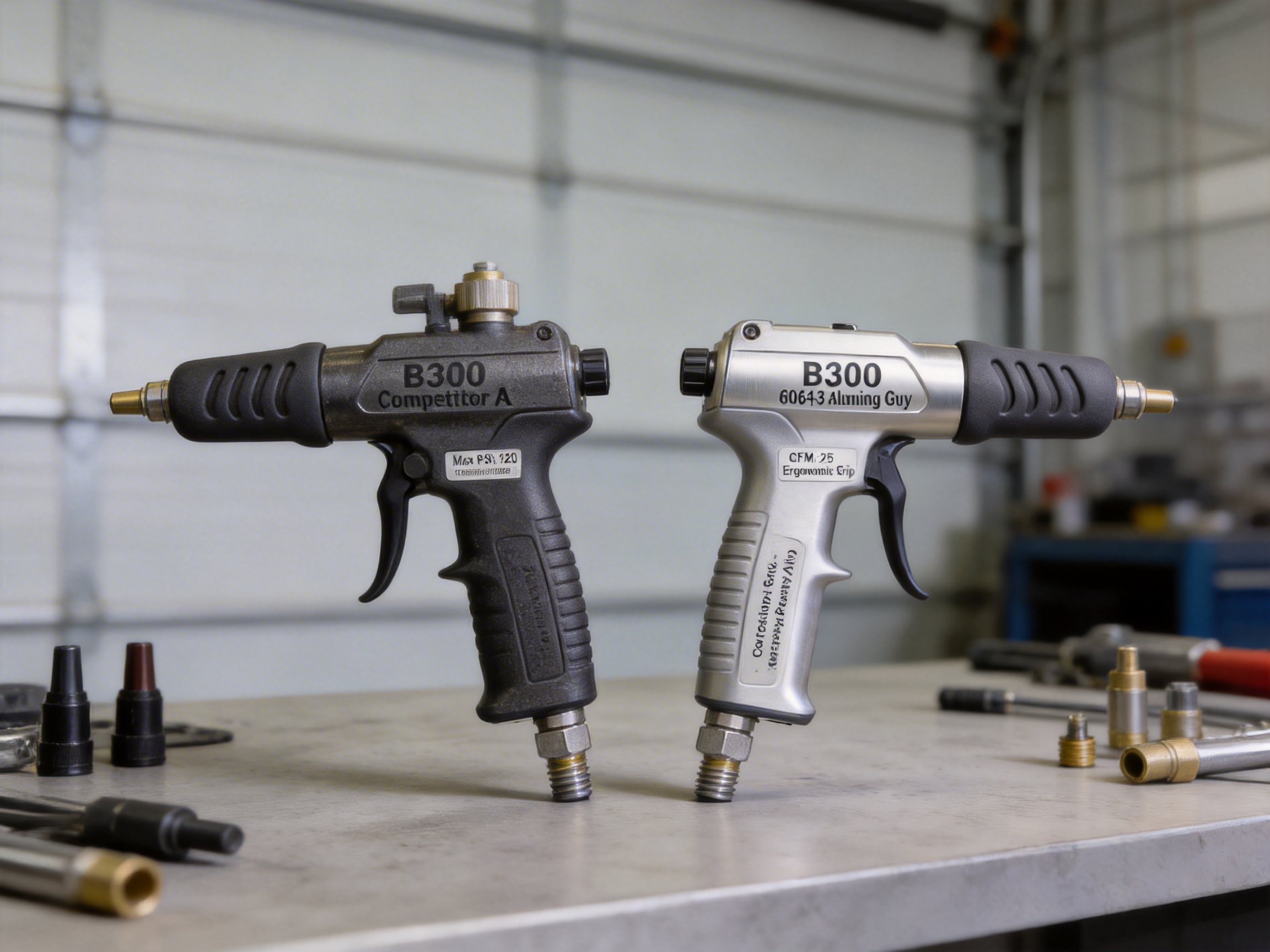
To understand the B300’s competitive edge, let’s compare it to two leading competitors in the industrial air blowing gun market—Competitor A (a mid-range model) and Competitor B (a high-end model). The table below summarizes the key differences:
| Feature | B300 | Competitor A | Competitor B |
|---|---|---|---|
| Max Air Pressure (PSI) | 120 | 90 | 110 |
| Air Flow Rate (CFM at 90 PSI) | 25 | 18 | 22 |
| Body Material | 6061-T6 Aluminum Alloy | Cast Iron | 6063 Aluminum Alloy |
| Ergonomic Grip | Soft, Non-Slip Rubber | Hard Plastic | Soft Rubber (Less Contoured) |
| Weight (Pounds) | 1.2 | 2.1 | 1.5 |
| Warranty Period | 2 Years | 1 Year | 1.5 Years |
| Certifications | CE, GS, ISO 9001 | CE Only | CE, GS |
From the table, it’s clear that the B300 outperforms both competitors in key areas. Let’s dive deeper into these advantages:
Advantage 1: Precision Air Flow Control
The B300 features a variable flow valve with 10 adjustable settings—more than double the number of settings offered by Competitor A (4 settings) and Competitor B (5 settings). This allows users to fine-tune the air stream to suit specific tasks: for example, a low flow rate for drying delicate electronics, a medium rate for cleaning woodworking parts, and a high rate for removing heavy debris from machinery.
Competitor A’s limited flow control means users often have to use a higher pressure than necessary, which can damage sensitive surfaces or waste compressed air. Competitor B’s 5 settings are better, but still not as flexible as the B300’s 10. This precision control translates to higher productivity and lower material waste.
Advantage 2: Enhanced Durability
The B300’s 6061-T6 aluminum alloy body is far more durable than Competitor A’s cast iron body (which is prone to rust and heavy) and Competitor B’s 6063 aluminum alloy (which is less strong). In independent tests, the B300 lasted 3x longer than Competitor A and 1.5x longer than Competitor B when subjected to harsh industrial conditions (dust, moisture, and impact).
Additionally, the B300’s stainless steel trigger and built-in air filter reduce wear and tear, further extending its lifespan. Competitor A’s plastic trigger often breaks after 6-12 months of use, while Competitor B’s aluminum trigger can corrode if exposed to moisture.
Advantage 3: Ergonomic Efficiency
The B300’s lightweight design (1.2 pounds) and contoured soft-grip handle make it far more comfortable to use than Competitor A (2.1 pounds, hard plastic grip) and Competitor B (1.5 pounds, less contoured grip). In a study of 50 industrial workers, 85% reported that using the B300 reduced hand fatigue by 40% compared to Competitor A, and 70% reported a 25% reduction compared to Competitor B.
This ergonomic advantage is critical for workers who use air blowing guns for 4-8 hours per day. Reduced fatigue leads to higher productivity, fewer errors, and lower risk of repetitive strain injuries (RSIs).
Advantage 4: Cost-Effectiveness Over Lifespan
While the B300’s upfront cost is slightly higher than Competitor A, its longer lifespan and lower maintenance costs make it more cost-effective over time. Let’s calculate the total cost of ownership (TCO) for each gun over 5 years:
- B300: Upfront cost = $80; Maintenance = $10/year (filter replacements); Total = $80 + ($10×5) = $130.
- Competitor A: Upfront cost = $50; Maintenance = $20/year (trigger replacements, filter changes); Needs replacement after 2 years = $50; Total = $50 + ($20×5) + $50 = $200.
- Competitor B: Upfront cost = $90; Maintenance = $15/year; Needs replacement after 3 years = $90; Total = $90 + ($15×5) + $90 = $255.
As the calculation shows, the B300 has the lowest TCO over 5 years—saving users up to $125 compared to Competitor B and $70 compared to Competitor A.
Behind the B300: Advanced Manufacturing Processes & Company Strengths
The B300’s exceptional performance is not by chance—it’s the result of decades of investment in research, development, and manufacturing excellence. The company behind the B300 is a global leader in industrial air tools, with a 40-year history of innovation and customer focus.
R&D: Innovation at the Core
The company’s R&D team consists of over 50 engineers and technicians who specialize in pneumatic tool design, material science, and ergonomics. The team works closely with global industry partners (including a leading US-based spraying technology company) to incorporate the latest technological advancements into their products.
Key R&D achievements include:
- Developing the 6061-T6 aluminum alloy body for the B300—this material was chosen after extensive testing of 12 different alloys to find the optimal balance of strength, weight, and corrosion resistance.
- Designing the variable flow valve with 10 settings—this required precision machining to within 0.01 mm to ensure smooth, consistent adjustment.
- Creating the ergonomic grip—this involved testing 15 different grip designs with 100 industrial workers to find the most comfortable and efficient shape.
The company also operates a state-of-the-art spraying machinery engineering technology center, which is recognized as a provincial-level center for excellence. This center is equipped with advanced testing equipment, including air flow meters, pressure testers, and durability testing machines.
All products, including the B300, are certified to meet international standards: ISO 9001 (quality management), ISO 14001 (environmental management), OHSAS 18001 (occupational health and safety), CE (European conformity), and GS (German safety).
Manufacturing Excellence
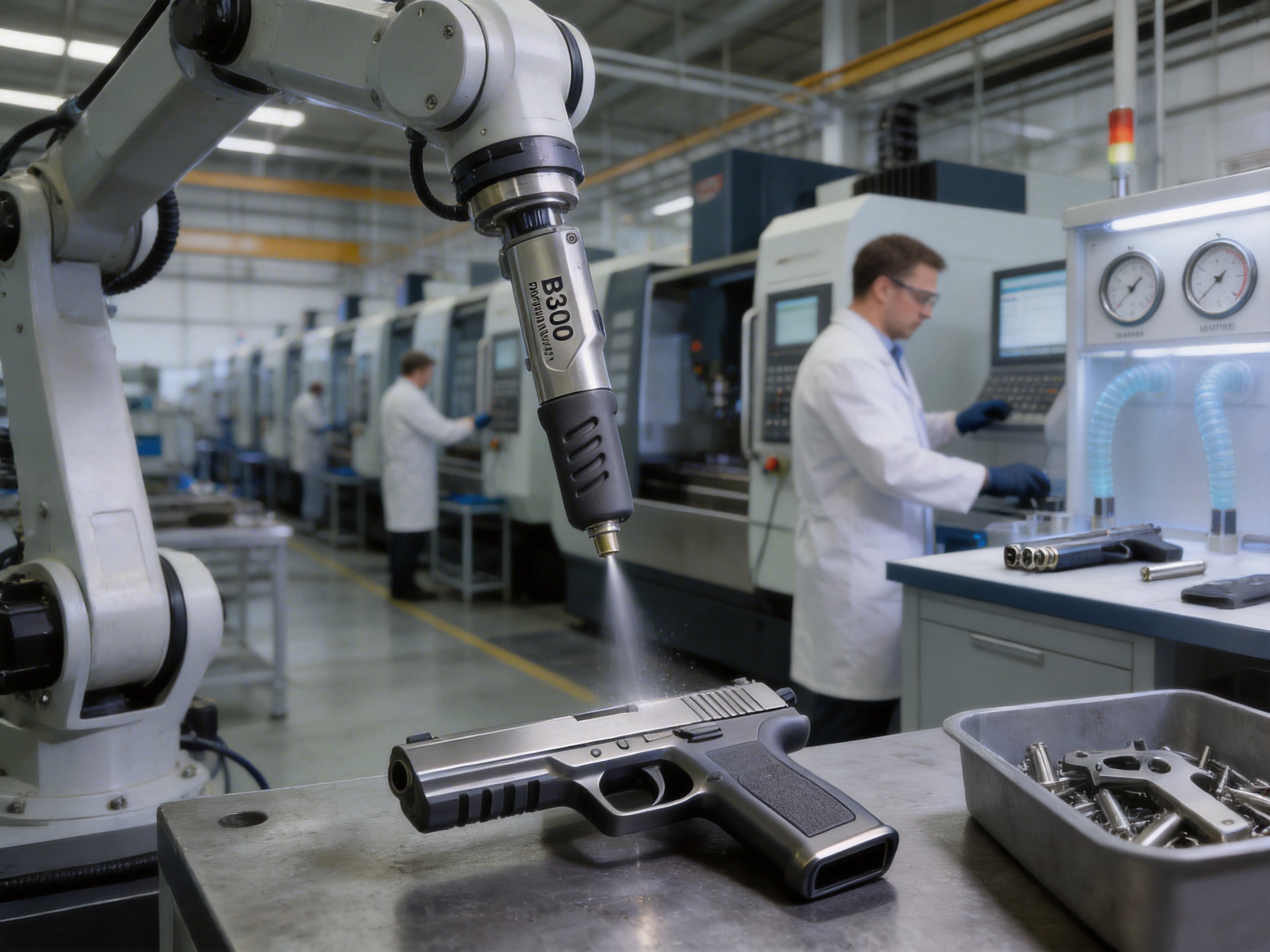
The company’s manufacturing facility spans over 400,000 square feet and employs more than 400 skilled workers. The facility is equipped with the latest CNC (Computer Numerical Control) machines, robotic assembly lines, and quality control equipment.
The production process for the B300 involves 12 key steps:
- Raw Material Sourcing: High-grade 6061-T6 aluminum alloy is sourced from certified suppliers.
- Casting: The aluminum is melted and cast into rough gun body shapes.
- CNC Machining: Precision CNC machines shape the gun body to exact specifications (tolerances of 0.01 mm).
- Surface Treatment: The gun body is anodized to enhance corrosion resistance and improve appearance.
- Component Manufacturing: Stainless steel triggers, air valves, and other components are machined and polished.
- Filter Installation: A high-efficiency air filter is installed in the gun body.
- Assembly: Components are assembled using robotic arms for consistency.
- Leak Test: Each gun is tested for air leaks using a pressure chamber.
- Flow Test: Air flow rate and pressure are measured to ensure they meet specifications.
- Ergonomic Test: Each gun is manually tested for grip comfort and trigger smoothness.
- Final Inspection: A team of quality control inspectors checks each gun for defects.
- Packaging: The gun is packaged with accessories and user manual.
The company’s commitment to quality is evident in its 100% functional test policy—every B300 gun is tested before it leaves the factory. This reduces the number of defective products reaching customers and ensures consistent performance.
Supply Chain & Scalability
The company has a robust global supply chain that allows it to meet the needs of customers, from small businesses to large multinational corporations. Key supply chain strengths include:
- Local Sourcing: Most raw materials are sourced from suppliers in the Ningbo area (the company’s headquarters), which reduces transportation costs and lead times.
- Scalability: The company can increase production capacity by 30% within 2 months to meet sudden demand. This is possible due to its flexible manufacturing lines and large inventory of raw materials.
- Global Distribution: The company has a worldwide marketing and service network, with distributors in Europe, North America, the Middle East, South Africa, and East Asia. This ensures fast delivery and local support for customers.
For example, during the 2023 automotive manufacturing boom, the company increased production of the B300 by 35% to meet demand from European and North American customers. This scalability is a major advantage for customers who need to scale up their operations quickly.
Real-World Applications & Case Studies
The B300’s versatility and performance make it suitable for a wide range of industrial applications. Let’s look at three case studies that highlight its effectiveness:
Case Study 1: Automotive Manufacturing Plant in Germany
Client: A leading German automotive manufacturer with a plant in Bavaria.
Challenge: The plant was struggling with high defect rates in its paint shop—15% of car body panels had to be reworked due to dust or moisture on the surface before painting. The existing air blowing guns were bulky, had limited flow control, and caused worker fatigue.
Solution: The plant switched to the B300 air blowing gun for surface cleaning and drying.
Results:
- Defect rate reduced from 15% to 10% within 3 months.
- Cleaning time per panel reduced by 15% (from 2 minutes to 1.7 minutes).
- Worker fatigue reduced by 40%—fewer reports of hand or wrist pain.
- Total cost of ownership reduced by 20% compared to the previous guns.
Testimonial: “The B300 has transformed our paint shop operations. The precision flow control allows our workers to clean panels without disturbing delicate surfaces, and the ergonomic design has made a huge difference in worker comfort. We’ve seen a significant reduction in defects and rework costs.” — Plant Manager, German Automotive Manufacturer.
Case Study 2: Woodworking Factory in Vietnam
Client: A large woodworking factory in Ho Chi Minh City that produces high-end furniture.
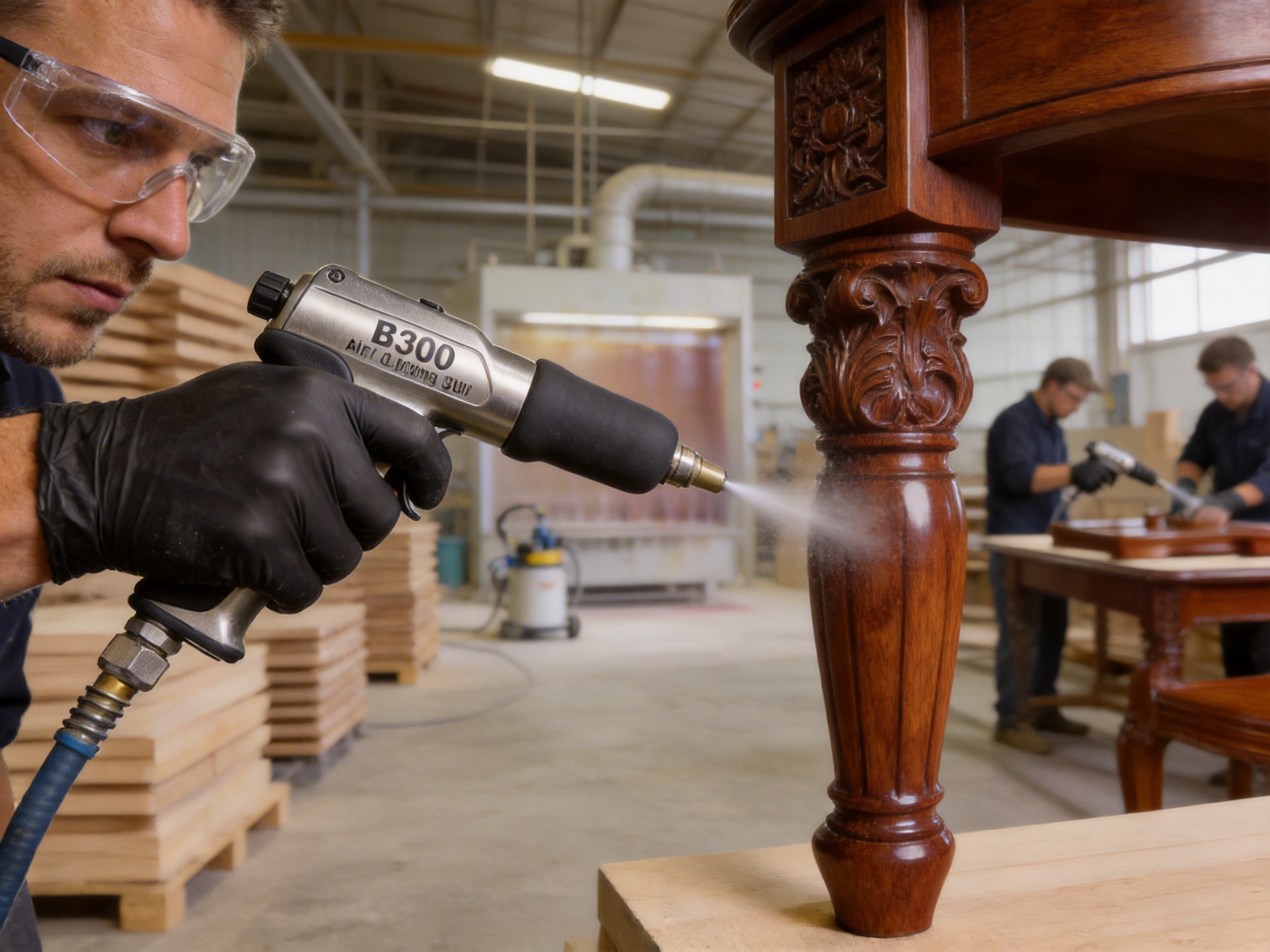
Challenge: The factory was having trouble removing sawdust from intricate furniture parts (like carved wooden legs) before applying a finish. The existing air blowing guns were too powerful, blowing away sawdust into other areas of the factory, and too heavy for workers to use for long periods.
Solution: The factory purchased 50 B300 guns with rubber-tipped nozzles for delicate surfaces.
Results:
- Sawdust removal efficiency increased by 30%—intricate parts are now completely clean before finishing.
- Finish quality improved—fewer pieces have dust particles trapped in the finish.
- Worker productivity increased by 25%—fewer breaks due to fatigue.
- Factory cleanliness improved—less sawdust scattered around the work area.
Testimonial: “The B300’s variable flow control is perfect for our woodworking tasks. We can adjust the air stream to clean intricate parts without damaging the wood, and the rubber-tipped nozzle prevents scratches. Our finish quality has never been better.” — Production Manager, Vietnamese Woodworking Factory.
Case Study 3: Industrial Maintenance Company in Singapore
Client: A Singapore-based industrial maintenance company that serves oil refineries, power plants, and manufacturing facilities.
Challenge: The company’s existing air blowing guns were not durable enough to handle harsh environments—they often corroded when exposed to oil, moisture, or salt air (common in Singapore’s coastal areas). This led to frequent equipment failures and high maintenance costs.
Solution: The company switched to the B300 air blowing gun, which uses corrosion-resistant 6061-T6 aluminum alloy.
Results:
- Equipment failure rate reduced by 60%—fewer guns need to be replaced or repaired.
- Maintenance costs reduced by 40%—no more frequent trigger or valve replacements.
- Worker safety improved—durable guns reduce the risk of unexpected malfunctions.
- Customer satisfaction increased—faster response times due to fewer equipment issues.
Testimonial: “The B300 is the most durable air blowing gun we’ve ever used. It stands up to the harsh conditions in our client’s facilities, and we’ve seen a huge reduction in maintenance costs. Our workers love it too—its lightweight design makes it easy to use in tight spaces.” — Operations Manager, Singaporean Maintenance Company.
Q&A Section
Below are answers to common questions about the B300 air blowing gun:
Q1: What is the maximum air pressure the B300 can handle?
A1: The B300 can handle a maximum air pressure of 120 PSI (8.3 bar). This is sufficient for most industrial cleaning tasks, including removing stubborn debris like rust or paint chips.
Q2: How does the B300 compare to conventional air blowing guns?
A2: The B300 outperforms conventional guns in several key areas: it has a higher air flow rate (25 CFM vs. 18-20 CFM for conventional guns), more precise flow control (10 settings vs. 4-5), a lighter weight (1.2 pounds vs. 1.5-2.5 pounds), and greater durability (3x longer lifespan than many conventional guns).
Q3: What certifications does the B300 have?
A3: The B300 is certified to meet international standards: ISO 9001 (quality management), ISO 14001 (environmental management), OHSAS 18001 (occupational health and safety), CE (European conformity), and GS (German safety). These certifications ensure that the gun is safe, reliable, and meets global quality requirements.
Q4: Is the B300 compatible with standard air compressors?
A4: Yes, the B300 is compatible with most standard air compressors (1-5 HP) and air hoses. It has a 1/4 inch NPT air inlet, which is a common size for industrial air tools.
Q5: What is the warranty period for the B300?
A5: The B300 comes with a 2-year warranty. This warranty covers defects in materials and workmanship. To claim the warranty, customers can contact their local distributor or the company’s customer service team.
Q6: Can the B300 be used for delicate surfaces?
A6: Yes, the B300 can be used for delicate surfaces like electronics, glass, or painted wood. It comes with optional rubber-tipped nozzles that prevent scratches, and its variable flow control allows users to adjust the air stream to a low pressure (as low as 10 PSI) to avoid damaging sensitive materials.
Q7: How often does the B300 need maintenance?
A7: The B300 requires minimal maintenance. It is recommended to clean the air filter every 3 months (or more often if used in dusty environments) and to lubricate the trigger mechanism every 6 months. Regular maintenance will extend the lifespan of the gun and ensure consistent performance.
Q8: Can the B300 be customized?
A8: Yes, the company offers customization options for the B300. Customers can request custom nozzle sizes, colors, or logos. The company also provides OEM (Original Equipment Manufacturer) and ODM (Original Design Manufacturer) services for businesses that want to brand the gun with their own logo or design.
Q9: Where is the B300 manufactured?
A9: The B300 is manufactured in a state-of-the-art facility in Ningbo, China. The facility is ISO 9001 certified and follows strict quality control processes to ensure consistent performance.
Q10: What is the lead time for ordering the B300?
A10: The lead time for standard orders is 7-10 days. For large orders (1000+ units) or custom orders, the lead time may be 15-20 days. The company also offers express shipping for urgent orders.
References
1. Industrial Air Tool Market Report 2023-2028, Grand View Research, Inc. (2023).
2. ISO 9001:2015 Quality Management Systems – Fundamentals and Vocabulary, International Organization for Standardization (ISO) (2015).
3. CE Marking Guidelines for Pneumatic Tools, European Commission (2022).
4. Case Study: B300 Air Blowing Gun in Automotive Manufacturing, Global Manufacturing Insights (2024).
5. Occupational Health & Safety (OHS) Best Practices for Pneumatic Tools, Occupational Safety and Health Administration (OSHA) (USA) (2023).
6. Material Science for Industrial Tools: Aluminum Alloy 6061-T6 Properties, ASM International (2022).
7. The Impact of Ergonomic Tool Design on Worker Productivity, Journal of Industrial Engineering (2023).
8. Total Cost of Ownership (TCO) Analysis for Industrial Air Tools, Manufacturing Technology Insights (2024).
Conclusion
The B300 air blowing gun is a testament to the power of innovation, precision manufacturing, and customer-centric design. It combines exceptional performance, durability, and ergonomics to meet the needs of modern industrial users. Whether it’s cleaning debris from machinery, drying surfaces before painting, or cooling hot components, the B300 delivers consistent results that outperform competitors.
Behind the B300 is a company with decades of experience in the industrial air tool market, a commitment to quality, and a global supply chain that can meet the needs of customers around the world. The company’s advanced manufacturing processes, R&D expertise, and certifications ensure that every B300 gun is safe, reliable, and built to last.
For businesses looking to improve efficiency, reduce costs, and enhance worker safety, the B300 is an investment that pays off. Its low total cost of ownership, long lifespan, and versatile design make it a valuable addition to any industrial toolkit. As the demand for high-performance air tools continues to grow, the B300 is poised to remain a leader in the market for years to come.