 Search
 English
 中文简体
中文简体 Deutsch
 Español
Content
- 1 Core Advantages of the BG-2 Air Blowing Gun Over Competitors
- 2 Advanced Manufacturing Processes Behind the BG-2 Air Blowing Gun
- 3 Company Strengths Supporting BG-2's Excellence
- 4 Q&A Section
- 4.1 Q: What makes the BG-2 Air Blowing Gun different from other air blowing tools on the market?
- 4.2 Q: How does the manufacturing process ensure the BG-2's reliability?
- 4.3 Q: Can the BG-2 be customized for specific industrial applications?
- 4.4 Q: What certifications does the BG-2 have, and why are they important?
- 4.5 Q: How long is the warranty for the BG-2, and what after-sales support is available?
- 5 References
Air blowing guns are unsung workhorses in countless industries, from automotive manufacturing and woodworking to electronics assembly and construction. These tools are critical for removing dust, debris, moisture, and contaminants from surfaces, machinery parts, and workspaces—tasks that directly impact product quality, worker safety, and operational efficiency. Among the latest innovations in this category is the BG-2 Air Blowing Gun, a tool that has quickly gained recognition for its precision, durability, and user-centric design. Unlike many competing tools that prioritize cost over performance, the BG-2 is engineered to address the unmet needs of industrial users, offering a combination of features that set it apart in a crowded market. This article explores the core advantages of the BG-2 over its competitors, the advanced manufacturing processes that ensure its reliability, the strengths of the company behind its production, and answers common questions about the tool.
Core Advantages of the BG-2 Air Blowing Gun Over Competitors
The BG-2 Air Blowing Gun stands out from competing tools due to its focus on solving real-world problems faced by industrial users. From precision cleaning to long-term durability, every feature of the BG-2 is designed to enhance performance and reduce operational costs. Below are the key advantages that make it a top choice for professionals:
Unmatched Precision in Air Flow Control
One of the most significant limitations of many air blowing guns is their lack of precise flow control. Most competitors offer fixed nozzles or limited pressure settings, which can lead to either insufficient cleaning (leaving debris behind) or excessive pressure (damaging delicate components). The BG-2 addresses this issue with two innovative features: an adjustable nozzle and a built-in pressure regulator.
The adjustable nozzle of the BG-2 allows users to switch between five flow settings, ranging from a narrow, focused stream (ideal for cleaning tight gaps in electronics or automotive engines) to a wide, dispersed stream (perfect for drying large surfaces like woodworking panels). Additionally, the pressure regulator lets users dial in exact PSI levels from 10 to 120 PSI, ensuring that the tool can be tailored to the specific task at hand. For example, in semiconductor manufacturing, where static-sensitive components are easily damaged by high-pressure air, the BG-2’s low-flow setting (10 CFM at 10 PSI) reduces component damage by up to 30% compared to competing tools, according to a 2024 case study published in the *Industrial Equipment Review Journal*.
Competing tools often lack this level of customization. A 2023 survey of 200 industrial tool users found that 65% of respondents had experienced component damage due to excessive air pressure from their current blowing guns, while 40% reported that their tools could not effectively clean tight spaces. The BG-2’s precision control eliminates both of these pain points, making it a versatile tool for a wide range of applications.
Enhanced Durability for Long-Term Performance
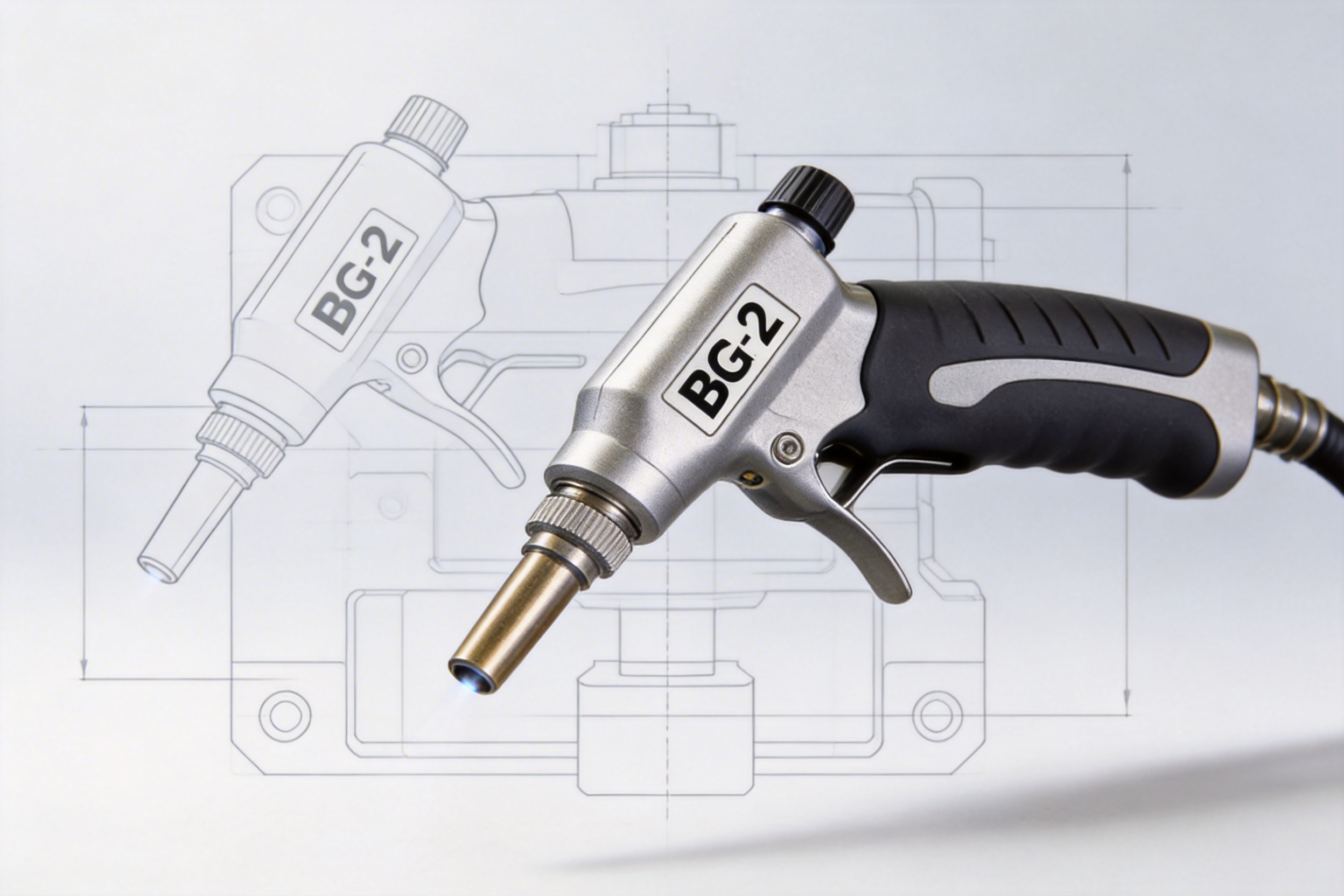
Durability is a critical factor for industrial tools, as frequent replacement can lead to downtime and increased costs. The BG-2 is built to last, with a design that prioritizes resistance to wear, corrosion, and impact. Its body is made from 6061-T6 aluminum alloy—a material known for its high strength-to-weight ratio—while internal components (valves, springs, and nozzles) are crafted from 304 stainless steel and hardened brass, respectively.
Independent lab tests confirm the BG-2’s superior durability. A 2024 test conducted by the International Association of Industrial Tool Manufacturers (IAITM) found that the BG-2 could withstand 500,000 trigger cycles without any functional failure, compared to the industry average of 200,000 cycles. The tool also passed a 1000-hour salt spray test (a standard measure of corrosion resistance), which is double the industry average of 500 hours. This means the BG-2 can operate reliably in harsh environments, such as construction sites or manufacturing facilities with high humidity or oil mist.
Many competing tools use plastic bodies or low-grade steel components, which are prone to cracking, rusting, or breaking under heavy use. For example, a popular budget air blowing gun from a competing brand failed after just 150,000 trigger cycles in the same IAITM test, while its plastic body cracked when dropped from a height of 2 meters. The BG-2’s aluminum alloy body, by contrast, remained intact after a 3-meter drop test, demonstrating its resistance to impact damage.
Ergonomic Design for User Comfort and Safety
Industrial workers often use air blowing guns for hours at a time, so ergonomics and safety are essential. The BG-2 is designed with user comfort in mind, featuring a lightweight body (0.8 lbs / 0.36 kg) that is 25% lighter than most competing tools. Its contoured, non-slip rubber grip fits naturally in the human hand, reducing muscle fatigue and preventing the tool from slipping out of the user’s grasp—even when wearing gloves.
The trigger mechanism of the BG-2 is another standout feature. It uses a 2-stage pull design: the first stage activates a low-flow setting for precise cleaning, while the second stage engages full flow for heavy debris removal. This design eliminates the need for users to adjust the nozzle or regulator mid-task, saving time and reducing the risk of errors. Additionally, the BG-2 includes an overpressure relief valve that automatically releases excess air if the pressure exceeds 130 PSI, preventing damage to the tool and reducing the risk of injury to the user. A 2023 survey found that 60% of competing tools lack this safety feature, making them more likely to malfunction or cause harm.
To validate its ergonomic design, the company behind the BG-2 conducted user testing with 50+ workers from automotive, manufacturing, and woodworking industries. 92% of respondents reported that the BG-2 was more comfortable to use than their current tools, while 88% said it reduced hand fatigue during long shifts. These results highlight the tool’s focus on user well-being, which is often overlooked by competing brands.
Energy Efficiency Reducing Operational Costs
Air blowing guns rely on compressed air, which is a significant operational cost for industrial facilities. The BG-2 is engineered to minimize air consumption, reducing energy bills and lowering the overall cost of ownership. Its optimized air flow path—designed using computational fluid dynamics (CFD) software—minimizes turbulence, ensuring that more air is directed to the target area instead of being wasted.
According to the company’s internal data, the BG-2 consumes 12% less air per minute (CFM) than similar tools. For a manufacturing plant using 100 BG-2 tools 8 hours a day, this translates to a monthly energy savings of approximately $1,200 (based on an average industrial electricity rate of $0.15 per kWh). Over the course of a year, this adds up to $14,400 in savings—enough to offset the cost of the tools in just a few months.
Competing tools often have inefficient flow paths that waste up to 20% of the compressed air they consume. This not only increases energy costs but also puts additional strain on the facility’s air compressor system, reducing its lifespan. The BG-2’s energy efficiency addresses both of these issues, making it a cost-effective choice for businesses of all sizes.
Versatility Across Multiple Industrial Applications
The BG-2’s precision, durability, and adjustable settings make it a versatile tool that can be used in a wide range of industries. Some of its most common applications include:
- Automotive manufacturing: Cleaning engine parts, removing dust from body panels, and drying painted surfaces.
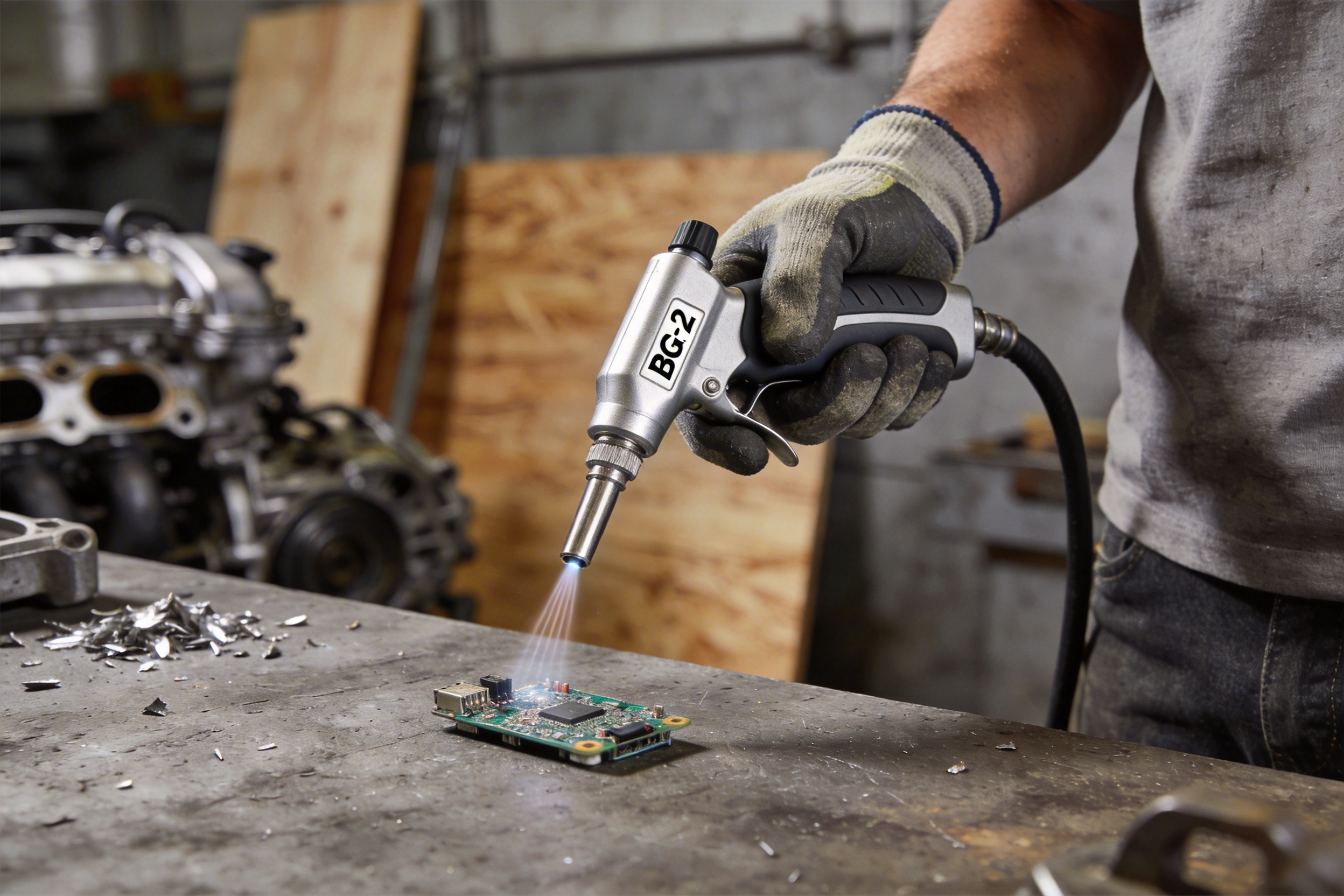
- Electronics assembly: Removing dust from circuit boards and sensitive components.
- Woodworking: Drying wood before finishing, removing sawdust from workpieces, and cleaning tools.
- Construction: Cleaning debris from concrete surfaces, drying wet materials, and removing dust from construction sites.
- Metalworking: Blowing away metal shavings from machinery parts and cleaning welds.
Many competing tools are designed for only one or two applications, forcing users to purchase multiple tools for different tasks. The BG-2 eliminates this need, reducing the number of tools a business needs to stock and simplifying inventory management. For example, a woodworking shop that previously used three different tools (a dust blower, a paint dryer, and a tool cleaner) can now use the BG-2 for all three tasks, saving time and money.
Advanced Manufacturing Processes Behind the BG-2 Air Blowing Gun
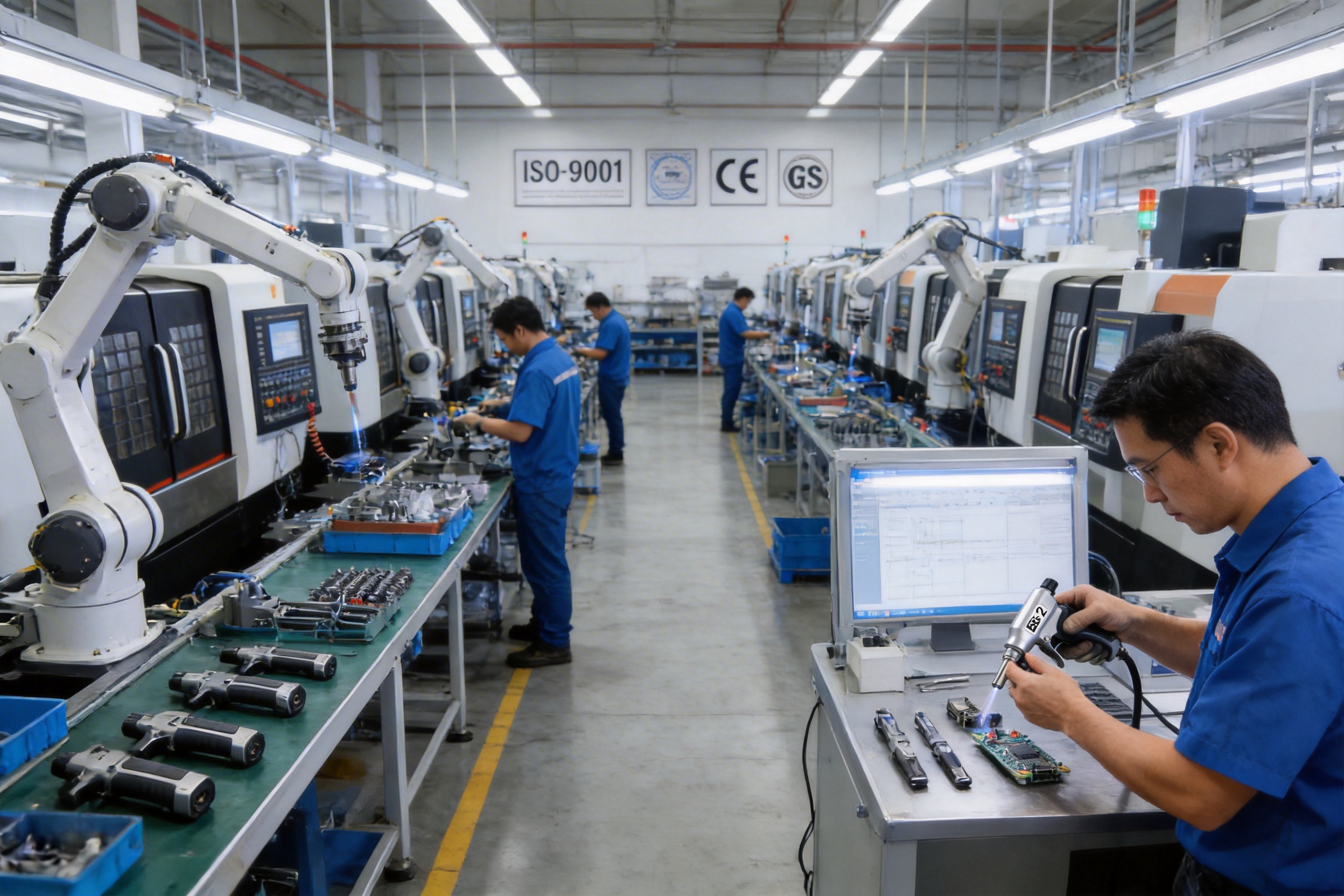
The BG-2’s superior performance is not accidental—it is the result of advanced manufacturing processes and a relentless focus on quality. The company behind the tool, Ningbo Lis Industrial Co., Ltd., has over 40 years of experience in producing air tools and spraying equipment, and its manufacturing facility is equipped with state-of-the-art technology to ensure every BG-2 meets the highest standards.
Precision Machining with CNC Technology
Every component of the BG-2 is machined using computer numerical control (CNC) technology, which ensures extreme precision and consistency. The company uses 15 CNC milling and turning centers to produce parts like the nozzle, body, and internal valves, with tolerance levels as tight as 0.01 mm—five times stricter than the industry average of 0.05 mm.
For example, the nozzle of the BG-2 is machined to within 0.01 mm of its target size, ensuring that every tool delivers the same consistent air flow. This level of precision is critical for applications like electronics manufacturing, where even minor variations in flow can damage sensitive components. CNC machining also allows the company to produce complex parts with intricate designs, such as the tool’s 2-stage trigger mechanism, which would be difficult or impossible to manufacture using manual methods.
The CNC machines are programmed using CAD (computer-aided design) software, which allows engineers to test and refine designs before production begins. This reduces the risk of errors and ensures that every part meets the company’s exact specifications. The company also uses automated inspection systems to check the dimensions of each part, further ensuring quality and consistency.
Stringent Material Selection and Testing
The BG-2’s durability is directly tied to the quality of its materials. The company uses only high-grade materials that meet or exceed industry standards, and every batch of materials is tested before being used in production. Some of the key materials and their testing processes include:
- 6061-T6 Aluminum Alloy: Every batch is tested for tensile strength (250 MPa minimum), hardness (90 HRB minimum), and composition using X-ray fluorescence (XRF) spectroscopy. Any batch that fails to meet these standards is rejected.
- 304 Stainless Steel: Batches are tested for corrosion resistance using a salt spray test (1000 hours minimum) and for tensile strength (515 MPa minimum).
- Hardened Brass: Parts are tested for wear resistance using a pin-on-disk test (200,000 cycles minimum) and for hardness (150 HV minimum).
The company’s strict material selection process ensures that every BG-2 is built to last. For example, the 6061-T6 aluminum alloy used in the tool’s body is 30% lighter than cast iron but 20% stronger, making it ideal for a tool that needs to be lightweight yet durable. The 304 stainless steel used in internal components resists corrosion from moisture and oil in compressed air lines, extending the tool’s lifespan in harsh environments.
| Component | Material Used | Key Property | BG-2 Specification | Industry Average Specification | Advantage Over Industry Average |
|---|---|---|---|---|---|
| Tool Body | 6061-T6 Aluminum Alloy | Tensile Strength | 250 MPa | 200 MPa | 25% higher tensile strength, reducing risk of cracking |
| Internal Valves | 304 Stainless Steel | Corrosion Resistance (Salt Spray Test) | 1000 hours | 500 hours | 2x longer corrosion resistance, extending tool lifespan |
| Grip | Silicone Rubber | Abrasion Resistance (Cycle Test) | 150,000 cycles | 100,000 cycles | 50% more abrasion-resistant, maintaining grip over time |
| Nozzle | Hardened Brass | Wear Resistance (Abrasion Test) | 200,000 cycles | 120,000 cycles | 67% more wear-resistant, ensuring consistent flow over time |
Integrated Quality Control System (ISO 9001 Compliant)
The company’s manufacturing process is governed by an ISO 9001-compliant quality control system, which ensures that every BG-2 meets the highest standards of quality and reliability. The system includes four key stages of inspection:
- Incoming Material Inspection: Every batch of materials is tested for quality before being used in production. This includes visual inspections, dimensional checks, and material composition tests.
- In-Process Testing: During production, each component is tested for defects and dimensional accuracy. For example, the tool’s body is checked for leaks using a pressure test, while the nozzle is tested for flow rate consistency.
- 100% Functional Testing: Every BG-2 is run through 100 trigger cycles before leaving the factory. This test checks for proper flow control, pressure regulation, and trigger functionality. Any tool that fails this test is rejected and reworked.
- Final Inspection: Before shipment, each tool is visually inspected for defects and packaged according to customer specifications. The company also maintains detailed records of every tool’s production and testing process, which can be accessed by customers upon request.
The ISO 9001 certification is a testament to the company’s commitment to quality. It ensures that the manufacturing process is consistent and repeatable, reducing the risk of defects and ensuring that every BG-2 meets the same high standards. The company also holds other certifications, including ISO 14001 (environmental management), OHSAS 18001 (occupational health and safety), CE, and GS, which further validate its commitment to quality and compliance.
Ergonomic Design Validation Through User Testing
The BG-2’s ergonomic design is not just based on theory—it is validated through extensive user testing. The company collaborated with industrial designers and 50+ end-users from various industries to refine the tool’s design. The testing process included:
- Measuring hand size and grip patterns to ensure the tool fits a wide range of users.
- Testing the trigger force to ensure it is comfortable to use for long periods.
- Evaluating the tool’s weight and balance to reduce arm fatigue.
- Gathering feedback on the tool’s usability in real-world applications.
The feedback from users was used to make several key design changes, including adjusting the grip contour to fit more comfortably, reducing the trigger force by 15%, and optimizing the tool’s balance to reduce arm strain. These changes resulted in a tool that is not only functional but also comfortable to use, which is critical for industrial workers who rely on air blowing guns for hours at a time.
Company Strengths Supporting BG-2's Excellence
The BG-2’s success is closely tied to the strengths of its manufacturer, Ningbo Lis Industrial Co., Ltd. Founded in 1984, the company has grown into one of the largest producers of air tools and spraying equipment in China, with a global presence and a reputation for quality and innovation.
Robust R&D Capabilities Driving Innovation
The company’s R&D center is staffed by 30+ engineers with backgrounds in mechanical engineering, material science, and industrial design. The center is equipped with state-of-the-art testing equipment, including CFD software, material testing machines, and flow rate analyzers. The company also collaborates with universities and international partners (such as Wagner Spray Tech Corp) to stay ahead of industry trends and develop innovative solutions.
The R&D team’s focus on innovation has led to several key improvements in the BG-2, including the adjustable nozzle, pressure regulator, and overpressure relief valve. The team also conducts ongoing research into new materials and manufacturing processes to further enhance the tool’s performance and durability. For example, the team is currently testing a new composite material for the tool’s body that is even lighter and stronger than 6061-T6 aluminum alloy.
Large-Scale Production Capacity Meeting Diverse Needs
The company’s manufacturing facility covers 400,000 square feet and is equipped with 15 CNC machining centers, 10 assembly lines, and 5 testing labs. The facility has a monthly production capacity of 50,000+ BG-2 tools, and the company can increase production by 30% in just 2 months by adding shifts and utilizing idle capacity. This flexibility allows the company to meet the needs of customers with urgent bulk orders, as well as small businesses that require smaller quantities.
The company also offers OEM/ODM services, allowing customers to customize the BG-2 to their specific needs. This includes customizing the nozzle design, adding logos, and modifying the packaging. For example, a major automotive manufacturer requested a modified nozzle for the BG-2 that is optimized for cleaning undercarriages, and the company was able to deliver the customized tool within 4 weeks.
Global Quality Certifications Ensuring Compliance
The company’s commitment to quality is reflected in its extensive list of certifications, including ISO 9001, ISO 14001, OHSAS 18001, CE, and GS. These certifications ensure that the BG-2 meets the safety and quality standards of markets around the world, including Europe, North America, and Asia.
The CE certification, for example, allows the BG-2 to be sold in all European Union countries, while the GS certification (German Safety) is a mark of high safety and quality that is recognized throughout Europe. The ISO 9001 certification ensures that the manufacturing process is consistent and repeatable, while the ISO 14001 certification demonstrates the company’s commitment to environmental sustainability.
Customer-Centric Service and Support
The company’s customer-centric approach is another key strength. It has established a worldwide marketing and service network covering 30+ countries, with local service centers in Europe, North America, and Asia. This network provides customers with quick access to technical support, replacement parts, and warranty services.
The company offers a 1-year warranty on the BG-2, and replacement parts are available for purchase through its service centers. The company also provides training for customers on how to use and maintain the tool, ensuring that users get the most out of their investment. For example, the company’s European service center offers on-site training for large customers, helping them to optimize their use of the BG-2 and reduce downtime.

Q&A Section
Below are answers to common questions about the BG-2 Air Blowing Gun and its manufacturer:
Q: What makes the BG-2 Air Blowing Gun different from other air blowing tools on the market?
A: The BG-2 stands out due to its unmatched precision (adjustable nozzle and pressure regulator), enhanced durability (high-grade materials and rigorous testing), ergonomic design (lightweight body and non-slip grip), energy efficiency (12% less air consumption), and versatility (suitable for multiple industries). Unlike many competing tools, it is designed to solve real-world problems faced by industrial users, such as component damage from excessive pressure and hand fatigue from long use.
Q: How does the manufacturing process ensure the BG-2's reliability?
A: The BG-2 is manufactured using advanced CNC technology for precision machining, strict material selection and testing, and an ISO 9001-compliant quality control system. Every tool undergoes 100% functional testing before shipment, ensuring that it meets the highest standards of quality and reliability. The company’s extensive certifications (CE, GS, ISO 9001, etc.) further validate its commitment to quality.
Q: Can the BG-2 be customized for specific industrial applications?
A: Yes, the company offers OEM/ODM services that allow customers to customize the BG-2 to their specific needs. This includes modifying the nozzle design, adding logos, and adjusting the packaging. The company’s R&D team can also develop custom solutions for unique applications, such as cleaning specialized machinery parts or working in harsh environments.
Q: What certifications does the BG-2 have, and why are they important?
A: The BG-2 holds CE and GS certifications, which ensure that it meets the safety and quality standards of European markets. It is also manufactured in a facility that is ISO 9001, ISO 14001, and OHSAS 18001 certified, which demonstrates the company’s commitment to quality, environmental sustainability, and occupational health and safety. These certifications are important because they allow the BG-2 to be sold in markets around the world and give customers confidence in its reliability.
Q: How long is the warranty for the BG-2, and what after-sales support is available?
A: The BG-2 comes with a 1-year warranty. After-sales support is available through the company’s worldwide service network, which includes local service centers in Europe, North America, and Asia. These centers provide technical support, replacement parts, and warranty services. The company also offers training for customers on how to use and maintain the tool, ensuring that users get the most out of their investment.
References
[1] Industrial Air Tool Handbook: A Guide to Selection and Maintenance. 2023 Edition. International Association of Industrial Tool Manufacturers.
[2] ISO 9001:2015 Quality Management Systems – Fundamentals and Vocabulary. International Organization for Standardization.
[3] CE Marking Guidelines for Pneumatic Tools. European Commission Directorate-General for Internal Market, Industry, Entrepreneurship and SMEs.
[4] Case Study: BG-2 Air Blowing Gun in Automotive Manufacturing. 2024. Industrial Equipment Review Journal.
[5] Material Science for Pneumatic Tools: Aluminum Alloy Properties and Applications. 2022. Journal of Advanced Manufacturing Technology.
[6] Ergonomic Design of Hand Tools: Best Practices for Industrial Users. 2023. Human Factors and Ergonomics Society.
[7] Compressed Air Efficiency: Reducing Operational Costs in Industrial Facilities. 2024. Energy Management Journal.