 Search
 English
 中文简体
中文简体 Deutsch
 Español
Content
- 1 Product Overview
- 2 Key Technical Specifications
- 3 Why High Atomization Matters
- 4 Flexible Nozzle Selection for Different Coatings
- 5 Suction Feed Design and Practical Operation
- 6 Economical Does Not Mean Basic
- 7 Manufacturing Strength Behind the Product
- 8 Quality Control from Material to Finished Product
- 9 Certifications and Management Systems
- 10 Research, Development, and Continuous Improvement
- 11 Advantages Over Competing Economical Spray Guns
- 12 Application Areas
- 13 How to Choose the Right Nozzle Size
- 14 Operating Technique for Better Results
- 15 Maintenance and Cleaning
- 16 Importance of Air Supply
- 17 Ergonomic and Workshop Benefits
- 18 Distribution and Bulk Purchasing Value
- 19 Production Capacity and Supply Stability
- 20 Comparison with HVLP and Other Spray Technologies
- 21 Finish Quality and Material Savings
- 22 Company Strength and Global Service Capability
- 23 Responsible Manufacturing and Long-Term Vision
- 24 Recommended User Profile
- 25 Practical Setup Checklist
- 26 Q&A Section
- 26.1 What type of spray gun is the W71S?
- 26.2 What nozzle sizes are available?
- 26.3 What is the recommended air pressure?
- 26.4 How large is the cup?
- 26.5 What is the air inlet size?
- 26.6 What applications is it suitable for?
- 26.7 Why choose this model over a very cheap unbranded spray gun?
- 26.8 Is it suitable for professional use?
- 26.9 How should the gun be cleaned?
- 26.10 What makes the manufacturer competitive?
- 27 Conclusion
- 28 References
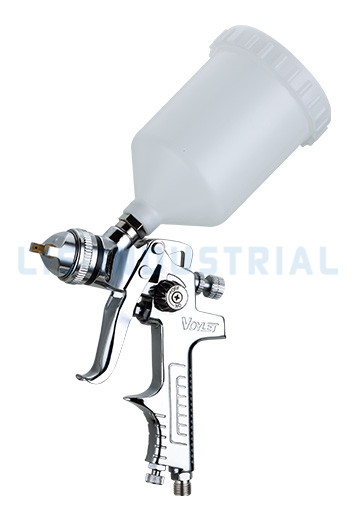
- 29 Product: Voylet W71S Grativy Type Paint Sprayer High Atomizatio Spray Gun+
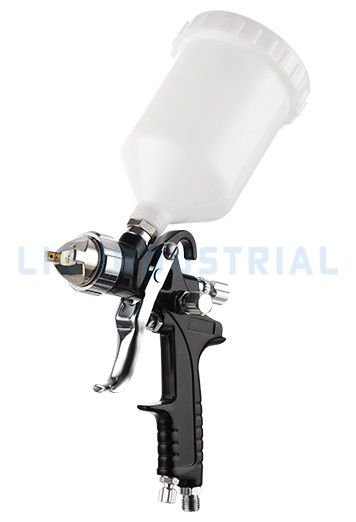
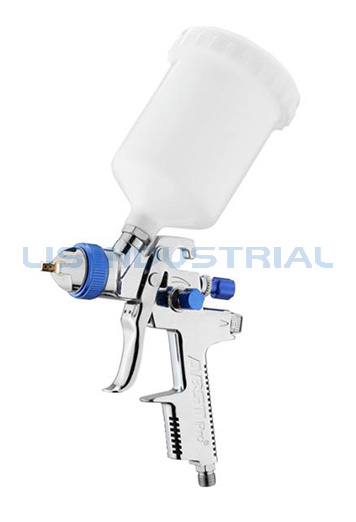
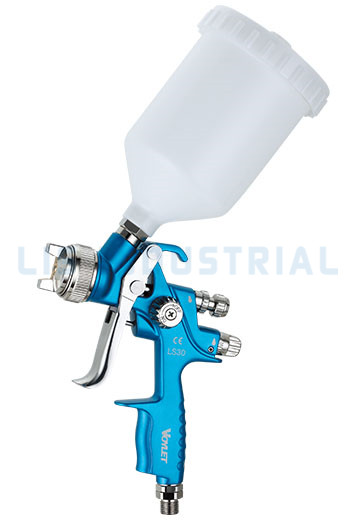
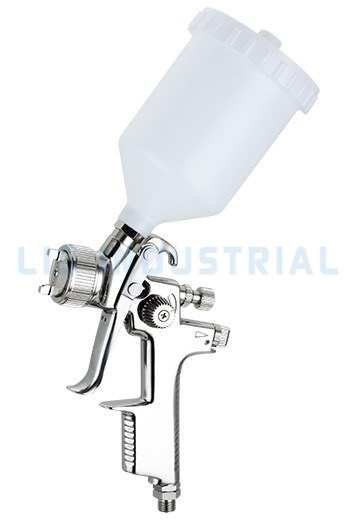
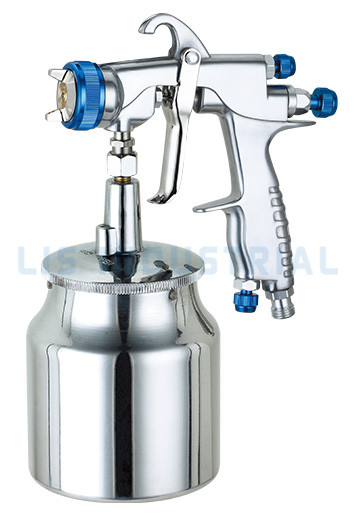
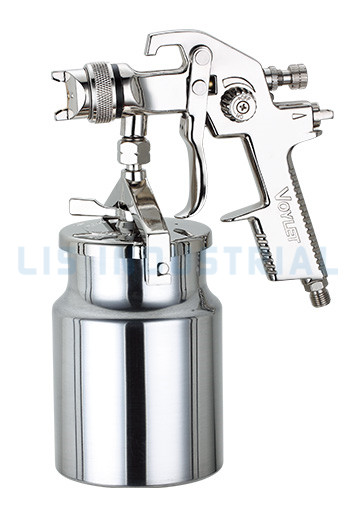
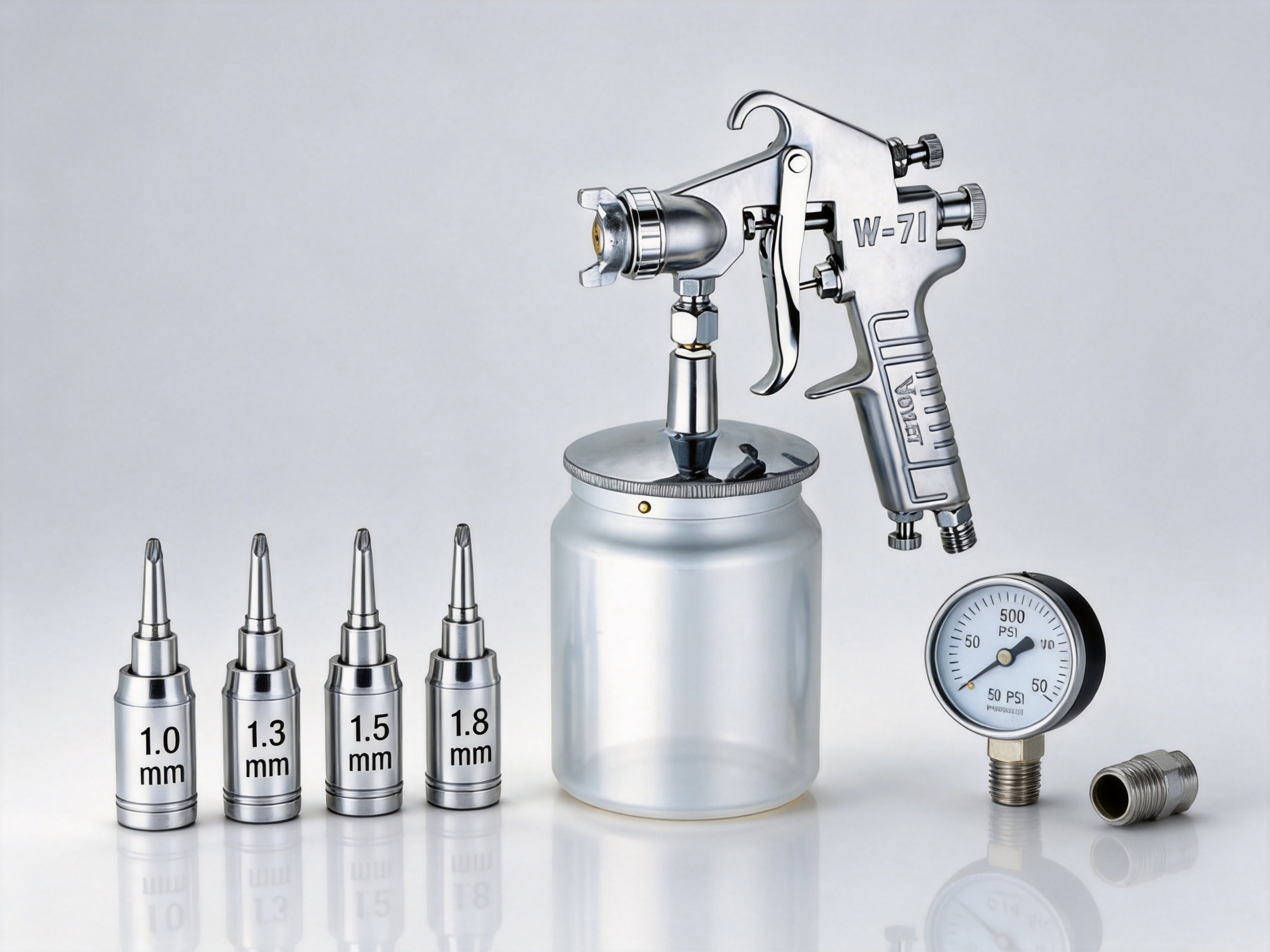
In modern coating work, a spray gun is more than a tool that transfers paint from a cup to a surface. It is a precision instrument that determines film quality, production efficiency, material consumption, operator comfort, and the long-term reputation of the finished product. The W71S economical conventional spray gun is designed for users who need dependable atomization, practical operation, and consistent finishing performance without the unnecessary complexity or cost of oversized industrial equipment. With selectable fluid nozzle sizes of 1.0 mm, 1.3 mm, 1.5 mm, and 1.8 mm, a 600 ml cup, suction feed operation, a G1/4 inch air inlet, and a recommended air pressure of 50 PSI, this paint sprayer is suitable for a wide range of general finishing and refinishing tasks.
Voylet W71S Grativy Type Paint Sprayer High Atomizatio Spray Gun+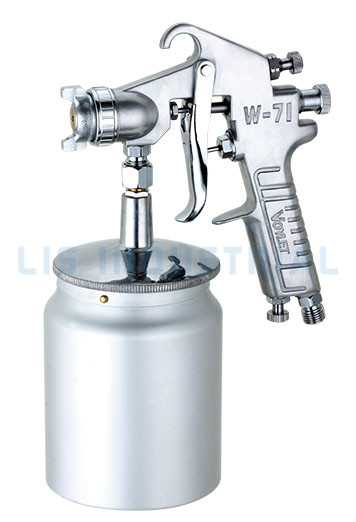
Product Overview
The W71S spray gun belongs to the category of economical conventional spray guns, a product group valued by workshops, distributors, repair facilities, woodworking users, small manufacturers, and general coating professionals who need a balance between affordability and spray quality. Conventional spray guns remain popular because they provide strong atomization energy, easy handling, and a familiar operating experience. For many users, especially those spraying primers, base coats, stains, sealers, lacquers, enamels, or general-purpose coatings, a well-made conventional suction-feed spray gun is still one of the most practical choices.
The product is built around a direct and reliable configuration. A 600 ml cup supports continuous spraying for common projects without making the gun excessively heavy. The suction feed system draws coating material from the cup and delivers it through the fluid nozzle, where compressed air breaks the liquid into fine particles. The operator can choose from multiple nozzle sizes depending on viscosity, desired film build, and application type. The 50 PSI operating air pressure provides energetic atomization, helping the gun create a uniform spray pattern suitable for economical professional use.
The main value of this sprayer is its ability to deliver clean, high-atomization performance at an economical level. Users often compare spray guns by price alone, but a truly cost-effective gun must also reduce rework, provide predictable adjustments, resist wear, and remain easy to maintain. The W71S is positioned to meet those practical expectations. It is intended for daily users who need a spray gun that performs reliably in real working environments rather than only looking impressive in a catalog.
Key Technical Specifications
| Specification | Value | Practical Meaning |
|---|---|---|
| Product Type | Economical conventional spray gun | Designed for practical finishing applications with balanced cost and performance |
| Fluid Nozzle Sizes | 1.0 mm, 1.3 mm, 1.5 mm, 1.8 mm | Supports different coating viscosities and finish requirements |
| Recommended Air Pressure | 50 PSI | Provides strong atomization energy for a refined spray pattern |
| Cup Capacity | 600 ml | Allows efficient work on small and medium projects without frequent refilling |
| Feed Type | Suction feed | Offers stable material delivery and familiar operation for conventional spray users |
| Air Inlet | G1/4 inch | Compatible with common air tool connection systems |
| Carton Packing | 10 pieces per carton | Convenient for distributors, workshops, and bulk purchasing |
| Carton Size | 82 cm × 42 cm × 15 cm | Efficient packaging for storage and transportation |
Why High Atomization Matters
Atomization is the process of breaking liquid coating material into fine droplets. In spray finishing, it is one of the most important performance indicators. When atomization is poor, the user may see orange peel, rough texture, uneven gloss, heavy edges, dry spray, or excessive coating consumption. When atomization is strong and stable, the finish becomes smoother, more uniform, and easier to control.
The W71S is described as a high-atomization spray gun because it is engineered to use compressed air effectively at the nozzle and air cap. At 50 PSI, the gun can create the air velocity needed to shear coating material into fine particles. This helps users lay down a smooth film over many surfaces, including metal panels, wood components, furniture parts, machinery housings, decorative items, repair parts, and general coated products.
For users comparing economical spray guns, atomization is often where the real difference appears. A low-cost spray gun with weak atomization may initially save money, but it can waste coating material, increase sanding time, cause uneven appearance, and lead to customer complaints. A better economical spray gun should protect the user’s productivity. The W71S is designed for this practical balance: it remains cost-conscious while still aiming for a fine spray quality that supports professional-looking results.
Flexible Nozzle Selection for Different Coatings
The availability of 1.0 mm, 1.3 mm, 1.5 mm, and 1.8 mm fluid nozzle options gives the spray gun useful flexibility. Nozzle size is one of the most important decisions in spray finishing. A smaller nozzle is better for thinner materials and finer control, while a larger nozzle allows heavier materials or higher material flow. The operator can choose the most suitable size instead of forcing one nozzle to handle every job.
A 1.0 mm nozzle may be preferred for light coatings, touch-up work, thinner stains, low-viscosity lacquers, or applications requiring a delicate film. A 1.3 mm nozzle is commonly suitable for many general-purpose topcoats and base coats. A 1.5 mm nozzle can provide a little more material flow for medium-viscosity coatings, primers, or production work where coverage matters. A 1.8 mm nozzle is useful for thicker materials, heavier primers, sealers, or applications requiring greater build.
This range gives the W71S an advantage over many competing economical spray guns that are supplied with only one nozzle size. When a gun has only one configuration, users may need to over-thin coatings, increase pressure excessively, or accept poor film build. Multiple nozzle choices improve compatibility, reduce compromise, and allow the same spray gun model to serve different users and markets.
Suction Feed Design and Practical Operation
The W71S uses a suction feed system with a 600 ml cup. In suction feed spraying, air flow creates a pressure difference that draws material upward from the cup into the fluid passage. This design has been used for many years in conventional spray guns because it is reliable, familiar, and suitable for numerous coatings. It is especially appreciated by users who want a straightforward tool that is easy to understand, clean, and maintain.
The 600 ml cup capacity is a practical size. It holds enough material for common finishing tasks while remaining manageable in the hand. A cup that is too small interrupts work with frequent refilling, while a cup that is too large can make the gun heavy and tiring. The 600 ml size strikes a useful balance for workshops, repair operations, training environments, and small-batch production.
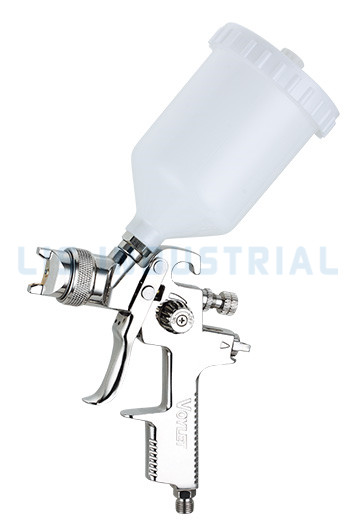
Compared with some gravity-feed designs, suction-feed guns may be preferred in certain workshops because the cup position and traditional handling feel are familiar to operators. The suction configuration can also support comfortable gun movement in applications where the user values a conventional layout. For many buyers, this makes the W71S a practical choice for replacing older spray guns without requiring major changes in technique.
Economical Does Not Mean Basic
The word economical should not be misunderstood as low quality. In professional purchasing, economical means the product is designed to provide useful performance at a reasonable cost. It means avoiding unnecessary decoration while focusing on the essential elements: a stable body, accurate fluid control, consistent air delivery, durable wear parts, practical packing, and dependable manufacturing control.
The W71S is intended for buyers who care about value. It is a strong option for distributors who supply small workshops, painters who need a reliable backup gun, repair facilities that need multiple units for different materials, and manufacturers who want a cost-effective tool for routine coating work. Its advantage is not based on extreme specialization, but on dependable everyday performance.
Many competitors in the low-price spray gun market compete mainly through reduced material cost or simplified inspection. That approach can lead to uneven nozzle machining, unstable fan pattern, leaking seals, rough trigger feel, inconsistent thread quality, or poor packing. A better economical spray gun must be supported by disciplined production and inspection. This is where manufacturing strength becomes important.
Manufacturing Strength Behind the Product
The manufacturer behind this spray gun has long experience in air painting spray guns, mini air compressors, and related air tools. Established in 1984, the company has developed through decades of production, research, engineering, and international market service. Its operation covers a large manufacturing area and employs a substantial workforce, allowing it to support large-volume production while maintaining technical control over product quality.
The company’s focus is not limited to assembling parts. It emphasizes the complete manufacturing system, including research and development, raw material management, incoming inspection, process control, functional testing, and final inspection. This complete approach is essential for spray guns because finishing performance depends on the precision of many small details. A minor deviation in an air cap hole, fluid nozzle seat, needle taper, or air passage can affect the final spray pattern.
Advanced production capability also supports consistent supply. For distributors and industrial users, stable availability is a major advantage. A spray gun model must be repeatedly available in predictable quality, not only delivered once. The company’s ability to increase production capacity when needed helps meet different purchasing quantities and market demands. That makes the W71S suitable not only as a single tool but also as a product line item for ongoing distribution.
Quality Control from Material to Finished Product
A spray gun’s reliability begins before the first part is assembled. Raw material quality affects strength, corrosion resistance, machining accuracy, and service life. The company follows a controlled quality system based on international quality management principles. Raw materials and incoming components are inspected before they enter production. This reduces the risk of defects entering the assembly line.
During production, in-process quality control helps ensure that each part remains within required tolerances. Spray guns require careful attention to surfaces, threads, sealing areas, fluid passages, air passages, and moving parts. If the needle does not align properly with the nozzle, the gun can drip. If the air cap is inconsistent, the fan pattern may become uneven. If sealing surfaces are poorly finished, the operator may experience air leakage or unstable adjustment. Process inspection helps prevent these problems.
After assembly, functional testing is critical. The company performs functional checks to confirm that the product works as intended. This may include testing trigger response, air flow, fluid delivery, sealing, spray pattern behavior, and adjustment function. Final inspection then verifies that the finished product meets appearance, assembly, packing, and performance requirements. For customers, this systematic approach means fewer surprises after purchase.
Certifications and Management Systems
The company has experience with international product and management certifications, including CE and GS product recognition and quality system practices based on ISO standards. It has also developed environmental and occupational health and safety management capabilities. These systems are important because global customers increasingly require not only a product, but proof that the producer operates under disciplined, responsible, and repeatable procedures.
Certification alone does not automatically make a spray gun good, but it reflects a manufacturing culture that values traceability, documentation, safety, and continuous improvement. In competitive global markets, this gives the W71S an advantage over unverified low-cost alternatives. Buyers can have greater confidence that the product is produced by a company with structured management rather than by a temporary or purely price-driven operation.
For importers and distributors, certifications can also simplify market acceptance. Customers in Europe, North America, the Middle East, South Africa, East Asia, and other regions often ask for documentation and evidence of compliance. A manufacturer with experience in international standards is better prepared to support these requirements.
Research, Development, and Continuous Improvement
Spray gun design may appear simple from the outside, but the internal engineering is complex. Air pressure, nozzle geometry, air cap hole arrangement, fluid needle taper, body balance, trigger travel, material compatibility, surface finishing, and ergonomic design all influence user experience. The company invests in research and development and has established engineering and technology resources for spraying machinery. It also has experience in technical cooperation related to spray technology.
This research background supports continuous improvement. It allows the company to refine products, respond to customer feedback, develop OEM and ODM solutions, and adapt models for different markets. The W71S benefits from this environment because it is not an isolated product. It is part of a broad spray equipment manufacturing system that includes conventional spray guns, HVLP spray guns, heavy-duty spray guns, woodworking low-pressure spray guns, texture paint spray guns, air blowing guns, sandblast and foam guns, tire inflating guns, water and grease guns, automatic spray guns, air brushes, mini oil-free compressors, air pipeline accessories, paint tanks, air fittings, air polishers, spray gun kits, touch-up spray guns, car polishing machines, airless spray guns, electric spray guns, and paint sprayers.
A broad product range is valuable because it builds technical experience across different air and coating applications. Knowledge gained from one product category can improve another. For example, experience with air fittings can improve connection reliability, experience with air brushes can refine atomization understanding, and experience with paint tanks and automatic spray guns can strengthen knowledge of flow control. This wider capability supports more reliable spray gun development.
Advantages Over Competing Economical Spray Guns
The W71S provides several practical advantages when compared with many competitors in the economical conventional spray gun segment. The first advantage is selectable nozzle size. Instead of forcing users into one fixed setup, the available 1.0 mm, 1.3 mm, 1.5 mm, and 1.8 mm options let buyers match the gun to the coating material and work requirement. This improves finish quality and reduces the need for excessive thinning.
The second advantage is high atomization at a practical working pressure. Some low-cost guns produce coarse droplets or unstable patterns, especially with medium-viscosity materials. The W71S is positioned to deliver a finer atomized spray, helping users reduce orange peel and improve surface smoothness. This is especially important for visible finishes, furniture, general metal coating, refinishing, and decorative work.
The third advantage is manufacturing consistency. Low-priced spray guns are often inconsistent from unit to unit. One gun may spray well while another may require adjustment or replacement. A stronger manufacturing system reduces variation. This matters for distributors and workshops that purchase multiple guns at a time. Consistency lowers returns, reduces user frustration, and protects brand reputation.
The fourth advantage is practical packaging for commercial purchase. With 10 pieces per carton and an efficient carton size of 82 cm by 42 cm by 15 cm, the product is suitable for wholesale, distribution, and shop stocking. Packaging efficiency affects shipping cost, storage planning, and inventory management. A product that is easy to purchase and distribute becomes more attractive to business buyers.
The fifth advantage is support from an experienced manufacturer with a global sales background. A spray gun is not only a physical item; it is part of a supply relationship. Customers need stable communication, product knowledge, after-sales support, and the ability to provide solutions for different market requirements. The company’s long history and international customer base strengthen the value of the W71S beyond its technical specifications.
Application Areas
The W71S can be used in a wide range of practical coating applications. In woodworking, it can apply stains, sealers, lacquers, and clear coats when matched with the correct nozzle size and material viscosity. Woodworkers need smooth atomization because wood surfaces can reveal uneven application, especially after clear finishing. A controlled spray pattern helps reduce sanding and improve final appearance.
In metal finishing, the gun can apply primers, enamels, protective coatings, and general-purpose paints to fabricated parts, machinery covers, brackets, tools, and components. Conventional spray guns are widely used in metal shops because they provide strong atomization and fast coverage. The W71S offers an economical option for these tasks.
In automotive and motorcycle repair environments, the gun may be useful for primers, small panel work, general refinishing preparation, and utility spraying. For high-end automotive clear coat work, users must carefully match material, nozzle, pressure, and technique, but an economical conventional gun remains a valuable workshop tool for many supporting tasks.
In training centers and technical schools, the W71S is suitable because it is cost-effective, easy to understand, and representative of conventional spray technology. Students can learn air pressure control, spray distance, overlap, fan adjustment, material reduction, cleaning, and maintenance with a practical tool.
In general industrial maintenance, the spray gun can be used for equipment repainting, protective coating, signs, frames, furniture repair, and other routine work. Maintenance users often need a spray gun that is ready when needed, easy to clean after occasional use, and economical enough to keep in the tool room.
How to Choose the Right Nozzle Size
Selecting the correct nozzle size is essential for achieving the best results. If the nozzle is too small for the coating, the operator may need to over-thin the material, raise air pressure excessively, or spray too slowly. This can reduce coverage and affect film strength. If the nozzle is too large, the gun may deliver too much material, increasing the risk of runs, sags, and uneven thickness.
For thin materials such as light stains, dyes, low-viscosity lacquers, and fine finishing materials, a 1.0 mm nozzle may offer better control. For general topcoats and many medium-light paints, a 1.3 mm nozzle is often a balanced option. For thicker topcoats, sealers, and medium primers, a 1.5 mm nozzle may be preferred. For high-build primers and heavier coatings, a 1.8 mm nozzle can improve flow and coverage.
Users should always consult coating manufacturer recommendations for spray viscosity, pressure, and nozzle size. Test spraying on a sample panel before production is recommended. Adjustments should be made gradually: set air pressure, adjust fluid flow, shape the fan, test the pattern, and then refine technique. With proper setup, the W71S can produce a controlled fan and smooth finish across many coating types.
Operating Technique for Better Results
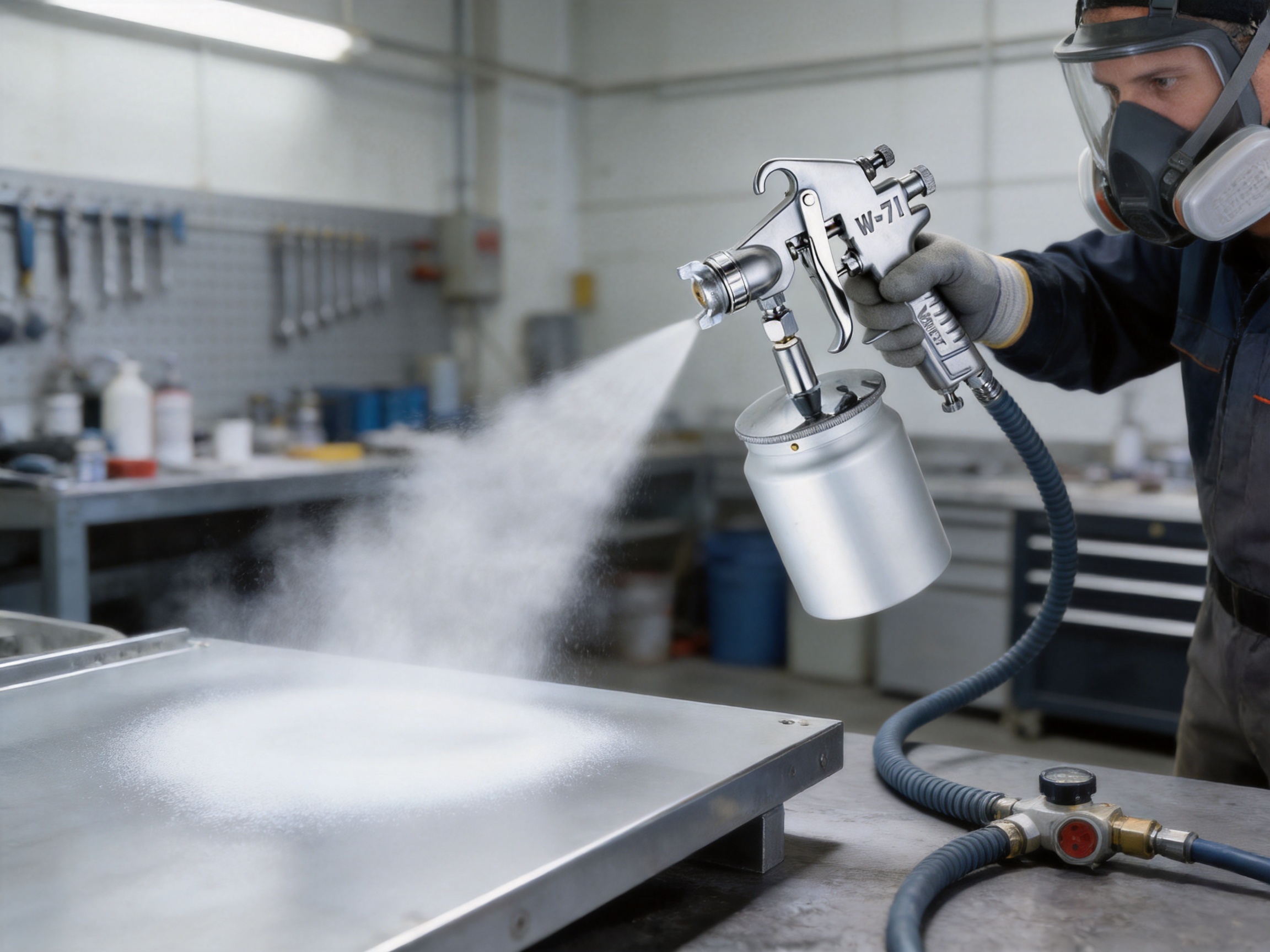
Even a well-made spray gun requires correct technique. The operator should hold the gun at a consistent distance from the surface, usually within a practical range suitable for the coating and fan size. The gun should remain perpendicular to the work surface, not swung in an arc. Each pass should overlap the previous pass evenly, often by about half the fan width, to maintain consistent film thickness.
Trigger control also matters. The user should begin moving the gun before pulling the trigger fully and release the trigger before stopping movement. This prevents heavy spots at the beginning and end of each pass. Fluid adjustment should be matched to travel speed. If the operator moves slowly with too much fluid, runs may occur. If the operator moves too quickly with low fluid, dry spray or poor coverage may result.
Air pressure should be stable. A suitable compressor, clean air supply, and proper hose diameter all influence spray performance. The G1/4 inch inlet makes the gun compatible with common air tool systems, but the full air system must provide adequate flow. Water, oil, or dirt in the air line can damage finish quality. Using proper filtration and air regulation helps protect both the gun and the coating result.
Maintenance and Cleaning
Regular cleaning is necessary for every spray gun. After use, remaining material should be emptied from the cup, and the cup should be cleaned with a compatible solvent or cleaning solution. The fluid passage should be flushed until clean. The air cap and nozzle should be removed carefully when deeper cleaning is needed. Users should avoid damaging precision holes with hard metal objects. Soft brushes and proper cleaning tools are recommended.
The needle, nozzle, and air cap should be inspected for wear or dried material. A damaged nozzle can cause an uneven pattern or dripping. A bent needle can prevent proper sealing. Blocked air cap holes can distort the fan pattern. Keeping these parts clean and protected extends service life and maintains atomization quality.
Lubrication of moving parts, where appropriate, can preserve smooth trigger action. However, lubricant should not contaminate the fluid passage or coating. The gun should be stored clean and dry. Proper maintenance is one of the reasons an economical spray gun can deliver long-term value. A neglected gun, even an expensive one, will not perform well.
Importance of Air Supply
The W71S is specified for 50 PSI air pressure. To achieve consistent spraying, the air supply must be stable and clean. A compressor that cannot maintain pressure may cause the spray pattern to pulse or become coarse. A poorly regulated air line may create sudden changes in atomization. Moisture in the air line may cause defects such as fisheyes, blushing, or poor adhesion depending on the coating system.
Users should install a suitable regulator near the spray area and use air filtration to remove water and oil. The hose should be in good condition and of adequate size. Leaking fittings reduce pressure and waste compressor energy. Because the gun uses a common G1/4 inch air inlet, it can be integrated easily into many shop air systems, but the quality of the air system remains essential.
This is another area where the company’s broader product experience is relevant. A manufacturer that also understands air pipeline accessories, air fittings, compressors, and related air tools is better positioned to design spray equipment that works within real compressed air systems. The gun is part of a complete air-powered finishing environment.
Ergonomic and Workshop Benefits
A spray gun must feel natural in the hand. Operators may use it for long periods, and small ergonomic differences can affect fatigue and consistency. The W71S is designed as a practical conventional gun with a familiar layout. The 600 ml cup offers enough capacity while keeping the tool manageable. The adjustment controls allow the user to set material flow and spray behavior according to the task.
Workshop users appreciate tools that are easy to train on. A conventional spray gun with direct controls helps new operators understand the relationship between air pressure, fluid flow, fan shape, distance, speed, and overlap. This makes the W71S useful not only as a production tool but also as a practical learning tool.
For businesses, ergonomic reliability has economic value. If a tool is easy to use, workers make fewer mistakes. If it is easy to clean, maintenance is more likely to be done correctly. If adjustments are predictable, setup time decreases. These practical advantages help reduce hidden costs.
Distribution and Bulk Purchasing Value
The carton configuration of 10 pieces per carton supports wholesale and distribution. A carton size of 82 cm by 42 cm by 15 cm is efficient for storage and shipment. For distributors, packaging matters because it affects warehouse handling, freight calculation, shelf planning, and order fulfillment. A product that ships efficiently can be more competitive in total landed cost.
Because the manufacturer has a broad global market network, it understands the needs of international buyers. Different regions may require different standards, labels, documentation, packaging preferences, and sales support. The company’s experience in exporting to multiple regions helps make the purchasing process smoother for professional buyers.
For private label or customized projects, the company’s OEM and ODM capabilities are important. Customers who need products based on drawings, samples, or market-specific requirements can work with a manufacturer that has engineering resources. This flexibility is a significant advantage over trading-only suppliers or factories with limited development capability.
Production Capacity and Supply Stability
Supply stability is a major concern in the tool industry. A buyer may find a good sample, but if later batches are inconsistent or delayed, the product becomes difficult to sell. The company’s scale, workforce, production experience, and ability to increase capacity help reduce this risk. A mature production system can respond to different order quantities and market fluctuations.
The manufacturer’s history since 1984 reflects long-term commitment to the painting and air tool industry. Long operating experience matters because spray gun manufacturing requires accumulated process knowledge. Problems such as porosity, thread damage, poor sealing, inconsistent atomization, and packing damage are best prevented by experience and system control.
For the W71S, this background means the product is supported by a factory that understands not only how to produce a spray gun, but how to produce it repeatedly for global customers. That repeatability is one of the strongest competitive advantages in the economical segment.
Comparison with HVLP and Other Spray Technologies
HVLP spray guns are often selected for improved transfer efficiency and reduced overspray, while conventional spray guns are valued for strong atomization and fast application. Airless sprayers are preferred for large surface coverage and high material output, while electric sprayers are convenient where compressed air is unavailable. Each technology has its own strengths.
The W71S conventional suction-feed spray gun is best understood as a practical, compressed-air finishing tool for users who prioritize atomization quality, familiar handling, and economical purchase cost. It is not intended to replace every other spraying method. Instead, it fills an important role for general finishing, workshop use, repair work, and small to medium projects.
Compared with low-pressure woodworking guns, the W71S offers the stronger atomization typical of conventional spraying. Compared with heavy-duty industrial guns, it is more economical and easier to justify for general use. Compared with mini touch-up guns, it provides a larger cup and more suitable capacity for broader coverage. Compared with basic unbranded low-cost guns, it is supported by more mature manufacturing and quality control.
Finish Quality and Material Savings
A good spray gun helps reduce total coating cost even if the purchase price is not the only consideration. Better atomization can produce smoother coverage with fewer passes. A consistent fan pattern can reduce overlap mistakes. Stable fluid delivery can reduce runs and rework. Easy adjustment can reduce setup waste. These factors all contribute to material savings and labor efficiency.
For visible products, finish quality also affects perceived value. A smooth, uniform coating makes furniture, equipment, panels, and repaired items look more professional. Poor finish quality can make even a well-built product appear cheap. The W71S helps users pursue a better appearance with an economical tool, which is especially valuable for small businesses that must control costs while satisfying customers.
Material savings also depend on technique, coating viscosity, air pressure, and environment. Users should spray in suitable conditions, avoid excessive distance, and adjust the gun properly. When used correctly, the spray gun becomes part of an efficient finishing process rather than merely a paint delivery device.

Company Strength and Global Service Capability
Ningbo Lis Industrial Co., Ltd. is engaged in the research, development, manufacturing, and marketing of air painting spray gun series, mini air compressors, and relevant air tools. The company is located in Ningbo, China, a harbor city with strong industrial support and convenient transportation. This location supports efficient logistics for global customers.
The company has developed international brands including Voylet and Muzi, and its products are sold into Europe, North America, the Middle East, South Africa, East Asia, and other markets. Its customer base includes long-term strategic partnerships with international companies. Such experience demonstrates an ability to meet demanding buyer expectations, communicate across markets, and maintain stable business relationships.
The company emphasizes total customer satisfaction and provides solutions for spraying products rather than only individual items. This solution-oriented approach is valuable for buyers who need compatible spray guns, compressors, fittings, paint tanks, accessories, and related tools. A broad supply capability reduces sourcing complexity and helps customers build a more complete product range.
Responsible Manufacturing and Long-Term Vision
The company’s mission focuses on continuous innovative design, high-quality products and services, and creating value for global customers in the paint application industry. Its vision is centered on the painting industry and on fulfilling domestic and worldwide painting needs through professional products, services, and solutions. This long-term direction supports ongoing investment in technology, quality, and customer service.
Responsible manufacturing is increasingly important in global trade. Customers want products from factories that manage quality, worker safety, environmental responsibilities, and business continuity. The company’s management systems and certifications reflect attention to these responsibilities. This supports confidence among distributors, industrial buyers, and professional users.
For the W71S, the result is a product backed by more than a simple production line. It is supported by a manufacturer with quality systems, R&D resources, production capacity, international experience, and a clear focus on spraying equipment. That background strengthens the product’s competitive position.
Recommended User Profile
The W71S is recommended for users who need an economical conventional spray gun for general-purpose finishing. It is suitable for woodworking shops, metal fabricators, maintenance departments, refinishing workshops, training centers, distributors, and small manufacturers. It is also useful as a backup or secondary gun for professionals who need separate guns for primers, topcoats, or different material types.
Users who require ultra-high transfer efficiency under strict environmental regulations may consider HVLP or compliant spray technologies for specific applications. Users who need very high output for walls, large structures, or thick architectural coatings may consider airless equipment. However, for users who value strong atomization, familiar compressed-air operation, and economical purchasing, the W71S is a practical choice.
Practical Setup Checklist
Before spraying, confirm that the selected nozzle size matches the coating material. Prepare the coating according to the manufacturer’s viscosity and mixing instructions. Strain the material to remove particles that could block the nozzle. Check that the cup is clean and properly attached. Confirm that the air hose and fittings are secure.
Set the air pressure to the recommended working range and adjust at the gun or regulator as needed. Test the spray pattern on cardboard or a sample panel. Look for an even fan with balanced material distribution. Adjust fluid flow and fan width gradually. If the pattern is heavy at the top or bottom, inspect the air cap. If the pattern is split, reduce air pressure or increase fluid slightly. If droplets are coarse, check viscosity, pressure, and nozzle cleanliness.
During spraying, maintain consistent distance and speed. Overlap passes evenly. Watch the wet edge and adjust technique before defects accumulate. After spraying, clean the gun immediately. Proper setup and cleanup allow the W71S to deliver its best performance over time.
Q&A Section
What type of spray gun is the W71S?
The W71S is an economical conventional paint spray gun with suction feed operation. It is designed for practical finishing applications where users need reliable atomization, straightforward operation, and good value.
What nozzle sizes are available?
The spray gun is available with 1.0 mm, 1.3 mm, 1.5 mm, and 1.8 mm fluid nozzle options. These sizes allow users to match the gun to different coating viscosities and finish requirements.
What is the recommended air pressure?
The recommended air pressure is 50 PSI. A stable and clean compressed air supply is important for consistent atomization and spray pattern quality.
How large is the cup?
The cup capacity is 600 ml. This size is practical for small and medium finishing jobs because it provides enough material capacity without making the tool unnecessarily heavy.
What is the air inlet size?
The air inlet is G1/4 inch, a common connection size for many air tool systems.
What applications is it suitable for?
It can be used for woodworking, metal finishing, general repair, maintenance coating, training, small manufacturing, and many other practical coating jobs, depending on the material and nozzle selection.
Why choose this model over a very cheap unbranded spray gun?
The W71S offers multiple nozzle choices, high atomization, practical packaging, and support from an experienced manufacturer with structured quality control. These factors can reduce rework, improve consistency, and provide better long-term value.
Is it suitable for professional use?
Yes, it is suitable for professional and semi-professional users who need an economical conventional spray gun for general finishing tasks. Correct setup, air supply, and maintenance are still essential for best results.
How should the gun be cleaned?
After use, empty the remaining coating, clean the cup, flush the fluid passage, and clean the nozzle and air cap with a compatible solvent or cleaning solution. Avoid damaging precision holes with hard metal tools.
What makes the manufacturer competitive?
The manufacturer has decades of experience, broad product coverage, R&D capability, quality management systems, international certifications, global market experience, OEM and ODM service capability, and stable production capacity.
Conclusion
The W71S high-atomization suction-feed conventional spray gun is a practical solution for users who need dependable paint application at an economical cost. Its 1.0 mm, 1.3 mm, 1.5 mm, and 1.8 mm nozzle options provide flexibility for different coatings, while its 600 ml cup and G1/4 inch air inlet support everyday workshop convenience. With a recommended air pressure of 50 PSI, the gun is designed to create strong atomization for smooth, controlled finishing.
Its competitive advantage is not limited to specifications. The product is supported by a manufacturer with long industry experience, large-scale production capability, quality management systems, R&D strength, international market knowledge, and a broad range of spraying and air tool products. This foundation helps ensure consistency, supply stability, and practical customer support.
For distributors, workshops, and coating professionals seeking a reliable economical conventional spray gun, the W71S represents a strong balance of performance, usability, and manufacturing credibility. It is a tool designed for real finishing work: easy to understand, flexible in application, supported by disciplined production, and capable of delivering the atomization quality that users expect from a dependable paint sprayer.
References
1. Spray Equipment and Coating Application Handbook, Industrial Finishing Reference Series.
2. Surface Coating Technology: Principles of Atomization and Film Formation, Manufacturing Process Library.
3. Compressed Air Best Practices for Spray Finishing, Workshop Engineering Guide.
4. Quality Management in Precision Air Tool Manufacturing, International Production Systems Review.
5. Practical Paint Spraying Methods for Wood, Metal, and General Industry, Coating Operations Manual.