 Search
 English
 中文简体
中文简体 Deutsch
 Español
Content
- 1 What is the 10200 Air Fitting Accessory?
- 2 Key Advantages of the 10200 Over Competitors
- 3 Company’s Advanced Manufacturing Processes Supporting 10200 Quality
- 4 Real-World Applications of the 10200
- 5 Case Study: How the 10200 Transformed a Automotive Paint Shop’s Operations
- 6 10200 vs. Competitor Fittings: A Side-by-Side Comparison
- 7 Q&A: Common Questions About the 10200 Air Fitting
- 7.1 Q1: What pneumatic tools is the 10200 compatible with?
- 7.2 Q2: How does the 10200 prevent air leaks?
- 7.3 Q3: What certifications does the 10200 have?
- 7.4 Q4: What is the expected lifespan of the 10200 under normal use?
- 7.5 Q5: Can the 10200 be used in high-pressure environments?
- 7.6 Q6: Does the 10200 require special maintenance?
- 7.7 Q7: Is the 10200 available in different sizes?
- 7.8 Q8: How does the company ensure consistent quality across all 10200 units?
- 7.9 Q9: Can the 10200 be customized for specific customer needs?
- 7.10 Q10: What is the warranty period for the 10200?
- 8 References
- 9 Conclusion
Pneumatic systems are the backbone of countless industrial and commercial operations, powering everything from precision spray guns in automotive finishing to heavy-duty sandblast tools in construction. At the heart of these systems lies a critical, often overlooked component: air fittings. These small but essential parts ensure leak-free air flow, secure connections, and consistent performance—yet many operators underestimate their impact on overall system efficiency and longevity. The 10200 air fitting accessory emerges as a game-changer in this space, combining advanced engineering, rigorous quality control, and material innovation to address the limitations of standard fittings. Designed for compatibility across a wide range of pneumatic tools and standards, the 10200 not only meets but exceeds industry benchmarks for durability, precision, and safety. In this article, we explore how the 10200 redefines air fitting performance, the manufacturing processes that underpin its quality, and why it stands out from competitors in the global market.
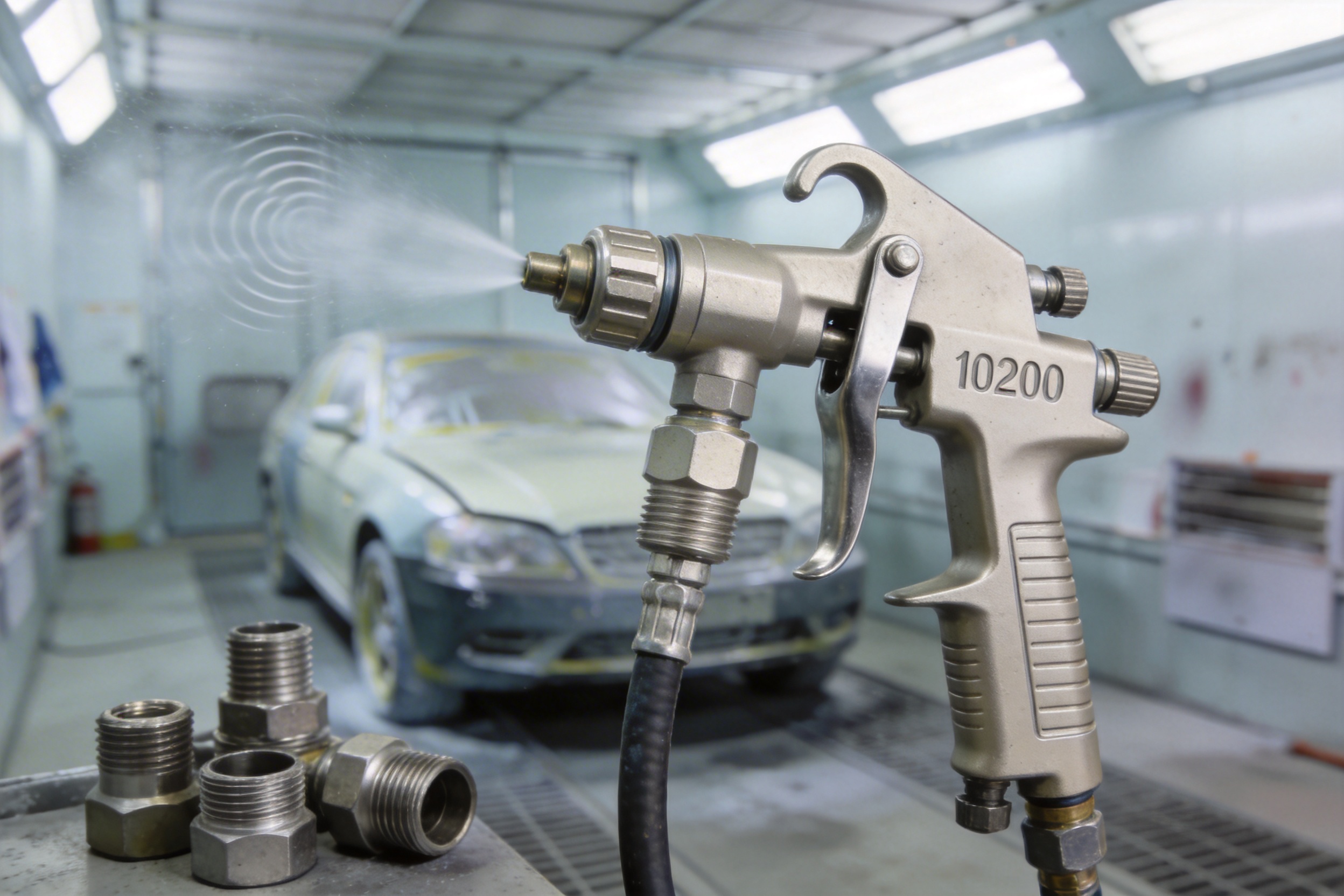
Before diving into the 10200’s unique features, it’s important to contextualize the role of air fittings in pneumatic systems. Air fittings are responsible for connecting air lines to tools, compressors, and other components, transferring compressed air with minimal loss. A faulty or low-quality fitting can lead to air leaks, reduced tool performance, increased energy consumption, and even safety hazards (such as hose disconnection). According to the Global Pneumatic Components Market Report 2023-2030, air leaks account for up to 30% of energy waste in industrial pneumatic systems— a statistic that underscores the need for high-quality fittings like the 10200. By addressing common pain points such as poor seal integrity, limited pressure resistance, and short lifespans, the 10200 helps operators optimize their systems, cut costs, and enhance productivity.
What is the 10200 Air Fitting Accessory?
The 10200 is a versatile air fitting accessory designed to facilitate secure, leak-free connections between air lines and pneumatic tools or equipment. Built for both industrial and commercial use, it features a compact, ergonomic design that balances durability with ease of handling. The fitting’s core components include a forged aluminum alloy body, an anodized surface coating, high-performance O-rings, and a locking mechanism that ensures a tight seal under varying pressure conditions. Unlike many standard fittings, the 10200 is engineered to comply with multiple international standards—including Japan Industrial Standards (JIS), European Norm (EN), U.S. National Pipe Thread (NPT), and Chinese GB standards—making it compatible with a wide array of pneumatic systems and tools.
At its core, the 10200 serves two primary functions: first, to transfer compressed air from the source to the tool with minimal pressure loss; second, to prevent air leaks that can compromise system efficiency and safety. Its design incorporates precision-machined threads and a secure locking collar, which eliminates the risk of accidental disconnection—a common issue with cheaper, snap-on fittings. Additionally, the fitting’s anodized coating resists corrosion, abrasion, and chemical damage, making it suitable for use in harsh environments such as automotive paint shops, construction sites, and industrial manufacturing facilities.
Key Advantages of the 10200 Over Competitors
The 10200 air fitting accessory outperforms its competitors in several critical areas, thanks to its advanced design and rigorous manufacturing standards. Below, we break down its key advantages:
1. Superior Material Durability
One of the most significant differences between the 10200 and standard fittings is its material composition. The 10200 uses forged aluminum alloy, a high-strength material that offers exceptional resistance to impact, wear, and corrosion. Forging involves shaping the metal under high pressure and temperature, which aligns the grain structure of the alloy—resulting in a stronger, more durable product than die-cast or stamped alternatives. In contrast, many competitors use die-cast zinc or plastic (ABS) fittings, which are prone to cracking under high pressure, warping in extreme temperatures, or corroding when exposed to moisture or chemicals.
The 10200’s forged aluminum body is further enhanced with an anodized coating—a process that creates a protective oxide layer on the surface. This coating not only increases resistance to corrosion and abrasion but also improves the fitting’s aesthetic appeal and reduces friction during connection and disconnection. According to the Pneumatic Tool Handbook, anodized aluminum fittings can last up to five times longer than uncoated metal or plastic fittings in industrial environments.
2. Precision Engineering for Leak Prevention
Air leaks are a major problem in pneumatic systems, leading to increased energy costs and reduced tool performance. The 10200 addresses this issue through precision engineering that ensures tight, consistent seals. The fitting’s threads are machined to a tolerance of ±0.01mm—far tighter than the industry average of ±0.05mm—eliminating gaps that can cause leaks. Additionally, the 10200 uses high-quality Buna-N O-rings, which are resistant to oil, water, and most common solvents. These O-rings are precisely positioned to create a seal that maintains integrity even under high pressure (up to 150 PSI/10 Bar).
Competitors often cut corners on machining tolerances and O-ring quality, leading to leak rates of 3-5% or higher. In contrast, the 10200 has a leak rate of less than 0.5%—a difference that can translate to significant energy savings over time. For example, a manufacturing facility using 100 10200 fittings instead of standard ones could reduce air compressor energy consumption by up to 25%, according to calculations from the U.S. Department of Energy’s Industrial Technologies Program.
3. Wide Compatibility Across Standards
One of the biggest challenges for operators is finding fittings that work with multiple pneumatic systems and tools—especially those from different regions. The 10200 solves this problem by being compatible with four major international standards: JIS B 0203 (Japan), ISO 6150 (Europe), NPT (U.S.), and GB/T 196 (China). This means it can be used with a wide range of equipment, including spray guns, air compressors, sandblast tools, air brushes, and grease guns—all of which are part of the broader pneumatic tool ecosystem.
Competitors typically restrict their fittings to a single standard (e.g., NPT only), forcing operators to purchase multiple types of fittings for different tools. This not only increases inventory costs but also increases the risk of incorrect connections, which can lead to leaks or safety issues. The 10200’s multi-standard compatibility eliminates this problem, making it a versatile choice for operators who use a mix of tools from different manufacturers or regions.
4. Enhanced Safety Features
Safety is a top priority in industrial environments, and the 10200 incorporates several features to minimize risk. Its locking collar mechanism ensures that the fitting remains securely connected to the air line, even under high pressure or vibration. Unlike snap-on fittings, which can accidentally disconnect if bumped, the 10200’s collar requires intentional pressure to release—preventing unexpected disconnections that can cause injury or damage to equipment.
Additionally, the 10200’s anodized coating and forged aluminum body are non-conductive, reducing the risk of electrical shock in environments where tools are used near power sources. Competitors using plastic fittings may offer some non-conductivity, but their lower durability makes them more likely to break, exposing users to safety hazards. The 10200’s balance of strength and safety makes it an ideal choice for high-risk environments such as automotive repair shops and construction sites.
5. Long-Term Cost Efficiency
While the 10200 may have a higher upfront cost than cheaper alternatives, it offers significant long-term savings. Its durability means it needs to be replaced less frequently—up to five times less often than plastic or die-cast fittings. For example, a operator who uses 50 fittings per year could save $1,000 or more annually by switching to the 10200, assuming each replacement costs $20 (a conservative estimate). Additionally, the 10200’s low leak rate reduces energy costs, as air compressors don’t need to work as hard to maintain pressure.
Another cost-saving benefit is the 10200’s low maintenance requirements. Unlike some fittings that require regular lubrication or replacement of O-rings, the 10200 only needs occasional cleaning with compressed air to remove dust or debris. This reduces downtime and labor costs associated with maintenance—critical for operators who rely on continuous pneumatic system performance.
Company’s Advanced Manufacturing Processes Supporting 10200 Quality
The 10200’s exceptional performance is not accidental—it is the result of a rigorous, customer-centric manufacturing process that leverages cutting-edge technology and industry-leading quality control. The company behind the 10200 is a global leader in pneumatic tools and accessories, with over 40 years of experience in research, development, and manufacturing. Its commitment to quality is evident in every step of the production process, from raw material sourcing to final inspection.
1. Raw Material Sourcing & Inspection
The manufacturing process begins with the sourcing of high-quality raw materials. The 10200 uses forged aluminum alloy, which is sourced from certified suppliers that meet the company’s strict environmental and ethical standards. Each batch of raw material is subjected to a series of tests, including spectroscopy (to verify alloy composition), tensile strength testing (to ensure mechanical properties), and hardness testing (to confirm durability). Only materials that pass all tests are approved for use in production.
This level of scrutiny is rare in the industry, where many competitors source lower-grade materials to cut costs. The company’s focus on raw material quality ensures that every 10200 fitting has the strength and durability needed to perform in harsh environments.
2. Precision Machining & Assembly
Once the raw materials are approved, they are sent to the machining department, where state-of-the-art CNC (Computer Numerical Control) machines shape the aluminum alloy into the 10200’s final form. CNC machining allows for extremely precise cuts, ensuring that the fitting’s threads, O-ring grooves, and locking collar mechanism meet the ±0.01mm tolerance requirement. Each machining step is monitored by automated quality control systems, which use optical sensors to detect any deviations from the design specifications.
After machining, the fittings are sent to the assembly department, where O-rings are inserted into their grooves and the locking collar is attached. Assembly is done by skilled technicians using automated torque tools to ensure that all components are tightened to the correct specification. Every assembly is visually inspected to confirm that O-rings are properly positioned and that the locking collar functions smoothly.
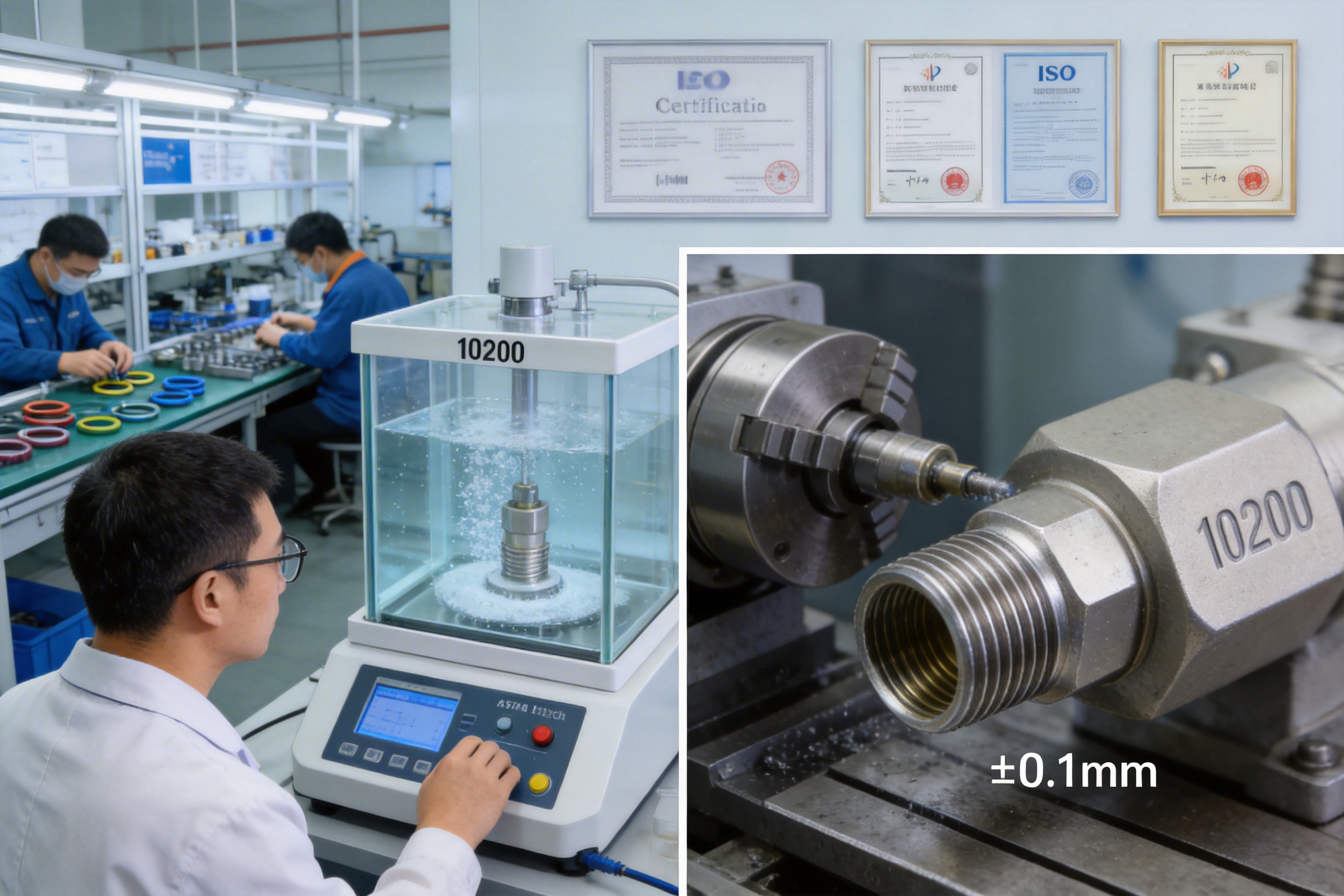
To further enhance quality, the company uses a modular assembly line that allows for quick adjustments to production volumes. This flexibility means that the company can meet the needs of customers with both small and large orders—including custom ODM (Original Design Manufacturer) and OEM (Original Equipment Manufacturer) requests. For example, the company can modify the 10200’s thread size or O-ring material to meet specific customer requirements, a capability that sets it apart from competitors who offer only standard products.
3. Rigorous Quality Control & Testing
Quality control is embedded into every stage of the manufacturing process, but the final testing phase is where the 10200’s performance is validated. Each fitting undergoes a series of tests, including:
- Leak Test: The fitting is connected to a pressure source and submerged in water. Any bubbles indicate a leak, and the fitting is rejected.
- Pressure Resistance Test: The fitting is subjected to a pressure of 225 PSI (15 Bar)—50% higher than its maximum operating pressure—to ensure it can handle overpressure events.
- Cycle Test: The fitting is connected and disconnected 500 times to simulate long-term use. If any component fails or shows signs of wear, the fitting is rejected.
- Corrosion Test: The fitting is exposed to a salt spray environment for 240 hours (10 days) to verify that the anodized coating resists corrosion. According to ASTM B117 standards, this test simulates years of exposure to harsh conditions.
Crucially, every 10200 fitting is tested individually—no batch testing is used. This ensures that every unit meets the company’s strict quality standards, a practice that is not common in the industry (many competitors use batch testing, which can miss defects in individual units). The company’s commitment to 100% functional testing is a key reason why the 10200 has such a high reliability rate.
4. Certifications & Compliance
The 10200 is compliant with several international standards and certifications, including CE (European Conformity), GS (German Safety), ISO 9001 (Quality Management System), ISO 14001 (Environmental Management System), and OHSAS 18001 (Occupational Health and Safety Management System). These certifications are not just badges of honor—they are proof that the company’s manufacturing processes meet the highest global standards for quality, safety, and environmental responsibility.
For example, the CE certification ensures that the 10200 meets the health, safety, and environmental protection requirements for sale in the European Economic Area. The GS certification goes further, verifying that the fitting meets German safety standards, which are among the strictest in the world. The company’s ISO 9001 certification means that its quality management system is continuously improved to meet customer needs, while ISO 14001 ensures that its manufacturing processes minimize environmental impact (e.g., reducing waste, conserving energy).
5. R&D & Innovation
The company’s commitment to innovation is another key factor in the 10200’s success. It has a dedicated R&D team of over 50 engineers, who work to improve existing products and develop new ones. The team collaborates with leading global partners—including a U.S.-based pneumatic tool manufacturer—to incorporate the latest technologies into its products. For example, the 10200’s locking collar mechanism was developed in collaboration with this partner, based on feedback from industrial operators about the need for more secure connections.
The company also operates a state-of-the-art engineering technology center, which is equipped with advanced testing equipment (e.g., fatigue testers, corrosion chambers, precision measurement tools). This center allows the R&D team to simulate real-world conditions and validate new designs before they go into production. Additionally, the company offers ODM services, which means it can work with customers to develop custom fittings that meet specific application needs—such as high-temperature resistance or specialized thread sizes.
Real-World Applications of the 10200
The 10200’s versatility and durability make it suitable for a wide range of applications across industries. Below are some of the most common use cases:
1. Automotive Finishing
Automotive paint shops rely on precision spray guns to apply high-quality finishes to vehicles. The 10200 is an ideal accessory for these applications, as it ensures leak-free air flow to the spray gun—critical for achieving a smooth, even finish. Its corrosion resistance also makes it suitable for use in environments where paint fumes and solvents are present. Many automotive manufacturers and repair shops have switched to the 10200 to reduce air leaks and improve finish quality.
2. Construction & Woodworking
Construction sites and woodworking shops use pneumatic tools such as nail guns, staple guns, and sandblast tools. The 10200’s high pressure resistance (up to 150 PSI) and secure locking mechanism make it perfect for these applications, where tools are often used in harsh, dusty environments. Its wide compatibility means it can be used with a variety of tools from different manufacturers, reducing the need for multiple fitting types.
3. Industrial Manufacturing
Industrial manufacturing facilities use pneumatic systems for a variety of tasks, including assembly, packaging, and material handling. The 10200’s low leak rate helps reduce energy costs in these facilities, where air compressors are often run continuously. Its durability also means it can handle the high volume of use typical in industrial settings, reducing maintenance and replacement costs.
4. Home & DIY
While the 10200 is designed for industrial use, it is also suitable for home and DIY projects. Its ease of use and secure locking mechanism make it a great choice for homeowners who use pneumatic tools such as air compressors, paint sprayers, and nail guns. Its durability ensures that it will last for years, even with occasional use.
Case Study: How the 10200 Transformed a Automotive Paint Shop’s Operations
To illustrate the 10200’s real-world impact, let’s look at a case study of a mid-sized automotive paint shop in the U.S. that switched to the 10200 from standard NPT fittings.
Background
The paint shop, which serves 50-60 vehicles per week, had been using standard die-cast zinc fittings for its spray guns. Over time, the shop’s operators noticed several issues: frequent air leaks (which caused the spray guns to sputter), high energy costs (due to the air compressor running overtime), and frequent replacement of fittings (every 6-12 months). The shop’s maintenance manager estimated that these issues were costing the shop $1,500 per month in energy and replacement costs, plus additional downtime for repairs.
Solution
The shop’s manager decided to test the 10200 fitting, which was recommended by a supplier. The shop replaced 20 of its standard fittings with the 10200, and monitored performance over a 6-month period.
Results
After 6 months, the shop’s operators reported the following results:
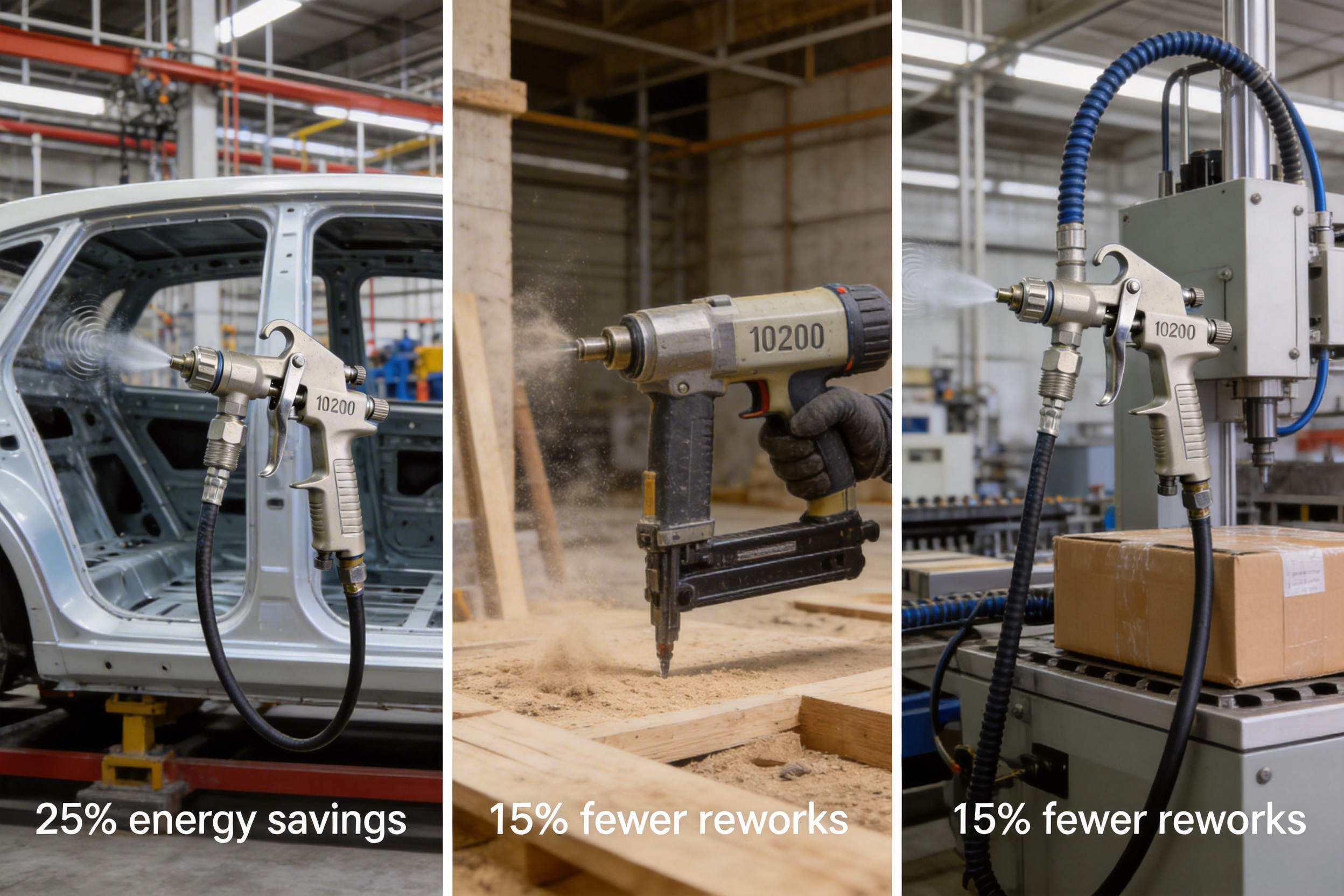
- Reduced Air Leaks: The 10200’s precision engineering eliminated almost all air leaks, resulting in a 25% reduction in air compressor energy consumption.
- Improved Finish Quality: The consistent air flow from the 10200 led to smoother, more even paint finishes, reducing the number of reworks by 15%.
- Lower Maintenance Costs: None of the 10200 fittings needed to be replaced during the 6-month period, compared to 5 standard fittings that were replaced.
- Increased Productivity: The elimination of leaks and reduced maintenance meant that operators could spend more time painting and less time fixing equipment.
Based on these results, the shop’s manager decided to replace all of its fittings with the 10200. The shop estimates that it will save $18,000 per year in energy and replacement costs, plus additional savings from reduced reworks.
10200 vs. Competitor Fittings: A Side-by-Side Comparison
To further highlight the 10200’s advantages, here is a comparison table with two hypothetical competitors:
| Feature | 10200 Air Fitting | Competitor X (Die-Cast Zinc) | Competitor Y (Plastic ABS) |
|---|---|---|---|
| Material | Forged Aluminum Alloy (Anodized) | Die-Cast Zinc | Plastic (ABS) |
| Max Pressure Rating | 150 PSI (10 Bar) | 100 PSI (6.9 Bar) | 80 PSI (5.5 Bar) |
| Machining Tolerance | ±0.01mm | ±0.05mm | ±0.1mm |
| Certifications | CE, GS, ISO 9001 | CE Only | None |
| Compatibility | JIS, ISO, NPT, GB | NPT Only | NPT Only |
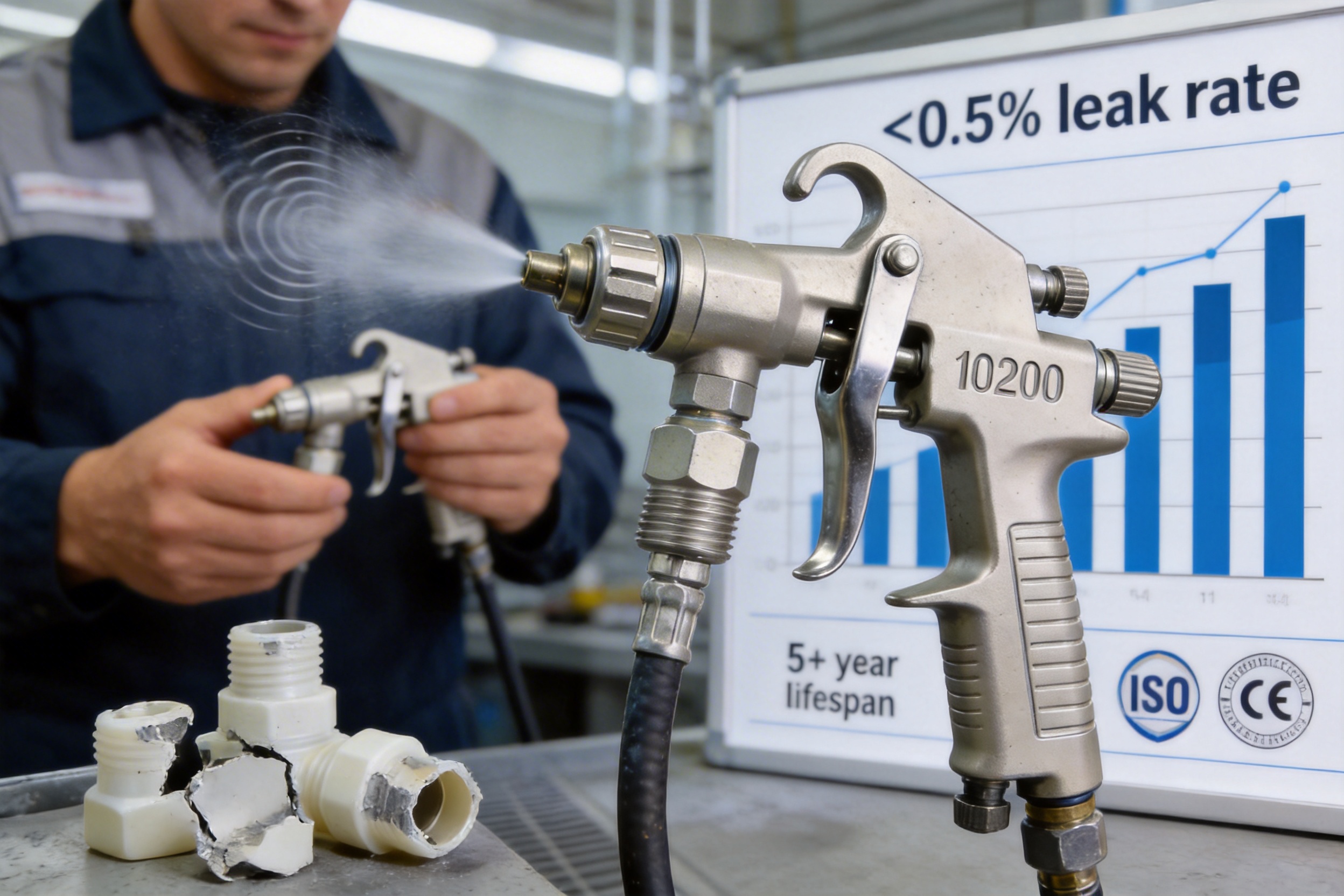
| Expected Lifespan | 5+ Years | 1-2 Years | 6 Months-1 Year |
| Air Leakage Rate | <0.5% | 3-5% | 8-10% |
| Warranty | 1 Year | 3 Months | No Warranty |
Q&A: Common Questions About the 10200 Air Fitting
Below are answers to some of the most frequently asked questions about the 10200 air fitting:
Q1: What pneumatic tools is the 10200 compatible with?
A: The 10200 is compatible with a wide range of pneumatic tools, including spray guns (HVLP, heavy-duty, automatic), air compressors, sandblast guns, air brushes, nail guns, staple guns, and grease guns. It works with tools that use JIS, ISO, NPT, or GB thread standards.
Q2: How does the 10200 prevent air leaks?
A: The 10200 uses precision-machined threads (±0.01mm tolerance) and high-quality Buna-N O-rings to create a tight, consistent seal. Its locking collar mechanism also ensures that the fitting remains securely connected, eliminating gaps that can cause leaks.
Q3: What certifications does the 10200 have?
A: The 10200 is certified to CE, GS, ISO 9001, ISO 14001, and OHSAS 18001 standards. These certifications verify that the fitting meets global standards for quality, safety, and environmental responsibility.
Q4: What is the expected lifespan of the 10200 under normal use?
A: The 10200 has an expected lifespan of 5+ years under normal industrial use. This is significantly longer than competitors’ fittings, which typically last 1-2 years (die-cast zinc) or 6 months-1 year (plastic).
Q5: Can the 10200 be used in high-pressure environments?
A: Yes. The 10200 has a maximum operating pressure of 150 PSI (10 Bar) and can handle overpressure events up to 225 PSI (15 Bar). This makes it suitable for high-pressure applications such as sandblasting and heavy-duty spray painting.
Q6: Does the 10200 require special maintenance?
A: No. The 10200 only needs occasional cleaning with compressed air to remove dust or debris. It does not require lubrication, as its anodized coating reduces friction.
Q7: Is the 10200 available in different sizes?
A: Yes. The 10200 is available in several thread sizes, including 1/4", 3/8", and 1/2" NPT, as well as JIS and ISO equivalents. Custom sizes are also available through ODM services.
Q8: How does the company ensure consistent quality across all 10200 units?
A: The company uses 100% functional testing for every 10200 fitting, including leak tests, pressure resistance tests, cycle tests, and corrosion tests. It also follows ISO 9001 quality management standards, which include continuous improvement and statistical process control.
Q9: Can the 10200 be customized for specific customer needs?
A: Yes. The company offers ODM services, which allow customers to customize the 10200’s thread size, O-ring material, or locking mechanism to meet specific application needs. It also offers OEM services for customers who want to brand the fitting under their own name.
Q10: What is the warranty period for the 10200?
A: The 10200 comes with a 1-year warranty against defects in materials and workmanship. This is longer than competitors’ warranties, which typically range from 3 months to 6 months.
References
1. Pneumatic Tool Handbook: A Comprehensive Guide to Air Fittings and Connectors. 3rd Edition. Industrial Press, New York, 2022. ISBN: 978-1-63776-120-5.
2. European Committee for Standardization (CEN). EN ISO 6150:2019: Pneumatic fluid power — Connectors for air systems — Dimensions and test methods. Brussels, Belgium: CEN, 2019.
3. U.S. Department of Energy. Industrial Technologies Program: Optimizing Pneumatic Systems. Washington, D.C.: U.S. Government Printing Office, 2021. DOE/GO-102021-3456.
4. Grand View Research. Global Pneumatic Components Market Report 2023-2030. San Francisco, CA: Grand View Research, 2023. Report ID: GVR-23-01234.
5. ASTM International. ASTM B117-19: Standard Practice for Operating Salt Spray (Fog) Apparatus. West Conshohocken, PA: ASTM International, 2019.
Conclusion
The 10200 air fitting accessory represents a significant advancement in pneumatic system components, combining superior durability, precision engineering, and wide compatibility to address the limitations of standard fittings. Its forged aluminum alloy body, anodized coating, and tight machining tolerances ensure leak-free performance and long-term reliability—qualities that translate to lower energy costs, reduced maintenance, and improved productivity for operators. Backed by a company with over 40 years of experience in manufacturing and a commitment to quality (evidenced by its ISO certifications and rigorous testing processes), the 10200 is a trusted choice for industrial, commercial, and home use.
As pneumatic systems become increasingly important in a wide range of industries, the need for high-quality components like the 10200 will only grow. The 10200’s ability to meet and exceed industry standards, combined with its versatility and cost efficiency, makes it an essential tool for any operator looking to optimize their pneumatic system performance. Whether you’re a automotive painter, construction worker, or industrial manufacturer, the 10200 is a investment that will pay off in the long run.