 Search
 English
 中文简体
中文简体 Deutsch
 Español
Content
- 1 Product Overview
- 2 Key Technical Specifications
- 3 Why Conventional High Pressure Spraying Still Matters
- 4 Advantages Over Competing Spray Guns
- 5 Balanced Design for Productivity and Control
- 6 Applications in Workshop and Industrial Environments
- 7 Nozzle Selection and Coating Matching
- 8 Suction Feed System: Practical and Familiar
- 9 Air System Requirements and Performance Stability
- 10 Manufacturing Strength Behind the Product
- 11 Quality Control from Raw Material to Finished Product
- 12 Research, Development, and Technical Cooperation
- 13 Certifications and Management Systems
- 14 Brand and Market Experience
- 15 Supply Capacity for Distributors and Industrial Buyers
- 16 Ease of Use for Operators
- 17 Maintenance and Cleaning Recommendations
- 18 How the Spray Gun Supports Better Finish Quality
- 19 Cost Efficiency and Long-Term Value
- 20 Purchasing Considerations
- 21 Q&A Section
- 21.1 What type of spray gun is this?
- 21.2 What cup capacity does it have?
- 21.3 Which nozzle sizes are available?
- 21.4 What is the recommended operating air pressure?
- 21.5 What does suction feed mean?
- 21.6 What is the air inlet size?
- 21.7 What coatings can be sprayed with it?
- 21.8 How does it compare with cheaper competing guns?
- 21.9 Is it suitable for professional workshops?
- 21.10 How should the spray gun be maintained?
- 21.11 Why is the manufacturer’s background important?
- 22 Conclusion
- 23 References
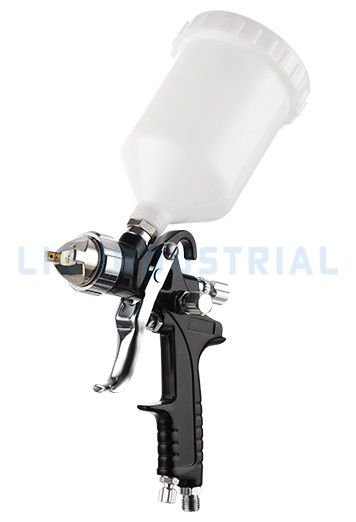
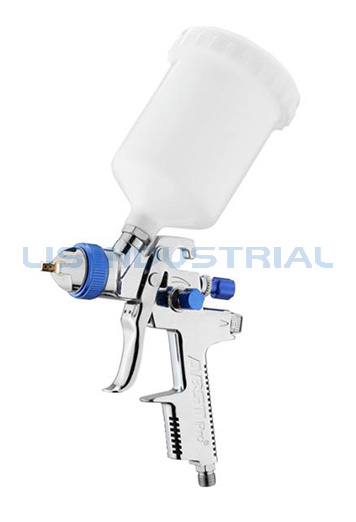
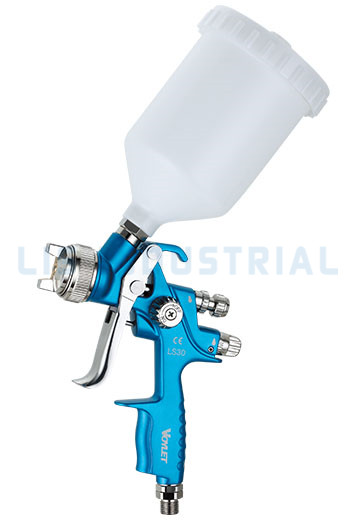
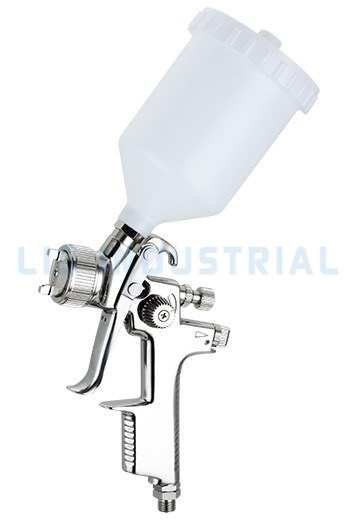
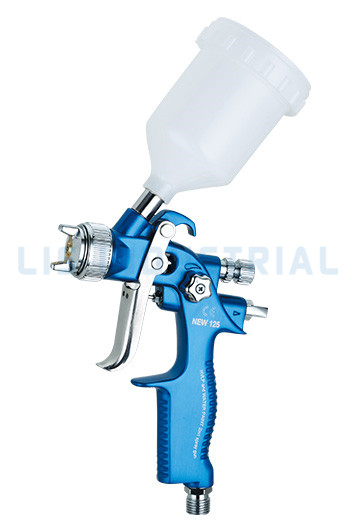
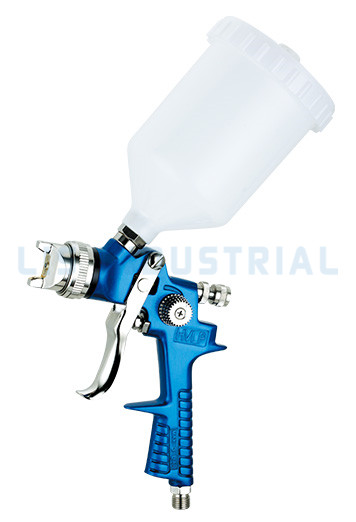
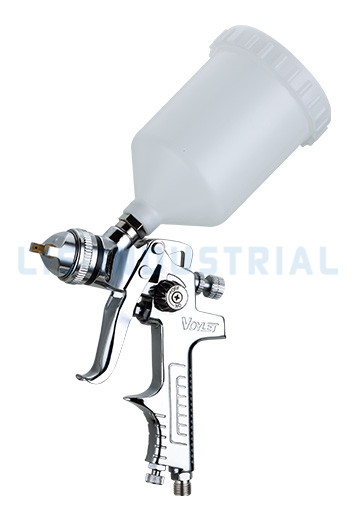
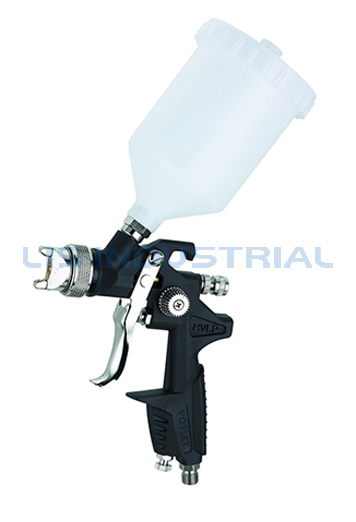
- 24 Product: Voylet S990S High Pressure Spray Gun With 750cc Cup+
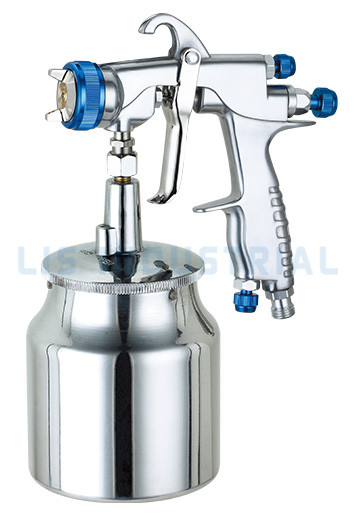
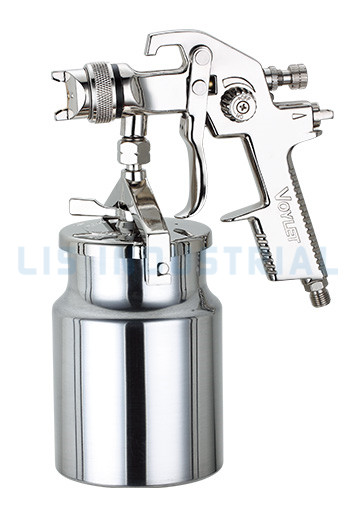
In professional finishing, a spray gun is more than a simple air tool. It is the point where compressed air, coating material, operator skill, and surface preparation come together to determine the final appearance of a product. The high pressure suction feed spray gun with a 750 cc cup discussed in this article is designed for users who require dependable atomization, practical capacity, flexible nozzle selection, and economical performance in daily painting operations.
This spray gun belongs to the economical conventional spray gun category, a segment valued by workshops, maintenance teams, refinishers, and general industrial users who want strong spraying performance without unnecessary complexity. It is configured with a suction feed system, a 750 ml paint cup, a G1/4 inch air inlet, and selectable fluid nozzle sizes of 1.3 mm, 1.5 mm, and 1.8 mm. With an operating air pressure of 50 PSI, it is intended for conventional high pressure atomization where good coverage, relatively fast application, and familiar handling are important.
Unlike overly specialized finishing equipment that may suit only one coating type or one narrow application, this model is built around practical versatility. It can be selected for many routine painting tasks, including general metal coating, vehicle maintenance work, woodworking finishing, machinery touch-up, furniture painting, and workshop repair jobs. Its suction feed structure supports stable material delivery, while the 750 cc cup provides enough coating capacity for continuous work without making the gun unnecessarily heavy or difficult to control.
The value of this spray gun also depends on the manufacturer behind it. Ningbo Lis Industrial Co., Ltd. has long experience in the development, manufacturing, and marketing of air painting spray guns, mini air compressors, and related air tools. Since its establishment in 1984, the company has grown into a large-scale spray gun manufacturing enterprise with strong production capacity, research and development resources, strict quality management, and international certification experience. Its brands, including Voylet, Muzi, and Wagem, are known in global markets for practical spraying solutions.
This article focuses on the product itself, its competitive advantages, its technical configuration, and the manufacturing strengths that support consistent quality. It also provides usage guidance, maintenance recommendations, purchasing considerations, and a Q&A section for users who want to understand how this spray gun can fit into their finishing process.
Voylet S990S High Pressure Spray Gun With 750cc Cup+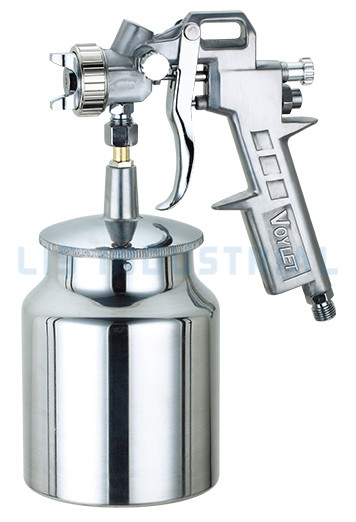
Product Overview
The spray gun is a high pressure suction feed model supplied with a 750 cc cup. It is designed for conventional air spraying, where compressed air atomizes the coating material as it exits the fluid nozzle. Conventional spray guns remain popular because they are straightforward to use, easy to understand, and capable of delivering strong atomization across many coating viscosities when paired with the right nozzle and air supply.
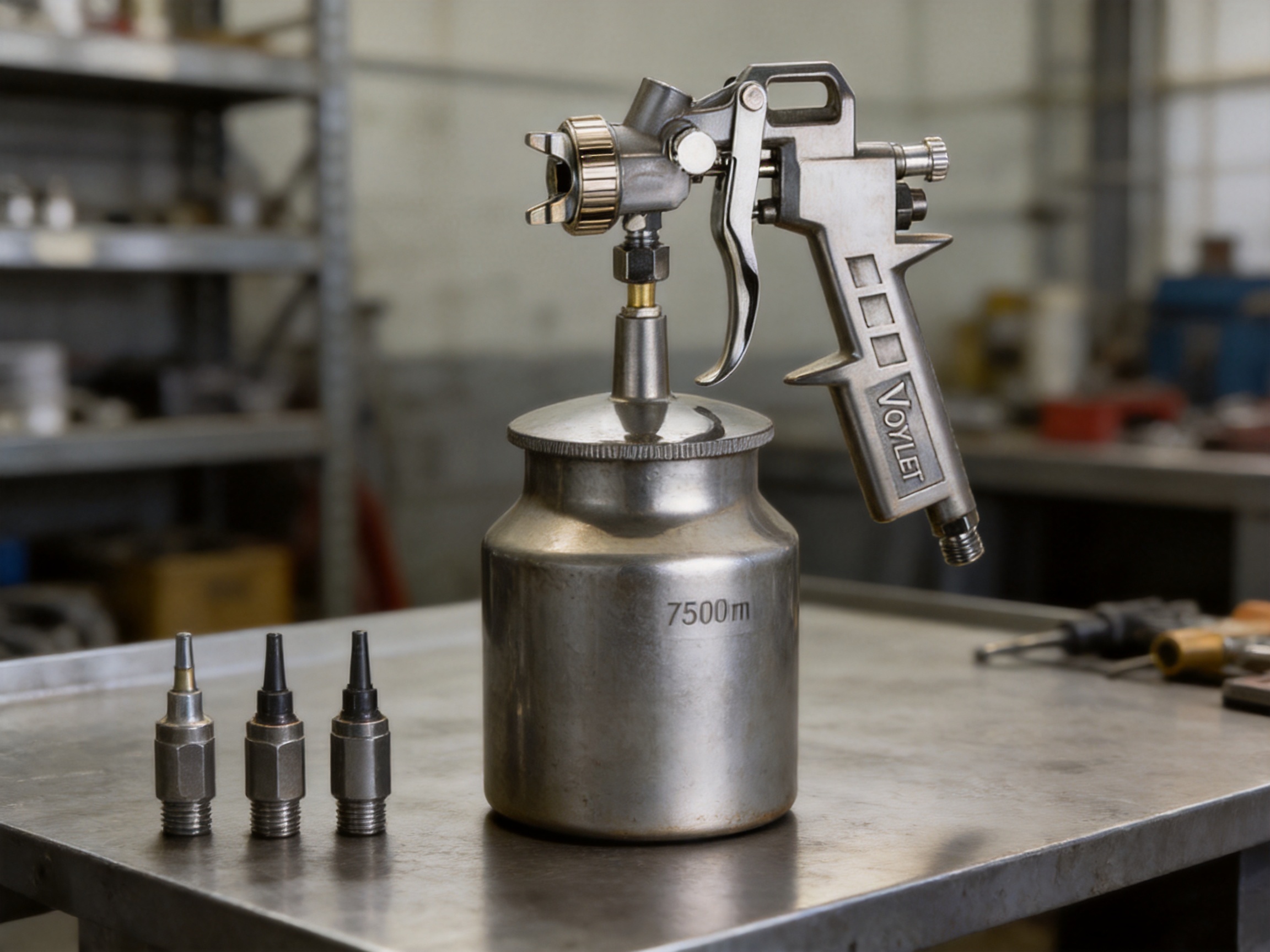
The selectable nozzle sizes of 1.3 mm, 1.5 mm, and 1.8 mm make the tool adaptable. A 1.3 mm nozzle is often suitable for thinner coatings, light finishing work, and applications requiring finer atomization. A 1.5 mm nozzle provides a balanced option for general purpose use. A 1.8 mm nozzle can be selected for heavier materials, primers, and coatings that need a larger fluid passage. This flexibility helps users reduce the need for multiple separate spray guns in the workshop.
The 750 ml cup capacity is another important feature. It is large enough for productive spraying sessions yet compact enough to maintain comfortable handling. For many users, this cup size represents a useful balance between productivity and control. A cup that is too small requires frequent refilling, interrupting workflow and increasing cleanup time. A cup that is too large can create fatigue, reduce wrist control, and make fine adjustment more difficult. The 750 ml capacity supports practical daily use.
The gun uses a suction feed system. In this configuration, the cup is typically mounted below the spray gun body, and air movement helps draw coating material upward into the fluid passage. Suction feed spray guns are valued for their familiar structure, easy refilling, and suitability for many repair and production environments. For users accustomed to traditional conventional guns, this design provides an intuitive spraying experience.
The air inlet is G1/4 inch, a common connection size for pneumatic tools and spray equipment. This standard connection helps simplify integration with workshop air lines, regulators, filters, and hoses. The operating air pressure is listed at 50 PSI, which reflects the high pressure conventional spraying style of the gun. When the air supply is properly regulated and filtered, the gun can produce effective atomization for a smooth and consistent finish.
Key Technical Specifications
| Item | Specification | Practical Meaning |
|---|---|---|
| Product Type | High pressure suction feed spray gun | Suitable for conventional air spraying in workshop and industrial use |
| Category | Economical conventional spray guns | Designed to offer useful performance at a competitive cost |
| Fluid Nozzle Options | 1.3 mm, 1.5 mm, 1.8 mm | Allows selection for light coatings, general finishes, primers, and heavier materials |
| Air Pressure | 50 PSI | Supports strong conventional atomization and efficient coverage |
| Cup Capacity | 750 ml | Provides a productive working volume without excessive handling weight |
| Feed Type | Suction feed | Practical for general painting, maintenance, and repair work |
| Air Inlet | G1/4 inch | Compatible with common pneumatic connections and workshop air systems |
| Carton Size | 56 cm x 36 cm x 54.5 cm, 20 pieces per carton | Convenient for distributors, wholesalers, and bulk procurement |
Why Conventional High Pressure Spraying Still Matters
Modern finishing technology includes HVLP guns, low pressure guns, airless equipment, electric sprayers, and automatic spray systems. Each has its place. However, conventional high pressure spray guns remain important because they provide a familiar combination of coating flow, fast atomization, and robust performance. Many operators prefer them for general repair, workshop maintenance, industrial touch-up, and applications where speed and coverage are important.
High pressure atomization can produce a fine spray pattern when the air supply, coating viscosity, and nozzle size are matched properly. The 50 PSI pressure rating gives the gun enough atomizing force for many coatings. Compared with low pressure alternatives, conventional high pressure spraying often feels more direct and responsive. The operator can quickly observe the fan pattern, adjust the distance, and control overlap to build an even wet film.
Another advantage is familiarity. Workshops that have used conventional suction feed spray guns for years often already have the air compressors, regulators, hoses, and working methods required. Training new users can be simpler because the operating principles are clear: adjust the air pressure, choose the correct nozzle, prepare the coating, set the fan and fluid controls, and apply steady overlapping passes.
In real working environments, simplicity is a competitive advantage. A tool that can be cleaned quickly, connected easily, and understood by many operators can reduce downtime. For maintenance teams, distributors, and small workshops, the ability to keep painting operations moving is often more valuable than advanced features that require special training or expensive accessories.
Advantages Over Competing Spray Guns
The spray gun stands out in its category through a practical combination of price-conscious design, reliable construction, flexible nozzle options, and production backing from an experienced manufacturer. In the economical conventional spray gun market, buyers often compare products based on cost alone. However, the true value of a spray gun should be measured by finish quality, durability, ease of use, replacement convenience, production consistency, and supplier reliability.
One advantage is the nozzle range. Some economical spray guns are sold with only one standard nozzle, which limits their usefulness. This model supports 1.3 mm, 1.5 mm, and 1.8 mm nozzle options, allowing the buyer to select a configuration according to material requirements. This helps reduce the risk of poor atomization, uneven coating, excessive orange peel, or slow application caused by mismatched nozzle size.
Another advantage is the 750 ml cup capacity. Many competing guns in the same price segment may use smaller cups that require frequent refills or poorly balanced larger cups that make spraying uncomfortable. The 750 ml design is well suited for general tasks. It improves productivity while still allowing the operator to maintain control during horizontal and vertical passes.
The suction feed design is also valuable for users who want practical handling and straightforward cleaning. In comparison with some pressure pot or gravity feed systems, a suction feed gun can be convenient when changing colors or coatings during maintenance work. It is familiar to many painters and requires no complicated external fluid delivery system.
The G1/4 inch air inlet improves compatibility with standard workshop pneumatic setups. In many industrial and repair environments, tool compatibility saves time. Users can connect the spray gun to existing air lines, filters, regulators, and hoses without extensive modification. This reduces setup cost and makes the gun easier to introduce into existing production or maintenance processes.
From a broader supply perspective, the manufacturing support behind the product is a major difference. Ningbo Lis Industrial Co., Ltd. has decades of experience in spray gun production, a large workforce, broad export experience, and a strong focus on quality systems. For distributors and purchasing teams, this matters because consistent supply and repeatable quality are as important as the individual tool specification.
Balanced Design for Productivity and Control
A good spray gun must balance atomization power, coating delivery, operator comfort, and maintenance convenience. If air pressure is too weak, the finish can appear coarse or uneven. If the gun is too heavy, the operator may struggle to maintain a consistent distance and angle. If the nozzle is too large or too small for the coating, paint consumption and finish quality can suffer. This spray gun is designed around a balanced set of practical specifications.
The 50 PSI operating pressure supports strong atomization. This is useful when spraying coatings that require energetic air breakup. The pressure helps create a stable fan pattern and can improve coverage speed, especially in general industrial and repair work. At the same time, users should regulate pressure carefully because excessive pressure may increase overspray and material waste. The best result comes from proper adjustment rather than simply maximizing air pressure.
The 750 ml cup supports continuous spraying. During production or repair tasks, frequent refilling can break the operator’s rhythm. Every refill also introduces the possibility of contamination, incorrect mixing, or accidental spillage. A well-sized cup allows longer application time and fewer interruptions, helping produce a more uniform finish across panels, parts, or wooden surfaces.
The gun’s nozzle selection provides control over material flow. A 1.3 mm nozzle can help with finer materials and smoother surface appearance. A 1.5 mm nozzle is a general purpose option that may suit many common coatings. A 1.8 mm nozzle can improve flow for heavier materials such as primers or thicker protective coatings. By matching the nozzle to the coating, users can improve transfer efficiency, reduce rework, and achieve better film build.
Operator technique remains essential. Even a well-designed gun must be used with proper spray distance, angle, overlap, and speed. However, the product’s configuration helps create a forgiving and practical operating experience. It provides enough atomization energy and material capacity for productive work while remaining simple enough for everyday use.
Applications in Workshop and Industrial Environments
This spray gun is suitable for many general finishing applications. In automotive repair and maintenance, it can be used for primers, touch-up work, and general refinishing tasks when the nozzle and coating are selected appropriately. In machinery maintenance, it can apply protective coatings to equipment housings, frames, brackets, and metal components. In woodworking, it can be used for suitable stains, sealers, and coatings where conventional spraying is preferred.
For metal fabrication shops, the spray gun can support daily coating needs on fabricated parts, gates, frames, and machinery components. Its conventional high pressure atomization provides useful coverage for parts with different shapes and sizes. For furniture repair or small production, the gun can help apply coatings consistently when paired with proper surface preparation and finishing practice.
The gun is also useful for distributors serving mixed customer groups. Because the specification is not limited to one narrow industry, it can be offered to small workshops, repair garages, industrial maintenance departments, and general tool users. Its economical category makes it accessible, while its specification gives it professional relevance.
Users should always match the spray gun to the coating manufacturer’s recommendations. Some modern coatings may require specific nozzle sizes, air pressures, reducers, or application methods. When properly matched, the gun can help produce smooth coverage and acceptable surface quality across many common coating tasks.
Nozzle Selection and Coating Matching
The three available nozzle sizes are a central benefit of the product. Selecting the correct nozzle is one of the most important decisions in spray finishing. A nozzle that is too small may restrict material flow, causing dry spray, slow production, or poor film build. A nozzle that is too large may deliver too much material, causing runs, sags, excessive texture, or waste.
The 1.3 mm nozzle is often chosen for lighter coatings and finishing work requiring finer atomization. It can be useful when the coating is properly thinned and the desired film is not too heavy. For operators focused on surface appearance, this smaller nozzle can help improve control, especially when applying thin materials.
The 1.5 mm nozzle is a balanced general purpose size. It is suitable for many common coatings used in repair and industrial environments. Buyers who want a versatile starting point often choose 1.5 mm because it can handle a broad range of materials with appropriate viscosity adjustment.
The 1.8 mm nozzle is useful for heavier coatings and primers. Materials with higher solids or greater viscosity may require a larger fluid passage to flow consistently. When applying primer or thicker protective coatings, the 1.8 mm nozzle can improve productivity and reduce the need for excessive thinning.
In comparison with competing products that offer only a single nozzle, this model’s nozzle flexibility helps users adapt the tool to changing work. A shop may use the same gun type across different tasks by choosing suitable nozzle configurations. This can simplify training, spare parts management, and purchasing decisions.
Suction Feed System: Practical and Familiar
The suction feed system is a traditional and widely understood spray gun configuration. In this system, the cup is positioned so the gun draws coating material into the fluid passage during spraying. This design is appreciated in many work environments because it is simple, serviceable, and familiar to experienced painters.
One benefit of suction feed is convenient handling during certain tasks. The operator can often see and manage the cup easily, and refilling can be straightforward. For repair work and general maintenance, where the user may change materials or colors, this practical structure can be an advantage.
Another benefit is that suction feed guns are commonly accepted in workshops with established conventional spraying practices. Operators who have used similar tools can quickly adapt, reducing training time. The familiar cup and gun layout can also make troubleshooting easier. If material flow is inconsistent, users can check viscosity, cup sealing, nozzle condition, air pressure, and fluid passage cleanliness using known procedures.
Compared with more complex systems, suction feed can be easier to maintain. There is no need for an external pressure tank for basic use, and cleaning can be performed by flushing the cup, fluid passage, nozzle, and air cap. This simplicity supports the economical nature of the product while still enabling productive coating application.
Air System Requirements and Performance Stability
A spray gun’s performance depends heavily on the air supply. The listed air pressure of 50 PSI indicates that the gun is intended for conventional high pressure spraying. To achieve stable performance, users should connect the gun to a suitable compressor, regulator, air filter, and hose. Clean and dry compressed air is essential for finish quality.
Moisture, oil, and dust in the air line can cause defects such as fisheyes, bubbles, uneven texture, and poor adhesion. A proper air filtration system helps prevent contamination. Pressure should be measured and adjusted as close to the gun as practical, because pressure can drop through long hoses, small fittings, or restricted connectors.
The G1/4 inch air inlet supports compatibility with common pneumatic fittings. This makes integration easier for users who already have compressed air systems in place. However, fittings, hoses, and regulators must be sized properly to avoid starving the gun of air. A restricted air supply can reduce atomization quality even if the compressor itself is adequate.
When comparing this spray gun with competitors, air compatibility is an important point. Some low-cost tools may use inconsistent fittings or poorly machined connections that create leakage or installation problems. A standard G1/4 inch inlet provides a practical solution and helps reduce setup uncertainty.
Manufacturing Strength Behind the Product
The quality of a spray gun is strongly influenced by the manufacturer’s engineering, machining, assembly, and inspection processes. Ningbo Lis Industrial Co., Ltd. is engaged in the research, development, manufacturing, and marketing of air painting spray gun series, mini air compressors, and related air tools. The company has been focused on customer satisfaction by providing total solutions for spraying products.
Located in Ningbo, a harbor city with developed economy and convenient transportation, the company benefits from a strong industrial environment and efficient logistics. Since its establishment in 1984, it has expanded into one of the larger enterprises in China’s painting spray gun industry. The company covers more than 400,000 square feet, employs more than 400 people, and has reported annual output of more than 40 million US dollars.
This manufacturing scale matters to buyers. A small or unstable supplier may struggle to maintain consistent quality, deliver repeat orders, or support distributors in global markets. A mature manufacturer with established systems can better control raw materials, machining accuracy, assembly procedures, testing, packaging, and shipment schedules.
The company has also gained recognition as a national high-tech enterprise, a customs advanced certification enterprise, an individual item champion of Ningbo City, and a provincial engineering and technology center. These strengths indicate an emphasis on technical development, process control, and long-term industrial capability rather than simple trading activity.
For this spray gun, the advantage is not only the specification on paper. It is the combination of product design and manufacturing discipline. Consistent nozzle machining, air cap accuracy, sealing performance, trigger action, and surface finishing all contribute to the way the gun performs in the user’s hand.
Quality Control from Raw Material to Finished Product
Spray gun quality requires attention throughout the entire production chain. According to the company information, the manufacturer follows ISO9000 quality system requirements and applies an elaborate production process. Quality control begins with raw material and incoming inspection, continues through in-process quality control, includes 100 percent functional testing, and ends with final inspection of finished products.
Incoming inspection is important because material consistency affects durability and machining quality. If the body material, sealing components, or nozzle parts do not meet requirements, the final gun may suffer from leakage, poor fit, weak corrosion resistance, or inconsistent spraying. By controlling materials at the start, the manufacturer reduces downstream defects.
In-process quality control is equally important. Spray guns require precision in fluid passages, air channels, needle alignment, nozzle seats, threads, and control mechanisms. Small dimensional errors can affect atomization, pattern shape, leakage resistance, or trigger feel. Continuous inspection during production helps identify issues before assembly is completed.
Functional testing gives additional assurance. A spray gun may look acceptable but still fail under air pressure or coating flow. Testing helps verify that the gun operates as intended, that adjustments function properly, and that no obvious defects exist. For professional buyers, this reduces risk and supports stable customer satisfaction.
Final inspection checks the finished product before shipment. Packaging quality is also relevant because spray guns can be damaged during transportation if not properly protected. The carton specification of 20 pieces per carton with a size of 56 cm x 36 cm x 54.5 cm supports organized bulk packing for distribution.
Research, Development, and Technical Cooperation
The manufacturer has invested significant effort in technology improvement. It established a spraying machinery engineering technology center and has carried out technical cooperation with American Wagner Spraying Technology Co., Ltd., specializing in the development and research of spraying machinery. This background supports product development and process improvement.
Research and development capability is important because spray equipment must respond to changing coatings, user expectations, environmental rules, and market needs. Even an economical conventional spray gun benefits from R&D expertise. Improvements in air cap geometry, machining process, sealing materials, ergonomic structure, and production consistency can all influence performance.
The company can provide OEM services according to customer drawings or samples, and ODM services according to customer needs. This flexibility is valuable for global distributors and private label buyers who may require specific packaging, configurations, nozzle selections, or market adaptations. A supplier capable of both OEM and ODM work is usually more technically engaged than one that only sells standard catalog products.
For the high pressure suction feed spray gun, the R&D background supports confidence that the design is not random. The product is part of a broader spraying equipment portfolio that includes HVLP spray guns, heavy duty spray guns, woodworking low pressure spray guns, texture paint spray guns, automatic spray guns, air brushes, mini oil-free compressors, paint tanks, air fittings, air polishers, spray gun kits, touch-up spray guns, airless spray guns, electric spray guns, and paint sprayers. Such a broad range gives the manufacturer insight into different spraying needs.
Certifications and Management Systems
International buyers often evaluate suppliers not only by price and product appearance but also by quality systems and certifications. The company has passed ISO9001 international quality system certification, OHSAS18001 occupational health and safety system certification, and ISO14001 environmental management system certification. It has also passed European CE and German GS international product certification for relevant products.
ISO9001 certification indicates a structured approach to quality management. It does not guarantee that every product is perfect, but it demonstrates that the organization has documented procedures, control methods, corrective action systems, and management responsibility for quality. For distributors and large purchasers, this supports supplier qualification.
OHSAS18001 reflects attention to occupational health and safety. A safer manufacturing environment can contribute to stable operations, better workforce management, and responsible production. ISO14001 reflects environmental management, which is increasingly important to global buyers who expect suppliers to control environmental impact and comply with regulations.
CE and GS certifications are relevant in markets that require product safety and conformity evaluation. While buyers should confirm the specific certification scope for their target product and market, the manufacturer’s experience with international certification shows familiarity with global compliance expectations.
These systems strengthen the competitive position of the spray gun. Buyers choosing between similar-looking tools may prefer a product backed by a manufacturer with documented management systems, recognized certifications, and export experience. This reduces procurement risk and supports long-term cooperation.
Brand and Market Experience
The manufacturer has developed international brands including Voylet, Muzi, and Wagem. The Muzi brand has been recognized as a China Well-known Brand, and the Voylet brand is known in domestic and overseas markets. The company has established brand agents in many countries and sells products widely into Europe, North America, the Middle East, South Africa, and East Asia.
Market experience is important because different regions have different expectations. European buyers may focus strongly on conformity, documentation, and stable quality. North American customers may prioritize durability, availability, and technical support. Middle Eastern, African, and Asian markets may require a balance of affordability, practicality, and easy maintenance. A manufacturer that serves many regions can develop products that meet broad user needs.
The company’s customer relationships include long-term strategic partnerships, and it values learning from customers. This matters because real-world feedback improves products. Spray guns are used in varied environments, with different coatings, climates, air systems, and operator habits. Manufacturers that listen to customer feedback can refine design, packaging, spare parts, and quality control more effectively.
For this economical conventional spray gun, broad market experience supports practical design choices. The product is not overloaded with unnecessary features. Instead, it focuses on the essentials that many global users need: flexible nozzle options, adequate cup capacity, conventional atomization, standard air connection, and reliable manufacturing.
Supply Capacity for Distributors and Industrial Buyers
Production capacity is a key issue for buyers who require consistent supply. The company reports an annual output of more than 40 million US dollars and the ability to increase production capacity by 30 percent within two months to meet different purchase quantities. This responsiveness is valuable for importers, wholesalers, and large customers managing seasonal demand or market growth.
The carton packing information, 20 pieces per carton with a carton size of 56 cm x 36 cm x 54.5 cm, is useful for logistics planning. Distributors can estimate storage, shipping volume, and warehouse handling. Consistent packaging also helps reduce damage and simplifies inventory management.
Large-scale manufacturing does not only mean quantity. It also supports parts availability, process standardization, trained staff, and purchasing power for raw materials. When a spray gun becomes a repeated item in a distributor’s catalog, supply consistency becomes essential. A strong manufacturer can help ensure that future batches remain aligned with previous quality expectations.
For industrial buyers, the ability to order in different quantities and receive consistent products reduces operational uncertainty. Maintenance departments and production teams may standardize on one spray gun type to simplify training and spare parts. Reliable supply supports that standardization.
Ease of Use for Operators
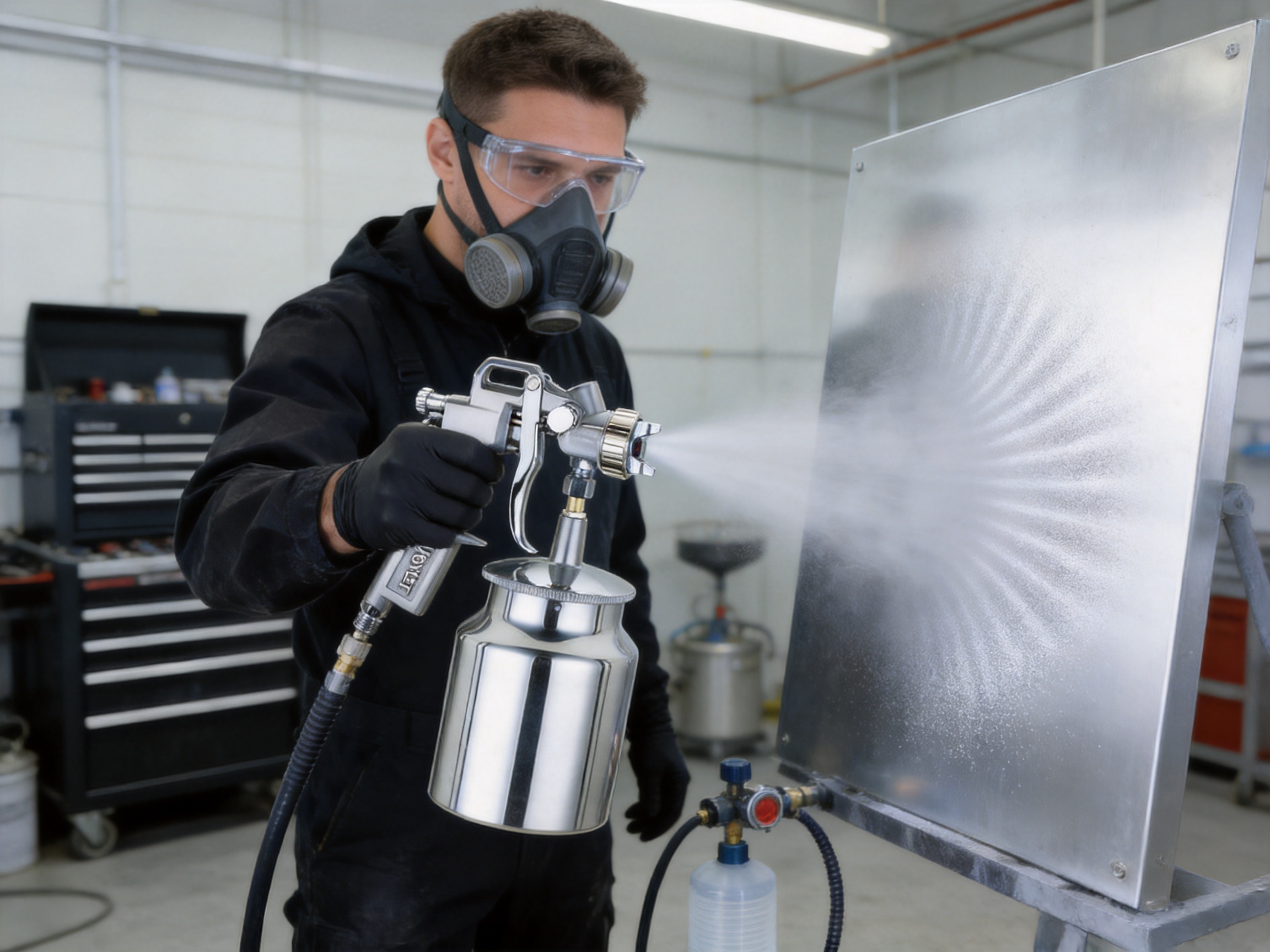
A spray gun should help the operator work efficiently. The high pressure suction feed model is straightforward to set up. The user connects the gun to a clean compressed air supply, fills the 750 ml cup with properly prepared coating, selects the correct nozzle, adjusts air and fluid settings, and performs a test spray pattern before painting the workpiece.
Test spraying is recommended before each job. The operator should check the fan pattern on a test panel or paper surface. A balanced pattern should be even, without heavy edges, excessive center loading, or spitting. If the pattern is uneven, the user should check the air cap, nozzle, needle, coating viscosity, air pressure, and cup seal.
Spray distance and overlap are also important. Conventional guns often perform well at a moderate distance from the surface, with the gun kept perpendicular to the workpiece. Each pass should overlap the previous pass to maintain even coverage. The operator should trigger the gun just before reaching the workpiece and release after passing the edge to avoid heavy spots.
Because the tool is in the economical conventional category, it is suitable for users who need dependable function without excessive complexity. It provides a good platform for training, maintenance work, and general production tasks. Operators familiar with pneumatic spray guns can quickly understand its operation.
Maintenance and Cleaning Recommendations
Cleaning is essential to spray gun performance. Coating residue can block the nozzle, restrict air passages, damage the spray pattern, and cause spitting or leakage. After each use, the cup should be emptied, and the gun should be flushed with an appropriate cleaning solvent or cleaning fluid recommended for the coating type.
The air cap and fluid nozzle should be cleaned carefully. Users should avoid damaging precision holes with hard metal tools. Soft brushes and proper cleaning solutions are preferred. The needle should be inspected for wear, bending, or dried coating buildup. Seals and threaded areas should be checked regularly.
When switching between coatings or colors, cleaning should be thorough enough to prevent contamination. Even small amounts of old coating can affect color, texture, or adhesion. For professional results, the gun should be cleaned immediately after spraying rather than left with material inside the cup or fluid passages.
Air supply maintenance is also important. Filters and moisture traps should be drained and serviced. Hoses should be checked for contamination and damage. A clean air system helps protect the gun and improves finish quality.
Proper storage extends tool life. After cleaning and drying, the gun should be stored in a clean environment, protected from dust, impact, and corrosive substances. If the spray gun is used in a high-volume workshop, a regular inspection schedule can help detect wear before it causes finishing defects.
How the Spray Gun Supports Better Finish Quality
Finish quality depends on several factors: surface preparation, coating mixing, viscosity, air pressure, nozzle selection, spray technique, drying conditions, and equipment cleanliness. This spray gun contributes by offering a stable conventional spraying platform. Its nozzle options help users match fluid delivery to coating type, while its pressure rating supports strong atomization.
The 750 ml cup supports smoother workflow. When operators can complete a section without constant refilling, they are more likely to maintain consistent overlap and wet film thickness. Interruptions can lead to dry edges, visible transition lines, or inconsistent gloss. A practical cup capacity helps reduce these risks.
The suction feed design can deliver dependable material supply when the cup is properly sealed and the coating viscosity is suitable. Consistent material flow helps prevent spitting and uneven film build. When combined with clean air and correct adjustment, the gun can support attractive finishes for general applications.
Compared with some low-cost competitors, manufacturing precision can improve consistency from one unit to another. For a distributor or workshop purchasing multiple guns, it is important that operators do not have to relearn the tool with every unit. Consistent machining and quality testing help make performance more predictable.
Cost Efficiency and Long-Term Value
An economical spray gun should not be judged only by its purchase price. True cost efficiency includes coating consumption, rework rate, downtime, durability, ease of cleaning, spare part convenience, and operator productivity. A low-priced gun that produces unstable patterns, leaks, or fails quickly can become expensive through wasted paint and lost labor.
This spray gun offers value by combining economical positioning with practical professional features. The selectable nozzle sizes reduce the need to buy separate guns for every material type. The 750 ml cup reduces refilling interruptions. The standard air inlet simplifies setup. The conventional high pressure design offers familiar performance for many users.
Manufacturing support adds long-term value. A supplier with large-scale production, quality systems, R&D capability, and export experience can provide more reliable supply than an unknown low-volume source. For distributors, this means fewer complaints, more stable inventory, and better customer confidence. For workshops, it means a tool that can be standardized and used repeatedly.
The product’s value is especially strong for users who need a dependable everyday spray gun rather than a highly specialized premium tool. It provides the essential functions needed for general finishing while remaining accessible to cost-conscious buyers.
Purchasing Considerations
Before purchasing, users should confirm the intended coating types and choose the nozzle size accordingly. If the main work involves thin finishing materials, a 1.3 mm nozzle may be appropriate. For general use, 1.5 mm is often a practical choice. For primers and heavier materials, 1.8 mm may be preferable.
Users should also confirm compressor capacity. The spray gun requires stable air pressure, and the air supply should be clean and dry. A regulator and filter are strongly recommended. If the compressor cannot maintain pressure during continuous spraying, atomization may suffer.
For distributors, carton quantity and dimensions are useful for planning. The 20-piece carton format supports bulk sales and warehouse management. Buyers may also consider whether they need branded packaging, OEM configuration, or ODM customization. The manufacturer’s ability to provide OEM and ODM services can support market-specific requirements.
It is also wise to plan for maintenance supplies, including cleaning tools, filters, air fittings, and replacement wear parts when available. A spray gun performs best as part of a complete finishing system rather than as an isolated tool.

Q&A Section
What type of spray gun is this?
It is a high pressure suction feed spray gun in the economical conventional spray gun category. It uses compressed air for atomization and is intended for general painting, repair, maintenance, and industrial finishing tasks.
What cup capacity does it have?
The spray gun is equipped with a 750 ml cup. This capacity offers a practical balance between continuous spraying time and comfortable handling.
Which nozzle sizes are available?
The available fluid nozzle sizes are 1.3 mm, 1.5 mm, and 1.8 mm. These options allow users to select the gun configuration according to coating viscosity and application requirements.
What is the recommended operating air pressure?
The listed air pressure is 50 PSI. Users should regulate air pressure properly and confirm the best setting through test spraying, because coating type, hose length, and air supply conditions can affect performance.
What does suction feed mean?
Suction feed means the gun draws coating material from the cup into the fluid passage during spraying. It is a traditional and familiar design used in many conventional spray guns.
What is the air inlet size?
The air inlet is G1/4 inch, a common pneumatic connection size that supports compatibility with many workshop air systems and fittings.
What coatings can be sprayed with it?
It can be used for many general coatings when the correct nozzle, viscosity, and air pressure are selected. Users should always follow the coating manufacturer’s application recommendations.
How does it compare with cheaper competing guns?
Its advantages include multiple nozzle options, practical cup capacity, standard air connection, conventional high pressure atomization, and the support of a manufacturer with strong quality control, R&D capability, and international market experience.
Is it suitable for professional workshops?
Yes, it is suitable for many professional workshop tasks, especially general repair, maintenance, metal coating, woodworking finishing, and industrial touch-up work. For highly specialized finishing requirements, users should confirm technical suitability before purchase.
How should the spray gun be maintained?
It should be cleaned after each use. The cup, nozzle, needle, air cap, and fluid passages should be flushed and inspected. Clean, dry compressed air should be used, and the gun should be stored in a clean environment.
Why is the manufacturer’s background important?
The manufacturer’s experience, quality systems, production scale, certifications, and R&D resources help ensure more consistent product quality, reliable supply, and better long-term value for distributors and end users.
Conclusion
The high pressure suction feed spray gun with a 750 cc cup is a practical tool for users who need conventional spraying performance, flexible nozzle selection, and dependable daily operation. Its 1.3 mm, 1.5 mm, and 1.8 mm nozzle options allow adaptation to different coatings, while the 750 ml cup supports productive work without excessive interruption. The 50 PSI high pressure conventional atomization style provides strong spraying capability for general finishing environments.
Its competitive strength lies in balance. It is economical but not simplistic. It is conventional but still versatile. It is easy to use but supported by serious manufacturing processes. For workshops, distributors, and industrial buyers, these qualities matter more than appearance alone.
Ningbo Lis Industrial Co., Ltd. strengthens the product’s value through decades of manufacturing experience, broad product development capability, strict quality control, ISO-based management systems, international certification experience, and global market presence. The company’s focus on raw material inspection, in-process control, 100 percent functional testing, and final inspection supports consistent product performance.
For buyers seeking a dependable conventional spray gun for general painting and maintenance applications, this model offers a strong combination of functionality, supply reliability, and cost efficiency. When used with clean compressed air, suitable coating preparation, proper nozzle selection, and regular maintenance, it can become a reliable part of a professional finishing workflow.
References
1. Technical product specification for high pressure suction feed spray gun with 750 ml cup, fluid nozzle options 1.3 mm, 1.5 mm, and 1.8 mm.
2. Company manufacturing profile and quality management information provided by Ningbo Lis Industrial Co., Ltd.
3. ISO 9001 quality management principles and common industrial quality control practices for pneumatic spray equipment manufacturing.
4. General finishing industry guidance on conventional air spray atomization, nozzle selection, compressed air preparation, and spray gun maintenance.
5. Common workshop practices for coating viscosity control, spray pattern testing, overlap technique, and post-use cleaning of pneumatic spray guns.