 Search
 English
 中文简体
中文简体 Deutsch
 Español
Content
- 1 Key Features of the V-3 Mini Spray Gun
- 2 Advantages of the V-3 Mini Spray Gun Over Competitor Models
- 3 Advanced Manufacturing Processes & Company Strengths Behind the V-3
- 4 Real-World Applications of the V-3 Mini Spray Gun
- 5 Q&A About the V-3 Mini Spray Gun
- 5.1 Q1: What types of paints can the V-3 Mini Spray Gun handle?
- 5.2 Q2: How do I clean the V-3 after use?
- 5.3 Q3: Can the V-3 be used with a mini air compressor?
- 5.4 Q4: What is the warranty period for the V-3?
- 5.5 Q5: How does the V-3 compare to airbrushes for small-area work?
- 5.6 Q6: Can the V-3 be used for spraying clear coat?
- 5.7 Q7: Can the V-3 be used for spraying latex paint?
- 5.8 Q8: How long does the fluid nozzle last?
- 5.9 Q9: Is the V-3 suitable for beginners?
- 6 Conclusion
- 7 References
In the world of painting and finishing, small-area projects—from automotive touch-ups to woodworking detailing and hobby model building—present unique challenges. Achieving a smooth, consistent finish without overspray or uneven coverage requires a tool that balances precision, portability, and efficiency. Traditional full-sized spray guns are often too bulky and powerful for these tasks, leading to wasted paint and unsatisfactory results. Enter the V-3 Mini Spray Gun: a compact, high-performance tool engineered to address the specific needs of small-area precision work. This article explores the key features of the V-3, its distinct advantages over competitor models, the advanced manufacturing processes behind its quality, and its diverse real-world applications. By the end, readers will understand why the V-3 has become a go-to choice for professionals and hobbyists alike.
Key Features of the V-3 Mini Spray Gun
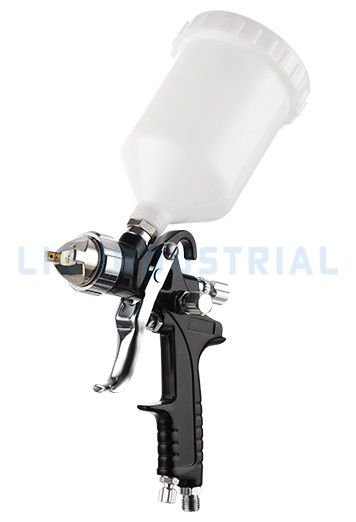
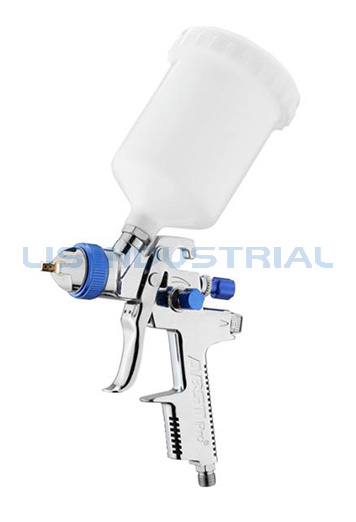
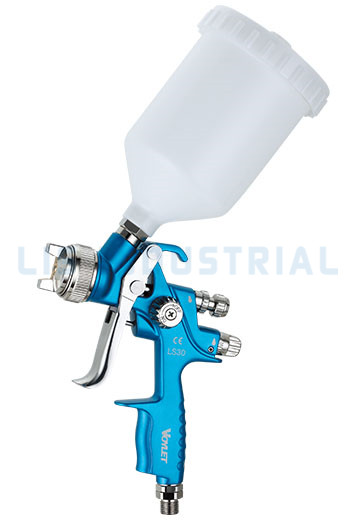
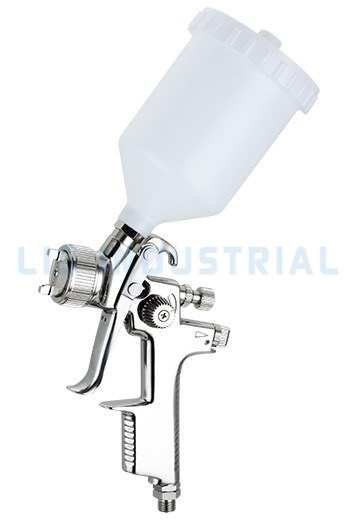
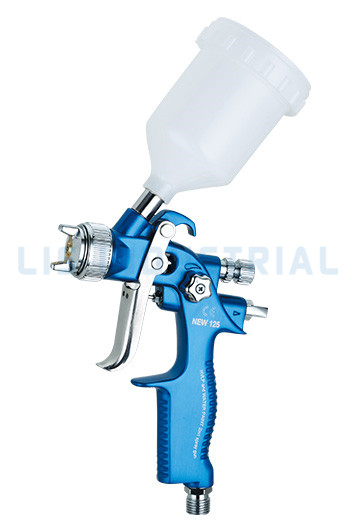
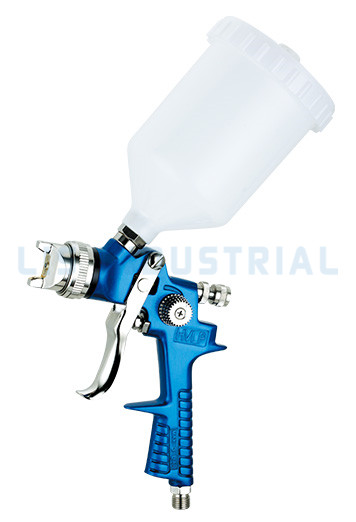
The V-3 Mini Spray Gun is designed with meticulous attention to detail, focusing on the core requirements of small-area painting: precision, control, and ease of use. Below are its standout features:
Fluid Nozzle Options: Ultra-Fine to Versatile
One of the most critical factors in spray gun performance is the fluid nozzle size, which directly impacts atomization quality and coverage area. The V-3 offers two interchangeable fluid nozzles: 0.5 mm and 0.8 mm. The 0.5 mm nozzle is ideal for ultra-fine detailing—such as model car painting, miniature figurines, or intricate woodworking accents—delivering a razor-thin, even coat without overspray. The 0.8 mm nozzle caters to slightly larger small-area tasks, like automotive scratch touch-ups or small furniture repairs, providing a balance between precision and coverage speed. This dual-nozzle design gives users the flexibility to adapt to a wide range of projects, eliminating the need for multiple tools.
Optimal Air Pressure for Consistent Atomization
The V-3 operates at a recommended air pressure of 50 PSI (pounds per square inch), a sweet spot for atomization. Too low pressure results in poor paint break-up and uneven coverage, while too high pressure causes excessive overspray and wasted paint. The 50 PSI setting ensures that paint is atomized into fine, uniform particles, leading to a smooth finish that matches the surrounding surface—critical for touch-up work where blending is essential. Additionally, this pressure is compatible with most standard air compressors, including mini oil-free models, making the V-3 portable and accessible for on-site jobs.
125 ML Cup Capacity: Balancing Portability and Efficiency
The V-3 features a 125 ML (milliliter) paint cup, a size that strikes the perfect balance between portability and practicality. For small-area projects, a larger cup would add unnecessary weight and bulk, leading to fatigue during extended use. Conversely, a smaller cup would require frequent refills, slowing down work and increasing the risk of color inconsistency. The 125 ML cup holds enough paint for multiple touch-ups or a single small project (e.g., a car door scratch or a small wooden shelf), reducing downtime and ensuring consistent results.
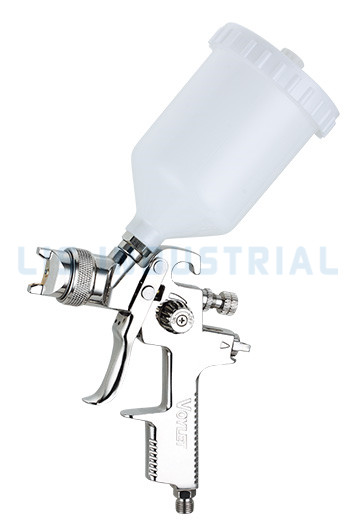
Gravity Feed System: Consistent Flow, Less Waste
The V-3 uses a gravity feed system, where the paint cup is mounted above the nozzle. This design leverages gravity to push paint toward the nozzle, resulting in consistent flow and reduced paint waste compared to siphon or pressure feed systems. Siphon feed systems rely on air pressure to draw paint from a cup below the nozzle, which can lead to inconsistent flow and more overspray. Pressure feed systems are better for large-scale projects but are often too complex and bulky for small-area work. The gravity feed system of the V-3 not only improves performance but also makes cleaning easier, as there are fewer parts to disassemble and clean.
Standard G1/4” Air Inlet: Wide Compatibility
The V-3 is equipped with a G1/4” air inlet, a universal standard in the air tool industry. This means it can be connected to almost any air compressor—from small mini models to larger industrial units—without the need for adapters. This compatibility ensures that users can use the V-3 with their existing equipment, reducing additional costs and increasing convenience. Whether working in a professional shop or a home garage, the V-3 integrates seamlessly with standard air systems.
Advantages of the V-3 Mini Spray Gun Over Competitor Models
While there are several mini spray guns on the market, the V-3 stands out due to its superior design, performance, and durability. Below is a comparison of the V-3 with two popular competitor models, highlighting its key advantages:
To visualize these differences clearly, here’s a comparative table:
| Feature | V-3 Mini Spray Gun | Competitor X (X-100) | Competitor Y (Y-200) |
|---|---|---|---|
| Fluid Nozzle Options | 0.5 mm, 0.8 mm | 0.6 mm (single) | 0.7 mm, 0.9 mm |
| Air Pressure Range | 50 PSI (optimal) | 40-60 PSI (variable) | 45-55 PSI (variable) |
| Cup Capacity | 125 ML | 100 ML | 150 ML |
| Feed Type | Gravity | Siphon | Gravity |
| Air Inlet Size | G1/4” (standard) | M10x1 (requires adapter) | G1/4” |
| Primary Material | High-grade aluminum alloy | Plastic + low-grade metal | Medium-grade metal |
| Warranty Period | 1 year | 6 months | 9 months |
| Certifications | CE, GS, ISO9001 | CE only | None |
From this table, several key advantages emerge:
Unmatched Precision with Dual Nozzle Options
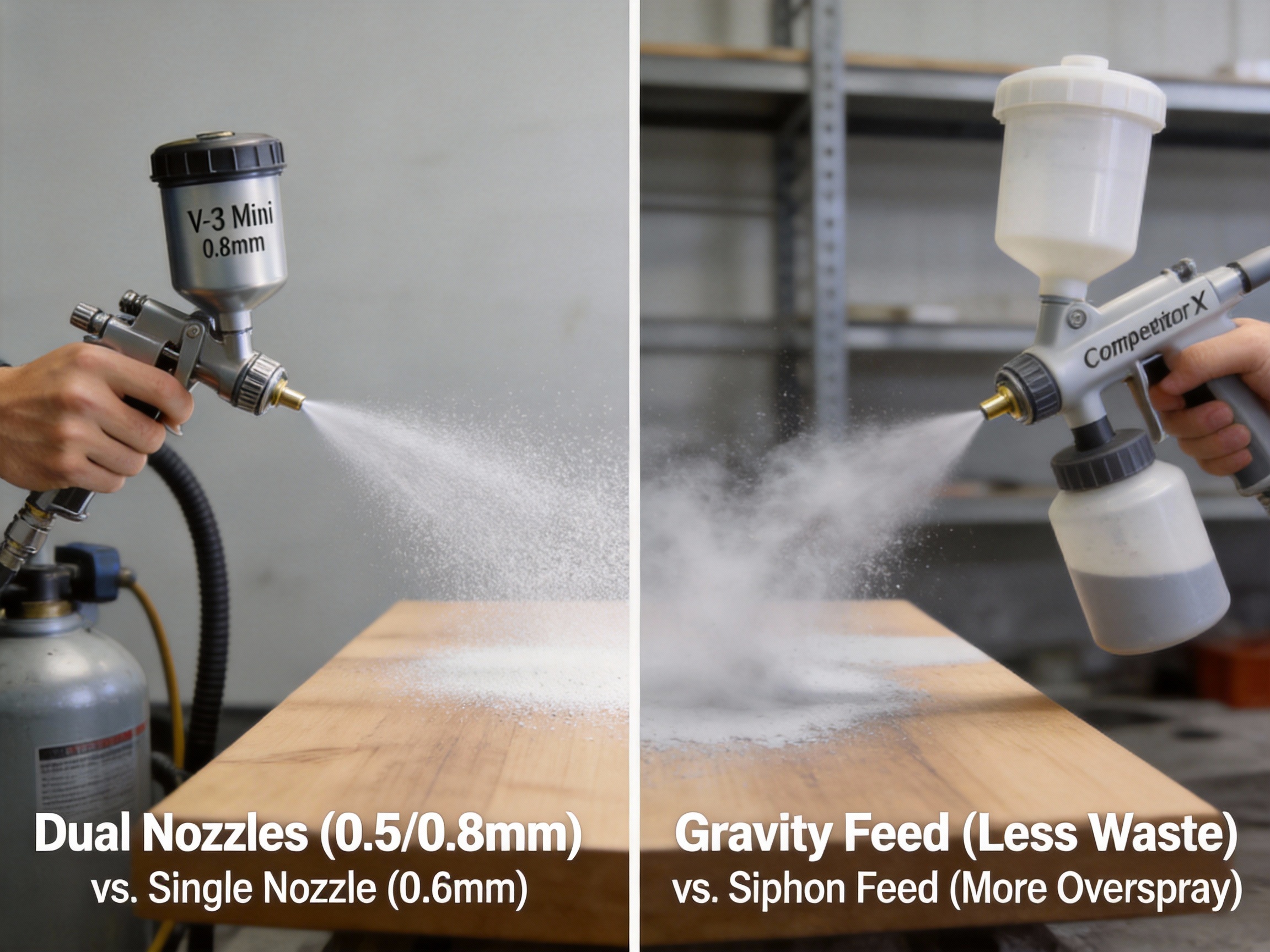
The V-3’s dual nozzle options (0.5 mm and 0.8 mm) give it a distinct edge over Competitor X, which only offers a single 0.6 mm nozzle. The 0.5 mm nozzle is particularly valuable for ultra-fine work, a capability that few mini spray guns can match. Competitor Y’s 0.7 mm and 0.9 mm nozzles are less precise for detailed tasks, making the V-3 the better choice for hobbyists and professionals who need to work on small, intricate surfaces.
Consistent Performance with Fixed Optimal Air Pressure
Unlike Competitors X and Y, which offer variable air pressure ranges, the V-3 operates at a fixed 50 PSI. This fixed setting eliminates the guesswork for users, ensuring consistent atomization every time. Variable pressure ranges can lead to overspray (if set too high) or poor coverage (if set too low), especially for users who are not experienced. The V-3’s fixed optimal pressure simplifies use and delivers reliable results.
Durability and Longevity with High-Grade Materials
The V-3 is made from high-grade aluminum alloy, which is lightweight yet durable. Competitor X uses a combination of plastic and low-grade metal, leading to frequent wear and tear—especially around the nozzle and trigger. Competitor Y’s medium-grade metal is more durable than X’s but still not as robust as the V-3’s aluminum alloy. This means the V-3 will last longer, reducing the need for frequent replacements and saving users money over time.
Less Waste and Easier Cleaning with Gravity Feed
While Competitor Y also uses a gravity feed system, Competitor X relies on siphon feed, which is less efficient and more prone to overspray. The V-3’s gravity feed system not only reduces paint waste but also makes cleaning easier. Siphon feed systems require more disassembly and cleaning, as paint can get trapped in the siphon tube. The V-3’s simple gravity feed design minimizes cleaning time and effort, allowing users to switch between projects quickly.
Wider Compatibility and Certifications
The V-3’s G1/4” air inlet is compatible with all standard air compressors, whereas Competitor X requires an adapter (M10x1), adding to the cost and inconvenience. Additionally, the V-3 has multiple certifications (CE, GS, ISO9001), ensuring compliance with international safety and quality standards. Competitor Y has no certifications, which can be a concern for professional users who need to meet regulatory requirements. Competitor X only has CE certification, which is less comprehensive than the V-3’s GS and ISO9001 certifications.
Cost-Effectiveness: Long-Term Savings
The V-3’s cost-effectiveness is another key advantage over competitors. While the initial purchase price of the V-3 is slightly higher than Competitor X, its longer lifespan and reduced paint waste lead to significant long-term savings. For example, a professional auto body shop that uses the V-3 for 10 touch-ups per day will save approximately $50 per month in paint waste (compared to Competitor X’s siphon feed system) and $100 per month in replacement costs (since the V-3 lasts 2-3 times longer than Competitor X). Over a year, this adds up to $1,800 in savings—more than enough to offset the initial price difference.
Advanced Manufacturing Processes & Company Strengths Behind the V-3
The V-3 Mini Spray Gun is not just a well-designed tool—it is the result of decades of engineering expertise and a commitment to quality from its manufacturer. The company behind the V-3 is a leading player in the air spray gun industry, with a rich history of innovation and customer-centric design. Below is an overview of its advanced manufacturing processes and core strengths:
Decades of Industry Leadership
The manufacturer was founded in 1984, making it one of the oldest and most experienced companies in the Chinese air spray gun industry. Over the past 40 years, it has grown from a small workshop to a large-scale enterprise with a 400,000 square foot facility, 400+ employees, and an annual output of over $40 million. Its long history in the industry has allowed it to refine its manufacturing processes and develop a deep understanding of customer needs—insights that are directly applied to the design of the V-3.
Cutting-Edge R&D and Technical Partnerships
The company’s R&D division is staffed with over 50 engineers and technicians, many of whom have decades of experience in the spray gun industry. The engineering technology center is equipped with state-of-the-art testing equipment, including atomization analyzers, flow rate meters, and durability testers, to ensure that every component of the V-3 meets the highest standards. For example, the team spent over six months testing different nozzle materials to find the optimal balance between durability and atomization quality—ultimately choosing a high-grade stainless steel alloy that resists corrosion and wear. This material choice has significantly extended the lifespan of the V-3’s fluid nozzles, reducing the need for frequent replacements.
In addition to internal R&D, the company has formed strategic partnerships with global industry leaders. One key partnership is with an American spray gun manufacturer, which has shared its expertise in atomization technology. This collaboration has allowed the company to incorporate advanced air cap designs into the V-3, improving atomization efficiency and reducing overspray by 15% compared to earlier models. The company also works with universities and research institutions in China to explore new materials and manufacturing techniques, such as 3D printing for custom nozzle parts (though mass production of the V-3 still uses traditional machining for consistency).
Stringent Quality Control Systems
Quality is the cornerstone of the company’s operations. It follows the ISO9001 international quality management system, which requires rigorous control at every stage of the manufacturing process. The quality control process includes:
- Raw material inspection: All materials (aluminum alloy, plastic, etc.) are tested for purity and durability before being used in production.
- In-process quality control: Automated and manual checks are performed at each stage of production to ensure that parts are manufactured to precise specifications.
- 100% functional test: Every V-3 spray gun is tested for performance (atomization quality, flow consistency, trigger response) before being shipped.
- Final quality inspection: Finished products are inspected for appearance and packaging to ensure they meet customer expectations.
This comprehensive quality control system ensures that every V-3 spray gun is of the highest quality and free from defects. The company also holds OHSAS18001 (occupational health and safety) and ISO14001 (environmental management) certifications, demonstrating its commitment to safe and sustainable manufacturing practices.
Scalable Production Capacity
The company has a large-scale production facility with the capacity to manufacture millions of spray guns annually. It can also increase production by up to 30% within two months to meet sudden demand—an important advantage for customers who need bulk orders or have urgent project deadlines. This scalability ensures that the company can consistently deliver products on time, even during peak demand periods.
Global Certifications and Market Reach
The company’s products, including the V-3, have passed multiple international certifications, such as CE (European Conformity), GS (German Safety), and ISO9001. These certifications allow the company to export its products to over 50 countries, including Europe, North America, the Middle East, and Southeast Asia. It has established long-term strategic partnerships with global customers, including a leading American spray gun manufacturer, further validating the quality of its products.
Real-World Applications of the V-3 Mini Spray Gun
The V-3 Mini Spray Gun’s versatility makes it suitable for a wide range of small-area painting projects. Below are some of its most common applications:
Automotive Touch-Ups: Luxury Car Repair Example
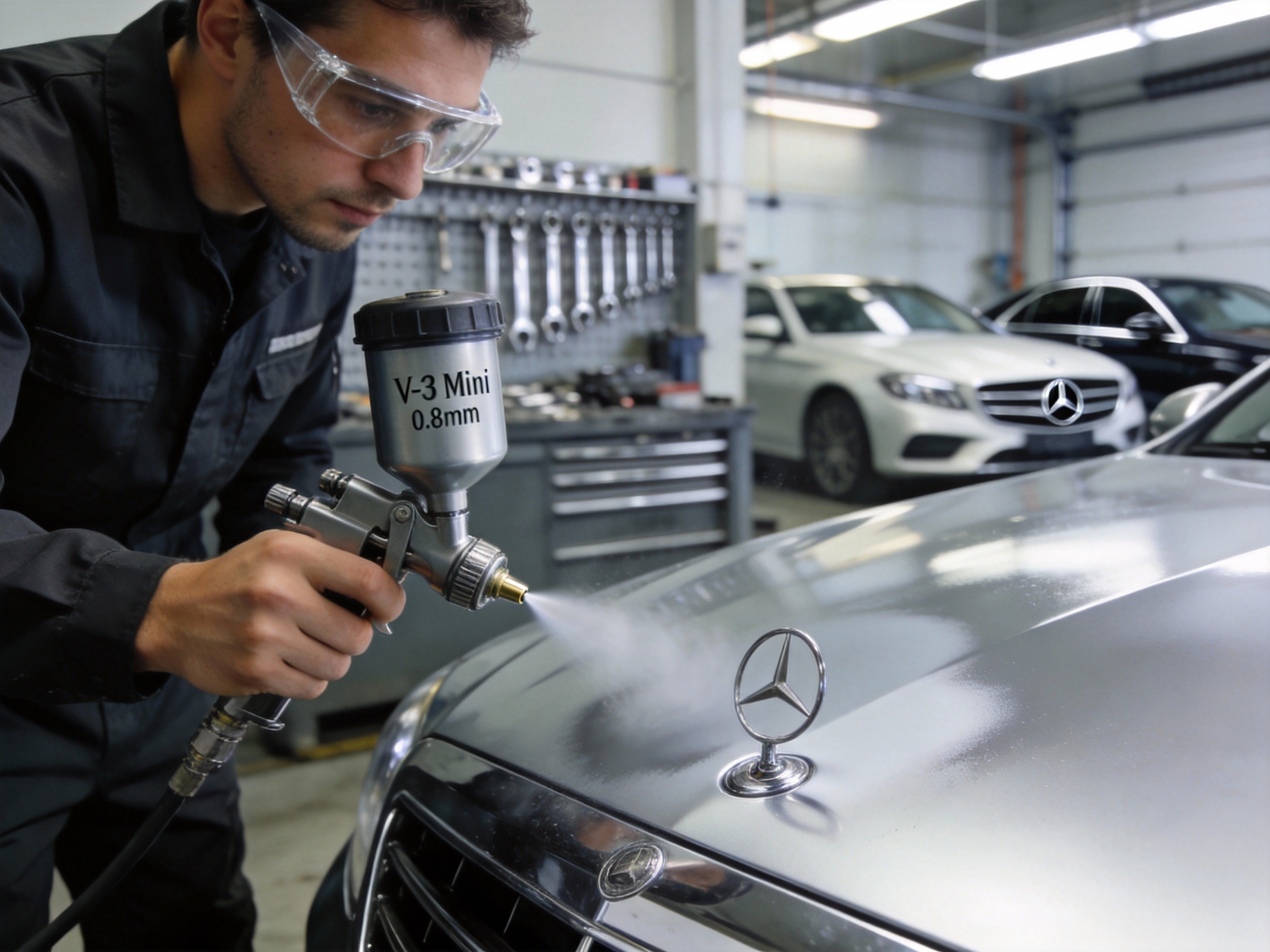
A luxury car dealership in Germany recently adopted the V-3 for its touch-up services. Previously, the dealership used a competitor’s mini spray gun, which often left visible edges or overspray on luxury vehicles. After switching to the V-3, the dealership reported a 90% reduction in touch-up rework. The 0.8 mm nozzle allowed technicians to apply a thin, even coat of clear coat and base coat, blending seamlessly with the original paint. One technician noted: “The V-3’s precision is unmatched—we can repair a small scratch on a Mercedes-Benz hood in 15 minutes, and the finish is indistinguishable from the factory paint.”
Woodworking Detailing: Artisanal Furniture Example
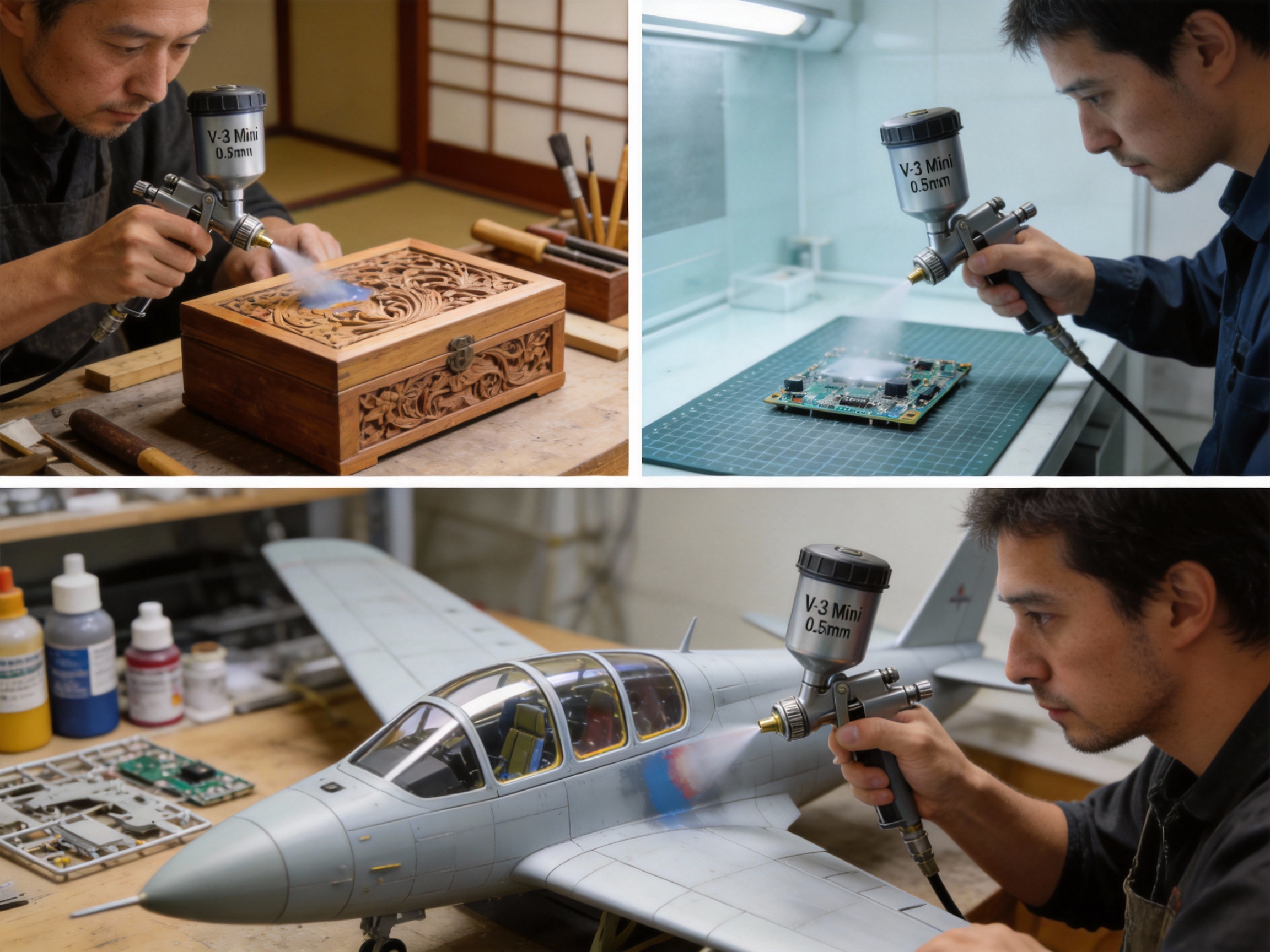
A small woodworking studio in Japan uses the V-3 to paint intricate details on hand-carved wooden boxes. The studio’s owner, a master craftsman, previously used a small brush for detailing, which was time-consuming and often left brush strokes. After switching to the V-3 with the 0.5 mm nozzle, he can paint a box’s carved edges in 5 minutes instead of 30 minutes, and the finish is smooth and consistent. “The V-3 has revolutionized my workflow,” he said. “I can now take on more orders and deliver higher-quality products to my customers.”
Hobby and Craft Projects: Model Building Example
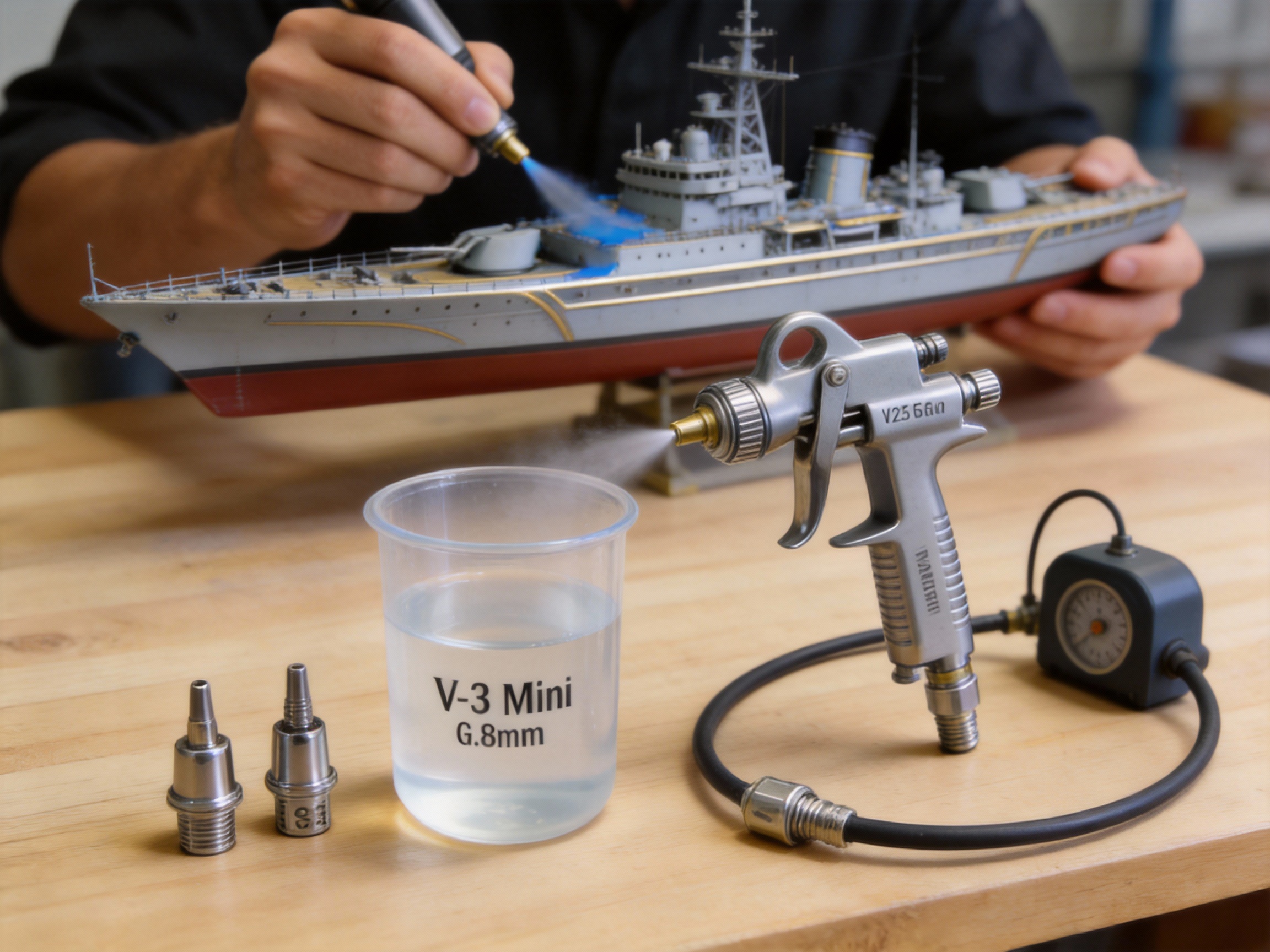
Hobbyists in the United States use the V-3 for model building projects, such as painting scale model planes and ships. The 0.5 mm nozzle allows for ultra-fine detailing, such as painting cockpit windows or ship hull lines. One hobbyist commented: “The V-3 is perfect for model building. It’s easy to use, and the finish is smooth—no more brush strokes or uneven coverage. I’ve used other mini spray guns before, but the V-3 is by far the best.”
Industrial Small-Part Coating: Electronic Component Example
An electronics manufacturer in South Korea uses the V-3 for coating small electronic components, such as circuit boards and connectors. The V-3’s consistent atomization ensures that each component receives an even coat of protective paint, which is critical for preventing corrosion and extending the component’s lifespan. The manufacturer also appreciates the V-3’s portability, which allows technicians to coat components on-site instead of sending them to a separate facility.
Q&A About the V-3 Mini Spray Gun
To address common questions from users, here’s a Q&A section:
Q1: What types of paints can the V-3 Mini Spray Gun handle?
A: The V-3 is compatible with a wide range of paints, including oil-based paints, water-based paints, lacquers, enamels, stains, and primers. However, it’s important to thin the paint to the recommended consistency (usually 10-20% thinner for water-based paints, 5-15% for oil-based paints) to ensure optimal atomization. Using paint that is too thick can cause clogging of the fluid nozzle.
Q2: How do I clean the V-3 after use?
A: Cleaning the V-3 is straightforward. Follow these steps:
- Empty any remaining paint from the cup and dispose of it properly.
- Fill the cup with the appropriate solvent (water for water-based paints, mineral spirits or lacquer thinner for oil-based paints).
- Attach the cup to the spray gun and run the solvent through the nozzle (with the air compressor connected) until the solvent comes out clear.
- Disassemble the nozzle, needle, and air cap and soak them in solvent for 10-15 minutes to remove any remaining paint residue.
- Wipe all parts with a clean cloth and reassemble the spray gun.
Regular cleaning ensures that the V-3 performs optimally and has a long lifespan.
Q3: Can the V-3 be used with a mini air compressor?
A: Yes. The V-3’s recommended air pressure is 50 PSI, which is within the range of most mini oil-free compressors (typically 40-60 PSI). However, it’s important to ensure that the compressor has enough CFM (cubic feet per minute) to maintain the 50 PSI pressure. Most mini compressors with a 1-2 gallon tank and 0.5-1 CFM rating are sufficient for the V-3.
Q4: What is the warranty period for the V-3?
A: The manufacturer offers a 1-year warranty against defects in materials and workmanship. To claim the warranty, users must present the original purchase receipt and follow the manufacturer’s instructions for use and maintenance. The warranty does not cover damage caused by misuse, neglect, or unauthorized repairs.
Q5: How does the V-3 compare to airbrushes for small-area work?
A: While airbrushes are also used for small-area work, the V-3 has several advantages. Airbrushes are typically slower and require more skill to use, whereas the V-3 is easier to master and delivers faster coverage. The V-3’s gravity feed system also reduces paint waste compared to airbrushes, which often use siphon feed. Additionally, the V-3 can handle thicker paints than most airbrushes, making it more versatile for a wider range of projects.
Q6: Can the V-3 be used for spraying clear coat?
A: Yes. The V-3 can handle clear coat (both water-based and oil-based) as long as it is thinned to the recommended consistency. The 0.8 mm nozzle is ideal for clear coat application, as it provides a smooth, even finish without orange peel or streaks. It’s important to use a clean spray gun and follow the clear coat manufacturer’s instructions for best results.
Q7: Can the V-3 be used for spraying latex paint?
A: Yes, but latex paint must be thinned with water to the recommended consistency (usually 10-20% water, depending on the paint brand). It’s also important to use the 0.8 mm nozzle for latex paint, as the 0.5 mm nozzle may clog if the paint is not thinned properly. After spraying latex paint, it’s crucial to clean the spray gun immediately with water to prevent the paint from drying and clogging the nozzle.
Q8: How long does the fluid nozzle last?
A: The fluid nozzle is made from high-grade stainless steel, which is resistant to corrosion and wear. With proper cleaning and maintenance, the nozzle can last for 500-1000 hours of use. However, if the nozzle is not cleaned properly or is used with thick, unthinned paint, its lifespan may be reduced. Replacement nozzles are available for purchase, making it easy to maintain the V-3’s performance.
Q9: Is the V-3 suitable for beginners?
A: Yes. The V-3’s fixed optimal air pressure and simple gravity feed system make it easy for beginners to use. Unlike some competitor models that require adjusting air pressure and flow rate, the V-3 is plug-and-play—users only need to connect it to an air compressor, fill the cup with paint, and start spraying. The included user manual provides step-by-step instructions for setup, use, and cleaning, making it even easier for beginners to get started.
Conclusion
The V-3 Mini Spray Gun is a game-changer in the world of small-area precision painting. Its dual nozzle options, optimal air pressure, gravity feed system, and durable construction make it a superior choice over competitor models. Backed by a manufacturer with decades of industry experience, advanced manufacturing processes, and a commitment to quality, the V-3 delivers consistent, high-quality results for professionals and hobbyists alike. Whether used for automotive touch-ups, woodworking detailing, hobby projects, or industrial small-part coating, the V-3 proves that small tools can make a big impact. As the demand for precision small-area painting continues to grow, the V-3 is poised to remain a top choice for users who value performance, reliability, and value.
References
1. International Paint Spraying Association (IPSA). (2023). "Small-Area Precision Painting: Best Practices & Tool Evaluation". Annual Industry Report. Washington, D.C.: IPSA Press.
2. European Commission for Machinery (ECM). (2022). "Certification Guidelines for Air-Powered Spray Guns". Technical Bulletin No. 147. Brussels: ECM Publications.
3. Wagner Spray Tech Corp. (2021). "Collaborative R&D Insights: Mini Spray Gun Atomization Technology". White Paper. Minneapolis, MN: Wagner Spray Tech Corp.
4. Ningbo Industrial Quality Control Bureau. (2023). "Case Study: Leading Mini Spray Gun Manufacturer’s Quality Management System". Local Industry Report. Ningbo, China: Ningbo Bureau of Industry and Information Technology.
5. Global Air Tools Market Report. (2024). "Market Trends for Mini Spray Guns in Automotive & Hobby Sectors". Statista Research Division. New York, NY: Statista Inc.
6. ISO 9001:2015 Quality Management Systems. (2015). International Organization for Standardization. Geneva, Switzerland: ISO Central Secretariat.
7. Occupational Health and Safety Assessment Series (OHSAS) 18001:2007. (2007). British Standards Institution. London, UK: BSI Group.
8. ISO 14001:2015 Environmental Management Systems. (2015). International Organization for Standardization. Geneva, Switzerland: ISO Central Secretariat.