 Search
 English
 中文简体
中文简体 Deutsch
 Español
Content
- 1 Product Overview
- 2 Key Specifications
- 3 Why the 1.5 mm Fluid Nozzle Matters
- 4 Spray Length and Coverage Control
- 5 Air Pressure and Atomization Performance
- 6 Gravity-Feed and Suction-Feed Flexibility
- 7 Advantages Over Common Competitor Spray Guns
- 8 Manufacturing Strength Behind the Product
- 9 Research and Development Capability
- 10 Quality Management and Certification
- 11 Advanced Production Process
- 12 Functional Testing and Final Inspection
- 13 Application Areas
- 14 Operator Benefits
- 15 Material Efficiency and Waste Reduction
- 16 How the LS101 Supports Consistent Finish Quality
- 17 Company Capability and Global Market Experience
- 18 OEM and ODM Service Strength
- 19 Why Manufacturing Scale Matters
- 20 Practical Use Recommendations
- 21 Cleaning and Maintenance
- 22 Purchasing Considerations
- 23 Environmental and Safety Responsibility
- 24 Frequently Asked Questions
- 24.1 What is the LS101 spray gun designed for?
- 24.2 What is the fluid nozzle size?
- 24.3 What air pressure does the LS101 require?
- 24.4 What cup capacities are available?
- 24.5 How does the LS101 compare with ordinary competitor spray guns?
- 24.6 Can the LS101 be used for woodworking?
- 24.7 Why is manufacturing quality important for a spray gun?
- 24.8 Does the manufacturer support OEM and ODM projects?
- 24.9 What quality systems support the product?
- 24.10 How should the LS101 be maintained?
- 25 Conclusion
- 26 References
- 27 Product: LS101
In modern coating, repair, woodworking, and general finishing work, a spray gun is not simply a tool that moves paint from a cup to a surface. It is a controlled delivery system that must balance atomization, air pressure, fluid output, operator comfort, surface coverage, and repeatable finishing quality. The LS101 spray gun is designed for users who need a practical, stable, and efficient solution for daily spraying tasks, especially where consistent coverage, manageable spray length, and reliable cup capacity are important.
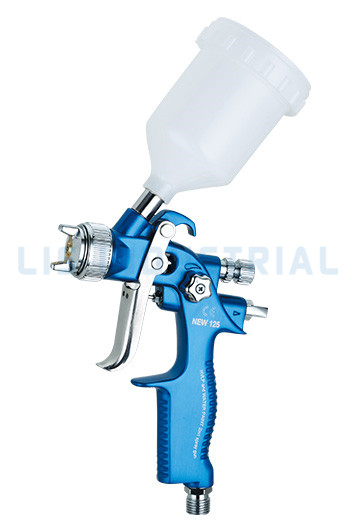
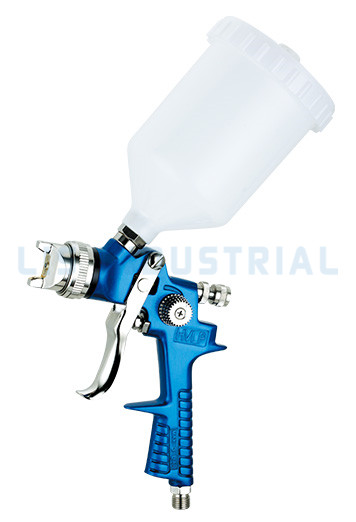
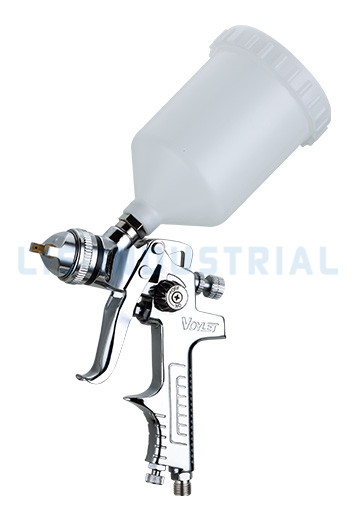
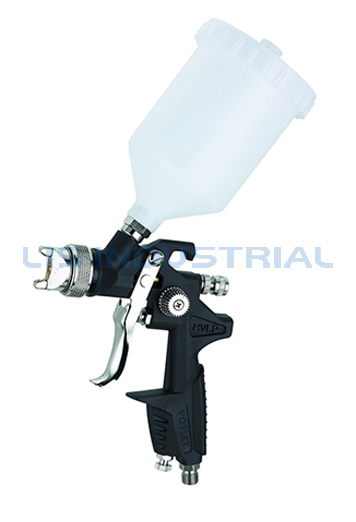
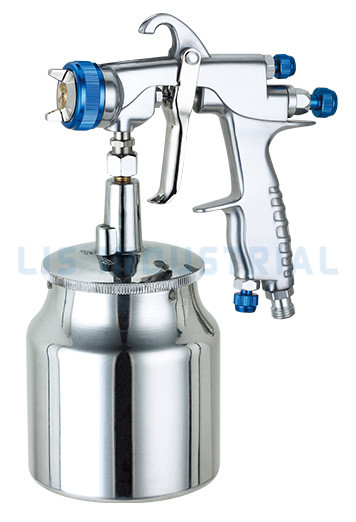
The LS101 is a new spray gun model with a 1.5 mm fluid nozzle, a spray length of approximately 180 mm, an operating air pressure of 60 PSI, and two cup configurations: 400 ml for gravity-feed operation and 750 ml for suction-feed operation. These specifications make it suitable for a wide range of coating applications, including general paint spraying, surface refinishing, light industrial work, woodworking finishing, and workshop maintenance tasks.
What makes the LS101 valuable is not only its technical specification, but also the manufacturing background behind it. It is produced by a company with long-term experience in air painting spray guns, mini air compressors, and related air tools. The manufacturer has built its capabilities through research, engineering, quality control, international certification, and continuous process improvement. This gives the LS101 an advantage over many ordinary spray guns that may look similar from the outside but lack the production consistency, testing discipline, and engineering support required for stable long-term performance.
Product Overview
The LS101 is positioned as a practical spray gun for users who require dependable spraying performance without unnecessary complexity. Its 1.5 mm fluid nozzle gives it a versatile middle-range flow capacity, making it suitable for many commonly used coatings when properly thinned and adjusted. The 180 mm spray length helps users achieve controlled coverage on panels, furniture parts, metal surfaces, plastic parts, and other workpieces. With an air pressure of 60 PSI, the tool is designed to provide strong atomization energy for smooth application.
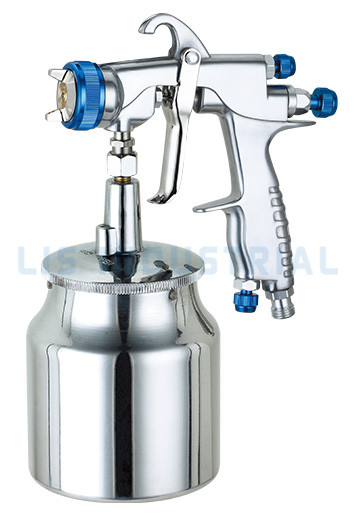
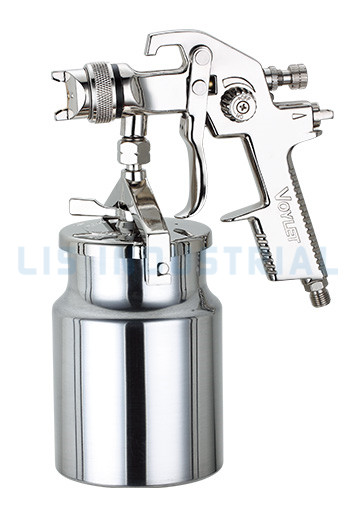
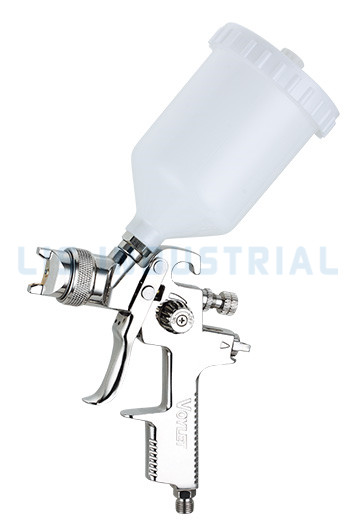
The product is available in gravity-feed and suction-feed cup configurations. The 400 ml gravity cup is suitable for applications where material efficiency, control, and reduced waste are priorities. Gravity-feed systems allow coating material to move naturally toward the nozzle, which can improve responsiveness and reduce the amount of material left in the cup after spraying. The 750 ml suction cup provides larger capacity for longer spraying sessions, making it useful when users want to cover larger areas with fewer refills.
This dual configuration approach helps the LS101 serve different user preferences. Some operators prefer the lighter and more controllable feel of a gravity-feed gun, while others appreciate the longer operating time of a larger suction-feed cup. By supporting both styles, the LS101 can fit into a broader range of workshop habits and working conditions.
Key Specifications
| Item | Specification | Practical Meaning |
|---|---|---|
| Product Model | LS101 | A new spray gun model for general finishing and coating work |
| Fluid Nozzle | 1.5 mm | Suitable for many common coating materials when correctly prepared |
| Spray Length | 180 mm | Supports controlled coverage and balanced spray patterns |
| Air Pressure | 60 PSI | Provides strong air support for effective atomization |
| Gravity Cup Capacity | 400 ml | Good for precision, lighter handling, and efficient material use |
| Suction Cup Capacity | 750 ml | Good for longer spraying sessions and larger surfaces |
| Application Range | Paint spraying, finishing, repair, woodworking, workshop coating | Flexible tool for professional and semi-professional use |
Why the 1.5 mm Fluid Nozzle Matters
The fluid nozzle is one of the most important parts of any spray gun because it directly affects material flow, atomization quality, and the final finish. A 1.5 mm nozzle is widely considered a useful general-purpose size. It is neither too small for many standard coatings nor too large for controlled finishing. This makes the LS101 attractive to users who do not want to change guns frequently for basic coating work.
For automotive touch-up, machinery coating, metal product finishing, furniture spraying, and many general-purpose painting tasks, a 1.5 mm nozzle can provide a balanced flow rate. When paint viscosity is adjusted correctly, it helps produce an even spray pattern and reduces the risk of excessive orange peel, uneven wet film thickness, or poor coverage. Of course, final finish quality also depends on coating type, air supply stability, surface preparation, operator technique, and environmental conditions, but the nozzle size is a major starting point.
Compared with lower-cost competitor spray guns that may use poorly machined nozzles, the LS101 benefits from controlled manufacturing and inspection. A nozzle may seem like a small component, but even minor variations in diameter, roundness, surface finish, or alignment can affect spray pattern stability. Better manufacturing control helps the gun deliver more predictable performance from unit to unit.
Spray Length and Coverage Control
The LS101 offers a spray length of approximately 180 mm. This gives users a workable pattern width for controlled spraying. A spray pattern that is too narrow can slow down production and create more overlap lines. A pattern that is too wide can waste material, increase overspray, and make it harder to control the wet edge. The 180 mm spray length is a practical middle ground for many workshop applications.
For users spraying furniture panels, cabinet doors, metal brackets, machinery covers, or repair areas, a controlled spray length helps maintain consistent overlap. When the operator keeps the gun at a steady distance and moves at a constant speed, the LS101 can help build an even coating layer. This is important because finish defects often come from inconsistent coverage rather than from the coating material itself.
Compared with many ordinary spray guns that may produce unstable or uneven spray shapes, a well-manufactured spray gun gives the operator better control. A balanced spray pattern reduces rework, sanding, polishing, and material waste. In professional environments, this can reduce labor time and improve final product appearance.
Air Pressure and Atomization Performance
The LS101 operates at an air pressure of 60 PSI. Air pressure affects how coating material breaks into droplets, how the spray fan forms, and how effectively the paint reaches the surface. With sufficient air support, the coating can atomize more evenly, helping create a smoother finish.
In practical use, stable air pressure is critical. Even a well-designed spray gun cannot perform properly if connected to an unstable air supply, undersized hose, contaminated air line, or compressor with insufficient capacity. When paired with appropriate air preparation accessories, such as filters, regulators, and moisture separators, the LS101 can deliver more reliable spraying results.
One of the advantages of choosing a spray gun from an experienced manufacturer is compatibility with broader air tool systems. The company behind the LS101 produces not only spray guns but also mini air compressors, air pipeline accessories, air fittings, paint tanks, and related air tools. This broader product knowledge helps support practical spray gun design because the performance of a spray gun is closely connected to the quality of the air system around it.
Gravity-Feed and Suction-Feed Flexibility
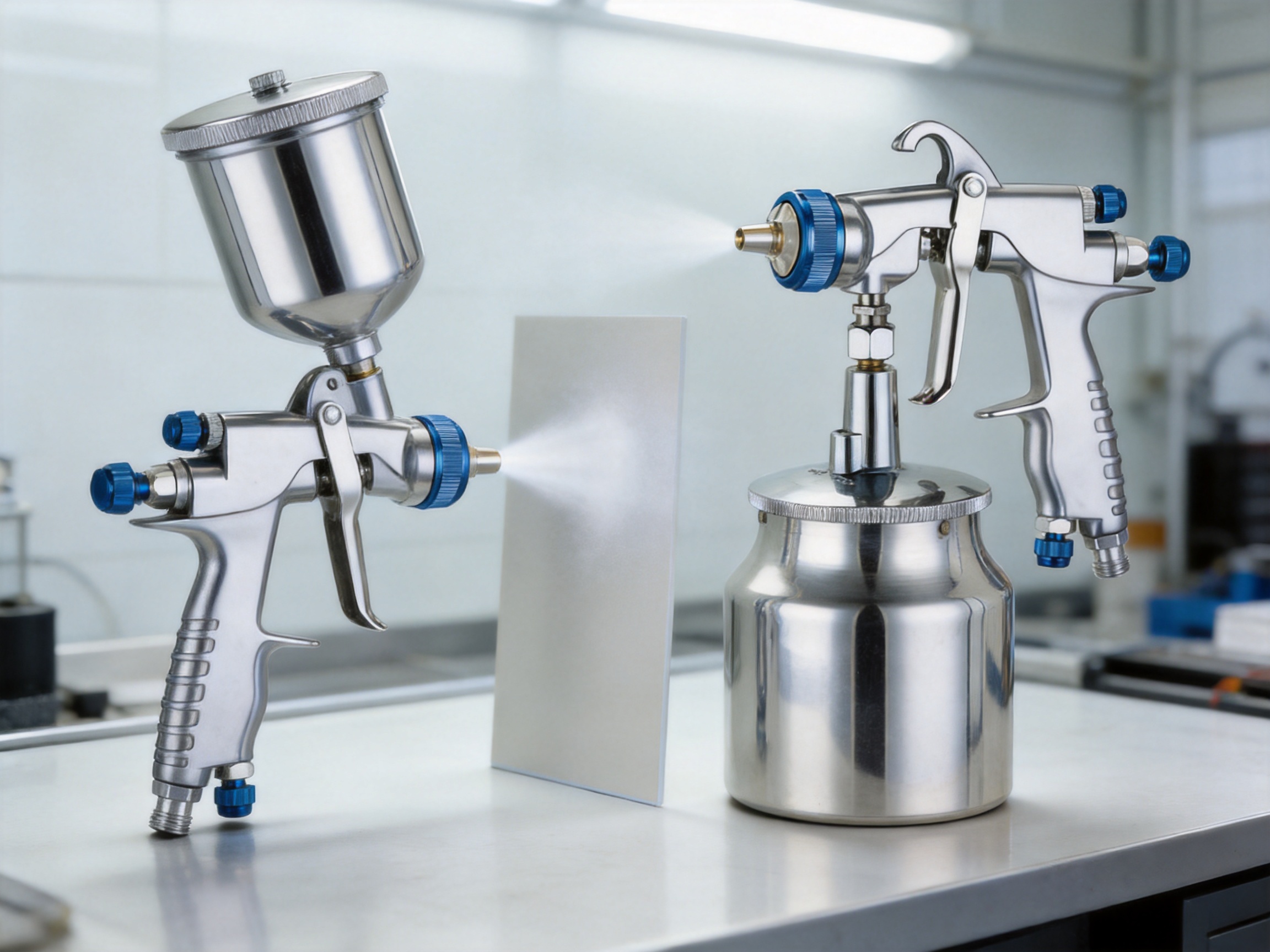
The LS101 provides two capacity options: a 400 ml cup for gravity-feed use and a 750 ml cup for suction-feed use. This flexibility gives the product an advantage over competitors that offer only one configuration. Different applications benefit from different cup styles, and the LS101 is designed to accommodate both.
The gravity-feed configuration is useful when the operator wants better material efficiency and more direct control. Because gravity helps feed the coating into the gun, less air energy is needed to lift the material from the cup. This can make gravity-feed guns responsive and efficient, especially for smaller jobs, detail work, or applications where the user wants to reduce leftover coating.
The suction-feed configuration is useful when larger cup capacity is preferred. With 750 ml available, users can spray for longer periods before stopping to refill. This can be helpful for larger panels, production batches, maintenance painting, and general coating work where uninterrupted operation improves productivity.
By offering both options, the LS101 can serve users who do not want to be locked into one workflow. A shop may use the gravity version for precision finishing and the suction version for larger coverage tasks. This improves practical value and helps reduce the need to purchase multiple unrelated spray gun models.
Advantages Over Common Competitor Spray Guns
The spray gun market includes a wide range of products, from low-cost tools intended for occasional use to professional models designed for daily production. Many competitor products may appear similar in shape and basic function, but the differences become clear during repeated use. The LS101 offers several advantages that come from specification balance, manufacturing experience, quality control, and application flexibility.
Balanced General-Purpose Nozzle Size
Some competitor guns are supplied with nozzle sizes that are too specialized for everyday use. A very small nozzle may limit coating options, while a very large nozzle may create excessive material output and waste. The LS101’s 1.5 mm nozzle gives users a practical middle point for many standard coatings.
Useful Spray Length for Controlled Work
The 180 mm spray length helps the operator work efficiently without losing control. This makes it suitable for both medium-sized surface areas and controlled finishing. Lower-quality competitor guns may produce irregular patterns that require more overlap correction and increase the chance of striping.
Choice of Cup Capacity
The availability of 400 ml gravity-feed and 750 ml suction-feed options gives the LS101 a flexible advantage. Users can select a configuration based on job size, operator preference, and material consumption. Many basic competitor guns provide only one cup style, which limits practical use.
Manufacturing Consistency
A spray gun is only as good as the consistency of its internal passages, nozzle geometry, needle fit, air cap machining, trigger response, and sealing performance. The LS101 benefits from the manufacturing capabilities of an experienced producer with established inspection systems. This helps reduce the risk of inconsistent quality between batches.
Support from a Full Air Tool Manufacturer
The company behind the LS101 manufactures a broad range of spraying and air tool products. This is important because spray performance depends on air control, accessories, fittings, and application knowledge. A manufacturer with full-system experience is better positioned to understand real workshop needs.
Manufacturing Strength Behind the Product
The LS101 is supported by a manufacturer with decades of experience in the research, development, manufacturing, and marketing of air painting spray guns, mini air compressors, and related air tools. Since its establishment in 1984, the company has grown into one of the major enterprises in the painting spray gun industry in China. Its production base covers more than 400,000 square feet, employs more than 400 people, and has achieved annual output exceeding 40 million US dollars.
This scale matters because stable spray gun quality requires specialized production equipment, trained workers, process discipline, and inspection capacity. A small or inexperienced producer may be able to assemble a spray gun, but it may not have the resources to maintain consistent tolerances, test every product properly, or respond quickly to large orders. In contrast, the manufacturer of the LS101 has developed long-term production systems and technical capabilities.
The company has received recognition as a national high-tech enterprise, a customs advanced certification enterprise, an individual item champion enterprise in Ningbo City, and a provincial engineering and technology center. These achievements reflect a sustained investment in technical development, quality control, and manufacturing management.
Research and Development Capability
Good spray gun design requires more than copying an existing shape. It requires understanding airflow, fluid delivery, ergonomics, sealing, surface treatment, material compatibility, and user behavior. The manufacturer of the LS101 has a strong research and development team and can provide both OEM and ODM services. This means it can manufacture according to customer drawings or samples and can also design products based on customer requirements.
The company has established a spraying machinery engineering technology center and has carried out technical cooperation with international spraying technology specialists. This background strengthens its ability to improve atomization structures, refine spray gun components, and develop products that meet changing market requirements.
For the LS101, R&D capability is important because users expect a spray gun that is easy to adjust, stable in operation, and practical in real working conditions. A manufacturer with engineering resources can better optimize component fit, air passage design, and product reliability.
Quality Management and Certification
Quality control is one of the strongest advantages behind the LS101. The company follows ISO9000 quality system requirements and applies strict control throughout the production process. This includes raw material inspection, incoming component inspection, in-process quality control, 100 percent functional testing, and final inspection of finished products.
In spraying equipment, quality cannot be checked only at the end of production. If a nozzle is poorly machined, if an air cap is inconsistent, if a sealing surface is damaged, or if a trigger part is incorrectly fitted, the final product may still look acceptable but perform poorly. Therefore, process control at each stage is necessary.
The manufacturer has passed ISO9001 international quality system certification, OHSAS18001 occupational health and safety system certification, and ISO14001 environmental management system certification. Its products have also passed CE and German GS international product certifications. These certifications help demonstrate that the company operates with recognized management systems and product compliance practices.
For users, this means the LS101 is not an isolated product made without oversight. It is part of a manufacturing environment that emphasizes quality, safety, environmental responsibility, and international market readiness.

Advanced Production Process
The production of a reliable spray gun involves several key stages. First, raw materials must be selected and inspected. Components that affect pressure resistance, wear, sealing, and corrosion resistance need stable material quality. Second, precision machining must be controlled. The nozzle, needle, air cap, fluid passages, and adjustment parts require accurate dimensions. Third, surface treatment and finishing must be performed correctly to protect parts and improve appearance. Fourth, assembly must be consistent, with proper fitting, alignment, and sealing. Finally, the completed gun must be tested to confirm function.
The manufacturer’s process includes incoming inspection, in-process quality control, full functional testing, and final inspection. This systematic approach helps ensure that the LS101 can meet performance expectations before it reaches the customer.
Compared with competitor spray guns produced under loose inspection systems, the LS101 has the advantage of being supported by documented quality procedures. In real use, this can mean fewer leaking cups, smoother trigger action, more stable spray patterns, better durability, and fewer returns.
Functional Testing and Final Inspection
One of the most important details in the manufacturing process is 100 percent functional testing. A spray gun may pass visual inspection but still fail to perform correctly under air pressure. Functional testing helps confirm that the product can operate as intended.
Testing may include checking trigger movement, air flow, fluid delivery, sealing, spray pattern behavior, and overall assembly quality. Final inspection further verifies that the product is complete, clean, correctly packaged, and ready for use. These steps are essential for reducing field problems and building customer trust.
For professional users, reliability is not optional. A faulty spray gun can delay work, waste coating materials, damage a finish, and reduce shop productivity. The LS101’s manufacturing background helps reduce these risks.
Application Areas
The LS101 can be used in a range of coating and finishing applications. Its general-purpose specification makes it suitable for workshops, repair centers, small production environments, woodworking shops, metal fabrication businesses, and maintenance departments.
Woodworking Finishing
Woodworking requires careful control because wood surfaces can absorb coating unevenly, and visible defects may remain after drying. The LS101’s manageable spray length and 1.5 mm nozzle can help apply coatings in controlled layers when the material is properly prepared. It can be used for furniture components, cabinet doors, decorative panels, and other wood products.
Metal Surface Coating
Metal parts often require consistent coverage for both appearance and protection. Uneven coating can lead to poor gloss, weak corrosion resistance, or visible film thickness differences. The LS101 can assist with general metal painting tasks where a practical spray gun is needed for regular use.
Automotive and Repair Work
For repair and refinishing tasks, spray control is important. While final suitability depends on the coating system and finish requirements, the LS101’s 1.5 mm nozzle and controlled spray pattern make it useful for many general paint spraying jobs, primer application in suitable conditions, and touch-up work.
Workshop Maintenance
Maintenance teams often need a spray gun that is easy to use, versatile, and durable. The LS101 can be used for repainting equipment, frames, fixtures, tools, and other workshop items. The suction-feed option with a 750 ml cup is especially helpful when longer spraying sessions are required.
Operator Benefits
A good spray gun should make the operator’s work easier. The LS101 supports this goal through a practical specification combination. The 1.5 mm nozzle helps reduce the need for multiple dedicated guns. The 180 mm spray length supports efficient coverage. The 400 ml gravity cup reduces weight and improves control for smaller jobs, while the 750 ml suction cup supports longer operation.
Operators also benefit from predictable performance. When a spray gun behaves consistently, the user can focus on technique rather than compensating for tool problems. Consistent spray pattern, stable material delivery, and dependable air response help reduce fatigue and improve finish quality.
In competitive environments, operator efficiency directly affects productivity. A tool that requires less adjustment, produces fewer defects, and supports multiple applications can help a workshop complete more jobs with less waste.
Material Efficiency and Waste Reduction
Material waste is a major cost in painting and finishing. Overspray, poor atomization, excessive fluid flow, and inconsistent pattern shape all contribute to wasted coating. The LS101 helps address these issues through controlled nozzle sizing, practical spray length, and proper air pressure support.
The gravity-feed cup can be especially useful when material efficiency is important. Since material flows downward toward the nozzle, the operator may use more of the coating in the cup and reduce leftover waste. The suction-feed cup, meanwhile, can reduce downtime by allowing more material to be loaded at once.
Compared with poorly designed competitor spray guns that may waste coating through unstable patterns or inefficient fluid delivery, the LS101 offers a more balanced approach for economical finishing.
How the LS101 Supports Consistent Finish Quality
Consistent finish quality comes from several connected factors: surface preparation, coating viscosity, air pressure, spray distance, gun movement speed, overlap technique, and equipment condition. The LS101 supports the equipment side of this process by offering a practical nozzle size, stable air-driven atomization, and usable spray length.
When used correctly, the operator can apply even coats with controlled overlap. The 180 mm spray length makes it easier to plan passes and maintain coverage. The 60 PSI air pressure provides the energy needed for atomization, while the selected cup style supports the preferred workflow.
The result is a spray gun that can contribute to smoother surfaces, more even coating distribution, and fewer defects caused by inconsistent application. It does not replace proper technique, but it gives the operator a strong foundation.
Company Capability and Global Market Experience
The manufacturer of the LS101 has developed a worldwide marketing and service network. Its products are sold into Europe, North America, the Middle East, South Africa, East Asia, and other regions. This international experience is important because different markets have different user habits, coating systems, regulatory expectations, and quality standards.
Working with global customers also pushes a manufacturer to improve. Long-term relationships with international partners require stable quality, timely delivery, engineering support, and responsive service. The company’s experience with global customers has helped it develop stronger manufacturing systems and a broader understanding of spraying applications.
The company also has the ability to increase production capacity by 30 percent within two months, helping meet customer needs for different purchase quantities. This is a major advantage for distributors, wholesalers, and industrial buyers who require reliable supply. A good product is only valuable if it can be delivered consistently.
OEM and ODM Service Strength
Many professional buyers need more than a standard product. They may require private label packaging, specific component configurations, customized accessories, or product modifications based on their market. The LS101 is supported by a manufacturer capable of OEM and ODM service.
OEM service allows production according to customer drawings or samples. ODM service allows the manufacturer to develop products according to customer needs. This flexibility is valuable for importers, distributors, and brands that want reliable production support from an experienced spray gun factory.
Compared with competitors that can only offer standard catalog items, this manufacturer can provide more complete cooperation. Customers can work with the engineering team to adjust products, improve packaging, develop new models, or match local market requirements.
Why Manufacturing Scale Matters
Manufacturing scale does not automatically guarantee quality, but it provides the foundation for better quality systems. A large factory with experienced personnel can invest in equipment, inspection, training, engineering, and process control. It can also maintain more stable supply chains and respond to large-volume orders.
The LS101 benefits from being produced within a large manufacturing organization. The company has more than 400 employees and a facility covering more than 400,000 square feet. This allows different production stages to be managed systematically, from raw material handling to machining, assembly, testing, and packaging.
For customers, scale can also mean better continuity. If a product becomes successful in the market, the manufacturer has the capacity to support repeat orders. This reduces the risk of supply interruption and helps distributors build stable product programs.
Practical Use Recommendations
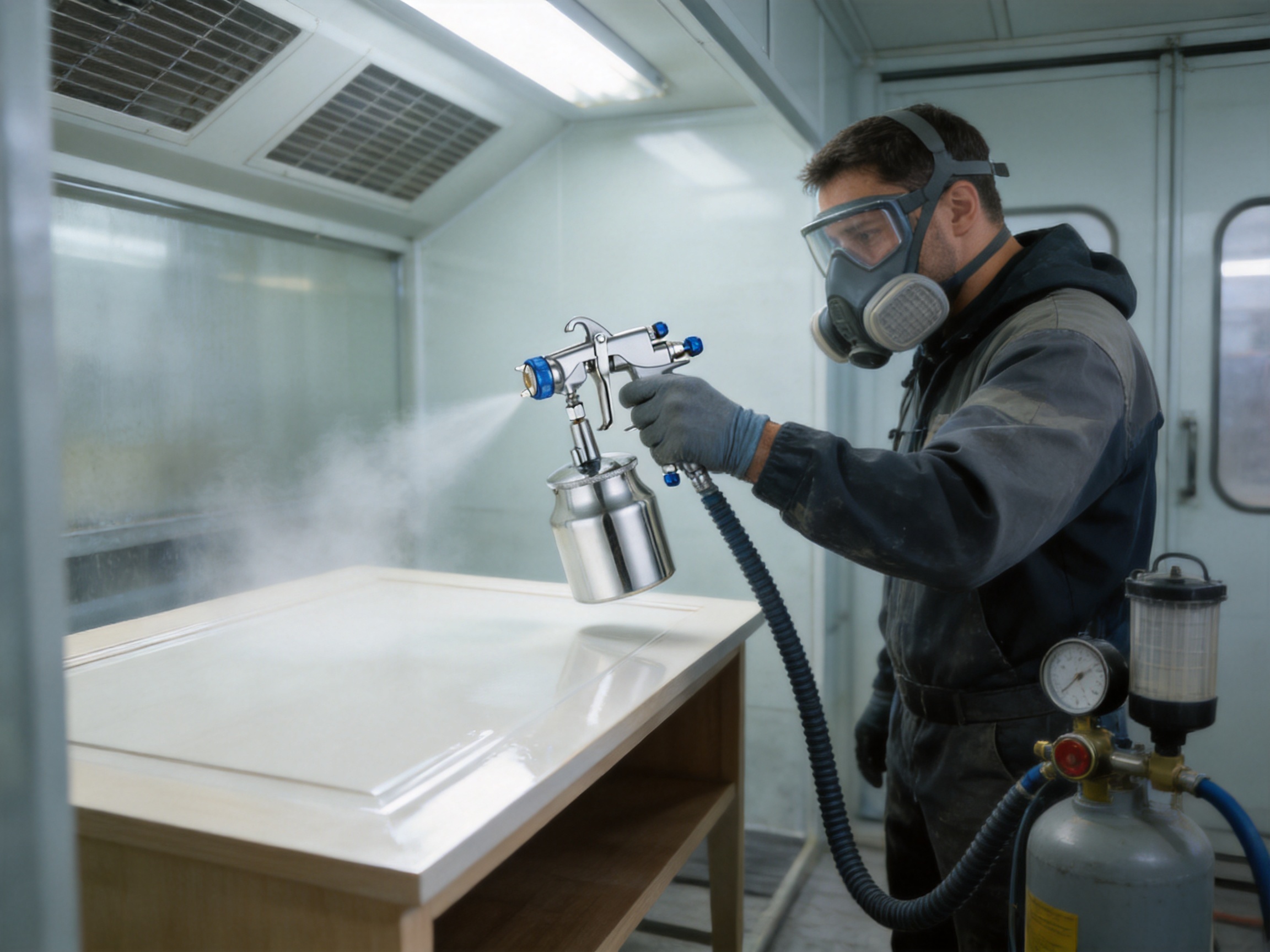
To get the best results from the LS101, users should prepare both the coating material and the air system correctly. The coating should be mixed and thinned according to the coating supplier’s instructions. It should also be filtered before being poured into the cup to prevent particles from blocking the nozzle.
The air supply should be clean, dry, and stable. Moisture in the air line can cause finish defects such as fisheyes, bubbles, or poor adhesion. Oil contamination can also damage coating quality. A proper air filter, regulator, and moisture separator are recommended.
The operator should test the spray pattern before spraying the final workpiece. A test panel helps confirm air pressure, fluid output, fan shape, and coating behavior. Adjustments should be made gradually. During spraying, the gun should be held at a consistent distance from the surface, moved at a steady speed, and overlapped evenly.
Cleaning and Maintenance
Regular cleaning is essential for maintaining spray gun performance. After use, remaining coating should be emptied from the cup, and the cup should be cleaned with a suitable solvent or cleaning material recommended for the coating system. The nozzle, needle, and air cap should be cleaned carefully to prevent dried material buildup.
Users should avoid damaging precision parts with hard metal tools. The nozzle and air cap are critical to spray pattern quality, and scratches or deformation can affect atomization. Seals and moving parts should be inspected periodically. If the trigger becomes stiff, the spray pattern becomes irregular, or leakage occurs, the gun should be inspected and serviced before further use.
A well-maintained LS101 can provide longer service life and more stable finishing quality. Maintenance is also a cost-saving practice because it reduces downtime, prevents defects, and extends the useful life of the tool.
Purchasing Considerations
When choosing a spray gun, buyers should not focus only on price. A lower-cost competitor product may appear attractive at first, but if it produces inconsistent spray patterns, leaks, wears quickly, or lacks spare parts support, the total cost can be higher. The LS101 offers value through balanced specifications, flexible cup options, and manufacturing reliability.
Buyers should consider the type of coating they use, the size of the workpieces, the required finish quality, and the available air supply. The LS101 is especially suitable for users who need a general-purpose spray gun with practical capacity options and dependable production background.
For distributors and wholesalers, the LS101 is also attractive because it comes from a manufacturer with strong output capacity, global market experience, and OEM/ODM support. This makes it suitable for product programs that require consistency and long-term supply.
Environmental and Safety Responsibility
Painting and spraying operations must be handled responsibly. Users should work in well-ventilated areas, wear suitable protective equipment, and follow coating material safety instructions. Respiratory protection, eye protection, gloves, and protective clothing may be necessary depending on the coating and working environment.
The manufacturer’s ISO14001 environmental management certification shows attention to environmental control within its operations. OHSAS18001 occupational health and safety certification also reflects structured management of workplace safety. These certifications are important because responsible manufacturing is increasingly valued by international buyers.
The LS101 should be used as part of a safe and compliant spraying process. Proper air handling, overspray control, fire safety, and waste disposal should always be considered.
Frequently Asked Questions
What is the LS101 spray gun designed for?
The LS101 is designed for general paint spraying, finishing, repair work, woodworking coating, metal surface painting, and workshop maintenance applications. Its 1.5 mm nozzle and 180 mm spray length make it a practical general-purpose spray gun.
What is the fluid nozzle size?
The LS101 uses a 1.5 mm fluid nozzle. This size is suitable for many standard coating applications when the material is correctly mixed, thinned, and filtered.
What air pressure does the LS101 require?
The LS101 operates at 60 PSI. For best results, users should ensure that the air supply is clean, dry, stable, and properly regulated.
What cup capacities are available?
The LS101 supports a 400 ml cup for gravity-feed operation and a 750 ml cup for suction-feed operation. The gravity cup is useful for control and material efficiency, while the suction cup is useful for longer spraying sessions.
How does the LS101 compare with ordinary competitor spray guns?
The LS101 offers balanced specifications, practical cup options, and support from an experienced manufacturer with strict quality control. Compared with ordinary low-cost spray guns, it is designed to provide more consistent performance, better production reliability, and stronger long-term value.
Can the LS101 be used for woodworking?
Yes, the LS101 can be used for woodworking finishing when the coating material is suitable for the 1.5 mm nozzle and properly prepared. It is useful for furniture parts, cabinet panels, and other wooden surfaces.
Why is manufacturing quality important for a spray gun?
Spray gun performance depends on precision parts such as the nozzle, needle, air cap, seals, and fluid passages. Poor manufacturing can cause uneven spray patterns, leakage, poor atomization, and short service life. Strict quality control helps improve reliability.
Does the manufacturer support OEM and ODM projects?
Yes, the manufacturer has strong R&D capability and can provide OEM production according to drawings or samples, as well as ODM development based on customer requirements.
What quality systems support the product?
The manufacturer follows ISO9000 quality system principles and has passed ISO9001, OHSAS18001, and ISO14001 certifications. Products have also passed CE and German GS certifications.
How should the LS101 be maintained?
The spray gun should be cleaned after each use. Coating material should be removed from the cup, and the nozzle, needle, and air cap should be cleaned carefully. Users should avoid damaging precision parts and should inspect seals and moving parts regularly.
Conclusion
The LS101 is a practical and reliable spray gun designed for users who need balanced performance, flexible cup options, and consistent finishing capability. With a 1.5 mm fluid nozzle, 180 mm spray length, 60 PSI air pressure, 400 ml gravity cup option, and 750 ml suction cup option, it provides the versatility needed for many common spraying tasks.
Its advantages go beyond the specification sheet. The LS101 is supported by a manufacturer with decades of experience, advanced manufacturing systems, strong R&D capability, international certifications, and strict quality control. From raw material inspection to in-process control, full functional testing, and final inspection, the production process is designed to ensure dependable product quality.
For workshops, distributors, repair professionals, woodworking users, and industrial buyers, the LS101 offers a strong combination of usability, flexibility, and manufacturing credibility. It is a spray gun built not only for single-use convenience but for repeatable performance in real working environments.
References
1. ISO 9001 Quality Management Systems: Principles and Application in Manufacturing.
2. ISO 14001 Environmental Management Systems: Requirements and Practical Implementation.
3. Occupational Health and Safety Management Systems for Industrial Production Facilities.
4. General Technical Guidance for Air Spray Gun Atomization and Coating Application.
5. Industrial Finishing Handbook: Spray Equipment, Surface Preparation, and Coating Control.
6. Paint Application Technology: Air Pressure, Nozzle Selection, and Spray Pattern Optimization.