 Search

 English
 中文简体
 Deutsch
 Español
Content
- 1 Understanding the Role of a Paint Tank
- 2 Why Pressure-Fed Spraying Matters
- 3 Key Application Areas for the PT-60
- 4 Important Product Advantages
- 5 Comparison with Common Alternatives
- 6 Design and Construction Considerations
- 7 Manufacturing Strengths Behind the Product
- 8 Manufacturing Process for a Professional Paint Tank
- 9 Operating the PT-60 Effectively
- 10 Maintenance and Service Recommendations
- 11 Safety Principles
- 12 How the PT-60 Can Improve Production Efficiency
- 13 Purchasing and Integration Checklist
- 14 Advantages for Distributors and OEM Customers
- 15 Environmental and Workplace Considerations
- 16 Frequently Asked Questions
- 16.1 What is the PT-60 used for?
- 16.2 Is the PT-60 suitable for every type of paint?
- 16.3 Does the PT-60 include a spray gun?
- 16.4 Can a paint tank replace a compressor?
- 16.5 Is a pressure-fed system better than a gravity-feed spray gun?
- 16.6 Can the PT-60 be used with more than one spray gun?
- 16.7 How should the tank be cleaned?
- 16.8 What should be checked before opening the tank?
- 16.9 Does the manufacturer provide customized products?
- 16.10 What certifications are available?
- 16.11 Where can technical information be obtained?
- 17 Conclusion
- 18 References
- 19 Product: PT-60
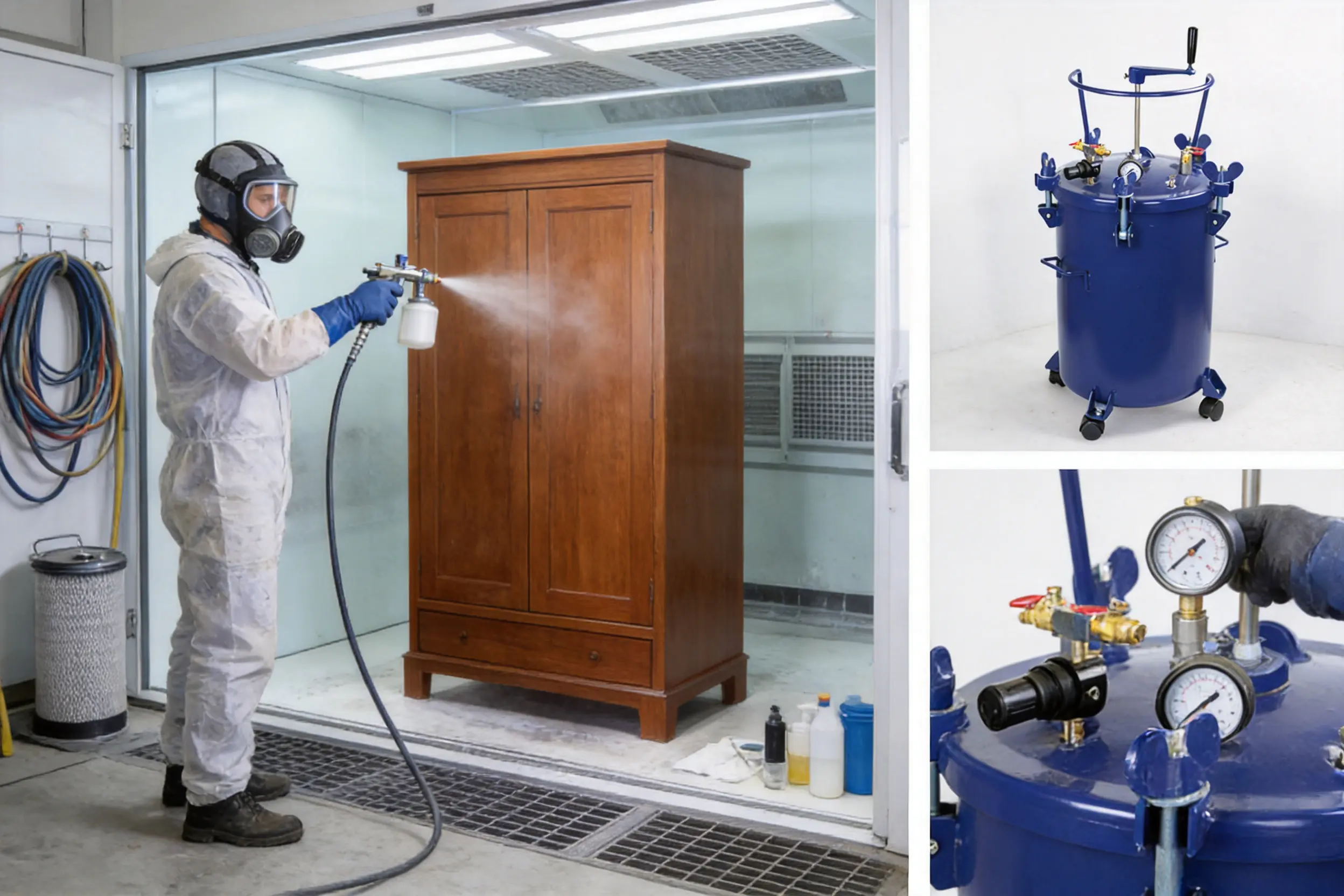
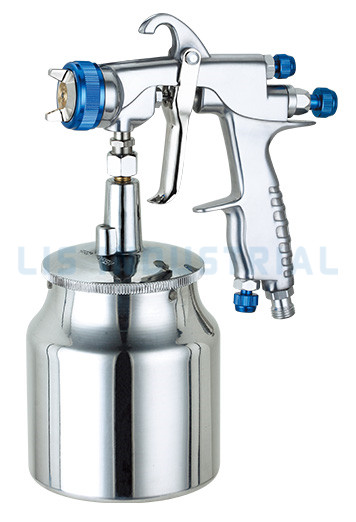
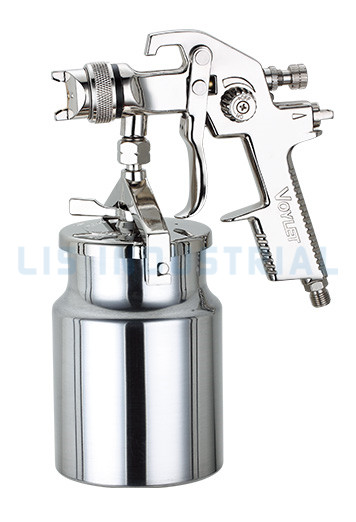
The PT-60 is a professional paint tank designed for pressure-assisted material delivery in industrial, commercial, automotive, woodworking, maintenance, and general coating applications. As part of a complete spraying system, it helps provide a steady supply of coating material to a spray gun, reducing the need for frequent cup refilling and supporting more consistent production work.
Pressure-fed paint tanks are especially valuable when operators need to spray for extended periods, use larger material volumes, or work with coatings that are difficult to manage through a conventional gravity or suction cup. By separating the material container from the spray gun, a paint tank can improve operator mobility, reduce hand fatigue, and support more uniform application across large surfaces.
The PT-60 belongs to the paint tank category and can be integrated into a suitable compressed-air spraying system. Its value is not limited to the tank itself. The performance of a pressure-fed system depends on the coordinated design of the tank body, lid, seals, fluid outlet, air regulator, pressure controls, hoses, fittings, spray gun, and compressor. When these components are correctly matched, the system can provide a practical and efficient solution for professional finishing work.
This article examines the role of the PT-60 in modern coating operations, explains its principal advantages, compares it with common alternatives, and describes the manufacturing capabilities behind its production. Because configurations may vary according to market, application, and customer requirements, users should confirm the exact pressure range, capacity, connection specification, included accessories, and applicable certifications before purchase or installation.
Understanding the Role of a Paint Tank
A paint tank is a pressurized material container used to feed coating material to a spray gun. Instead of placing all the material in a small cup attached directly to the gun, the operator loads the coating into a separate tank. Compressed air is then introduced into the tank through a regulated air circuit. The resulting pressure acts on the material surface and pushes the coating through a fluid outlet and hose toward the spray gun.
This arrangement creates a continuous supply of material. The operator can work with a spray gun that is lighter and easier to maneuver than a large-cup gun, while the tank stores enough material for longer spraying cycles. The arrangement is particularly useful for doors, furniture, vehicle panels, machinery, walls, structural components, and other surfaces where uninterrupted coverage is important.
A pressure tank normally contains several functional elements. The tank body holds the coating material. The lid provides access for filling and cleaning. A sealing system helps maintain pressure. The air inlet delivers regulated compressed air. A fluid outlet carries material toward the gun. Pressure adjustment and monitoring components allow the operator to control material delivery. Depending on the configuration, the system may also include a pressure relief mechanism, agitator, multiple outlets, fluid filters, or additional hose connections.
The PT-60 is therefore best understood as the central material-management component in a complete spray system. Its performance must be evaluated in relation to the coating being used, the selected spray gun, the available compressor, the hose length, and the required production rate.
Why Pressure-Fed Spraying Matters
Traditional spray guns with attached cups are useful for small repairs, touch-up work, and low-volume projects. However, their material capacity is limited. When the cup becomes empty, the operator must stop spraying, release or manage the gun, refill the cup, and resume the work. Repeated interruptions can reduce productivity and create visible differences in overlap, wetness, and film thickness.
A paint tank helps reduce these interruptions. The operator can prepare a larger quantity of coating in advance and maintain a more continuous workflow. This is particularly valuable when the coating must be mixed carefully or when the workpiece is large enough that stopping midway could affect the final appearance.
Pressure feeding can also make it easier to deliver coatings with higher viscosity than those commonly used in small gravity-fed guns. The material is driven from the tank by controlled pressure rather than relying only on gravity or the suction effect created at the fluid nozzle. Nevertheless, viscosity still has to be appropriate for the spray gun, nozzle, hose, and coating system. A pressure tank does not eliminate the need for correct material preparation.
Another important advantage is ergonomic. A gun connected to a remote tank does not need to carry a heavy cup filled with coating. This can make it easier for the operator to maintain a stable spray angle, consistent distance, and smooth hand movement. Reduced wrist and arm fatigue can be meaningful during long production shifts.
Pressure-fed systems can also support multiple spray guns in selected configurations. A larger material container may supply more than one operator when the tank, regulator, fluid circuits, hoses, and coating requirements are designed for that purpose. The exact suitability of any multi-gun arrangement must be confirmed with the equipment supplier.
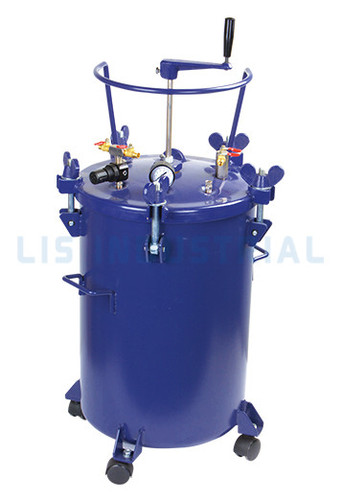
PT-60
Key Application Areas for the PT-60
Automotive Refinishing
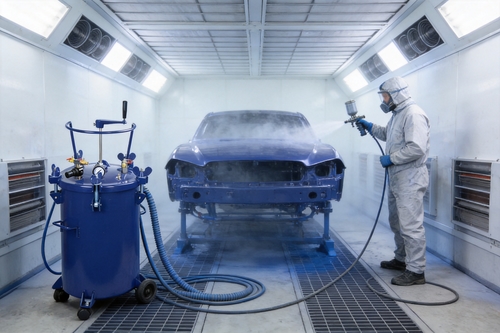
Automotive refinishing requires controlled application, smooth overlap, and reliable material delivery. A pressure-fed system can be useful for body panels, commercial vehicles, equipment bodies, trailers, and larger components. Instead of carrying a cup full of material, the technician can use a lighter spray gun while the tank remains in a stable location.
The PT-60 may be used with suitable primers, basecoats, clearcoats, undercoatings, and industrial finishes when the material is compatible with the tank, seals, fluid passages, and spray gun. Compatibility is essential because different coatings may contain solvents or additives that affect elastomeric seals, hoses, and internal surfaces.
Woodworking and Furniture Finishing
Woodworking shops often need to finish cabinet doors, furniture panels, tables, chairs, built-in components, and decorative elements. These operations can involve repeated spraying over large batches of similar parts. A paint tank helps maintain a consistent supply and can reduce the physical burden of holding a material cup.
For woodworking applications, a pressure-fed system is useful when the operator needs to apply stains, sealers, lacquers, paints, or protective topcoats over multiple surfaces. The material should be filtered before entering the system when appropriate, and the tank should be cleaned promptly after use to prevent dried residue from affecting later work.
Industrial Equipment and Machinery
Manufacturers of machinery, metal cabinets, agricultural equipment, tools, and fabricated components may benefit from pressure-fed spraying. Industrial parts frequently have large surface areas, complex shapes, or production quantities that make small-cup spraying inefficient.
A suitable tank can support more predictable material delivery during primer and finish application. Consistent delivery helps the operator maintain an even spray pattern, although final coating quality still depends on gun adjustment, atomizing air, material viscosity, distance, overlap, environmental conditions, and operator technique.
Construction and Maintenance
Maintenance contractors and construction teams may use pressure-fed equipment for architectural coatings, protective finishes, specialized primers, and other materials. The PT-60 can be considered where a mobile, compressed-air-based material supply is more suitable than repeatedly refilling a handheld spray gun.
Before use on construction or maintenance sites, the operator should evaluate portability, ventilation, available compressed air, hose routing, electrical and ignition risks, and the coating manufacturer’s instructions. A pressure tank should always be used within its approved operating conditions.
Specialty and Texture Coatings
Some coatings contain particles, fibers, or solid additives that require appropriate fluid passages and nozzle sizes. In these cases, the tank itself may be only one part of the selection process. The material must be compatible with the fluid outlet, hose, filter, spray gun, and nozzle.
Where texture materials are considered, operators should verify whether the PT-60 configuration is intended for that particular coating. The tank should not be assumed to be suitable for every high-solids or abrasive product without confirmation.
Important Product Advantages
Continuous Material Supply
The most direct advantage of the PT-60 is the ability to supply coating material continuously over a longer working period than a small attached cup. This can reduce downtime and improve the rhythm of production work.
Continuous supply is especially helpful when spraying large surfaces or when the coating process must be completed within a controlled wet-edge window. Fewer pauses can help the operator maintain a consistent application pattern and reduce unnecessary transitions between partially finished areas.
Improved Operator Mobility
A remote tank allows the spray gun to remain relatively compact. The operator can move the gun across broad surfaces without carrying the full weight of a cup and its contents. This may improve comfort, balance, and control during extended use.
Better mobility can also help when spraying around corners, inside cabinets, across vehicle bodies, or over large panels. The hose must be routed safely so that it does not drag across wet surfaces or become a trip hazard.
More Consistent Material Delivery
When the tank is correctly regulated, the coating can be delivered through a controlled pressure-fed path. A stable material supply helps reduce the variation that may occur when a small cup becomes nearly empty or when the gun angle changes significantly.
Consistency does not mean that the pressure should simply be increased. Excessive pressure can create overspray, poor transfer efficiency, excessive atomization, or an unstable spray pattern. The correct setting depends on the material and spray gun. The objective is controlled delivery, not maximum pressure.
Suitability for Larger Workpieces
Large workpieces often require a practical solution for material storage and delivery. A paint tank can be positioned near the work area while the operator handles a lighter gun. This arrangement can be more efficient than repeatedly returning to a mixing station or stopping to refill a small cup.
Support for Professional Workflow
The PT-60 can become part of a structured coating process. Materials can be prepared, filtered, loaded, and connected before spraying begins. Operators can establish a repeatable setup for different products, workpieces, and production stages.
In a professional environment, repeatability is an important advantage. A well-organized pressure-fed system can support standardized work instructions, defined cleaning procedures, scheduled inspections, and controlled material preparation.
Comparison with Common Alternatives
The following table provides a general comparison between a pressure-fed paint tank system and several common coating equipment arrangements. The comparison is based on typical operating characteristics. Actual performance depends on the configuration, coating, spray gun, and working conditions.
| Equipment arrangement | Main strengths | Typical limitations | Best suited applications |
|---|---|---|---|
| Pressure-fed paint tank | Longer spray cycles, remote material supply, reduced gun weight, useful for larger workpieces | Requires correct regulation, hoses, cleaning, and compressed air | Professional production, furniture, automotive, machinery, and large surfaces |
| Gravity-feed spray gun | Simple setup, good control for small and medium jobs, low material volume in the cup | Limited capacity and added hand weight when the cup is full | Touch-up, repair, automotive refinishing, and smaller components |
| Suction-feed spray gun | Traditional arrangement, useful for selected materials and general-purpose work | May require more atomizing energy and can be less convenient for extended spraying | General maintenance and conventional coating tasks |
| Airless sprayer | High production potential and strong material delivery without atomizing air at the gun | Different spray characteristics, higher equipment complexity, and less suitable for some fine-finish work | Large-area architectural and protective coating applications |
| Handheld electric sprayer | Portable, convenient, and independent of a separate compressor in many configurations | May have different atomization characteristics and limited suitability for continuous industrial work | Small projects, maintenance, and occasional use |
Compared with a small attached cup, the PT-60 approach can offer better capacity and less weight at the gun. Compared with an airless system, a compressed-air pressure tank can provide a different type of atomization and may be preferred for applications where finish control and spray-gun adjustment are priorities.
Compared with low-cost, lightly constructed alternatives, a professional paint tank should be evaluated by more than purchase price. Important factors include material quality, sealing performance, regulator reliability, corrosion resistance, ease of cleaning, spare-parts availability, manufacturing control, certification, and technical support.
Design and Construction Considerations
Tank Body
The tank body must withstand the intended internal pressure and remain stable during filling, pressurization, transport, and cleaning. Its geometry should support practical access to the interior and allow the operator to remove coating residue effectively.
Material selection is important because the tank may encounter water-based coatings, solvent-based coatings, cleaning agents, and other chemicals. The body, fittings, and internal surfaces should be selected according to the intended application and the applicable technical requirements.
Lid and Sealing System
A reliable lid and sealing system are essential for maintaining pressure. The lid should be secure, accessible, and designed to support routine inspection. Seals must be compatible with the coating and cleaning products used by the operator.
Damaged, hardened, swollen, or contaminated seals can cause pressure loss and unstable material delivery. Regular inspection is therefore part of normal maintenance rather than an optional activity.
Pressure Regulation
Regulation is central to the operation of a pressure-fed tank. The operator needs to introduce compressed air in a controlled manner and adjust the material pressure according to the requirements of the coating and spray gun.
A pressure gauge can help the operator monitor the system, while a suitable regulator helps maintain a repeatable setting. The exact control arrangement may vary by product configuration. Users should follow the operating instructions supplied with the selected PT-60 version.
Fluid Outlet and Hoses
The fluid outlet must provide a reliable path from the tank to the spray gun. Hoses should be compatible with the coating, rated for the intended pressure, and long enough to support movement without excessive loops or sharp bends.
Hose condition should be checked regularly. Cracks, swelling, abrasion, blocked passages, or loose connections can affect both performance and safety. Fluid fittings should be kept clean and tightened according to appropriate procedures without damaging threads or seals.
Safety Features
Pressure equipment requires responsible operation. The system should include appropriate methods for pressure control and pressure release. Operators must never open a pressurized tank. Before opening the lid, changing components, or cleaning the interior, the tank must be isolated and fully depressurized in accordance with the instructions.
Protective equipment, ventilation, grounding or bonding requirements, and coating-specific safety procedures must also be considered. The presence of a pressure tank does not replace the need to follow the safety data sheet for the coating and cleaning chemicals.
Manufacturing Strengths Behind the Product
The reliability of a paint tank is strongly influenced by the manufacturing system used to produce it. A pressure vessel or pressurized coating container must be made with attention to forming, joining, sealing, surface treatment, component assembly, inspection, and final testing.
The manufacturer of the PT-60 is Ningbo Lis Industrial Co., Ltd., an established Chinese supplier of air painting spray guns, mini air compressors, air tools, and related spraying equipment. The company was established in 1984 and has developed a broad manufacturing and development base for coating equipment.
The company reports a production site covering more than 400,000 square feet, a workforce of more than 400 employees, and annual output exceeding 40 million United States dollars. These resources provide a foundation for product development, purchasing, production planning, quality management, testing, packaging, and export service.
For a paint tank, manufacturing scale can provide several practical benefits. It may support dedicated production processes, controlled supplier management, more consistent component sourcing, and a larger technical team. It can also help the manufacturer respond to different customer requirements, including private-label programs, drawings, samples, and customized product configurations.
Research and Development Capability
Spraying equipment is not a single-product field. Spray guns, tanks, compressors, hoses, fittings, regulators, and accessories must work together. A manufacturer with experience across multiple product categories can evaluate the interaction between these components more effectively.
The company states that it maintains a strong research and development team and provides both OEM and ODM services. OEM production can support customers who provide drawings or samples. ODM development can support customers who require a product to be developed around specific application needs, market requirements, or branding programs.
This capability is relevant to paint tanks because different markets may require different fittings, labels, packaging, operating instructions, accessories, and certifications. A flexible engineering process can help adapt a product while maintaining control over the main functional requirements.
Engineering and Technical Cooperation
The company reports the establishment of a spraying machinery engineering technology center and technical cooperation with American Wagner Spraying Technology Co., Ltd. Such cooperation reflects the importance of engineering knowledge in the spraying machinery field.
Technical experience can influence the selection of fluid passages, pressure controls, seals, spray-gun compatibility, and manufacturing tolerances. It can also support the development of products that are easier to integrate into complete spraying solutions.
Quality Management
The company describes a quality system based on ISO9000 requirements. Its reported control process extends from raw-material and incoming inspection through process control, functional testing, and final inspection of finished products.
For a pressure-fed tank, this type of staged quality management is valuable. Inspection should not be limited to the finished exterior. Critical characteristics may include body integrity, connection quality, seal installation, regulator operation, pressure behavior, fluid passage cleanliness, and accessory completeness.
Process control can help reduce variation between production batches. Incoming inspection can identify problems with raw materials or purchased components before they enter assembly. In-process checks can identify errors earlier, while final functional testing can verify that the completed unit operates as intended within the relevant test conditions.
Certification and Compliance Experience
The company reports that its products have passed certifications including CE and GS, and that it has experience with ISO9001, OHSAS18001, and ISO14001 management systems. Certification requirements vary according to the product, market, configuration, and applicable legislation, so customers should request the specific documents relevant to the PT-60 version they intend to purchase.
Compliance experience is important for international buyers. It can help support documentation, product labeling, technical files, packaging information, and market-specific requirements. However, users should always verify that the actual supplied configuration is covered by the relevant certificate or declaration.
Production Flexibility
The company states that its production capacity can be increased by 30 percent within two months. This may be valuable for distributors, equipment brands, and professional buyers who need a supplier capable of responding to changing demand.
Capacity alone does not guarantee quality. The important question is whether increased production can be supported by sufficient tooling, trained personnel, inspection resources, component availability, and production planning. A mature manufacturing organization is better positioned to expand output while maintaining process control.
Manufacturing Process for a Professional Paint Tank
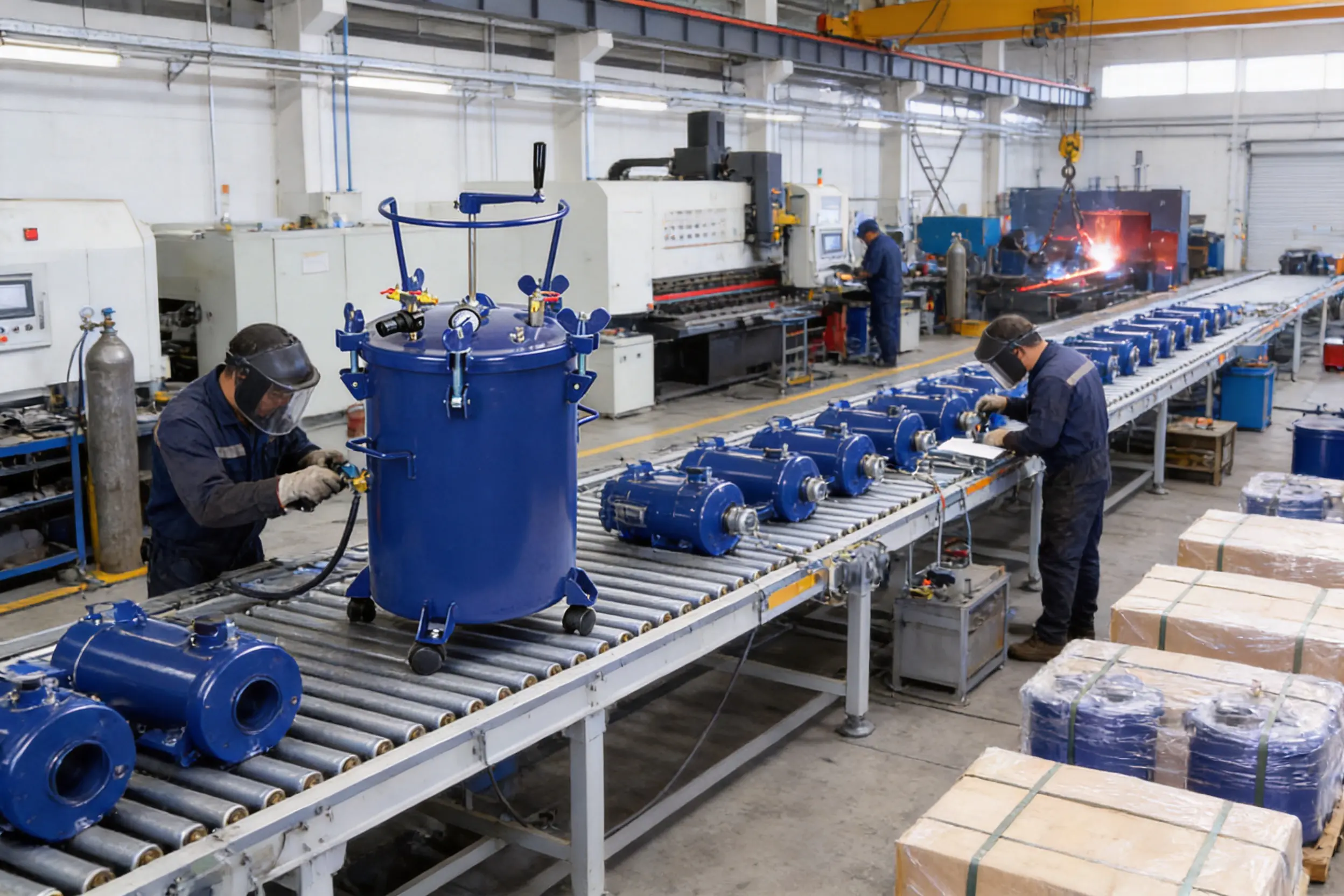
The exact process for the PT-60 depends on its detailed construction and configuration. However, a professional paint tank commonly passes through several controlled stages.
Material and Component Selection
Manufacturing begins with the selection of suitable body materials, fittings, seals, valves, gauges, regulators, hoses, and other components. Each material must be considered in relation to pressure, corrosion, chemical compatibility, temperature, durability, and the intended operating environment.
Purchased components should be checked against specifications before entering production. Component traceability can help the manufacturer investigate quality issues and maintain consistency across batches.
Forming and Fabrication
The tank body and lid may require forming, machining, stamping, welding, or other fabrication operations, depending on the design. Dimensional accuracy is important because the lid, gasket, fittings, and internal components must align correctly.
Fabrication quality can influence both appearance and safety. Poorly controlled forming may create distortion. Inconsistent joining may affect structural integrity or cause leakage. For this reason, production equipment and operator skill are important parts of the manufacturing system.
Surface Treatment
Surface treatment may be used to improve corrosion resistance, appearance, cleanability, or protection against the working environment. The treatment should be appropriate for the tank material and compatible with the coatings and cleaning procedures expected in service.
Surface preparation and coating control are important. Contamination, incomplete coverage, poor adhesion, or excessive roughness may reduce service performance. A controlled surface-treatment process can help achieve a more consistent result.
Assembly
During assembly, the manufacturer installs seals, valves, regulators, gauges, fittings, outlets, and other components. Assembly instructions and torque control may be used where appropriate. Seals must be correctly positioned, and fluid passages must remain clean and unobstructed.
Correct assembly is especially important for pressure equipment. A component that appears acceptable from the outside may still be incorrectly fitted or insufficiently secured. In-process checks help identify these issues before final testing.
Functional and Pressure Testing
Testing is a key stage in the production of a paint tank. Depending on the product design and applicable requirements, testing may include leak checks, pressure behavior, regulator function, gauge response, valve operation, and fluid-flow verification.
Testing procedures should be performed using controlled equipment and defined acceptance criteria. Products that do not meet the required criteria should be identified and managed through the manufacturer’s nonconforming-product process.
Final Inspection and Packaging
Final inspection may include appearance, labeling, accessories, connection points, operating documentation, and packaging. Packaging should protect the tank and its fittings during internal handling, warehouse storage, and international transportation.
Clear operating instructions are important because safe use depends on correct assembly, pressure adjustment, cleaning, and depressurization. Professional packaging and documentation also help distributors provide better service to their customers.
Operating the PT-60 Effectively
Before use, the operator should inspect the tank, lid, seals, fittings, hoses, regulator, gauge, and spray gun. The equipment should be clean, undamaged, and suitable for the intended coating. Any uncertainty about compatibility or pressure should be resolved before pressurization.
The coating should be mixed according to the coating manufacturer’s instructions. If thinning is required, the correct thinner and mixing ratio should be used. The material may need to be filtered before loading, particularly when the coating contains skin, dried particles, or other contaminants.
The tank should be filled only to the permitted level. Space may be required above the material for proper pressurization and operation. The lid should be installed correctly, and all connections should be checked before compressed air is introduced.
The operator should begin with a conservative pressure setting and test the spray pattern on a suitable surface. Material flow, atomizing air, spray distance, fan width, overlap, and gun movement should be adjusted as a coordinated system.
A good spray technique generally involves maintaining a consistent distance and angle, moving the gun smoothly, and overlapping passes evenly. The operator should avoid stopping directly over the workpiece unless the coating process specifically requires it. Pressure should be adjusted only as needed to achieve a stable and appropriate pattern.
When work is complete, the material pressure must be released safely. Remaining material should be handled according to the coating manufacturer’s instructions. The tank, fluid hose, and spray gun should be cleaned before residue dries. Cleaning chemicals should be compatible with the equipment seals and materials.
Maintenance and Service Recommendations
Routine maintenance helps preserve performance and reduce unexpected downtime. After each use, the operator should inspect the lid seal, pressure controls, fluid outlet, hose, fittings, and spray gun. Dried coating should not be allowed to accumulate around the lid or fluid connections.
Seals should be checked for cuts, deformation, chemical attack, or loss of elasticity. A seal that no longer provides reliable closure should be replaced with a compatible part. Lubrication, if required, should follow the manufacturer’s instructions because some lubricants may damage particular seal materials or contaminate the coating.
Gauges and regulators should be monitored for unusual behavior. A gauge that remains at zero, fluctuates unexpectedly, or does not correspond to the regulator adjustment may require inspection. The equipment should not be used if pressure control is unreliable.
Hoses should be stored away from sharp edges, excessive heat, direct chemical exposure, and unnecessary bending. Fluid hoses should be flushed and cleaned according to the material used. A hose may appear intact externally while its inner lining has become swollen or damaged, so performance changes should not be ignored.
Periodic inspection should be documented in professional production environments. Records may include the date of cleaning, coating used, pressure setting, seal replacement, regulator inspection, and any identified issue. This helps maintenance teams identify recurring problems and plan replacement parts.
Safety Principles
A paint tank is pressure equipment and must be treated accordingly. Operators should read the supplied instructions before use and should never modify the tank, remove safety-related components, exceed the approved pressure, or use damaged parts.
The tank must never be opened while pressurized. Before removing the lid, disconnecting a hose, replacing a fitting, or performing internal cleaning, the system must be isolated and fully depressurized. Pressure can remain trapped in a hose or fluid passage even after the main air supply is disconnected.
Coatings and cleaning agents may produce flammable vapors, harmful aerosols, or skin and eye irritation. Adequate ventilation, protective clothing, gloves, eye protection, and respiratory protection should be selected according to the coating’s safety data sheet and the workplace risk assessment.
Compressed air should not be directed toward the body or used casually for cleaning clothing or skin. Hoses should be routed to avoid trip hazards and should be protected from moving machinery, vehicle traffic, and sharp corners.
Grounding or bonding may be necessary when spraying flammable materials. Electrical equipment, lighting, ventilation, and other equipment in the spray area should be suitable for the environment. Local regulations and workplace safety procedures must be followed.
How the PT-60 Can Improve Production Efficiency
Efficiency is not simply a matter of spraying faster. A productive coating system reduces interruptions, supports repeatable settings, minimizes material waste, and simplifies cleaning and maintenance.
The PT-60 can reduce refill frequency when its capacity is correctly matched to the job. This may help the operator complete a larger workpiece in a continuous sequence. Fewer interruptions can also reduce the risk of visible differences caused by changes in overlap or drying between passes.
A remote tank can help standardize material preparation. The operator can mix and filter a planned quantity, record the batch information, and connect the system before beginning the application. In production environments, this can support better process control.
The reduction in gun weight may improve comfort and help operators maintain consistent movement. Over long shifts, ergonomics can affect both productivity and finish quality. A tool that is easier to control may reduce unnecessary pauses and physical strain.
Material efficiency depends on the entire spray system. Correct nozzle selection, suitable atomizing pressure, proper viscosity, controlled spray distance, and appropriate overlap are all important. The PT-60 provides material delivery, but it cannot compensate for incorrect gun setup or poor application technique.
Purchasing and Integration Checklist
Buyers should evaluate the PT-60 as part of a complete spraying solution rather than as an isolated tank. Before placing an order, they should confirm the following points with the supplier:
| Evaluation area | Questions to confirm |
|---|---|
| Capacity | What is the nominal and usable material capacity for the selected configuration? |
| Pressure | What are the approved operating and test pressure values? |
| Material compatibility | Which water-based, solvent-based, high-solids, or specialty coatings are supported? |
| Connections | What are the air and fluid connection standards, sizes, and thread types? |
| Accessories | Are the regulator, gauge, hoses, fluid outlet, fittings, and safety components included? |
| Spray gun matching | Which spray guns, nozzle sizes, and air requirements are recommended? |
| Certification | Which certificates or declarations apply to the exact product version and target market? |
| Maintenance | Which seals, hoses, regulators, and other spare parts are available? |
| Customization | Are OEM labels, packaging, fittings, colors, or documentation available? |
| Service | What technical support, operating instructions, warranty, and after-sales assistance are provided? |
These questions are especially important for distributors and industrial buyers. A product that appears similar to another model may differ in pressure rating, connection standard, seal material, accessories, or certification coverage.
Advantages for Distributors and OEM Customers
The PT-60 may be attractive to distributors because it can be positioned as part of a broader spraying equipment portfolio. A supplier that also manufactures spray guns, compressors, air fittings, hoses, and related accessories can help distributors assemble compatible product packages.
A broad product range can simplify sourcing. Instead of purchasing every component from unrelated suppliers, a buyer may be able to coordinate key elements through one manufacturing partner. This can support more consistent packaging, technical documentation, product training, and after-sales service.
OEM and ODM capability provides additional flexibility. Customers may require private-label packaging, specific connection standards, localized manuals, special accessories, or product combinations designed for a particular market. The manufacturer’s reported experience with drawings, samples, and customer development projects can support these programs.
International distribution also requires dependable communication and logistics. The company reports an established worldwide marketing and service network, with products sold in Europe, North America, the Middle East, South Africa, and East Asia. Buyers should still confirm current lead times, export documentation, packaging requirements, minimum order quantities, and service arrangements for each project.
Environmental and Workplace Considerations
Pressure-fed spraying can contribute to efficient coating application when the equipment is correctly adjusted. Stable material delivery and appropriate atomization may help reduce rework and unnecessary coating consumption. However, environmental performance depends on the coating chemistry, transfer efficiency, overspray control, ventilation, waste handling, and operator technique.
The company reports an environmental management system based on ISO14001. This indicates experience with structured environmental management, although customers should evaluate the specific environmental requirements of their own facilities and markets.
Workplace efficiency also includes cleaning and waste management. Operators should avoid allowing excess coating to harden inside the tank or hoses. Recovered or leftover material must be handled according to local regulations and the coating manufacturer’s instructions.
For solvent-based materials, ventilation and vapor control are especially important. For water-based materials, operators should not assume that ordinary disposal is acceptable. Each coating product requires appropriate handling based on its safety and environmental documentation.
Frequently Asked Questions
What is the PT-60 used for?
The PT-60 is a paint tank used to supply coating material to a compatible spray gun through a pressure-fed system. It is intended for applications where a continuous material supply, reduced gun weight, or larger working capacity is beneficial.
Is the PT-60 suitable for every type of paint?
No. Suitability depends on the coating’s chemical composition, viscosity, solids content, particle size, and compatibility with the tank, seals, hoses, fittings, and spray gun. Users should confirm compatibility before filling the tank.
Does the PT-60 include a spray gun?
The supplied contents depend on the selected product configuration and sales package. Buyers should confirm whether the tank is supplied alone or as part of a kit that includes regulators, gauges, hoses, fittings, or a spray gun.
Can a paint tank replace a compressor?
No. A pressure-fed paint tank requires a suitable compressed-air source unless it is used in a special integrated system designed for another method of pressurization. The compressor must provide the air volume and pressure required by the tank and spray gun.
Is a pressure-fed system better than a gravity-feed spray gun?
Neither system is universally better. A gravity-feed gun is often convenient for small jobs and touch-up work, while a pressure-fed tank is generally more useful for longer spray cycles, larger workpieces, and reduced gun weight. The best choice depends on the application.
Can the PT-60 be used with more than one spray gun?
Some pressure tank configurations can supply multiple guns, but this should not be assumed. The tank outlet, regulator, hoses, material demand, and compressor capacity must be suitable for the number of guns used. Confirm the intended arrangement with the supplier.
How should the tank be cleaned?
The tank should be depressurized and cleaned promptly after use. The cleaning method and solvent should be selected according to the coating manufacturer’s instructions and the compatibility of the tank seals and internal components. Residue should not be allowed to dry in the fluid passages.
What should be checked before opening the tank?
The air supply must be isolated, and all pressure must be released from the tank and connected fluid lines. The operator should verify that the pressure gauge indicates no remaining pressure and should follow the equipment’s specified depressurization procedure.
Does the manufacturer provide customized products?
The manufacturer reports OEM and ODM capabilities, including production based on customer drawings or samples and development according to customer needs. The available customization should be confirmed for the specific PT-60 project.
What certifications are available?
The company reports experience with CE and GS product certifications as well as ISO9001, OHSAS18001, and ISO14001 management systems. Certification coverage can vary by product version and market, so buyers should request the documentation applicable to the exact configuration.
Where can technical information be obtained?
Customers can request technical specifications, operating instructions, accessory lists, compatibility guidance, certifications, and spare-parts information from the supplier before purchase. The supplied documentation should be treated as the controlling source for operation.
Conclusion
The PT-60 paint tank offers a practical approach to pressure-fed coating application. Its principal benefits include longer spray cycles, a remote material supply, reduced weight at the spray gun, improved workflow for larger workpieces, and the possibility of more consistent material delivery when the system is correctly regulated.
Its strongest applications are likely to include automotive refinishing, woodworking, furniture production, machinery finishing, maintenance, construction, and other professional coating tasks where a small attached cup is inconvenient or inefficient. The tank should always be selected together with a compatible spray gun, compressor, hose system, coating material, and safety procedure.
The product is supported by the manufacturing experience of Ningbo Lis Industrial Co., Ltd., a long-established producer of spray guns, compressors, air tools, and spraying accessories. The company describes substantial production resources, research and development capability, OEM and ODM support, international market experience, formal quality management, and experience with multiple certification systems.
Compared with basic alternatives, the value of the PT-60 lies not only in its material capacity. Its practical advantage depends on the quality of its pressure controls, seals, connections, materials, assembly, inspection, testing, documentation, and after-sales support. These factors determine whether a paint tank can deliver dependable service in a demanding professional environment.
For buyers, the most important next step is to confirm the exact configuration and specifications required for the intended application. When properly matched and maintained, the PT-60 can become an effective part of a complete spraying solution designed to improve productivity, operator comfort, and coating-process consistency.
References
1. ISO 9001, Quality Management Systems — Requirements.
2. ISO 14001, Environmental Management Systems — Requirements with Guidance for Use.
3. International Organization for Standardization, general guidance on quality control, process management, and product conformity.
4. European Commission, general guidance relating to CE marking and product conformity assessment.
5. Coating manufacturers’ safety data sheets and technical data sheets for material compatibility, thinning, cleaning, ventilation, and personal protective equipment.
6. General industrial guidance on compressed-air equipment, pressure safety, hose inspection, and safe depressurization procedures.
7. Manufacturer product information for the PT-60 paint tank and associated spraying equipment.
8. Manufacturer information on research and development, OEM and ODM services, quality management, production capability, and international product certification.