 Search

 English
 中文简体
 Deutsch
 Español
Content
- 1 Product Overview
- 2 How the LS230 Supports Efficient Painting
- 3 Advantages Over Less Specialized Painting Methods
- 4 Applications Across Different Industries
- 5 Manufacturing Strengths Behind the Product
- 6 Quality Management and Testing
- 7 Certifications and International Market Experience
- 8 Operating the LS230 Correctly
- 9 Maintenance and Service Practices
- 10 Workplace Safety
- 11 Why the LS230 Is a Practical Professional Choice
- 12 Frequently Asked Questions
- 12.1 What type of spray gun is the LS230?
- 12.2 What nozzle sizes are available?
- 12.3 What is the cup capacity?
- 12.4 What air pressure does the LS230 use?
- 12.5 Is the LS230 suitable for automotive painting?
- 12.6 Can it be used for woodworking?
- 12.7 Does the LS230 reduce paint consumption?
- 12.8 What compressor is required?
- 12.9 How should the spray gun be cleaned?
- 12.10 Is the product suitable for industrial use?
- 12.11 Can the manufacturer provide customized products?
- 12.12 Where is the manufacturer located?
- 13 Conclusion
- 14 References
- 15 Product: LS230 Spray Gun Car Painting Tool High Atomization Air Paint Sprayer
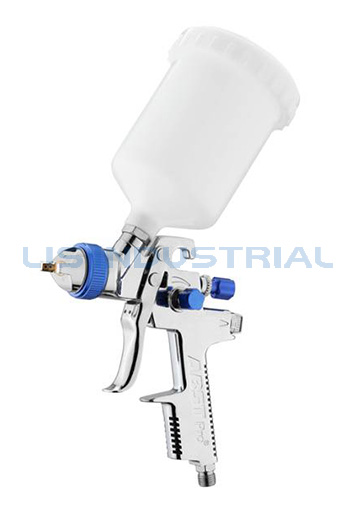
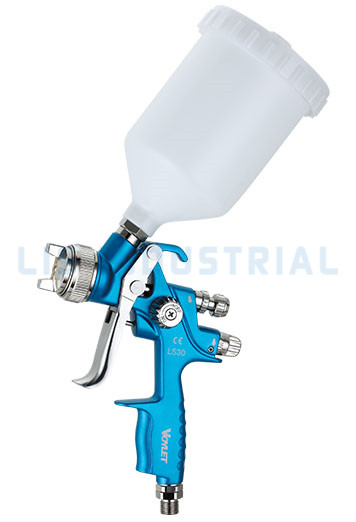
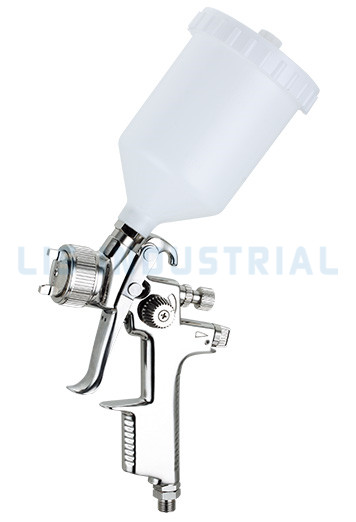
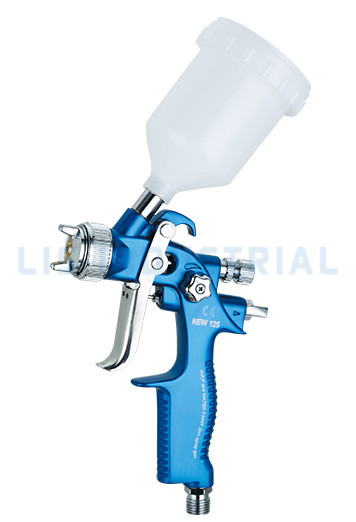
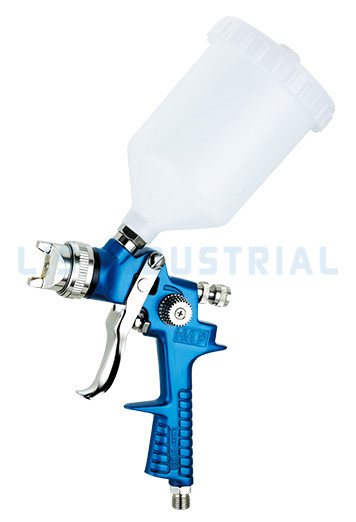
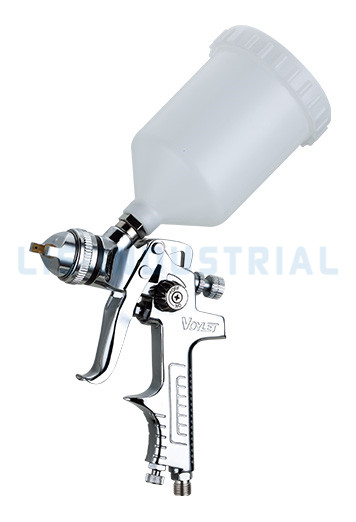
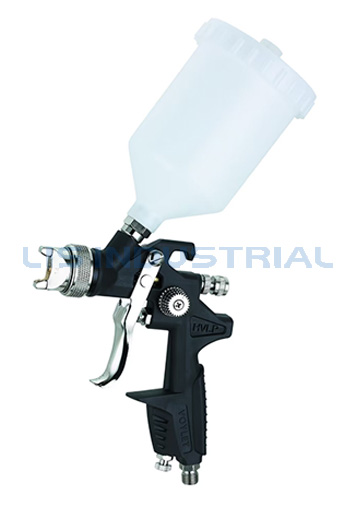
The LS230 spray gun is a professional gravity-feed painting tool designed for users who require consistent atomization, a long spray pattern, efficient paint transfer, and dependable day-to-day performance. It is suitable for automotive refinishing, woodworking, equipment maintenance, furniture finishing, general industrial coating, and other applications where a controlled pneumatic spray gun can provide a smoother and more productive alternative to brush or roller application.
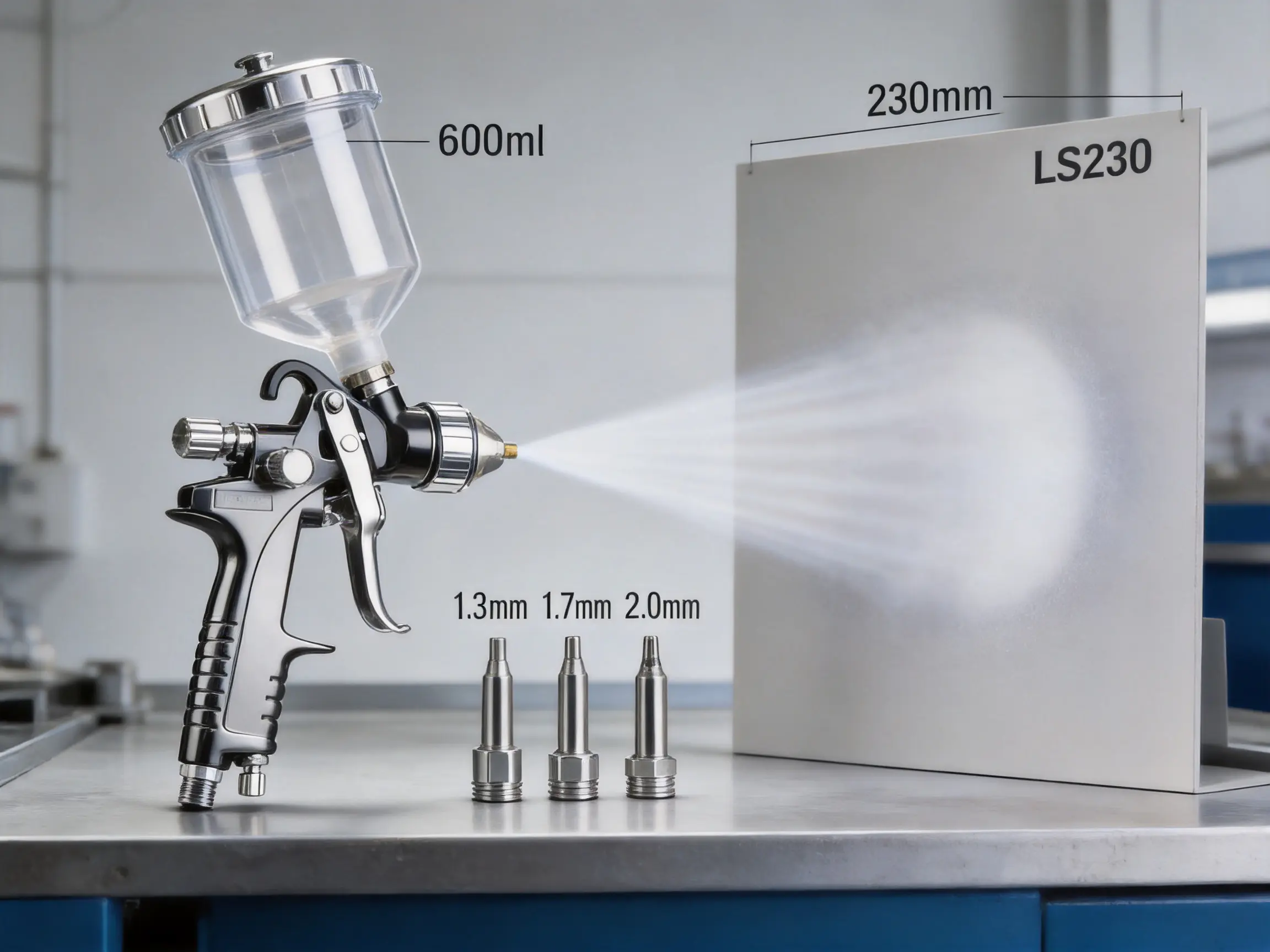
With interchangeable 1.3 mm, 1.7 mm, and 2.0 mm fluid nozzles, a 600 ml gravity-feed cup, a stated working air pressure of 43 PSI, and a spray length of approximately 230 mm, this model is designed to combine practical versatility with efficient coverage. Its configuration allows operators to adapt the spray gun to different coating viscosities and finishing requirements without changing to an entirely different tool.
The product is manufactured by Ningbo Lis Industrial Co., Ltd., an established Chinese manufacturer specializing in air painting spray guns, mini air compressors, air tools, and related spraying equipment. The company’s experience, production scale, quality systems, research capability, and international certification background support the LS230’s positioning as a practical solution for professional and demanding users.
This article examines the LS230’s operating characteristics, application advantages, manufacturing strengths, quality-control process, maintenance requirements, and potential benefits when compared with less specialized painting methods or lower-quality spray guns.
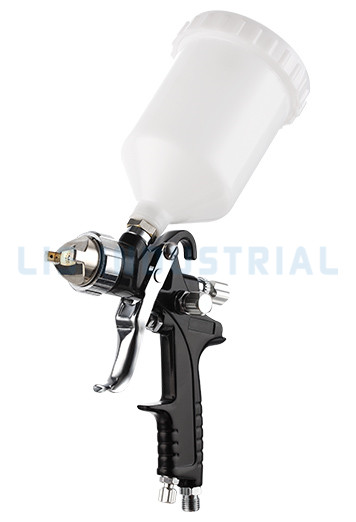
LS230 Spray Gun Car Painting Tool High Atomization Air Paint Sprayer
Product Overview
The LS230 is a pneumatic spray gun that uses compressed air to atomize liquid coating material into a controlled spray. In a gravity-feed design, the coating is held in a cup above the gun body and moves toward the fluid nozzle with assistance from gravity. This arrangement can reduce the amount of compressed air needed to draw material from a remote container and can help the operator use a broader range of coating quantities for small and medium-sized jobs.
The gun is intended for users who want a balance between coverage speed and finish quality. It is not limited to one specific coating or trade. Depending on the selected nozzle, material preparation, air regulation, and spraying technique, it may be used for primers, topcoats, clear coats, stains, lacquers, selected furniture coatings, and other compatible liquid materials.
The 230 mm spray length is an important feature for work efficiency. A longer spray pattern can cover a wider area during each pass than a narrow touch-up gun. This can reduce the number of overlapping strokes required on panels, doors, furniture components, and other surfaces. When the operator maintains the correct distance and gun movement, the wider coverage may also help create a more uniform appearance.
At the same time, the interchangeable nozzle options give the LS230 greater flexibility than a fixed-nozzle sprayer. The 1.3 mm nozzle is generally suitable for finer finishing materials and controlled surface work. The 1.7 mm nozzle provides a useful middle range for general-purpose painting. The 2.0 mm nozzle can support thicker materials, primers, and applications where material delivery is more important than extremely fine atomization.
Key Technical Specifications
| Specification | LS230 Configuration | Practical Significance |
|---|---|---|
| Product type | Pneumatic gravity-feed spray gun | Uses compressed air for controlled liquid atomization |
| Fluid nozzle options | 1.3 mm, 1.7 mm, and 2.0 mm | Allows adjustment for different materials and finish requirements |
| Spray length | Approximately 230 mm | Supports broad and efficient surface coverage |
| Stated air pressure | 43 PSI | Provides a reference point for setup and operating adjustment |
| Cup capacity | 600 ml | Provides useful working capacity while remaining manageable for manual spraying |
| Feed type | Gravity | Supports efficient material delivery from the upper cup |
Actual results depend on coating viscosity, ambient temperature, air supply stability, nozzle selection, surface preparation, spray distance, and operator technique. The specifications should therefore be used as a starting point for setup rather than as a substitute for application testing.
How the LS230 Supports Efficient Painting
Painting productivity depends on more than the speed at which material leaves the gun. A productive spray gun must also provide usable coverage, manageable control, repeatable atomization, and reasonable material consumption. The LS230 is designed around these practical requirements.
Long Spray Pattern
The long spray pattern is one of the LS230’s central advantages. A broader pattern enables the operator to cover more surface during each pass. On large panels or flat workpieces, this can shorten application time compared with a narrow spray pattern. It may also help reduce the number of passes and minimize excessive overlap when the gun is held at the correct distance.
Efficient coverage is particularly valuable in automotive and woodworking environments. Vehicle hoods, doors, fenders, cabinet sides, tables, and machinery panels can require many parallel passes. A spray gun with an appropriately long pattern allows the operator to establish a consistent rhythm and maintain a more uniform wet edge across the workpiece.
A long pattern does not automatically guarantee a perfect finish. The gun must remain perpendicular to the surface, and the operator must keep a consistent speed and distance. However, a well-designed spray pattern gives the operator a stronger foundation for achieving repeatable results.
High Atomization Performance
Atomization is the process through which liquid coating is divided into small droplets by compressed air. Effective atomization can contribute to a smoother finish, improved coverage, and more controlled distribution of paint. The LS230 is promoted as a high-atomization spray gun, making it suitable for users who need a refined pneumatic application rather than a coarse or uneven spray.
Fine atomization is especially useful for visible surfaces, automotive refinishing, furniture, decorative work, and final coating stages. It can help reduce the appearance of heavy droplets, uneven edges, and inconsistent material distribution. Nevertheless, atomization must be matched to the coating. If a material is too thick, poorly mixed, or incompatible with the selected nozzle, even a capable spray gun may produce unsatisfactory results.
Gravity-Feed Material Delivery
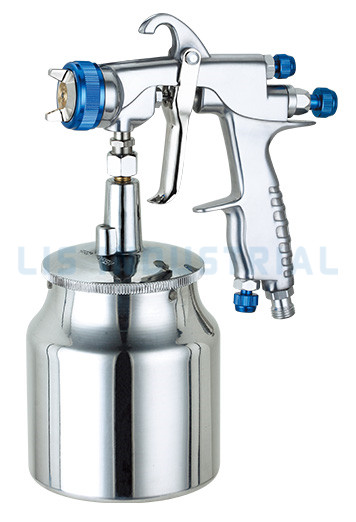
The gravity-feed system places the 600 ml cup above the spray gun body. Material moves downward toward the fluid passage, which can support reliable delivery during normal operation. Compared with some suction-feed arrangements, gravity feed may require less effort from the compressed-air system to lift material from a lower container.
This design can be beneficial for smaller and medium-sized jobs where fast color changes, lower material quantities, and direct operator control are important. It also allows the user to see the remaining material in the cup, helping to anticipate refilling requirements and reduce unexpected interruptions.
The 600 ml capacity provides a practical balance. It is large enough for many panels and workpieces, yet not so large that the gun becomes unnecessarily difficult to handle when full. The ideal fill level depends on the job, but users should avoid overfilling because excessive weight can cause fatigue and make precise control more difficult.
Interchangeable Nozzle Sizes
The three nozzle options expand the working range of the LS230. A smaller nozzle generally supports finer control with lower-viscosity materials, while a larger nozzle can allow more substantial material flow for thicker coatings. Choosing the appropriate nozzle is one of the most important setup decisions for achieving a stable spray pattern.
The 1.3 mm nozzle is commonly associated with finishing applications where controlled atomization and a refined surface are important. It may be suitable for certain topcoats, clear coats, and thin materials after proper preparation.
The 1.7 mm nozzle provides a versatile intermediate configuration. It can be a useful choice for general-purpose work, especially when the operator handles several compatible coating types and wants a balanced combination of flow and atomization.
The 2.0 mm nozzle is intended for materials that require greater fluid passage. It may be useful for selected primers, heavier coatings, and applications where a higher delivery rate is desirable. Material compatibility must always be confirmed before use, and the coating should be strained and mixed according to its technical instructions.
Advantages Over Less Specialized Painting Methods
The LS230 can offer important advantages over brushes, rollers, aerosol cans, and basic low-cost sprayers when the job requires a consistent sprayed finish.
Compared with Brush Application
Brushes are useful for edges, small repairs, detail work, and coatings that are intended to be brushed. However, brush application can leave visible brush marks, especially on broad smooth surfaces. It may also require repeated working of the coating, which can affect the final appearance and increase labor time.
The LS230 distributes coating as atomized droplets, allowing the operator to apply material without direct brush contact. On suitable surfaces, this can produce a more even appearance and reduce visible application marks. It is particularly helpful for complex shapes, curved panels, grilles, furniture components, and surfaces with recessed or difficult-to-reach areas.
Compared with Roller Application
Rollers are effective for walls and other broad surfaces, but they may create texture, stippling, or uneven coverage on smooth automotive, metal, and furniture substrates. They can also be less convenient for narrow edges, contoured parts, and intricate assemblies.
A pneumatic spray gun can reach around corners and across shaped surfaces more naturally than a roller. The LS230’s wider spray pattern can support faster application while preserving the advantages of contact-free coating distribution.
Compared with Aerosol Cans
Aerosol cans are convenient for small repairs and occasional use, but they normally provide limited capacity, less flexibility in coating selection, and less control over continuous work. Frequent use can lead to high consumable costs and repeated interruptions for can replacement.
The LS230 uses a refillable 600 ml cup and an external compressed-air source. This enables longer working sessions, adjustable material selection, and the use of larger quantities of compatible coating. It is therefore more appropriate for workshops and users who carry out repeated painting tasks.
Compared with Entry-Level Spray Guns
Low-cost spray guns may appear attractive because of their initial purchase price, but inconsistent machining, unstable seals, poor fluid control, and irregular atomization can increase material waste and rework. A spray gun that produces an uneven pattern may require additional sanding, recoating, or corrective finishing.
The LS230 is supported by the manufacturing resources of a specialized air-tool producer. Its product concept focuses on practical atomization, interchangeable nozzles, gravity-feed efficiency, and a long spray pattern. These features can provide a more useful platform for professional users than a basic, single-configuration sprayer.
Applications Across Different Industries
Automotive Refinishing
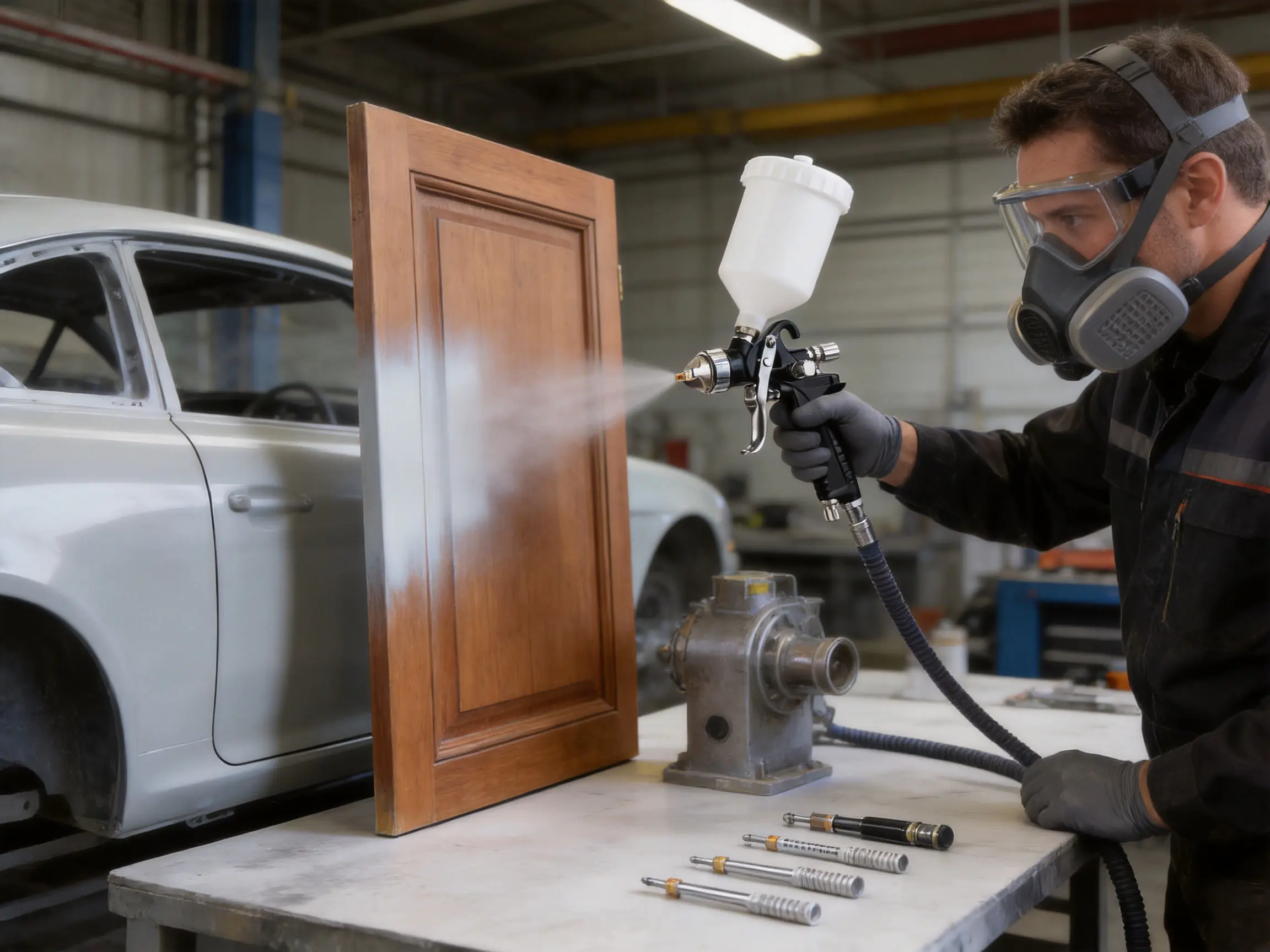
The LS230 is well suited to automotive painting tasks such as refinishing panels, applying compatible primers, spraying color coats, and finishing selected components. The 230 mm spray length can help the operator work efficiently across hoods, doors, fenders, bumpers, and other broad parts.
Automotive refinishing requires careful preparation. The substrate must be cleaned, degreased, sanded, repaired, and masked as appropriate. The coating manufacturer’s instructions should determine mixing ratios, reducer selection, flash times, and recoat procedures. The LS230 can support the application stage, but the final result depends on the complete process.
For visible vehicle surfaces, the 1.3 mm nozzle may be considered when the coating is properly reduced and the desired finish requires fine atomization. The 1.7 mm nozzle can provide a more general-purpose setup, while the 2.0 mm nozzle may be useful for suitable primers or heavier materials.
Woodworking and Furniture Finishing
Woodworkers can use a pneumatic spray gun to apply stains, lacquers, paints, sealers, and other compatible finishes to furniture, cabinet doors, shelves, decorative panels, and turned or shaped components. Spraying can help cover profiles, grooves, edges, and broad surfaces without leaving the marks that may occur with brushes or rollers.
Wood absorbs coatings differently across end grain, open grain, and previously sealed areas. Operators should test the spray pattern and material behavior on scrap wood or an unseen section before starting the final surface. Proper sanding between coating stages remains important even when the material is sprayed.
Industrial Equipment
Industrial maintenance teams may use the LS230 for machinery housings, metal frames, enclosures, brackets, tools, and other equipment components. Its gravity-feed format is practical for repair departments and smaller production areas where jobs vary in size and color.
For industrial work, users should confirm that the coating is compatible with the spray gun’s fluid passages and seals. Protective equipment, ventilation, grounding practices, and fire-safety controls are essential when applying solvent-based or combustible materials.
General Maintenance and Decorative Work
The spray gun can also support general workshop maintenance, hobby projects, decorative coating, model-related work at an appropriate scale, and restoration tasks. Its adjustable nozzle selection enables users to select a configuration suited to the material and desired coverage.
Because the product is a pneumatic tool, it can be integrated into a workshop air system that already supports other air tools. Users should ensure that the compressor and air line can provide stable, clean, and adequately regulated air for the intended application.
Manufacturing Strengths Behind the Product
The LS230 is produced by Ningbo Lis Industrial Co., Ltd., a company engaged in the research, development, manufacturing, and marketing of air painting spray guns, mini air compressors, and related air tools. The company was established in 1984 and has developed a substantial manufacturing base in Ningbo, China.
The company reports a facility covering more than 400,000 square feet, a workforce of more than 400 employees, and annual output exceeding 40 million US dollars. These resources are significant because spray gun performance depends on coordinated design, precision component production, assembly control, testing, packaging, and after-sales support.
Specialized Industry Experience
Long-term specialization in spray guns gives a manufacturer practical knowledge that is difficult to obtain through occasional or unrelated production. Spray guns require careful relationships among air passages, fluid passages, nozzles, needles, seals, adjustment components, and cup assemblies. Small variations in these areas can influence spray shape, atomization, leakage resistance, and operator control.
A manufacturer focused on painting equipment can develop processes around these requirements. Experience with different markets and coating applications can also support the development of products that address common user needs, such as wider patterns, interchangeable nozzle configurations, manageable cup capacity, and economical material use.
Research and Development Capability
Ningbo Lis Industrial Co., Ltd. maintains a research and development focus in spraying machinery and has established a spraying machinery engineering technology center. The company also reports technical cooperation with American Wagner Spraying Technology Co., Ltd. This type of engineering background can contribute to improvements in air distribution, fluid control, ergonomic design, production consistency, and product reliability.
The company states that it can provide OEM services according to customer drawings or samples and ODM services according to customer requirements. For distributors, importers, and professional equipment brands, this capability can be valuable because it supports product customization, packaging programs, market-specific configurations, and long-term supply relationships.
Production Capacity and Supply Support
Production capacity is an important consideration for customers who need continuity of supply. The company reports that its production capacity can be increased by 30 percent within two months. This flexibility may help accommodate changes in customer demand, seasonal orders, new distribution programs, or larger project requirements.
A scalable factory can also support consistent product availability. For professional distributors, reliable replenishment is often as important as the performance of an individual spray gun. A product that is technically capable but difficult to restock can create operational problems for dealers and end users.
Quality Management and Testing
Spray gun quality is influenced by the entire manufacturing chain, beginning with material selection and ending with final inspection. Ningbo Lis Industrial Co., Ltd. describes a quality system that includes raw-material control, incoming inspection, in-process quality control, 100 percent functional testing, and final inspection of finished products.
Raw-Material and Incoming Inspection
Incoming inspection helps confirm that purchased components and materials meet specified requirements before they enter production. In a spray gun, important components may include the gun body, nozzle, needle, air cap, seals, springs, cup, fittings, and adjustment parts.
Controlling these inputs can reduce the risk that dimensional variation, surface defects, contamination, or unsuitable material properties will affect finished products. This is especially important for components that interact directly with fluid or compressed air.
In-Process Quality Control
In-process checks allow problems to be identified during assembly rather than after the product has been completed and shipped. Assembly control may include checking the installation of fluid components, confirming adjustment movement, inspecting seals, verifying cup connections, and ensuring that air and material passages are properly aligned.
These checks support production consistency. A spray gun should not merely look correct; it must also function correctly under operating conditions. In-process control helps connect visual inspection with practical performance.
Functional Testing
The company reports 100 percent functional testing. This is a valuable practice for pneumatic painting equipment because leaks, irregular airflow, blocked passages, stiff controls, or abnormal fluid delivery can immediately affect the user’s work.
Functional testing may identify defects before products are packaged. Although exact test methods and acceptance criteria can vary by model and market, a comprehensive approach generally examines the gun’s operating behavior rather than relying only on appearance.
Final Inspection
Final inspection provides another opportunity to verify the completed product, accessories, labeling, packaging, and general condition. It helps ensure that the product reaching the customer corresponds to the required configuration and is ready for distribution.
The company’s stated quality approach follows ISO9000 requirements and emphasizes control from incoming materials through finished-goods inspection. This structured approach can help reduce variation and support confidence among international customers.

Certifications and International Market Experience
Ningbo Lis Industrial Co., Ltd. reports that its products have passed CE and GS certifications and that the company has obtained ISO9001, ISO14001, and OHSAS18001-related certifications. Certification requirements vary according to product, market, version, and applicable standards, so buyers should request current documentation for the specific model and shipment configuration.
ISO9001 relates to quality-management practices and can indicate that an organization has established documented processes for controlling and improving quality. ISO14001 concerns environmental-management systems, while OHSAS18001 was an occupational health and safety management standard that has largely been superseded internationally by ISO 45001. Current certificate validity and scope should always be verified directly with the supplier.
The company has developed customers and market relationships in Europe, North America, the Middle East, South Africa, and East Asia. International experience can strengthen a manufacturer’s understanding of packaging requirements, documentation, product configuration, regulatory expectations, distributor support, and customer communication.
For buyers evaluating the LS230, international market experience may offer practical benefits. It can support more organized export procedures, clearer product documentation, spare-parts communication, and cooperation with importers or private-label customers.
Operating the LS230 Correctly
Prepare the Surface
A high-quality spray gun cannot compensate for poor surface preparation. The workpiece should be cleaned of oil, dust, wax, loose material, and other contaminants. Damaged areas should be repaired, and the substrate should be sanded or otherwise prepared according to the coating system.
Masking is necessary wherever overspray is not wanted. In automotive work, this may include windows, trim, tires, handles, lights, and adjacent panels. In woodworking and industrial applications, masking protects fittings, moving parts, labels, and areas that require a different finish.
Prepare the Coating
The coating should be mixed according to the material manufacturer’s instructions. Viscosity affects fluid delivery, atomization, coverage, drying behavior, and final appearance. If the material requires thinning or reduction, the correct compatible product should be used rather than an unapproved substitute.
Filtering the material before filling the cup can help reduce the risk of particles entering the fluid passage. The cup should not be filled beyond a safe working level, and the lid should be secured correctly before spraying.
Select the Nozzle
Choose the nozzle based on the material and the desired finish. The 1.3 mm option may suit finer finishing materials, the 1.7 mm option may suit general-purpose work, and the 2.0 mm option may support heavier compatible materials. These are practical guidelines, not universal rules.
Users should begin with a test spray on cardboard, scrap material, or a hidden section. The test should evaluate spray width, material flow, atomization, edge distribution, and possible defects such as excessive spitting or dry spray.
Set the Air Supply
The stated air pressure for the LS230 is 43 PSI. Operators should use a suitable regulator and verify the pressure under operating conditions. Pressure that is too low can result in poor atomization or irregular spray. Excessive pressure can increase overspray, material waste, and turbulence.
The compressor and air line should be capable of maintaining stable air delivery. Moisture and oil contamination in compressed air can damage the finish, so appropriate filtration and drainage are recommended where required by the application.
Use Consistent Technique
The gun should generally be held perpendicular to the surface and moved at a consistent speed. The operator should begin moving before triggering the spray and release the trigger before stopping the movement. This technique helps reduce heavy spots at the beginning and end of each pass.
Maintain a consistent distance from the workpiece and overlap passes evenly. The ideal overlap depends on the coating and spray pattern, but a regular overlap helps produce uniform coverage. The operator should avoid swinging the gun in an arc because this can change the distance and create uneven material distribution.
Maintenance and Service Practices
Cleaning is essential after every spraying session. Residual coating can harden inside the nozzle, air cap, needle passage, or fluid channel. Even small deposits may affect the spray pattern during the next use.
After safely relieving air pressure and following the coating manufacturer’s cleaning instructions, empty unused material from the cup. Clean the cup and flush the fluid passage with a compatible cleaning solution. Remove and clean the nozzle and air cap as recommended. Do not use tools or procedures that could damage precision openings.
Seals and moving components should be inspected periodically. If a seal becomes damaged, swollen, cracked, or excessively worn, it should be replaced with a compatible part. Threads should be kept clean, and components should be assembled carefully to avoid cross-threading or distortion.
The spray gun should be stored in a clean, dry location. It should not be left with coating inside the cup or fluid passage. Proper storage protects the equipment and helps ensure that the next spraying session can begin with minimal preparation.
Workplace Safety
Spraying creates airborne droplets and, depending on the coating, may release harmful vapors or create a fire risk. The LS230 should be used only in a properly ventilated area that is suitable for the coating being applied.
Operators should wear appropriate respiratory protection, eye protection, gloves, protective clothing, and hearing protection where necessary. The correct protective equipment depends on the coating, solvent, workplace, and applicable safety regulations.
Keep ignition sources away from flammable coatings and cleaning materials. Follow grounding and static-control procedures where required. Compressed-air hoses and fittings should be inspected for damage, and the air supply should be shut off before maintenance or disassembly.
Users must read the coating safety data sheet and the equipment instructions before operation. The spray gun is a tool for controlled application, but safe performance depends on the complete workplace system, including ventilation, personal protection, material handling, and waste disposal.
Why the LS230 Is a Practical Professional Choice
The LS230 combines several features that are valuable to users who need a flexible pneumatic spray gun rather than a single-purpose applicator. Its gravity-feed design supports direct material delivery, its 600 ml cup provides useful working capacity, and its three nozzle sizes expand the range of compatible applications.
The long spray pattern can improve work efficiency by covering a greater area with each pass. High atomization can support a smoother and more controlled finish when the coating is properly prepared. The product is also supported by a manufacturer with substantial experience in spray equipment, dedicated research resources, documented quality procedures, international certifications, and large-scale production capability.
These strengths distinguish the LS230 from basic spray guns that may offer limited adjustment or inconsistent performance. Compared with brushes, rollers, and aerosol cans, the LS230 can provide faster and more uniform application on suitable surfaces. Compared with low-cost pneumatic alternatives, its combination of nozzle flexibility, production support, and quality-control processes may offer better long-term value.
Long-term value should be considered in terms of total application cost rather than purchase price alone. Material waste, labor time, rework, downtime, replacement parts, and finish consistency all affect the true cost of a painting tool. A reliable spray gun that supports repeatable work can help users reduce avoidable losses and improve productivity.
Frequently Asked Questions
What type of spray gun is the LS230?
The LS230 is a pneumatic gravity-feed spray gun. It uses compressed air to atomize liquid coating material, while the coating is supplied from a cup positioned above the gun body.
What nozzle sizes are available?
The specified nozzle sizes are 1.3 mm, 1.7 mm, and 2.0 mm. The appropriate choice depends on coating viscosity, desired finish, material flow, and application requirements.
What is the cup capacity?
The gravity-feed cup has a stated capacity of 600 ml. Users should avoid overfilling and should consider the weight of the material when planning longer spraying sessions.
What air pressure does the LS230 use?
The product information states an air pressure of 43 PSI. Operators should regulate and verify air pressure according to the actual coating, nozzle, air supply, and application conditions.
Is the LS230 suitable for automotive painting?
Yes. The long spray pattern, gravity-feed configuration, interchangeable nozzles, and high-atomization design make it suitable for many automotive painting and refinishing applications. The coating manufacturer’s instructions and all applicable safety requirements must be followed.
Can it be used for woodworking?
Yes. The LS230 may be used for compatible stains, lacquers, paints, sealers, and other woodworking finishes. A test spray should be performed because wood, coating viscosity, grain structure, and desired appearance vary from project to project.
Does the LS230 reduce paint consumption?
The product is designed to improve work efficiency and save paint through its long spray pattern and controlled pneumatic atomization. Actual consumption depends on transfer efficiency, pressure, material preparation, spray technique, overspray control, and the shape of the workpiece.
What compressor is required?
The compressor must provide clean and stable compressed air suitable for the spray gun and coating. Buyers should confirm the equipment’s air-consumption requirements and ensure that the compressor can maintain the required pressure during continuous spraying.
How should the spray gun be cleaned?
Empty the cup after use, flush the fluid passage with a compatible cleaning solution, and clean the nozzle and air cap carefully. Follow the coating manufacturer’s cleaning guidance and avoid damaging precision openings or seals.
Is the product suitable for industrial use?
The LS230 can be used for many industrial maintenance, equipment, metal-component, and general coating tasks when the material is compatible and the operating environment is properly controlled. Heavy production applications should be evaluated according to duty cycle, coating type, air supply, and required finish.
Can the manufacturer provide customized products?
Ningbo Lis Industrial Co., Ltd. reports that it provides OEM services based on customer drawings or samples and ODM services according to customer requirements. Specific customization, minimum order quantities, packaging, and delivery conditions should be confirmed directly with the supplier.
Where is the manufacturer located?
Ningbo Lis Industrial Co., Ltd. is located in Hengxi Industrial Zone, Yinzhou District, Ningbo, China. The company serves international markets and provides spray guns, mini compressors, and related air tools.
Conclusion
The LS230 spray gun is a versatile pneumatic tool designed for users who need efficient coverage, controlled atomization, and adaptable material handling. Its 230 mm spray length can support faster work on broad surfaces, while the gravity-feed configuration and 600 ml cup provide practical material delivery for small and medium-sized projects.
The availability of 1.3 mm, 1.7 mm, and 2.0 mm nozzles allows the operator to configure the gun for different compatible coatings and finish requirements. This flexibility makes the LS230 relevant to automotive refinishing, woodworking, furniture finishing, industrial maintenance, equipment painting, and general workshop applications.
Its product advantages are reinforced by the manufacturing capabilities of Ningbo Lis Industrial Co., Ltd. The company’s long history in spray-equipment production, research and development resources, OEM and ODM capacity, reported quality-control procedures, international certification background, and large production base provide a strong foundation for professional supply.
For users seeking an alternative to brushes, rollers, aerosol cans, or basic single-configuration spray guns, the LS230 offers a practical combination of coverage, atomization, nozzle flexibility, and production support. With correct material preparation, regulated air, consistent technique, thorough cleaning, and appropriate safety controls, it can become a dependable tool for achieving efficient and repeatable painting results.
References
1. Ningbo Lis Industrial Co., Ltd. Product information for the LS230 spray gun, including nozzle options, spray length, air pressure, cup capacity, and feed type.
2. Ningbo Lis Industrial Co., Ltd. Corporate information concerning product development, manufacturing capability, quality management, certifications, OEM services, ODM services, and international markets.
3. International Organization for Standardization. ISO 9001, Quality Management Systems—Requirements.
4. International Organization for Standardization. ISO 14001, Environmental Management Systems—Requirements with Guidance for Use.
5. International Organization for Standardization. ISO 45001, Occupational Health and Safety Management Systems—Requirements with Guidance for Use.
6. General technical principles for pneumatic spray application, including coating preparation, nozzle selection, air-pressure regulation, spray distance, overlap, cleaning, and workplace safety.