 Search

 English
 中文简体
 Deutsch
 Español
Content
- 1 Introduction
- 2 Product Overview
- 3 How the Gravity-Feed Design Works
- 4 Advantages of the G80 Over Basic Conventional Spray Guns
- 5 Applications
- 6 Spray Quality and Operating Technique
- 7 Recommended Setup Procedure
- 8 Manufacturing Strengths Behind the Product
- 9 Research, Development, and Customization Capability
- 10 Certifications and Management Systems
- 11 Logistics and Wholesale Considerations
- 12 Comparison With Alternative Spray Equipment
- 13 Safety and Responsible Use
- 14 Cleaning and Maintenance Recommendations
- 15 Quality, Value, and Total Cost of Ownership
- 16 Purchasing Guidance for Distributors and Professional Users
- 17 Why the G80 Is a Practical Choice
- 18 Questions and Answers
- 18.1 What type of spray gun is the G80?
- 18.2 What nozzle sizes are available?
- 18.3 What is the cup capacity?
- 18.4 What air pressure does the G80 use?
- 18.5 What air connection does the product have?
- 18.6 Can the G80 be used for woodworking?
- 18.7 Is the G80 suitable for automotive work?
- 18.8 Is the G80 suitable for large factory production lines?
- 18.9 How should the spray gun be cleaned?
- 18.10 Can the manufacturer provide customized products?
- 18.11 What quality controls are reported by the manufacturer?
- 18.12 How is the product packed?
- 19 Conclusion
- 20 References
- 21 Product: G80
Introduction
Choosing the right spray gun has a direct effect on coating quality, material consumption, working speed, and operator comfort. For workshops, maintenance teams, furniture producers, automotive refinishing specialists, and general industrial users, a spray gun must deliver a consistent finish without becoming unnecessarily complicated or expensive. The G80 gravity-feed conventional spray gun is designed for this practical requirement. It combines a straightforward structure, flexible nozzle options, a useful 600 ml cup, and a standard G1/4-inch air inlet in one economical spraying solution.
The G80 belongs to the economical conventional spray gun category, but economical does not mean unsuitable for demanding work. Its design focuses on the essential functions required for reliable atomization: controlled air delivery, stable fluid feeding, adjustable spray performance, and convenient maintenance. The gun is suitable for users who need a dependable air-powered paint application tool while keeping equipment investment and operating complexity under control.
Compared with basic low-quality spray guns, the G80 offers a more balanced combination of capacity, nozzle flexibility, working pressure, and manufacturing support. Compared with highly specialized professional spray systems, it provides a simpler and more accessible alternative for general-purpose applications. This balance makes it useful for both commercial workshops and users who need a practical spray gun for periodic projects.
The product is manufactured by Ningbo Lis Industrial Co., Ltd., a Chinese producer with long-term experience in air painting spray guns, mini air compressors, air tools, and related spraying equipment. The company supports product development, quality control, OEM production, and ODM services, allowing the G80 platform to serve different market requirements while retaining a consistent basic design.
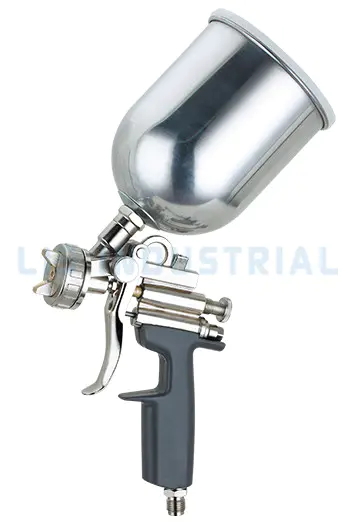
G80
Product Overview
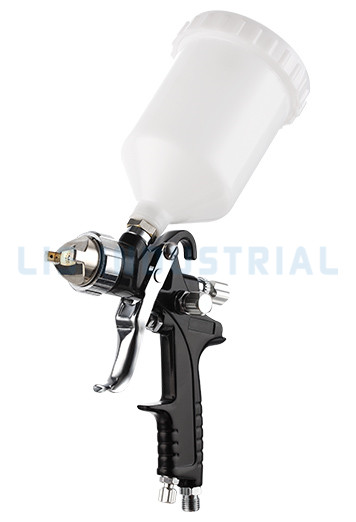
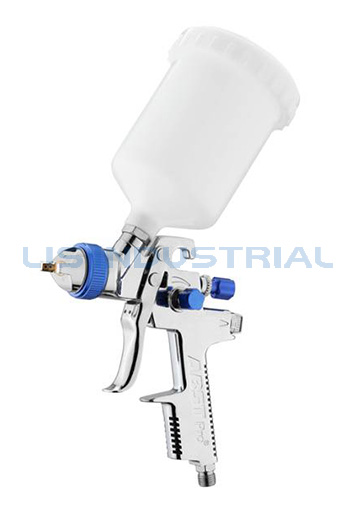
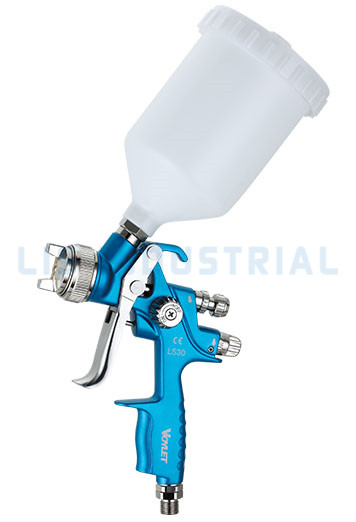
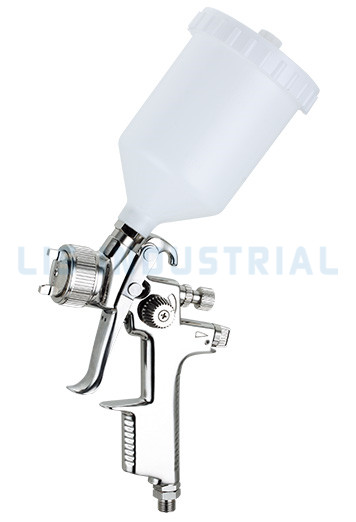
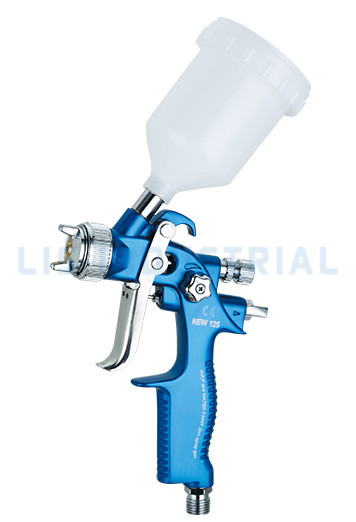
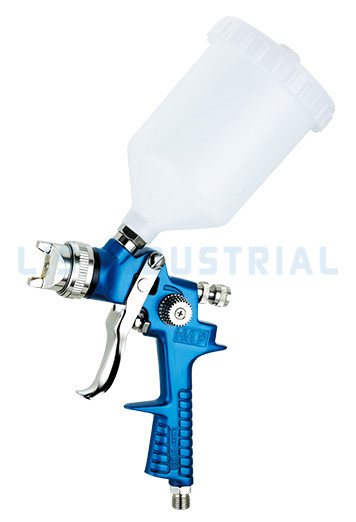
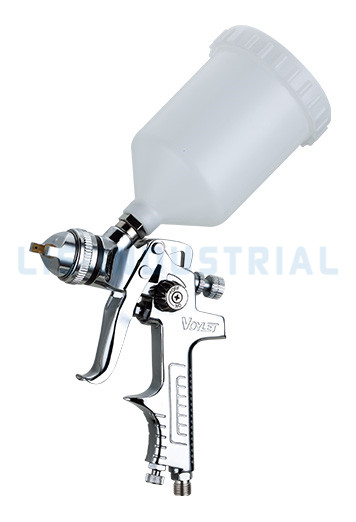
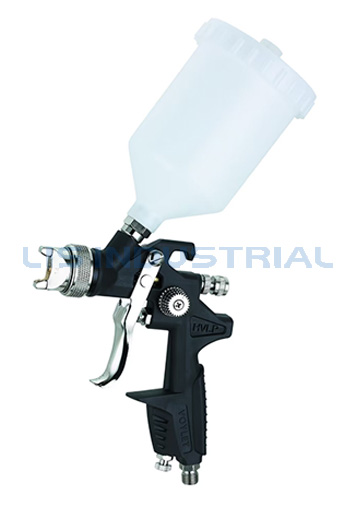
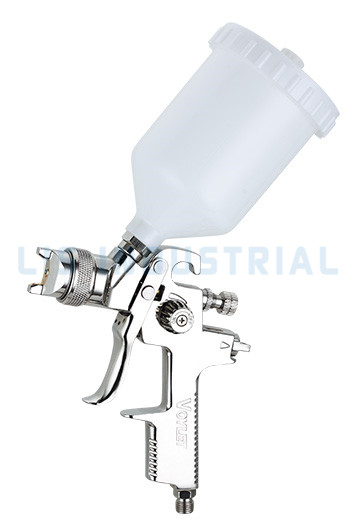
The G80 is a gravity-feed conventional spray gun. In a gravity-feed configuration, the coating material is held in a cup positioned above the gun body. Gravity helps move the material toward the fluid nozzle, while compressed air atomizes and carries the coating toward the work surface. This arrangement is widely used because it can provide efficient material transfer with a comparatively simple setup.
The product uses a 600 ml cup. This capacity is suitable for many small and medium spraying tasks. It reduces the need for frequent refilling during touch-up work, furniture coating, equipment maintenance, general painting, and repair applications. At the same time, the cup is not excessively large, so the gun can remain manageable for hand operation.
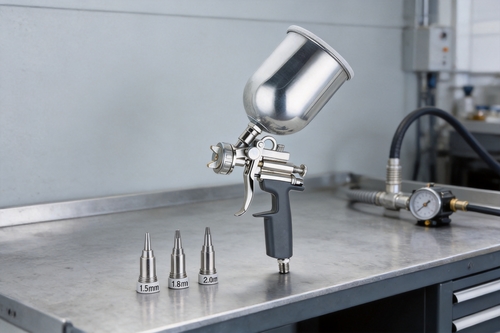
The G80 is available with fluid nozzle sizes of 1.5 mm, 1.8 mm, and 2.0 mm. These options allow the user to match the spray gun to different coating viscosities and application requirements. A smaller nozzle is generally appropriate for thinner materials and finer work, while a larger nozzle can support thicker coatings or higher material output when the coating has been correctly prepared.
The specified air pressure is 50 PSI. This pressure provides a clear operating reference for users and distributors. Correct pressure adjustment remains important because actual atomization depends on coating viscosity, hose length, air volume, nozzle size, spraying distance, and the desired finish. The stated pressure should therefore be treated as a practical operating specification rather than as a substitute for application testing.
The air inlet is G1/4 inch, a common connection specification for air tools and spraying equipment. A standard inlet makes it easier to connect the gun to a suitable compressor, regulator, filter, and air hose. It also simplifies replacement and maintenance in markets where G1/4-inch accessories are readily available.
| Specification | G80 Information | Practical Significance |
|---|---|---|
| Product type | Gravity-feed conventional spray gun | Suitable for general-purpose compressed-air coating work |
| Fluid nozzle options | 1.5 mm, 1.8 mm, and 2.0 mm | Supports different coating viscosities and spray outputs |
| Specified air pressure | 50 PSI | Provides a clear starting point for setup and testing |
| Cup capacity | 600 ml | Balances working duration and hand-held manageability |
| Feed type | Gravity | Helps reduce the complexity of material delivery |
| Air inlet | G1/4 inch | Compatible with widely used air tool connections |
| Carton packing | 20 pieces per carton | Convenient for wholesale distribution and inventory planning |
| Carton dimensions | 74.5 x 46.5 x 27 cm | Useful for logistics, warehousing, and shipment calculations |
How the Gravity-Feed Design Works
The operating principle of a gravity-feed spray gun is simple but effective. Coating material enters the fluid passage from the cup, while compressed air flows through the air cap and around the fluid nozzle. The air stream breaks the liquid into fine droplets and forms the spray pattern. The operator then moves the gun evenly across the workpiece to create a uniform coating layer.
Because the cup is located above the fluid passage, the system does not normally require a separate material pressure tank or suction tube. This can reduce the number of components that must be adjusted and maintained. For smaller jobs, the gravity-feed format can also help reduce material waste because less coating may remain in a long pickup tube or remote delivery line.
The G80 design is appropriate for users who value direct control. The operator can observe the material level in the cup, select a suitable nozzle, adjust the air supply, and regulate the spray movement according to the surface. This direct operating method is easy to understand for new users while still offering useful flexibility to experienced painters.
A gravity-feed gun is not intended to replace every type of spraying equipment. Large production lines, very high-output industrial operations, or extremely heavy materials may require pressure-feed systems, automatic guns, airless equipment, or specialized pumps. However, for general workshops and intermittent production, the G80 can provide a more practical relationship between equipment cost, output, and maintenance effort.
Advantages of the G80 Over Basic Conventional Spray Guns
Flexible Nozzle Selection
One of the most useful advantages of the G80 is the availability of three fluid nozzle sizes. Many entry-level spray guns are sold with only one fixed nozzle, which can restrict the range of materials and finishes that the user can handle. The G80 gives users a choice between 1.5 mm, 1.8 mm, and 2.0 mm configurations, making it easier to adapt the gun to different jobs.
The 1.5 mm nozzle can be considered for finer coating work, thinner paints, touch-up applications, and surfaces where controlled material delivery is important. The 1.8 mm nozzle offers a balanced configuration for many general-purpose coatings. The 2.0 mm nozzle can be selected when a greater material flow is needed, provided the coating is suitable and properly mixed.
Nozzle selection should always be based on the material manufacturer’s instructions and a test spray. Paint viscosity, solids content, pigment size, temperature, and application method can all affect performance. The important advantage is that the G80 gives the user a practical range of configurations rather than limiting the gun to one narrow operating condition.
Useful Cup Capacity
A 600 ml cup provides a practical working volume for many repair, maintenance, woodworking, and general painting tasks. A cup that is too small may require frequent interruptions, while an oversized cup can increase the weight of the tool and make overhead work more tiring. The G80 occupies a useful middle position.
The cup size is particularly convenient for small production batches and repair departments. An operator can prepare an appropriate quantity of coating for a job without filling a large container unnecessarily. This can support better material planning and reduce the amount of mixed coating that may become unusable after the work is complete.
Standard Air Connection
The G1/4-inch air inlet is a practical feature for international users. Standard connection dimensions simplify integration with regulators, air hoses, filters, quick couplers, and workshop compressors. Users do not need a highly specialized air supply arrangement to begin using the product.
A suitable air preparation system is still important. Compressed air should be clean, dry, and stable. Moisture, oil, rust particles, or pressure fluctuations can affect atomization and surface quality. When the G80 is installed with a correctly sized regulator and a suitable filter, the standard inlet supports a more predictable spraying process.
Accessible Operating Pressure
The specified 50 PSI operating pressure is accessible to many workshop compressors and general air systems. Users can begin setup with a clear pressure reference and then make controlled adjustments based on spray appearance. This is more convenient than working with an undefined pressure range.
The actual pressure should be checked at the gun while air is flowing, because pressure losses may occur through the hose, couplers, filters, or regulator. A pressure gauge located far from the gun may not show the same value available at the air inlet. Correct measurement and gradual adjustment help the operator avoid excessive overspray, dry spray, or uneven atomization.
Simple Maintenance Requirements
Conventional gravity-feed spray guns are generally easier to clean than more complex systems with pumps, long fluid lines, or remote pressure tanks. After use, the cup, fluid passage, nozzle, and air cap can be cleaned according to the coating manufacturer’s recommendations. Regular cleaning helps preserve the spray pattern and extends the service life of wearing components.
The G80’s straightforward structure is an advantage for workshops that need to train several operators. Maintenance procedures can be documented clearly, and replacement parts can be managed without the complexity associated with larger automated systems. This simplicity can reduce downtime and make routine care more consistent.
Applications
Automotive and Vehicle Repair
The G80 can be used for selected automotive repair and refinishing tasks where a conventional air spray method is appropriate. Its nozzle options allow the operator to configure the gun for primers, compatible topcoats, or other materials within the recommended viscosity range. The 600 ml cup is convenient for panels, localized repair work, trim components, and small parts.
Automotive users should follow the coating supplier’s requirements concerning nozzle size, pressure, thinning, flash time, ventilation, and personal protective equipment. The spray gun itself cannot compensate for incorrect surface preparation or unsuitable coating conditions. Proper cleaning between materials is also essential when color accuracy and finish consistency are important.
Woodworking and Furniture
Woodworking professionals and furniture workshops often need equipment that can handle repeated small and medium jobs without requiring a large production system. The G80 can support the application of compatible stains, sealers, primers, lacquers, paints, and clear finishes when the material specifications match the selected nozzle and operating method.
Wood surfaces often contain edges, profiles, recesses, and varying levels of porosity. A gravity-feed spray gun allows the operator to adjust movement speed and spray overlap as the shape changes. The user can also select a nozzle that provides an appropriate balance between atomization and material delivery.
Before spraying a finished furniture component, the operator should test the coating on a sample or hidden area. This confirms the correct viscosity, pressure, gun distance, fan adjustment, and overlap. Such testing is particularly important for high-gloss surfaces, where small variations can be visible after curing.
Equipment Maintenance
Maintenance departments frequently paint brackets, machine guards, frames, covers, fixtures, and replacement components. In these environments, a dependable general-purpose spray gun can be more useful than a specialized system designed for only one coating process.
The G80 can be stored as part of a workshop air-tool program and used when brush or roller application would produce an unsuitable finish. Its cup capacity and conventional feed design are appropriate for limited production quantities and repair work. The standard air inlet also helps maintenance teams connect the gun to existing compressed-air infrastructure.
General Industrial and Fabrication Work
Fabrication shops may use the G80 for compatible primers, protective coatings, color coats, and finishing materials on metal or other prepared substrates. The gun can support both cosmetic and functional coating work, subject to the requirements of the selected material.
For industrial applications, the coating process should be evaluated as a complete system. Surface preparation, environmental conditions, mixing accuracy, spray technique, drying, and inspection all influence the final result. The G80 provides the application tool, while the user’s process controls determine whether the coating achieves the required thickness and appearance.
DIY and Workshop Projects
For experienced do-it-yourself users, the G80 can be useful for furniture renovation, equipment repainting, hobby projects, and small construction tasks. The product offers more control than many disposable or very basic spray solutions while remaining relatively straightforward to operate.
New users should begin with practice panels and water-compatible test materials where appropriate. They should learn how changes in distance, speed, pressure, and viscosity influence the spray. A careful learning process can produce better results and reduce material waste.
Spray Quality and Operating Technique
A high-quality spray finish depends on more than the spray gun specification. The G80 is designed to provide a practical foundation, but the operator must prepare the complete system correctly. The compressor should provide sufficient air volume at the required pressure. The regulator should be stable, and the air hose should be long enough for safe movement without creating excessive pressure loss.
The coating should be mixed thoroughly and filtered when recommended. Improperly mixed material can cause color variation, blocked passages, inconsistent gloss, or an unstable spray pattern. If thinning is required, the correct thinner and ratio should be used. Excessive thinning may reduce coverage and film performance, while insufficient thinning may cause poor atomization.
The gun should normally be held perpendicular to the surface and moved at a consistent speed. Tilting the gun excessively can change the relationship between the cup, fluid passage, and surface, especially during edge work. The operator should begin and end the spray movement slightly outside the target area when the process allows, helping to avoid heavy deposits at the start or finish of a pass.
Overlap should be consistent. Too little overlap can create stripes and uneven coverage, while too much overlap can produce excessive film thickness and runs. A test pattern on cardboard or a sample panel can reveal whether the fan, material flow, and air pressure are correctly balanced.
The nozzle, needle, and air cap should be kept clean. Even a small amount of dried material can disturb the spray pattern. Cleaning should be performed with suitable tools and approved cleaning fluids. Hard metal objects should not be forced through precision openings because they can damage the nozzle geometry.
Recommended Setup Procedure
1. Inspect the Equipment
Before connecting the G80, inspect the cup, lid, fluid nozzle, air cap, trigger, adjustment controls, and air inlet. Confirm that the correct nozzle is installed and that all parts are clean. Check the air hose and couplings for damage or leakage.
2. Prepare the Air Supply
Connect the gun to a clean and dry compressed-air source. Install a regulator and filter where necessary. Set the pressure conservatively and increase it only after observing the test pattern. The specified 50 PSI provides a useful starting reference, but actual settings may vary with the material and application.
3. Prepare the Coating
Mix the coating according to its technical instructions. Check the viscosity and remove unwanted particles through appropriate filtration. Pour only the quantity needed for the planned work into the 600 ml cup. Avoid overfilling, especially when the gun will be tilted or moved frequently.
4. Test the Spray Pattern
Spray onto a test surface before beginning the final application. Examine the pattern for uniform distribution, excessive center loading, dry edges, spitting, or irregular atomization. Adjust pressure, material flow, fan control, distance, or viscosity one variable at a time.
5. Apply the Coating
Hold the gun at a consistent distance from the surface and move smoothly. Keep the gun square to the workpiece whenever possible. Use steady overlapping passes and observe the wet film appearance. Avoid stopping over one area because this may produce runs or excessive thickness.
6. Clean Immediately After Use
When spraying is complete, remove unused material from the cup and clean the gun promptly. Flush the fluid passage using the correct cleaning method. Clean the air cap and nozzle carefully, dry the components, and store the gun in a clean location protected from impact and contamination.
Manufacturing Strengths Behind the Product
The G80 benefits from the production experience of Ningbo Lis Industrial Co., Ltd. The company has been involved in the development, manufacture, and marketing of air painting spray guns, mini air compressors, and related air tools since 1984. Its long operating history provides a substantial foundation for understanding product design, production control, customer requirements, and international distribution.
The company operates a large manufacturing facility covering more than 400,000 square feet and employs more than 400 people. Its reported annual output exceeds 40 million United States dollars. This scale can support organized purchasing, component management, production scheduling, quality inspection, packaging, and export operations.
Manufacturing scale is valuable when it is supported by process discipline. A large facility alone does not guarantee quality, but an established production system can help maintain repeatability across batches. For a spray gun, repeatability is important because variations in nozzle geometry, air passages, sealing surfaces, trigger movement, or cup connections can affect the user’s experience.
The company reports the use of an elaborate quality process that includes raw material control, incoming inspection, in-process quality control, functional testing, and final product inspection. This sequence addresses quality at multiple stages rather than relying only on a final visual check.
Raw Material and Incoming Inspection
Incoming inspection helps verify that purchased materials and components meet defined requirements before they enter production. For spray guns, this may include checking dimensional accuracy, surface condition, material consistency, thread quality, and compatibility with assembly processes.
Early inspection can prevent nonconforming components from moving through the manufacturing line. It also supports better traceability when a quality issue needs to be investigated. Consistent incoming materials are especially important for components that interact with air pressure, coating chemicals, and repeated mechanical movement.
In-Process Quality Control
In-process controls help identify problems while production is still underway. Assembly alignment, component fit, thread engagement, sealing, control movement, and appearance can be checked during manufacturing. Detecting a problem before final packing reduces the possibility of large quantities requiring rework.
A controlled assembly process can also improve the consistency of the trigger feel and adjustment response. These details may appear minor, but they influence how easily an operator can control the spray pattern during real work.
Functional Testing
The company reports 100 percent functional testing. For an air spray gun, functional testing is particularly relevant because a product may look acceptable while still having an air leak, unstable fluid delivery, blocked passage, or inconsistent spray behavior.
Testing helps verify that the assembled unit performs its essential functions before shipment. This type of control can provide distributors and users with greater confidence than a system based only on random inspection. It also supports the company’s ability to serve international customers who may require stable product performance across repeated orders.
Final Quality Inspection
Final inspection provides another opportunity to check product appearance, accessories, packaging, labeling, and shipping condition. Correct packing is important because spray guns may pass through several stages of handling before reaching the customer. The stated carton configuration of 20 pieces per carton supports organized wholesale shipment and inventory management.
Research, Development, and Customization Capability
The company maintains a research and development team focused on spraying machinery and related products. This capability supports continued improvement in product design, production methods, and application performance. It also allows the manufacturer to respond to changing requirements in different markets.
In addition to manufacturing its own product lines, the company offers OEM services based on customer drawings or samples. This can be useful for importers, distributors, and equipment companies that require a private-label product or a specific configuration. OEM production may involve changes to packaging, markings, accessories, colors, nozzle combinations, or other approved specifications.
The company also offers ODM services according to customer needs. ODM cooperation can extend beyond simple labeling and include product planning, design adaptation, engineering support, and development of a new configuration. For customers seeking a customized spraying solution, this capability can reduce the need to coordinate separately with designers, component suppliers, and assembly factories.
Technical cooperation with Wagner Spraying Technology is also identified in the company information. Such cooperation reflects an effort to improve technical knowledge and product development within the spraying machinery field. For buyers, the practical value lies in the manufacturer’s ability to combine established production experience with ongoing engineering development.
Certifications and Management Systems
The company reports certification and compliance achievements including ISO9001 quality management certification, ISO14001 environmental management certification, OHSAS18001 occupational health and safety certification, European CE certification, and German GS product certification. Certification details should always be verified for the specific model, production batch, and intended market, but these systems indicate attention to structured management and product compliance.
ISO9001 supports a documented approach to quality management. It encourages organizations to define processes, monitor performance, address nonconformities, and pursue continual improvement. For a spray gun manufacturer, this approach can apply to purchasing, design, production, inspection, customer feedback, and corrective action.
ISO14001 focuses on environmental management. Manufacturing companies may use this framework to control environmental impacts, manage resources, handle waste, and improve operational practices. Environmental management is increasingly relevant to international buyers evaluating the complete supply chain.
Occupational health and safety management supports safer working conditions for employees. Spray gun production can involve machining, assembly, testing, coating, packaging, and material handling. Systematic safety management helps reduce workplace risks and promotes responsible manufacturing.
CE and GS references are relevant to international product distribution, but buyers should confirm the applicable requirements for their specific country and product use. Certification marks and technical documentation must correspond to the actual product and current regulatory conditions.
Logistics and Wholesale Considerations
The G80 is packed at 20 pieces per carton, with carton dimensions of 74.5 x 46.5 x 27 cm. These details help importers estimate warehouse space, shipping volume, pallet arrangements, and landed cost. Accurate packing information is also useful when planning mixed containers or consolidated shipments.
For distributors, a 20-piece carton provides a practical balance between order quantity and inventory management. It can support retail replenishment, workshop supply programs, and regional distribution. Buyers should confirm the exact package contents, individual product protection, spare parts policy, labeling, and carton markings before placing a commercial order.
Supplier production capacity is another important consideration. The company states that production capacity can be increased by 30 percent within two months. This may help accommodate customers with changing seasonal demand or urgent replenishment requirements. Capacity planning should still be discussed in advance, especially when orders involve customized packaging or special configurations.
International customers may also benefit from the company’s established marketing and service network. The products are reported to be sold in Europe, North America, the Middle East, South Africa, and East Asia. A broad export background can help a manufacturer understand differences in packaging, documentation, connection standards, market expectations, and customer service requirements.
Comparison With Alternative Spray Equipment
The G80 occupies a specific position in the spray equipment market. It is more adaptable than a single-nozzle basic spray gun, but it is simpler than many automatic or high-output systems. Understanding this position helps users select the product according to the application rather than comparing all spray technologies as if they were interchangeable.
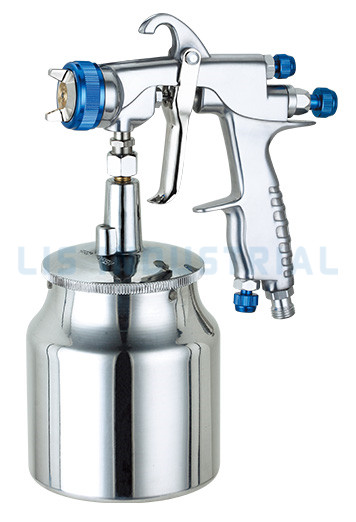
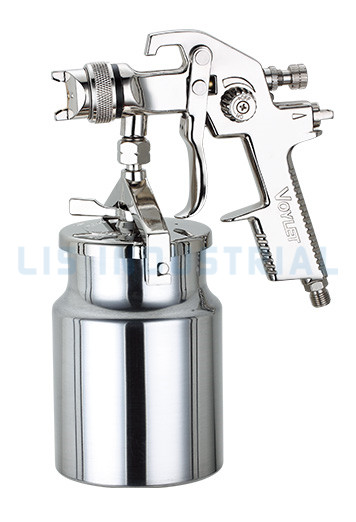
Compared with a siphon-feed gun, a gravity-feed gun generally places the material container above the fluid passage and can offer a direct, compact material path. This arrangement can be convenient for smaller jobs and may reduce the amount of material left in the delivery system. Siphon-feed guns may still be preferred for certain container arrangements or heavier-duty applications.
Compared with an airless sprayer, the G80 uses compressed air to atomize the coating. Airless systems can deliver high output and are often selected for large surfaces and certain heavy coatings. The G80, however, can provide more direct atomization control for smaller jobs and can be easier to clean and store when production volume is moderate.
Compared with an automatic spray gun, the G80 requires manual operation. Automatic systems are appropriate for production lines where repeatability, cycle time, and integration are priorities. The manual G80 is more suitable when workpieces vary in shape, quantity, or position and when equipment flexibility is more important than full automation.
Compared with a high-end specialized professional gun, the G80 focuses on essential performance and economical ownership. It may not include every advanced feature of a premium system, but its accessible design can be an advantage for general workshops, training environments, maintenance teams, and buyers who want controlled investment.
| Equipment Type | Main Strength | Typical Limitation | Position of the G80 |
|---|---|---|---|
| Basic single-nozzle gun | Low purchase cost | Limited material and finish flexibility | Offers three nozzle options and a more adaptable setup |
| Gravity-feed conventional gun | Simple material delivery and manual control | Requires operator technique | The G80 is designed for this practical category |
| Siphon-feed gun | Flexible container placement | May require more material movement through the pickup system | The G80 provides a compact gravity-fed alternative |
| Airless sprayer | High output on large surfaces | Different cleaning, pressure, and overspray considerations | The G80 suits smaller and more controlled applications |
| Automatic spray gun | Repeatable production-line operation | Higher integration and equipment requirements | The G80 is more flexible for manual and varied work |
| Premium specialized gun | Advanced application features | Higher purchase and ownership cost | The G80 emphasizes essential performance and value |
Safety and Responsible Use
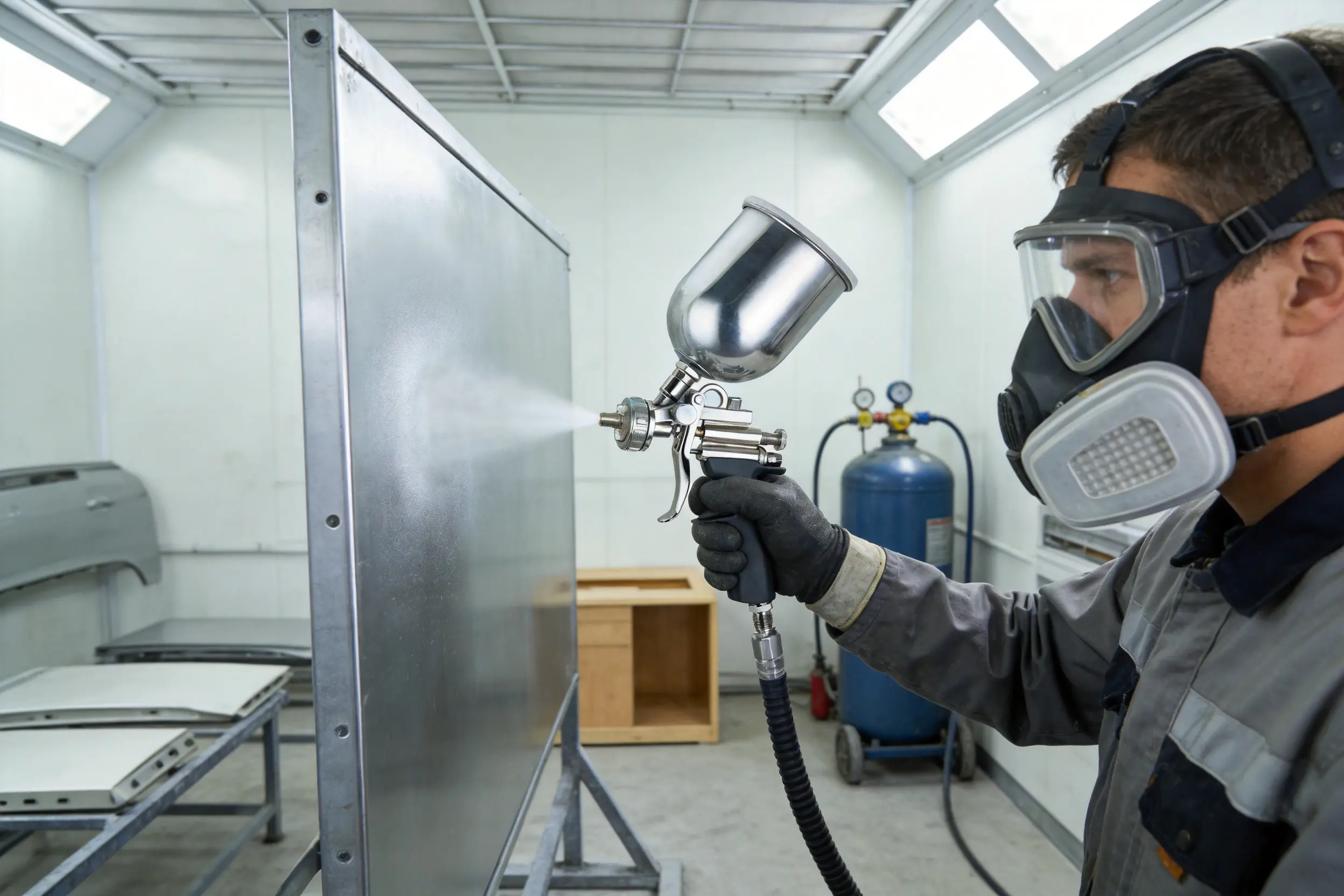
Spray painting involves compressed air, airborne droplets, flammable materials in some applications, and chemical exposure. The G80 should be used only in a properly ventilated area with suitable protective equipment. Operators should wear respiratory protection, eye protection, gloves, and protective clothing appropriate for the coating being applied.
Material safety data and coating manufacturer instructions should be reviewed before use. Some paints and solvents require explosion-resistant equipment, specialized ventilation, grounding, or strict ignition control. The operator must confirm that the complete spraying environment is suitable for the material.
Compressed air should never be directed at people or used to clean clothing or skin. The air supply should be disconnected before maintenance, nozzle removal, or internal cleaning. Damaged hoses, leaking couplers, or cracked components should be replaced before operation.
Waste coating and cleaning fluids should be collected and disposed of according to local regulations. Responsible handling protects workers, the environment, and the long-term reputation of the workshop. A well-managed spray process is not only safer but can also reduce material waste and improve final quality.
Cleaning and Maintenance Recommendations
Cleaning should begin as soon as possible after spraying. Once coating material dries inside the nozzle or fluid passage, removal becomes more difficult and may require extended soaking or replacement of parts. Prompt cleaning helps preserve the original spray characteristics.
Empty the cup and follow the coating supplier’s cleaning instructions. Use a compatible cleaning fluid and flush the fluid path carefully. Remove the air cap and nozzle only as far as necessary, using suitable tools that will not damage the surfaces.
Inspect seals and gaskets periodically. If a seal becomes swollen, hardened, cracked, or chemically damaged, it may cause air or fluid leakage. Replacement parts should match the intended G80 configuration and should be installed carefully to avoid cross-threading or misalignment.
Store the gun in a dry, clean area. Do not leave it immersed in solvent for longer than recommended, because prolonged exposure may damage seals and finishes. Keep nozzles and small components in a protected container so that they are not lost or contaminated.
Quality, Value, and Total Cost of Ownership
The purchase price of a spray gun is only one part of its total cost. Users should also consider material waste, cleaning time, replacement parts, downtime, operator training, compressor compatibility, and expected service life. The G80’s value comes from the relationship between these factors.
Its gravity-feed format can be suitable for controlled quantities of coating, while the 600 ml cup can reduce unnecessary interruptions. Three nozzle choices may reduce the need to purchase separate guns for every common application. The G1/4-inch inlet can simplify connection to existing workshop systems, and the conventional structure can make routine maintenance easier to organize.
A product that is simple to operate and maintain can also reduce training demands. Operators still need proper instruction, but they can learn the relationship between pressure, viscosity, distance, movement, and overlap without dealing with a highly complex equipment platform.
The manufacturing company’s quality systems, testing procedures, R&D capability, and international experience further support the product’s value. These strengths do not eliminate the need for correct application practice, but they provide a stronger foundation than an anonymous, uncontrolled product source.

Purchasing Guidance for Distributors and Professional Users
Before purchasing the G80 in quantity, buyers should confirm the required nozzle configuration. Some markets may prefer one nozzle size, while others may require mixed nozzle kits. The buyer should also verify cup material, included accessories, spare parts availability, packaging language, labeling, and warranty terms.
Distributors should identify the main application segments in their market. Automotive repair customers may require different support materials from woodworking customers. Industrial users may request technical documents, compliance information, or private labeling. Understanding these needs helps the distributor order the correct configuration and prepare useful product training.
Professional users should evaluate the gun together with the available compressor. A compressor that cannot maintain sufficient air volume may produce unstable atomization even when the spray gun is functioning correctly. Hose diameter, regulator quality, moisture control, and connection condition should be included in the evaluation.
Sample testing is recommended before major adoption. A test can compare coverage, spray pattern, material consumption, cleaning time, and operator comfort against the customer’s current equipment. This provides more meaningful information than comparing specifications alone.
Why the G80 Is a Practical Choice
The G80 is not designed as a specialized solution for every possible coating operation. Its strength is its practical balance. It provides a gravity-feed structure, three nozzle choices, a 600 ml cup, a standard G1/4-inch inlet, and a clear 50 PSI reference in an economical conventional spray gun.
These features make it suitable for workshops that need reliable general-purpose equipment. It can support automotive repair, woodworking, furniture finishing, equipment maintenance, fabrication, and selected DIY projects. It can also serve as a useful product for distributors seeking an accessible spray gun with broad application potential.
Its advantages are reinforced by the manufacturer’s long-term experience, large production base, quality management process, functional testing, R&D capability, OEM and ODM services, and international market presence. Together, these factors make the G80 more than a basic hand tool. It is part of a broader manufacturing and service system designed to support spraying applications.
Questions and Answers
What type of spray gun is the G80?
The G80 is an economical conventional gravity-feed spray gun. It uses compressed air to atomize coating material supplied from a cup positioned above the gun body.
What nozzle sizes are available?
The listed fluid nozzle options are 1.5 mm, 1.8 mm, and 2.0 mm. The correct choice depends on coating viscosity, desired material flow, surface size, and the instructions provided by the coating manufacturer.
What is the cup capacity?
The cup capacity is 600 ml. This size is suitable for many small and medium spraying jobs while keeping the tool reasonably manageable for manual operation.
What air pressure does the G80 use?
The specified air pressure is 50 PSI. Users should begin with the recommended reference and adjust carefully after testing the spray pattern, while also considering the pressure available at the gun inlet.
What air connection does the product have?
The G80 uses a G1/4-inch air inlet. This is a widely used connection size for air hoses, regulators, filters, and other air-tool accessories.
Can the G80 be used for woodworking?
Yes. It can be used for compatible woodworking coatings such as suitable stains, sealers, primers, paints, lacquers, and clear finishes. The material supplier’s viscosity, nozzle, pressure, and safety instructions should always be followed.
Is the G80 suitable for automotive work?
It can be used for selected automotive repair and refinishing applications when the coating and process are compatible with a conventional gravity-feed spray gun. Operators should test the setup and follow all requirements for ventilation, protective equipment, mixing, and curing.
Is the G80 suitable for large factory production lines?
The G80 is primarily a manual general-purpose spray gun. Large automated production lines may require automatic guns, pressure-feed systems, robotics, or other specialized equipment. The G80 is better suited to varied manual work, repair operations, small and medium batches, and general workshops.
How should the spray gun be cleaned?
The cup, fluid passage, nozzle, and air cap should be cleaned promptly after use with a compatible cleaning method. The coating manufacturer’s cleaning recommendations should be followed, and precision openings should not be damaged with unsuitable tools.
Can the manufacturer provide customized products?
The company reports OEM services based on customer drawings or samples and ODM services according to customer requirements. Customization possibilities should be discussed directly, including product specifications, packaging, markings, accessories, and order quantities.
What quality controls are reported by the manufacturer?
The reported process includes raw material and incoming inspection, in-process quality control, 100 percent functional testing, and final quality inspection. Buyers should request current technical and compliance documents for the exact product configuration they intend to purchase.
How is the product packed?
The stated carton configuration is 20 pieces per carton. The carton dimensions are 74.5 x 46.5 x 27 cm. Buyers should confirm final packing details before shipment because packaging may vary according to market or customized order requirements.
Conclusion
The G80 gravity-feed conventional spray gun offers a well-balanced solution for users who need practical spray performance without the cost and complexity of highly specialized equipment. Its 1.5 mm, 1.8 mm, and 2.0 mm nozzle options provide useful flexibility, while the 600 ml cup supports many workshop and repair applications. The G1/4-inch air inlet and 50 PSI reference further simplify setup with common compressed-air systems.
Its value is strengthened by a straightforward gravity-feed design, accessible maintenance, broad application range, and suitability for professional and general-purpose work. Compared with basic single-nozzle products, it provides greater adaptability. Compared with larger or automated systems, it offers easier manual control and lower operational complexity.
The manufacturing background behind the product is equally important. Ningbo Lis Industrial Co., Ltd. brings decades of experience, a large production facility, a dedicated R&D capability, documented quality systems, functional testing, international certifications, and OEM and ODM support. These strengths provide a credible foundation for distributors and users seeking consistent spraying equipment from an established manufacturer.
When paired with correct material preparation, clean compressed air, suitable safety procedures, proper spraying technique, and regular maintenance, the G80 can deliver dependable service across automotive repair, woodworking, furniture finishing, equipment maintenance, fabrication, and many other applications. It is a practical tool for buyers who value flexibility, manageable ownership, and reliable manufacturing support.
References
Ningbo Lis Industrial Co., Ltd. Product specification information for the G80 gravity-feed conventional spray gun.
Ningbo Lis Industrial Co., Ltd. Corporate information concerning manufacturing capacity, quality management, certifications, research and development, OEM, and ODM services.
International Organization for Standardization. Quality management systems and ISO 9001 principles.
International Organization for Standardization. Environmental management systems and ISO 14001 principles.
Occupational health and safety management system guidance related to industrial manufacturing operations.
General compressed-air spray application practices for coating preparation, atomization, equipment setup, cleaning, and operator safety.