 Search

 English
 中文简体
 Deutsch
 Español
Content
- 1 Product Overview
- 2 Why a Dedicated Tyre Inflating Gun Matters
- 3 Pressure Capability and Practical Performance
- 4 G1/4-Inch Air Inlet Compatibility
- 5 Construction for Repeated Workshop Use
- 6 Advantages for Professional Users
- 7 Comparison with Less Specialized Alternatives
- 8 Manufacturing Expertise and Industrial Background
- 9 Quality Control from Incoming Materials to Finished Goods
- 10 ISO-Based Management and Product Certification
- 11 Research, Development, and Technical Cooperation
- 12 Applications in Different Work Environments
- 13 Installation and Operating Considerations
- 14 Maintenance Recommendations
- 15 Advantages for Distributors and OEM Buyers
- 16 How the G52 Creates Value over the Product Life Cycle
- 17 Procurement Checklist
- 18 Safety and Responsible Use
- 19 Frequently Asked Questions
- 19.1 What is the G52?
- 19.2 What type of air inlet does it use?
- 19.3 What is its rated pressure?
- 19.4 Can it be used for passenger vehicles?
- 19.5 Can it be used for commercial or utility tyres?
- 19.6 Is the G1/4-inch inlet widely used?
- 19.7 How is the product supplied?
- 19.8 What makes it different from an ordinary air hose?
- 19.9 What quality controls support the product?
- 19.10 Does the manufacturer offer OEM and ODM services?
- 19.11 What air compressor is required?
- 19.12 How should the G52 be maintained?
- 19.13 Can the G52 replace a professional tyre service machine?
- 19.14 Where can buyers obtain more information?
- 20 Conclusion
- 21 References
- 22 Product: G52
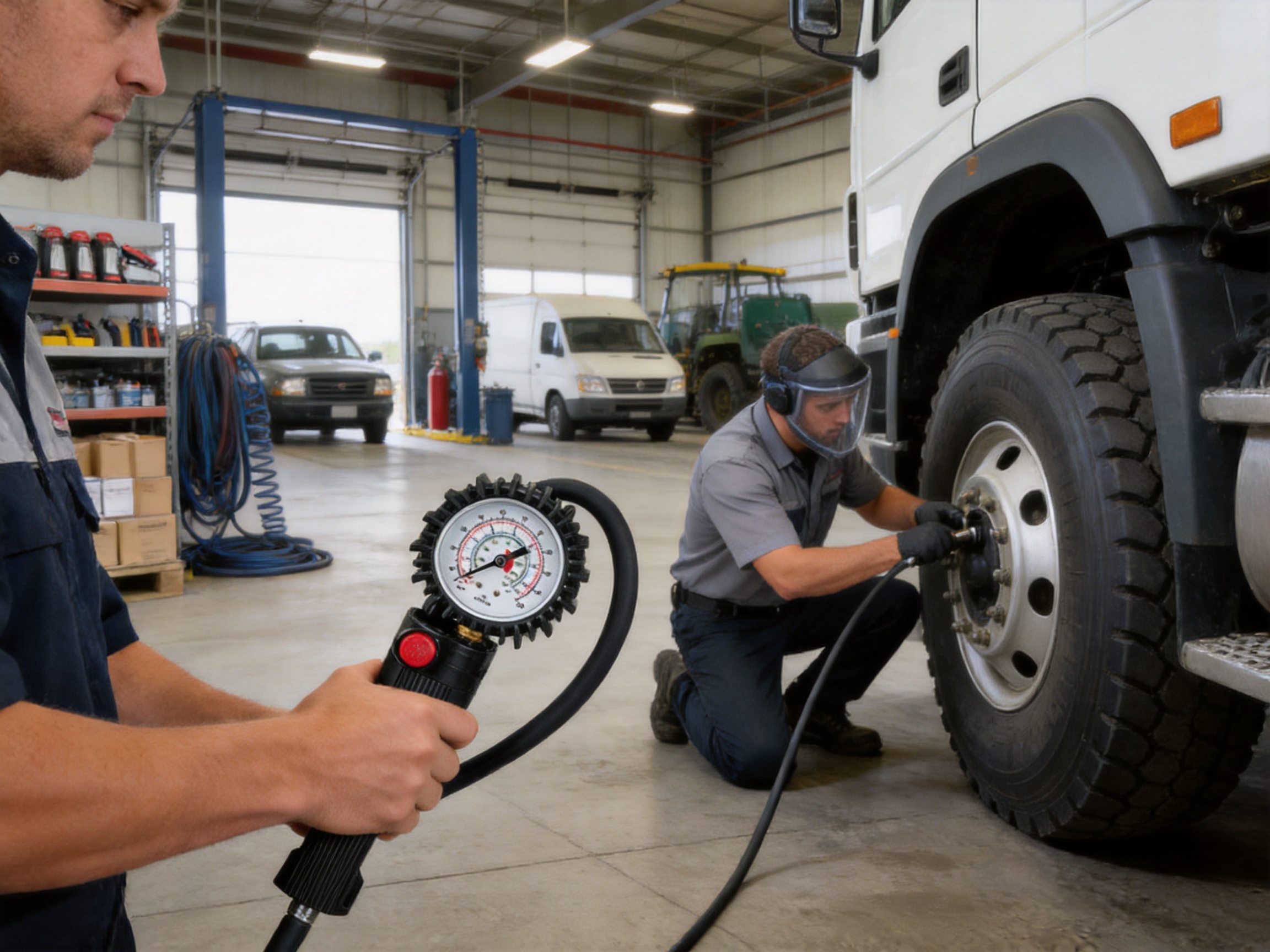
The G52 tyre inflating gun is designed for workshops, service stations, garages, vehicle maintenance facilities, agricultural equipment centers, and industrial users that require dependable compressed-air tyre inflation. Combining a practical air inlet, a high rated pressure, a stronger maximum pressure capability, and a production process built around quality control, the G52 provides a useful solution for routine tyre service and demanding maintenance environments.
Tyre inflation is often treated as a simple maintenance task, but accurate inflation has a direct effect on safety, handling, fuel consumption, tread wear, operating cost, and equipment performance. A tyre inflating gun must therefore do more than deliver air. It should connect securely to an air supply, withstand repeated pressure cycles, remain easy to operate, and provide consistent service over an extended working life. The G52 has been developed around these practical requirements.
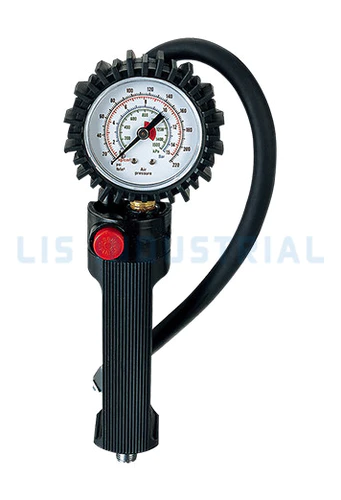
With a G1/4-inch air inlet, a rated pressure of 150 PSI, and a maximum pressure of up to 220 PSI, the G52 is suitable for a broad range of vehicle and equipment applications. Its compact format makes it convenient for workshop use, while its heavy-duty positioning supports regular operation in professional environments. The product is supplied in efficient cartons of 20 units, making it suitable for distributors, wholesalers, equipment dealers, and original equipment buyers.
Product Overview
The G52 is a compressed-air tyre inflating gun intended to help operators add air to tyres in a controlled and convenient manner. It is designed to work with standard workshop air systems and can be integrated into existing air hoses, compressors, and air pipeline accessories through its G1/4-inch inlet.
The primary specifications are listed below.
| Item | Specification |
|---|---|
| Product model | G52 |
| Product category | Tyre inflating gun |
| Air inlet | G1/4 inch |
| Rated pressure | 150 PSI |
| Maximum pressure | Up to 220 PSI |
| Packaging quantity | 20 pieces per carton |
| Carton dimensions | 57 × 29 × 28 cm |
| Typical air source | Workshop compressor or compressed-air pipeline |
| Intended users | Garages, workshops, service stations, distributors, and industrial maintenance teams |
The specification profile demonstrates that the G52 is not limited to occasional domestic use. Its pressure range supports common passenger vehicle applications as well as many light commercial, utility, and equipment-related tyre service requirements. Users should always confirm the recommended pressure of the tyre and follow the safety instructions supplied with the vehicle or equipment.
G52
Why a Dedicated Tyre Inflating Gun Matters
A dedicated tyre inflating gun offers several advantages over improvised inflation methods. It provides a purpose-built connection between the compressed-air source and the tyre valve, allowing the operator to work more efficiently and with better control. The form of the tool also supports repeated use, which is particularly important in professional workshops where many tyres may be serviced each day.
Manual pumps can be useful in emergencies, but they require significant physical effort and may not be practical for commercial service. A basic open air hose may deliver air, but it may lack the handling characteristics, connection compatibility, and pressure management expected from a proper inflation tool. The G52 is designed to occupy the practical middle ground between simple air delivery and more complicated tyre service equipment.
For a workshop, efficiency is measured not only by the purchase price of a tool but also by the time required for each job, the number of interruptions, the risk of connection problems, and the consistency of the result. A dependable inflating gun can shorten routine service operations and help technicians follow a repeatable process.
The G52 is also useful as part of a wider air-tool program. A workshop may already use spray guns, air blow guns, sandblasting equipment, pneumatic polishers, or other compressed-air tools. A standard G1/4-inch inlet makes it easier to select compatible air fittings, hoses, couplers, and pipeline accessories from an established workshop supply system.
Pressure Capability and Practical Performance
The G52 has a rated pressure of 150 PSI and a maximum pressure of up to 220 PSI. These figures provide a useful working margin for many vehicle maintenance environments. The rated pressure indicates the normal pressure level for which the product is specified, while the maximum pressure identifies the upper limit that must not be exceeded during use.
A suitable pressure range matters because different tyres and equipment require different inflation pressures. Passenger cars commonly operate at moderate pressures, while certain commercial vehicles, trailers, industrial machines, agricultural equipment, and specialized applications may require higher pressures. The G52 gives distributors and service organizations flexibility when supplying one professional tool for a variety of routine applications.
Pressure capability should never be confused with permission to inflate every tyre to the maximum tool pressure. Safe inflation always depends on the tyre manufacturer’s recommendation, the wheel specification, the condition of the tyre, and the operating instructions of the equipment being serviced. The tool provides an air delivery solution; the operator remains responsible for selecting the correct inflation pressure.
The pressure rating also contributes to product durability. When a tool is engineered for a defined pressure range, its air passage, connection area, body structure, seals, and operating components can be selected and tested according to that range. Properly controlled manufacturing helps reduce the possibility of performance variation between units.
G1/4-Inch Air Inlet Compatibility
The G1/4-inch air inlet is a widely used connection specification in compressed-air equipment. This is a practical benefit for professional users because it simplifies the selection of compatible hoses, adapters, couplers, regulators, and air pipeline components.
In a busy workshop, compatibility can influence productivity. If a tool requires an unusual connection, the operator may need special adapters or a separate hose assembly. A common inlet specification reduces this complexity and allows the G52 to be included in existing air systems with fewer modifications.
For distributors, a recognized inlet size can also simplify inventory management. Retailers and wholesalers may be able to offer the G52 alongside standard fittings and accessories, creating a convenient product package for end users. Customers can purchase the inflating gun with suitable connection parts instead of searching for unrelated components from different suppliers.
The inlet should be connected with the correct fitting and sealed properly. Thread compatibility, hose condition, compressor output, and air quality all affect the final performance of a pneumatic tool. Water, oil contamination, dust, or damaged connectors may reduce service life, so a clean and properly maintained air supply is recommended.
Construction for Repeated Workshop Use
A tyre inflating gun used in a professional environment may be connected and disconnected many times each day. It may be placed on a service cart, hung beside a compressor, or moved between vehicle bays. These conditions require a practical product design that can withstand normal handling and repeated operating cycles.
The G52 is positioned as a heavy-duty tyre inflating gun, making it suitable for users who expect more from a tool than occasional household service. Heavy-duty design generally includes attention to the strength of the body, the stability of the air connection, the reliability of internal seals, and the consistency of the trigger or control mechanism.
Durability also depends on manufacturing discipline. A strong design can perform poorly if dimensions vary excessively, components are not inspected, or finished products are not functionally tested. For this reason, the production system behind the G52 is an important part of its value. The manufacturer applies structured quality management from raw-material inspection through final product testing.
When a workshop selects a durable tool, it can reduce the frequency of replacement and the disruption caused by unexpected equipment failure. A longer service life may also lower the total cost of ownership, particularly for businesses that operate several service bays or maintain large fleets.
Advantages for Professional Users
The G52 offers several practical advantages for professional tyre service.
Efficient Air Delivery
Connected to a suitable compressor or workshop air pipeline, the G52 allows technicians to inflate tyres more efficiently than manual methods. This is particularly valuable where vehicles are serviced in volume, such as fleet depots, tyre centers, service stations, and logistics facilities.
Broad Application Potential
The pressure specification enables the tool to serve many common tyre inflation tasks. It can be considered for passenger vehicles, light commercial vehicles, trailers, motorcycles, utility vehicles, and selected equipment applications, subject to the pressure requirements and safety conditions of each tyre.
Easy Integration
The G1/4-inch inlet supports integration with common compressed-air equipment. Users can connect the gun to existing air hoses and fittings without redesigning an entire workshop system.
Professional Handling
A dedicated gun format provides a practical grip and operating arrangement for technicians. It is easier to position at the tyre valve and more convenient to move around a vehicle than a permanently fixed inflation arrangement.
Commercial Supply Convenience
The 20-piece carton quantity and 57 × 29 × 28 cm carton size are suitable for wholesale and distribution channels. Dealers can plan stock levels, organize warehouse space, and supply multiple branches or service locations efficiently.
Potentially Lower Operating Cost
A reliable pneumatic tool can support a lower cost per service operation by reducing manual effort and saving technician time. When combined with correct maintenance and proper use, its durable construction can also help reduce replacement frequency.
Comparison with Less Specialized Alternatives
Product selection should be based on application, operating frequency, required pressure, connection type, and service expectations. The G52 offers a professional alternative to several less specialized approaches.
| Selection factor | Basic manual pump | Uncontrolled air hose | G52 tyre inflating gun |
|---|---|---|---|
| Air source | Human-powered | Compressed air | Compressed air |
| Suitability for repeated service | Limited | Variable | Designed for regular workshop use |
| Connection convenience | Application-dependent | May require separate attachment | Uses a dedicated tool with G1/4-inch inlet |
| Operator effort | High for repeated inflation | Low, but handling may be inconvenient | Low and suitable for professional operation |
| Pressure capability | Depends on pump design | Depends on the air system | Rated at 150 PSI, maximum up to 220 PSI |
| Workshop integration | Limited | Possible but less organized | Designed for connection to air equipment |
| Supply format | Usually individual | Usually component-based | 20 pieces per carton for distribution |
This comparison does not mean that every alternative is unsuitable. A manual pump may be useful in an emergency, and an air hose can be helpful for general cleaning or air delivery. However, a dedicated tyre inflating gun is usually more convenient when consistent, repeated tyre service is part of the daily workflow.
Compared with low-cost products made without a clearly controlled manufacturing system, the G52 benefits from the support of an established industrial producer with experience in air tools and spraying equipment. The value lies not only in the basic pressure figures but also in production experience, inspection procedures, technical development, and after-sales supply capability.
Manufacturing Expertise and Industrial Background
The manufacturer has specialized in air painting spray guns, mini air compressors, and related air tools since 1984. This long-term focus provides a substantial technical foundation for the production of pneumatic equipment. Although a tyre inflating gun has a different use from a paint spray gun, both product groups depend on controlled air passages, reliable connections, suitable materials, precision assembly, and consistent functional testing.
The company operates from Ningbo, China, a major industrial and port city with developed manufacturing resources and convenient transportation. Its production site covers more than 400,000 square feet and employs more than 400 people. Annual output is reported at more than 40 million United States dollars, reflecting the scale required to support international supply programs.
A large manufacturing base can provide important benefits for buyers. It can support dedicated production areas, more systematic purchasing, specialized assembly operations, better production planning, technical development, and greater capacity during periods of increased demand. The stated ability to increase production capacity by 30 percent within two months may be valuable for distributors managing seasonal demand or new market launches.
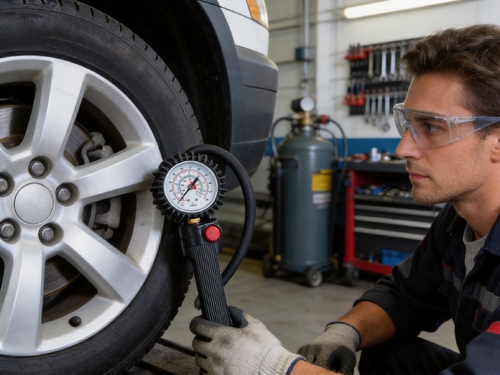
Manufacturing scale alone does not guarantee quality, but it creates the infrastructure for quality when supported by appropriate systems. The manufacturer’s documented approach includes raw-material and incoming inspection, in-process quality control, functional testing, and final inspection of finished products.
Quality Control from Incoming Materials to Finished Goods
Quality control begins before assembly. Incoming materials and components must be checked against defined requirements to confirm that they are suitable for production. This stage helps identify dimensional variation, surface defects, material problems, or supplier inconsistencies before those issues enter the assembly line.
In-process quality control is equally important. Operators and inspectors can verify assembly dimensions, thread conditions, air passage connections, operating movement, and other characteristics at different stages of production. Detecting a problem during assembly is generally more efficient than discovering it after packaging or delivery.
The manufacturer also describes 100 percent functional testing. For a pneumatic tool, functional testing can help confirm that the assembled product operates correctly and that the air system is capable of performing as intended. Testing every finished unit rather than relying only on sample inspection provides additional confidence for professional buyers.
Final quality inspection provides another checkpoint before products are packed. This stage may include visual checks, packaging verification, product identification, and confirmation that the correct quantity is prepared for shipment. For export customers, consistent packaging and documentation are important because products may travel through several distribution stages before reaching the final user.
This layered approach is particularly relevant to tyre inflating guns. Air tools must maintain a dependable connection and withstand pressure during operation. A small defect in a fitting, seal, or body component can affect performance. A controlled quality system helps reduce the risk of such defects reaching customers.
ISO-Based Management and Product Certification
The manufacturer reports operation under ISO9000 quality-system requirements and identifies certifications including ISO9001, ISO14001, and OHSAS18001. It also reports European CE and German GS product certifications for applicable products. These systems and certifications demonstrate an established approach to quality management, environmental management, occupational health, and product safety.
Certification does not remove the need for correct product use or maintenance. Instead, it indicates that the organization has developed formal processes intended to manage production and compliance. Buyers should request the specific certificate and product documentation applicable to the G52 and the destination market before placing a large order.
For importers and distributors, documented quality systems can simplify supplier evaluation. They provide a basis for reviewing manufacturing controls, corrective actions, traceability, and production consistency. This is especially important when tools are purchased in volume or supplied under a private-label arrangement.
Environmental and occupational management systems can also contribute to responsible manufacturing. Efficient material use, controlled production conditions, worker safety procedures, and waste management are increasingly important considerations in international procurement.
Research, Development, and Technical Cooperation
The manufacturer maintains a research and development capability dedicated to spraying machinery and related air tools. It has established a spraying machinery engineering technology center and has engaged in technical cooperation with an American spraying technology company. This technical background supports continued improvement in pneumatic product design.
Research and development can influence the G52 in several ways. Engineers may study air efficiency, body ergonomics, connection reliability, component life, production methods, and application requirements. Product development may also focus on making tools easier to assemble, inspect, maintain, and distribute.
The manufacturer offers OEM services based on customer drawings or samples and ODM services based on customer requirements. This is useful for distributors and equipment companies that need a customized handle design, packaging format, product marking, connection arrangement, or sales configuration, provided that the requested changes remain technically and legally suitable.
OEM and ODM capability also gives buyers an opportunity to develop a broader product program. A company may begin with the standard G52 and later request packaging adapted to its market, a private-label version, or a related series of air tools. A supplier capable of supporting both standard production and customization can reduce the number of separate manufacturing relationships a buyer must manage.
Applications in Different Work Environments
Automotive Workshops
Automotive repair shops can use the G52 for routine tyre pressure checks and inflation during maintenance, brake service, suspension work, wheel replacement, and vehicle preparation. Its compressed-air operation fits naturally into workshops that already have an air compressor.
Tyre Service Centers
Tyre centers require tools that can withstand frequent use. The G52 can support daily inflation work for passenger vehicles and light commercial vehicles, subject to appropriate pressure limits and connection accessories.
Service Stations
Service stations can use the product in maintenance bays or provide it as part of an assisted tyre service area. A reliable tool helps staff handle customer vehicles efficiently while keeping the inflation process connected to the station’s existing air system.
Fleet Maintenance Facilities
Transport companies, delivery operators, construction businesses, and municipal departments often maintain multiple vehicles. A dedicated inflating gun can help standardize tyre service across different work areas and reduce dependence on manual inflation methods.
Agricultural and Utility Equipment Maintenance
Some agricultural and utility equipment uses tyres that require more air than ordinary passenger vehicles. The G52 pressure specification may make it suitable for selected applications, but the operator must verify the equipment manufacturer’s pressure requirements and ensure that the tyre and wheel are in safe condition.
Industrial Maintenance Departments
Factories, warehouses, and logistics facilities may operate carts, trailers, forklifts, or other wheeled equipment. A compact tyre inflating gun can be stored with maintenance tools and connected to the plant’s compressed-air network when needed.
Wholesale and Distribution
The 20-piece carton packaging is convenient for distributors that supply independent garages, tool retailers, industrial dealers, and regional service networks. The carton dimensions provide a clear basis for warehouse planning and freight calculation.
Installation and Operating Considerations
Before using the G52, inspect the tool, hose, fittings, and tyre valve. Do not use a product with visible cracks, damaged threads, worn seals, or other defects. Confirm that the compressor and air pipeline are suitable for the tool’s pressure requirements.
Connect the air hose to the G1/4-inch inlet using a compatible fitting. The connection should be secure and free from leakage. If an adapter is required, select one with the correct thread and pressure rating. Avoid forcing incompatible threads together, as this can damage the inlet and create an unsafe connection.
Check the tyre condition before inflation. Do not inflate a tyre that shows severe sidewall damage, exposed cords, deep cuts, separation, or signs of a compromised bead. A damaged tyre may fail during inflation regardless of the quality of the tool.
Confirm the recommended pressure from the vehicle manufacturer, tyre manufacturer, equipment manual, or applicable service information. Inflate gradually and monitor the pressure with a suitable gauge or integrated pressure-measuring arrangement where provided. Never exceed the tyre’s permitted pressure or the tool’s maximum pressure.
During inflation, keep hands and face away from the immediate valve and bead area. For large, damaged, or specialized tyres, use appropriate safety equipment and follow professional tyre-service procedures. If there is any doubt about the condition of the tyre or wheel, refer the task to a qualified technician.
After inflation, close the air supply, remove the connector carefully, and check for leakage. Store the tool in a clean, dry location where it is protected from impact, excessive moisture, and contaminants.
Maintenance Recommendations
Regular maintenance helps preserve pneumatic tool performance. Inspect the air inlet and fitting regularly for damage or loose connections. Check the hose for abrasion, cuts, crushing, and signs of aging. Replace worn components before they create a safety or performance problem.
Compressed air should be as clean and dry as practical. Water and contamination in the air line can affect internal components and seals. If the workshop uses a filter, regulator, or dryer, maintain those devices according to their service instructions. A properly prepared air supply benefits all pneumatic tools, including inflating guns, spray guns, polishers, and air blow guns.
Do not use aggressive chemicals or unsuitable solvents to clean the tool. Wipe external surfaces with an appropriate cloth and use maintenance materials recommended for pneumatic equipment. If lubrication is required, follow the product instructions and avoid excessive oil that could contaminate connected systems.
Store the G52 away from direct sunlight, corrosive materials, extreme temperatures, and locations where it may be crushed by vehicles or other equipment. Proper storage is simple but can significantly extend the useful life of a workshop tool.
Advantages for Distributors and OEM Buyers
For distributors, the G52 provides a straightforward product proposition: a professional tyre inflating gun with a familiar air inlet, a strong pressure specification, and packaging suitable for wholesale supply. It can be positioned within automotive tools, pneumatic tools, garage equipment, or general industrial maintenance categories.
The established manufacturing background is another advantage. Buyers can work with a supplier that has experience in air tools, international markets, certification, OEM production, and ODM development. This reduces the need to coordinate technical development with a company that has no background in pneumatic equipment.
The manufacturer serves customers in Europe, North America, the Middle East, South Africa, and East Asia. International distribution experience can support export documentation, packaging requirements, product communication, and long-term supply planning. Buyers should still confirm the precise requirements of their own market, including labeling, certification, customs documentation, and local safety regulations.
OEM customers may request customized packaging, product identification, manuals, or visual presentation. ODM customers may work with the manufacturer on a modified product concept or related pneumatic product. These services can help a retailer or equipment supplier create a differentiated product range rather than competing only on generic product availability.
Stable production capacity is especially useful when a product becomes part of a service network. If a distributor supplies many workshops, inconsistent availability can cause customers to switch to alternative products. A manufacturer with a large facility, established workforce, and capacity planning can provide a stronger foundation for repeat orders.
How the G52 Creates Value over the Product Life Cycle
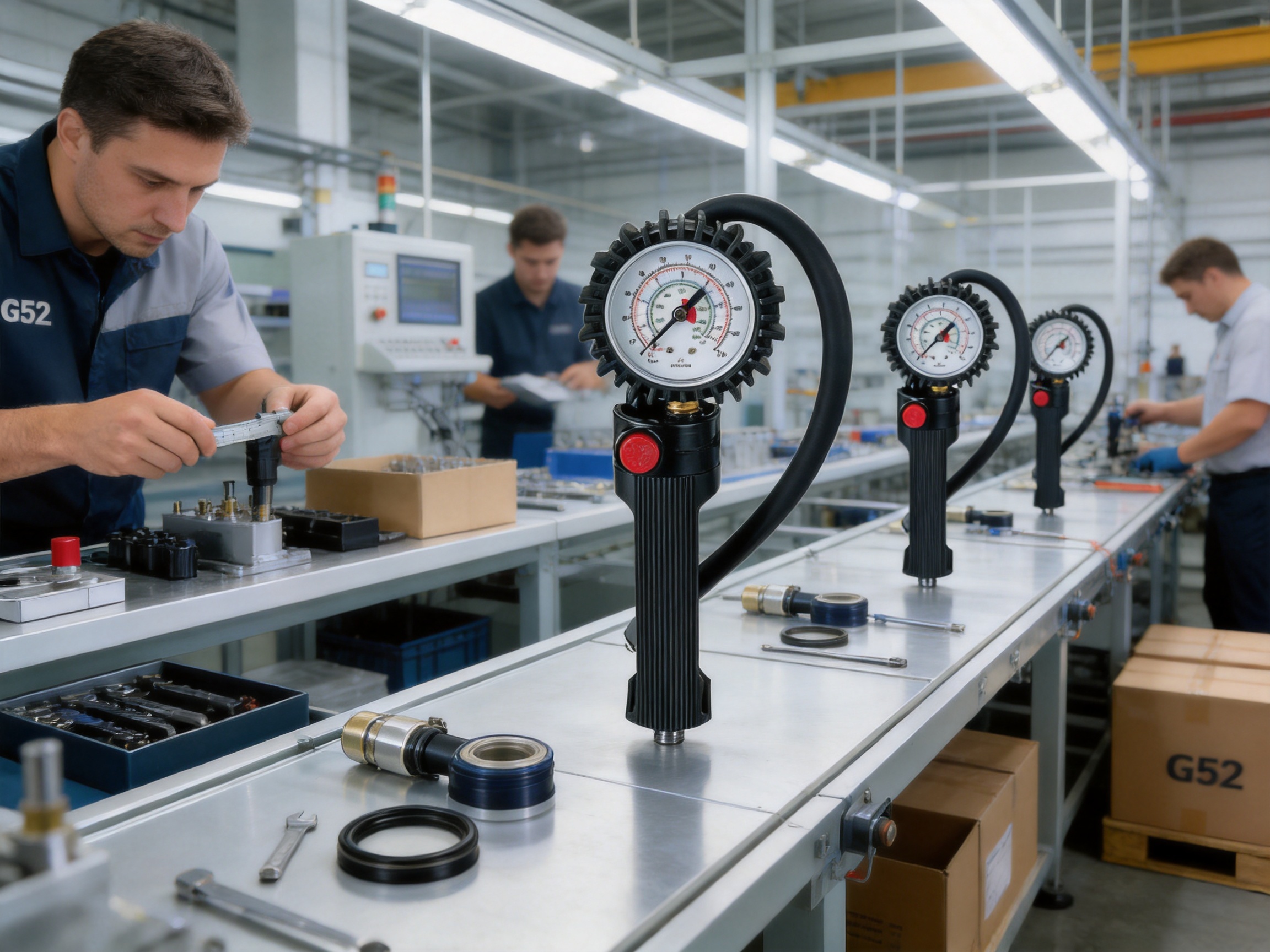
The purchase price is only one part of the value of a tyre inflating gun. Buyers should consider installation, operating time, maintenance, replacement frequency, inventory management, and the consequences of tool failure.
The G52’s standard G1/4-inch inlet can reduce setup complexity by fitting into common air systems. Its pressure capability supports a broad range of service tasks. Its professional construction is intended for repeated use, while the manufacturer’s inspection and testing procedures support product consistency.
For a small garage, value may come from saving technician effort and avoiding the need for several specialized inflation tools. For a large service center, value may come from standardizing equipment across multiple bays. For a distributor, value may come from reliable carton packaging, OEM support, technical documentation, and the ability to reorder from an established manufacturing source.
Long-term value is also connected to correct use. Even a well-made tool can be damaged by excessive pressure, contaminated air, impact, incorrect fittings, or neglect. Training technicians and following maintenance recommendations are therefore essential parts of the product’s life-cycle performance.
Procurement Checklist
Before purchasing the G52, buyers should evaluate the following points.
- Confirm that a G1/4-inch air inlet is compatible with the intended hose and air pipeline system.
- Confirm that the rated pressure and maximum pressure suit the intended tyre and equipment applications.
- Review local safety, labeling, packaging, and certification requirements.
- Ask for applicable product drawings, manuals, testing information, and certificates.
- Confirm carton quantity, carton dimensions, shipping method, and delivery schedule.
- Discuss OEM or ODM requirements if private-label or customized products are needed.
- Evaluate after-sales support, replacement parts, technical communication, and warranty terms.
- Ensure that the compressor can supply sufficient air for the intended workload.
- Plan suitable storage to protect tools from moisture, contamination, and impact.
These checks help buyers match the product to the actual working environment instead of selecting a tool based only on appearance or price.
Safety and Responsible Use
Compressed air and pressurized tyres can present serious hazards when used incorrectly. Operators should wear appropriate eye protection and follow workplace safety procedures. Never point the air outlet at a person, never use compressed air to clean clothing or skin, and never exceed the pressure limits of the tool, hose, fitting, tyre, or wheel.
Tyre inflation should be performed by trained personnel when the tyre is large, damaged, heavily loaded, or associated with specialized equipment. Operators must understand the risks related to bead seating, wheel condition, split rims, and stored energy. The G52 is a professional air tool, but it is not a substitute for safe working practices or qualified technical judgment.
When the tool is used in commercial operations, employers should provide training, inspection procedures, and suitable personal protective equipment. Regular checks of hoses, couplers, valves, and compressor systems can help prevent avoidable incidents.
Frequently Asked Questions
What is the G52?
The G52 is a compressed-air tyre inflating gun designed for vehicle, equipment, workshop, and industrial maintenance applications.
What type of air inlet does it use?
The product uses a G1/4-inch air inlet. Users should select compatible hoses, couplers, and fittings with suitable pressure ratings.
What is its rated pressure?
The rated pressure is 150 PSI. The stated maximum pressure is up to 220 PSI. The correct operating pressure must always be determined by the tyre or equipment manufacturer’s instructions.
Can it be used for passenger vehicles?
Yes. Its pressure specification and workshop format make it suitable for many passenger vehicle tyre inflation tasks, provided that the correct fittings are used and the recommended tyre pressure is followed.
Can it be used for commercial or utility tyres?
It may be suitable for selected commercial, utility, trailer, agricultural, or industrial applications. Buyers must verify the required pressure, tyre condition, wheel design, and applicable safety procedures before use.
Is the G1/4-inch inlet widely used?
G1/4-inch is a common connection size in compressed-air equipment. Compatibility should still be confirmed because thread standards and fitting designs may vary between markets and suppliers.
How is the product supplied?
The stated packaging is 20 pieces per carton, with carton dimensions of 57 × 29 × 28 centimeters.
What makes it different from an ordinary air hose?
The G52 is a dedicated tyre inflating tool designed for handling and repeated service. An ordinary air hose may deliver air, but it may not provide the same convenience, connection arrangement, or purpose-built workshop format.
What quality controls support the product?
The manufacturer describes control of raw materials and incoming components, in-process quality checks, 100 percent functional testing, and final inspection. These controls are intended to improve consistency and reduce defects.
Does the manufacturer offer OEM and ODM services?
Yes. The manufacturer reports that it can produce according to customer drawings or samples and can provide development services according to customer requirements. Details should be discussed for each project.
What air compressor is required?
The appropriate compressor depends on the number of tyres, inflation speed, hose length, air-line losses, and workshop workload. The compressor must provide clean, dry air at a pressure suitable for the tool and application.
How should the G52 be maintained?
Keep the tool clean and dry, inspect the inlet and hose connections, protect it from impact, and maintain the compressed-air system. Follow the supplier’s instructions for lubrication, cleaning, and replacement parts.
Can the G52 replace a professional tyre service machine?
No. The G52 is an inflation tool. It does not replace tyre changers, balancing machines, safety cages, pressure monitoring systems, or other equipment required for specialized tyre service.
Where can buyers obtain more information?
Commercial buyers can contact the manufacturer through its sales department for quotations, technical documents, OEM and ODM discussions, packaging information, certificates, and delivery arrangements.
Conclusion
The G52 tyre inflating gun is a practical pneumatic tool for workshops, service stations, garages, fleet operators, distributors, and industrial maintenance teams. Its G1/4-inch air inlet supports integration with common compressed-air systems, while the 150 PSI rated pressure and maximum pressure of up to 220 PSI provide flexibility for many vehicle and equipment applications.
Its value extends beyond basic specifications. The product is supported by a manufacturer with decades of experience in air tools, a large production facility, international supply experience, research and development resources, OEM and ODM capabilities, and structured quality control. Raw-material inspection, in-process checks, full functional testing, and final inspection contribute to a more consistent finished product.
Compared with manual pumps or unstructured air hoses, a dedicated inflating gun can improve workshop efficiency, reduce operator effort, and provide a more organized approach to tyre service. For distributors, carton packaging and scalable production make the G52 suitable for regular commercial supply.
Correct application remains essential. Operators should use compatible fittings, maintain clean compressed air, follow tyre pressure recommendations, inspect tyres before inflation, and observe all relevant safety procedures. When selected and used properly, the G52 can become a dependable component of a professional air-tool system.
References
1. Product specification sheet for the G52 tyre inflating gun, including air inlet, rated pressure, maximum pressure, and packaging information.
2. Manufacturer information concerning air tools, pneumatic equipment, product development, OEM production, ODM services, and international distribution.
3. ISO 9001 quality management system principles and quality-control practices for manufacturing organizations.
4. General workshop guidance for compressed-air tool maintenance, hose inspection, fitting compatibility, and air-line preparation.
5. General tyre service and inflation safety guidance concerning recommended pressure, tyre condition, wheel inspection, and operator protection.
6. General principles of pneumatic equipment selection, including pressure ratings, air inlet standards, compressor capacity, and service environment requirements.