 Search
 English
 中文简体
中文简体 Deutsch
 Español
Content
- 1 Product Overview
- 2 Why the HYQ11 Matters in Professional Workshops
- 3 Advantages Over Common Competing Products
- 4 Engineering Value of the G1/4 Air Inlet
- 5 Pressure Performance: Rated Pressure and Maximum Limit
- 6 Applications in Cleaning, Maintenance, and Service Work
- 7 Manufacturing Strength Behind the Product
- 8 Quality Control from Raw Material to Final Inspection
- 9 Certifications and Management Systems
- 10 Research and Development Capability
- 11 OEM and ODM Support for Professional Buyers
- 12 Packaging and Logistics Advantages
- 13 How the HYQ11 Fits into a Complete Air Tool Program
- 14 User Experience and Practical Handling
- 15 Maintenance Recommendations
- 16 Buyer Considerations
- 17 Frequently Asked Questions
- 17.1 What is the HYQ11?
- 17.2 What air inlet does the HYQ11 use?
- 17.3 What is the rated pressure of the HYQ11?
- 17.4 What is the maximum pressure?
- 17.5 How is the HYQ11 packed?
- 17.6 What makes the HYQ11 different from low-cost competitors?
- 17.7 Can the HYQ11 be used in an international distribution program?
- 17.8 Does the manufacturer provide OEM or ODM support?
- 17.9 Why is manufacturing experience important for a water or grease gun?
- 17.10 How should users maintain the HYQ11?
- 18 Conclusion
- 19 References
- 20 Product: HYQ11
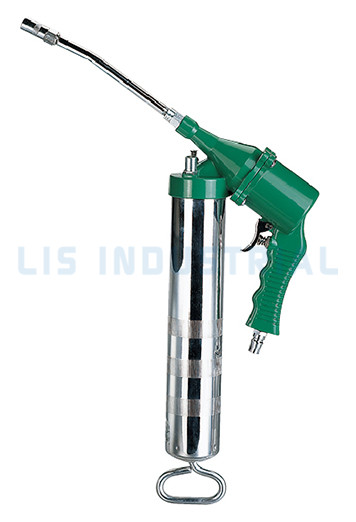
In modern workshops, maintenance bays, industrial cleaning stations, vehicle service centers, and production environments, a water gun or grease gun must do more than simply connect to compressed air and discharge fluid. It must be stable under pressure, easy to handle, consistent in output, compatible with standard air systems, efficient to pack and transport, and dependable enough for repeated daily use. The HYQ11 is designed for this practical working reality. As a product in the Water Guns & Grease Guns category, it combines a straightforward pneumatic structure with carefully controlled specifications, making it suitable for users who need a reliable air-powered tool for cleaning, washing, lubrication-related service, and general workshop support.
The HYQ11 is built around essential performance values: a G1/4 air inlet, a rated working pressure of 70 PSI, and a maximum pressure limit of no more than 140 PSI. These figures may appear simple, but they are important because they define the tool’s compatibility, operating safety, and usable working range. A G1/4 inlet is widely accepted in industrial pneumatic systems, which allows the tool to integrate easily with common air fittings and pipelines. A 70 PSI rated pressure supports stable daily operation, while the 140 PSI maximum pressure ceiling provides a practical safety boundary for demanding environments.
Behind the HYQ11 is a manufacturer with decades of experience in air painting spray guns, mini air compressors, and related air tools. Since its establishment in 1984, the company has grown into one of the major enterprises in the painting spray gun and pneumatic tool industry in China. Its capabilities include research and development, manufacturing, marketing, OEM production, ODM services, strict quality management, and international certification systems. These manufacturing strengths are highly relevant to the HYQ11 because a water and grease gun benefits from the same engineering discipline required for precise spray guns, air tools, air pipeline accessories, and pressure-related pneumatic equipment.
Unlike many basic workshop washing guns or grease-related air tools that are purchased only for low cost, the HYQ11 is positioned as a dependable product for buyers who care about practical quality. It is not merely a loose assembly of generic parts. It is part of a larger production system supported by raw material inspection, in-process quality control, 100% functional testing, and final inspection. This makes it attractive for distributors, wholesalers, workshop supply companies, and professional users who need repeatable quality in every shipment, not just one acceptable sample.
Product Overview
The HYQ11 belongs to the Water Guns & Grease Guns range, a category that serves many professional maintenance and cleaning tasks. In a typical air tool catalog, water guns and grease guns are often placed alongside air blowing guns, tyre inflating guns, paint spray guns, sandblast guns, foam guns, air brushes, air polishers, air fittings, and pipeline accessories. This reflects the fact that workshops rarely use one pneumatic tool alone. They require a complete system of compressed air tools that can share fittings, hoses, regulators, pressure sources, and maintenance procedures.
The HYQ11 is designed for users who want a simple, strong, and practical tool. Its G1/4 air inlet helps it connect with commonly used compressed air systems. Its 70 PSI rated pressure places it in a comfortable working range for many general service environments. Its maximum pressure limit of 140 PSI gives operators a clear ceiling, helping them avoid unsafe overloading and extending the service life of the tool when used correctly.
Packaging is also part of the product’s professional value. The carton size is 47.5 by 41 by 32 centimeters, with 10 pieces per carton. This packing format supports efficient handling for importers, distributors, warehouse operators, and retailers. A product may perform well in use, but if it is inefficient to store, count, ship, or distribute, it creates hidden costs. The HYQ11’s carton specification gives buyers a clear basis for logistics planning and inventory management.
| Item | HYQ11 Specification | Practical Meaning |
|---|---|---|
| Product Category | Water Guns & Grease Guns | Suitable for workshop cleaning, washing, maintenance, and service support tasks |
| Model | HYQ11 | Identifies the product clearly for ordering, inventory, and replacement planning |
| Air Inlet | G1/4 | Compatible with common pneumatic fittings and air supply systems |
| Rated Pressure | 70 PSI | Supports stable everyday operation under normal compressed air conditions |
| Maximum Pressure | No more than 140 PSI | Defines the upper operating limit for safer use and longer service life |
| Carton Size | 47.5 × 41 × 32 cm | Convenient for shipment planning and warehouse storage |
| Packing Quantity | 10 pieces per carton | Suitable for wholesale, distribution, and bulk purchase programs |
Why the HYQ11 Matters in Professional Workshops
A professional workshop depends on tools that save time and reduce inconsistency. In vehicle service, machinery maintenance, woodworking support areas, paint preparation zones, and general industrial cleaning, water and grease guns are often used repeatedly throughout the day. Operators may use them for rinsing surfaces, supporting cleaning processes, assisting with maintenance routines, or working alongside other pneumatic tools. When a tool is uncomfortable, unstable, difficult to connect, or unreliable under pressure, productivity suffers immediately.
The HYQ11 addresses this by focusing on compatibility and controlled working pressure. The G1/4 inlet is a major advantage because it reduces the need for unusual adaptors. Many factories, body shops, and maintenance departments already organize their air lines around standardized fittings. A tool that accepts a common air connection can be introduced into the workflow quickly. This saves time during installation, reduces the chance of incorrect connections, and simplifies replacement when older equipment is retired.
The 70 PSI rated pressure is equally important. Some inexpensive competitors advertise only a high maximum pressure, but high numbers alone do not guarantee better performance. What matters in daily use is stable rated operation. A tool that works comfortably at its rated pressure is easier to regulate, safer to manage, and less likely to create uneven output. The HYQ11 gives users a realistic pressure reference for normal operation, while the maximum pressure limit helps define the safe boundary.
Another reason the HYQ11 matters is its connection to a manufacturer experienced in pneumatic equipment. Air tools require knowledge of sealing, pressure balance, material strength, surface finishing, machining accuracy, assembly control, and functional testing. A company that produces spray guns, air brushes, mini oil-free compressors, air polishers, air fittings, paint tanks, and airless or electric spraying products has accumulated useful knowledge across many related product types. That broader experience strengthens the reliability of individual tools such as the HYQ11.
Advantages Over Common Competing Products
The HYQ11 offers several advantages when compared with ordinary low-cost water guns or grease guns found in general tool markets. The first advantage is specification clarity. Many competing tools are sold with vague descriptions, incomplete pressure information, or uncertain connection standards. Buyers may not know whether the product will match their existing system or withstand the working conditions of a busy workshop. The HYQ11 provides clear data: G1/4 air inlet, 70 PSI rated pressure, maximum pressure not exceeding 140 PSI, and defined carton packing. This clarity helps purchasing departments and distributors make confident decisions.
The second advantage is manufacturing background. A tool produced by a company with long-term air tool manufacturing experience is different from a tool sourced from a purely trading-based supply chain. In a manufacturing-based system, technical feedback from production, quality inspection, and customer use can be applied to future improvements. The company behind the HYQ11 has been engaged in research, development, manufacturing, and marketing of air painting spray guns, mini air compressors, and relevant air tools for decades. This background supports more consistent production and better quality discipline.
The third advantage is quality control. Some competitors may rely heavily on random inspection or sample approval, which can leave variation between batches. The HYQ11 is supported by a quality approach that includes raw material and incoming inspection, in-process quality control, 100% functional testing, and final quality inspection of finished products. This is especially important for pneumatic tools because small defects in sealing, threading, valve operation, or assembly fit can lead to leakage, unstable operation, premature wear, or user dissatisfaction.
The fourth advantage is international market experience. Products intended only for a small local market may not meet the expectations of global buyers. The manufacturer’s products are sold into Europe, North America, the Middle East, South Africa, East Asia, and other regions. Serving international markets requires attention to documentation, packaging, product consistency, certification needs, communication, and long-term after-sales support. The HYQ11 benefits from this export-oriented culture because global distributors generally require dependable repeat orders, not one-time production.
The fifth advantage is flexible service capability. Many buyers do not simply want a standard product; they need support for packaging, purchasing quantities, private-label programs, or adaptation based on drawings or samples. The company has strong R&D capability and can provide OEM according to customer drawings or samples, as well as ODM services according to customer needs. For the HYQ11 and related air tools, this means professional buyers can work with a supplier capable of supporting broader business plans rather than only single-item transactions.
Engineering Value of the G1/4 Air Inlet
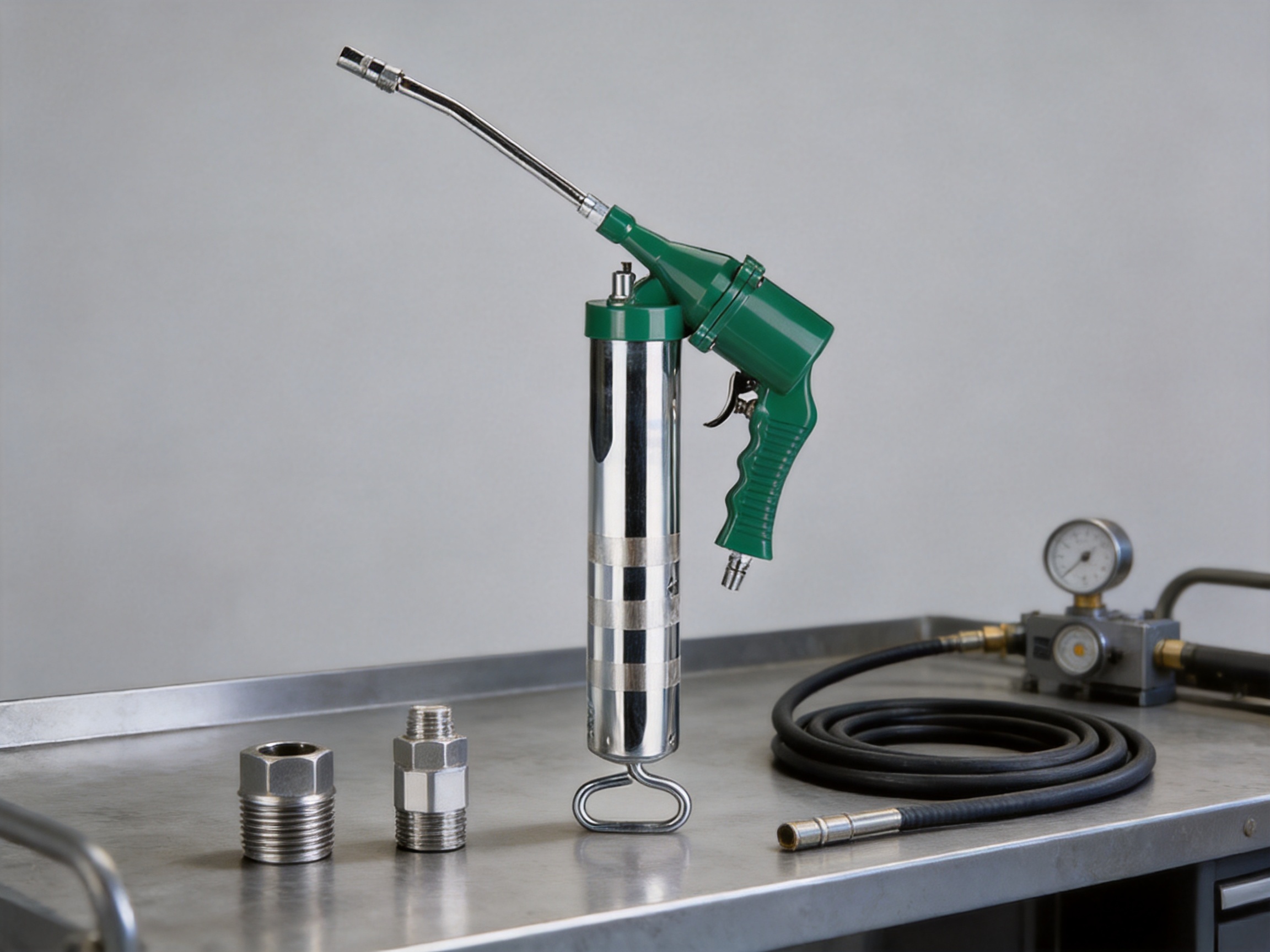
The air inlet is one of the most important connection points in any pneumatic tool. If the inlet is not compatible, the tool cannot be used efficiently. If the thread quality is poor, leakage may occur. If the inlet position or construction is weak, long-term use can lead to damage. The HYQ11 uses a G1/4 air inlet, a practical and widely recognized size in pneumatic systems.
For distributors, this matters because a standard inlet reduces customer complaints. A buyer who receives a tool and immediately discovers that it cannot connect to existing hoses may return the product or require additional fittings. Standardization helps avoid that problem. For workshops, it improves efficiency because operators can switch between tools more easily. A worker may move from an air blowing gun to a tyre inflating gun, then to a water or grease gun, depending on the job. Similar connection standards help the air tool system function as a unified workstation.
The G1/4 inlet also supports inventory simplification. Maintenance departments can keep a common set of couplers, plugs, hoses, regulators, and accessories. This reduces downtime and prevents confusion. In larger service centers, where multiple operators use shared tools, standard inlet compatibility is especially valuable. A tool that requires unique or hard-to-find connectors may create delays. The HYQ11 avoids this by following a common pneumatic connection approach.
From a production point of view, accurate inlet threading is a sign of controlled manufacturing. Threads must be formed correctly, inspected properly, and protected during packaging and transport. A poorly made inlet can damage fittings, cause leakage, or create unsafe pressure release. The HYQ11’s value is not only the inlet size itself, but the manufacturing discipline required to make that connection reliable across large production quantities.
Pressure Performance: Rated Pressure and Maximum Limit
Pressure is the operating heart of an air-powered water or grease gun. Too little pressure can lead to weak performance, while excessive pressure can create safety risks, leakage, faster wear, or damage. The HYQ11 is specified with a rated pressure of 70 PSI and a maximum pressure of no more than 140 PSI. These values provide a useful operating framework for professional users.
The rated pressure of 70 PSI indicates the pressure level at which the tool is intended to perform in normal working conditions. This is important because it helps operators set regulators correctly. Instead of guessing, users can work from a defined pressure value. Correct pressure setup improves repeatability and reduces stress on the tool. It also helps new operators learn proper use more quickly.
The maximum pressure limit of 140 PSI gives a clear warning boundary. Professional air systems can sometimes deliver pressure higher than what a tool should receive. Without a proper regulator, a tool may be exposed to unnecessary stress. By stating a maximum pressure, the HYQ11 helps users maintain safer operation. It also supports better maintenance planning because users can train staff to avoid exceeding the product’s pressure range.
Compared with competitors that only promote high maximum pressure as a selling point, the HYQ11 takes a more balanced approach. A higher pressure number is not always beneficial if the tool is not designed for stable use. A clear rated pressure plus a defined maximum pressure is more useful than exaggerated marketing claims. Professional buyers often prefer realistic specifications because they reduce risk and make product performance easier to manage.
Applications in Cleaning, Maintenance, and Service Work
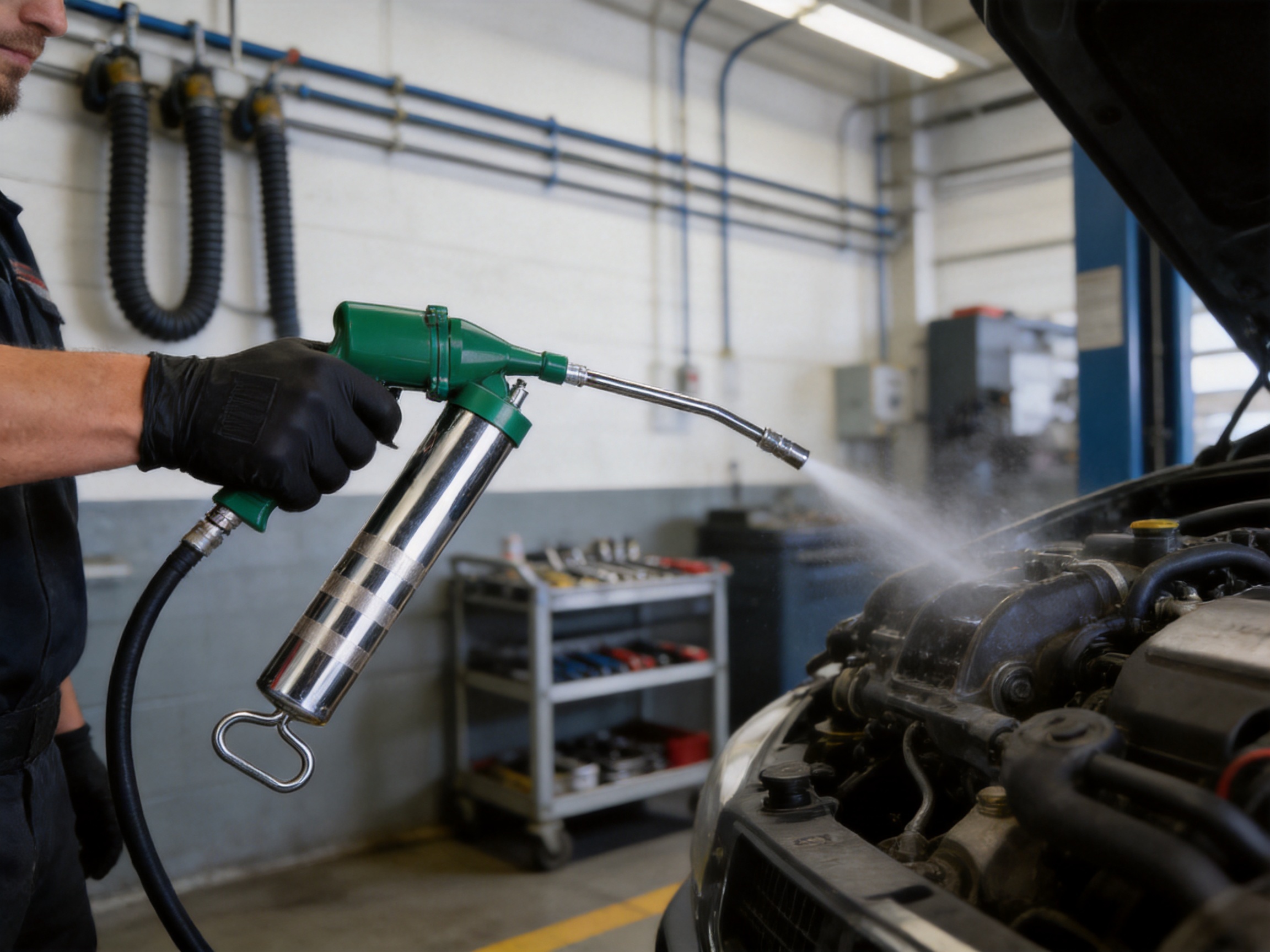
The HYQ11 can support many everyday applications where a pneumatic water or grease-related gun is needed. In automotive service centers, it may be used as part of cleaning and maintenance routines. In machinery workshops, it may assist with removing dirt, residue, or contaminants from selected surfaces before inspection or repair. In industrial maintenance areas, it can help technicians carry out regular service procedures where controlled air-powered discharge is useful.
In woodworking environments, low-pressure and air-related tools are often used alongside dust control, finishing preparation, and general shop cleaning. While the HYQ11 is categorized as a water and grease gun rather than a woodworking spray gun, it may still fit into broader maintenance routines in workshops that use compressors and air pipeline accessories. Equipment must be kept clean, fittings must be maintained, and work areas often need practical pneumatic support tools.
In paint preparation and finishing facilities, cleanliness is essential. Contaminants, dust, oil, and residue can affect final coating quality. A water gun or grease gun may not replace specialized spray equipment, but it can contribute to the wider preparation and maintenance process. When used appropriately, the HYQ11 can support the environment in which high-quality spraying, polishing, coating, or finishing tasks take place.
For agricultural machinery, transport equipment, and general metalworking workshops, practical service tools are especially important. Operators often need robust, easy-to-connect products that can withstand repeated handling. The HYQ11’s simple connection specification and pressure range make it suitable for buyers who do not want overly complicated equipment. Its value lies in dependable function, not unnecessary complexity.
Manufacturing Strength Behind the Product
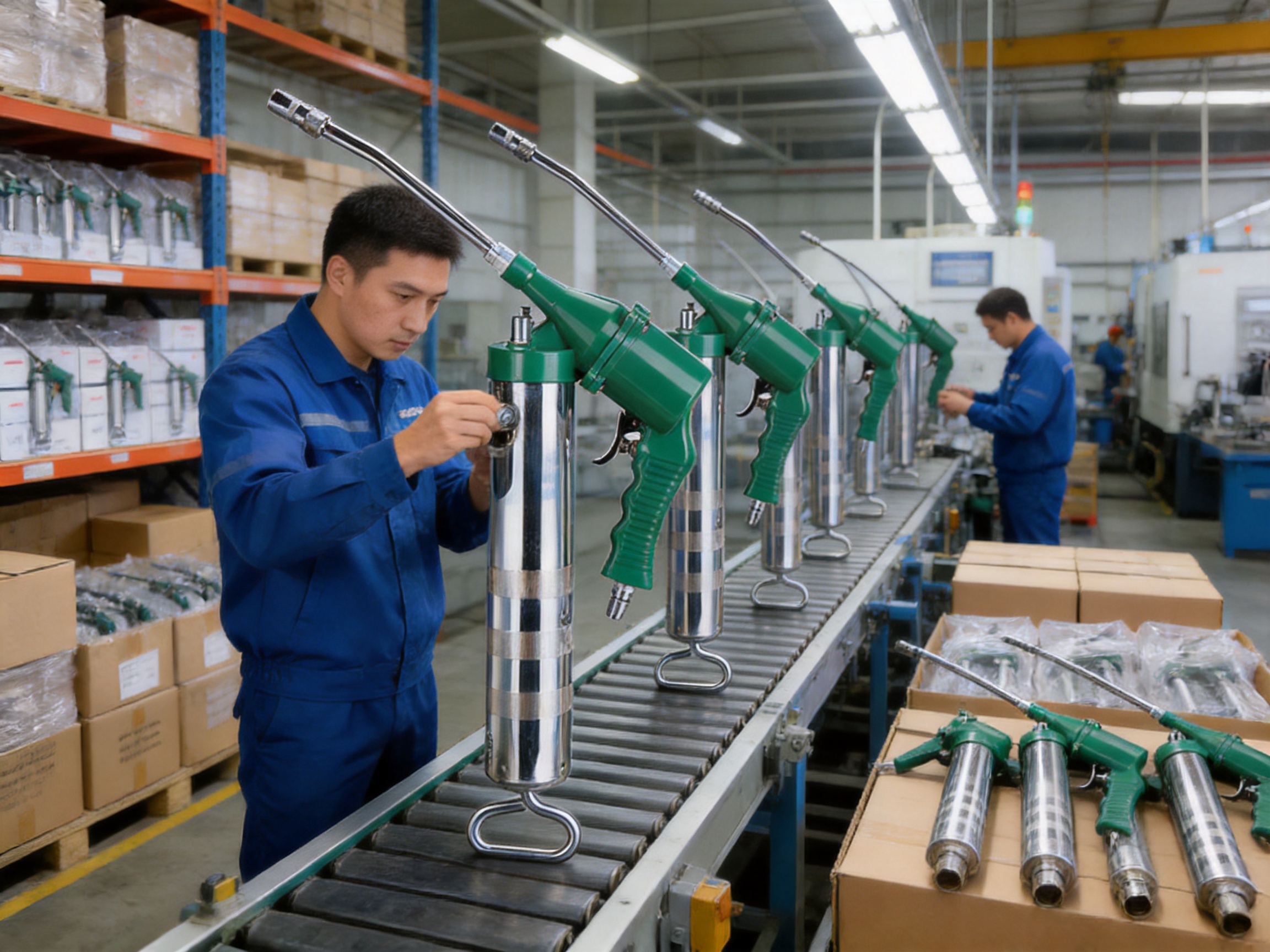
A product’s performance is strongly influenced by the manufacturing system behind it. The HYQ11 is supported by a company that has developed from a specialized air tool manufacturer into a large-scale enterprise with more than 400 employees, a production area of over 400,000 square feet, and annual output exceeding 40 million US dollars. This scale matters because it indicates a mature manufacturing organization with the resources to support stable production, quality management, engineering development, and global order fulfillment.
The company is located in Ningbo, a harbor city with a strong industrial base, developed economy, and convenient transportation. This location supports export logistics, supplier coordination, and delivery efficiency. For global buyers, location is not a minor issue. A manufacturer with access to strong transport infrastructure can respond more effectively to shipment schedules and international market demand.
The company has also received recognition such as national high-tech enterprise status, customs advanced certification, individual item champion recognition in Ningbo, and a provincial engineering and technology center. These achievements show that the manufacturer is not only producing standard tools but also investing in technical progress, quality systems, and industrial capability. For products such as the HYQ11, this means buyers are dealing with an organization that understands both production scale and technical development.
Advanced manufacturing strength is particularly important in pneumatic tools because consistent product quality depends on many small details. Thread accuracy, sealing quality, valve movement, pressure resistance, surface treatment, assembly torque, and final testing all influence performance. A small defect may not be visible at first glance, but it can become a failure during use. The company’s established production and inspection systems help reduce these risks.
Quality Control from Raw Material to Final Inspection
Quality control for the HYQ11 begins before assembly. Raw material and incoming inspection help ensure that components meet required standards before they enter production. This step reduces the chance that defective material will be processed further, saving time and protecting final product quality. In pneumatic tools, material quality affects pressure resistance, durability, and sealing reliability.
During production, in-process quality control monitors critical manufacturing stages. This can include dimensional checks, machining consistency, component fit, surface condition, and assembly accuracy. In-process control is essential because it catches problems early. If a thread, seal, or internal component is outside tolerance, correction during production is far more efficient than discovering the issue after final assembly.
The company’s quality system also includes 100% functional testing. This is a major advantage over competitors that rely only on sample testing. Functional testing confirms that each finished unit operates correctly before shipment. For a water or grease gun, this may involve checking air passage function, connection integrity, pressure-related performance, and general operation. The goal is to reduce defects reaching customers and improve confidence in bulk orders.
Final quality inspection provides another layer of assurance. Finished products are checked before packing and shipment, helping confirm that appearance, assembly, labeling, and packing meet expectations. This is important for distributors because a shipment is judged not only by technical function but also by presentation, consistency, and readiness for resale. The HYQ11’s 10-piece carton packing is part of this final delivery system.
Certifications and Management Systems
The manufacturing organization behind the HYQ11 has passed ISO9001 international quality system certification, OHSAS18001 occupational health and safety system certification, and ISO14001 environmental management system certification. These systems are meaningful because they show organized control over quality, workplace safety, and environmental responsibilities. For international buyers, management system certification often forms part of supplier evaluation.
ISO9001 is especially relevant to product consistency. It emphasizes controlled processes, documented procedures, corrective actions, customer focus, and continual improvement. For a pneumatic tool buyer, ISO9001 does not simply mean paperwork; it suggests that the manufacturer has a structured method for managing production quality. This reduces uncertainty when placing repeat orders.
OHSAS18001 indicates attention to occupational health and safety. A safer manufacturing environment can support more stable production by reducing workplace risk and promoting organized operations. ISO14001 shows that the company has considered environmental management. As global customers increasingly evaluate supplier responsibility, environmental and safety systems become part of competitive strength.
The company’s products have also passed CE and GS certifications for relevant product lines. Although certification requirements vary depending on product type and market, the manufacturer’s experience with European and German certification standards demonstrates familiarity with international expectations. This benefits buyers who need a supplier capable of understanding compliance, documentation, and export requirements.
Research and Development Capability
The HYQ11 benefits from a manufacturing culture that values research and development. The company has established a spraying machinery engineering technology center and has carried out technical cooperation with American Wagner Spraying Technology Co., Ltd., specializing in the development and research of spraying machinery. While the HYQ11 is not a paint spray gun, the same engineering environment supports knowledge of air flow, pressure control, ergonomic requirements, sealing structures, and durable tool design.
R&D capability is important because markets change. Customers may request modified packaging, alternative fittings, adjusted product features, or complete new solutions. A supplier without R&D strength may only provide fixed catalog items. A supplier with R&D and engineering capability can support OEM and ODM projects, improve product designs, solve application issues, and respond to market feedback.
For distributors, this means the HYQ11 can be part of a larger cooperation strategy. A buyer may begin with a standard water or grease gun and later expand to air blowing guns, spray gun kits, air fittings, mini oil-free compressors, paint tanks, or other pneumatic accessories. Working with a manufacturer that has a broad R&D base allows the buyer to consolidate sourcing and develop a more complete product range.
For end users, R&D translates into practical reliability. Products designed by experienced engineers are more likely to balance cost, durability, and ease of use. They are also more likely to fit real workshop conditions. The HYQ11’s simple but practical specification reflects this mindset: standard connection, clear pressure range, and efficient bulk packaging.
OEM and ODM Support for Professional Buyers
Many global buyers require more than standard catalog supply. They may need OEM production based on drawings or samples, or ODM development according to specific market needs. The company behind the HYQ11 can provide both. This is an important competitive advantage because it supports private-label businesses, regional distributors, industrial supply chains, and specialized purchasing programs.
OEM support is valuable when a customer already has a design, market concept, or established product line. The manufacturer can work according to drawings or samples, using its production and quality systems to deliver consistent results. ODM support is valuable when the customer has a need but requires engineering assistance to develop the product. In both cases, the manufacturer’s experience in spray guns, compressors, and pneumatic tools provides a strong technical foundation.
For the HYQ11, OEM and ODM capability may involve packaging requirements, accessory matching, order quantities, documentation needs, or adaptation for specific distribution channels. A professional buyer may need cartons labeled in a certain way, product information aligned with a catalog system, or shipment planning coordinated with other air tools. A capable manufacturer can support these commercial details as well as product production.
This flexibility distinguishes the HYQ11 supply chain from competitors that only offer fixed products with limited communication. In international business, responsive service and customization capability can be as important as the product itself. Buyers want suppliers who can grow with them, respond to seasonal demand, and support long-term market development.
Packaging and Logistics Advantages
The HYQ11 is packed 10 pieces per carton, with a carton size of 47.5 by 41 by 32 centimeters. This packaging specification supports efficient wholesale and distribution operations. For importers, carton dimensions affect container loading, warehouse planning, freight calculation, and order management. For retailers and regional distributors, a 10-piece carton is convenient for stock control and sales planning.
Packaging consistency is a practical but often overlooked advantage. When each carton follows a predictable size and quantity, warehouses can count stock faster, organize shelves more efficiently, and reduce picking errors. Distributors can also calculate replenishment needs more accurately. A product with inconsistent packing creates hidden labor costs, even if the unit price appears attractive.
The company’s location in Ningbo further supports logistics. As a major harbor city with developed transportation infrastructure, Ningbo offers advantages for international shipping. Efficient logistics can shorten delivery cycles, improve order reliability, and support customers who manage seasonal or project-based demand. For buyers of air tools, fast and stable shipment is often part of the total value.
The company also states that production capacity can be increased by 30% within two months. This is valuable for customers with changing purchase quantities. If market demand rises, a supplier with flexible capacity can respond more effectively than a smaller producer with limited scalability. For the HYQ11, this means bulk buyers can plan growth with more confidence.
How the HYQ11 Fits into a Complete Air Tool Program
The HYQ11 is not an isolated product. It belongs to a wider ecosystem of pneumatic and spraying equipment that includes HVLP spray guns, heavy duty spray guns, woodworking low pressure spray guns, economical conventional spray guns, texture paint spray guns, paraffin guns, washing gun series, air blowing guns, sandblast guns, foam guns, tyre inflating guns, automatic spray guns, air brushes, mini oil-free compressors, air pipeline accessories, paint tanks, air fittings, air polishers, spray gun kits, pro touch-up spray guns, car polish machines, airless spray guns, electric spray guns, and paint sprayers.
This broad product family is important for buyers who want consolidated sourcing. A distributor may prefer to purchase multiple related air tool categories from one experienced manufacturer rather than manage many small suppliers. Consolidation can reduce communication costs, improve quality consistency, simplify documentation, and strengthen purchasing power. The HYQ11 can therefore serve as one item in a complete professional air tool lineup.
For workshops, a complete air tool program improves operational efficiency. Air tools work best when fittings, pressure settings, hoses, compressors, and accessories are properly coordinated. If products come from a supplier that understands the full system, compatibility and support are easier to manage. The HYQ11’s G1/4 inlet and defined pressure range make it a practical part of such a system.
For brand owners and importers, a complete product program supports market identity. Customers often prefer to buy related tools from a familiar source. A water or grease gun can be sold alongside spray guns, air blowing guns, tyre inflators, foam guns, fittings, and compressors. This strengthens sales opportunities and encourages repeat purchasing.
User Experience and Practical Handling
Although the HYQ11’s available specification focuses on air inlet, pressure, and packaging, its value can also be understood through user experience. A professional water or grease gun should be easy to connect, simple to operate, and durable enough for repeated use. Operators do not want complicated adjustments for basic service tasks. They want a tool that can be picked up, connected, used, and stored without difficulty.
Clear pressure guidance improves user experience. When a worker knows the rated pressure is 70 PSI, the air regulator can be set appropriately. This prevents overpressure, reduces tool stress, and helps maintain stable function. In shared workshops, where several operators may use the same tool, clear pressure guidance helps standardize operation.
Connection convenience also improves workflow. A G1/4 inlet allows the HYQ11 to fit into many existing compressed air systems. This is especially helpful when a workshop uses multiple pneumatic tools and needs quick switching. A tool that connects easily is more likely to be used correctly. A tool that requires awkward adaptors may be misused, damaged, or avoided.
Durability is supported not only by design but also by manufacturing discipline. Consistent assembly, inspected components, and functional testing reduce the chance of failures that frustrate users. A professional tool does not need to be complex to be valuable. It must perform its intended function repeatedly and predictably. That is the practical strength of the HYQ11.
Maintenance Recommendations
Proper maintenance helps the HYQ11 deliver stable service life. Users should always operate within the rated and maximum pressure limits. The normal working reference is 70 PSI, and pressure should not exceed 140 PSI. A regulator should be used when the air supply pressure is uncertain or variable. Overpressure can reduce tool life and may create safety risks.
Before use, the air inlet and fitting connection should be checked. Threads should be clean, undamaged, and properly connected. If leakage is detected, the tool should not be forced to operate until the connection is corrected. Using suitable fittings and keeping the air line clean can help maintain performance.
After use, the tool should be cleaned and stored in a dry, suitable location. If the tool is used in environments with moisture, dirt, or grease residue, basic cleaning can prevent buildup and corrosion. Operators should avoid dropping the tool or allowing heavy objects to damage the inlet connection. Good storage habits are inexpensive but highly effective.
For professional workshops, maintenance procedures should be standardized. Staff should understand pressure limits, connection methods, and inspection routines. When tools are used by many people, small errors can accumulate. A simple maintenance checklist can extend the life of the HYQ11 and reduce replacement costs.
Buyer Considerations
When selecting a water or grease gun, buyers should consider more than the purchase price. A cheaper product may appear attractive, but hidden costs can arise from leakage, inconsistent quality, poor packaging, missing specifications, difficult connections, or unreliable supply. The HYQ11 offers value through clear specifications, quality-controlled manufacturing, standard connection, and professional packaging.
Distributors should evaluate supplier stability. A manufacturer established in 1984 with large production capacity, international market experience, R&D strength, and certification systems offers more assurance than an unknown supplier with limited background. Long-term cooperation depends on stable quality, delivery ability, communication, and capacity to support changing demand.
Workshops should evaluate compatibility. The G1/4 air inlet is a strong advantage if it matches existing air systems. Users should also confirm that their operating pressure can be regulated around the 70 PSI rated pressure and below the 140 PSI maximum limit. Proper system matching leads to safer and more reliable use.
Importers and brand owners should evaluate packaging and order planning. With 10 pieces per carton and a defined carton size, the HYQ11 supports predictable logistics. Buyers can calculate storage space, shipment volume, and replenishment quantities more easily. This practical supply chain advantage contributes to overall profitability.
Frequently Asked Questions
What is the HYQ11?
The HYQ11 is a professional air-powered product in the Water Guns & Grease Guns category. It is designed for workshop cleaning, washing, maintenance support, and related pneumatic service applications where a reliable compressed-air tool is required.
What air inlet does the HYQ11 use?
The HYQ11 uses a G1/4 air inlet. This is a practical and commonly used pneumatic connection size, making the tool easier to integrate with many existing air systems, fittings, and hoses.
What is the rated pressure of the HYQ11?
The rated pressure is 70 PSI. This value provides users with a clear reference for normal operation and helps support stable tool performance.
What is the maximum pressure?
The maximum pressure is no more than 140 PSI. Users should not exceed this limit. Operating within the specified range helps protect the tool and improves safety.
How is the HYQ11 packed?
The HYQ11 is packed 10 pieces per carton. The carton size is 47.5 by 41 by 32 centimeters, which supports efficient storage, distribution, and shipment planning.
What makes the HYQ11 different from low-cost competitors?
The HYQ11 offers clear specifications, a standard G1/4 inlet, defined rated and maximum pressure values, organized carton packing, and support from a manufacturer with decades of pneumatic tool experience. It is also backed by quality control processes including incoming inspection, in-process control, functional testing, and final inspection.
Can the HYQ11 be used in an international distribution program?
Yes. The product’s standard connection, clear pressure data, and carton packing make it suitable for wholesale and distribution. The manufacturer’s international market experience also supports export-oriented business needs.
Does the manufacturer provide OEM or ODM support?
Yes. The manufacturer can provide OEM services according to drawings or samples and ODM services according to customer needs. This is useful for professional buyers, private-label programs, and distributors seeking customized solutions.
Why is manufacturing experience important for a water or grease gun?
Pneumatic tools depend on accurate threading, reliable sealing, pressure resistance, proper assembly, and consistent testing. A manufacturer with long experience in air tools and spraying equipment is better positioned to control these details and deliver consistent quality.
How should users maintain the HYQ11?
Users should operate within the specified pressure range, check the G1/4 inlet connection before use, keep fittings clean, avoid overpressure, clean the tool after use, and store it properly. Regular basic inspection helps extend service life.
Conclusion
The HYQ11 is a practical and dependable water and grease gun designed for users who value clear specifications, system compatibility, pressure stability, and professional manufacturing support. Its G1/4 air inlet allows it to integrate easily with common pneumatic systems. Its 70 PSI rated pressure provides a useful operating reference, while its maximum pressure limit of 140 PSI helps define safe use. Its 10-piece carton packing and defined carton size make it suitable for distribution, wholesale, and inventory planning.
The product’s real strength is not limited to its visible specifications. It is supported by a manufacturer with decades of experience in air tools, spray guns, compressors, and related pneumatic equipment. The company’s advanced manufacturing processes, R&D capability, ISO-based management systems, functional testing, international market experience, OEM and ODM support, and scalable production capacity all contribute to the HYQ11’s value.
Compared with ordinary low-cost competitors, the HYQ11 offers a more complete professional proposition. It gives buyers clearer data, better supply confidence, stronger manufacturing backing, and practical compatibility with existing compressed air systems. For workshops, it is a straightforward tool that supports daily maintenance and service work. For distributors, it is a product that can fit into a broader air tool program. For international buyers, it represents a balance of function, quality control, and manufacturing strength.
In a market where many pneumatic tools appear similar at first glance, the difference is found in the details: the accuracy of the inlet, the honesty of the pressure rating, the consistency of inspection, the reliability of packaging, and the strength of the supplier behind the product. The HYQ11 stands out by combining these details into a practical tool for professional use.
References
1. ISO 9001 Quality Management Systems: Principles and Application in Manufacturing.
2. ISO 14001 Environmental Management Systems: Requirements and Implementation Guidance.
3. Occupational Health and Safety Management Practices for Industrial Manufacturing Facilities.
4. Compressed Air and Gas Institute. Handbook of Compressed Air Systems and Pneumatic Tool Operation.
5. Industrial Pneumatic Tool Maintenance and Safety Guidelines for Workshop Applications.
6. International Practices in Air Tool Manufacturing, Quality Inspection, and Functional Testing.