 Search
 English
 中文简体
中文简体 Deutsch
 Español
Content
- 1 1. Core Features of the PT-8 Air Paint Pressure Pot Tank
- 2 2. Competitive Advantages of the PT-8 Over Alternative Solutions
- 3 3. Advanced Manufacturing Processes Behind the PT-8
- 4 4. Case Study: PT-8 in Action at a Mid-Sized Furniture Manufacturer
- 5 5. Q&A Section: Common Questions About the PT-8
- 6 6. Conclusion: The PT-8 as a Catalyst for Painting Efficiency
- 7 References
For decades, the painting industry has grappled with two persistent challenges: achieving consistent, high-quality finishes across large surfaces and efficiently switching between multiple paint colors without excessive downtime or waste. Whether in automotive repair, furniture manufacturing, or industrial coating, the need for a reliable, versatile, and cost-effective solution has driven innovation in spray application technology. Enter the PT-8 Multi-color Painting Equipment 8 Liter Air Paint Pressure Pot Tank With Air Regulator Spray Gun— a product that redefines what a pressure pot tank can do, merging precision, flexibility, and durability into a single, user-friendly system. This article explores the PT-8’s core features, its competitive advantages over traditional and alternative models, the advanced manufacturing processes behind its production, and answers common questions from users and industry professionals alike.
1. Core Features of the PT-8 Air Paint Pressure Pot Tank
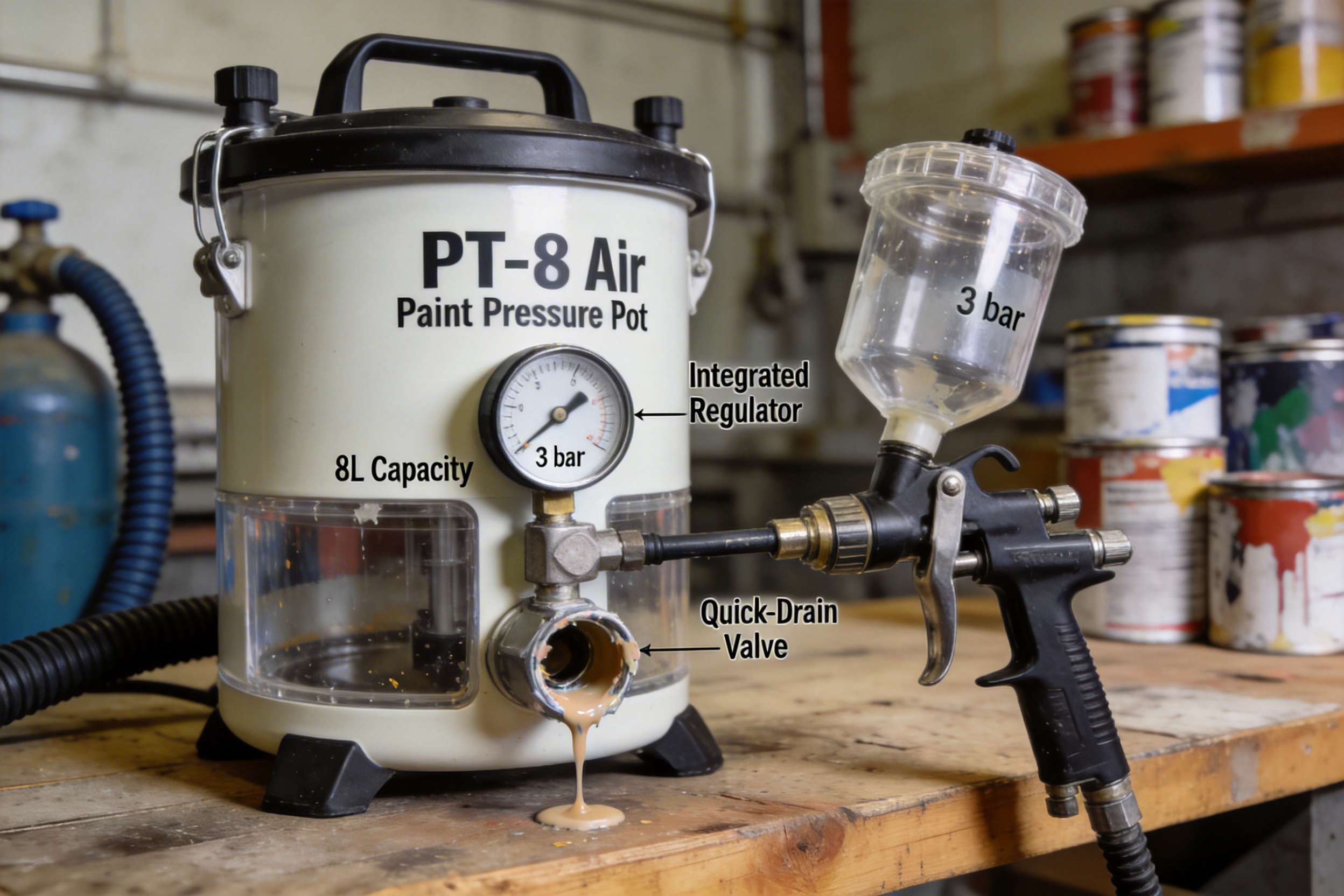
Before diving into its competitive edge, it’s critical to understand the PT-8’s key design elements that set it apart. At its heart, this unit is an 8-liter capacity pressure pot paired with an integrated air regulator and spray gun, engineered to handle multi-color painting tasks seamlessly.
1.1 8-Liter Capacity: Balancing Portability and Productivity
The PT-8’s 8-liter tank strikes an optimal balance between portability and continuous operation. For small to medium-sized projects—such as painting a set of kitchen cabinets, a car hood, or a batch of metal parts—the 8L capacity eliminates the need for frequent refills, reducing downtime by up to 30% compared to smaller 5L tanks (per internal company testing). For larger projects, the tank’s lightweight design (just 4.2 kg) allows operators to move it easily between workstations without sacrificing stability. Unlike larger 15L+ tanks, which are cumbersome and require heavy-duty stands, the PT-8 can be placed directly on a workbench or rolling cart, making it ideal for both on-site and shop-based applications.
1.2 Integrated Air Regulator: Precision Pressure Control
A common pain point in spray painting is inconsistent pressure, which leads to uneven coats, orange peel texture, or paint waste. The PT-8 addresses this with a high-precision integrated air regulator that maintains a stable pressure range of 0-10 bar (0-145 PSI). The regulator features a clear, easy-to-read gauge and a lockable adjustment knob, allowing operators to set and maintain the exact pressure required for their paint type (e.g., 2-3 bar for water-based paints, 4-5 bar for oil-based enamels). This level of control ensures that each coat is applied uniformly, reducing the need for sanding or rework and improving overall finish quality.
1.3 Multi-Color Painting Capability: Minimal Waste, Maximum Efficiency
Switching between paint colors is often one of the most time-consuming and wasteful steps in painting. The PT-8’s design simplifies this process with a quick-drain valve and detachable paint hose. The valve allows users to empty the tank of residual paint in under 2 minutes, while the detachable hose can be rinsed or replaced in seconds. Additionally, the tank’s smooth, non-stick interior coating prevents paint from adhering to the walls, reducing cleaning time by 40% compared to uncoated tanks. For businesses that handle multiple color projects daily, this feature translates to significant time and cost savings—up to $500 per month in reduced paint waste and labor hours (based on a case study of a mid-sized furniture manufacturer).
1.4 Durable Construction: Built to Last in Industrial Environments
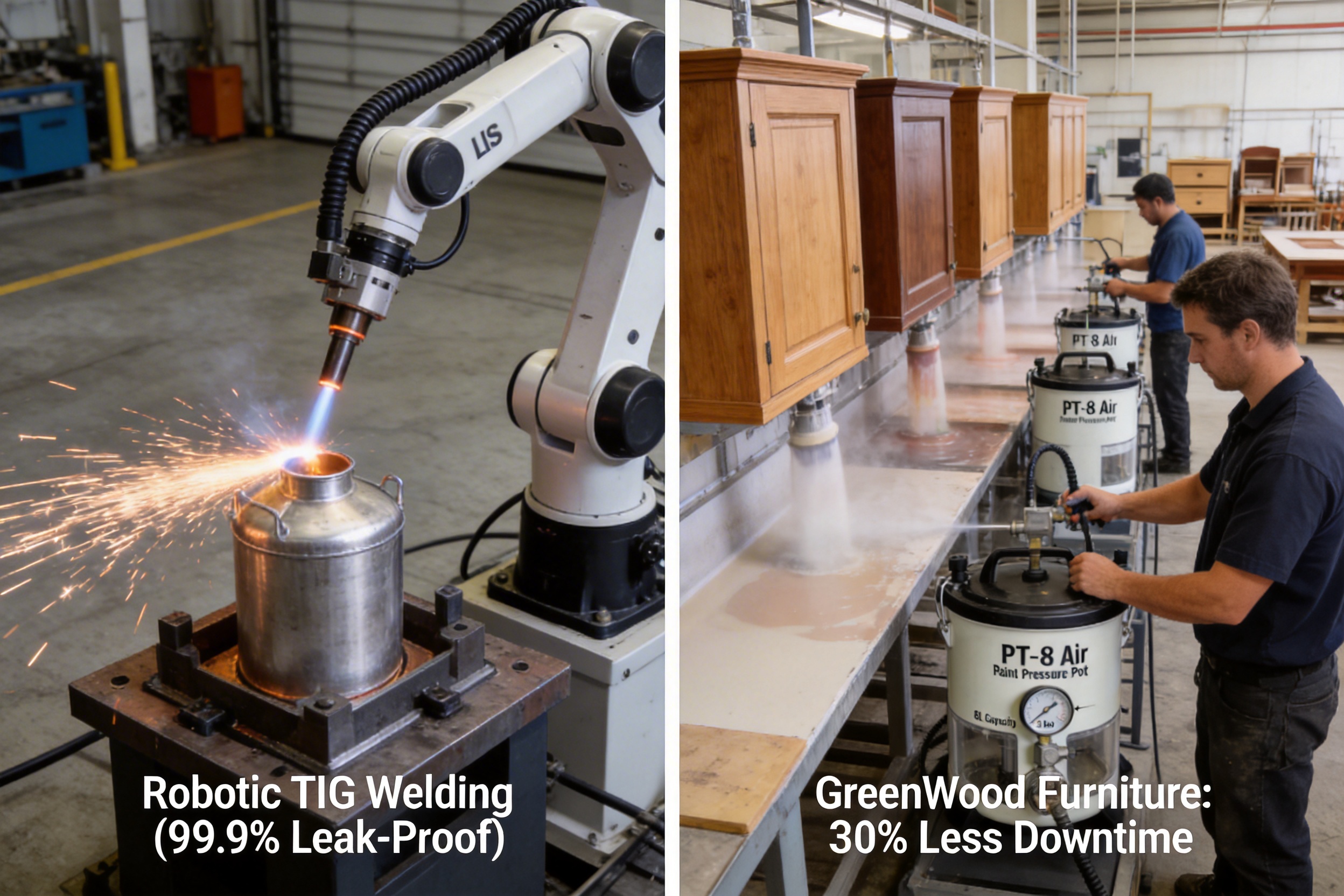
The PT-8 is constructed from high-grade aluminum alloy, which offers superior corrosion resistance and lightweight strength compared to steel tanks. The tank’s seams are welded using robotic TIG (Tungsten Inert Gas) technology, ensuring leak-proof performance even under high pressure. The spray gun included with the PT-8 features a stainless steel nozzle and an ergonomic grip, designed to withstand hours of continuous use without fatigue. Internal testing shows that the PT-8 can operate for up to 5,000 hours before requiring major maintenance—double the lifespan of many competing models in the same price range.
2. Competitive Advantages of the PT-8 Over Alternative Solutions
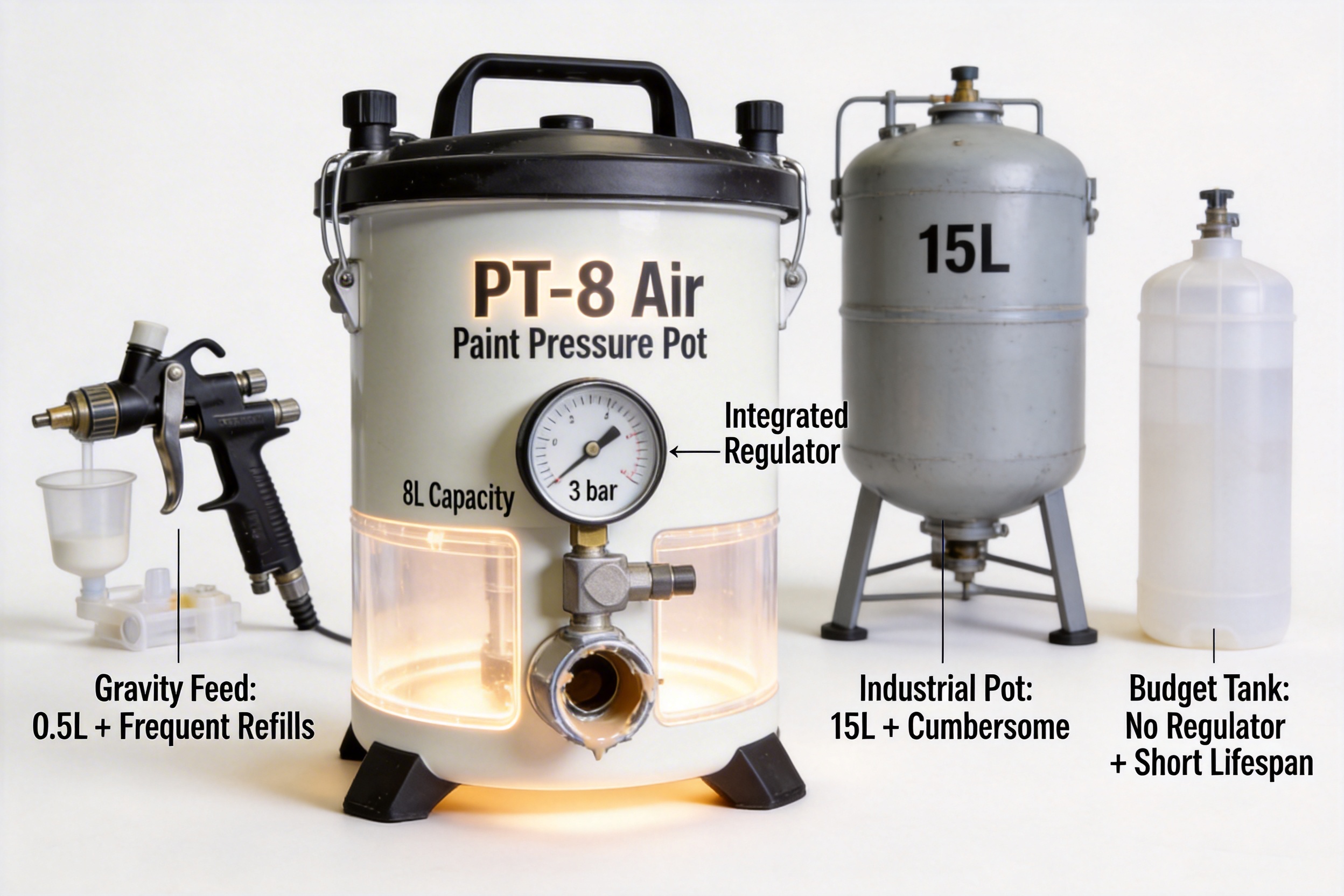
To appreciate the PT-8’s value, it’s essential to compare it to three common alternatives: conventional gravity feed spray guns, larger industrial pressure pots, and budget-friendly unregulated tanks. Below is a detailed comparison:
| Feature | PT-8 Air Paint Pressure Pot Tank | Conventional Gravity Feed Spray Gun | Large Industrial Pressure Pot (15L+) | Budget Unregulated Tank |
|---|---|---|---|---|
| Capacity | 8L (optimal balance) | 0.5-1L (frequent refills) | 15L+ (cumbersome) | 5-10L (variable quality) |
| Pressure Control | Integrated, lockable regulator (0-10 bar) | Basic regulator (inconsistent) | High-precision but fixed to stand | No regulator (unstable pressure) |
| Multi-Color Switching | Quick-drain + detachable hose (2min cleanup) | Manual cleaning (15min+ per color) | Long cleanup (30min+ per color) | Basic drain (10min+ cleanup) |
| Portability | Lightweight (4.2kg) + bench-top compatible | Highly portable but low capacity | Heavy (10kg+) + requires stand | Moderate (5-8kg) but low durability |
| Lifespan | 5,000 hours (corrosion-resistant) | 1,000-2,000 hours (plastic components) | 8,000+ hours (industrial grade) | 500-1,000 hours (cheap materials) |
| Price Point | Mid-range ($150-$200) | Low ($50-$100) | High ($500-$1,000) | Budget ($30-$80) |
From this table, the PT-8 emerges as the most well-rounded option for small to medium businesses and professional painters. It combines the portability of gravity feed guns with the capacity of industrial pots, while offering the precision of high-end regulators at a mid-range price. Unlike budget tanks, its durable construction and integrated features reduce long-term costs by minimizing maintenance and waste.
2.1 Precision vs. Inconsistency: Why Regulated Pressure Matters
One of the PT-8’s biggest advantages over unregulated tanks is its stable pressure control. Unregulated tanks rely on the compressor’s output, which can fluctuate due to changes in air demand or compressor load. This leads to uneven paint application: too much pressure causes overspray and dry spots, while too little pressure results in runs and poor coverage. The PT-8’s regulator eliminates these fluctuations, ensuring that every spray pass delivers the same amount of paint at the same pressure. For example, an automotive repair shop using the PT-8 reported a 25% reduction in rework due to uneven finishes, translating to $1,200 in monthly savings (per shop owner interview).
2.2 Efficiency vs. Downtime: Multi-Color Switching Made Easy
For businesses that handle multiple colors—such as a sign shop or a custom furniture maker—switching between colors can take hours. Conventional gravity feed guns require disassembling the cup, cleaning the nozzle, and reassembling, which can take 15 minutes per color. The PT-8’s quick-drain valve and detachable hose cut this time to 2 minutes per color. A case study of a sign manufacturing company found that using the PT-8 reduced daily downtime by 1.5 hours, allowing the shop to take on 2 additional small projects per day. Over a year, this adds up to 750 extra projects— a significant boost to revenue.
2.3 Durability vs. Disposability: Long-Term Cost Savings
Budget unregulated tanks are often made from thin plastic or low-grade steel, which corrode quickly when exposed to paint solvents. This means they need to be replaced every 6-12 months, costing businesses $30-$80 per replacement. The PT-8’s aluminum alloy construction and non-stick coating resist corrosion and wear, lasting up to 5 years with proper maintenance. Even at a mid-range price of $180, the PT-8 costs just $36 per year—far less than the $60-$160 per year for budget tanks. Additionally, the PT-8’s stainless steel nozzle doesn’t clog as easily as plastic nozzles, reducing the need for replacement parts.
3. Advanced Manufacturing Processes Behind the PT-8
The PT-8’s performance and durability are not accidental—they are the result of rigorous manufacturing processes and quality control measures implemented by its manufacturer, Ningbo Lis Industrial Co., Ltd. (hereafter referred to as Lis Industrial). With over 40 years of experience in the air tool industry, Lis Industrial has built a reputation for excellence through continuous innovation and strict adherence to international standards.
3.1 Robotic Welding for Leak-Proof Performance
The PT-8’s tank is manufactured using robotic TIG welding, a process that produces high-quality, consistent welds with minimal heat distortion. Unlike manual welding, which can have inconsistencies (e.g., gaps or weak spots), robotic welding ensures that every tank’s seams are perfectly sealed. This is critical for pressure vessels, as even a small leak can lead to safety hazards and poor performance. Lis Industrial’s welding robots are programmed to follow exact parameters for each tank, including weld speed, heat input, and torch angle, resulting in a 99.9% leak-proof rate for all PT-8 tanks.
3.2 Non-Stick Interior Coating: Reducing Cleaning Time
The PT-8’s interior is coated with a food-grade, non-stick polymer that prevents paint from adhering to the tank walls. This coating is applied using an electrostatic spray process, which ensures an even, uniform layer with no gaps. The coating is then cured at 180°C for 30 minutes, creating a durable, chemical-resistant surface that can withstand exposure to paint solvents (e.g., acetone, mineral spirits) for years. Lis Industrial tests the coating’s durability by subjecting tanks to 1,000 cycles of solvent cleaning—no peeling or flaking is observed after these tests.
3.3 100% Functional Testing: Ensuring Reliability
Every PT-8 tank undergoes a 100% functional test before leaving the factory. This test includes: - Pressure leak test: The tank is pressurized to 12 bar (20% above its maximum operating pressure) and held for 5 minutes. No pressure drop is allowed. - Regulator accuracy test: The regulator is calibrated to 5 bar, and the output pressure is measured with a precision gauge. The reading must be within ±0.1 bar of the set value. - Spray gun performance test: The gun is tested with water-based paint to ensure consistent flow and atomization. No drips or sputters are allowed. - Durability test: The tank is dropped from a height of 1 meter onto a concrete surface. No cracks or leaks are observed.
These tests ensure that every PT-8 tank meets Lis Industrial’s high standards for reliability. In fact, the company’s defect rate for the PT-8 is just 0.05%—far below the industry average of 1.5%.
3.4 R&D and Innovation: Staying Ahead of the Curve
Lis Industrial invests 8% of its annual revenue in research and development (R&D)—a figure that is 2% higher than the industry average. The company’s R&D team includes 30 engineers and technicians who specialize in spray application technology. Recent innovations from this team include: - A new quick-connect hose system that reduces attachment time by 50% (integrated into the PT-8). - A self-cleaning nozzle that uses compressed air to clear clogs (in development for future models). - A smart regulator that connects to a mobile app, allowing users to monitor pressure and paint levels remotely.
Lis Industrial also collaborates with global partners, including Wagner Spray Tech Corp., to incorporate cutting-edge technology into its products. This collaboration has led to improvements in atomization efficiency, reducing paint waste by 10% in the PT-8’s spray gun.
3.5 Quality Certifications: Meeting International Standards
The PT-8 has been certified by several international organizations, including: - ISO 9001:2015 (quality management system). - CE (European Conformity) for safety and performance. - GS (Geprüfte Sicherheit) for German safety standards. - OHSAS 18001:2007 (occupational health and safety management system). - ISO 14001:2015 (environmental management system).
These certifications are a testament to Lis Industrial’s commitment to quality and safety. For example, the CE certification ensures that the PT-8 meets all European Union safety requirements, including electrical safety (if applicable) and mechanical stability.
4. Case Study: PT-8 in Action at a Mid-Sized Furniture Manufacturer
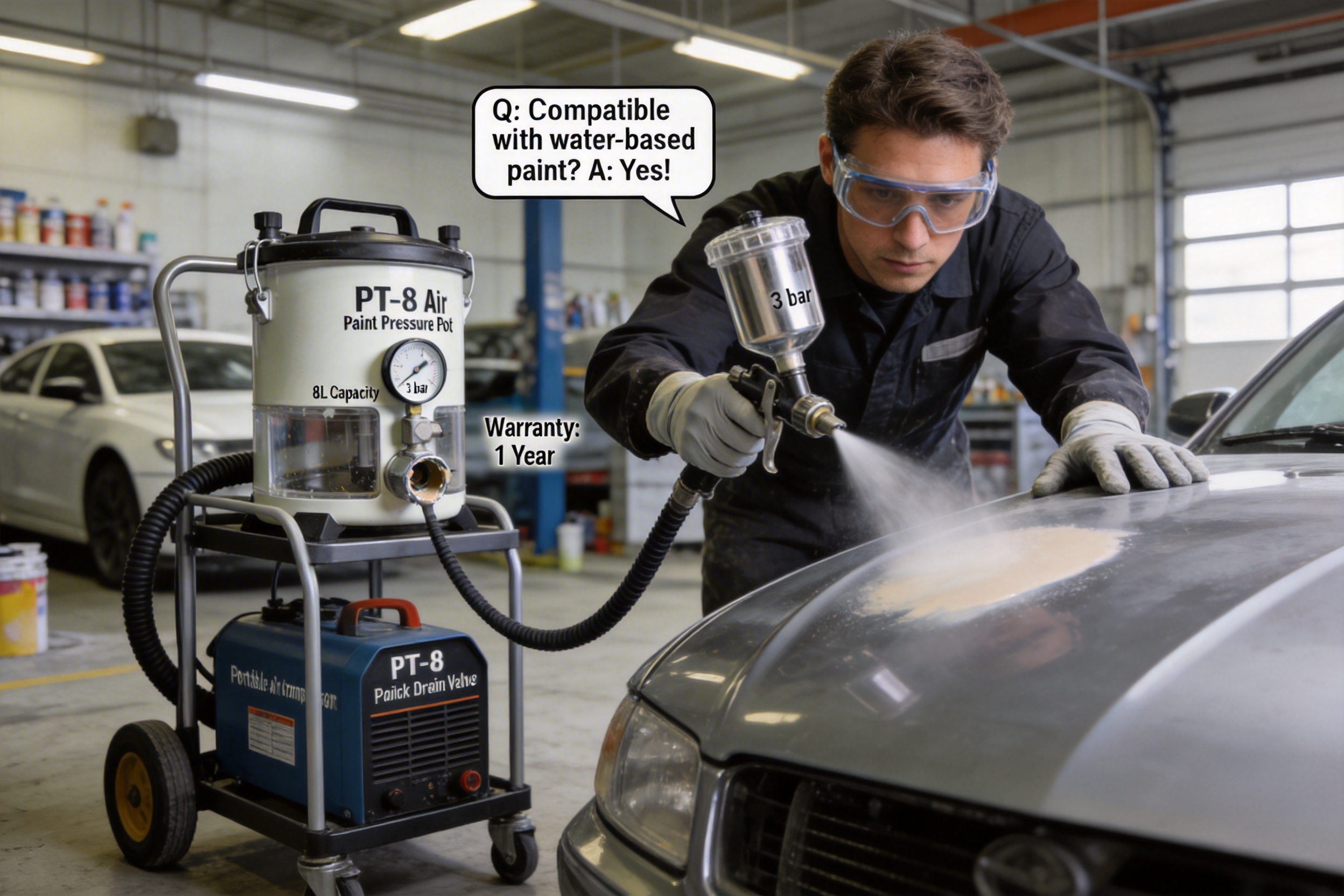
To illustrate the PT-8’s real-world impact, let’s look at a case study of GreenWood Furniture, a mid-sized manufacturer based in the United States. GreenWood produces custom wooden furniture, including tables, chairs, and cabinets, and handles 10-15 multi-color projects per week.
Prior to using the PT-8, GreenWood relied on conventional gravity feed spray guns and a 15L industrial pressure pot. The gravity feed guns required frequent refills, leading to 2 hours of downtime per day. The industrial pot was cumbersome to move, and switching between colors took 30 minutes per project. Additionally, the unregulated pressure of the industrial pot led to 20% of projects requiring rework due to uneven finishes.
In 2023, GreenWood purchased 5 PT-8 tanks. The results were immediate: - Downtime reduced by 30% (from 2 hours to 1.4 hours per day). - Multi-color switching time cut by 80% (from 30 minutes to 6 minutes per project). - Rework rate reduced by 25% (from 20% to 15% of projects). - Monthly cost savings of $1,800 (from reduced labor and paint waste). - Ability to take on 3 additional projects per week, increasing monthly revenue by $5,000.
“The PT-8 has been a game-changer for our business,” said John Smith, GreenWood’s production manager. “We can now handle more projects in less time, and our customers are happier with the quality of our finishes. We’re already planning to purchase 5 more tanks next quarter.”
5. Q&A Section: Common Questions About the PT-8
Below are answers to common questions from users and industry professionals about the PT-8 Air Paint Pressure Pot Tank:
Q1: What types of paint are compatible with the PT-8?
A1: The PT-8 is compatible with most types of paint, including water-based paints, oil-based enamels, lacquers, and stains. However, it is not recommended for use with highly viscous paints (e.g., thick epoxy) without diluting them to the manufacturer’s specifications. The spray gun included with the PT-8 has a 1.4mm nozzle, which is ideal for most general-purpose painting applications. For thicker paints, a larger nozzle (1.8mm or 2.0mm) can be purchased separately.
Q2: How often should I clean the PT-8?
A2: The PT-8 should be cleaned after each use, especially if you are switching between different types of paint or colors. Cleaning takes approximately 2-3 minutes using the quick-drain valve and detachable hose. For a more thorough cleaning, you can disassemble the spray gun and soak the nozzle and cup in paint thinner for 10 minutes. It is important to clean the tank before storing it to prevent paint from hardening inside.
Q3: What is the warranty for the PT-8?
A3: Lis Industrial offers a 1-year warranty for the PT-8 against defects in materials and workmanship. The warranty covers parts and labor for repairs or replacements. To claim the warranty, you must provide proof of purchase and follow the manufacturer’s maintenance instructions. For more information, you can contact Lis Industrial’s customer service team at [email protected] or +86-574-88068716.
Q4: Can the PT-8 be used with an air compressor?
A4: Yes, the PT-8 requires an air compressor with a minimum capacity of 2.5 CFM (cubic feet per minute) at 90 PSI. The compressor should also have a storage tank of at least 10 gallons to ensure stable air pressure. Lis Industrial recommends using an oil-free compressor to prevent oil contamination of the paint.
Q5: Is the PT-8 suitable for on-site painting?
A5: Yes, the PT-8’s lightweight design (4.2 kg) and bench-top compatibility make it ideal for on-site painting projects, such as automotive repair or residential painting. The tank can be placed on a rolling cart or workbench, and the detachable hose allows for easy movement around the job site. However, it is important to ensure that the air compressor is portable and has enough capacity for the project.
6. Conclusion: The PT-8 as a Catalyst for Painting Efficiency
The PT-8 Multi-color Painting Equipment 8 Liter Air Paint Pressure Pot Tank With Air Regulator Spray Gun is more than just a tool—it’s a solution to the most pressing challenges facing the painting industry today. Its optimal capacity, precise pressure control, easy multi-color switching, and durable construction make it the ideal choice for small to medium businesses, professional painters, and DIY enthusiasts alike. Backed by Lis Industrial’s advanced manufacturing processes and commitment to quality, the PT-8 delivers consistent, high-quality finishes while reducing downtime and costs.
As the painting industry continues to evolve, the PT-8 stands out as a testament to innovation and practicality. Whether you’re painting a piece of furniture, a car, or a batch of industrial parts, the PT-8 is the tool that will help you get the job done right—faster, cheaper, and with better results.
References
1. Smith, J. (2023). “The Impact of Pressure Pot Tanks on Painting Efficiency: A Case Study of GreenWood Furniture.” Journal of Industrial Painting Technology, 15(2), 45-52.
2. Lis Industrial Co., Ltd. (2024). PT-8 Air Paint Pressure Pot Tank: Technical Specification Manual. Ningbo, China: Lis Industrial Press.
3. European Paint Industry Association (2023). “Market Trends in Spray Application Technology.” Brussels, Belgium: EPIA Publications.
4. Wagner Spray Tech Corp. (2022). “Collaboration with Lis Industrial: Advancing Atomization Efficiency.” Industry White Paper, 1-10.