 Search
 English
 中文简体
中文简体 Deutsch
 Español
Content
- 1 Understanding the Role of a Quick Coupler Plug
- 2 Key Advantages of the USH20 Pneumatic Fitting
- 3 Advantages Compared with Basic or Incompatible Alternatives
- 4 Product Application Areas
- 5 Technical Selection Considerations
- 6 Manufacturing Quality and Process Control
- 7 Manufacturing Strengths of the Supplier
- 8 Quality Management and International Supply
- 9 Installation Recommendations
- 10 Maintenance and Service Life
- 11 Improving Air-System Efficiency
- 12 Purchasing Guidance for Distributors and Industrial Users
- 13 Application Comparison Table
- 14 Safety Considerations
- 15 Why Manufacturer Experience Matters
- 16 Frequently Asked Questions
- 16.1 What is the USH20 pneumatic quick coupler plug used for?
- 16.2 Can the USH20 connect directly to every air compressor hose?
- 16.3 Is a US-standard plug compatible with European-standard fittings?
- 16.4 Can the plug be used with spray guns?
- 16.5 How can leakage be reduced?
- 16.6 Does a quick coupler plug improve air-tool performance?
- 16.7 What should be checked before ordering?
- 16.8 How should the USH20 be stored?
- 16.9 Can Ningbo Lis Industrial provide OEM or ODM support?
- 16.10 What quality information can customers request?
- 17 Conclusion
- 18 References
- 19 Product: USH20 Pneumatic fittings Air Compressor Hose Quick Coupler Plug+

In compressed-air systems, a small connector can have a major effect on productivity, safety, operating cost, and equipment life. The USH20 pneumatic fitting air compressor hose quick coupler plug is designed to provide a practical connection point between an air hose and compatible pneumatic equipment. Used in workshops, vehicle service centers, woodworking facilities, manufacturing plants, maintenance departments, and professional spray-painting environments, this type of plug helps operators connect and disconnect air tools efficiently while maintaining a dependable air path.
The USH20 belongs to the US Standard category of air fittings and accessories. Its principal function is to work with a compatible quick coupler, allowing an air compressor hose, tool hose, or branch line to be connected without repeatedly threading and unthreading conventional fittings. This makes routine work faster and reduces unnecessary wear on threaded connections. When correctly selected, installed, and maintained, a quality quick coupler plug can contribute to a cleaner, more organized, and more productive compressed-air installation.
This article explains the working principles, application advantages, manufacturing considerations, selection factors, maintenance requirements, and quality-control practices associated with the USH20 pneumatic quick coupler plug. It also describes how Ningbo Lis Industrial Co., Ltd. supports pneumatic accessory production through technical development, process control, testing, and international market experience.
Understanding the Role of a Quick Coupler Plug
A pneumatic quick coupler system normally consists of two complementary parts: a plug and a coupler. The plug is fitted to the end of an air hose, tool, regulator, manifold, or other pneumatic component. The coupler receives the plug and locks it into position through an internal retention mechanism. Depending on the design, the connection may also include a valve arrangement that controls the flow of compressed air during connection and disconnection.
The USH20 is the plug component in this type of system. It is intended for use with compatible US-standard couplers. The plug does not function as a universal connector for every national or regional standard. Compatibility depends on the profile, nominal size, thread configuration, sealing arrangement, and operating requirements of the complete connection system. For this reason, users should confirm that the selected coupler and plug belong to the same standard before installation.
Quick coupler plugs are used because pneumatic equipment often needs to be moved, changed, cleaned, or serviced. A spray gun may be removed from an air hose at the end of a shift. A mechanic may alternate between an impact wrench, blow gun, and tyre inflating tool. A production line may require the connection of portable tools at several workstations. In each case, a quick plug and coupler can simplify the process compared with a permanent threaded connection.
In addition to convenience, a well-designed plug helps maintain consistent air delivery. The internal passage should support an effective flow path while minimizing unnecessary restriction. The outside profile must be manufactured accurately enough to engage smoothly with the coupler. The threaded end must match the hose fitting or accessory into which it is installed. These details are small, but they directly influence the performance of the entire air system.
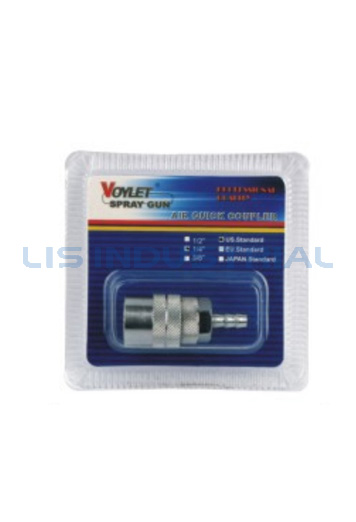
USH20 Pneumatic fittings Air Compressor Hose Quick Coupler Plug+
Key Advantages of the USH20 Pneumatic Fitting
Efficient connection and disconnection
The main advantage of a quick coupler plug is speed. Operators can connect compatible equipment in a short sequence instead of spending time tightening and loosening threaded fittings. This is particularly valuable in busy workshops where tools are exchanged frequently. Faster connection procedures can reduce interruptions and help workers spend more time on productive operations.
The USH20 is suitable for applications in which an air hose or tool must be detached regularly. A professional user may connect and disconnect equipment many times during a working day. A durable plug reduces the inconvenience associated with repeated changes and provides a more practical alternative to permanently attached hoses.
Support for organized pneumatic systems
Quick coupler plugs make it easier to organize air distribution around a workshop or production area. Hoses can be equipped with standardized connection points, allowing compatible tools to be used at different locations. This reduces the need to dedicate a separate compressor hose to every tool and can help limit clutter around the work area.
When used with suitable hose reels, regulators, filters, and wall-mounted distribution points, quick couplers can form part of a modular pneumatic system. The USH20 can therefore support both simple portable arrangements and more structured air pipeline installations.
Compatibility with US-standard equipment
For customers operating equipment built around US-standard pneumatic connections, the correct standard is an important purchasing consideration. A fitting that appears similar may not be interchangeable if its profile or dimensions differ. Selecting a US-standard product such as the USH20 helps users maintain consistency within their existing equipment range.
Standardization can simplify inventory management. A distributor, service center, or factory can specify one compatible family of plugs and couplers for frequently used tools. This reduces confusion during maintenance and makes it easier to replace worn or damaged components.
Practical support for air tools and spray equipment
The product category served by the USH20 includes air tools, paint-spraying equipment, air blow guns, tyre inflating guns, sandblasting equipment, foam guns, and other pneumatic accessories. These applications require a connection that is convenient and dependable. In spray-painting environments, a secure hose connection is especially important because unexpected leakage can affect atomization, air pressure stability, and working efficiency.
A quick coupler plug is also useful in maintenance operations. Technicians can connect an air blow gun for cleaning, switch to an impact tool for removal work, and then connect an inflating gun or inspection tool without replacing the complete hose assembly. This flexibility is one of the principal reasons quick-connect accessories remain common in professional compressed-air systems.
Reduced dependence on repeated threaded changes
Threaded connections remain important in permanent installations, but they are less convenient when a tool is changed frequently. Repeated threading can damage threads, wear sealing materials, and increase the risk of cross-threading. A quick coupler system transfers the repeated connection function to a component specifically designed for that purpose.
The USH20 should still be installed with suitable thread sealant or sealing methods where required by the connection design. Proper installation is essential. A quick plug cannot compensate for unsuitable thread size, poor hose preparation, over-tightening, or incompatible sealing materials.
Advantages Compared with Basic or Incompatible Alternatives
Not every low-cost connector provides the same level of practical value. Some alternatives may use soft materials, inaccurate machining, inconsistent surface finishing, or an unsuitable standard profile. These issues can lead to air leakage, difficult connection, premature wear, and unplanned replacement. The advantage of a properly manufactured US-standard plug is not simply its appearance; it is the consistency of the connection across repeated use.
Compared with a basic threaded adapter used for every tool change, a quick coupler plug can reduce operating time and improve flexibility. Compared with an incorrectly matched standard, a properly specified US-standard plug reduces the risk of incomplete engagement or poor sealing. Compared with a poorly finished component, a carefully produced plug can provide smoother operation and more predictable service performance.
Cost should be considered across the entire service period rather than only at the initial purchase. A low purchase price may become less attractive if the fitting causes repeated leakage, interrupts production, damages the mating coupler, or requires frequent replacement. A reliable accessory can deliver value by protecting the efficiency of the larger compressed-air system.
The USH20 is also suitable for businesses that need to combine pneumatic accessories from multiple equipment groups while retaining a consistent connection method. Workshops frequently use equipment from different manufacturers. The key requirement is that the plug and coupler comply with the same recognized standard and are compatible in design. This helps users avoid the problems associated with mixing visually similar but technically different profiles.
Product Application Areas
Automotive repair and service
Vehicle service centers use compressed air for impact wrenches, ratchets, blow guns, tyre inflating tools, brake cleaning, and general maintenance. These tasks often require several tools during a single repair. A quick coupler plug can help mechanics change tools efficiently while preserving a common hose connection.
In automotive environments, the fitting may be exposed to dust, oil mist, vibration, and frequent handling. Regular inspection is therefore important. The plug should be kept clean, and the mating coupler should be checked for damage or leakage. A clean connection helps protect the internal sealing elements and maintains more stable air delivery.
Painting and surface finishing
Air spray guns require a controlled supply of compressed air. The quality of the air hose connection can affect working comfort and system reliability. A leaking fitting may increase compressor cycling, reduce available pressure, and create an untidy working environment. The USH20 can be used as part of a compatible air line serving spray guns, paint tanks, regulators, and filters.
Painting operations also require attention to contamination. Oil, moisture, dust, and unsuitable thread-sealing compounds must not enter the air path. The quick plug should be installed in a clean system and protected from contaminants when disconnected. Operators should follow the maintenance instructions for the spray equipment and air-treatment components connected to the line.
Woodworking and furniture production
Woodworking facilities use compressed air for nailers, staplers, blow guns, sanding equipment, finishing tools, and spray guns. Quick connections are convenient where workers move between benches or exchange tools during assembly and finishing. A standardized plug arrangement can support a more efficient workshop layout.
Wood dust can collect around fittings and couplers. Cleaning the outside of the connection and preventing debris from entering the coupler can improve service life. In high-dust environments, protective caps or plugs may be used when connections are not in service.
Industrial assembly and maintenance
Manufacturing plants may use pneumatic tools on production lines, assembly stations, inspection benches, and repair areas. Quick couplers support the connection of portable tools and allow maintenance teams to isolate equipment when necessary. They are especially useful where the same air supply is shared among several tools.
Industrial users should include fittings in their preventive-maintenance programs. The inspection should cover visible wear, leakage, difficult engagement, damaged threads, and unexpected pressure loss. Replacing a worn plug at an early stage can prevent damage to the mating coupler and reduce the possibility of process interruption.
General workshop and household applications
Small workshops and serious home users can also benefit from the USH20 when their compressor and tools use compatible US-standard connections. Applications may include cleaning, inflation, light spraying, fastening, and other occasional pneumatic work. Although operating frequency may be lower than in a factory, correct selection remains important because compressors and tools differ in pressure, flow, and connection requirements.
Technical Selection Considerations
Standard and profile compatibility
The first selection factor is the connection standard. The USH20 is categorized as a US-standard plug, so it should be matched with a compatible US-standard coupler. Users should not assume that every quick coupler with a similar external appearance will fit correctly. Profiles may differ in insertion depth, locking geometry, valve design, and flow characteristics.
Before ordering, compare the plug with the existing coupler or consult the equipment documentation. If a facility uses several standards, each type should be clearly identified and kept in a separate inventory group. This simple practice can prevent incorrect connections and reduce installation time.
Thread size and thread form
The threaded end of a plug must match the female thread of the hose, adapter, regulator, manifold, or tool. Thread form and nominal size should both be verified. A fitting may appear to enter a threaded port while still being incompatible, which can cause leakage or permanent damage.
When connecting a plug to a hose assembly, the user should select a hose-end fitting designed for the hose’s internal diameter, pressure range, and reinforcement construction. The plug should not be forced into an unsuitable adapter. If an intermediate adapter is necessary, it should be selected from a compatible pneumatic fitting range and installed according to accepted practice.
Operating pressure and flow demand
The quick plug must be suitable for the pressure used by the air system. The maximum allowable pressure is determined by the complete assembly, including the plug, coupler, hose, fittings, seals, and connected equipment. The lowest-rated component governs the safe operating limit.
Flow demand is also relevant. A small fitting may restrict airflow when connected to a tool requiring a large volume of air. Users should consider compressor capacity, hose length, internal diameter, coupler design, and tool consumption together. For spray guns and other air-sensitive equipment, a suitable air-treatment and distribution arrangement can be as important as the plug itself.
Environmental conditions
Temperature, humidity, dust, oil, chemicals, vibration, and outdoor exposure can influence fitting performance. A workshop plug may operate in a relatively controlled environment, while an industrial or automotive installation may experience contamination and mechanical impact. Users should select the fitting and sealing materials with the actual working environment in mind.
Where the fitting is exposed to aggressive chemicals, paint solvents, cleaning agents, or unusual temperatures, compatibility should be confirmed before use. The plug should not be used outside the conditions recommended for the complete pneumatic assembly.
Frequency of connection
A frequently exchanged tool places more mechanical demand on the plug and coupler than a connection that remains in place for months. In high-cycle applications, smooth engagement, accurate dimensions, and regular inspection are particularly important. The mating coupler should also be maintained because a damaged coupler can cause premature wear on a new plug.
Manufacturing Quality and Process Control
The performance of a pneumatic plug begins with the quality of its raw material and continues through every stage of production. Ningbo Lis Industrial Co., Ltd. has developed long-term experience in manufacturing air painting spray guns, mini air compressors, air tools, fittings, accessories, and related spraying equipment. This product background provides a practical understanding of the working conditions in which pneumatic accessories are used.
Manufacturing a dependable quick plug requires more than forming an external shape. The production process must control dimensions, thread accuracy, surface condition, internal passage quality, locking geometry, and final appearance. Small variations can affect the way the plug engages with the coupler or seals under pressure.
Material preparation
Material selection influences strength, corrosion resistance, machinability, surface finish, and service life. Production materials must be received and checked according to internal specifications. Incoming inspection helps identify unsuitable material before it reaches machining or forming processes.
Material traceability is valuable for consistent production. When material batches are documented, the manufacturer can investigate quality issues more effectively and maintain better control over repeat orders. This is especially important for customers that require stable supply over an extended period.
Precision machining and forming
The external and internal features of a quick plug must be produced with suitable accuracy. Threaded areas require controlled machining or forming so that the plug can be installed correctly in the intended port. The mating profile must be consistent with the compatible coupler design. Internal passages should be free from avoidable burrs and obstructions.
Modern production systems combine suitable machinery, tooling, process parameters, and operator experience. Dimensional checks are performed during production rather than relying only on a final visual inspection. In-process control helps identify drift early and reduces the risk of producing a large quantity of nonconforming parts.
Surface finishing
A suitable surface finish can support corrosion protection, handling, appearance, and compatibility with sealing elements. The finishing process must be controlled so that it does not interfere with threads, insertion surfaces, or functional areas. Excessive coating thickness or roughness in a critical location may make connection difficult.
Finished components should be inspected for scratches, burrs, contamination, uneven treatment, and other visible defects. Appearance is not the only quality indicator, but visible irregularities can provide an early sign of process problems.
Assembly and functional inspection
If the product is supplied as part of a fitting assembly, components must be assembled according to controlled procedures. Thread sealants, washers, seals, and other parts must be appropriate for the application. Assembly workers should be trained to avoid over-tightening, misalignment, or contamination.
Functional inspection may include checking connection dimensions, engagement with a compatible coupler, air passage, sealing behavior, and visible workmanship. The specific inspection plan depends on the product design and customer requirements. A combination of dimensional inspection and functional testing provides more useful information than either method alone.
Final quality control
Lis Industrial describes a quality system that covers raw-material inspection, incoming inspection, in-process quality control, functional testing, and final inspection of finished products. This staged approach is important because it controls quality throughout the production chain. Detecting a problem at the earliest practical stage can reduce waste and protect delivery schedules.
The company also states that its products have obtained certifications including CE and GS for applicable product ranges. Certification requirements vary by product and market, so customers should confirm the documentation relevant to the specific item and destination. Quality certification and production testing are complementary: certification demonstrates conformity with defined requirements, while routine factory control supports consistency from batch to batch.
Manufacturing Strengths of the Supplier
Ningbo Lis Industrial Co., Ltd. was established in 1984 and has developed into a large manufacturer serving the air-spraying and pneumatic-equipment sector. The company reports a factory area exceeding 400,000 square feet, a workforce of more than 400 employees, and annual output valued at over 40 million US dollars. These resources support product development, manufacturing capacity, quality management, and international supply.
The company’s product range includes new HVLP spray guns, heavy-duty spray guns, woodworking low-pressure spray guns, economical conventional spray guns, texture paint spray guns, paraffin guns, air blow guns, sandblast and foam guns, tyre inflating guns, water and grease guns, automatic spray guns, air brushes, mini oil-free compressors, air pipeline accessories, paint tanks, air fittings, air polishers, spray gun kits, touch-up spray guns, car polishing machines, airless spray guns, electric spray guns, and paint sprayers.
This broad portfolio is relevant to the USH20 because the fitting may be used alongside many of these product groups. A supplier that understands spray guns, compressors, air tools, and pipeline accessories can better evaluate how individual components perform within a complete air system. It can also help customers select compatible accessories instead of treating the plug as an isolated item.
Lis Industrial has also developed its own brands, including Voylet and Muzi, and provides OEM services based on customer drawings or samples. In addition, the company states that it can offer ODM services according to customer needs. For distributors and equipment manufacturers, this capability may support customized packaging, product combinations, branding, or technical adjustments, subject to engineering review and order requirements.
The company reports the establishment of a spraying machinery engineering technology center and technical cooperation with American spraying technology specialists. Its research and development capability is directed toward spraying machinery and related equipment. Experience in this field can assist with the development of fittings that are suitable for practical air-tool and spray-equipment use.
Production capacity is another consideration for distributors. Lis Industrial states that its production capacity can be increased by 30 percent within two months. A scalable manufacturing base can be valuable when customers need to respond to seasonal demand, new projects, market expansion, or large-volume purchasing programs.
Quality Management and International Supply
For pneumatic accessories, quality management should extend beyond individual inspection reports. It should include documented procedures, trained personnel, controlled materials, equipment maintenance, process monitoring, traceability, and corrective action. A supplier with an established quality structure is better positioned to handle repeat orders and customer-specific requirements.
Lis Industrial reports experience with ISO9001 quality management, ISO14001 environmental management, and OHSAS18001 occupational health and safety management systems. It also reports recognition as a national high-tech enterprise, an advanced customs certification enterprise, and a provincial engineering and technology center, as well as recognition related to an individual champion product in Ningbo. Customers should request current certificates and scope information when documentation is needed for a specific procurement project.
International distribution requires more than manufacturing capacity. Export packaging, labeling, documentation, product identification, customs coordination, and communication all influence the customer experience. The company’s established sales network covers Europe, North America, the Middle East, South Africa, and East Asia. Its experience serving customers in different regions can support distributors that require regular international shipments.
The company also reports long-term relationships with international customers, including Wagner Spray Tech Corp. Such relationships indicate experience with demanding commercial supply environments, although each customer should evaluate the specific product, quality requirements, and commercial terms relevant to its own project.

Installation Recommendations
Before installation, disconnect the compressor or isolate the relevant air line. Release residual pressure from the hose and confirm that the work area is safe. Pneumatic energy can cause sudden movement or hose whip, so the connection should never be installed or removed while the line is pressurized unless the system is specifically designed for that procedure.
Inspect the USH20 plug and the mating thread before installation. Remove dirt, metal chips, old sealant, and damaged sealing material. Confirm that the thread size and form are correct. If resistance occurs immediately, stop and investigate rather than forcing the plug into the port.
Apply an appropriate thread-sealing method where required. Sealant should be applied in a way that prevents excess material from entering the air passage. Excess compound inside a pneumatic system may contaminate valves, regulators, spray guns, or other precision components.
Tighten the plug according to accepted fitting-installation practice. Over-tightening can damage threads, distort components, or create stress in the connected part. Under-tightening can lead to leakage or loosening during operation. The correct method depends on the thread type, fitting design, sealing method, and equipment instructions.
After installation, pressurize the system gradually and inspect the connection. Listen for escaping air and use an approved leak-detection method if necessary. Do not use an open flame to find a leak. If leakage continues, depressurize the system and check the thread, sealant, alignment, and compatibility.
Maintenance and Service Life
Routine maintenance is simple but important. Keep the plug clean and protect it from impact when it is disconnected. Dirt on the plug may enter the coupler and interfere with the locking mechanism or valve. A protective cap can be useful in dusty workshops and during transport.
Inspect the plug for damaged threads, deformation, corrosion, deep scratches, burrs, or unusual wear. Check whether it engages smoothly with the coupler and remains securely locked. If the plug becomes difficult to insert or remove, the problem may be caused by contamination, coupler damage, pressure trapped in the line, or wear of the mating components.
Air leakage is a clear signal that inspection is needed. Minor leakage can increase compressor run time and energy consumption. Larger leakage can reduce tool performance and create noise. Replacing a worn plug or coupler may be more economical than allowing the problem to continue.
Lubrication requirements depend on the design of the coupler and the recommendations of the equipment manufacturer. Do not apply an unsuitable lubricant, especially in a spray-painting system where oil contamination can damage the finish. Users should follow the maintenance instructions for the complete connection assembly.
Quick plugs should be replaced if they have been exposed to severe mechanical damage, unauthorized modification, excessive corrosion, or conditions outside their intended operating range. A plug is a pressure-containing component, so repair by welding, grinding, or improvised modification is not recommended.
Improving Air-System Efficiency
A quick plug alone cannot correct an inefficient compressed-air system, but it can contribute to better overall operation when selected and maintained properly. The hose should have an appropriate internal diameter and length. Filters and regulators should be sized for the required flow. Couplers should be selected to avoid unnecessary restriction, and damaged hoses should be removed from service.
Leak prevention is one of the easiest ways to reduce compressed-air waste. Every connection point should be inspected periodically, including plugs, couplers, threaded adapters, hose ends, regulators, and tool inlets. A systematic leak survey can identify problems that are not obvious during normal work.
Operators should also avoid connecting incompatible standards merely because the parts appear to fit. A partially engaged connection can leak or separate unexpectedly. Standard identification, clear labeling, and staff training are low-cost measures that support safer and more efficient operations.
Purchasing Guidance for Distributors and Industrial Users
When purchasing the USH20, buyers should define the intended application and specify the required standard. The procurement description should identify the product as a US-standard pneumatic hose quick coupler plug and should include any required thread, packaging, branding, documentation, or inspection conditions.
For trial orders, users can evaluate connection smoothness, compatibility with the existing coupler, leakage behavior, surface quality, packaging, and ease of installation. For larger orders, buyers may request technical drawings, samples, quality documents, inspection standards, and production lead-time information before confirming the full quantity.
Distributors should consider whether the product will be sold as an individual plug, a fitting set, a hose assembly, or part of a spray-gun kit. Clear product classification helps end users select the correct accessory. It is also useful to explain that a plug and coupler are complementary components and that US-standard products may not match Japan-standard, European-standard, or other regional profiles.
Packaging should protect threads and functional surfaces from impact and contamination. Product identification should remain clear throughout storage and distribution. For export orders, customers may also need carton markings, barcodes, private-label packaging, multilingual instructions, or specific pallet requirements.
Application Comparison Table
| Application | Typical Pneumatic Equipment | Value of a Quick Coupler Plug | Important Considerations |
|---|---|---|---|
| Automotive service | Impact wrench, blow gun, tyre inflating gun | Fast tool changes and convenient hose management | Inspect for dust, oil, vibration, and mechanical wear |
| Spray painting | Air spray gun, regulator, paint tank | Efficient connection of spray equipment to treated air | Prevent contamination and check for air leakage |
| Woodworking | Nailer, stapler, sanding tool, spray gun | Supports mobile workstations and shared hoses | Protect connections from wood dust and debris |
| Industrial assembly | Pneumatic driver, grinder, inspection tool | Enables standardized connections across stations | Consider cycle frequency, flow, and preventive maintenance |
| General workshop use | Inflator, cleaning gun, light-duty air tool | Simple and flexible connection for occasional work | Confirm compressor capacity and standard compatibility |
Safety Considerations
Compressed air can cause serious injury if it is directed toward the skin, eyes, or clothing. The USH20 should be used only within a properly designed pneumatic system. Operators should wear suitable eye protection and follow workplace safety procedures.
Never disconnect a pressurized hose unless the coupler and system are specifically designed for safe disconnection under pressure. Before changing tools, turn off the air supply and release trapped pressure where appropriate. Secure hoses to prevent them from creating trip hazards or whipping if a connection fails.
Do not use the fitting for gases or fluids for which it was not designed. Pneumatic components intended for compressed air may not be suitable for oxygen, combustible gases, liquid service, or corrosive chemicals. The product should be used within the pressure, temperature, and environmental limits established for the complete system.
Any user who notices unusual vibration, audible leakage, sudden pressure loss, cracking, or a damaged locking mechanism should stop using the connection and inspect it. Safety depends on the condition of both the plug and the mating coupler.
Why Manufacturer Experience Matters
Although a quick plug is a compact component, its quality is connected to the capabilities of the manufacturer. A supplier that produces only a narrow range of basic fittings may not have the same experience with air-flow behavior, spray-equipment contamination, compressor operation, or tool compatibility as a manufacturer serving the broader pneumatic industry.
Lis Industrial’s experience in air painting spray guns, compressors, and air tools provides a foundation for understanding the practical needs of professional users. The company’s product development work, engineering resources, production scale, and quality-control procedures support the manufacture of accessories intended for complete spraying and pneumatic solutions.
Its OEM and ODM capabilities may also be useful to customers that need more than a standard catalog product. A customer may require a private-label program, a customized package, a combined hose and fitting kit, or a product adapted to a particular distribution channel. Such projects should be reviewed technically to confirm that any customization preserves connection compatibility and safe operating performance.
Long-term supplier cooperation can simplify future purchasing. Once a distributor has verified the product standard, quality level, packaging, and delivery performance, repeat orders can be handled more efficiently. Technical communication remains important, especially when the product will be used in a new market or alongside equipment from another standard family.
Frequently Asked Questions
What is the USH20 pneumatic quick coupler plug used for?
The USH20 is used to create a quick-connect point in a compressed-air system. It can be installed on an air hose, tool, regulator, manifold, or other compatible pneumatic component and connected to a matching US-standard coupler.
Can the USH20 connect directly to every air compressor hose?
No. The hose end must have a compatible thread, fitting, and pressure rating. The plug must also match the coupler profile used in the system. Users should confirm thread specifications and US-standard compatibility before installation.
Is a US-standard plug compatible with European-standard fittings?
Not necessarily. Different regional standards may use different profiles, dimensions, locking arrangements, and flow characteristics. A US-standard plug should be used with a compatible US-standard coupler unless the manufacturer has specifically confirmed interchangeability.
Can the plug be used with spray guns?
Yes, it may be used in a compatible air supply arrangement for spray guns and related equipment. The system should include suitable filtration and regulation, and the connection must be clean and free from oil, moisture, and other contaminants that could affect paint quality.
How can leakage be reduced?
Use the correct thread size and form, apply a suitable sealing method, avoid over-tightening, keep the mating surfaces clean, and inspect both the plug and coupler regularly. If leakage continues, replace the worn or damaged component rather than relying on excessive sealant.
Does a quick coupler plug improve air-tool performance?
It can support reliable performance by providing a secure and convenient connection, but the plug is only one part of the air system. Hose diameter, coupler flow capacity, compressor output, regulator setting, filtration, and tool requirements must all be suitable.
What should be checked before ordering?
Buyers should check the standard, profile, thread size, thread form, operating pressure, intended application, required quantity, packaging, and documentation. If compatibility is uncertain, a sample or technical drawing should be reviewed before a larger purchase.
How should the USH20 be stored?
Store the plugs in a clean, dry environment away from impact, excessive humidity, corrosive substances, and extreme temperatures. Protect threaded and functional surfaces from damage and keep different fitting standards clearly separated.
Can Ningbo Lis Industrial provide OEM or ODM support?
The company states that it provides OEM services according to customer drawings or samples and ODM services according to customer requirements. Customers should discuss technical specifications, minimum order quantities, packaging, testing, and production schedules with the supplier.
What quality information can customers request?
Depending on the project, customers may request product drawings, material information, inspection standards, sample approval records, applicable certificates, packaging specifications, and delivery documentation. The required information should be agreed before production.
Conclusion
The USH20 pneumatic fittings air compressor hose quick coupler plug provides a practical connection solution for compressed-air equipment using the US-standard system. Its value comes from efficient tool changes, organized hose connections, compatibility with suitable US-standard couplers, and support for a wide range of workshop, automotive, industrial, woodworking, and spray-painting applications.
Reliable performance depends on correct selection and complete-system compatibility. Thread dimensions, pressure, flow, environment, connection frequency, and maintenance practices should all be considered. Users should also remember that the plug and coupler work as a pair; the quality and condition of both parts influence the safety and effectiveness of the connection.
Ningbo Lis Industrial Co., Ltd. combines long-term experience in spraying equipment with manufacturing capacity covering air tools, compressors, fittings, and accessories. Its reported quality-management systems, testing procedures, engineering resources, OEM and ODM capabilities, international distribution experience, and scalable production provide important advantages for distributors and professional users seeking a stable pneumatic accessory supply.
For customers building or upgrading an air system, the best results come from treating the quick coupler plug as part of a complete solution. When the USH20 is matched with the correct coupler, hose, air-treatment equipment, and tool, it can help create a more efficient, flexible, and maintainable compressed-air installation.
References
1. ISO 9001, Quality Management Systems — Requirements.
2. ISO 14001, Environmental Management Systems — Requirements with Guidance for Use.
3. ISO 4414, Pneumatic Fluid Power — General Rules and Safety Requirements for Systems and Their Components.
4. Occupational Safety and Health Administration, Compressed Air and Pneumatic Tool Safety Guidance.
5. Manufacturer technical information for USH20 pneumatic fittings and compatible quick coupler systems.
6. Ningbo Lis Industrial Co., Ltd., corporate manufacturing, quality-management, product-range, and engineering information.