 Search
 English
 中文简体
中文简体 Deutsch
 Español
Content
- 1 Product Overview: What the DG10S-3 Is Built to Do
- 2 Why Air Blowing Gun Quality Matters
- 3 Core Advantages of the DG10S-3 Over Generic Competitors
- 4 Applications Across Professional Environments
- 5 Manufacturing Strength Behind the Product
- 6 Advanced Process Control and Quality Assurance
- 7 Research, Development, and Engineering Capability
- 8 Material and Component Considerations
- 9 Comparison Table: DG10S-3 and Typical Low-Cost Alternatives
- 10 Energy Efficiency and Compressed-Air Economy
- 11 Role in Surface Preparation and Paint Application Workflows
- 12 Manufacturing Scale and Supply Reliability
- 13 Brand Heritage and Market Experience
- 14 Quality Systems from Raw Material to Finished Product
- 15 Design Details That Influence User Experience
- 16 Safety and Responsible Use
- 17 Value for Distributors and Importers
- 18 Value for Industrial End Users
- 19 Integration with Air Pipeline Accessories and Fittings
- 20 How the DG10S-3 Supports Clean Production
- 21 Why Established Manufacturing Outperforms Trading-Only Supply
- 22 Purchasing Considerations for the DG10S-3
- 23 Q&A Section
- 23.1 What is the DG10S-3 used for?
- 23.2 How does the DG10S-3 differ from a basic low-cost air blowing gun?
- 23.3 Can the DG10S-3 help reduce compressed-air waste?
- 23.4 Is the DG10S-3 suitable for painting preparation?
- 23.5 What industries commonly use this type of air blowing gun?
- 23.6 Does the manufacturer support OEM or ODM requirements?
- 23.7 Why is supplier experience important for a simple product like an air blowing gun?
- 23.8 What should users remember for safe operation?
- 23.9 Can the DG10S-3 be supplied for different regional standards?
- 23.10 What makes the company behind the DG10S-3 a strong supplier?
- 24 Conclusion: A Practical Tool Backed by Industrial Capability
- 25 References
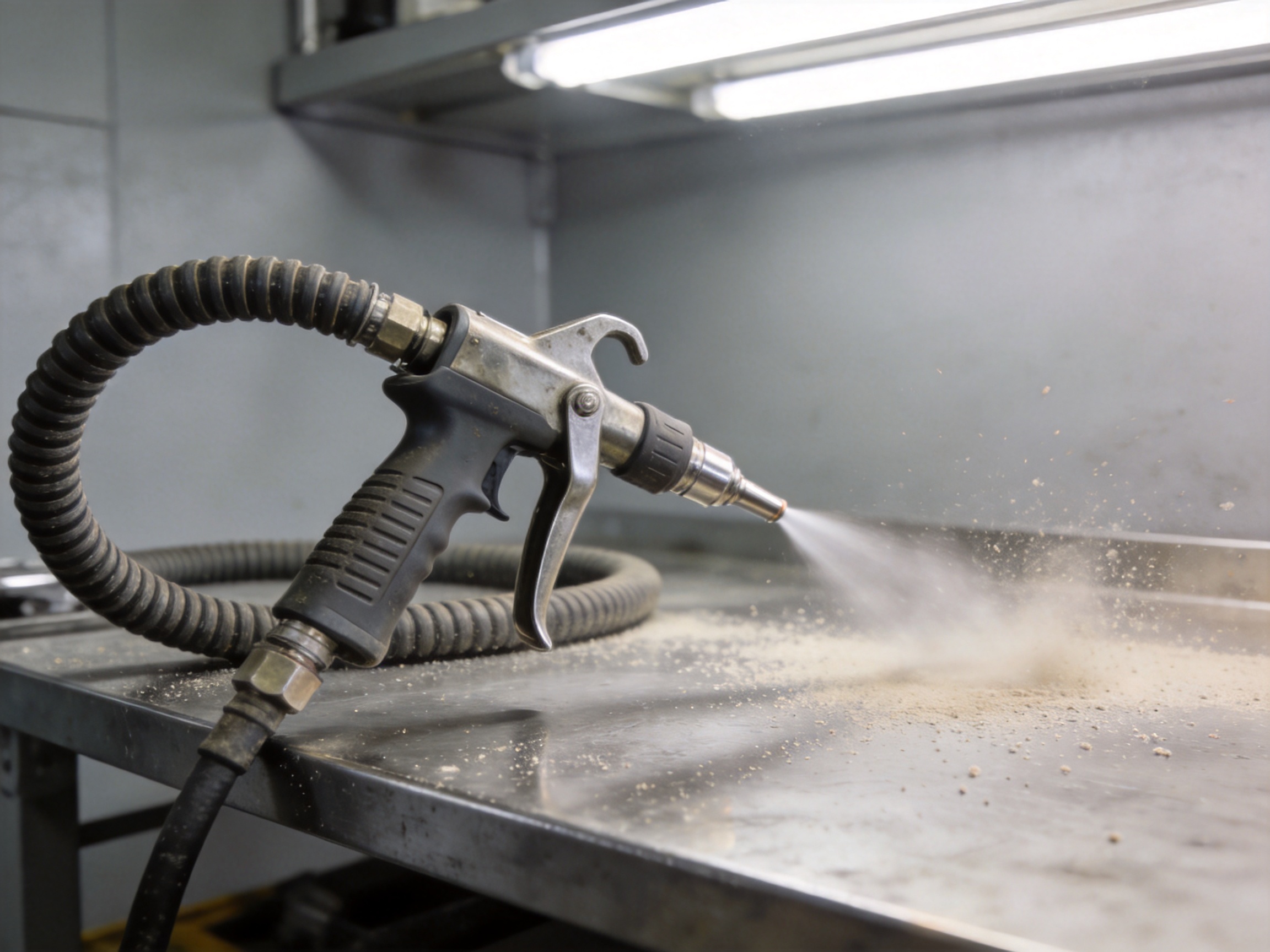
In modern workshops, compressed air is more than a utility; it is a productivity tool. The DG10S-3 air blowing gun is designed for users who need dependable airflow for cleaning, drying, dust removal, surface preparation, workstation maintenance, and general industrial service. As an air blowing gun within a broad pneumatic tool portfolio, DG10S-3 addresses a practical need found in automotive repair, woodworking, metalworking, machinery maintenance, coating preparation, assembly lines, packaging areas, and factory cleaning stations: delivering controllable air exactly where it is needed.
Unlike simple disposable blow guns that are treated as low-value accessories, the DG10S-3 is positioned as a functional workshop tool that must withstand frequent operation, repeated air pressure cycles, rough handling, and changing environmental conditions. Its value is not only in pushing air from a compressor line; its value is in how reliably, comfortably, and efficiently it helps operators complete daily tasks. A well-designed air blowing gun can reduce cleaning time, improve surface quality before spraying or assembly, support safer maintenance routines, and extend the useful life of other tools and equipment by removing debris before it becomes damaging contamination.
The DG10S-3 benefits from the experience of a manufacturer deeply involved in spray guns, air tools, mini compressors, air pipeline accessories, paint tanks, fittings, and related pneumatic systems. This production background matters because an air blowing gun depends on many of the same disciplines that define higher-end pneumatic products: air passage design, trigger response, sealing performance, material selection, thread accuracy, ergonomic form, surface finishing, and final functional testing. When these details are controlled by an experienced factory, the resulting tool can outperform generic alternatives in consistency, durability, operator comfort, and long-term reliability.
This article explains the DG10S-3 from a product-centered perspective. It explores where the tool is used, what qualities distinguish it from competing low-cost options, how advanced manufacturing processes contribute to performance, and why the company behind the product is well positioned to support professional buyers, distributors, and OEM or ODM customers. It also includes a practical comparison table, a Q&A section, and references for readers who evaluate pneumatic tools from engineering, purchasing, or production-management viewpoints.
Product Overview: What the DG10S-3 Is Built to Do
The DG10S-3 is an air blowing gun intended to connect to a compressed-air supply and deliver directed airflow through a handheld trigger-operated body. Its primary function is simple, but its quality depends on details. A poor-quality blow gun may leak air, feel uncomfortable, wear out quickly, deliver unstable airflow, have inaccurate threads, or fail under repeated workshop use. A professional air blowing gun must solve these issues by combining reliable sealing, responsive operation, sturdy construction, and compatibility with standard air systems.
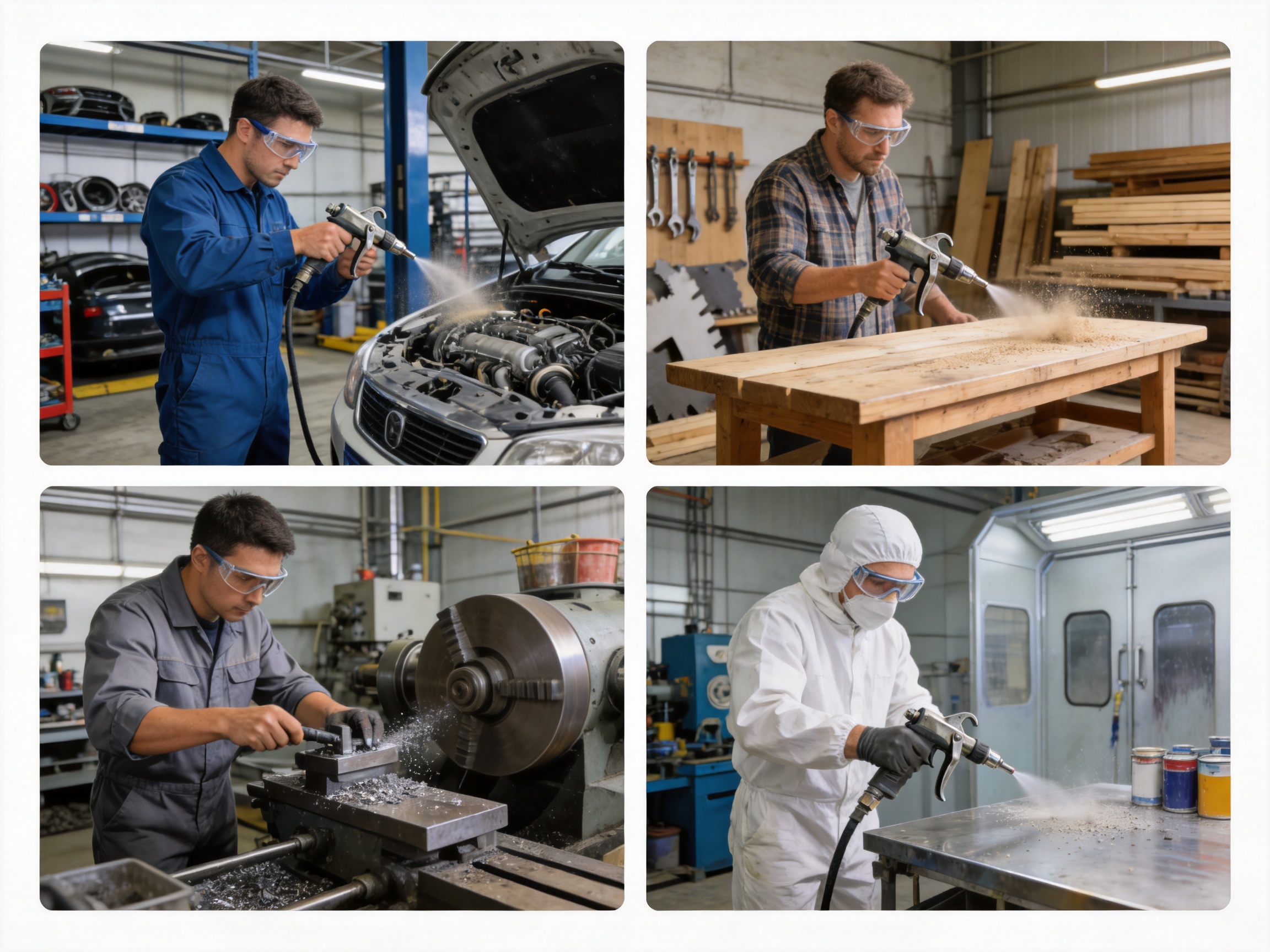
In real working environments, the DG10S-3 can be used for clearing chips from machining equipment, removing sawdust from woodworking benches, drying water from parts after washing, blowing dust from vehicle interiors, cleaning spray booths, preparing surfaces before coating, removing packaging residue, and clearing hard-to-reach areas around machinery. In coating and paint-related environments, air blowing is often used before spraying to help remove loose dust and particles. This can contribute to cleaner coating results, fewer finish defects, and reduced rework.
The DG10S-3 is also useful where operators need repeated short bursts of air rather than continuous airflow. Trigger control allows the user to apply air only when needed, helping reduce unnecessary compressed-air consumption. Since compressed air is one of the more expensive utilities in a factory, even small improvements in control and leakage reduction can create measurable energy benefits over time. A tool that seals well and responds accurately is not merely convenient; it supports operational efficiency.
For distributors and professional buyers, the DG10S-3 belongs to a category with broad demand because almost every pneumatic workshop uses air blowing tools. Its compact utility, repeat-purchase potential, compatibility with accessories, and relevance across industries make it a practical addition to air tool product lines. Buyers often evaluate such products not only by unit price but also by defect rate, consistency of finish, packaging quality, availability of fittings, support for different regional standards, and the stability of the manufacturing source. In these areas, the DG10S-3 is supported by a factory structure built around pneumatic product manufacturing rather than short-term trading.
Why Air Blowing Gun Quality Matters
Air blowing guns are sometimes underestimated because they appear simple. However, quality failures in this product category can create hidden costs. A leaky valve wastes compressed air during every shift. An uncomfortable handle increases operator fatigue. A weak trigger can break under repeated use. A poorly machined inlet thread can damage fittings or cause unsafe connections. A rough internal passage can reduce airflow efficiency. An inconsistent nozzle can make cleaning slower or less precise. These problems may seem small individually, but in high-volume operations they affect safety, productivity, energy cost, and user satisfaction.
The DG10S-3 is designed for users who recognize these practical realities. Its purpose is to provide controlled airflow through a durable, easy-to-handle tool body. The product’s advantage comes from balancing cost-effectiveness with industrial dependability. In markets where many blow guns compete mainly on low price, a better-built model provides value by reducing replacement frequency, minimizing air leakage, and delivering consistent operation. For a maintenance team, a reliable blow gun means fewer interruptions. For a distributor, it means fewer complaints. For an OEM customer, it means a product that can be integrated into a wider air tool offering with confidence.
Quality also matters because compressed air can be hazardous when misused. Responsible product design and manufacturing cannot replace proper workplace training, but they can support safer use through predictable trigger action, secure connections, appropriate material strength, and stable construction. Operators should always follow local safety rules, use suitable personal protective equipment, avoid directing compressed air at the body, and follow pressure limitations recommended for the specific application. A dependable tool helps users maintain control, which is a key part of safe pneumatic work.
Core Advantages of the DG10S-3 Over Generic Competitors
Controlled Air Delivery
One of the most important advantages of the DG10S-3 is controlled air delivery. A good air blowing gun should give the operator a responsive connection between trigger movement and airflow. This allows short bursts for delicate cleaning or stronger blasts for removing stubborn particles. Generic competitors may have rough trigger movement or inconsistent valve response, causing air to surge unpredictably or continue leaking after release. The DG10S-3 is designed around functional control, helping users apply air more efficiently and accurately.
Durable Construction for Repeated Workshop Use
Air blowing guns are dropped, hung from hoses, placed on workbenches, exposed to dust, and operated repeatedly throughout the day. Durability is therefore essential. The DG10S-3 benefits from manufacturing practices developed for pneumatic tools and spray equipment, where pressure integrity and long service life are central expectations. Compared with cheaper alternatives made with inconsistent materials or poorly controlled components, a more carefully produced air blowing gun can better resist wear, maintain sealing performance, and continue operating under frequent use.
Improved Sealing and Reduced Air Waste
Air leakage is one of the most common complaints in low-grade blow guns. Leakage may occur at the inlet, around the valve, or through a worn trigger mechanism. The DG10S-3 is supported by production processes that emphasize incoming inspection, in-process quality control, functional testing, and final inspection. Better sealing helps reduce wasted air and can contribute to lower operating costs, particularly in factories where many air tools are connected at the same time. The benefit may not be obvious at purchase, but it becomes clear during daily use.
Ergonomic Handling
A tool used repeatedly should feel natural in the hand. The DG10S-3 is intended for practical workshop handling, with attention to grip form, trigger accessibility, and ease of operation. In comparison, some low-cost competitors rely on narrow or awkward bodies that may cause discomfort during long cleaning tasks. Better ergonomics help users maintain control, reduce hand strain, and work more efficiently. For environments such as automotive detailing, assembly cleaning, woodworking dust removal, or preparation before coating, comfort is not a luxury; it is part of productivity.
Compatibility with Pneumatic System Accessories
The manufacturer’s wider involvement in air fittings, pipeline accessories, compressors, paint tanks, spray gun kits, and international standard product categories provides an advantage in compatibility awareness. Air blowing guns must connect reliably with hoses, couplers, regulators, and fittings used in different markets. Experience with Japan Standard, European Standard, U.S. Standard, and G.B. Standard pneumatic accessories supports a better understanding of thread expectations, connection quality, and market-specific requirements. This is valuable for distributors supplying multiple regions.
Stable Supply from an Established Manufacturing Base
Many buyers face problems when sourcing simple tools from unstable suppliers: inconsistent batches, changing materials, poor packaging, delayed delivery, or lack of documentation. The DG10S-3 is backed by an established manufacturer with decades of experience, a large production site, strong staffing, and international business exposure. This stability is a significant advantage for importers, wholesalers, and brand owners who need repeatable supply rather than one-time opportunistic purchasing.
Applications Across Professional Environments
The DG10S-3 can serve a broad range of sectors because compressed air cleaning is universal. In automotive workshops, it can help remove dust from engine compartments, blow water from crevices after washing, clean wheel areas, remove sanding dust before refinishing, and clear debris from work surfaces. In body shops, it can assist surface preparation before spraying, helping technicians reduce contamination that may cause finish defects.
In woodworking shops, the tool can remove sawdust from benches, jigs, machinery, and workpieces. Low-pressure and controlled cleaning is especially important around delicate surfaces or assembled wood components. While users must manage dust collection responsibly and avoid dispersing hazardous dust into breathing zones, a controlled air blowing gun remains a practical tool for localized cleaning when used correctly.
In metalworking and machinery environments, the DG10S-3 can blow chips from fixtures, remove coolant residue, and clear debris around machine guards or assembly areas. In maintenance departments, it can help clean filters, housings, tools, and mechanical parts before inspection or repair. In electronics-related settings, air blowing must be carefully controlled and may require specialized antistatic or filtered air systems, but the general principle of directed airflow remains important.
In packaging and production lines, air blowing tools can help remove dust from containers, clear particles before labeling, dry surfaces, and maintain equipment cleanliness. In painting and coating environments, the DG10S-3 fits naturally within a product ecosystem that includes spray guns, paint sprayers, airless spray guns, electric spray guns, paint tanks, and air pipeline accessories. Air cleaning before coating is often a small step with a large effect on finish quality.
Manufacturing Strength Behind the Product
The performance of the DG10S-3 is closely connected to the manufacturing strength behind it. Ningbo Lis Industrial Co., Ltd. is engaged in research, development, manufacturing, and marketing of air painting spray gun series, mini air compressors, and relevant air tools. The company has developed from its establishment in 1984 into one of the larger enterprises in China’s painting spray gun industry, with more than 400 employees and a production site covering over 400,000 square feet. This scale provides the organizational foundation needed for stable production, quality control, and product development.
The company’s background in spray technology is particularly relevant. Spray guns require precise air and fluid control, accurate machining, careful assembly, consistent sealing, and reliable testing. Those same capabilities support the production of air blowing guns such as DG10S-3. A manufacturer that understands airflow control in paint application is well positioned to design and produce tools that manage compressed air efficiently. The product may be simpler than a high-end spray gun, but the underlying manufacturing discipline still matters.
The company has also built a broad product range that includes heavy duty spray guns, woodworking low pressure spray guns, economical conventional spray guns, texture paint spray guns, washing guns, air blowing guns, sandblast and foam guns, tyre inflating guns, water guns, grease guns, automatic spray guns, air brushes, mini oil-free compressors, air fittings, paint tanks, air polishers, spray gun kits, pro touch-up spray guns, car polish machines, airless spray guns, electric spray guns, and paint sprayers. This wide portfolio reflects experience across pneumatic functions and market requirements. For the DG10S-3, it means the product is not isolated; it is part of a mature air tool manufacturing ecosystem.
Advanced Process Control and Quality Assurance
Quality in pneumatic tools begins before assembly. Raw materials must be checked for conformity, strength, finish suitability, and consistency. Components such as bodies, triggers, valves, springs, seals, nozzles, and fittings must meet dimensional requirements. Threads must be clean and accurate. Air passages must be formed correctly. Surface finishes should be consistent and protective. The company follows the requirements of an ISO9000 quality system and applies control throughout the production process, including raw material and incoming inspection, in-process quality control, functional testing, and final quality inspection.
For a product such as the DG10S-3, these procedures help ensure that each unit is not merely visually acceptable but functionally dependable. Functional testing is especially important because an air blowing gun must perform under pressure. A product may look correct but still leak, respond poorly, or fail to deliver stable airflow. Testing helps identify such issues before shipment. In-process controls also reduce variation from batch to batch, which is vital for distributors and industrial buyers who expect repeatability.
The company’s production culture is supported by certifications and management systems, including ISO9001 quality system certification, OHSAS18001 occupational health and safety system certification, and ISO14001 environmental management system certification. Products have also passed CE and GS certifications in relevant categories. These systems indicate a structured approach to quality, workplace safety, environmental management, and international market expectations. For buyers, the importance is practical: a supplier with established systems is generally better equipped to provide consistent documentation, traceability, inspection routines, and corrective actions when needed.
Research, Development, and Engineering Capability
Engineering capability is another advantage behind the DG10S-3. The company has a strong research and development team and can provide both OEM services based on drawings or samples and ODM services based on customer requirements. This is important in the air tool market because distributors and brand owners often need variations in color, packaging, inlet standard, nozzle form, trigger style, accessory kits, or regional compliance requirements. A supplier with ODM capability can help transform market feedback into practical product adjustments.
The company established a spraying machinery engineering technology center and has carried out technical cooperation with American Wagner Spraying Technology Co., Ltd., focusing on the development and research of spraying machinery. While the DG10S-3 is an air blowing gun rather than a paint spray gun, the same engineering environment supports airflow-related product improvement. Experience in spray technology helps engineers understand air movement, pressure behavior, user handling, component tolerances, and manufacturing repeatability.
Innovation in a product category like air blowing guns does not always mean dramatic visual change. It often means better valve durability, more comfortable grip geometry, improved sealing materials, smoother trigger feel, more efficient airflow paths, stronger threads, better surface finishing, or more stable assembly methods. These incremental improvements are precisely the kind that professional users appreciate after weeks or months of use. The DG10S-3 benefits from this mindset: practical improvement guided by manufacturing experience and user needs.
Material and Component Considerations
Although specific technical specifications should always be confirmed through the latest product datasheet, the performance principles of the DG10S-3 can be understood through common air blowing gun design factors. The body must provide strength while remaining light enough for comfortable handling. The valve system must open and close reliably under compressed air pressure. Seals must resist wear and maintain airtight performance. The nozzle must direct air efficiently. The inlet connection must mate securely with fittings used in the target market.
Material consistency is a major difference between a dependable tool and a low-grade competitor. If body material is inconsistent, the tool may crack, deform, or wear prematurely. If springs are poorly specified, trigger response may weaken. If seals are low quality, leakage may appear early. If machining tolerances are loose, assembly may vary from unit to unit. By applying controlled sourcing and inspection, the manufacturer can reduce these risks and produce a more reliable DG10S-3.
Surface treatment and finishing also contribute to product value. A clean, well-finished tool is easier to maintain, looks more professional, and better reflects manufacturing discipline. For distributors, consistent appearance matters because the product must meet end-user expectations when displayed in retail, catalog, or industrial supply channels. For industrial buyers, appearance is secondary to function, but a consistent finish often indicates better process control overall.
Comparison Table: DG10S-3 and Typical Low-Cost Alternatives
| Evaluation Area | DG10S-3 Air Blowing Gun | Typical Low-Cost Alternative | Practical Benefit for Users |
|---|---|---|---|
| Airflow Control | Designed for responsive trigger operation and directed airflow. | May provide uneven trigger feel or unstable air release. | Improves cleaning precision and reduces unnecessary air use. |
| Sealing Performance | Supported by controlled production and functional testing. | Often vulnerable to leakage at the valve or inlet. | Helps reduce compressed-air waste and operating cost. |
| Durability | Built within a mature pneumatic tool manufacturing system. | May use inconsistent materials or simplified construction. | Supports longer service life in daily workshop use. |
| Ergonomics | Designed for practical handheld operation and repeated use. | May feel awkward, narrow, or uncomfortable during long tasks. | Reduces fatigue and improves user acceptance. |
| Compatibility | Backed by experience with multiple regional air fitting standards. | May have limited or inconsistent thread and fitting options. | Helps distributors serve different markets more easily. |
| Quality Control | Produced under structured inspection and testing routines. | Quality may vary significantly between batches. | Improves supply reliability and reduces complaints. |
| Supplier Support | Supported by OEM and ODM capability, broad product range, and established production capacity. | Often limited to basic trading without engineering support. | Benefits importers, wholesalers, and brand owners seeking long-term cooperation. |
Energy Efficiency and Compressed-Air Economy
Compressed air is convenient but costly to generate. Compressors consume electricity, and leaks in the system can waste significant energy. While a single air blowing gun may appear small, a factory may operate many such tools across multiple stations. If each one leaks or encourages excessive air use, the combined cost becomes substantial. The DG10S-3 contributes to compressed-air economy through controlled operation and reliable sealing.
Operators can use short, targeted bursts instead of prolonged airflow when a trigger responds well. Good sealing helps ensure that air is consumed mainly during intentional operation rather than escaping when the tool is idle. Accurate fittings and threads reduce connection losses. In production environments focused on lean management and energy reduction, these details support broader operational goals. A well-made air blowing gun is therefore not just a consumable accessory; it is part of the compressed-air efficiency strategy.
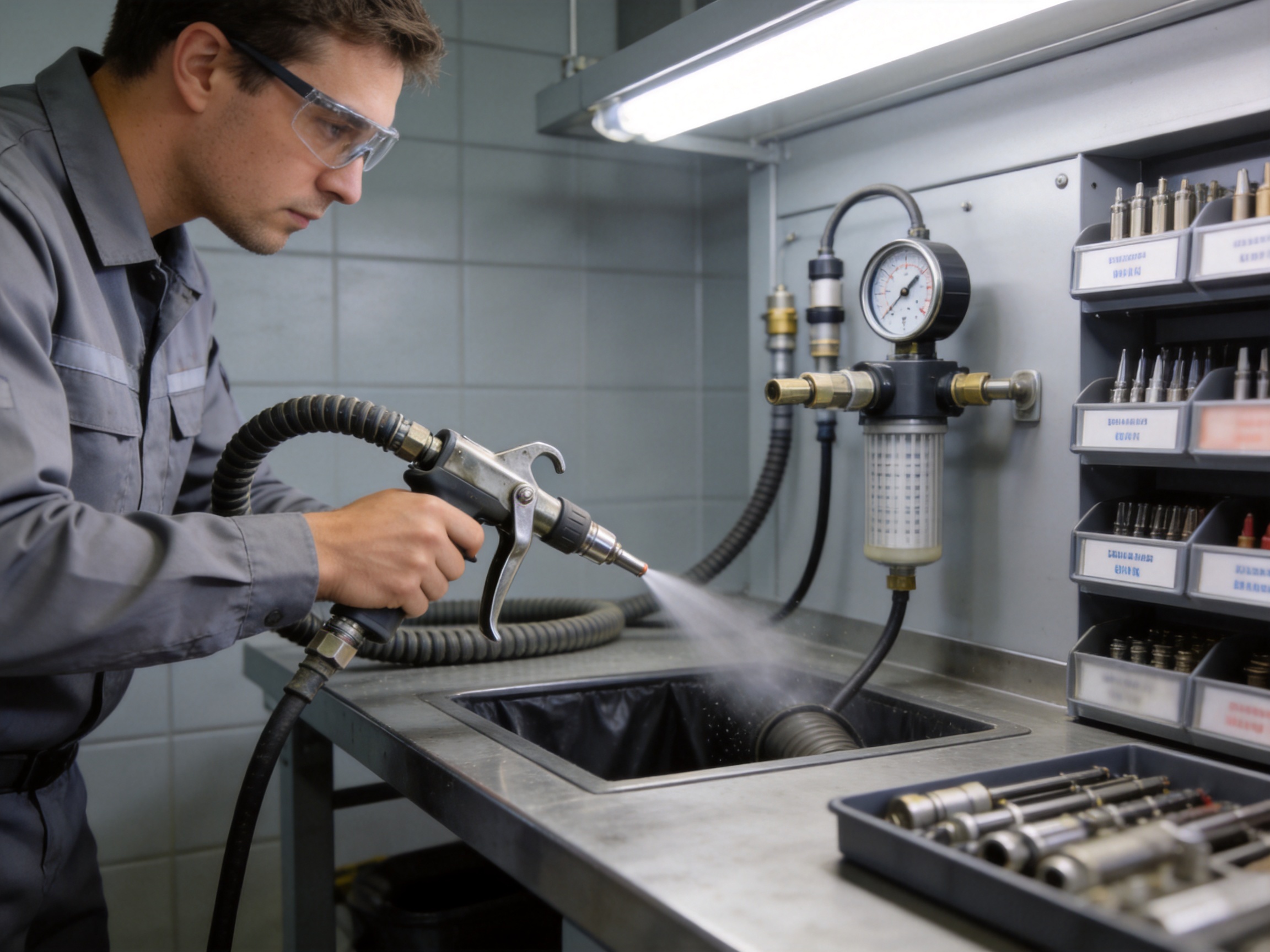
Users should also pair the DG10S-3 with appropriate regulators, filters, hoses, and couplers. Clean, dry, properly regulated air helps improve tool life and performance. Excessive pressure should be avoided because it can increase noise, energy consumption, dust dispersion, and safety risk. The best results come from matching the tool, air source, nozzle, and task requirements.
Role in Surface Preparation and Paint Application Workflows
The manufacturer’s strong background in spray guns and painting equipment makes the DG10S-3 especially relevant for coating-related workflows. Before painting, surface cleanliness is crucial. Dust, sanding particles, fibers, and loose debris can cause defects such as fisheyes, roughness, poor adhesion, or visible contamination in the finish. Air blowing can help remove loose material before final cleaning and spraying, provided it is used with clean air and proper technique.
In automotive refinishing, furniture coating, industrial painting, and maintenance repainting, the DG10S-3 can serve as part of the preparation process. It should not replace all cleaning steps, such as wiping with appropriate materials or using tack cloths where required, but it can reduce contamination before those steps. When paired with quality spray equipment, compressed-air preparation tools contribute to a more consistent finish.
This ecosystem advantage differentiates the DG10S-3 from products offered by suppliers that only sell isolated accessories. A company experienced in spray guns, paint sprayers, airless spray guns, electric spray guns, air brushes, compressors, paint tanks, and air fittings understands the complete workflow around painting. This helps align the air blowing gun with real shop needs rather than treating it as a generic add-on.

Manufacturing Scale and Supply Reliability
Supply reliability matters greatly for international buyers. A distributor may need consistent shipments throughout the year. An OEM customer may need private-label production according to schedule. A large retailer may need packaging consistency and quality documentation. An industrial procurement team may need stable replacement availability. The manufacturer behind the DG10S-3 has developed substantial production capacity and can increase production capacity by 30 percent within two months to meet different purchase quantities. This flexibility supports customers with changing demand patterns.
The company’s location in Ningbo, a major harbor city with developed economic infrastructure and convenient transportation, also supports export logistics. Efficient access to shipping channels can help reduce lead-time uncertainty and improve international delivery planning. For global buyers, the physical location and export experience of the supplier are important elements of total purchasing value.
The company’s products are sold into Europe, North America, the Middle East, South Africa, and East Asia. Experience with these markets helps the company understand international quality expectations, documentation needs, packaging standards, and after-sales communication. For the DG10S-3, this means customers can source a practical pneumatic tool from a supplier already familiar with global business requirements.
Brand Heritage and Market Experience
The company has built recognized international brands, including Voylet and Muzi, and serves customers worldwide. Over years of development, it has formed long-term strategic partnerships with customers, including well-known industry participants. This market experience helps guide product development because feedback from different regions and user groups reveals what matters most: durable construction, easy handling, reliable sealing, attractive appearance, reasonable price, and stable supply.
While the DG10S-3 is the focus of this article, the company’s brand and manufacturing heritage provide confidence that the product is part of a long-term development strategy. The company’s mission emphasizes innovative design, high-quality products and services, and value creation for global customers. Its vision focuses on the painting industry and the fulfillment of worldwide and domestic painting needs through professional products, services, and solutions. These commitments are relevant because air blowing guns often support painting and surface preparation processes.
A mature manufacturer also understands the importance of customer-specific requirements. Some customers may need products under their own brand. Others may need modified accessories or packaging. Some markets require different inlet fittings or instruction materials. OEM and ODM capability allows the DG10S-3 to be adapted within reasonable engineering limits, helping customers differentiate their product lines while relying on a proven production base.
Quality Systems from Raw Material to Finished Product
The company’s quality-control model covers the full production chain. Raw material inspection helps prevent nonconforming material from entering production. Incoming inspection checks purchased parts and components. In-process quality control monitors manufacturing steps before defects multiply. Functional testing verifies practical performance. Final inspection confirms that finished goods meet requirements before packing and shipment. This layered approach is important for air tools because a defect in any stage can affect safety, performance, or customer satisfaction.
For the DG10S-3, raw material control supports body strength and component durability. Dimensional inspection supports proper assembly and thread compatibility. Valve and seal checks support airtight performance. Functional tests support trigger response and air delivery. Final inspection supports appearance, packaging accuracy, and shipment readiness. The result is a product better suited for distributors and end users who expect consistency.
Quality control also supports continuous improvement. When inspection data is collected and reviewed, the manufacturer can identify recurring issues, improve tooling, adjust processes, refine supplier requirements, and update assembly methods. This is how a practical product like an air blowing gun becomes more reliable over time. The advantage is not only in the design drawing but in the manufacturing system that repeats the design accurately.
Design Details That Influence User Experience
Several design details influence how the DG10S-3 feels and performs in daily use. The trigger should be positioned for natural finger movement. The body should balance strength and weight. The air inlet should allow secure hose connection without making the tool awkward. The nozzle should direct airflow effectively. Internal passages should support efficient air movement. Sealing parts should be protected from premature wear. These details may seem ordinary, but they determine whether users choose the same tool again after long-term use.
Compared with basic competitors, the DG10S-3 benefits from a more professional design philosophy. It is intended not only to pass a quick visual inspection but to serve in real working conditions. A user cleaning a machine table, drying a component, or preparing a surface for coating wants predictable behavior every time the trigger is pressed. The tool should not require constant adjustment, leak when idle, or feel fragile. The DG10S-3 is designed to support this practical confidence.
Another important design consideration is maintenance simplicity. Air blowing guns are generally low-maintenance tools, but they should remain easy to keep clean and easy to connect or disconnect from air lines. Users should inspect fittings, avoid contamination entering the tool, and store the gun properly when not in use. A robust design helps the product tolerate normal workshop routines while maintaining functional reliability.
Safety and Responsible Use
Compressed air must be used responsibly. Even though the DG10S-3 is a practical cleaning tool, users should never direct compressed air toward skin, eyes, or another person. Flying particles can cause injury, and compressed air can be dangerous if misused. Operators should wear eye protection and other appropriate personal protective equipment according to workplace rules. Work areas should be arranged so that blown debris does not create hazards for nearby personnel.
Users should also avoid using excessive pressure. Higher pressure is not always better; it can increase noise, scatter debris, consume more energy, and increase risk. The correct pressure depends on the task, local regulations, and system setup. A regulator should be used where appropriate. Air should be filtered or dried when the application requires clean airflow, especially before painting or precision assembly.
The DG10S-3 supports safer work by providing controllable trigger operation and reliable connections, but safety ultimately depends on proper training and workplace procedures. Buyers should provide instructions and ensure that operators understand how to use pneumatic tools correctly. When used responsibly, the DG10S-3 can be a valuable part of clean, efficient, and orderly workshop operations.
Value for Distributors and Importers
For distributors, the DG10S-3 offers several commercial advantages. First, air blowing guns have wide market demand because they are used across many industries. Second, the product is easy to position alongside compressors, hoses, fittings, spray guns, paint tools, and other pneumatic accessories. Third, the manufacturer’s broad product range allows buyers to consolidate sourcing, reducing supplier management complexity. Fourth, stable production and quality systems help protect distributor reputation.
In competitive markets, distributors need products that provide a clear value story. The DG10S-3 can be presented as a durable, controlled, professionally manufactured air blowing gun supported by an experienced pneumatic tool producer. This differentiates it from anonymous low-cost alternatives. Customers who have experienced leaking or fragile blow guns understand the benefit of upgrading to a better-built option.
Private label and customized packaging possibilities can also support distributor strategy. A buyer may choose standard supply, branded packaging, or product adjustments depending on market needs. With OEM and ODM support, the manufacturer can cooperate on product development within realistic technical and commercial parameters. This flexibility helps distributors serve retail, industrial, automotive, and professional tool channels.
Value for Industrial End Users
Industrial end users often evaluate tools by total cost of ownership rather than purchase price alone. A very cheap air blowing gun may cost more in the long run if it leaks, breaks, causes downtime, or needs frequent replacement. The DG10S-3 is designed for practical reliability, making it suitable for maintenance teams, production workers, body shops, woodworking facilities, and general workshops seeking dependable compressed-air cleaning.
End users benefit from consistent trigger control, comfortable handling, reduced leakage, and compatibility with proper air system accessories. These advantages help improve daily efficiency. A worker can clean faster, prepare surfaces more thoroughly, and spend less time dealing with faulty tools. In environments where many small tasks accumulate into significant labor time, tool quality matters.
Industrial buyers may also appreciate supplier stability. When a company standardizes on a tool, it wants replacements and related accessories to remain available. The manufacturer’s scale, export experience, and production capacity help support long-term procurement confidence. The DG10S-3 can therefore fit not only individual tool purchases but also broader workshop standardization programs.
Integration with Air Pipeline Accessories and Fittings
An air blowing gun is only as effective as the system to which it is connected. Hoses, couplers, filters, regulators, and fittings all influence performance. The manufacturer’s product range includes air pipeline accessories and air fittings, which supports a system-based understanding of pneumatic tools. This is important because connection reliability and airflow efficiency depend on matched components.
For the DG10S-3, proper fitting selection helps prevent leaks and pressure loss. A secure coupler connection improves safety and convenience. A suitable hose diameter supports adequate airflow. A regulator helps control pressure. A filter can improve air cleanliness. These system factors allow the product to perform at its best. Buyers who source multiple pneumatic accessories from one experienced manufacturer may also benefit from improved compatibility and procurement efficiency.
Different regions may use different standards, including Japan Standard, European Standard, U.S. Standard, and G.B. Standard connections. Experience with these standards gives the manufacturer an advantage when serving international customers. It reduces the risk of mismatch and supports smoother market entry for distributors.
How the DG10S-3 Supports Clean Production
Clean production is a major concern in modern factories. Dust, chips, fibers, and residue can interfere with assembly, reduce finish quality, damage machinery, and create workplace hazards. The DG10S-3 supports clean production by giving operators a fast way to remove unwanted particles from localized areas. When used as part of a broader cleaning system that may include vacuum extraction, filtration, wiping, and preventive maintenance, it helps maintain a more orderly production environment.
In painting and finishing areas, cleanliness directly affects quality. In assembly areas, cleanliness affects fit, function, and inspection results. In machining areas, chip control affects tool life and operator safety. In packaging areas, dust control affects product appearance. The DG10S-3 is a small tool, but it contributes to these larger objectives by making routine cleaning easier and faster.
Responsible use is important. Air blowing should not simply move contamination from one critical area to another. Operators should blow debris toward collection points when possible and follow facility procedures. The tool’s controlled airflow helps users work more precisely, supporting better housekeeping practices.
Why Established Manufacturing Outperforms Trading-Only Supply
Some air blowing guns on the market are supplied through trading channels with limited control over production. While such products may be inexpensive, they can suffer from inconsistent specifications and quality variation. A manufacturing-based supplier has greater control over material selection, tooling, assembly, inspection, testing, and product improvement. The DG10S-3 benefits from being produced within a company that is directly engaged in pneumatic product manufacturing.
This distinction matters when problems occur. A manufacturing supplier can analyze defects, adjust processes, improve tooling, and provide technical feedback. A trading-only supplier may have limited ability to solve root causes. For professional buyers, long-term cooperation with a real manufacturer is often more valuable than chasing the lowest short-term price. The DG10S-3 offers the practical reliability and support structure that professional sourcing teams prefer.
The company’s history since 1984 demonstrates persistence in the industry. Its development into a large enterprise with advanced certifications, international customers, engineering capability, and broad product lines reflects operational maturity. This maturity supports the DG10S-3 not only as a product but as part of a dependable supply program.
Purchasing Considerations for the DG10S-3
When purchasing the DG10S-3, buyers should consider the intended market, fitting standard, packaging requirements, air pressure practices, expected usage intensity, and accessory compatibility. Distributors may need different configurations for retail and industrial channels. Industrial buyers may focus on durability and system compatibility. OEM customers may require color, logo, labeling, or packaging customization. These requirements should be discussed during sourcing to ensure the final product matches user expectations.
Buyers should also request current technical information from the supplier, including applicable specifications, packaging details, certification information, and recommended operating conditions. Since product designs can be updated, the latest official data should guide final purchasing decisions. This article explains product positioning and advantages but should not replace the formal product datasheet.
For best performance, users should pair the DG10S-3 with a properly maintained compressed-air system. Clean air, correct pressure, sound hoses, and good fittings all help the tool perform reliably. Poor air supply conditions can shorten tool life or reduce performance even when the tool itself is well made. A system approach produces the best result.
Q&A Section
What is the DG10S-3 used for?
The DG10S-3 is used for directed compressed-air cleaning, drying, dust removal, debris clearing, surface preparation, and general workshop maintenance. It is suitable for automotive shops, woodworking areas, production lines, machinery maintenance, painting preparation, and other pneumatic workstations.
How does the DG10S-3 differ from a basic low-cost air blowing gun?
The DG10S-3 is supported by a mature pneumatic tool manufacturing system, structured quality control, functional testing, and experience with airflow products. Compared with many basic low-cost alternatives, it is positioned to provide better sealing, more stable trigger control, improved durability, and more reliable batch consistency.
Can the DG10S-3 help reduce compressed-air waste?
Yes, a well-sealed and responsive air blowing gun can help reduce unnecessary air loss. The DG10S-3 supports controlled bursts of air and benefits from quality-control practices intended to reduce leakage. Users should also maintain hoses, couplers, and regulators to maximize energy efficiency.
Is the DG10S-3 suitable for painting preparation?
Yes, it can be used to remove loose dust and particles before painting or coating, especially when paired with clean, regulated air. However, it should be part of a complete surface preparation process and should not replace required wiping, degreasing, tack cloth use, or other finishing procedures.
What industries commonly use this type of air blowing gun?
Common industries include automotive repair, body refinishing, woodworking, metalworking, machinery maintenance, assembly, packaging, general manufacturing, and coating operations. Any workplace with compressed air may find a controlled air blowing gun useful.
Does the manufacturer support OEM or ODM requirements?
Yes. The company has a strong research and development team and can provide OEM services based on drawings or samples, as well as ODM services according to customer needs. This is useful for distributors, brand owners, and buyers requiring customized product or packaging solutions.
Why is supplier experience important for a simple product like an air blowing gun?
Even simple pneumatic tools depend on sealing quality, thread accuracy, material consistency, trigger durability, and airflow control. An experienced manufacturer is better able to manage these factors through process control, inspection, testing, and engineering improvement.
What should users remember for safe operation?
Users should never direct compressed air at people or the body, should wear suitable eye protection, should avoid excessive pressure, and should follow workplace safety procedures. Air blowing can scatter debris, so the work area should be controlled and nearby personnel protected.
Can the DG10S-3 be supplied for different regional standards?
The manufacturer has experience with Japan Standard, European Standard, U.S. Standard, and G.B. Standard pneumatic products and accessories. Buyers should confirm the required fitting or thread standard when placing orders.
What makes the company behind the DG10S-3 a strong supplier?
The company has decades of manufacturing experience, a large production base, more than 400 employees, international market exposure, quality management systems, product certifications in relevant categories, broad pneumatic product lines, and the ability to increase capacity to meet customer demand.
Conclusion: A Practical Tool Backed by Industrial Capability
The DG10S-3 air blowing gun is a practical product designed for one of the most common needs in pneumatic work environments: controlled, dependable airflow. Its value lies in daily usefulness, but its competitive strength comes from details that are easy to overlook: sealing quality, trigger control, ergonomic handling, material consistency, fitting compatibility, and manufacturing repeatability. These qualities distinguish it from many generic low-cost alternatives that may appear similar but perform inconsistently over time.
Behind the DG10S-3 is a manufacturer with extensive experience in air painting spray guns, spray equipment, compressors, fittings, accessories, and related pneumatic tools. The company’s history since 1984, large production scale, engineering capability, quality systems, certifications, OEM and ODM services, and international market presence provide a strong foundation for reliable supply. For distributors, this means a product that can be marketed with confidence. For industrial users, it means a tool that supports clean, efficient, and controlled workshop operations.
In a market crowded with simple blow guns, the DG10S-3 stands out through professional manufacturing support and practical design intent. It is not merely an air outlet attached to a handle; it is a workshop tool shaped by pneumatic product expertise. When selected, installed, and used properly, it can help improve cleaning efficiency, reduce air waste, support surface preparation, and contribute to better workplace productivity.
References
Compressed Air and Gas Institute. Compressed Air System Best Practices Manual.
International Organization for Standardization. ISO 9001 Quality Management Systems: Requirements.
International Organization for Standardization. ISO 14001 Environmental Management Systems: Requirements with Guidance for Use.
Occupational safety guidance materials on the safe use of compressed air tools and pneumatic equipment.
Industrial finishing and surface preparation manuals covering dust removal, compressed-air cleaning, and coating preparation practices.
Pneumatic tool engineering references on valve design, air consumption, sealing performance, and compressed-air system efficiency.