 Search
 English
 中文简体
中文简体 Deutsch
 Español
Content
- 1 Product Overview and Core Positioning
- 2 Key Technical Specifications
- 3 Why HVLP Technology Matters
- 4 Advantages Over Typical Competing Spray Guns
- 5 Detailed Performance Benefits
- 6 Application Areas
- 7 How the Product Supports Better Finish Quality
- 8 Manufacturing Strength Behind the Spray Gun
- 9 Advanced Quality Control Process
- 10 Certifications and Management Systems
- 11 Research, Development, OEM, and ODM Capabilities
- 12 Production Capacity and Supply Chain Reliability
- 13 Practical Setup Guidance
- 14 Maintenance for Long Service Life
- 15 Business Value for Distributors and Professional Buyers
- 16 Sustainability and Responsible Spraying
- 17 Frequently Asked Questions
- 17.1 What type of work is this compact HVLP spray gun best suited for?
- 17.2 Why does the gun use a 125 ml cup?
- 17.3 What are the benefits of having 0.5 mm, 0.8 mm, and 1.0 mm nozzle options?
- 17.4 How does HVLP spraying reduce waste?
- 17.5 Is the G1/4 air inlet compatible with common workshop systems?
- 17.6 What air pressure should be used?
- 17.7 How should the spray gun be cleaned?
- 17.8 What makes the manufacturer reliable for international buyers?
- 17.9 Can this product be used for large panels?
- 17.10 Why is manufacturing quality important for a spray gun?
- 18 Conclusion
- 19 References
In modern coating work, the quality of a finish is determined not only by the paint or coating material, but also by the way that material is delivered to the surface. A compact HVLP spray gun with a 125 ml gravity cup, 0.5 mm, 0.8 mm, and 1.0 mm nozzle options, 29 PSI working air pressure, and a G1/4 air inlet is designed for users who need controlled atomization, efficient material transfer, and accurate handling in detail-oriented spraying jobs. This type of spray gun is especially valuable for touch-up work, small component finishing, woodworking details, automotive refinishing, sample coating, craft production, and other applications where a full-size gun may waste material or reduce operator control.
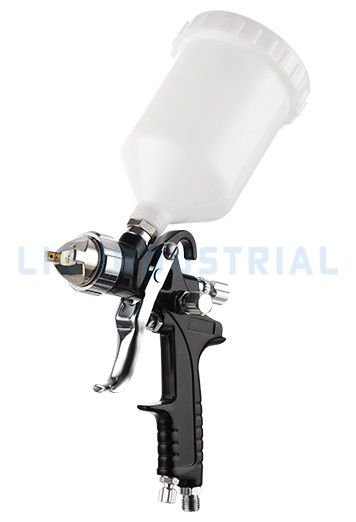
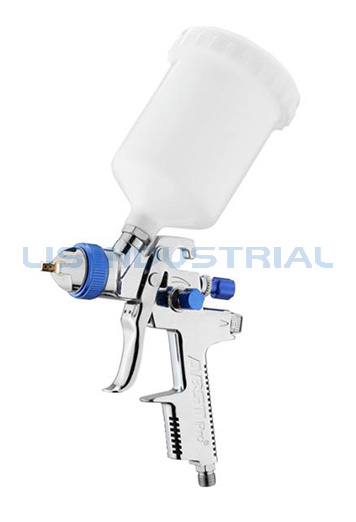
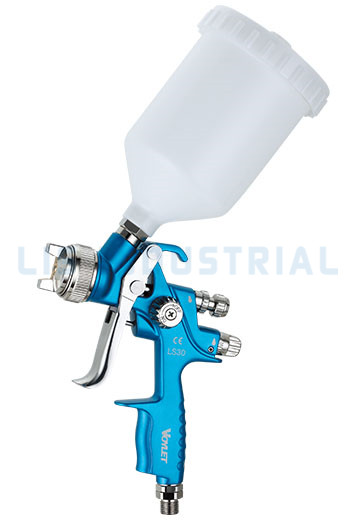
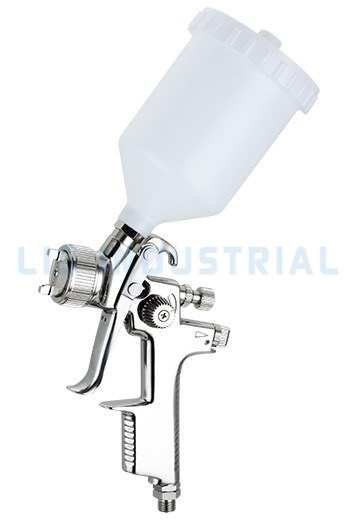
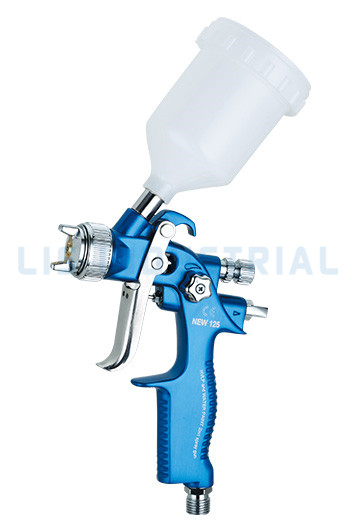
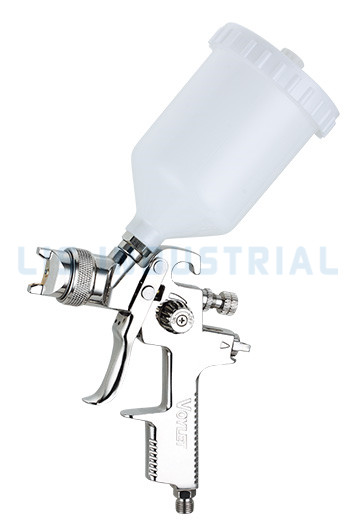
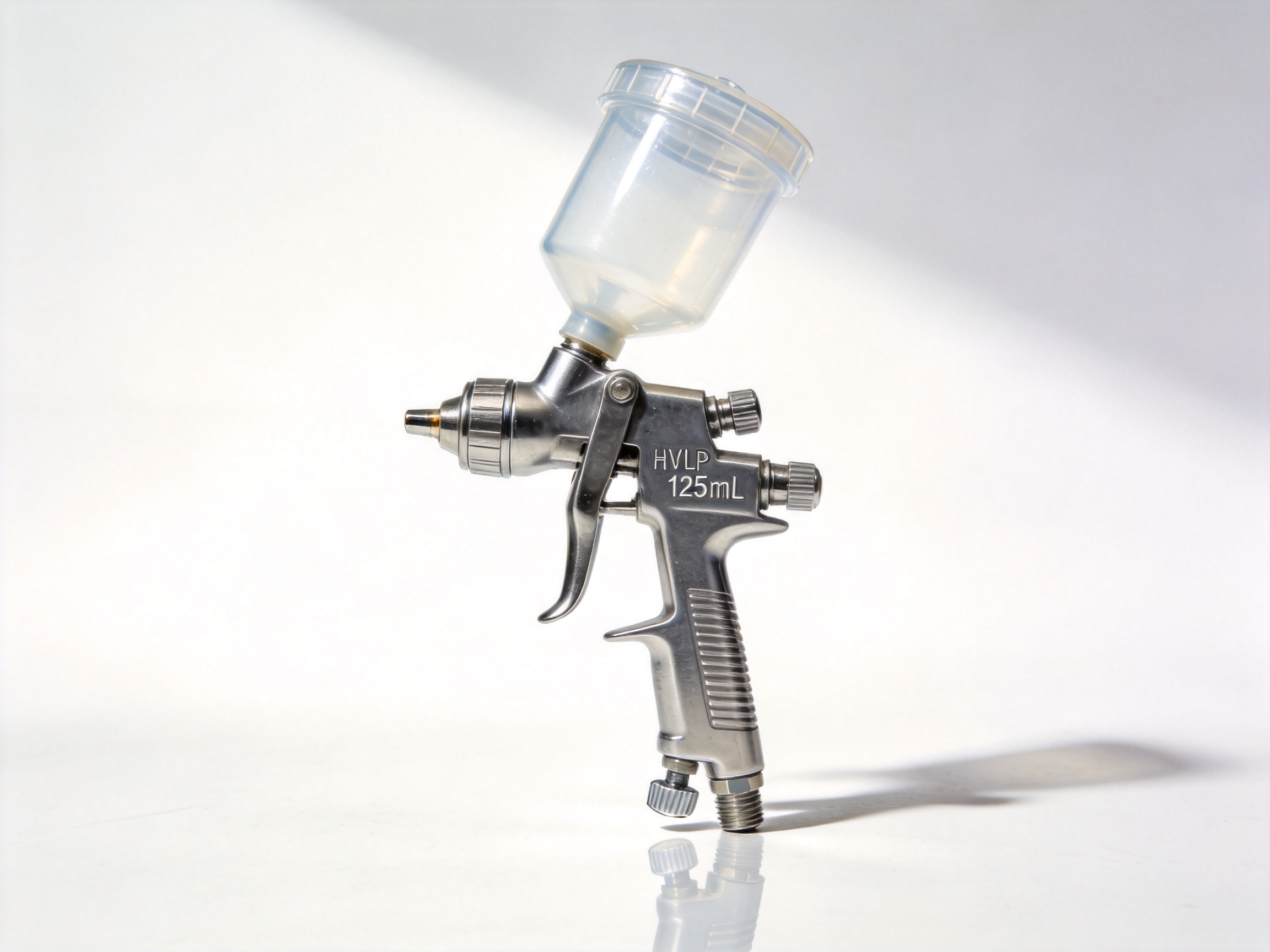
The product discussed in this article is a compact gravity-feed HVLP spray gun in the N125 class, supplied with a 125 ml cup and multiple fluid nozzle choices. It belongs to the HVLP spray gun category and is built for users who value paint savings, fine atomization, lower overspray, and reliable repeatability. Unlike many conventional low-cost spray guns that prioritize simple paint delivery, this HVLP model is intended to balance transfer efficiency, comfortable operation, and precise coating control. Its small cup capacity and fine nozzle range make it a practical tool for controlled applications rather than broad, high-volume coverage.
Behind the product is Ningbo Lis Industrial Co., Ltd., a specialized manufacturer engaged in the research, development, production, and marketing of air painting spray guns, mini air compressors, and related air tools. The company has decades of manufacturing experience, a large production base, systematic quality management, strong research and development capability, and international product certification experience. These manufacturing strengths contribute directly to product stability, supply reliability, and the ability to serve both standard product buyers and customers requiring OEM or ODM spraying solutions.
Product Overview and Core Positioning
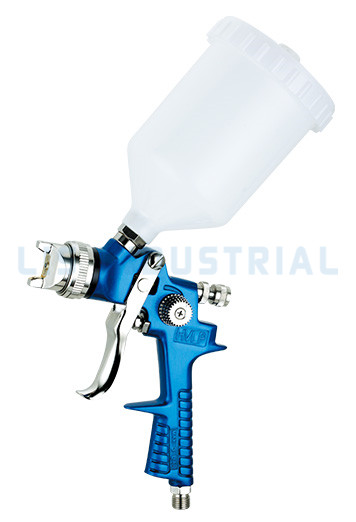
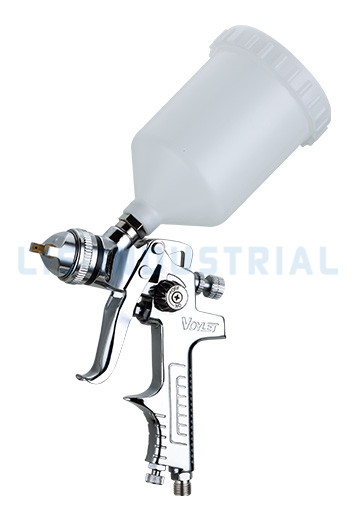
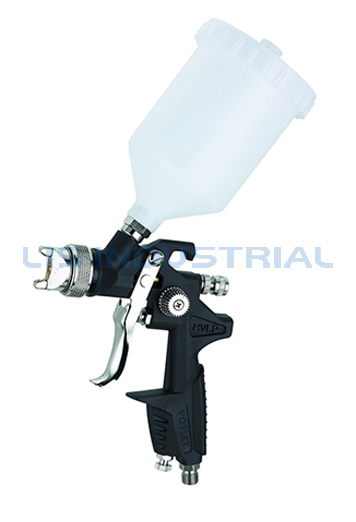
The N125 HVLP spray gun is positioned as a compact, efficient, and detail-friendly air paint sprayer. It uses gravity feed, meaning the paint cup is mounted above the gun body and coating material flows downward into the fluid passage with the assistance of gravity. This structure is widely appreciated in finishing work because it can help reduce residual material, support smoother feed behavior, and make small-batch spraying more convenient.
The 125 ml cup capacity reflects the intended use of the product. Rather than being designed for large surfaces that require continuous spraying over long periods, it is optimized for smaller workpieces, repair areas, edge coating, decorative surfaces, sample panels, and detailed finishing zones. In these scenarios, a large cup can be heavy, wasteful, and inconvenient. A smaller cup allows the operator to prepare only the amount of material needed for the task, reduce color-change waste, and maintain better wrist movement during fine operations.
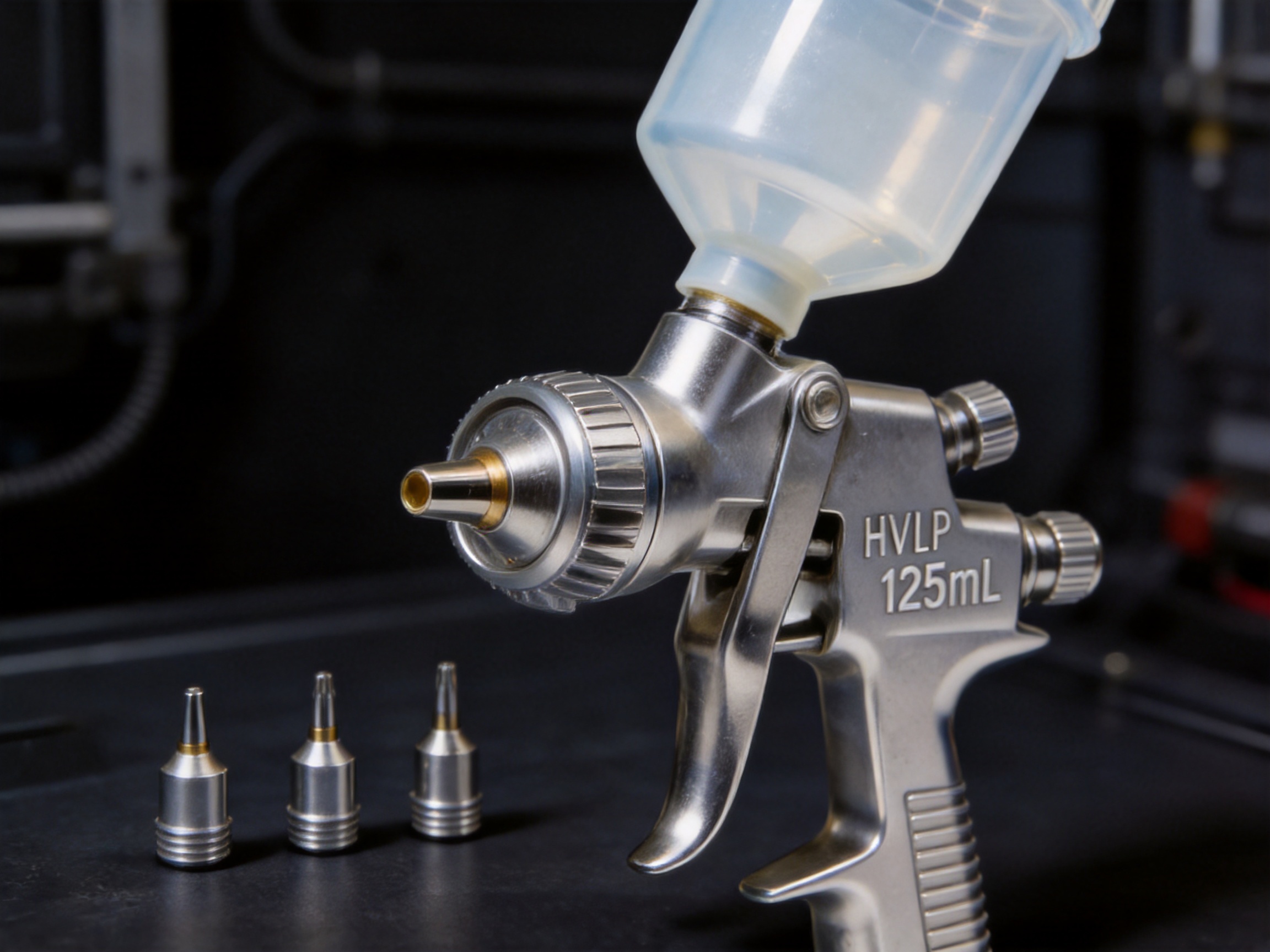
The nozzle options of 0.5 mm, 0.8 mm, and 1.0 mm give users flexibility across different coating viscosities and finish requirements. A 0.5 mm setup can be suitable for very fine spraying, thin coatings, small parts, or detailed touch-up. A 0.8 mm nozzle can provide a balanced option for many small finishing tasks. A 1.0 mm nozzle can handle slightly higher flow when more coverage is needed while still retaining the compact control of a touch-up spray gun. This range allows one gun platform to cover multiple workshop needs.
The gun works at an air pressure of 29 PSI, placing it in a practical range for HVLP operation. HVLP means high volume, low pressure. The goal of HVLP technology is to deliver coating material with a softer, more controlled spray pattern than many conventional high-pressure systems. When properly matched with an air compressor and coating material, HVLP spraying can reduce bounce-back and overspray, helping the user place more coating on the target surface instead of losing it into the air or onto surrounding masking materials.
The G1/4 air inlet is a common connection standard for air tools, making the gun compatible with many workshop air systems and fittings. This helps users integrate the spray gun into existing setups without unusual adapters or complex installation. For professional distributors and industrial users, compatibility is an important advantage because it reduces after-sales confusion and improves convenience for end users.
Key Technical Specifications
| Specification | Value | Practical Meaning |
|---|---|---|
| Product Type | Compact HVLP spray gun | Designed for efficient atomization, lower overspray, and precise finishing control |
| Fluid Nozzle Options | 0.5 mm, 0.8 mm, 1.0 mm | Supports fine touch-up, small components, sample coating, and controlled detail spraying |
| Air Pressure | 29 PSI | Suitable for low-pressure spraying with improved transfer efficiency when properly adjusted |
| Cup Capacity | 125 ml | Ideal for small-batch work, color changes, repairs, and reduced paint waste |
| Feed Type | Gravity | Helps provide steady material flow and convenient cleaning for small quantities |
| Air Inlet | G1/4 | Compatible with common compressed air fittings and workshop air systems |
| Carton Packing | 20 pieces per carton, 53 cm x 28 cm x 39 cm | Efficient for distributors, wholesalers, and organized inventory handling |
Why HVLP Technology Matters
HVLP spray technology has become popular because it addresses one of the most common problems in spray finishing: material waste. In conventional high-pressure spraying, atomized coating can travel at higher velocity, causing more bounce-back from the surface and more overspray around the target. This not only wastes paint but also increases booth contamination, cleaning workload, and masking requirements. HVLP technology is designed to reduce these problems by using a high volume of air at lower pressure to atomize coating in a softer, more controlled way.
For a compact gun with small nozzles, HVLP technology can be especially useful. Touch-up and detail work often require accurate placement of coating in a limited area. If the spray is too aggressive, it can easily create dry edges, paint build-up, uneven repair zones, or overspray on adjacent areas. A well-adjusted HVLP spray pattern can help the user feather material smoothly and build coverage gradually. This is valuable in automotive spot repair, cabinet edge work, small furniture refinishing, metal component coating, model making, and decorative finishing.
Another advantage of HVLP spraying is improved working environment control. Lower overspray can mean less airborne coating material, cleaner surrounding areas, and more efficient use of extraction or filtration equipment. While proper ventilation and personal protective equipment remain essential for any spraying process, using a spray gun designed for better transfer efficiency can support cleaner and more disciplined workshop practice.
In business terms, HVLP efficiency can also reduce operating cost. Coating materials can be expensive, particularly when working with specialized automotive finishes, high-quality wood coatings, industrial primers, or custom colors. A small improvement in material transfer can produce noticeable savings over repeated daily use. For workshops that frequently perform small repairs or customized coating jobs, a compact HVLP gun can help reduce leftover paint and make each prepared batch more useful.
Advantages Over Typical Competing Spray Guns
The compact 125 ml HVLP spray gun offers several advantages when compared with many general-purpose or low-cost competing spray guns. The first advantage is application precision. A full-size spray gun may be excellent for large panels, but it can be less efficient when used on small areas. It may produce a wider pattern than necessary, require more paint in the cup, and feel less balanced for detail work. The compact HVLP structure gives the operator a tool better matched to touch-up and fine spraying tasks.
The second advantage is material economy. The 125 ml cup encourages small-batch preparation and reduces the amount of coating left unused after a job. This matters when spraying expensive finishes or when performing frequent color changes. In comparison, larger guns may require more material to fill the cup and fluid passages, increasing waste during setup and cleaning. For repair work, sample panels, and custom orders, less waste can directly improve profitability.
The third advantage is nozzle flexibility. Competitors that provide only one fixed nozzle size can limit users to a narrow application range. The 0.5 mm, 0.8 mm, and 1.0 mm options allow this gun to handle fine detail, medium touch-up, and slightly broader small-area coating. This flexibility is useful for distributors because one product can satisfy multiple user groups. It is also useful for workshops because operators can select a nozzle more closely matched to coating viscosity and desired film build.
The fourth advantage is the HVLP spraying concept itself. Compared with conventional economical spray guns, an HVLP model can support better transfer efficiency and more controlled overspray. This can lead to cleaner spraying, reduced material consumption, and more consistent finish quality when the gun is correctly set up. Users who are upgrading from basic conventional spray guns can often notice the difference in softness of spray, ease of control, and reduced paint fog around the work area.
The fifth advantage is manufacturing backing. A spray gun is not only a metal body with a cup and nozzle. Its performance depends on the precision of the air cap, needle, nozzle, seals, passages, trigger response, and assembly consistency. Ningbo Lis Industrial Co., Ltd. has long-term experience in air painting spray gun production and uses quality control processes covering raw material inspection, in-process control, functional testing, and finished product inspection. This manufacturing depth gives buyers more confidence than sourcing from suppliers with limited technical background or inconsistent quality systems.
The sixth advantage is supply reliability. For wholesalers, importers, private-label brands, and industrial buyers, product quality must be matched by stable production capacity and responsive service. The manufacturer has a large production base, hundreds of employees, established export experience, and the ability to increase production capacity when purchase volume changes. This is particularly important for customers planning seasonal promotions, large procurement programs, or long-term distribution.
Detailed Performance Benefits
Fine Atomization for Small Surfaces
Fine atomization is one of the most important performance indicators of a spray gun. Atomization describes how effectively the gun breaks liquid coating into fine droplets. When atomization is too coarse, the finish may show orange peel, uneven texture, droplets, or poor leveling. When atomization is properly controlled, the coating can form a smoother and more uniform film. With small nozzle options and HVLP air delivery, the N125 class spray gun is well suited for small surfaces where finish appearance matters.
The 0.5 mm nozzle option can be used for very precise work with thin materials. It can help users apply light coats, blend edges, and work on delicate pieces. The 0.8 mm option gives a balanced spray for many common small coating tasks. The 1.0 mm option can provide more material flow for users who need slightly faster coverage while maintaining the benefits of a compact gun. This range supports practical versatility without making the gun oversized or difficult to control.
Controlled Spray Pattern
For touch-up work, pattern control is critical. A spray pattern that is too wide can coat areas that should remain clean. A pattern that is too narrow may require too many passes and can create striping if the operator is inexperienced. A compact HVLP spray gun allows the user to work closer to the target, adjust movement more carefully, and manage the coating edge with better visibility. This helps when blending repairs, coating curved components, or applying material around corners and profiles.
Controlled spraying also reduces the need for excessive masking. In many workshops, masking time is a major part of total job time. If a spray gun creates unnecessary overspray, operators must spend more time protecting surrounding areas and cleaning after the job. A softer, more controlled HVLP spray can improve the workflow by reducing overspray management, especially for small repairs and partial refinishing.
Comfortable Operation
A compact spray gun can reduce operator fatigue. The 125 ml cup keeps the loaded weight lower than a large production gun with a larger cup. Lower weight is beneficial during detailed movements because the operator can hold the gun steadily and make small wrist adjustments. This is particularly useful for craft workers, automotive refinishers, woodworking finishers, and technicians who perform multiple touch-up operations throughout the day.
Good handling also supports better consistency. When an operator feels comfortable with a tool, it becomes easier to maintain proper distance, angle, and speed. These basic spraying habits have a major effect on finish quality. A compact gun with gravity feed can provide a predictable feel, helping users apply even coats and avoid overloading the surface.
Efficient Cleaning and Color Change
Cleaning is another area where compact gravity-feed guns have an advantage. Smaller cup volume means less residual coating after spraying. Gravity-feed design can simplify draining and flushing because material pathways are generally straightforward. For users who frequently switch colors, primers, stains, or clear coats, easier cleaning can save time and reduce solvent use.
In environments where sample production or custom finishing is common, fast color change is a practical advantage. Instead of setting up a large gun for a very small job, the operator can use the compact HVLP gun, spray the required part, and clean the system quickly. This improves productivity and helps reduce contamination between colors.
Application Areas
Automotive Touch-Up and Spot Repair
Automotive refinishing often requires different spray guns for different tasks. A large spray gun may be suitable for complete panels, but small repairs need a finer tool. The compact HVLP spray gun can be used for spot repair, blending, small component coating, and detail refinishing. Its nozzle options help users match the gun to base coats, clear coats, or other suitably prepared automotive materials, depending on viscosity and spraying requirements.
In spot repair, the objective is not only to cover the damaged area, but also to blend the repair into surrounding paint. Overspray control is essential. A compact HVLP spray gun helps apply coating with a more localized pattern, supporting smoother transitions and reducing unnecessary paint fog beyond the repair zone.
Woodworking and Furniture Finishing
Woodworking applications often involve edges, profiles, carvings, trim pieces, cabinet parts, and small furniture components. These areas can be difficult to coat evenly with brushes or rollers, and a full-size spray gun may apply too much material. A compact HVLP gun provides a controlled solution for stains, sealers, lacquers, and other suitable wood coatings when properly reduced and filtered according to coating manufacturer instructions.
Fine spray control helps preserve details in wood surfaces. Too much coating can fill decorative profiles or create runs on vertical edges. By selecting the appropriate nozzle and applying multiple light coats, the user can build a high-quality finish with better control. The 125 ml cup is also convenient for custom colors and small furniture repair tasks.
Metal Parts and Industrial Components
Small metal components, brackets, tools, machine covers, prototypes, and replacement parts often require coating for appearance or protection. A compact HVLP spray gun is practical for these parts because it can coat small surfaces without excessive material waste. The controlled spray pattern can help reach edges and corners while minimizing overspray around fixtures and workholding devices.
Industrial users may also appreciate repeatability. When a spray gun has consistent air and fluid delivery, operators can develop standard settings for common parts. This helps reduce variation between batches and supports more predictable coating quality.
Craft, Model, and Decorative Work
Although air brushes are often used for extremely fine artistic work, a compact HVLP spray gun can be useful for larger craft pieces, decorative objects, display items, and models that require more material delivery than a small air brush can provide. The 0.5 mm nozzle option is useful for fine control, while the 0.8 mm and 1.0 mm options allow users to cover modest surfaces efficiently.
For craft producers, repeatable finishing can improve product value. A smooth and consistent coating can make handmade or small-batch products look more professional. The compact cup size also supports frequent color changes and limited material preparation.
How the Product Supports Better Finish Quality
Finish quality depends on several factors: coating viscosity, air pressure, nozzle size, gun distance, spray angle, overlap, surface preparation, environmental conditions, and drying behavior. A well-designed spray gun cannot replace good technique, but it can make good technique easier to achieve. The N125 class HVLP spray gun supports finish quality by giving operators a controlled and efficient tool for small-area spraying.
The 29 PSI air pressure specification gives users a defined starting point for setup. From there, adjustments can be made based on coating material and desired spray result. Using too much pressure may increase overspray and dry spray, while too little pressure may produce poor atomization. A compact HVLP gun is most effective when the operator follows a disciplined setup process: strain the coating, adjust viscosity if required, set air pressure, test the pattern, adjust fluid flow, and spray a sample before working on the final part.
Nozzle selection is equally important. A small nozzle may produce excellent detail but may not deliver enough coating for thicker materials. A larger nozzle can increase flow but may require more careful control to avoid runs. By offering 0.5 mm, 0.8 mm, and 1.0 mm options, the product allows users to select a more appropriate setup rather than forcing all materials through one nozzle size.
The gravity-feed cup helps maintain stable material supply during normal spraying positions. It can also reduce the need for high suction force, supporting more efficient low-pressure operation. This is one reason gravity-feed HVLP guns are widely used in fine finishing environments.
Manufacturing Strength Behind the Spray Gun
Ningbo Lis Industrial Co., Ltd. is not only a product supplier; it is a long-established manufacturer specializing in air painting spray guns, mini air compressors, and related air tools. Since its establishment in 1984, the company has developed extensive industry experience and built a broad product portfolio that includes HVLP spray guns, heavy-duty spray guns, woodworking low-pressure spray guns, conventional spray guns, texture paint spray guns, washing guns, air blowing guns, sandblast and foam guns, tire inflating guns, water guns, grease guns, automatic spray guns, air brushes, air fittings, paint tanks, spray gun kits, pro touch-up spray guns, air polishers, airless spray guns, electric spray guns, and paint sprayers.
This broad category coverage is important because it shows that the company understands compressed air systems, coating behavior, spray gun ergonomics, air control, fluid delivery, and related accessories as an integrated field. A compact HVLP gun benefits from this accumulated knowledge. The design of a spray gun requires attention to airflow, machining tolerance, sealing, surface treatment, trigger response, and assembly precision. A manufacturer with experience across many spraying and air tool categories is better positioned to solve these technical issues.
The company operates from Ningbo, a major harbor city with developed transportation and industrial resources. This location supports export logistics, supply chain coordination, and access to skilled manufacturing resources. For international customers, efficient logistics can reduce lead time and improve supply predictability.
The production base covers over 400,000 square feet and employs more than 400 people. This scale allows the company to manage large orders while maintaining specialized production processes. Annual output has reached a significant level, and the company has developed into one of the notable enterprises in China’s painting spray gun industry. For buyers, scale matters because it reduces the risk of unstable delivery and supports long-term cooperation.
Advanced Quality Control Process
Spray gun performance depends heavily on consistency. Two guns of the same model should behave similarly when used under the same conditions. Achieving this consistency requires a quality system that controls materials, machining, assembly, and testing. Ningbo Lis Industrial Co., Ltd. follows ISO9000 quality system requirements and applies stringent control throughout the production process.
Raw material and incoming inspection are the first steps. The quality of metal components, seals, springs, cups, fittings, and surface treatments affects durability and performance. If incoming materials vary too much, final product consistency becomes difficult. By inspecting materials before production, the manufacturer reduces the risk of defects entering the assembly line.
In-process quality control is the second step. During machining, finishing, and assembly, dimensions and functions must remain within required tolerances. The air cap, nozzle, and needle are especially important because small dimensional differences can change spray pattern and atomization. In-process checks help identify problems before they become large batches of nonconforming products.
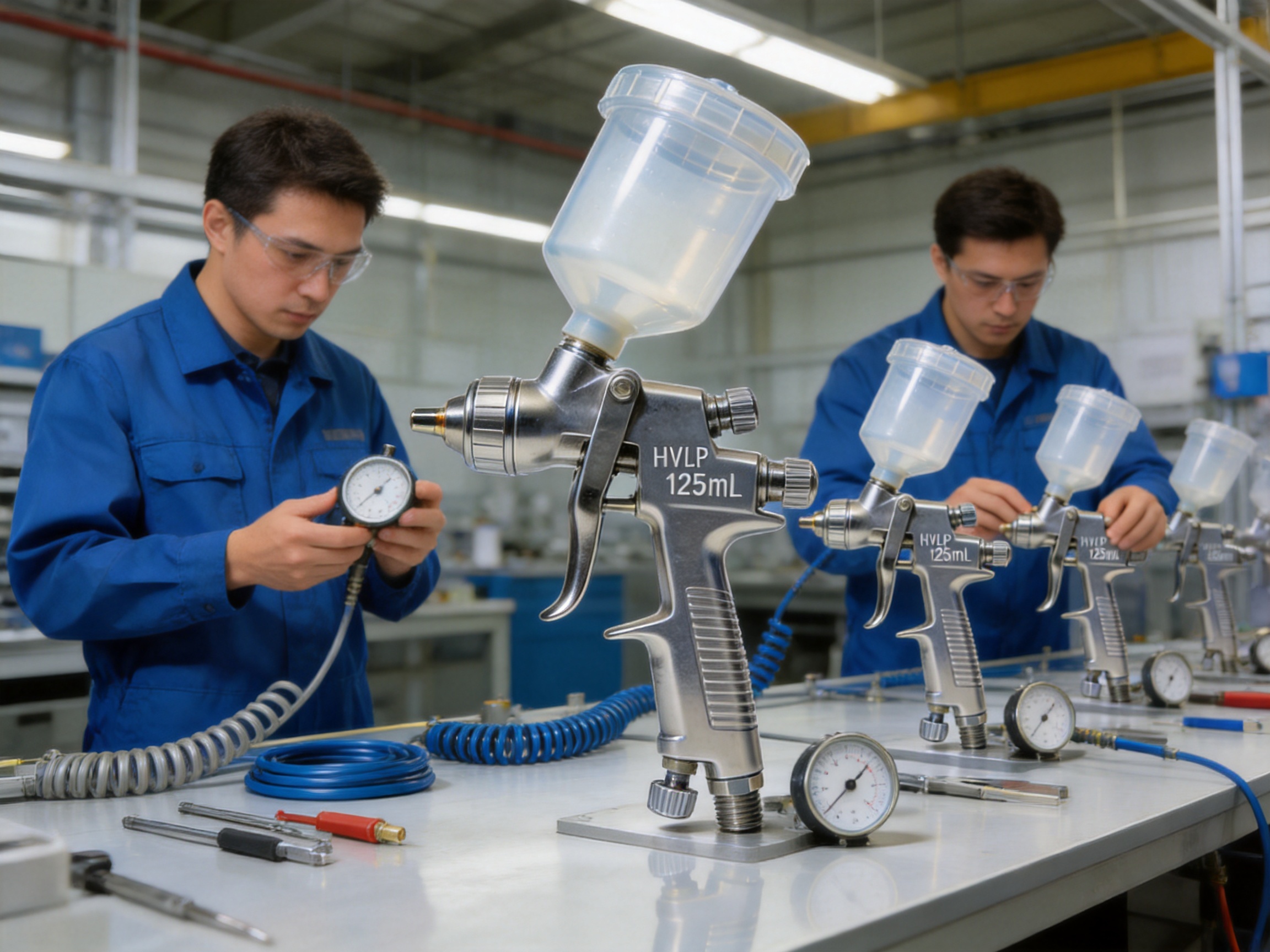
Functional testing is another key stage. The company conducts 100% functional testing, meaning each finished product is checked for practical operation rather than relying only on random sampling. For a spray gun, functional testing may include trigger movement, air flow behavior, fluid delivery, leakage control, pattern performance, and general operation. This process gives customers more confidence that products will work correctly out of the box.
Final quality inspection completes the control system. Finished products are checked before packaging and shipment to confirm appearance, assembly, accessories, labeling, and packing. For distributors and private-label customers, final inspection helps protect brand reputation and reduces after-sales issues.
Certifications and Management Systems
The company has passed ISO9001 international quality system certification, OHSAS18001 occupational health and safety system certification, and ISO14001 environmental management system certification. It has also passed European CE and German GS international product certification for relevant products. These certifications show a systematic approach to quality, safety, environmental responsibility, and product compliance.
For international buyers, certification experience is important. Different markets have different expectations for documentation, product safety, labeling, and performance. A manufacturer familiar with international certification processes can support smoother market entry and reduce compliance uncertainty. While each product and market may require specific confirmation, working with a manufacturer that understands certification standards is a practical advantage.
The company has also received recognition such as national high-tech enterprise status, customs advanced certification, individual item champion recognition in Ningbo City, and provincial engineering and technology center status. These achievements reflect investment in technology, management, export compliance, and specialized manufacturing capability.
Research, Development, OEM, and ODM Capabilities
Strong research and development capability is a major advantage in the spray gun industry. Coating materials continue to change, environmental expectations become stricter, and users demand better efficiency, lighter tools, and more consistent finishes. A manufacturer that only copies existing products may struggle to meet changing market needs. Ningbo Lis Industrial Co., Ltd. has built a strong R&D team and can provide both OEM and ODM services.
OEM service allows customers to order products according to drawings, samples, specifications, or private-label requirements. This is valuable for distributors, tool brands, and professional purchasing groups that need consistent products under their own market identity. ODM service goes further by allowing the manufacturer to develop products according to customer needs, helping buyers create differentiated solutions for specific markets.
The company has invested heavily in technology improvement and established a spraying machinery engineering technology center. It has also carried out technical cooperation with American Wagner Spraying Technology Co., Ltd. in the development and research of spraying machinery. Such cooperation and technical investment support better product engineering, improved manufacturing methods, and continued innovation.
For the compact HVLP spray gun, R&D capability can affect details such as air cap design, trigger feel, sealing structure, balance, fluid passage efficiency, and ease of maintenance. These details may not always be visible in a product photo, but they influence user satisfaction during real spraying work.
Production Capacity and Supply Chain Reliability
For many buyers, a good product is only useful if it can be supplied reliably. The company has established a worldwide marketing and service network, with products sold into Europe, North America, the Middle East, South Africa, East Asia, and other regions. This export experience indicates the ability to manage different customer requirements, documentation needs, packaging standards, and logistics conditions.
The company’s production capacity can be increased by 30% within two months to meet changing purchase quantities. This flexibility is valuable for customers who face seasonal demand, promotional programs, or unexpected market growth. A supplier with limited capacity may fail to deliver at critical times, causing lost sales and customer dissatisfaction. Scalable capacity helps protect the buyer’s supply chain.
Packaging also supports distribution efficiency. The carton specification for this product is 20 pieces per carton, with a carton size of 53 cm x 28 cm x 39 cm. Organized packing helps wholesalers and importers manage inventory, shipping calculations, and warehouse handling. When combined with stable production quality, efficient packing contributes to lower operational friction for business customers.
Practical Setup Guidance
To achieve the best results with a compact HVLP spray gun, users should follow a careful setup procedure. First, the coating material should be prepared according to the coating manufacturer’s instructions. This may include mixing, thinning, catalyzing, and filtering. Unfiltered material can contain particles that block small nozzles, especially 0.5 mm and 0.8 mm setups. Straining the material before filling the cup is a simple step that helps prevent defects.
Second, the correct nozzle should be selected. For thin materials and fine detail, the 0.5 mm nozzle may be appropriate. For general small-area finishing, the 0.8 mm nozzle can be a practical starting point. For slightly higher flow or larger small parts, the 1.0 mm nozzle may be preferred. Users should test on a sample panel before spraying the final workpiece.
Third, air pressure should be adjusted. The product specification lists 29 PSI, which can serve as a reference operating pressure. Actual performance may vary depending on hose length, regulator accuracy, compressor capacity, and material viscosity. It is best to measure pressure near the gun and adjust based on spray pattern quality. A balanced fan with even distribution is the goal.
Fourth, the operator should practice proper spray technique. The gun should be held at a consistent distance and angle from the surface. Passes should overlap evenly, commonly around half the spray pattern width, depending on the application. Movement should begin before pulling the trigger and continue briefly after releasing it to avoid heavy spots at the start and end of each pass.
Fifth, cleaning should be done immediately after use. Coating material left inside the nozzle, needle, or air cap can dry and affect future performance. The cup should be emptied, flushed with suitable cleaning solvent or water depending on the coating system, and the air cap and nozzle should be cleaned carefully. Metal tools that can damage precision openings should be avoided.
Maintenance for Long Service Life
Regular maintenance helps preserve spray quality and tool durability. After each use, the cup should be cleaned thoroughly and the fluid passages flushed. The air cap should be removed and cleaned to ensure that air holes remain open. Blocked or partially blocked air cap holes can distort the spray pattern and create uneven atomization.
The needle and nozzle should be handled carefully. These parts are precision components. Dropping the needle, scratching the nozzle seat, or overtightening components can reduce sealing quality and affect spray performance. If the gun begins to leak, spray unevenly, or fail to shut off properly, the needle, nozzle, seals, and trigger mechanism should be inspected.
Clean, dry compressed air is also important. Moisture or oil in the air line can contaminate coatings and cause finish defects such as fisheyes, poor adhesion, or surface imperfections. Using suitable air filtration and moisture separation equipment can improve results. The G1/4 air inlet makes the gun compatible with common air line accessories, including regulators, filters, and quick couplers.
Storage should be in a clean and dry environment. The gun should not be left with coating material inside. After cleaning, parts should be reassembled correctly, and the trigger movement should remain smooth. Proper maintenance not only extends service life but also keeps finish quality consistent.
Business Value for Distributors and Professional Buyers
For distributors, the compact HVLP spray gun offers a product with clear market positioning. It is not merely another general spray gun; it serves the growing need for efficient touch-up, small-area finishing, and detail work. Customers in automotive refinishing, woodworking, craft production, repair shops, and industrial maintenance can all understand its purpose. This makes the product easier to explain, display, and sell.
The multiple nozzle options add sales flexibility. A distributor can present the product as a versatile compact solution rather than a single-purpose tool. The 125 ml cup, gravity feed, and 29 PSI operation provide clear technical talking points. These specifications help sales teams communicate benefits in practical terms: less waste, easier handling, controlled spraying, and suitability for small jobs.
For professional buyers, manufacturer reliability is as important as product performance. Ningbo Lis Industrial Co., Ltd. has decades of experience, a large production base, systematic quality control, international certification experience, and OEM/ODM capabilities. These factors reduce sourcing risk. Buyers can work with a supplier capable of supporting standard orders, customized projects, and changing market requirements.
Another business advantage is the manufacturer’s broad product range. Buyers who need complementary products, such as air accessories, paint tanks, spray gun kits, air brushes, or other spray guns, can source multiple categories from one experienced supplier. This can simplify procurement, improve coordination, and support consistent product quality across a wider tool offering.
Sustainability and Responsible Spraying
Efficient spraying is not only an economic issue; it is also connected to environmental responsibility. Lower overspray can reduce wasted coating material, solvent consumption during cleanup, and contamination of surrounding work areas. A compact HVLP spray gun supports responsible use by helping operators apply the right amount of coating to the right area.
The manufacturer’s ISO14001 environmental management system certification indicates attention to environmental management at the organizational level. In modern manufacturing and global trade, customers increasingly value suppliers that can demonstrate structured environmental practices. While the user’s own spraying environment must also be properly managed, choosing efficient equipment and responsible manufacturing partners contributes to better overall practice.
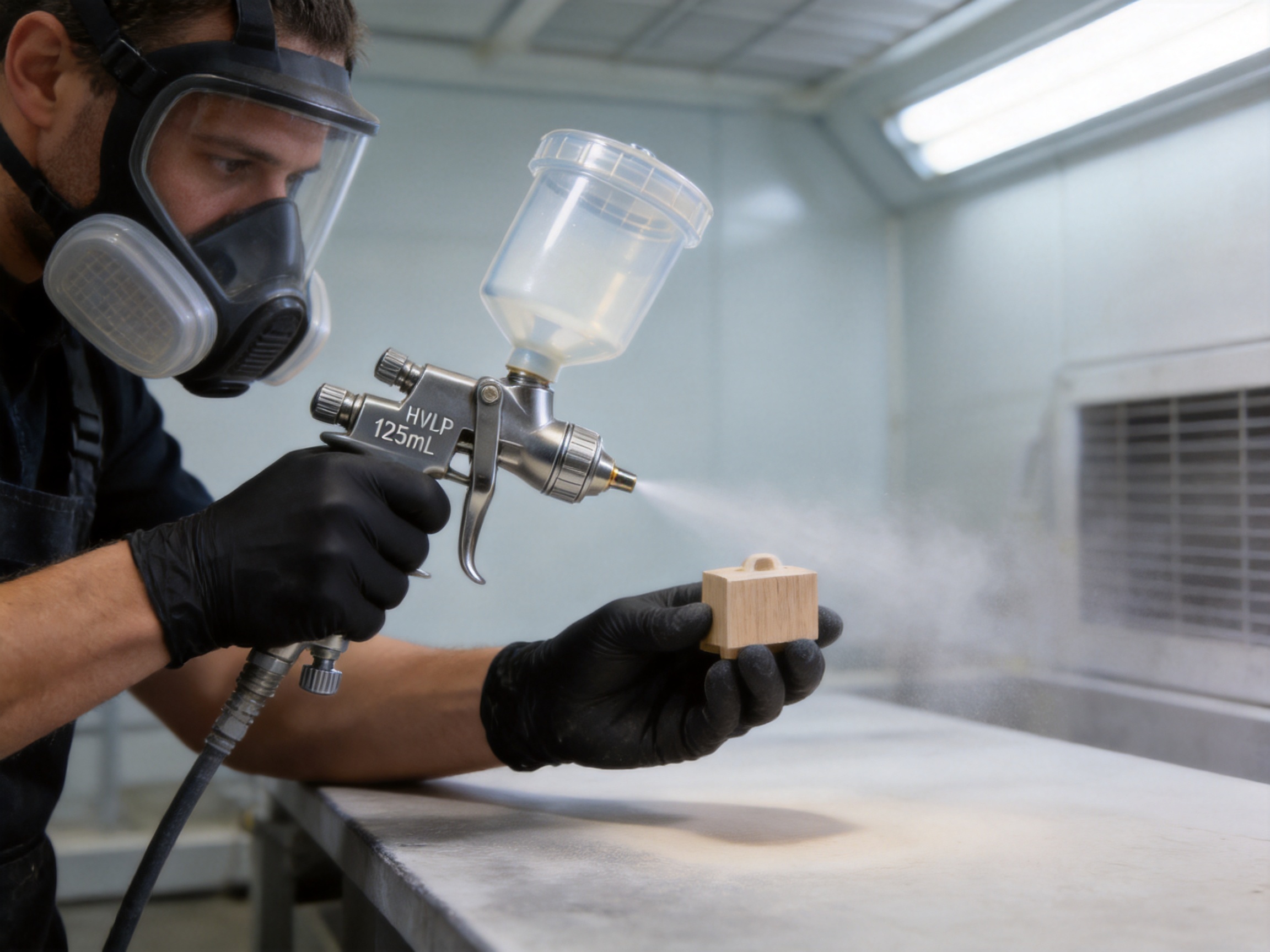
Responsible spraying also includes operator safety. Any spray application may involve airborne particles, solvents, or reactive materials. Users should always follow coating safety data sheets, wear suitable respiratory protection, use ventilation, and avoid ignition sources when working with flammable materials. A more efficient spray gun can reduce unnecessary overspray, but it does not eliminate the need for professional safety procedures.
Frequently Asked Questions
What type of work is this compact HVLP spray gun best suited for?
It is best suited for touch-up work, small-area finishing, automotive spot repair, woodworking details, craft coating, sample panels, small metal parts, and other applications requiring controlled spraying rather than broad high-volume coverage.
Why does the gun use a 125 ml cup?
The 125 ml cup is designed for small-batch work. It helps reduce paint waste, improves handling, supports frequent color changes, and makes the gun more comfortable for detailed spraying tasks.
What are the benefits of having 0.5 mm, 0.8 mm, and 1.0 mm nozzle options?
The different nozzle sizes allow users to match the gun to coating viscosity and application needs. The 0.5 mm nozzle supports fine detail, the 0.8 mm nozzle is a balanced option for many touch-up jobs, and the 1.0 mm nozzle allows slightly higher material flow for broader small-area coverage.
How does HVLP spraying reduce waste?
HVLP spraying uses high air volume at lower pressure to deliver a softer spray. When properly adjusted, this can reduce bounce-back and overspray, allowing more coating to reach the target surface and less to be lost into the surrounding air.
Is the G1/4 air inlet compatible with common workshop systems?
Yes. G1/4 is a common air inlet standard for many pneumatic tools and spray guns, making it convenient to connect with typical air hoses, couplers, filters, and regulators.
What air pressure should be used?
The listed air pressure is 29 PSI. Users should treat this as a working reference and fine-tune according to coating material, hose setup, compressor capacity, and desired spray pattern.
How should the spray gun be cleaned?
After spraying, empty the cup, flush the fluid passages with the correct cleaning liquid for the coating used, clean the air cap and nozzle carefully, and avoid damaging precision openings. Cleaning immediately after use helps maintain atomization quality.
What makes the manufacturer reliable for international buyers?
The manufacturer has decades of spray gun production experience, a large production base, more than 400 employees, systematic quality control, ISO9001, OHSAS18001, and ISO14001 management certifications, CE and GS certification experience for relevant products, R&D capability, and OEM/ODM service capacity.
Can this product be used for large panels?
It can spray coating, but it is not primarily designed for large panels or continuous high-volume coverage. A full-size spray gun may be more efficient for large surfaces, while this compact HVLP gun is better for detail, repair, and small-area applications.
Why is manufacturing quality important for a spray gun?
Spray performance depends on precision components such as the nozzle, needle, air cap, seals, and air passages. Consistent manufacturing and functional testing help ensure stable spray patterns, reliable operation, and reduced defects.
Conclusion
The compact HVLP spray gun with 0.5 mm, 0.8 mm, and 1.0 mm nozzle options, a 125 ml gravity cup, 29 PSI air pressure, and G1/4 air inlet is a practical solution for users who need precision, efficiency, and control in small-area coating work. Its strengths are clear: reduced material waste, better handling, flexible nozzle selection, controlled atomization, easier cleaning, and suitability for touch-up, woodworking, automotive repair, craft, and industrial component finishing.
Compared with many competing spray guns, its advantage is not only in the specifications, but also in the complete value behind the product. The compact design addresses real user needs, while HVLP technology supports more efficient coating transfer. The small cup helps reduce waste and improve comfort. The multiple nozzle options broaden application range. The common air inlet improves compatibility. Together, these features create a tool that is practical for both professional and workshop users.
The manufacturing foundation further strengthens the product’s value. Ningbo Lis Industrial Co., Ltd. brings long-term industry experience, broad product knowledge, advanced quality control, international certification experience, R&D capability, OEM and ODM services, scalable production capacity, and global market understanding. For buyers seeking not only a spray gun but a dependable supply partner, these strengths are highly significant.
In an industry where finish quality, material cost, productivity, and reliability all matter, a compact HVLP spray gun of this class offers a balanced and professional answer. It is designed for the detail work that larger guns often handle inefficiently, and it is supported by a manufacturer with the experience and systems needed to deliver consistent value to global customers.
References
1. ISO 9001 Quality Management Systems: Principles and Requirements.
2. ISO 14001 Environmental Management Systems: Guidelines for Manufacturing Organizations.
3. Occupational Health and Safety Management Practices for Industrial Tool Manufacturing.
4. General Technical Literature on HVLP Spray Application and Transfer Efficiency.
5. Coating Application Handbook for Automotive Refinishing and Industrial Finishing.
6. Spray Finishing Best Practices for Woodworking, Metal Coating, and Touch-Up Repair.
7. Product specification materials for compact HVLP spray guns with gravity-feed cups.