 Search
 English
 中文简体
中文简体 Deutsch
 Español
Content
- 1 Understanding the DG60-3 Air Blowing Gun
- 2 Key Advantages of a Professional Air Blowing Gun
- 3 Comparison with Alternative Cleaning Methods
- 4 Design Considerations for Daily Use
- 5 Manufacturing Strength Behind the Product
- 6 Why Manufacturing Scale Matters to Buyers
- 7 Advantages Over Low-Cost, Uncontrolled Alternatives
- 8 Use in Different Professional Environments
- 9 Installation and Operating Guidance
- 10 Maintenance and Service Expectations
- 11 Purchasing Considerations for Distributors and Industrial Users
- 12 Role in a Complete Air-Tool Portfolio
- 13 Quality, Consistency, and Customer Value
- 14 Environmental and Workplace Considerations
- 15 Q&A
- 15.1 What is the primary purpose of the DG60-3?
- 15.2 Can the DG60-3 replace an industrial vacuum?
- 15.3 What type of air supply does the product require?
- 15.4 Is the DG60-3 suitable for woodworking?
- 15.5 Is the product suitable for automotive maintenance?
- 15.6 What makes a professionally manufactured air gun different from a low-cost alternative?
- 15.7 Does the manufacturer offer OEM and ODM services?
- 15.8 Can the DG60-3 be used with other air tools?
- 15.9 How should the tool be maintained?
- 15.10 Where can buyers obtain commercial information?
- 16 Conclusion
- 17 References
- 18 Product: DG60-3
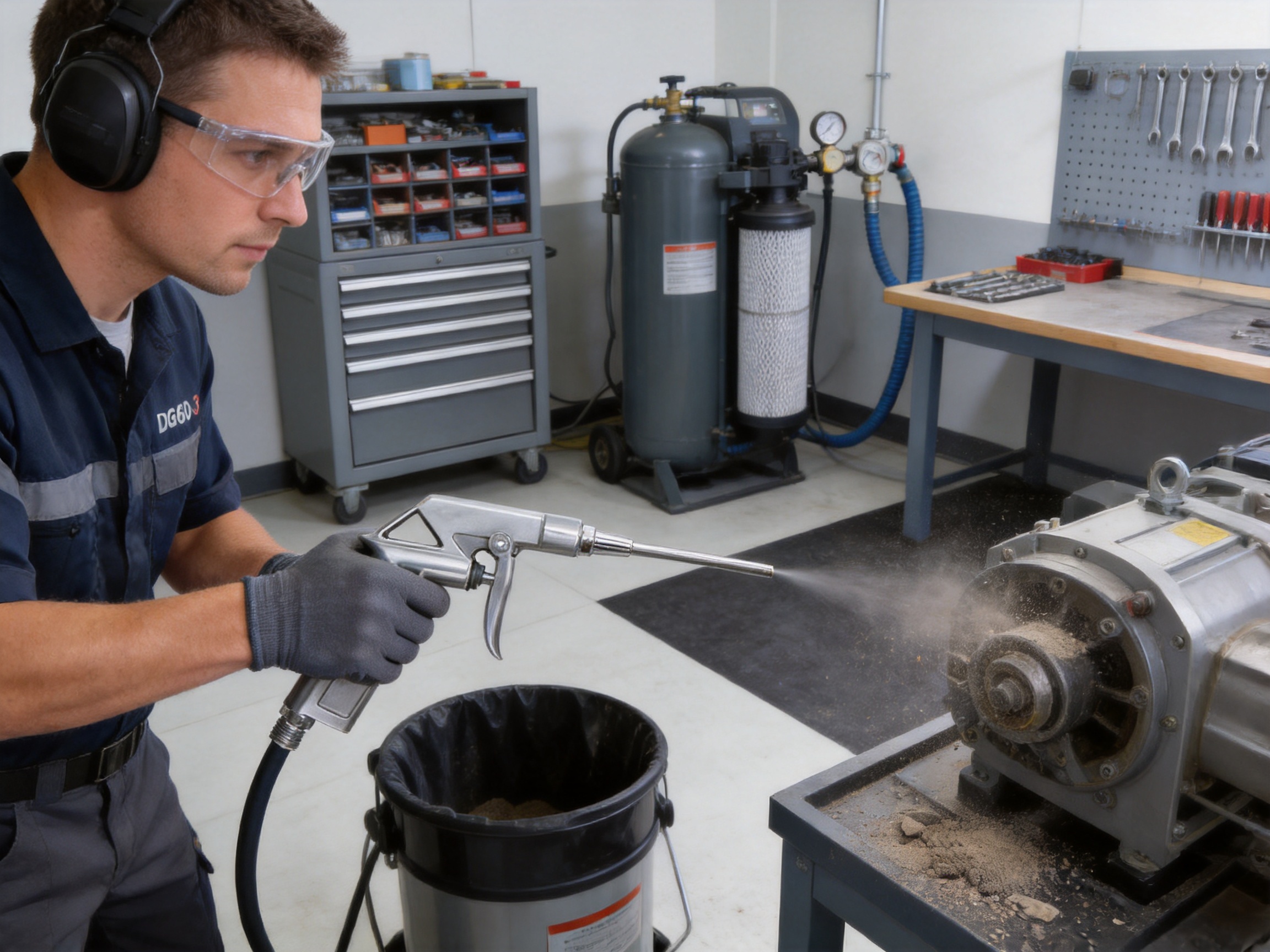
The DG60-3 air blowing gun is designed for one of the most common and essential tasks in workshops, production lines, garages, maintenance areas, and woodworking environments: removing dust, chips, loose particles, moisture, and other unwanted material with compressed air. Although air blowing guns are often simple in appearance, their usefulness depends on several important qualities, including airflow control, handling comfort, durability, compatibility with air systems, and the ability to deliver consistent performance during repeated use.
As part of a broad professional air-tool portfolio, the DG60-3 represents a practical approach to compressed-air cleaning. It is intended for users who need a dependable hand-operated tool rather than a complex automated system. The product can be used in general workshop cleaning, equipment maintenance, surface preparation, production-line housekeeping, automotive service, woodworking, and many other applications where directed air is required.
The value of this type of tool is not limited to the air stream itself. A well-designed air blowing gun helps operators reach narrow areas, remove debris without direct contact, reduce manual cleaning time, and maintain a more organized working environment. When combined with a properly prepared compressed-air supply, it can contribute to more efficient maintenance routines and cleaner production processes.
Understanding the DG60-3 Air Blowing Gun
The DG60-3 is categorized as an air blowing gun. Its primary function is to use compressed air to create a directed stream for cleaning, drying, clearing, and light-duty surface preparation. The hand-operated format gives the user control over where the air is directed and when the air is released. This makes the tool suitable for tasks that require precision rather than continuous, uncontrolled airflow.
Unlike fixed air nozzles or large industrial blow-off systems, a portable blowing gun can be moved from one work area to another. It can be used around machinery, benches, components, fixtures, panels, tools, and assemblies. Its compact operating concept also makes it easier to include in routine maintenance kits and mobile service equipment.
The DG60-3 belongs to a product category that supports a wide range of industries. Air blowing guns are commonly found alongside spray guns, air fittings, air pipeline accessories, compressors, inflating guns, sandblast equipment, polishing tools, and other pneumatic products. This broader compatibility allows distributors and professional users to build complete compressed-air solutions from related equipment.
Typical applications
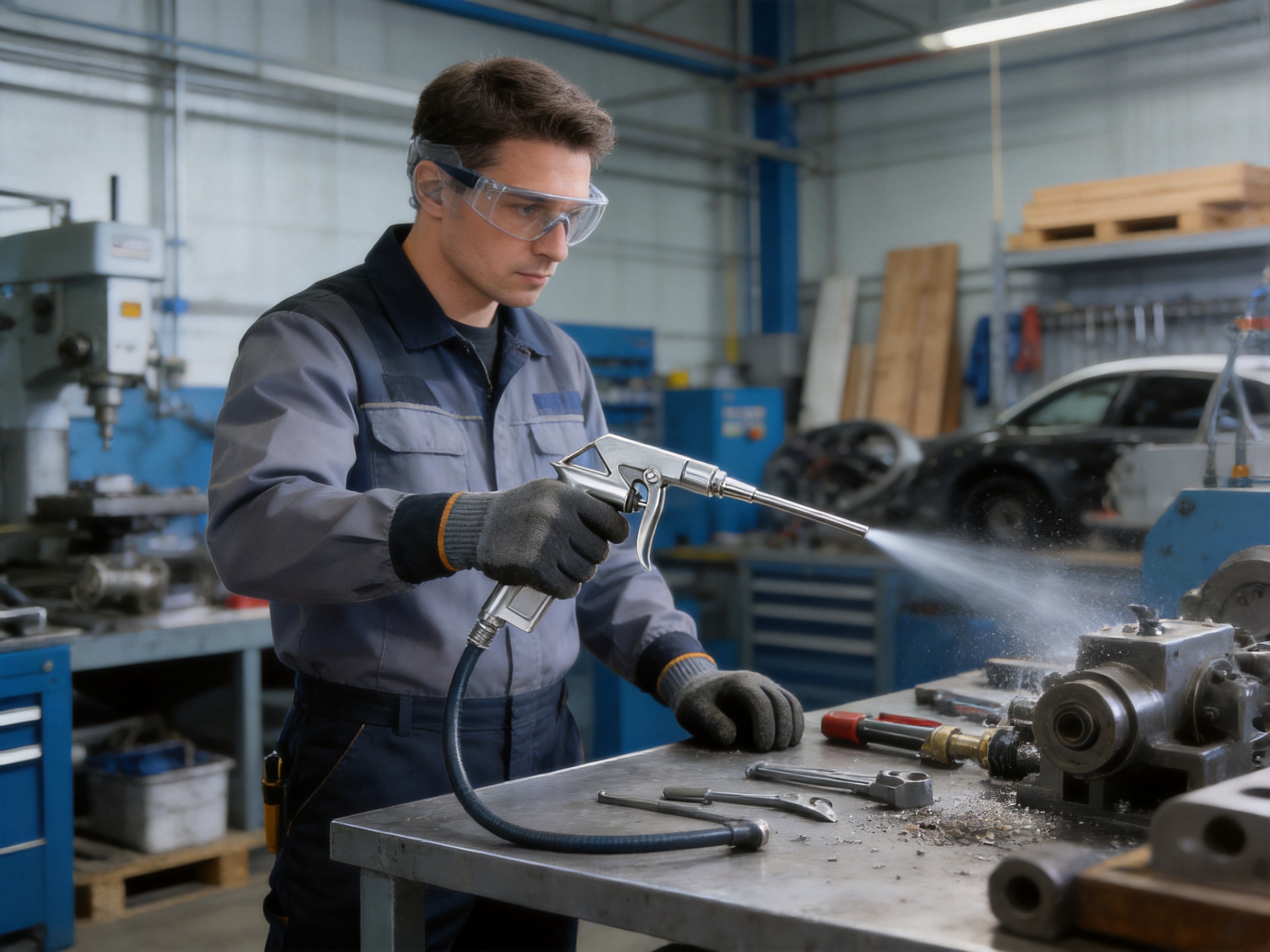
In general workshops, the DG60-3 can be used to clear metal filings, dust, loose debris, and residue from benches and tools. In automotive service, it can help remove moisture and dirt from components, recesses, housings, and hard-to-reach areas. In woodworking, directed air can be useful for clearing sawdust from work surfaces, fixtures, and equipment, provided that appropriate dust-control and personal-protection procedures are followed.
In light manufacturing, operators may use an air blowing gun to remove particles before assembly, clear workholding areas, or dry selected surfaces after cleaning. In maintenance operations, the tool may support inspection by clearing a component so that cracks, fasteners, labels, and other details are easier to see.
Because the product is manually controlled, it is especially useful when the cleaning point changes frequently. An operator can position the tool close to the target area, apply air for the required duration, and move on without adjusting a fixed installation.
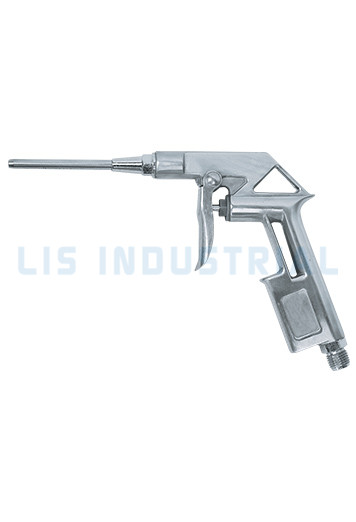
DG60-3
Key Advantages of a Professional Air Blowing Gun
Directed airflow for efficient cleaning
The most important advantage of the DG60-3 is the ability to direct compressed air toward a specific area. This is more efficient than attempting to clean a workpiece with a broad and poorly controlled air source. A focused air stream can help move loose particles out of corners, grooves, holes, channels, and other locations that are difficult to reach by hand.
Directed airflow also allows users to separate cleaning tasks from contact-based methods. Instead of touching a delicate or contaminated surface with a cloth, brush, or hand, the operator can first use air to remove loose material. This may reduce the risk of transferring dirt from one area to another, although the suitability of air cleaning depends on the material, contamination type, workplace conditions, and safety requirements.
Fast operation during repetitive work
Cleaning with a manual brush or cloth can consume considerable time when performed repeatedly. An air blowing gun provides a quick method for clearing loose debris from a work area. In production and maintenance environments, even small time savings can become significant when a task is repeated throughout the day.
The DG60-3 can support a simple workflow: connect the tool to a suitable compressed-air supply, point the outlet toward the target area, activate the control, and release it when cleaning is complete. This straightforward operating sequence helps reduce unnecessary complexity for workers and supervisors.
Portable and flexible use
A portable air gun can be moved wherever compressed air is available. This is a practical advantage over fixed blow-off equipment, especially in workshops where different machines or workstations require cleaning at different times. The user does not need to transport a workpiece to a dedicated cleaning station merely to remove dust or loose particles.
Portability is also valuable for service technicians, equipment installers, vehicle repair professionals, and maintenance teams. A compact pneumatic tool can be included in a service cart, toolbox, or mobile repair setup. When paired with a suitable hose and air connection, it can be ready for use across multiple locations.
Simple operating principle
The DG60-3 uses a mechanical air-blowing concept rather than an electrically powered motor at the point of use. This can be advantageous in environments where users prefer pneumatic tools, where electrical cables would be inconvenient, or where a compressed-air network already exists.
A simple pneumatic design can also make the tool easy to understand and integrate into daily operations. Operators generally do not need specialized software, batteries, or electrical controls to perform ordinary blow-off work. The main factors to manage are the air source, connection quality, operating pressure according to applicable instructions, and safe handling.
Comparison with Alternative Cleaning Methods
The DG60-3 should not be viewed as a universal replacement for every cleaning system. Instead, its advantages are clearest when compared with methods that are less convenient for loose-particle removal or localized blow-off work. Choosing the right tool depends on the material being removed, the surface being cleaned, the required speed, and the surrounding environment.
| Cleaning method | Primary strength | Possible limitation | Where an air blowing gun can help |
|---|---|---|---|
| Manual brush | Useful for stubborn particles and controlled contact cleaning | Can spread contamination or require repeated physical effort | Removes loose particles quickly before or after brushing |
| Cloth wiping | Suitable for surface wiping and residue removal | Consumes materials and may leave fibers or transfer dirt | Clears loose dust before wiping and reaches narrow spaces |
| Industrial vacuum | Captures dust and debris rather than displacing it | Less convenient for some recesses and mobile tasks | Provides localized blow-off where safe and appropriate |
| Fixed blow-off nozzle | Efficient for a dedicated workstation | Limited to one position or installation | Offers flexible, hand-directed operation |
| Electric blower | Can provide airflow without a central compressor | Requires electrical power and may be less convenient in some areas | Uses an existing pneumatic system where available |
| DG60-3 air blowing gun | Portable, direct, and suited to general compressed-air cleaning | Requires a suitable air supply and responsible operating practices | Combines hand control with targeted airflow |
This comparison shows why a professional air blowing gun remains relevant even in facilities that use several cleaning technologies. A vacuum may be the better choice when dust capture is essential. A brush may be preferred for bonded contamination. A fixed nozzle may be more efficient for a high-volume automated station. However, the DG60-3 offers a useful balance of portability, accessibility, and fast manual control.
Design Considerations for Daily Use
Operator control
Hand control is central to the usefulness of an air blowing gun. The operator should be able to start and stop the airflow promptly and direct the tool accurately. This is particularly important when cleaning around assembled components, electrical enclosures, precision parts, or finished surfaces where uncontrolled airflow could move debris into another area.
Controlled operation also supports economical air consumption. Releasing the control when the cleaning task is finished prevents unnecessary continuous discharge. In facilities with many pneumatic tools, responsible use can help reduce demand on the compressor system and limit avoidable energy consumption.
Access to difficult areas
Many cleaning problems occur in locations that are difficult to reach with a cloth or standard brush. Recesses, channels, joints, cavities, and narrow gaps may collect dust or chips. A handheld blowing gun allows the user to alter the approach angle and position the outlet close to the area requiring attention.
Users should still avoid forcing debris into bearings, seals, vents, electrical contacts, or other sensitive components. The objective is to remove contamination safely, not simply to move it from one location to another. In some cases, a vacuum used together with controlled airflow may provide a more suitable solution.
Compatibility with workshop air systems
The performance of any pneumatic tool depends partly on the quality of the compressed-air system. A suitable hose, compatible fitting, adequate pressure, and sufficient air volume are necessary for reliable operation. Moisture, oil, rust particles, or contamination in the air line may affect the tool and the surface being cleaned.
For this reason, the DG60-3 should be installed and used as part of a properly maintained air system. Air preparation equipment, such as filters and regulators, may be appropriate depending on the facility and application. Connections should be checked for leakage, and the air supply should be isolated before maintenance or disassembly.
Manufacturing Strength Behind the Product
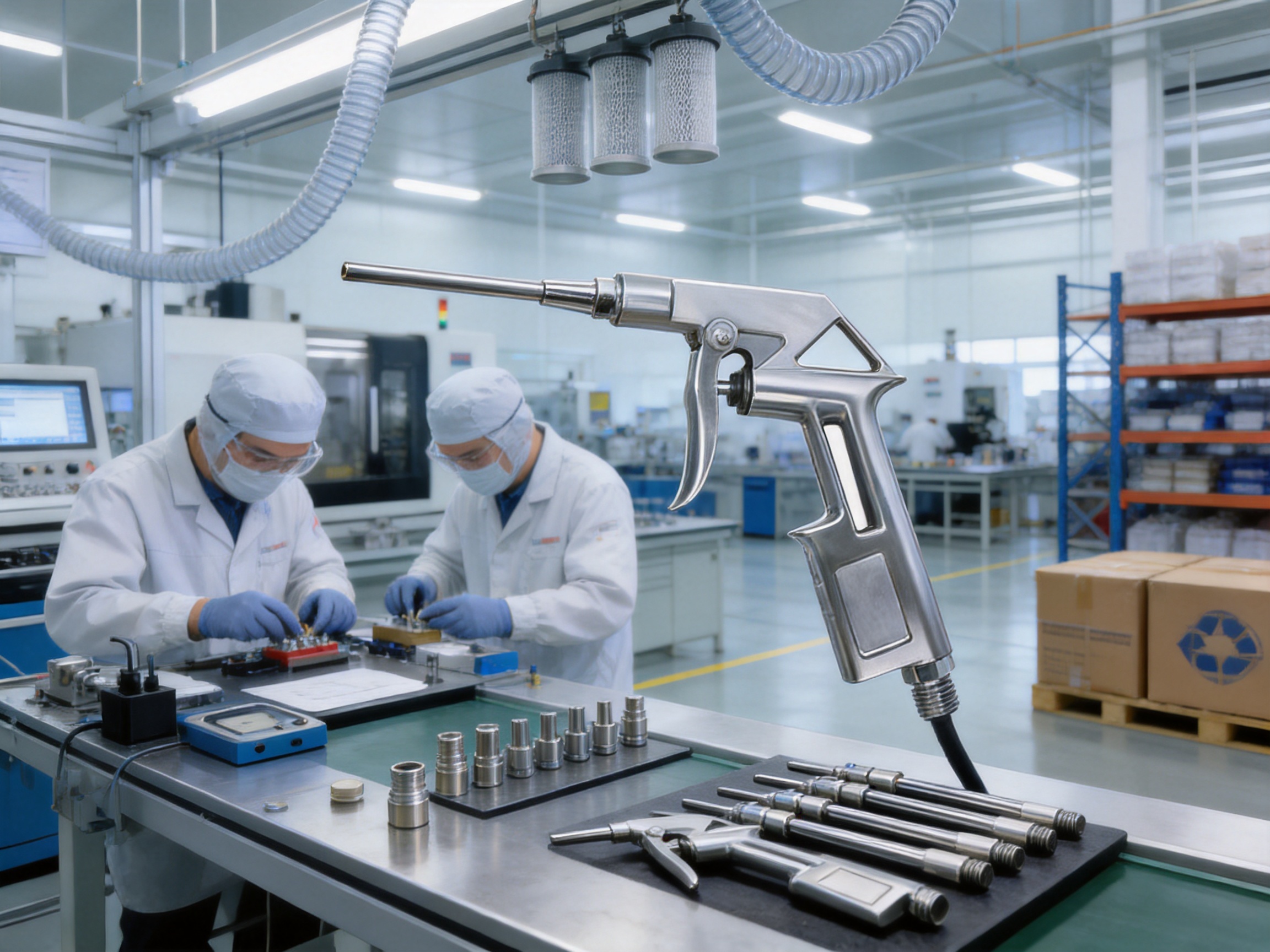
The quality of an air blowing gun is influenced by more than its visible shape. Material selection, machining, assembly, inspection, functional testing, packaging, and traceability all contribute to the final user experience. Ningbo Lis Industrial Co., Ltd. has developed its manufacturing activities around air painting spray guns, mini air compressors, and related air tools since its establishment in 1984.
According to the supplied company information, the manufacturer operates on a site covering more than 400,000 square feet and employs more than 400 people. Its reported annual output is valued at more than 40 million United States dollars. This scale provides a substantial foundation for product development, production planning, quality management, and international distribution.
A large manufacturing organization can support product consistency by using defined processes instead of relying solely on individual operator experience. Consistent work instructions, inspection procedures, production records, and controlled assembly methods help reduce variation from one production batch to another.
Research and development capability
The company reports having a strong research and development team and offering both OEM and ODM services. OEM production allows products to be manufactured according to customer drawings or samples, while ODM support involves developing products according to customer requirements. These capabilities are relevant to distributors and industrial buyers who need customized packaging, product configurations, or application-specific solutions.
The company has also established a spraying machinery engineering technology center and has carried out technical cooperation with American Wagner Spraying Technology Co., Ltd. This experience in spraying machinery and pneumatic equipment provides a technical background relevant to the development and manufacture of products such as air blowing guns.
Research and development is important even for a relatively simple hand tool. Engineers must consider airflow behavior, trigger or valve operation, material durability, connection compatibility, ergonomics, manufacturability, and service requirements. Improvements in any of these areas can influence the total cost of ownership for users.
Process control from incoming materials to final inspection
The supplied company information describes a quality-control process based on ISO9000 requirements. It includes raw-material control, incoming inspection, in-process quality control, 100 percent functional testing, and final quality inspection of finished products.
Incoming inspection is intended to verify that materials and components meet defined requirements before they enter production. In-process control helps identify problems during manufacturing rather than waiting until the end of the line. Functional testing provides a further check that each completed product operates as intended. Final inspection supports the review of appearance, assembly, packaging, and other release criteria.
For air tools, functional testing is especially valuable because visual inspection alone cannot confirm pneumatic performance. A product may appear correctly assembled but still have a leak, restricted passage, defective control, or connection problem. Testing each finished unit helps reduce the risk that such issues reach the customer.
Certification and management systems
The company reports certification to ISO9001, OHSAS18001, and ISO14001, as well as European CE and German GS product certifications. These certifications and systems indicate a structured approach to quality management, occupational health and safety, environmental management, and product conformity.
Certification does not eliminate the need for correct installation and safe use, but it can provide buyers with evidence that the manufacturer has established formal systems for managing important business and production activities. For importers, distributors, and professional users, documented systems can also support supplier evaluation and long-term purchasing decisions.
Why Manufacturing Scale Matters to Buyers
Professional customers often need more than a single product. They may require stable supply, consistent packaging, replacement arrangements, technical communication, and the ability to increase order volumes when market demand changes. Manufacturing scale can be useful in each of these areas.
The company states that production capacity could be increased by 30 percent within two months. If achieved for a specific order and product mix, this flexibility may help meet changing requirements from distributors, project contractors, and large industrial customers. Buyers should confirm capacity, lead times, customization requirements, and minimum order quantities directly for each purchasing program.
International experience is another relevant strength. The company reports sales into Europe, North America, the Middle East, South Africa, and East Asia, along with a worldwide marketing and service network. Experience with multiple markets may help a supplier understand different packaging expectations, documentation needs, certification requirements, and distribution channels.
The manufacturer also reports long-term business relationships with international customers, including Wagner Spray Tech Corp. Such relationships do not automatically determine the suitability of every product for every application, but they demonstrate experience in serving demanding professional markets and managing ongoing commercial cooperation.
Advantages Over Low-Cost, Uncontrolled Alternatives
Many inexpensive air blow-off tools are available in the marketplace. Their initial purchase price may appear attractive, but the lowest price does not always represent the lowest operating cost. A tool that leaks, has inconsistent airflow, fails prematurely, or is difficult to connect can create hidden expenses through downtime, replacement purchases, and lost labor.
The DG60-3 is positioned within a manufacturer that emphasizes production control, functional testing, engineering development, and international quality systems. These factors may provide advantages over unverified alternatives whose production processes and inspection standards are unclear.
A professionally manufactured product can also be easier for a distributor to support. Consistent product identification, technical documentation, packaging control, and repeatable supply are important when a product is sold to many customers. Service teams can work more effectively when the same model behaves consistently from one shipment to another.
Another advantage is the ability to obtain related products from an established air-tool supplier. A buyer interested in air blowing guns may also need spray guns, spray gun kits, compressors, air fittings, pipeline accessories, inflating guns, polishing tools, or other pneumatic equipment. A broad product portfolio can simplify supplier management and support the development of a coordinated product range.
Use in Different Professional Environments
Automotive repair and maintenance
Vehicle service areas often need quick removal of dust, water, and loose debris from components and work surfaces. An air blowing gun can assist with cleaning around engine parts, brake-service areas, fixtures, tools, and general workstations. It may also be used after washing or degreasing when a component requires controlled drying.
Care is necessary around sensitive electronics, seals, bearings, and areas where compressed air could force contamination deeper into a component. The operator should follow workshop procedures and use the lowest effective airflow for the task.
Woodworking
Woodworking shops generate sawdust, shavings, and loose particles that can accumulate on benches, tools, and machinery. The DG60-3 may help clear selected areas during setup, inspection, and maintenance. It can also support surface preparation before certain finishing operations when the material and workplace procedure allow it.
Wood dust can present health and fire risks. Air blowing should not replace a suitable dust-extraction system, and users should avoid creating airborne dust clouds. Local regulations, dust-control procedures, ventilation, and personal protective equipment should guide the use of compressed air in woodworking environments.
Light manufacturing and assembly
Production operators may use an air blowing gun to clear fixtures, remove loose particles before assembly, or clean a work area between production steps. A portable tool can be useful when the workpiece changes size or position and a fixed nozzle would not provide adequate coverage.
For precision assembly, the air supply should be appropriately filtered and clean. Oil or water carried through a pneumatic line could contaminate surfaces. Where contamination control is critical, the engineering team should validate the cleaning method before introducing it into production.
Equipment maintenance
Maintenance workers frequently need to inspect components that are covered with dust or loose debris. Controlled airflow can improve visibility around fasteners, housings, joints, and labels. The tool can also help clean work surfaces before disassembly, reducing the chance that loose material enters an opened assembly.
Maintenance personnel should isolate equipment before cleaning and avoid directing air toward energized electrical systems unless the procedure specifically permits it. Safe isolation and contamination control remain more important than cleaning speed.
Installation and Operating Guidance
Before connection
Inspect the air blowing gun, hose, fitting, and air source before use. Check for visible damage, loose parts, contamination, or signs of wear. Confirm that the connection type is suitable for the air line and that the hose is secured properly.
The air supply should be clean and suitable for pneumatic tools. If the system contains excessive moisture or particles, filters and drainage procedures should be reviewed. If a regulator is installed, set the pressure according to the applicable product instructions and the needs of the task. Do not exceed the permitted operating conditions.
During operation
Hold the tool securely and direct the outlet away from people, animals, and unprotected skin. Begin with a controlled application of air and evaluate the result before increasing the duration or adjusting the operating condition. Keep the outlet at a suitable distance from the surface and avoid using excessive force on fragile parts.
Compressed air can propel particles at high speed. Safety glasses or appropriate face protection should be worn, especially when removing chips, dust, or material from machinery. Hearing protection may also be needed in areas where pneumatic tools contribute to elevated noise levels.
Do not use compressed air to clean clothing or the body. Do not direct the air toward another person as a practical joke or casual action. These rules are basic but essential because even a small hand tool can cause injury when used irresponsibly.
After operation
Release the control and disconnect the air supply when the tool is no longer required. If the tool will be stored or serviced, isolate the line and relieve trapped pressure according to workplace procedures. Keep the product in a clean, dry location and protect the connection from dirt.
Regularly check the tool for leakage, damaged seals, worn connections, or changes in operating behavior. A sudden reduction in airflow may indicate a blocked passage, air-line problem, or internal fault. Any repair should be carried out by qualified personnel using suitable replacement parts.
Maintenance and Service Expectations
A pneumatic hand tool can provide long service when it is used within its intended conditions and maintained properly. Maintenance begins with prevention. Clean air, correct connections, suitable storage, and responsible handling help protect internal components and reduce avoidable wear.
Air-line maintenance is equally important. Condensation can accumulate in compressed-air systems, particularly when temperature changes occur. Water in the line may affect pneumatic tools and can damage the quality of cleaning or drying work. Filters, separators, regulators, and drains should be checked according to the facility’s maintenance schedule.
Users should avoid modifying the tool without technical approval. Unapproved changes may affect airflow, safety, certification status, and compatibility with the air system. If the product is used in a specialized application, the buyer should consult the supplier regarding available configurations and recommended accessories.
For distributors, serviceability and product support are important commercial considerations. A reliable supply of replacement components, clear model identification, and responsive technical communication can make it easier to support end users. These factors are part of the product’s practical value, even though they are not visible during the first inspection.
Purchasing Considerations for Distributors and Industrial Users
When evaluating the DG60-3, buyers should consider the intended application, air-source conditions, connection standards, expected usage frequency, packaging requirements, and local compliance obligations. The most suitable product is the one that matches the actual work environment rather than simply the one with the lowest purchase price.
Industrial buyers should ask for current technical information, operating recommendations, available fittings, packaging details, inspection procedures, and warranty terms. If the product is intended for resale, the buyer may also need product photographs, labeling information, carton specifications, manuals, and market-specific documentation.
OEM and ODM capability can be valuable for customers seeking private-label programs or customized product ranges. The supplied company information indicates that the manufacturer can work from customer drawings or samples and can also develop products according to customer requirements. Any customization should be documented through approved drawings, samples, quality criteria, and production agreements.
Order planning should include expected demand, forecast changes, production lead time, shipping arrangements, and inspection requirements. The manufacturer’s reported ability to increase capacity may support larger programs, but each order should still be confirmed in writing because capacity depends on product mix, materials, seasonal demand, and production scheduling.
Role in a Complete Air-Tool Portfolio
The DG60-3 can serve as an entry point into a broader compressed-air product program. A workshop that uses air blowing guns may also require air compressors to supply the system, pipeline accessories to distribute air, fittings to make connections, inflating guns for tire service, spray guns for coating work, and air polishers for finishing operations.
For distributors, a complete portfolio can create a more coherent offer to customers. Instead of selling an isolated cleaning tool, the distributor can provide equipment for preparation, application, maintenance, and finishing. This approach may simplify purchasing for professional customers and create opportunities for compatible accessories and replacement products.
The manufacturer’s experience across spraying equipment, compressors, and related air tools supports this type of portfolio strategy. It also allows the company to understand how individual products function within a larger pneumatic system. Such system awareness can be useful when customers require more than a single hand tool.
Quality, Consistency, and Customer Value
Product quality should be evaluated in relation to the complete period of ownership. A tool that performs consistently, connects properly, and remains usable during repeated work can offer better value than an inexpensive tool that requires frequent replacement. Consistency is especially important in professional environments, where downtime can affect schedules and labor costs.
The manufacturer’s stated use of incoming inspection, in-process quality control, 100 percent functional testing, and final inspection is relevant to this consideration. These controls are intended to ensure that products meet defined requirements before shipment. Buyers should review the specific quality documentation and acceptance criteria applicable to their orders.
The company’s long history, large production base, engineering resources, international customer network, and reported certifications provide additional reasons for buyers to consider the DG60-3 as a professional product rather than an unverified general-purpose accessory. These strengths support confidence in supply and process management, while the final suitability of the tool must still be confirmed against the buyer’s application.
Environmental and Workplace Considerations
Compressed air is convenient, but it is not free from environmental or operating costs. Compressors consume electricity, and unnecessary air discharge can increase energy use. Operators should apply air only when needed, repair leaks, and use controlled cleaning procedures. Proper air-line maintenance can also improve efficiency.
Air blowing can move dust and particles into the surrounding environment. It should therefore be used with appropriate ventilation, extraction, containment, or vacuum support where required. In workplaces handling hazardous substances, the cleaning method must be reviewed under the relevant safety procedures. The DG60-3 is a tool for directed airflow, not a substitute for a complete industrial hygiene program.
Environmental management systems, such as the ISO14001 system reported by the manufacturer, can help organize a company’s approach to environmental responsibilities. For customers with supplier sustainability programs, documented environmental management may be an important part of vendor evaluation.
Q&A
What is the primary purpose of the DG60-3?
The DG60-3 is an air blowing gun used to direct compressed air for cleaning, clearing, drying, and light-duty surface preparation. It is suitable for workshops, maintenance areas, automotive service, woodworking environments, and selected manufacturing applications.
Can the DG60-3 replace an industrial vacuum?
No. An air blowing gun displaces material, while a vacuum captures it. The DG60-3 is useful when directed blow-off is appropriate, but a vacuum may be preferable when dust containment or recovery is required. In some applications, both methods can be used together.
What type of air supply does the product require?
The tool requires a suitable compressed-air system with compatible connections and operating conditions. Buyers should confirm the required pressure, air consumption, fitting type, and hose requirements from the applicable technical documentation before installation.
Is the DG60-3 suitable for woodworking?
It can be used for selected woodworking cleaning tasks, such as clearing loose sawdust from work surfaces and equipment. However, compressed air can create airborne dust. A suitable dust-extraction system, ventilation, protective equipment, and workplace safety procedure should always be used.
Is the product suitable for automotive maintenance?
Air blowing guns are commonly used in automotive service for localized cleaning and drying. The operator should take care around electronics, bearings, seals, and other sensitive parts and should follow the repair facility’s safety procedures.
What makes a professionally manufactured air gun different from a low-cost alternative?
Important differences may include material control, assembly consistency, functional testing, connection quality, product documentation, production traceability, and after-sales support. The DG60-3 is manufactured by a company that reports formal quality systems, functional testing, engineering resources, and experience in international markets.
Does the manufacturer offer OEM and ODM services?
According to the supplied company information, the manufacturer offers OEM production based on customer drawings or samples and ODM services based on customer requirements. Buyers should define customization, testing, packaging, labeling, and acceptance requirements before placing an order.
Can the DG60-3 be used with other air tools?
Yes, it can form part of a broader compressed-air equipment program that may include compressors, air fittings, pipeline accessories, spray guns, inflating guns, polishers, and other pneumatic products. Each product must still be connected and operated according to its own requirements.
How should the tool be maintained?
Keep the air supply clean, inspect the hose and fittings, check for leaks, store the tool in a dry location, and isolate the air supply before servicing. Do not modify the product without qualified technical guidance.
Where can buyers obtain commercial information?
Commercial buyers can contact Ningbo Lis Industrial Co., Ltd. for current information about specifications, availability, packaging, OEM or ODM projects, certificates, and order requirements. Product details should be confirmed for the intended market and application before purchase.
Conclusion
The DG60-3 air blowing gun is a practical solution for users who need portable, directed compressed-air cleaning. Its main benefits include flexible operation, quick removal of loose debris, access to difficult areas, and compatibility with workshop and industrial pneumatic systems. It is especially valuable when a task requires a manually controlled air stream rather than a fixed nozzle or large cleaning machine.
Its broader value is supported by the manufacturing capabilities of Ningbo Lis Industrial Co., Ltd. The company reports a long operating history, substantial production facilities, a workforce of more than 400 employees, engineering and development resources, OEM and ODM capabilities, international market experience, and quality controls covering incoming materials, production, function, and final inspection. Reported ISO, CE, and GS certifications further indicate an organized approach to manufacturing and product conformity.
For the best results, the DG60-3 should be selected as part of a complete application review. Buyers should verify air-system compatibility, operating conditions, safety requirements, cleaning objectives, and local regulations. When used responsibly and maintained correctly, the product can provide a dependable and efficient method for routine cleaning, maintenance, and surface preparation across many professional environments.
References
1. Product information supplied for the DG60-3 air blowing gun, Ningbo Lis Industrial Co., Ltd.
2. Company information supplied for Ningbo Lis Industrial Co., Ltd., including manufacturing history, production capacity, quality systems, certifications, and international distribution.
3. General principles of compressed-air tool operation, pneumatic equipment maintenance, and air-line preparation.
4. General workplace guidance concerning compressed-air safety, personal protective equipment, dust control, and equipment isolation.
5. General quality-management principles associated with ISO9001-based manufacturing systems.
6. General environmental-management principles associated with ISO14001-based industrial operations.