 Search
 English
 中文简体
中文简体 Deutsch
 Español
Content
- 1 Introduction
- 2 Product Overview
- 3 How a Sandblast and Foam Gun Supports Workshop Productivity
- 4 Key Product Advantages
- 5 Performance Considerations in Sandblasting Applications
- 6 Performance Considerations in Foam Applications
- 7 Advantages Compared with Narrow-Use Alternatives
- 8 Manufacturing Strengths Behind the Product
- 9 Quality Certifications and International Market Readiness
- 10 Applications for Different Industries
- 11 Recommended Operating Practices
- 12 Purchasing and Distribution Benefits
- 13 Why Manufacturer Experience Matters
- 14 Maintenance and Serviceability
- 15 Environmental and Workplace Responsibilities
- 16 Technical Evaluation Before Adoption
- 17 Frequently Asked Questions
- 17.1 What is the PS5?
- 17.2 What is the rated pressure of the PS5?
- 17.3 What is the maximum pressure?
- 17.4 Can the PS5 be used for both blasting and foaming?
- 17.5 What types of work can it support?
- 17.6 What compressor is required?
- 17.7 Is the PS5 suitable for industrial use?
- 17.8 How many units are packed in one carton?
- 17.9 What is the carton size?
- 17.10 What safety equipment should be used?
- 17.11 How should the gun be cleaned?
- 17.12 Does the manufacturer provide OEM or ODM services?
- 17.13 Why consider an established manufacturer?
- 18 Conclusion
- 19 References
- 20 Product: PS5
Introduction
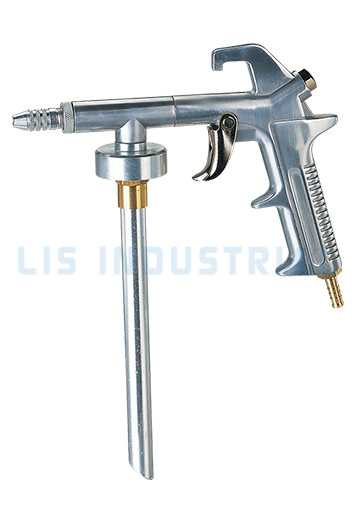
Surface preparation, cleaning, coating removal, and controlled foam application are essential tasks in automotive repair, industrial maintenance, woodworking, equipment servicing, and general workshop operations. A suitable air tool can make these jobs faster, more consistent, and more economical while reducing the physical effort required from the operator. The PS5 is designed as a versatile sandblast and foam gun for users who need practical performance from a compact pneumatic tool.
With a rated pressure of 70 PSI and a maximum pressure of no more than 150 PSI, the PS5 is suited to a broad range of compressed-air applications. Its operating range provides useful flexibility for light and medium-duty surface treatment, cleaning, and foam dispensing tasks. The tool can be connected to a suitable air compressor and used in workshops, garages, maintenance areas, production facilities, and professional service environments.
The PS5 combines the functional advantages of a sandblast gun and a foam gun in one product category. This makes it a useful choice for users who want to remove dirt, oxidation, loose coatings, and surface contamination, while also retaining the ability to apply cleaning foam or other compatible liquid materials. Rather than requiring multiple specialized tools for every basic cleaning and preparation operation, users can select an adaptable air-powered solution that supports several common tasks.
Behind the product is Ningbo Lis Industrial Co., Ltd., a Chinese manufacturer and supplier specializing in air painting spray guns, mini air compressors, air tools, and related spraying equipment. The company has been developing products in the air-tool industry since 1984 and has established production, research, quality-control, and international service capabilities. Its experience supports the development of practical tools such as the PS5 for customers seeking dependable equipment and long-term supply cooperation.
PS5
Product Overview
The PS5 belongs to the Sandblast Guns/Foam Guns category. It is intended for compressed-air use where the operator needs to direct abrasive media, cleaning material, or foam toward a work surface. The product’s compact format makes it suitable for handheld operation, and its pneumatic working principle allows the air source to provide the energy needed for material projection or application.
The principal specifications supplied for the PS5 are as follows:
| Specification | PS5 Information |
|---|---|
| Product model | PS5 |
| Product category | Sandblast Guns/Foam Guns |
| Rated pressure | 70 PSI |
| Maximum pressure | Not more than 150 PSI |
| Carton size | 58 × 31.5 × 25.5 cm |
| Carton quantity | 10 pieces per carton |
The stated pressure figures give buyers a clear starting point when evaluating compressor compatibility and application suitability. A rated pressure of 70 PSI indicates the main working pressure around which the tool is designed to operate. The maximum pressure limitation of 150 PSI establishes an upper boundary that should not be exceeded. Operators should always use the gun according to the product instructions, select appropriate hoses and fittings, and confirm that the compressor and air system are compatible before use.
The carton specification is also relevant to distributors, importers, wholesalers, and professional users purchasing multiple units. A carton measuring 58 × 31.5 × 25.5 cm and containing 10 pieces supports organized warehousing and shipment planning. Buyers can calculate approximate storage requirements, pallet arrangements, and transport quantities more efficiently when the packing information is available in advance.
How a Sandblast and Foam Gun Supports Workshop Productivity
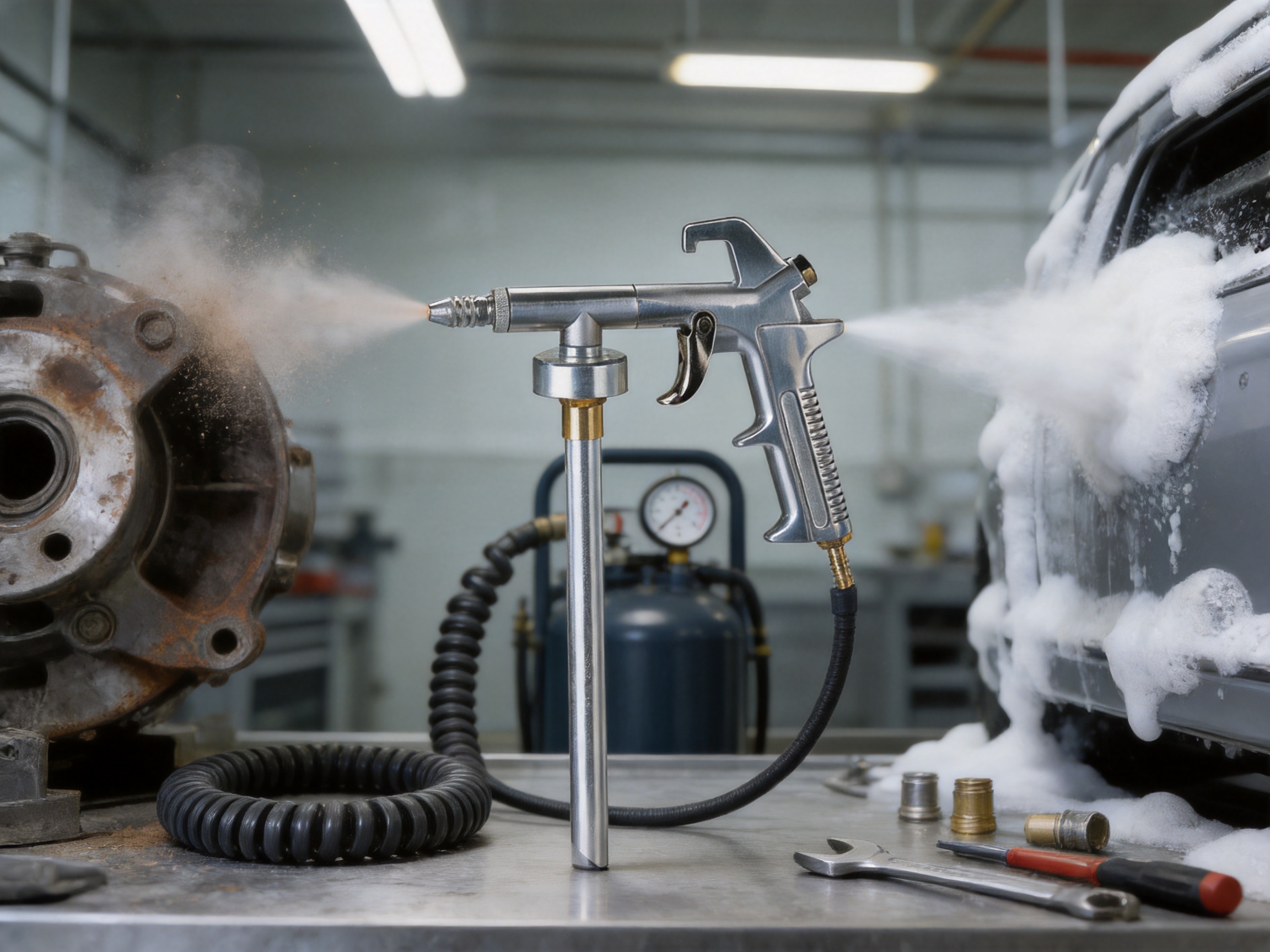
A pneumatic sandblast gun uses compressed air to carry abrasive material toward a surface. Depending on the selected media and operating conditions, the process may help remove surface rust, old paint, dirt, oxidation, scale, and other unwanted deposits. It can also prepare a surface before painting, bonding, repair, or refinishing. Surface preparation is often one of the most important stages in a coating project because the quality of the final finish depends heavily on the cleanliness and condition of the substrate.
A foam gun uses compressed air to help dispense a cleaning solution in a foamed form. Foam can remain on a surface longer than a thin liquid spray, giving the cleaning agent more contact time. This can be useful for vehicle washing, equipment cleaning, workshop maintenance, and other applications in which the operator wants to cover a surface evenly and visibly.
Combining these functions within one product category offers a practical advantage. Users can select the appropriate material and operating method for the task rather than relying on a single cleaning technique. Abrasive blasting may be suitable for hard deposits or corrosion, while foam application may be better for routine washing and degreasing. The PS5 therefore serves as a flexible air-tool option for users whose work involves more than one kind of surface treatment.
Using a handheld pneumatic tool can also improve operator control. The user can direct the nozzle toward a specific area, adjust movement speed, and control the distance from the workpiece. This is valuable when cleaning corners, edges, joints, machine components, and other areas that are difficult to treat with large equipment. The compact tool format can help reduce setup time for small repair jobs and localized maintenance work.
Key Product Advantages
Dual-Application Flexibility
The most important advantage of the PS5 is its position as a sandblast and foam gun. Many workshops perform both surface preparation and cleaning, but the requirements of these activities are different. Sandblasting focuses on removing unwanted surface material, while foam application focuses on distributing a cleaning solution. A tool that supports both categories can help reduce the number of separate devices that must be purchased, stored, maintained, and transported.
This flexibility is particularly valuable for automotive service centers, restoration shops, equipment-maintenance teams, woodworking operations, and small industrial workshops. A user may need to clean a vehicle component, remove oxidation from a metal bracket, wash a machine enclosure, and prepare a surface for repainting during the same working week. The PS5 can be considered as part of a broader pneumatic toolkit for these varied requirements.
Practical Pressure Range
The 70 PSI rated pressure is a practical specification for many general air-tool applications. It provides a useful operating reference without suggesting that the tool must be used continuously at its maximum allowable pressure. The maximum limit of 150 PSI gives additional system tolerance, provided that the operator follows the manufacturer’s safety instructions and does not exceed the stated limit.
For buyers, clear pressure information simplifies equipment selection. A compatible compressor, regulator, hose, and fitting system can be chosen according to the gun’s requirements. Clear specifications also help distributors communicate product capability to customers and reduce the risk of unsuitable installation. Proper pressure control can contribute to more predictable performance, reduced material waste, and better operator safety.
Compact Workshop Format
The PS5 is designed as a handheld air tool rather than a large fixed machine. A compact format can be an advantage when the work area is limited or when the operator must reach around a component. It may also be easier to move from one work station to another, especially in repair shops where several vehicles, machines, or parts are being serviced simultaneously.
Portable tools are also useful for maintenance teams that work at different locations. A technician may carry an air gun with hoses and accessories to a production line, service bay, repair area, or construction-related workshop. Although the available performance depends on the air source and the selected material, the product format supports flexible deployment.
Efficient Use of Compressed Air
Pneumatic tools can provide a strong working action without requiring an electric motor inside the handheld body. This can simplify the tool format and allow the air source to be located separately. In workshops that already operate compressors for spray guns, air blow guns, impact tools, or other equipment, the PS5 can be integrated into the existing compressed-air environment.
The actual air consumption depends on operating conditions, nozzle configuration, pressure, material, and application technique. For this reason, users should consult the complete technical documentation and match the gun to an appropriately sized compressor. When the air system is properly configured, the operator can work with a steady supply rather than experiencing frequent pressure drops or interruptions.
Suitable for Professional and General Maintenance Work
The PS5 can be considered for professional workshops as well as knowledgeable general users. Its applications may include cleaning metal parts, preparing components for repainting, removing light corrosion, treating hard-to-reach areas, washing equipment, and applying compatible foam solutions. This broad use potential helps the tool serve different customer segments through one product line.
Professional users may appreciate a product that can be incorporated into standard workshop procedures, while distributors may value its appeal across multiple industries. A product with several practical applications can be easier to position in sales channels than a tool limited to one narrow task. The PS5’s category therefore gives it commercial relevance in automotive, industrial, maintenance, cleaning, and repair markets.
Performance Considerations in Sandblasting Applications
Sandblasting performance depends on more than the gun itself. The abrasive medium, air pressure, air volume, nozzle condition, hose arrangement, workpiece material, and operator technique all influence the result. The PS5 provides the air-powered delivery platform, while the user must select a suitable abrasive and configure the system for the specific job.
For surface preparation, the operator should first identify the substrate and the material that needs to be removed. Metal, wood, masonry, and painted surfaces may require different abrasive types and operating settings. A hard abrasive may remove deposits quickly but can also damage a delicate surface if used improperly. A finer or softer medium may be more appropriate where the goal is cleaning or light preparation rather than aggressive removal.
Pressure should be adjusted gradually. Starting at a moderate setting allows the operator to observe the effect on the surface and reduce the risk of unnecessary damage. The gun should be moved evenly rather than held in one place for too long. Consistent movement can help produce a more uniform finish and avoid creating deep marks or unevenly treated areas.
Workpiece preparation is also important. Loose dirt, oil, and heavy contamination should be removed when possible before abrasive treatment. This can prevent the abrasive from becoming contaminated and may improve visibility during the process. After blasting, the surface should be inspected and cleaned according to the requirements of the next operation, especially when the component will be painted or coated.
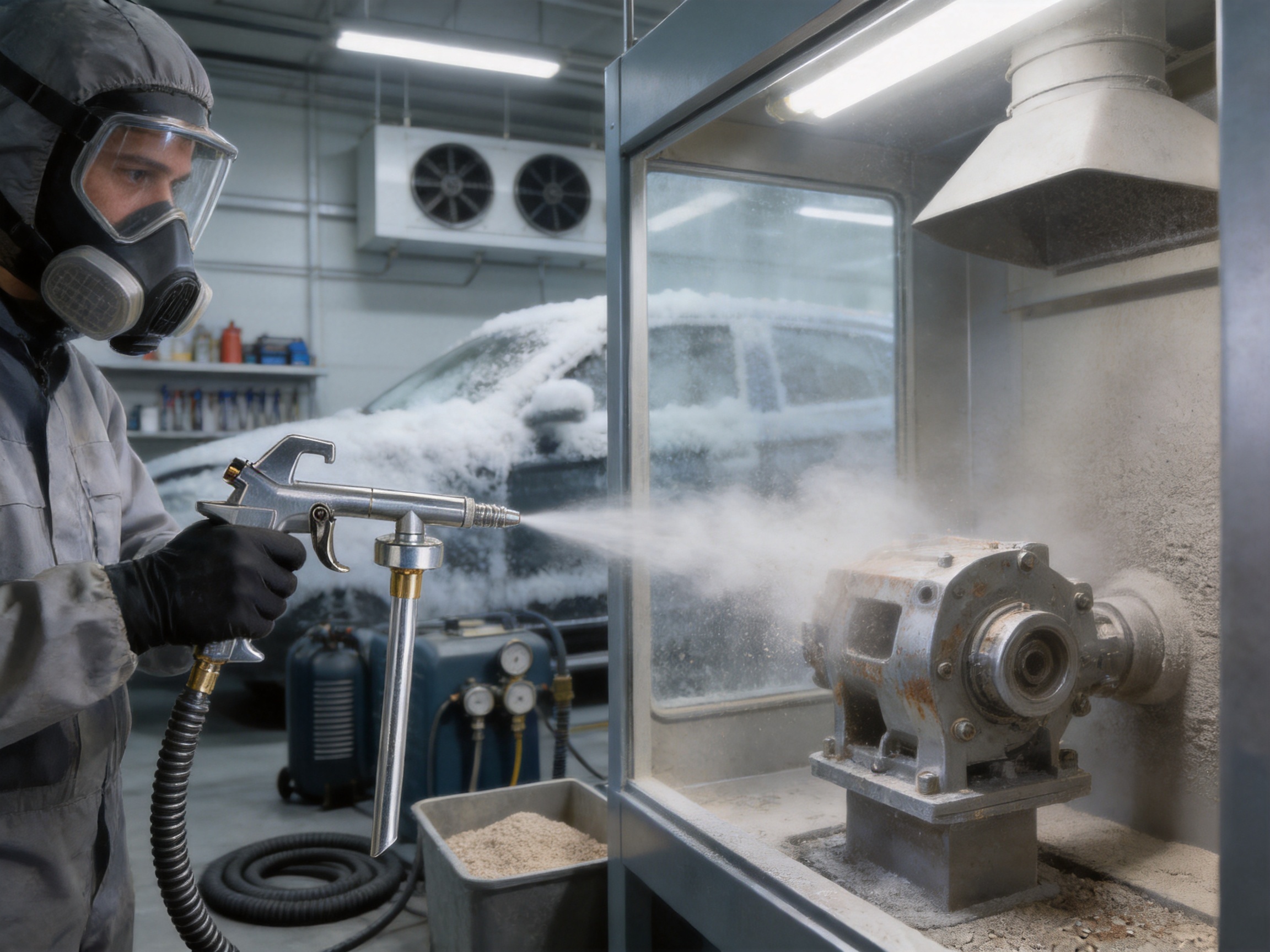
Because abrasive blasting can generate dust and flying particles, appropriate protective equipment and containment procedures are essential. Operators should use suitable eye and face protection, respiratory protection where required, gloves, protective clothing, and hearing protection. The work area should be ventilated or equipped with appropriate extraction and collection systems. These measures are fundamental to responsible use of any sandblast tool.
Performance Considerations in Foam Applications
Foam application is useful when the cleaning solution needs to be distributed across a surface in a visible layer. The foam helps the operator see which areas have been covered and may allow the solution to remain on the surface during the cleaning process. This is especially helpful for vehicle bodies, machinery, workshop floors, tools, and other washable surfaces.
The quality of foam depends on the cleaning chemical, dilution ratio, water quality, air pressure, and equipment settings. Users should select a solution that is compatible with the gun and the surface being cleaned. Automotive finishes, painted equipment, plastics, glass, rubber, and unfinished materials may react differently to chemicals. The cleaning product supplier’s instructions should be followed carefully.
For best results, the operator can apply foam from a suitable distance and work in sections. Allowing the foam to dwell for the recommended period may help loosen dirt, grease, and road film. However, the solution should not be allowed to dry on a sensitive surface unless the chemical instructions specifically permit it. Rinsing, wiping, or further brushing can then be performed according to the cleaning procedure.
A foam gun can reduce the amount of manual scrubbing needed for certain jobs, although it does not eliminate the need for proper cleaning technique. Heavy deposits may still require agitation, repeated application, or a specialized degreaser. The PS5 should therefore be viewed as a tool that supports an efficient cleaning workflow rather than as a replacement for appropriate chemicals and surface-care procedures.
Advantages Compared with Narrow-Use Alternatives
Compared with Basic Manual Cleaning Tools
Brushes, cloths, and hand-applied cleaners remain useful, but they can require considerable labor when treating large or heavily contaminated surfaces. Manual cleaning may also produce inconsistent coverage, particularly on complex components or textured areas. An air-powered gun can distribute material more quickly and may reach recesses that are difficult to access with a cloth or brush.
The PS5 can help improve workflow efficiency by reducing repetitive hand movement during suitable applications. It also allows the operator to maintain a working distance from the surface, which may be useful when applying a cleaning product over a broad area. The result depends on material selection and technique, but pneumatic delivery provides an efficient alternative to entirely manual methods.
Compared with Single-Purpose Sandblast Guns
A single-purpose sandblast gun may be optimized for abrasive work, but it does not necessarily provide the same flexibility for cleaning and foam application. Users who require both functions may need to purchase separate tools. That can increase acquisition costs and require additional storage space, spare parts, and maintenance procedures.
The PS5’s sandblast and foam-gun positioning gives buyers a more versatile option. It is particularly attractive for smaller workshops that need to control equipment investment or for mobile technicians who want to carry fewer tools. While specialized equipment may still be preferred for very high-volume or highly demanding blasting operations, a versatile product can be more practical for general-purpose work.
Compared with Low-Capacity Electric Cleaning Devices
Electric cleaning devices can be convenient in areas without compressed air, but they may require an internal motor, electrical connection, and additional protection against moisture or chemical exposure. A pneumatic tool can be integrated into a workshop air system that is already used for other equipment. This may reduce duplication in facilities that have an established compressor network.
Air-powered tools can also be useful in environments where the operator prefers to keep electrical components away from the immediate application area. The appropriate choice depends on the location, available utilities, safety requirements, and intended material. The PS5 offers an alternative for users who value pneumatic compatibility and workshop integration.
Compared with Low-Quality Unbranded Tools
Price alone does not determine the overall value of an air tool. Poor dimensional control, inconsistent material quality, weak seals, inadequate testing, and limited technical support can lead to leakage, unstable output, premature wear, and increased downtime. A manufacturer with established production systems and quality procedures can provide greater confidence in repeatability and supply continuity.
Ningbo Lis Industrial Co., Ltd. has developed its manufacturing capabilities over many years and operates a production base with more than 400 employees and an annual output reported at over 40 million US dollars. The company’s scale, engineering resources, and quality-management approach provide a stronger foundation than an unverified source with no clear manufacturing history. Buyers can evaluate the PS5 not only as an individual tool but also as a product supported by an experienced industrial organization.
Manufacturing Strengths Behind the Product
The performance of a pneumatic tool is closely connected to manufacturing consistency. Small differences in threads, seals, trigger components, material passages, and connection points can affect usability and service life. A capable manufacturer must therefore control materials, machining, assembly, testing, packaging, and documentation as part of one connected process.
Ningbo Lis Industrial Co., Ltd. states that its production process includes raw-material control and incoming inspection, in-process quality control, 100 percent functional testing, and final inspection of finished products. This multi-stage approach is important because quality cannot be created through final inspection alone. Potential issues must be identified as early as possible, while completed products must still be checked before shipment.
Incoming inspection helps verify that purchased materials and components meet defined requirements. In-process controls monitor production stages where dimensions, fit, surface condition, or assembly quality may influence final performance. Functional testing then provides a practical confirmation that the completed tool operates as intended. Final inspection supports packaging accuracy and shipment readiness.
For international buyers, this type of process can reduce uncertainty. Consistent production is particularly important when customers require repeated orders with similar performance. Distributors, private-label customers, and original-equipment buyers need products that can be supplied reliably across different purchasing cycles. An organized quality system supports that commercial requirement.
Research and Development Capability
The company reports having a strong research and development team and the ability to provide both OEM and ODM services. OEM production can support customers who require products manufactured according to supplied drawings or samples. ODM capability can help customers who need assistance developing a product according to application requirements, market positioning, or design objectives.
For a product such as the PS5, engineering capability may support improvements in usability, material compatibility, connection design, ergonomic handling, packaging, and production efficiency. Development work can also help manufacturers respond to changing market needs, regional requirements, and distributor feedback. A strong R&D function is therefore valuable not only for launching new products but also for maintaining and refining existing product lines.
The company has also established a spraying machinery engineering technology center and reports technical cooperation with American spraying technology specialists. Such cooperation indicates an effort to connect manufacturing experience with specialized engineering knowledge. In a competitive air-tool market, continuous technical development can help a supplier improve product reliability and maintain relevance across international markets.
Large-Scale Production and Supply Capacity
Production capacity is an important consideration for distributors and industrial buyers. A supplier may offer an attractive product, but if it cannot deliver consistent quantities, the buyer may face stock shortages and missed sales opportunities. Ningbo Lis Industrial Co., Ltd. reports that its production capacity can be increased by 30 percent within two months, helping it respond to customers with different purchasing volumes.
This flexibility can benefit both small and large buyers. A smaller distributor may begin with a trial order, while an established importer may require regular container shipments. The ability to adjust production can support gradual business development and reduce the pressure to commit to excessive inventory at the beginning of a relationship.
The reported factory area of more than 400,000 square feet also indicates a substantial physical base for manufacturing, storage, engineering, and related operations. Combined with a workforce of more than 400 employees, this scale can support multiple product categories, including spray guns, compressors, air tools, air fittings, paint tanks, and accessories.
Quality Certifications and International Market Readiness
Products intended for international distribution must satisfy customer expectations that may differ by region. Ningbo Lis Industrial Co., Ltd. reports certifications and management systems including ISO9001, ISO14001, OHSAS18001, CE, and GS. These certifications and approvals represent a structured approach to quality, environmental management, occupational health and safety, and product conformity, subject to the scope of each certification.
ISO9001-based quality management supports documented processes, corrective actions, continuous improvement, and customer-focused control. ISO14001 relates to environmental management practices, while OHSAS18001 was an occupational health and safety management standard used before the broader adoption of ISO 45001. CE and GS references are relevant to European market expectations, although buyers should confirm the exact applicable directives, certificates, test reports, and product scope for the specific PS5 configuration.
Certification does not remove the need for responsible product selection or safe operation. Customers should review technical files, user instructions, labeling, packaging, and regional compliance requirements before placing an order. Nevertheless, a supplier with recognized management and product-certification experience is generally better prepared to support international procurement than a supplier without documented systems.
The company’s products are reported to be sold in Europe, North America, the Middle East, South Africa, East Asia, and other markets. International distribution experience can help a manufacturer understand variations in packaging, labeling, documentation, logistics, customer service, and product expectations. This background is useful for buyers who need more than a factory quotation and require ongoing support throughout the supply process.
Applications for Different Industries
Automotive Repair and Detailing
Automotive workshops can use a sandblast and foam gun for cleaning components, treating corrosion, preparing parts for refinishing, and applying vehicle-cleaning solutions. Metal brackets, engine parts, wheel components, tools, and workshop surfaces may benefit from controlled cleaning. Foam application can support exterior washing and the removal of road film, grease, and general dirt when a compatible solution is selected.
In restoration work, surface preparation is often essential before primer and paint application. Abrasive treatment can help expose the condition of a metal surface, but the operator must choose a suitable medium and pressure to avoid unnecessary damage. The PS5 may be useful for localized treatment, small parts, and maintenance operations where a large blasting cabinet or industrial blasting system is not required.
Industrial Maintenance
Factories and maintenance departments frequently need to clean machine parts, remove deposits, and prepare surfaces for repair coatings. A portable pneumatic tool can be moved between workstations and used during scheduled maintenance or corrective repair. Foam application may support the cleaning of housings, guards, tools, and non-sensitive equipment surfaces.
Industrial users should assess the compatibility of the tool and cleaning material with their working environment. Where hazardous dust, chemicals, or combustible materials are present, the facility must implement appropriate risk controls. The PS5 can contribute to a maintenance program, but it should be integrated into the site’s established safety, ventilation, waste-handling, and personal-protection procedures.
Woodworking and Furniture Preparation
Woodworking shops may use air tools for cleaning dust, treating selected surfaces, and preparing components for coating. Abrasive blasting on wood requires especially careful selection of media and pressure because wood is softer and more vulnerable to surface texture changes than many metals. The operator should conduct a test on scrap material before treating a visible workpiece.
Foam cleaning may be useful for washable shop surfaces and selected equipment, although excessive moisture should be avoided around unfinished wood, porous materials, and precision machinery. The PS5’s versatility can make it useful in a mixed workshop, but the application must always be adapted to the material being treated.
Equipment Cleaning and General Workshop Service
Service technicians may need to remove dirt from tools, machinery, workbenches, and parts before inspection or repair. Foam can make coverage easy to see, while abrasive action may assist with deposits or corrosion on appropriate hard surfaces. A single adaptable gun can be stored as part of a general maintenance kit and used when a specific cleaning or preparation task arises.
Recommended Operating Practices
Before using the PS5, inspect the gun, hose, fittings, connections, material container, nozzle area, and trigger mechanism. Confirm that parts are secure and that there are no visible cracks, blockages, or damaged seals. The air supply should include suitable filtration and regulation where required. Moisture and oil contamination in the air line can influence tool performance and may affect the applied material.
Use only compatible abrasive media and cleaning solutions. Abrasive material should be clean, dry, and suitable for the gun’s passage system. Cleaning chemicals should be used according to their labels and safety data sheets. Do not mix chemicals unless the supplier specifically confirms that the combination is safe and effective.
Set the regulator to an appropriate starting pressure rather than immediately operating at the maximum limit. The rated pressure of 70 PSI should be treated as the primary operating reference, while the maximum pressure of no more than 150 PSI must not be exceeded. If the task requires a different setting, the operator should follow the official technical instructions and confirm that the workpiece can tolerate the selected conditions.
Maintain a stable stance and direct the tool away from people, animals, electrical hazards, and fragile objects. For blasting, use appropriate containment to prevent abrasive rebound and airborne dust. For foaming, protect nearby surfaces that may be sensitive to water or chemicals. Always release air pressure before cleaning, changing materials, disconnecting components, or performing maintenance.
After use, clean the material passages and nozzle according to the recommended procedure. Residual chemical solution or abrasive particles can harden, obstruct the tool, or cause wear if left inside. Store the gun in a dry location and protect it from impact, contamination, and extreme environmental conditions. Regular inspection and proper storage can help extend service life.
Purchasing and Distribution Benefits
For importers and distributors, the PS5 offers a product concept that is easy to understand and relevant to several customer groups. The sandblast and foam-gun category communicates both the surface-preparation and cleaning functions. This can support sales through automotive, industrial, hardware, cleaning-equipment, woodworking, and air-tool channels.
The product’s stated carton quantity of 10 pieces provides a manageable unit for wholesale ordering. Buyers can plan inventory in consistent carton quantities while keeping the initial stock commitment practical for market testing. The carton dimensions also assist freight planning and warehouse organization.
Supplier support is another important factor. Ningbo Lis Industrial Co., Ltd. offers a broad portfolio that includes spray guns, air brushes, compressors, air pipeline accessories, fittings, paint tanks, polishers, airless spray guns, electric spray guns, paint sprayers, and related equipment. A buyer who starts with the PS5 may later source complementary products from the same manufacturing network, reducing the need to coordinate with many separate suppliers.
The company’s experience with OEM and ODM projects can also be valuable for customers seeking private-label opportunities or customized product programs. Customization may involve packaging, color, labeling, accessories, documentation, or design adjustments, depending on engineering feasibility and order requirements. Buyers should discuss minimum order quantities, tooling, testing, lead times, and intellectual-property responsibilities before confirming a customized project.
Why Manufacturer Experience Matters
Since its establishment in 1984, Ningbo Lis Industrial Co., Ltd. has focused on the research, development, manufacture, and marketing of air painting spray guns and related air tools. Long-term industry participation can provide knowledge of component sourcing, production management, international logistics, after-sales requirements, and changing customer expectations.
The company reports that its brands include Voylet and Muzi, with Muzi recognized as a China Well-known Brand, as well as Wagem-related product activity. These brand resources reflect experience in building product identities and serving different market segments. For a buyer evaluating the PS5, this background suggests that the product is part of a larger, established air-tool and spraying-equipment program rather than an isolated item.
The company also reports cooperation with international customers, including Wagner Spray Tech Corp. Such relationships indicate experience with demanding business customers and quality expectations. Buyers should still conduct their own evaluation, including sample testing and documentation review, but a history of serving international markets can provide a useful basis for supplier assessment.
Manufacturing scale, quality systems, engineering capability, and supply flexibility together create a stronger value proposition than product specifications alone. A tool must perform its intended task, but the supplier must also be able to deliver consistent quality, respond to technical questions, support documentation, and maintain availability. These factors become increasingly important when the product is sold under a distributor’s name or incorporated into a professional service network.
Maintenance and Serviceability
Routine maintenance is central to the reliable operation of any pneumatic gun. The operator should keep the air inlet clean, inspect the hose and fittings, remove material residue, and check the nozzle and fluid or abrasive passages for obstruction. Maintenance frequency depends on usage intensity, material type, pressure, and working environment.
Abrasive materials naturally create wear, especially when used frequently or at higher operating rates. Nozzles, seals, and passages should therefore be inspected regularly. A gradual change in spray pattern, reduced output, leakage, or unusual air loss may indicate that cleaning or replacement is required. Early attention can prevent a small issue from affecting other components or interrupting a larger job.
Foam applications may leave chemical residue if the gun is not flushed properly after use. The cleaning procedure should be compatible with the material used and should not introduce a chemical that damages seals or internal surfaces. Operators should avoid using unapproved solvents and should refer to the product manual for the correct cleaning method.
For commercial users, a preventive-maintenance schedule can improve availability. A workshop may record the date of inspection, material used, operating pressure, observed condition, and replacement parts. Such records help identify recurring issues and support consistent training among different operators.
Environmental and Workplace Responsibilities
Responsible use of a sandblast and foam gun includes control of dust, wastewater, chemical exposure, noise, and waste material. Abrasive blasting should be conducted in a controlled area with suitable ventilation and collection. Used abrasive and removed coatings may require special disposal depending on the material and contamination level.
Foam cleaning can generate wastewater containing detergents, oils, grease, or other contaminants. Facilities should collect and manage wastewater according to local environmental requirements. Cleaning chemicals should be stored, labeled, and handled in accordance with their safety data sheets. A product that improves cleaning efficiency should be used as part of a complete environmental and safety plan.
Noise levels can increase when compressed air is discharged, particularly in enclosed spaces. Hearing protection and suitable work-area management may be necessary. Operators should also be trained to recognize the hazards associated with pressurized equipment and should never point the tool toward the skin or use compressed air for unsafe personal cleaning.
Technical Evaluation Before Adoption
Before placing a large order, professional buyers should evaluate the PS5 under representative working conditions. Sample testing can confirm how the gun performs with the intended abrasive media or cleaning solution. The evaluation should include pressure stability, material flow, coverage, ease of cleaning, connection compatibility, and operator comfort.
Buyers should also confirm the complete technical specification with the supplier. Important questions may include air-consumption requirements, inlet size, nozzle options, compatible materials, replacement-part availability, recommended hose dimensions, packaging details, and applicable certificates. The supplied pressure figures of 70 PSI rated pressure and no more than 150 PSI maximum pressure should be incorporated into the buyer’s equipment-selection and safety procedures.
For distributors, field testing with representative customers can provide additional information. Automotive technicians may assess cleaning and component-preparation performance, while industrial users may focus on corrosion removal, maintenance efficiency, and durability. Feedback from these groups can help determine the most suitable market position and training content.
A total-cost assessment should include the purchase price, compressor requirements, abrasive or chemical consumption, replacement parts, labor savings, cleaning time, and expected service life. A versatile tool may offer value by reducing the need for multiple devices, but the actual benefit depends on usage frequency and application mix. Careful evaluation allows buyers to make decisions based on operational value rather than initial price alone.
Frequently Asked Questions
What is the PS5?
The PS5 is a pneumatic sandblast and foam gun designed for compressed-air surface treatment, cleaning, and compatible foam application tasks. It belongs to the Sandblast Guns/Foam Guns product category.
What is the rated pressure of the PS5?
The stated rated pressure is 70 PSI. Users should operate the gun according to the official product instructions and select a pressure appropriate for the material and workpiece.
What is the maximum pressure?
The maximum pressure is specified as no more than 150 PSI. This limit must not be exceeded. A suitable regulator and compatible air system should be used to maintain controlled pressure.
Can the PS5 be used for both blasting and foaming?
The product is categorized as a sandblast and foam gun, making it suitable for applications involving abrasive surface treatment and compatible foam dispensing. The operator must use the correct material, configuration, and cleaning procedure for each application.
What types of work can it support?
Potential applications include localized rust and coating removal, surface preparation, equipment cleaning, automotive service, vehicle washing, workshop maintenance, and selected woodworking or repair tasks. Material and pressure suitability should be tested before full-scale use.
What compressor is required?
The correct compressor depends on the gun’s air-consumption requirement, operating pressure, duty cycle, hose length, and application material. Buyers should obtain the complete technical data and select a compressor capable of maintaining stable performance under the intended conditions.
Is the PS5 suitable for industrial use?
The PS5 can be considered for industrial maintenance and general workshop service, particularly for localized cleaning and preparation. High-volume production applications should be evaluated through sample testing to confirm whether the tool meets the required duty cycle and output.
How many units are packed in one carton?
The stated carton quantity is 10 pieces per carton. The carton size is 58 × 31.5 × 25.5 centimeters.
What is the carton size?
The carton measures 58 × 31.5 × 25.5 centimeters. This information can assist with inventory, warehouse, and freight planning.
What safety equipment should be used?
Safety equipment depends on the application, but may include eye and face protection, gloves, protective clothing, hearing protection, and suitable respiratory protection. Blasting should be performed with effective dust containment and ventilation, while chemical products should be handled according to their safety data sheets.
How should the gun be cleaned?
The gun should be cleaned after use by removing remaining abrasive or foam material from the relevant passages and components. The correct cleaning method depends on the material used. Operators should follow the product manual and avoid unapproved chemicals that could damage internal parts.
Does the manufacturer provide OEM or ODM services?
Ningbo Lis Industrial Co., Ltd. reports that it provides OEM services based on customer drawings or samples and ODM services according to customer requirements. Specific customization options, minimum order quantities, testing requirements, and lead times should be confirmed directly with the company.
Why consider an established manufacturer?
An established manufacturer can offer advantages in engineering support, quality control, production capacity, documentation, supply continuity, and after-sales communication. Ningbo Lis Industrial Co., Ltd. reports decades of industry experience, international market coverage, quality-management systems, and a broad air-tool product portfolio.
Conclusion
The PS5 is a practical compressed-air tool for users who need both sandblasting and foam-application capability. Its 70 PSI rated pressure, maximum pressure of no more than 150 PSI, compact handheld format, and broad application potential make it suitable for general workshop, automotive, maintenance, cleaning, and selected woodworking tasks.
Its greatest advantage is versatility. A single product category can support surface preparation, localized corrosion or coating removal, equipment cleaning, and foam distribution. This can help workshops reduce tool duplication, simplify storage, and improve workflow flexibility. The tool should still be matched carefully with the compressor, abrasive, chemical, workpiece, and safety system.
The product is supported by Ningbo Lis Industrial Co., Ltd.’s long-standing experience in air painting spray guns, compressors, air tools, and spraying equipment. The company reports advanced quality-control procedures, functional testing, research and development capability, OEM and ODM support, international certifications, and scalable production capacity. These strengths are important for customers seeking reliable supply as well as a functional product.
For distributors and professional users, the PS5 can serve as a flexible addition to an established air-tool range. For industrial and automotive operators, it can support practical cleaning and preparation procedures when used correctly. Sample testing, technical confirmation, and proper safety planning are recommended before large-scale adoption, but the product offers a strong combination of pneumatic convenience, multi-purpose capability, and manufacturer support.
References
1. Ningbo Lis Industrial Co., Ltd. Product information for the PS5 Sandblast Guns/Foam Guns model.
2. Ningbo Lis Industrial Co., Ltd. Corporate information concerning manufacturing capacity, research and development, OEM and ODM services, and international markets.
3. Ningbo Lis Industrial Co., Ltd. Reported product specifications: rated pressure of 70 PSI, maximum pressure of no more than 150 PSI, and carton packing of 10 pieces.
4. International Organization for Standardization. Quality management principles and ISO 9001 quality-management-system guidance.
5. International Organization for Standardization. Environmental management principles and ISO 14001 guidance.
6. European product-safety and conformity-assessment guidance applicable to pneumatic tools and workshop equipment.
7. General occupational safety guidance for compressed-air tools, abrasive blasting, chemical handling, dust control, and personal protective equipment.