 Search
 English
 中文简体
中文简体 Deutsch
 Español
Content
- 1 Introduction
- 2 Understanding the PG1 Foam Gun
- 3 Advantages Compared with Basic Foam Dispensing Methods
- 4 Advantages for Professional Users
- 5 Application Considerations
- 6 Manufacturing Strength Behind the Product
- 7 Why Manufacturing Experience Matters to Buyers
- 8 Comparison with Competing Product Approaches
- 9 Commercial Value for Distributors and Importers
- 10 Quality, Safety, and Responsible Use
- 11 Recommended Purchasing Process
- 12 Company Capability and Customer Support
- 13 Frequently Asked Questions
- 13.1 What is the PG1 Foam Gun used for?
- 13.2 What is the main advantage of using a foam gun?
- 13.3 Can the PG1 be used with every type of foam?
- 13.4 Is the PG1 suitable for professional work?
- 13.5 How is the product packaged?
- 13.6 Can the product be ordered for private-label sales?
- 13.7 What quality systems does the manufacturer report?
- 13.8 Does the company manufacture other air tools?
- 13.9 Where is the manufacturer located?
- 13.10 How should the foam gun be maintained?
- 13.11 What should buyers compare before ordering?
- 14 Conclusion
- 15 References
- 16 Product: PG1 Foam Gun
Introduction
Professional foam application requires more than a pressurized container and a basic trigger. The quality of the tool affects how accurately material can be placed, how efficiently the operator can work, and how consistently the finished result can be achieved. A suitable foam gun helps users guide expanding foam into joints, gaps, cavities, and other target areas while reducing unnecessary material loss and improving workplace control.
The PG1 Foam Gun is designed for users who need a practical air-tool solution within the Sandblast Guns/Foam Guns product category. It is part of a broad professional equipment portfolio that includes spray guns, air tools, compressors, air fittings, paint tanks, and other spraying-related products. The product is supported by the manufacturing and engineering capabilities of Ningbo Lis Industrial Co., Ltd., an established Chinese manufacturer specializing in air painting spray guns, mini air compressors, and relevant air tools.
Although foam application is a specialized task, the same fundamental expectations apply as with other professional air tools: reliable construction, comfortable handling, predictable operation, suitable production consistency, and dependable supplier support. The PG1 Foam Gun is positioned as a useful solution for customers seeking a dedicated foam application tool rather than relying on improvised methods or low-quality alternatives.
This article examines the product’s practical value, its position in the professional tool market, the manufacturing strengths behind it, and the considerations that matter when selecting a foam gun for commercial distribution, maintenance work, construction-related applications, or general workshop use.
PG1 Foam Gun
Understanding the PG1 Foam Gun
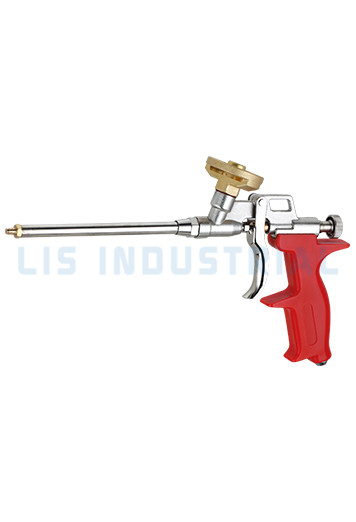
The PG1 Foam Gun is identified as a foam gun within the Sandblast Guns/Foam Guns category. Its primary purpose is to provide a more directed and manageable method of applying compatible foam materials. Compared with uncontrolled dispensing methods, a dedicated gun can offer a more familiar grip, a trigger-based operating method, and a form factor that supports more accurate placement.
Foam products are often used in areas where the material must be placed into a specific opening or along a defined joint. The work may involve filling gaps, sealing around construction elements, improving insulation coverage, or carrying out repair and maintenance tasks. In these situations, over-application can create waste and additional cleanup, while under-application can lead to incomplete coverage. A tool designed specifically for foam application helps the operator approach the task with greater control.
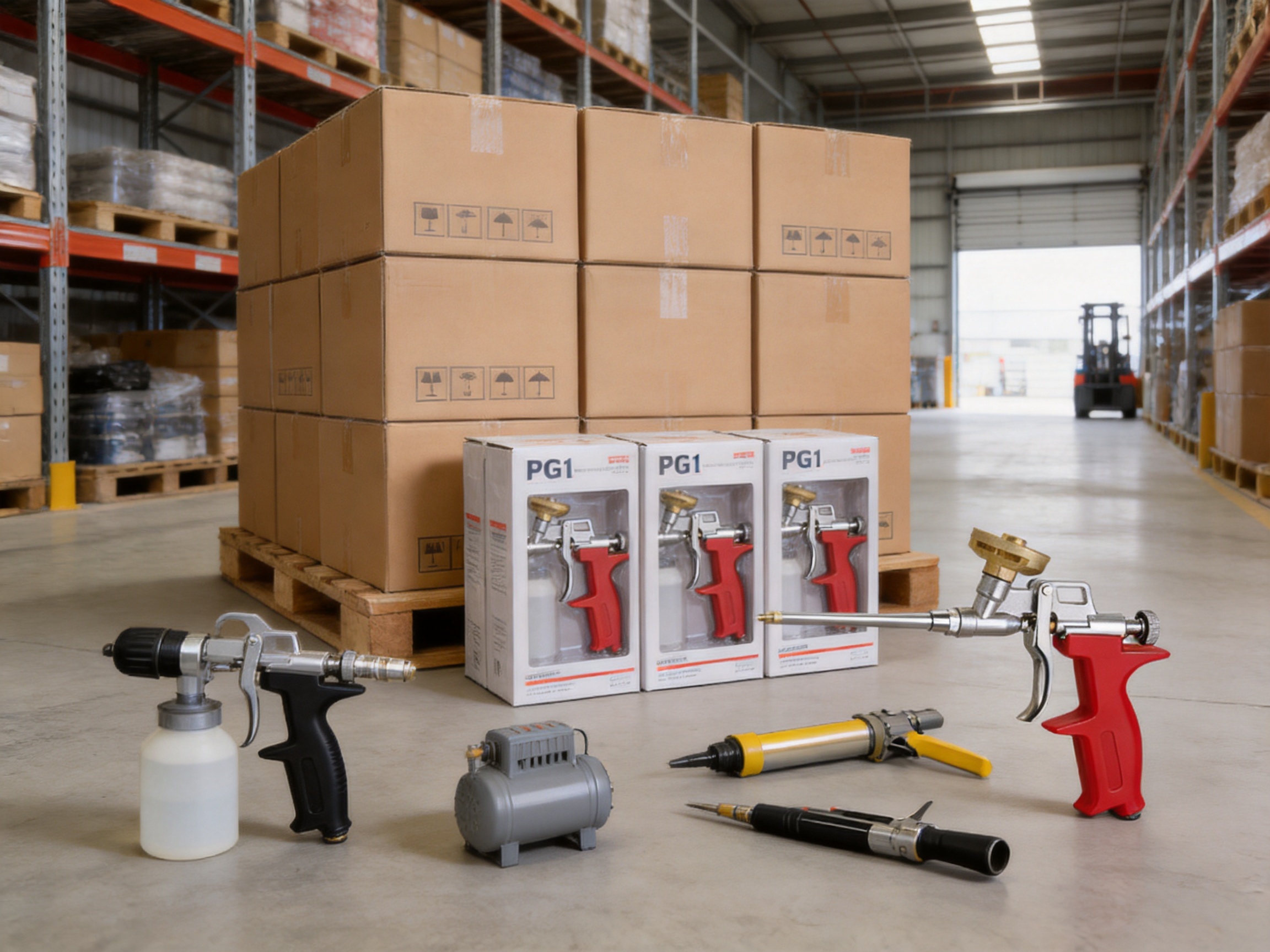
The PG1 model is suitable for professional product lines that require straightforward identification and efficient packaging. The supplied carton information is 64 × 29.5 × 29 cm, with 20 pieces per carton. This packaging configuration is useful for distributors and wholesalers because it provides a clear basis for shipment planning, warehouse allocation, order consolidation, and export quotation.
Product logistics are an important part of tool purchasing. A tool that performs well but is difficult to package, store, or replenish can create avoidable costs for distributors. The PG1’s stated carton quantity allows buyers to plan purchasing in practical batch sizes and helps simplify inventory management.
Designed for practical control
A foam gun is valuable primarily because it gives the user a dedicated interface between the material container and the application surface. The operator can direct the tool into a specific area instead of attempting to guide the material directly from a can or use an unsuitable accessory. This can improve the working process, particularly in narrow, elevated, or difficult-to-reach locations.
Practical control also supports cleaner work. When the output is directed more precisely, less material is likely to spread over adjacent surfaces. Reduced overspray or unwanted deposition can shorten finishing and cleaning time. In professional environments, these time savings can contribute to greater productivity over the course of a project.
Suitable for product distribution programs
The PG1 Foam Gun can be considered for hardware distributors, building-material suppliers, air-tool wholesalers, maintenance-equipment dealers, and private-label product programs. Its product category is easy to understand, and the application is familiar to many users who work with expanding foam or related materials.
For distributors, a clearly categorized tool can be easier to merchandise and promote. It may be offered as an individual tool, included in a wider air-tool catalog, or combined with compatible foam products and workshop accessories. The product can also complement a supplier’s existing range of paint spray guns, air blowing guns, sandblast guns, tyre inflating guns, water guns, grease guns, and other pneumatic equipment.
Advantages Compared with Basic Foam Dispensing Methods
The PG1 Foam Gun offers several practical advantages over basic dispensing approaches. These advantages should be understood in terms of application control, work efficiency, handling, professional presentation, and compatibility with a broader tool portfolio.
Improved application direction
One of the main reasons to use a foam gun is the ability to direct material more deliberately. A dedicated tool gives the operator a stable body and a familiar trigger interface. This is particularly useful when filling a narrow gap or working around a frame, panel, pipe, fixture, or other installed component.
Compared with holding a container directly, a gun-style tool can make the application path easier to follow. It also allows the operator to maintain a more consistent hand position. This is valuable when the work requires repeated applications across a large number of joints or openings.
Better control of material placement
Foam expands after application, so the correct amount of material is important. Applying too much can increase waste and may require trimming after curing. Applying too little may leave an opening insufficiently filled. A professional foam gun supports a more controlled application process, allowing the user to work progressively instead of releasing material without a clear direction.
The exact operating results will depend on the foam formulation, ambient temperature, surface condition, operator technique, and maintenance practices. Nevertheless, the tool itself remains an important part of the overall application system. A well-designed gun gives the user a more suitable means of managing these variables than an improvised dispensing method.
Greater suitability for repeated work
Occasional users may accept a basic dispensing solution for a single small task. However, repeated professional work places higher demands on handling and consistency. Contractors, installers, maintenance technicians, and production workers often need to apply material several times during one shift or across multiple projects.
A dedicated foam gun is better aligned with this type of work because it is designed around the operator’s need to hold, guide, and actuate a tool. Its inclusion in a professional air-tool range also makes it easier for users to standardize equipment across different workstations or teams.
A more professional user experience
Equipment selection influences how a tool is perceived in the workplace. A dedicated product communicates that the application task has been considered and that the operator has been provided with an appropriate instrument. This can support better work habits, more consistent procedures, and improved customer confidence when tools are used on site.
For distributors, a purpose-built product is also easier to explain than a generic or improvised solution. Sales staff can focus on the tool’s intended application, packaging, product category, and supply advantages instead of trying to position an unsuitable accessory for a specialized task.
Advantages for Professional Users
Useful for construction and installation work
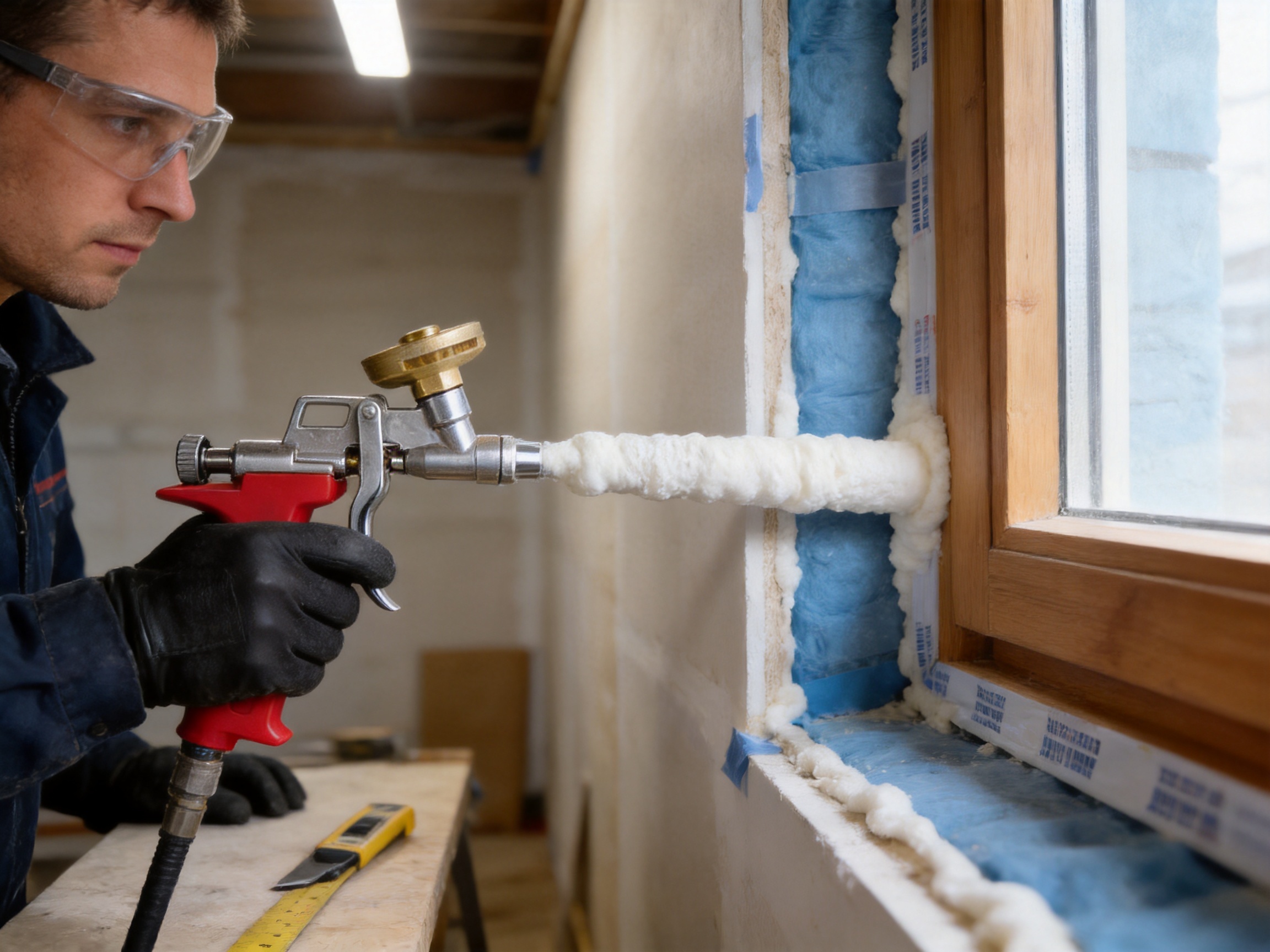
Foam is widely associated with construction, renovation, installation, and repair activities. It may be used around openings, joints, fixtures, insulation-related areas, and other locations where a filling or sealing material is required. In these applications, access and accuracy are often more important than simply releasing a large quantity of product.
The PG1 Foam Gun gives users a practical tool for reaching the intended application area and placing the material with greater care. It can therefore be considered for professional work where surface protection, clean application, and repeatability matter.
Suitable for maintenance environments
Maintenance personnel often work with varied materials and equipment in changing conditions. A compact, dedicated tool can be useful when completing repair tasks in workshops, facilities, warehouses, and service locations. The tool can be stored as part of a maintenance kit and selected when controlled foam application is required.
Maintenance work also benefits from equipment standardization. When a company uses a consistent family of air tools, workers can become familiar with similar handling principles and storage procedures. A foam gun can form part of a broader maintenance equipment program alongside air blowing guns, tyre inflating guns, grease guns, and other utility tools.
Helpful for reducing avoidable waste
Material waste can result from poor aiming, excessive release, unsuitable application technique, or repeated attempts to fill the same area. A dedicated gun does not eliminate all waste, because results depend on the product and the user, but it can help create better conditions for controlled use.
Lower waste can benefit both project economics and workplace cleanliness. A more disciplined application process may reduce unnecessary material consumption, cleanup effort, and time spent trimming or correcting excess foam. For high-volume users, even small improvements in control can become meaningful over many applications.
Supports consistent working procedures
Professional operations often depend on repeatable processes. A dedicated foam gun can be assigned to a defined task, included in work instructions, and stored with related materials. This is more practical than depending on whatever dispensing method happens to be available at the time.
Consistent procedures are especially useful for companies training new employees or managing multiple teams. Operators can be instructed on surface preparation, material compatibility, application technique, cleaning, and storage while using the same product model. Such standardization can make quality control easier.
Application Considerations
The PG1 Foam Gun should be used with compatible foam materials and according to the instructions supplied for the specific consumable. Foam formulations can differ significantly in viscosity, expansion behavior, curing time, container connection, and cleaning requirements. Users should confirm compatibility before placing the tool into service.
Surface preparation
Application quality begins with the surface. Dust, loose particles, grease, moisture, and other contaminants may affect adhesion or curing. The correct preparation method depends on the foam and the substrate. In general, the application area should be examined and prepared in accordance with the material manufacturer’s instructions.
Users should also consider the size and shape of the gap. Because foam may expand, the operator should avoid assuming that a large initial release is necessary. Controlled passes and gradual filling can help produce a more predictable result.
Environmental conditions
Temperature and humidity may influence the behavior of foam materials. Cold conditions can affect flow and expansion, while excessive heat may change curing behavior or create storage concerns. The foam manufacturer’s recommended operating range should always be observed.
The gun should be protected from contamination and extreme conditions when not in use. Storage practices are important because cured material can interfere with future operation. Proper cleaning and maintenance procedures should be followed after use, using only products that are approved for the tool and the foam system.
Operator technique
Good technique involves keeping the tool aligned with the target area, maintaining an appropriate distance, and applying material in a controlled manner. The operator should avoid sudden movements and should monitor expansion rather than attempting to fill every space immediately.
Training is particularly important for new users. The foam product itself, rather than the gun alone, determines many of the final characteristics. A skilled operator understands how the material behaves and adjusts the application speed accordingly.
Cleaning and maintenance
Maintenance helps preserve the working condition of any professional tool. After use, the operator should follow the recommended cleaning procedure and prevent foam residue from curing in critical areas. The gun should be inspected for visible contamination, damage, or abnormal operation before being returned to storage.
Maintenance procedures should not be improvised. Different foam products may require different cleaning agents, and an unsuitable chemical may damage seals, surfaces, or internal components. Clear instructions from the tool supplier and foam supplier should be treated as the primary reference.
Manufacturing Strength Behind the Product
The product’s value is supported by the capabilities of Ningbo Lis Industrial Co., Ltd. The company is engaged in the research, development, manufacturing, and marketing of air painting spray guns, mini air compressors, and related air tools. This specialization is relevant to the PG1 Foam Gun because it demonstrates experience in designing and producing equipment for controlled air-tool applications.
The company was established in 1984 and has developed a large manufacturing operation in Ningbo, China. Its facility covers more than 400,000 square feet and employs more than 400 people. The stated annual output exceeds 40 million US dollars, indicating substantial production capacity and experience serving international customers.
For buyers, production scale can provide several advantages. It may support more stable procurement, broader engineering resources, better production planning, and the ability to handle different order quantities. The company states that its production capacity can be increased by 30 percent within two months, which can be valuable for customers managing seasonal demand, new product launches, or rapid market expansion.
Research and development capability
A dedicated research and development team is an important strength for an air-tool manufacturer. Product development requires attention to ergonomics, component interaction, manufacturing tolerances, application requirements, and long-term product consistency. The company states that it can provide OEM production based on customer drawings or samples and ODM services based on customer needs.
This flexibility can benefit importers and distributors that need customized packaging, product identification, market-specific configurations, or private-label solutions. It also allows customers to work with a supplier that understands both standardized catalog products and tailored development projects.
The company has established a spraying machinery engineering technology center and has carried out technical cooperation with American Wagner Spraying Technology Co., Ltd. This experience in spraying machinery contributes to a technical foundation that extends beyond a single product model. It indicates a long-term focus on spraying technology, product improvement, and engineering development.
Production process and quality control
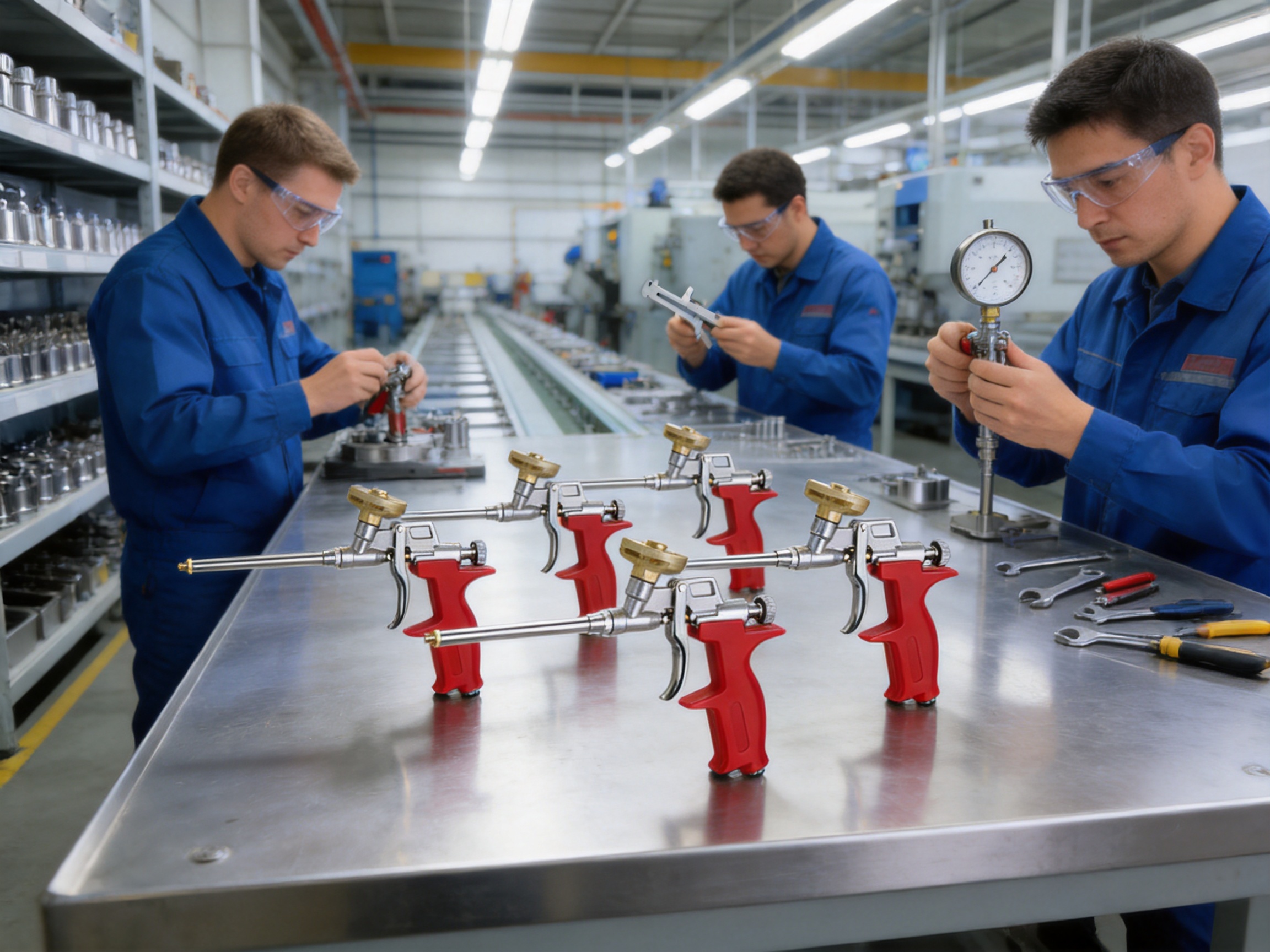
The company describes a quality system covering raw-material control, incoming inspection, in-process quality control, functional testing, and final inspection of finished products. This whole-process approach is important for air tools because performance can be affected by material quality, component accuracy, assembly consistency, and final adjustment.
Raw-material and incoming inspection help prevent unsuitable components from entering production. In-process controls help identify deviations during assembly or manufacturing rather than waiting until the end of the process. Functional testing provides an opportunity to confirm that the completed tool operates as intended, while final inspection supports outgoing product quality.
The company also states that it carries out 100 percent functional testing. For customers purchasing in commercial quantities, a comprehensive testing approach can help reduce the risk of receiving products with obvious operational defects. It also reflects the importance placed on dependable tool performance before shipment.
International certifications
The company reports certification under ISO9001, OHSAS18001, and ISO14001, as well as European CE and German GS product certifications. These certifications and approvals represent important elements of its management, occupational safety, environmental, and product-quality framework.
Certification does not replace appropriate product selection, correct use, or routine inspection. However, it can provide international buyers with additional confidence when evaluating a supplier’s management systems and export readiness. It may also simplify supplier qualification procedures for customers whose purchasing policies require documented quality or compliance systems.
Why Manufacturing Experience Matters to Buyers
When comparing foam guns from different sources, buyers often focus on unit price. Price is important, but it should be evaluated together with manufacturing consistency, product support, packaging, supply continuity, and the supplier’s ability to respond to market needs.
Stable supply and production planning
A manufacturer with long-term experience and a broad production base may be better prepared to support continuing orders. This is particularly important for distributors that invest in product catalogues, sales training, packaging design, and customer development. A product should remain available at a predictable level after it has been introduced to the market.
The company’s stated capacity and expansion capability can support larger purchasing programs. Customers can discuss forecast requirements, planned promotions, seasonal demand, and target inventory levels with a supplier that has experience in international production and distribution.
Broader product integration
The PG1 Foam Gun is not an isolated product in a narrow workshop range. It belongs to a wider collection that includes HVLP spray guns, heavy-duty spray guns, low-pressure woodworking spray guns, conventional spray guns, texture paint spray guns, paraffin guns, air blowing guns, sandblast guns, tyre inflating guns, water and grease guns, automatic spray guns, air brushes, mini oil-free compressors, air pipeline accessories, paint tanks, air fittings, air polishers, spray gun kits, touch-up spray guns, airless spray guns, electric spray guns, and paint sprayers.
This breadth can simplify sourcing for buyers who want to consolidate their air-tool purchases. Instead of managing many unrelated suppliers, a distributor may be able to build a coordinated product range through one experienced manufacturer. This may improve communication, order planning, private-label consistency, and after-sales coordination.
Experience with international markets
The company reports sales and business relationships across Europe, North America, the Middle East, South Africa, and East Asia. International market experience can help a supplier understand different packaging expectations, documentation requirements, product preferences, shipping practices, and customer service standards.
For importers, an established export orientation may make communication and order execution more straightforward. Buyers should still confirm all market-specific requirements, but a supplier with international experience is often better positioned to support cross-border transactions than a factory with no established export background.
Comparison with Competing Product Approaches
The PG1 Foam Gun should be compared with competing products using meaningful criteria rather than price alone. A proper evaluation may include intended application, handling, material compatibility, production quality, packaging, certification, customization, and supplier reliability.
| Evaluation factor | Why it matters | PG1 purchasing consideration |
|---|---|---|
| Application control | Accurate placement can reduce waste and cleanup. | A dedicated foam-gun format is suited to controlled dispensing. |
| Product category | Clear categorization supports training and merchandising. | Listed within Sandblast Guns/Foam Guns. |
| Manufacturing background | Long-term production experience can support consistency. | Produced by an established air-tool and spraying-equipment manufacturer. |
| Quality management | Inspection and testing help reduce product variation. | Manufacturer reports ISO-based quality control and 100 percent functional testing. |
| Order planning | Packaging quantity affects warehouse and shipping calculations. | 20 pieces per carton; carton size is 64 × 29.5 × 29 cm. |
| Customization capability | Private-label and market-specific programs may need engineering support. | OEM and ODM services are available according to stated company information. |
| Supplier range | A broad catalogue can reduce the number of suppliers required. | Supported by a wider range of spray guns, compressors, fittings, and air tools. |
| International readiness | Export experience can support cross-border purchasing. | Products are reported as being sold in multiple global regions. |
Some competing foam guns may offer additional documented features, different connection systems, or specialized adjustment mechanisms. Buyers should compare those details directly with the requirements of their intended market. The key advantage of the PG1 is its combination of dedicated application purpose, professional positioning, manufacturer experience, quality-system support, and supply capability.
Against improvised dispensing tools
The strongest comparison is often between a dedicated foam gun and an improvised dispensing method. Improvised tools may be less expensive at the initial point of purchase, but they can be harder to control and less suitable for repeated professional use. They may also create more waste, inconsistent application, or additional cleanup.
A dedicated gun provides a clearer operating concept. It can be assigned to a defined task, included in standard operating procedures, and stocked as a repeatable product. These benefits may be more important than a small difference in initial purchase price.
Against low-cost, inconsistent products
Low-cost tools can vary in material quality, assembly, packaging, and inspection. Inconsistent operation may result in user complaints, returns, and damage to a distributor’s reputation. A manufacturer with established inspection and testing processes can offer a stronger basis for quality-oriented purchasing.
Buyers should request samples, evaluate the tool with compatible materials, confirm packaging details, and establish acceptance criteria before placing large orders. These steps help ensure that the selected product meets the actual needs of the target market.
Commercial Value for Distributors and Importers
The PG1 Foam Gun can be positioned as a practical addition to a professional hardware or air-tool catalogue. Its purpose is easy to communicate, and the product can serve customers who need controlled foam application but do not require a complex automated system.
Merchandising opportunities
Distributors may present the tool through several channels, including construction-tool catalogues, online industrial stores, hardware outlets, maintenance-supply programs, and trade counters. It can be marketed as a dedicated foam application tool for users who value control and repeatability.
The product may also be placed near compatible consumables, sealants, insulation products, repair materials, and other building or maintenance supplies. Cross-merchandising can help customers understand the relationship between the gun and the materials used with it.
Private-label potential
Customers with their own brands may benefit from OEM and ODM support. A private-label program can allow an importer to develop a consistent appearance across its air-tool range, use its own packaging, and align product presentation with local market expectations.
Before beginning a private-label project, the buyer should define the target application, technical requirements, packaging language, regulatory documents, carton markings, order quantity, inspection procedure, and after-sales responsibilities. Early technical communication can reduce misunderstanding and help establish a practical production schedule.
Packaging and logistics
The stated carton size and quantity provide a basic foundation for shipping calculations. Twenty pieces per carton can be suitable for wholesale distribution, while the carton dimensions allow buyers to estimate pallet requirements and container utilization.
Logistics planning should also consider product protection, carton strength, labeling, moisture exposure, stacking conditions, and handling during international transport. Buyers should confirm the final packing method with the supplier before production, especially if the product will be shipped over long distances or stored in challenging environments.
Quality, Safety, and Responsible Use
Professional tool quality and safe use are closely connected. Users should read the product instructions and the foam manufacturer’s safety information before operation. Appropriate personal protective equipment should be selected according to the material being applied and the working environment.
Work areas should have suitable ventilation where required. Operators should protect nearby surfaces and avoid contact between uncured foam and skin, eyes, or unsuitable materials. Containers and consumables should be stored according to their own safety requirements.
The tool should not be modified without authorization. Unauthorized changes may affect performance, safety, compatibility, or certification status. If the tool shows damage, leakage, abnormal operation, or other concerns, it should be removed from service until it has been inspected.
Responsible use also includes correct disposal of empty containers, contaminated cleaning materials, and other waste. Local regulations and the foam manufacturer’s instructions should be followed. Good environmental practice protects workers, facilities, and the surrounding community.
Recommended Purchasing Process
Buyers considering the PG1 Foam Gun should begin by identifying the intended users and applications. A contractor, maintenance department, hardware distributor, and private-label importer may all require different commercial arrangements even if they select the same basic product.
Define the application
Document the types of foam materials, surfaces, working environments, frequency of use, and expected performance. Determine whether the tool will be used occasionally or continuously. Clarify whether it will be sold to professional users, general consumers, or both.
Confirm compatibility
Ask the supplier to confirm the intended foam-container connection and material compatibility. The foam supplier’s technical information should be reviewed as part of this process. Testing with actual materials is preferable to relying only on general descriptions.
Evaluate samples
Sample evaluation should include handling, trigger feel, application control, cleaning, storage, and packaging. Users should test the tool under realistic conditions and record any concerns. If the product is intended for a private-label program, the sample should also be reviewed for appearance, labeling, and retail presentation.
Review quality documentation
Buyers should request the documents required for their market, including available certificates, inspection records, technical specifications, packaging information, and applicable declarations. The company reports CE and GS certifications for its products, but customers should confirm the documents that specifically apply to the ordered model and destination market.
Plan volume and replenishment
The 20-piece carton configuration should be included in purchasing calculations. Buyers should estimate initial launch stock, monthly demand, safety inventory, and lead-time requirements. A forecast shared with the supplier can help support production planning and reduce the risk of shortages.
Company Capability and Customer Support
Ningbo Lis Industrial Co., Ltd. presents itself as a complete spraying-equipment and air-tool supplier rather than only a single-product factory. Its stated mission emphasizes innovative design, high-quality products, professional services, and value creation for global customers.
The company has built international brands and serves customers in multiple regions. It also reports long-term strategic relationships with international customers, including Wagner Spray Tech Corp. Such relationships can indicate experience with demanding quality expectations and structured business cooperation.
Customer support is particularly important for products used across international markets. Buyers may need assistance with technical selection, product documentation, packaging, shipping, customization, and replenishment. A supplier capable of addressing these areas can contribute more value than a source that only provides a basic unit quotation.
The company’s stated commitment to research and development, production quality, certifications, and customer satisfaction supports the PG1 Foam Gun as part of a professional product program. These strengths do not remove the need for buyer testing and due diligence, but they provide a credible foundation for further cooperation.
Frequently Asked Questions
What is the PG1 Foam Gun used for?
The PG1 Foam Gun is intended for controlled application of compatible foam materials. It is listed in the Sandblast Guns/Foam Guns category and is suitable for professional product ranges serving construction, installation, maintenance, repair, and workshop applications.
What is the main advantage of using a foam gun?
A foam gun provides a dedicated interface for directing and controlling foam material. Compared with basic dispensing methods, it can support more accurate placement, better handling, reduced unnecessary application, and a more repeatable work process.
Can the PG1 be used with every type of foam?
Compatibility should not be assumed. Users must confirm that the foam container, formulation, connection system, and cleaning method are suitable for the tool. The supplier and foam-material manufacturer should be consulted before use.
Is the PG1 suitable for professional work?
The product is positioned as a professional foam gun within a broad air-tool portfolio. Its suitability for a particular job depends on the foam material, working conditions, usage frequency, and operator technique. Sample testing is recommended for demanding applications.
How is the product packaged?
The stated carton size is 64 × 29.5 × 29 cm, with 20 pieces per carton. Buyers should confirm final packing details, carton markings, and any customized packaging requirements before placing an order.
Can the product be ordered for private-label sales?
The manufacturer states that it provides OEM services based on customer drawings or samples and ODM services according to customer needs. Buyers should discuss branding, packaging, specifications, order quantity, testing, and documentation during the development stage.
What quality systems does the manufacturer report?
The company reports quality control covering raw-material inspection, incoming inspection, in-process control, 100 percent functional testing, and final inspection. It also reports ISO9001, OHSAS18001, ISO14001, CE, and GS-related certifications for its operations and products.
Does the company manufacture other air tools?
Yes. Its stated product range includes many types of spray guns, mini oil-free compressors, air pipeline accessories, paint tanks, air fittings, air polishers, spray gun kits, and other air tools. This broad range may help customers consolidate sourcing.
Where is the manufacturer located?
Ningbo Lis Industrial Co., Ltd. is located in Hengxi Industrial Zone, Yinzhou, Ningbo, China. Ningbo is a major harbor city with established industrial and transportation infrastructure.
How should the foam gun be maintained?
Maintenance should follow the tool and foam-material instructions. The operator should prevent residue from curing in working areas, use only approved cleaning products, inspect the tool after use, and store it in a suitable environment.
What should buyers compare before ordering?
Buyers should compare application compatibility, handling, quality consistency, supplier capacity, packaging, certifications, customization capability, lead time, after-sales support, and total ownership cost rather than comparing unit price alone.
Conclusion
The PG1 Foam Gun is a practical product for users who need controlled and directed foam application. Its dedicated design can offer advantages over basic dispensing methods by supporting better material placement, more consistent handling, reduced avoidable waste, and a more professional work process.
The product is strengthened by the manufacturing background of Ningbo Lis Industrial Co., Ltd., a company with long-term experience in air painting spray guns, compressors, and related air tools. Its stated factory scale, research and development resources, OEM and ODM capabilities, international market experience, quality-control procedures, and reported certifications provide important advantages for distributors and professional buyers.
For commercial purchasing, the PG1 can be considered as an individual foam-gun product or as part of a wider air-tool portfolio. Its carton configuration of 20 pieces per carton and stated carton dimensions support basic inventory and shipping planning. Buyers should still confirm compatibility, documentation, final packaging, and application performance through samples and technical discussions before committing to large-volume orders.
When selected for the correct materials and used with appropriate training and maintenance, the PG1 Foam Gun can help create a more controlled, organized, and efficient foam-application process. Its value lies not only in the tool itself, but also in the engineering, production, quality management, and supply capability available behind it.
References
1. Product information supplied for the PG1 Foam Gun, including category, packaging details, product title, and product identification.
2. Ningbo Lis Industrial Co., Ltd. company information supplied for manufacturing history, factory scale, product range, research and development, certifications, production capacity, and international market coverage.
3. General professional guidance on foam-material handling, surface preparation, storage, cleaning, and workplace safety.
4. General principles of ISO-based quality management, incoming inspection, in-process control, functional testing, and final product inspection.
5. General purchasing practices for air tools, including sample evaluation, material compatibility confirmation, packaging review, supplier qualification, and order planning.