 Search

 English
 中文简体
 Deutsch
 Español
Content
- 1 1. Product Overview
- 2 2. Why Low-Pressure Spraying Matters in Woodworking
- 3 3. The Value of the 1.3 mm Fluid Nozzle
- 4 4. Suction Feed and the 1,000 ml Cup
- 5 5. Air Pressure and Spray Control
- 6 6. Advantages for Woodworking Applications
- 7 7. Comparison with General Competing Spray-Gun Designs
- 8 8. Recommended Materials and Applications
- 9 9. Proper Setup Procedure
- 10 10. Techniques for Better Wood Finishing
- 11 11. Manufacturing Strengths Behind the Product
- 12 12. Supply and Wholesale Considerations
- 13 13. Maintenance and Service Life
- 14 14. Safety Requirements
- 15 15. Troubleshooting Guide
- 16 16. How to Evaluate the MZ527 for a Specific Workshop
- 17 17. Environmental and Efficiency Considerations
- 18 18. Questions and Answers
- 18.1 Q1: What type of product is the MZ527?
- 18.2 Q2: What is the nozzle size?
- 18.3 Q3: What air pressure is specified?
- 18.4 Q4: How much material does the cup hold?
- 18.5 Q5: Is the MZ527 suitable for furniture and cabinet work?
- 18.6 Q6: Can it spray every type of paint?
- 18.7 Q7: What type of air connection does it use?
- 18.8 Q8: How does it compare with a small touch-up gun?
- 18.9 Q9: How does it compare with a pressure-feed spray system?
- 18.10 Q10: What compressor is required?
- 18.11 Q11: How can overspray be reduced?
- 18.12 Q12: How should the spray gun be cleaned?
- 18.13 Q13: Is the product appropriate for wholesale purchasing?
- 18.14 Q14: What manufacturing capabilities support the product?
- 18.15 Q15: Is the MZ527 suitable for industrial automation?
- 19 19. Conclusion
- 20 References
- 21 Product: MZ527 Woodworking Low Pressure Spray Gun
Woodworking projects demand more than a spray gun that simply delivers paint from a cup to a surface. The equipment must support even coverage, manageable material consumption, consistent atomization, comfortable operation, and reliable results across repeated jobs. The MZ527 Woodworking Low Pressure Spray Gun is designed for this type of application. With a 1.3 mm fluid nozzle, a stated air pressure of 35 PSI, a 1,000 ml suction cup, and a G1/4-inch air inlet, it provides a specification profile suited to furniture finishing, cabinet work, joinery, trim, workshop restoration, and other woodworking applications.
Low-pressure spraying is especially useful where finish quality and control are more important than maximum production speed. A properly adjusted low-pressure spray gun can help the operator apply stains, lacquers, primers, paints, sealers, and compatible clear coats in smooth, controlled passes. Compared with many high-pressure conventional spray systems, it can reduce excessive overspray and make it easier to manage the amount of coating deposited on the workpiece.
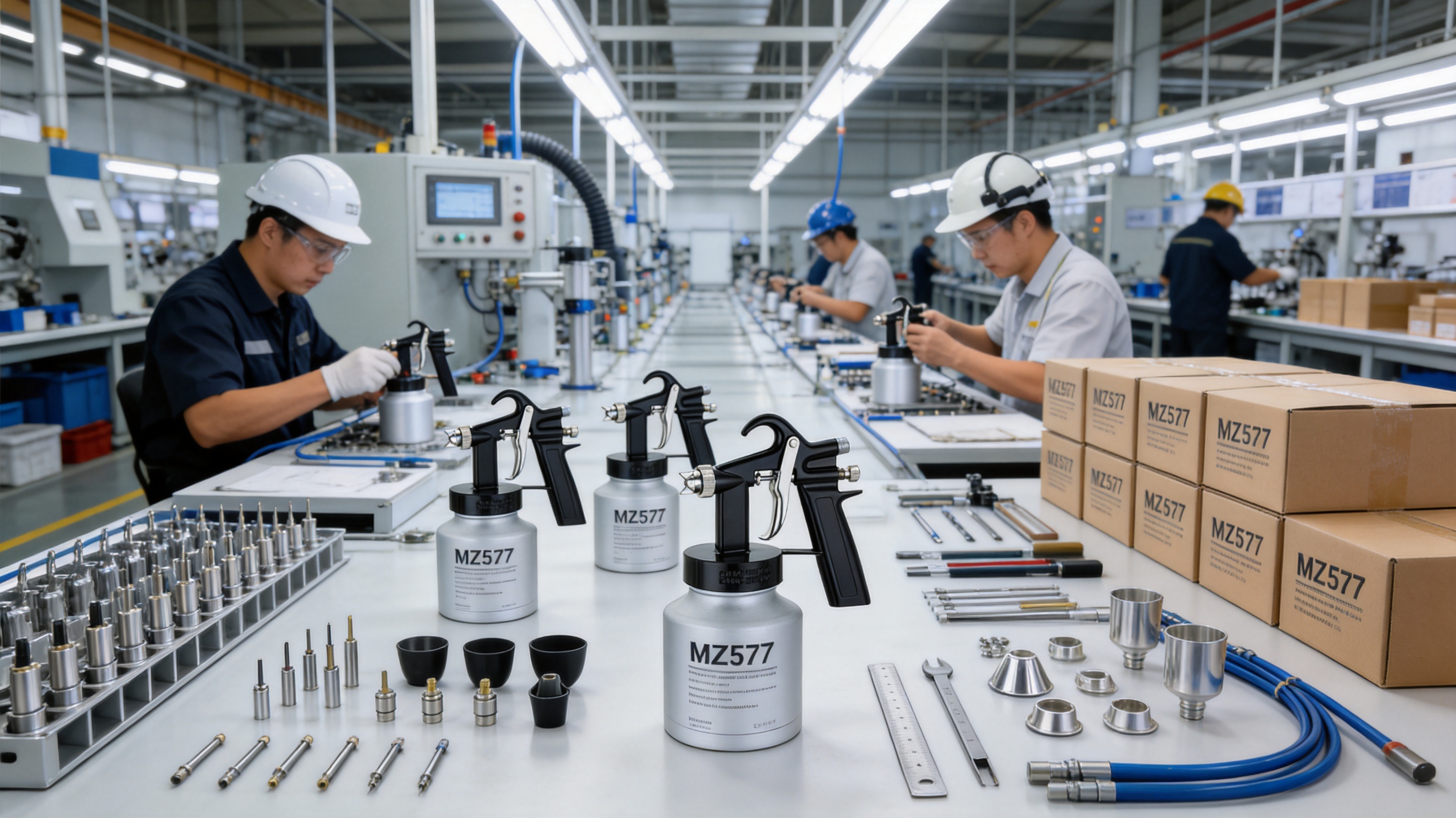
The MZ527 is also supported by the manufacturing resources of Ningbo Lis Industrial Co., Ltd., an established Chinese producer of air painting spray guns, mini air compressors, air tools, and related spraying equipment. The company has developed a broad product portfolio, a large production base, research and development capabilities, international certifications, and a quality-control system covering material inspection, process control, functional testing, and final inspection.
This article examines the MZ527 in detail, explains how its specifications affect practical operation, compares its potential advantages with general competing spray-gun designs, and describes the manufacturing strengths behind the product. It also provides recommendations for setup, maintenance, application technique, purchasing evaluation, and responsible use.
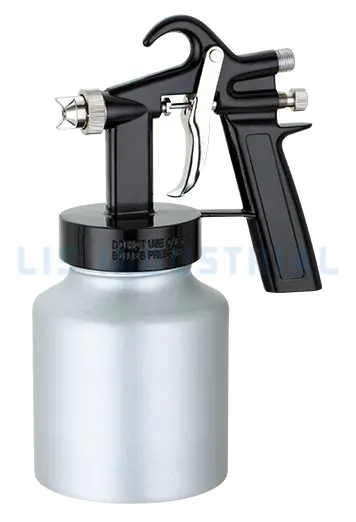
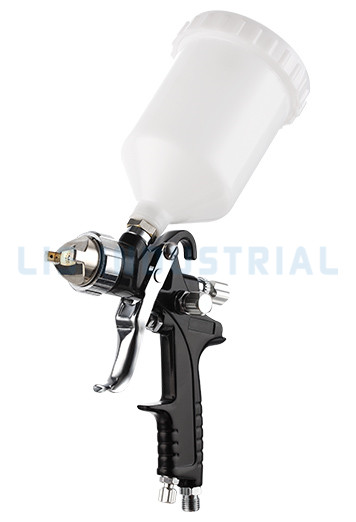
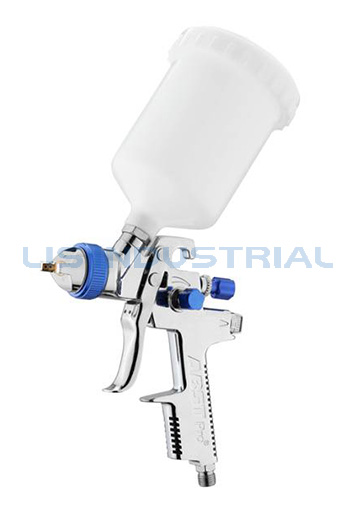
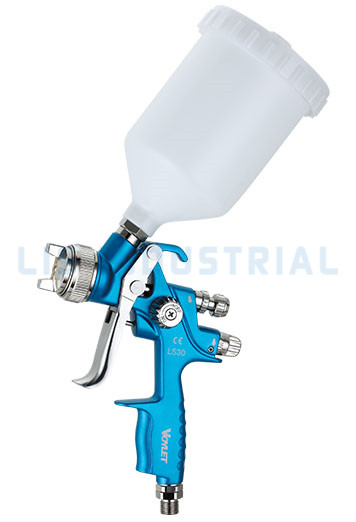
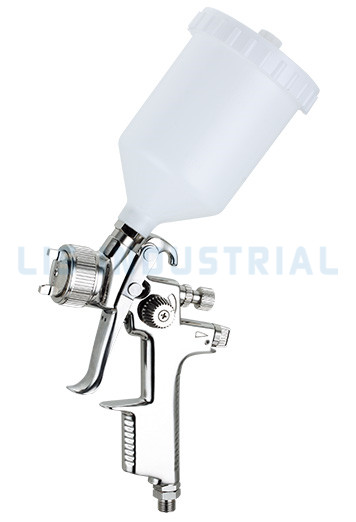
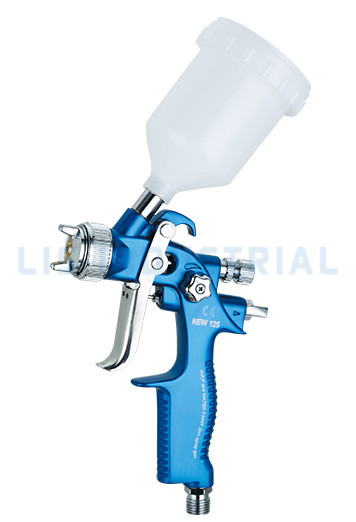
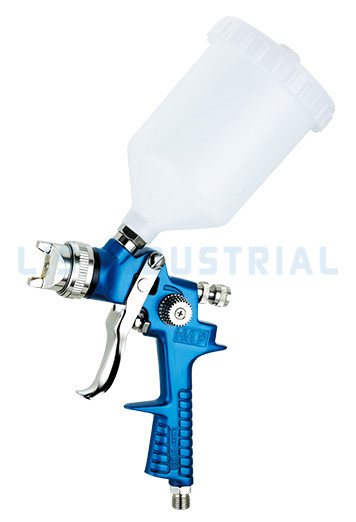
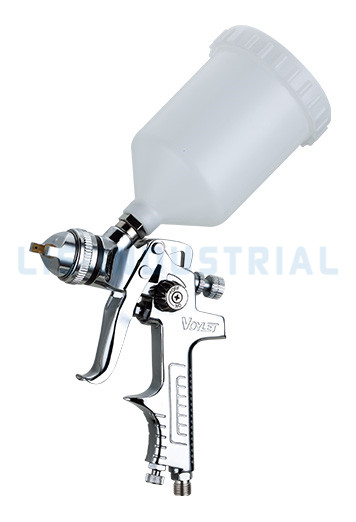
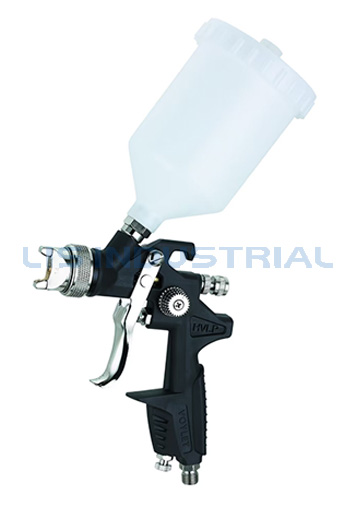
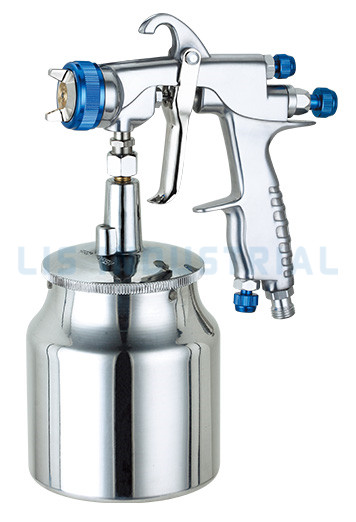
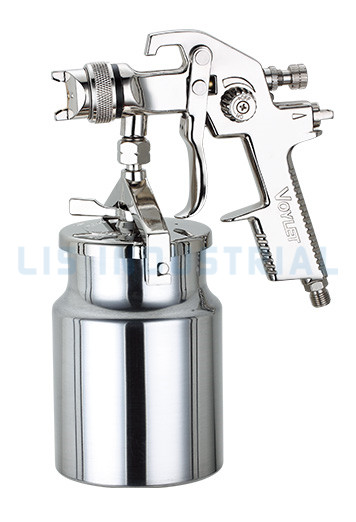
MZ527 Woodworking Low Pressure Spray Gun
1. Product Overview
The MZ527 is categorized as a woodworking low-pressure spray gun. Its design is intended for users who need a controlled air spray tool for applying finishing materials to wood and wood-based products. Typical users may include furniture manufacturers, cabinetmakers, joinery workshops, contractors, restoration specialists, maintenance departments, and serious woodworking enthusiasts.
The gun uses a suction-feed configuration. In this arrangement, the coating material is stored in a lower cup and drawn toward the spray head by the pressure difference created as compressed air passes through the gun. Suction feed is a familiar arrangement in general-purpose spray equipment because it offers a practical balance between capacity, flexibility, and ease of refilling.
A 1,000 ml cup provides a useful working volume for medium-sized woodworking tasks. It is large enough to reduce frequent interruptions during cabinet doors, furniture panels, shelving, frames, and groups of smaller components, while remaining more manageable than very large remote pressure tanks. The exact usable volume will depend on the coating, cup design, safe fill level, and the operator’s need to avoid excessive movement or spillage.
The 1.3 mm nozzle is a versatile size for many finishing materials when they have been correctly prepared. It is commonly associated with controlled application of relatively fine coatings, including certain lacquers, stains, sealers, primers, and finishing paints. The correct material viscosity is always essential. A nozzle size alone cannot determine the final result because atomization also depends on air pressure, fluid adjustment, fan adjustment, coating formulation, temperature, humidity, and spraying distance.
The stated air pressure is 35 PSI. This specification provides a clear starting point for users when matching the spray gun to an air compressor and air-treatment system. Actual operating requirements should always be confirmed through practical testing and the manufacturer’s instructions for the particular coating. Pressure that is too low can produce poor atomization, while excessive pressure can increase overspray, dry spray, and material waste.
The G1/4-inch air inlet is a widely used connection size for workshop air tools and spray equipment. It simplifies integration with many air hoses, regulators, filters, quick couplers, and air pipeline accessories. Users should still verify thread compatibility, sealing method, hose internal diameter, and compressor capacity before installation.
Key Specifications
| Specification | MZ527 Information | Practical Significance |
|---|---|---|
| Product type | Woodworking low-pressure spray gun | Designed for controlled air-assisted finishing applications |
| Fluid nozzle | 1.3 mm | Suitable for many fine and medium finishing materials when correctly reduced |
| Air pressure | 35 PSI | Provides a reference point for air regulation and compressor selection |
| Cup capacity | 1,000 ml | Supports medium-duration spraying with fewer refills |
| Feed type | Suction | Uses a lower material cup and offers familiar general-purpose operation |
| Air inlet | G1/4 inch | Compatible with many standard workshop air connections |
| Carton packing | 10 pieces per carton | Practical for wholesale, distribution, and professional procurement |
| Carton size | 57 × 32 × 28.5 cm | Useful for logistics planning and warehouse organization |
2. Why Low-Pressure Spraying Matters in Woodworking
Wood surfaces often reveal defects that may not be obvious before coating. Uneven application can emphasize sanding marks, open pores, dents, repaired areas, or differences in absorption. A spray gun that provides controlled atomization helps the operator build a more uniform finish while minimizing heavy wet spots and visible brush or roller marks.
Low-pressure operation can also be beneficial when the workpiece has edges, profiles, grooves, or decorative details. These areas are difficult to coat evenly with a brush and may show overlap marks when rolled. A controlled spray pattern can reach recesses and contours without requiring the operator to press a tool directly against the surface.
Another advantage is the possibility of improved transfer efficiency compared with poorly adjusted high-pressure spraying. Transfer efficiency describes the proportion of coating that reaches the target rather than becoming airborne overspray. The final result depends on the gun, material, pressure, distance, technique, and booth conditions, but lower operating pressure can help the operator control the spray cloud and reduce unnecessary loss.
Low-pressure spraying does not mean that preparation becomes less important. Dust removal, surface sanding, coating filtration, material reduction, and test spraying remain essential. The technology supports better control, but it cannot compensate for contaminated surfaces, unsuitable coating viscosity, incorrect pressure, or poor application technique.
For woodworking, the ability to apply several thin coats is often more valuable than applying one excessively wet coat. Thin, even coats can help reduce runs, sags, solvent entrapment, and uneven sheen. They also provide the operator with opportunities to inspect the surface between coats and correct defects before proceeding.
3. The Value of the 1.3 mm Fluid Nozzle
The 1.3 mm fluid nozzle represents a balanced choice for a broad range of woodworking finishing work. It is smaller than the nozzle sizes commonly used for very heavy primers, textured materials, and thick body coatings, but it is large enough for many properly prepared finishing materials used on furniture and joinery.
For clear finishes and relatively thin pigmented products, a 1.3 mm nozzle can help produce a refined spray pattern when the air pressure and fluid flow are correctly adjusted. The result may be a smoother deposited film with less visible texture than would be expected from a larger, less controlled setup.
For primers or heavier coatings, the operator may need to follow the coating supplier’s reduction instructions carefully. A material that is too thick may produce spitting, an irregular fan, poor atomization, or excessive fluid demand. Over-thinning, however, can reduce coverage, alter color, weaken film build, or affect drying behavior. The correct approach is to use the coating manufacturer’s technical data and verify the result on a test panel.
A 1.3 mm nozzle can also support economical material use when the operator applies several controlled passes. Instead of flooding the surface, the operator can build the required film gradually. This is particularly useful when the workpiece has visible grain, veneer, or carefully prepared edges that could be damaged by excessive wet application.
Nozzle size should be considered together with fan width and fluid adjustment. A narrow fan may be appropriate for legs, trim, frames, and detailed components, while a wider pattern can improve productivity on doors and flat panels. The operator should overlap each pass consistently, normally aiming for an even overlap rather than attempting to cover the entire surface in one pass.
4. Suction Feed and the 1,000 ml Cup
The suction-feed configuration is familiar to many professional and semi-professional users. The lower cup holds the coating and allows the gun to operate without a separate pressure pot. This makes the MZ527 a practical choice for workshops that need flexibility without installing a more complex fluid-delivery system.
A 1,000 ml cup can be useful when spraying several components in one session. Fewer refills can improve workflow and reduce the chance of color or viscosity differences caused by repeatedly preparing small quantities. It may also be convenient when the operator needs to move between a workbench, spray booth, and drying area without managing a remote material hose.
The cup should not be filled beyond a safe level. Excessive filling can increase weight, create spillage risk, and make the gun less comfortable to maneuver. The operator should also consider the density of the coating. A cup filled with a heavy material will place more demand on wrist and arm control than the same volume of a lighter material.
Suction feed offers operational flexibility, but the gun should generally be held in a position that allows the pickup tube to remain immersed in the coating. Extreme tilting can interrupt fluid pickup and cause intermittent spraying. For large vertical surfaces, the operator should plan the work position and gun angle so that the cup remains stable and the material can flow consistently.
Cleaning the cup promptly after use is important. Residue left in the cup, pickup tube, fluid passage, or nozzle can harden and interfere with subsequent spraying. A disciplined cleaning routine helps preserve the gun’s performance and reduces the risk of cross-contamination between colors or coating types.
5. Air Pressure and Spray Control
The stated 35 PSI air pressure gives users a useful reference for initial setup. Pressure should be regulated at the gun or at a nearby regulator while the gun is operating, because pressure can drop through long hoses, restrictive couplers, filters, or undersized pipeline components.
Starting at the recommended reference pressure and then making small adjustments is usually more effective than immediately increasing pressure to the highest available setting. If the spray is coarse, the operator should first check coating viscosity, nozzle cleanliness, fluid adjustment, air supply stability, and spraying distance. Increasing pressure alone may create a larger spray cloud without solving the underlying problem.
Excessive pressure can produce several disadvantages. It may atomize the coating too aggressively, increase overspray, accelerate solvent evaporation, cause dry spray at the surface, and reduce transfer efficiency. It can also make the fan more difficult to control, especially in a small workshop or near intricate workpieces.
Insufficient pressure may result in a heavy, uneven pattern, poor breakup of the coating, pulsing, or visible droplets. The operator should make adjustments gradually and test the pattern on masking paper or scrap wood before spraying the finished component.
Air quality is equally important. Moisture, oil, dust, or compressor debris in the air line can contaminate the finish. A suitable filter and water separator should be installed, and the compressor should be drained and maintained according to its instructions. Clean, dry air supports more predictable results and protects the spray gun’s internal passages.
6. Advantages for Woodworking Applications
Controlled Application
The combination of a 1.3 mm nozzle and a low-pressure operating reference supports controlled coating application. This can be valuable when the surface requires a smooth appearance and when the operator needs to manage film thickness carefully.
Broad Workshop Use
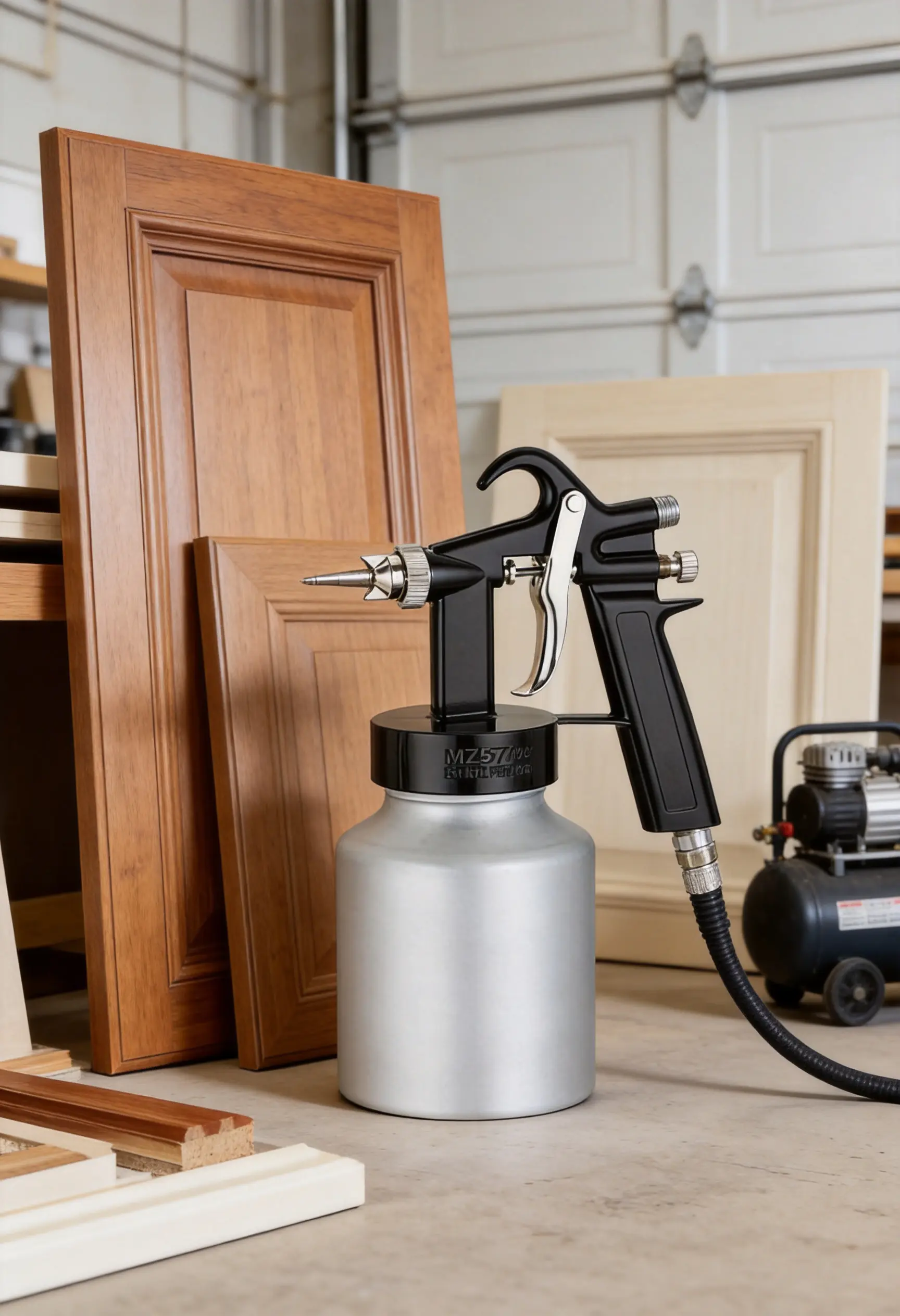
The MZ527 can be considered for furniture parts, cabinet doors, drawer fronts, shelves, table components, wooden frames, moldings, interior joinery, and restoration projects. The spray gun is not limited to one specific coating category, although every material must be confirmed as compatible with the equipment and nozzle size.
Reduced Interruption During Medium Jobs
The 1,000 ml cup helps reduce refilling during medium-sized jobs. This may improve productivity when a workshop is spraying a group of components with the same coating and color.
Common Air Connection
The G1/4-inch air inlet supports straightforward connection to many standard air hoses and workshop accessories. This can simplify replacement, maintenance, and integration into an existing compressed-air system.
Practical Procurement Format
The stated packing configuration of 10 pieces per carton is suitable for distributors, importers, equipment dealers, and professional users purchasing multiple units. The carton dimensions also provide useful information for shipping estimates, storage planning, and palletization discussions.
Balanced Design Position
The MZ527 occupies a practical middle position between very small touch-up spray guns and larger industrial spray systems. It offers more material capacity than a compact detail gun while avoiding the complexity of a remote pressure tank. For workshops with varied projects, this balance can be more useful than equipment optimized for only one production scale.
7. Comparison with General Competing Spray-Gun Designs
Product comparisons should be based on the complete application rather than one specification. A spray gun with a larger cup may reduce refilling but could be heavier. A gun with a smaller nozzle may offer fine atomization for thin coatings but struggle with thicker materials. A high-pressure gun may provide strong atomization but create more overspray if it is not carefully adjusted.
| Evaluation Area | MZ527 Configuration | Possible Alternative | Potential MZ527 Benefit |
|---|---|---|---|
| Feed arrangement | Suction feed | Gravity feed or pressure feed | Familiar operation and useful cup capacity for general workshop spraying |
| Nozzle size | 1.3 mm | Very small detail nozzle or larger heavy-material nozzle | Balanced suitability for many woodworking finishing materials |
| Air pressure reference | 35 PSI | Higher-pressure conventional setup | Potentially more manageable overspray and controlled application |
| Cup volume | 1,000 ml | Small detail cup | Fewer refills during medium projects |
| Air connection | G1/4 inch | Less common proprietary connection | Convenient integration with standard accessories in many workshops |
| Application range | Woodworking low-pressure finishing | Highly specialized industrial gun | Useful balance for varied furniture and joinery work |
Compared with a small gravity-feed touch-up gun, the MZ527’s 1,000 ml suction cup can be advantageous when the user must spray larger panels or multiple parts. A small detail gun may be lighter and more precise for tiny repairs, but it can require frequent refilling and may not be efficient for a complete cabinet or furniture set.
Compared with a high-pressure conventional gun, the MZ527 may provide a more controlled approach for operators who want to limit unnecessary overspray. The practical outcome depends heavily on settings and technique, but the lower-pressure positioning makes it suitable for users who prioritize material management and finish control.
Compared with a pressure-feed system, the suction-feed MZ527 is generally simpler to deploy for ordinary workshop tasks. A pressure pot can support long production runs and continuous material supply, but it introduces additional hoses, fittings, cleaning requirements, and setup considerations. For many small and medium woodworking operations, a self-contained cup may be more convenient.
Compared with a very large nozzle system, the 1.3 mm configuration may be better suited to fine finishing rather than high-build or textured applications. Users working with thick fillers, heavily pigmented primers, or texture coatings should choose equipment specifically designed for those materials instead of expecting a fine-finishing spray gun to perform every task.
8. Recommended Materials and Applications
The MZ527 may be considered for compatible woodworking coatings such as stains, clear finishes, sealers, lacquers, certain water-based coatings, and suitably reduced primers or paints. Compatibility should always be checked against the coating manufacturer’s instructions, especially for solvents, aggressive cleaners, two-component materials, and products that may attack seals or internal components.
Common application targets include solid wood, plywood, veneer, medium-density fiberboard, prepared cabinet components, furniture panels, decorative trim, doors, shelves, and wood fixtures. The final appearance will depend on substrate preparation, grain direction, coating choice, sanding sequence, environmental conditions, and curing time.
For open-grained wood, the operator may need a separate grain-filling process before applying the final finish. For veneered surfaces, excessive wetting can create swelling, lifting, or uneven absorption. For engineered boards, exposed edges may require appropriate sealing before spraying. The spray gun applies material; it does not replace the preparation steps that determine whether a coating system succeeds.
Before beginning production spraying, users should perform a compatibility test on scrap material or an inconspicuous area. This test should confirm fan shape, fluid delivery, surface wetness, drying rate, color, gloss, adhesion, and final appearance after curing.
9. Proper Setup Procedure
Prepare the Work Area
The work area should be clean, adequately ventilated, and arranged to prevent dust from settling on wet surfaces. Flammable coatings and solvents require appropriate fire-safety controls. The operator should use suitable personal protective equipment, including eye protection, gloves, and respiratory protection selected for the coating and local regulations.
Prepare the Air Supply
Connect the spray gun to a compressor that can provide stable air at the required pressure and flow. Install a suitable regulator and moisture separator. Inspect the hose for damage, confirm that fittings are secure, and check for leaks before adding coating material.
Prepare the Coating
Mix the coating thoroughly according to its technical instructions. If reduction is permitted, use the specified thinner or water and add it gradually. Filter the material before filling the cup to help prevent nozzle blockage. Do not combine products unless the coating manufacturer confirms that they are compatible.
Fill the Cup Carefully
Fill the cup only to a practical level and secure the lid or connection correctly. Avoid spilling material onto the outside of the gun. Spilled coating can enter adjustment areas or create a slipping hazard for the operator.
Test the Pattern
Spray onto cardboard, masking paper, or scrap wood. Check whether the pattern is even and whether the coating is being deposited as a consistent film. Adjust air pressure, fluid flow, fan width, material viscosity, or spraying distance in small steps.
Establish a Consistent Technique
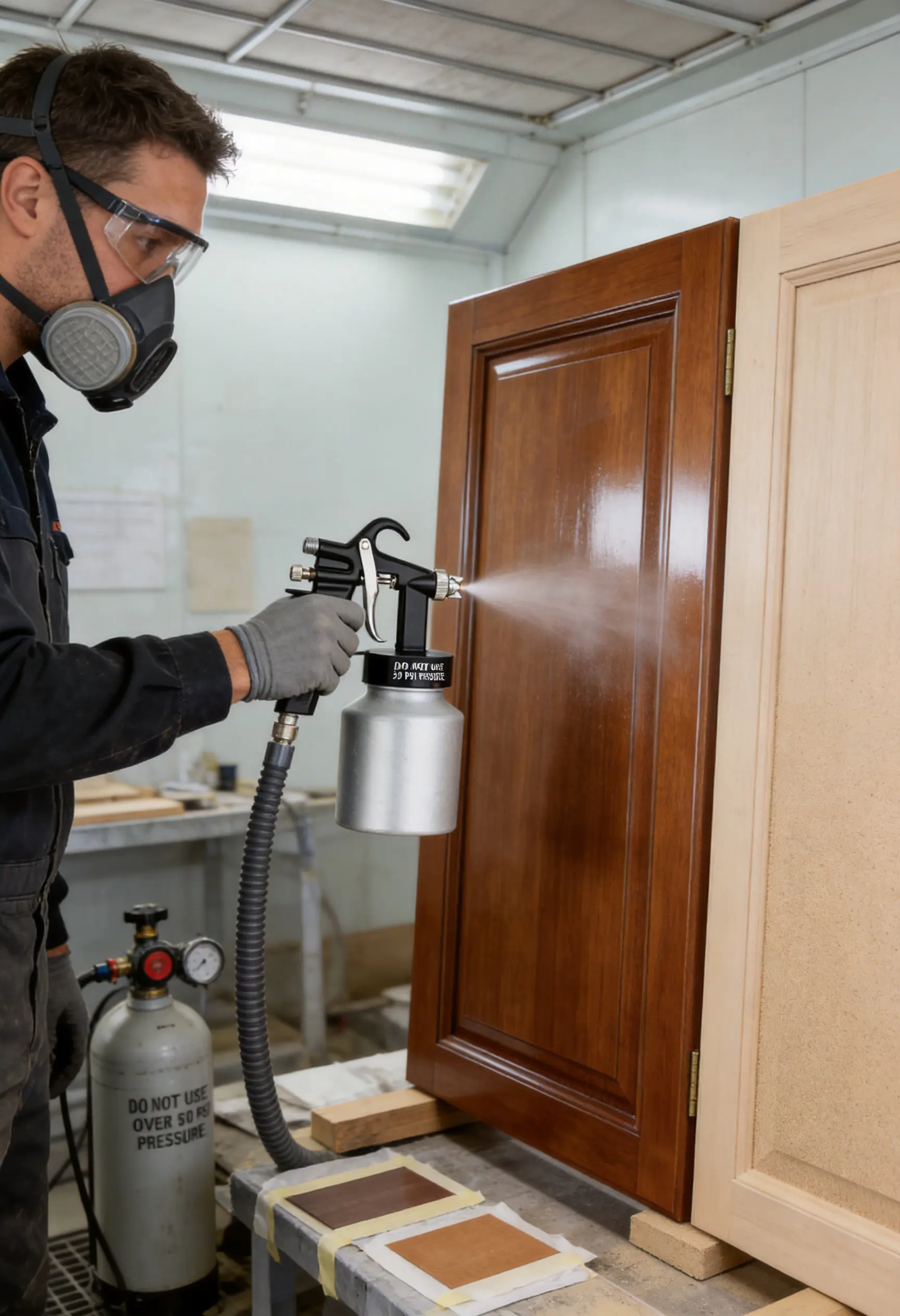
Hold the gun perpendicular to the work surface and move it at a steady speed. Begin moving before pulling the trigger and release the trigger before stopping the movement. Maintain a consistent distance and overlap each pass evenly. Arcing the gun or changing distance during a pass can create uneven film thickness.
10. Techniques for Better Wood Finishing
Flat panels should generally be sprayed using organized passes that follow a repeatable pattern. The operator may begin with edges and difficult profiles, then cover the main face. This sequence can help manage overspray and reduce the chance of touching wet areas with the gun or clothing.
Edges should not receive excessive material simply because they are easy to miss. A light, controlled pass can establish coverage before the main face is sprayed. Heavy accumulation on edges may lead to runs or sags that become visible after curing.
For doors and large panels, the operator should divide the surface into manageable sections while maintaining a wet edge. The exact overlap depends on the fan pattern and coating, but consistent overlap is more important than using a fixed percentage in every situation.
For spindles, legs, profiles, and decorative details, the operator should rotate or reposition the workpiece when possible instead of relying on extreme gun angles. This keeps the cup stable and allows the spray pattern to reach the surface more directly.
Thin coats are usually safer than one heavy coat. The correct number of coats depends on the coating system and the desired build. Allow sufficient flash-off and curing time between coats, and avoid sanding or handling the surface before it has reached the required hardness.
Lighting is an important but often overlooked part of quality control. Bright, angled lighting can reveal dry spray, missed areas, runs, and uneven gloss while the operator is still working. A clean spray area and a consistent inspection process can improve repeatability from one batch to the next.
11. Manufacturing Strengths Behind the Product
The MZ527 is produced by Ningbo Lis Industrial Co., Ltd., a company engaged in the research, development, manufacturing, and marketing of air painting spray guns, mini air compressors, and related air tools. The company’s long-term specialization in spraying equipment provides an important foundation for product development and manufacturing consistency.
The company was established in 1984 and has developed a substantial industrial operation in Ningbo, China. Its facilities cover more than 400,000 square feet and support a workforce of more than 400 employees. The company reports annual output exceeding 40 million US dollars, indicating a production scale capable of supporting both standard product supply and larger customer programs.
Large-scale manufacturing can benefit customers in several ways. It can support more organized purchasing of raw materials, dedicated production planning, repeatable assembly procedures, structured testing, and stable packaging operations. It can also make it easier to coordinate orders involving multiple product categories, such as spray guns, compressors, fittings, tanks, and air accessories.
The company also reports that its factory has received recognition as a national high-tech enterprise, an advanced customs certification enterprise, a Ningbo individual-item champion, and a provincial engineering and technology center. These credentials reflect an emphasis on technical development, production capability, and formal organizational systems.
Research and Development
A strong research and development function is particularly valuable in spray equipment because performance depends on the interaction of many small details. Fluid passages, nozzle geometry, air channels, seals, trigger movement, cup connections, surface treatment, and machining accuracy can all affect the spraying result.
The company maintains a spraying machinery engineering technology center and has carried out technical cooperation with an American spraying technology company. It also provides OEM services based on customer drawings or samples and ODM services based on customer requirements. This allows buyers to consider both catalog products and customized development programs.
For importers and distributors, OEM and ODM capability can support private-label projects, market-specific configurations, packaging adjustments, accessory combinations, and product-line development. Any customization should be confirmed through technical documentation, samples, testing, and written specifications before mass production.
Production and Quality Control
The company describes a quality system based on ISO9000 requirements. Its reported control process extends from raw-material and incoming inspection through in-process quality control, 100 percent functional testing, and final finished-product inspection.
Incoming inspection is important because the quality of metal components, seals, springs, needles, cups, fittings, and other parts can influence the final product. In-process control helps identify assembly or machining issues before a completed unit reaches the final testing stage.
Functional testing is especially relevant for spray guns. A visual inspection alone cannot confirm trigger action, fluid delivery, air passage performance, sealing, or spray behavior. Testing each unit provides a stronger basis for identifying defects before shipment, although customers should still perform their own incoming inspection and sample testing.
Final inspection and controlled packaging help protect the product during storage and transportation. The stated carton configuration of 10 pieces per carton gives distributors a defined packaging unit for inventory management and order planning.
Certifications and International Market Experience
The company reports certification to ISO9001, OHSAS18001, and ISO14001, as well as European CE and German GS product certifications. Certification requirements vary by product, market, and intended use, so buyers should request current certificates and confirm that they apply to the exact model and shipment configuration.
Experience serving customers in Europe, North America, the Middle East, South Africa, and East Asia can support international procurement. Export experience may include familiarity with packaging requirements, documentation, customs coordination, product labeling, and distributor support. These factors are important when a buyer is building a stable supply chain rather than purchasing a single unit.
12. Supply and Wholesale Considerations
For distributors and professional buyers, product performance is only one part of the purchasing decision. They must also evaluate supply continuity, production capacity, lead times, packaging, spare parts, technical communication, inspection procedures, and after-sales support.
The manufacturer reports that production capacity can be increased by 30 percent within two months. This may be useful for customers facing seasonal demand or a rapid expansion of distribution. Buyers should still provide forecasts early and confirm capacity, minimum order quantities, tooling requirements, inspection standards, and delivery schedules in writing.
A product such as the MZ527 can fit effectively into a broader spraying-equipment range. A supplier capable of offering conventional spray guns, HVLP models, airless spray guns, electric sprayers, air brushes, compressors, paint tanks, fittings, air pipeline accessories, polishers, and related tools may help buyers consolidate sourcing.
Consolidated sourcing can reduce the number of supplier relationships that a distributor must manage. It may also simplify product documentation, container planning, sample coordination, and quality communication. However, each product should still be evaluated independently because different categories may have different technical, regulatory, and service requirements.
Purchasers should request a pre-production sample or production sample for approval. Important inspection points may include nozzle size, air inlet dimensions, cup capacity, trigger operation, leakage, surface finish, packaging quality, markings, accessories, and the completeness of user instructions.
13. Maintenance and Service Life
Routine cleaning is one of the most important factors affecting spray-gun life. After spraying, the cup should be emptied and the remaining coating stored or disposed of according to the coating supplier’s instructions. The cup should then be cleaned with the correct compatible cleaning agent.
The fluid nozzle and needle should be cleaned carefully. Hard tools or sharp objects should not be forced through precision openings because they may damage the geometry and alter the spray pattern. Soft brushes and approved cleaning tools are generally safer, but the operator must follow the manufacturer’s maintenance guidance.
Air passages and adjustment areas should be kept free of dried material. If the gun begins to spray unevenly, the operator should inspect the nozzle, needle, air cap, pickup tube, cup connection, filter, and air supply before changing multiple settings at once.
Seals and other wear components may eventually require replacement. The replacement parts should be suitable for the model and the coating chemistry. Solvent-resistant components may be necessary for certain materials, while water-based coatings may require a different cleaning routine to prevent residue buildup.
Storage should take place in a clean, dry environment. The gun should not be stored with coating material inside the cup or passages. Proper storage reduces corrosion, contamination, and accidental damage to the nozzle or air cap.
14. Safety Requirements
Spraying can create airborne particles, vapors, and flammable atmospheres. Operators must read the coating safety data sheet and follow applicable workplace regulations. Ventilation should be adequate for the material being sprayed, and ignition sources must be controlled when flammable products are used.
Respiratory protection should be selected for the coating and application environment. Ordinary dust masks may not provide adequate protection against solvent vapors or fine spray particles. Eye protection, gloves, suitable clothing, and hearing protection may also be necessary depending on the equipment and working conditions.
The air hose and fittings should be inspected regularly. A loose connection can reduce performance or create a hose-whip hazard. The gun should never be directed toward people, animals, energized equipment, or unprotected skin.
Compressed air should not be used carelessly for cleaning clothing, skin, or work areas. It can drive particles into the eyes or skin and may create additional hazards. Work surfaces should be cleaned using appropriate methods that do not spread hazardous dust or coating residue.
15. Troubleshooting Guide
| Problem | Possible Causes | Recommended Checks |
|---|---|---|
| Uneven spray pattern | Blocked air cap, dirty nozzle, incorrect pressure, unsuitable viscosity | Clean the spray head, verify pressure, filter the coating, and test viscosity |
| Spitting or pulsing | Low material level, loose cup connection, blocked pickup tube, unstable air supply | Refill safely, tighten connections, clean the pickup path, and inspect the compressor |
| Excessive overspray | Pressure too high, gun too far from surface, fast movement, incorrect fan adjustment | Reduce pressure gradually, maintain distance, and use a consistent pass speed |
| Runs and sags | Coat too wet, movement too slow, excessive fluid flow, surface held vertically | Reduce fluid flow, increase movement speed, apply thinner coats, and allow proper drying |
| Dry spray | Gun too far away, pressure too high, coating drying too quickly | Adjust distance and pressure, review thinner selection, and consider environmental conditions |
| Poor coverage | Material too thin, fan too narrow, movement too fast, insufficient overlap | Check reduction, adjust the fan, slow the pass, and maintain consistent overlap |
Troubleshooting should proceed systematically. The operator should change one variable at a time where possible. Simultaneously changing pressure, viscosity, distance, fan width, and fluid flow makes it difficult to identify the true cause of a problem.
16. How to Evaluate the MZ527 for a Specific Workshop
The MZ527 is likely to be a good fit for users whose primary needs involve medium-scale woodworking finishing and general-purpose coating application. It is especially appropriate where a 1,000 ml cup is useful, a 1.3 mm nozzle matches the planned materials, and the workshop has a stable compressed-air supply.
Users should consider a different or additional spray gun if their work is dominated by tiny touch-ups, very thick materials, textured coatings, continuous industrial production, or coatings requiring specialized fluid-delivery systems. A single gun should not be expected to replace every type of spraying equipment.
Before purchase, buyers should compare the gun’s specifications with their compressor output, air hose capacity, coating requirements, local connection standards, spare-part availability, and expected production volume. They should also verify the exact contents of the package, including air cap, nozzle and needle set, cup components, tools, cleaning accessories, and instructions.
For commercial operations, the evaluation should include a controlled spray trial. The trial should use the actual coating, substrate, environmental conditions, and production technique. Reviewers should examine appearance, coverage, material consumption, cleaning time, operator comfort, repeatability, and compatibility with the intended air system.
17. Environmental and Efficiency Considerations
Material efficiency is an important consideration in modern finishing operations. Reducing overspray can lower coating consumption, cleanup requirements, and airborne waste. Low-pressure operation may support this goal when the operator uses appropriate settings and maintains a suitable spraying technique.
Efficient spraying also depends on preparation. A well-sanded and properly sealed surface may require fewer corrective coats. Correct masking prevents coating from being wasted on surrounding areas. Batch processing can reduce color changes and cleaning frequency when production planning allows it.
Cleaning materials and waste should be managed responsibly. Solvent residues, contaminated wipes, filters, and unused coatings may be regulated as hazardous waste. Workshops should follow local disposal requirements and avoid releasing coating residue into drains or soil.
Environmental conditions influence finish quality and material use. Excessive humidity can affect drying and surface appearance, while high temperatures may accelerate solvent evaporation and cause dry spray. Cold conditions can increase viscosity and reduce atomization. Controlled workshop conditions help the MZ527 perform more consistently and can reduce rework.
18. Questions and Answers
Q1: What type of product is the MZ527?
The MZ527 is a woodworking low-pressure spray gun with a suction-feed system. It is intended for controlled application of compatible coatings used in furniture, cabinets, joinery, trim, and other woodworking projects.
Q2: What is the nozzle size?
The listed fluid nozzle size is 1.3 mm. This is a versatile size for many fine and medium woodworking finishes when the coating has been prepared according to the coating manufacturer’s instructions.
Q3: What air pressure is specified?
The listed air pressure is 35 PSI. This should be treated as a reference for initial setup. The operator should confirm actual requirements through the coating instructions and a test spray because pressure can vary with material, hose length, regulator position, and application technique.
Q4: How much material does the cup hold?
The cup capacity is listed as 1,000 ml. The operator should fill it only to a safe practical level and consider the weight of the coating before beginning an extended spraying session.
Q5: Is the MZ527 suitable for furniture and cabinet work?
Its woodworking classification, 1.3 mm nozzle, suction feed, and low-pressure specification make it suitable for consideration in furniture and cabinet finishing. A test panel should always be completed with the intended coating before production use.
Q6: Can it spray every type of paint?
No spray gun should be assumed to be compatible with every coating. Users must check the coating manufacturer’s instructions for viscosity, reduction, nozzle requirements, solvent compatibility, safety, and cleaning procedures.
Q7: What type of air connection does it use?
The listed air inlet is G1/4 inch. Users should confirm that their hose, regulator, coupler, and sealing arrangement match this connection.
Q8: How does it compare with a small touch-up gun?
The MZ527 has a larger 1,000 ml cup and is positioned for broader woodworking tasks. A small touch-up gun may be more convenient for tiny repairs, while the MZ527 may reduce refilling during medium-sized projects.
Q9: How does it compare with a pressure-feed spray system?
The suction-feed design is generally simpler and more self-contained. A pressure-feed system may be more suitable for long continuous production runs, but it normally involves additional equipment and a more complex fluid-delivery arrangement.
Q10: What compressor is required?
The compressor must provide stable air at the required pressure and flow. Buyers should compare the spray gun requirement with the compressor’s delivered air capacity, not merely its maximum pressure rating. A regulator, moisture separator, and suitable hose are recommended.
Q11: How can overspray be reduced?
Use the correct pressure, maintain a consistent spraying distance, keep the gun perpendicular to the surface, avoid excessive fluid flow, and apply the coating in controlled overlapping passes. Material viscosity and environmental conditions should also be checked.
Q12: How should the spray gun be cleaned?
Empty the cup promptly, use a compatible cleaning agent, clean the fluid passage, nozzle, needle, air cap, and pickup tube carefully, and store the gun in a clean and dry condition. Do not damage precision openings with unsuitable tools.
Q13: Is the product appropriate for wholesale purchasing?
The stated packing configuration is 10 pieces per carton, which can be practical for distributors and professional buyers. Wholesale customers should confirm current packaging, lead time, minimum order quantity, inspection requirements, documentation, and spare-parts support.
Q14: What manufacturing capabilities support the product?
The manufacturer reports long-term experience in spraying equipment, a large production facility, more than 400 employees, research and development resources, OEM and ODM services, structured quality control, and international certifications. Buyers should request current documentation for the specific product and market.
Q15: Is the MZ527 suitable for industrial automation?
The available specifications describe a manual suction-feed spray gun. Automated applications may require automatic spray guns, robotic interfaces, specialized fluid delivery, or additional controls. The MZ527 should not be assumed to be an automated production component without technical confirmation.
19. Conclusion
The MZ527 Woodworking Low Pressure Spray Gun offers a practical combination of controlled air spraying, a 1.3 mm nozzle, 35 PSI reference pressure, suction feed, a 1,000 ml cup, and a G1/4-inch air inlet. These specifications make it a balanced option for many woodworking finishing tasks, particularly furniture, cabinets, panels, trim, joinery, and workshop restoration.
Its principal advantages are flexibility, manageable material capacity, compatibility with common air-system connections, and a configuration that emphasizes controlled application rather than unnecessarily aggressive atomization. Compared with small touch-up equipment, it can support larger projects with fewer refills. Compared with more complex pressure-feed systems, it can offer simpler setup for ordinary workshop work. Compared with poorly adjusted high-pressure equipment, its low-pressure positioning may help users manage overspray and material consumption more effectively.
The final performance will always depend on correct coating selection, preparation, air quality, pressure adjustment, spray distance, operator technique, cleaning, and maintenance. The product is best evaluated as part of a complete finishing process rather than as an isolated tool.
The manufacturing background of Ningbo Lis Industrial Co., Ltd. adds further value for professional buyers. The company reports decades of experience, substantial production capacity, research and development resources, OEM and ODM capability, international market experience, formal management systems, and quality controls extending from incoming materials to 100 percent functional testing and final inspection.
For workshops seeking a versatile woodworking spray gun and for distributors seeking a scalable air-tool product line, the MZ527 deserves consideration. A technical sample trial using the intended coating and substrate remains the best way to confirm whether its configuration matches a particular application.
References
1. Product specification information supplied for the MZ527 Woodworking Low Pressure Spray Gun.
2. General principles of compressed-air spray application and coating atomization.
3. Wood finishing practice for furniture, cabinets, joinery, and prepared wood substrates.
4. ISO 9001 quality management system principles.
5. ISO 14001 environmental management system principles.
6. Occupational health and safety guidance for spray finishing operations.
7. Coating manufacturer technical data sheets and safety data sheets for viscosity, reduction, application pressure, drying, and compatibility.
8. General maintenance practices for suction-feed compressed-air spray guns.
9. Workshop guidance for air-line filtration, moisture control, regulator selection, and compressed-air equipment maintenance.