 Search
 English
 中文简体
中文简体 Deutsch
 Español
Content
- 1 Designed for Controlled Touch-Up Work
- 2 Core Specifications at a Glance
- 3 Advantages of the Suction-Feed Configuration
- 4 Applications Across Repair, Maintenance, and Woodworking
- 5 How the M308 Compares with Common Alternatives
- 6 Manufacturing Strength Behind the Product
- 7 Product Advantages for Professional Buyers
- 8 Recommended Air System and Operating Setup
- 9 Cleaning, Maintenance, and Service Life
- 10 Quality Consistency and Supplier Evaluation
- 11 Why Manufacturing Experience Matters in Spray Equipment
- 12 Purchasing Guidance for Distributors and End Users
- 13 Frequently Asked Questions
- 13.1 What type of work is the M308 intended for?
- 13.2 What are the available fluid nozzle sizes?
- 13.3 What is the cup capacity?
- 13.4 Is the M308 gravity feed or suction feed?
- 13.5 What air connection does it use?
- 13.6 What air pressure is specified?
- 13.7 Can it be used for automotive paint?
- 13.8 Can it be used for woodworking coatings?
- 13.9 Does the product include a compressor?
- 13.10 How should the spray gun be cleaned?
- 13.11 Is it suitable for large surfaces?
- 13.12 What makes it different from an airbrush?
- 13.13 What makes it different from a full-size conventional gun?
- 13.14 Can businesses order it for private labeling?
- 13.15 What information should be requested before a bulk order?
- 14 Overall Assessment
- 15 References
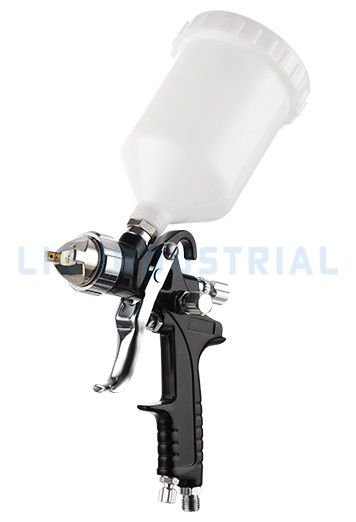
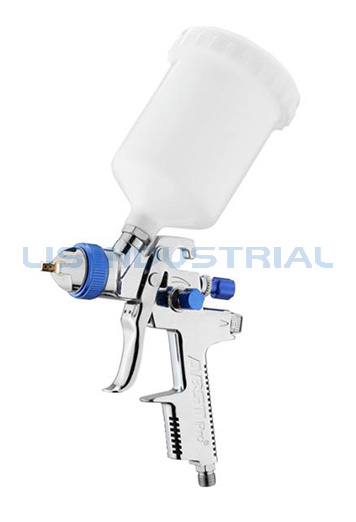
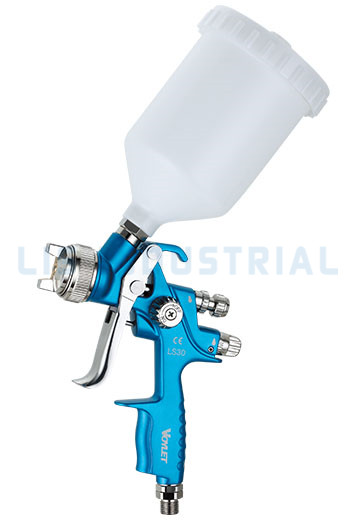
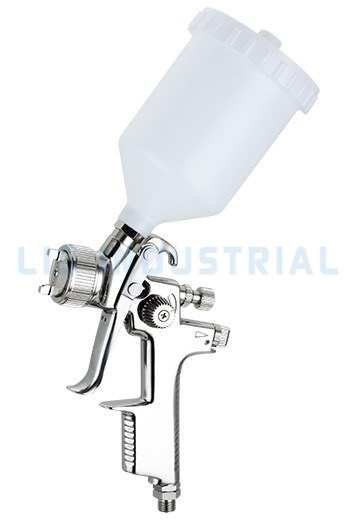
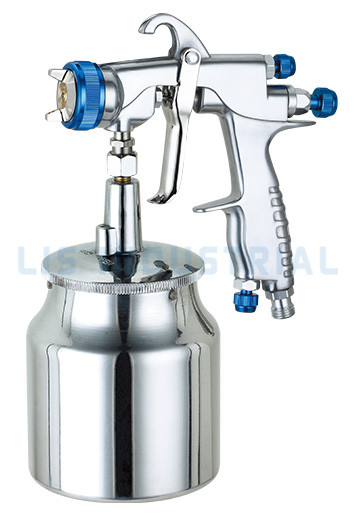
- 16 Product: M308 Pro Touch-Up Spray Gun Siphon Feed Detail Spray Gun Small Air Operated Suction Paint Sprayer
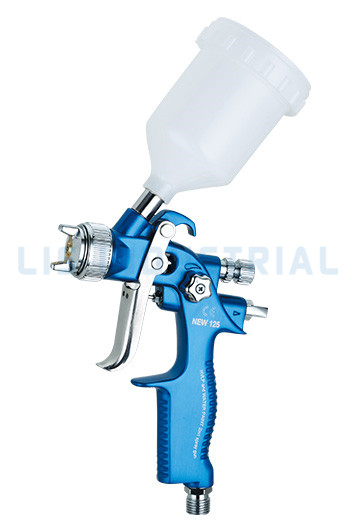
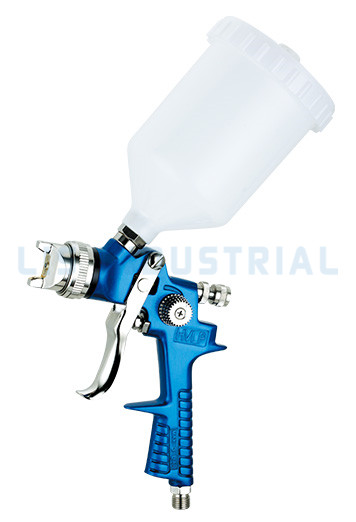
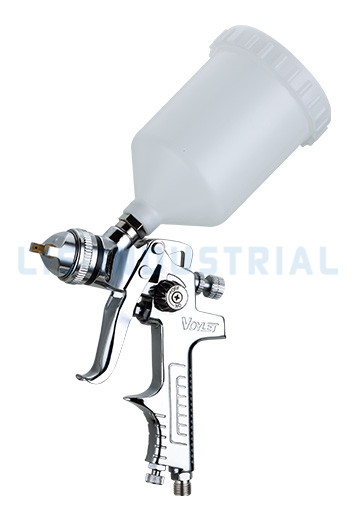
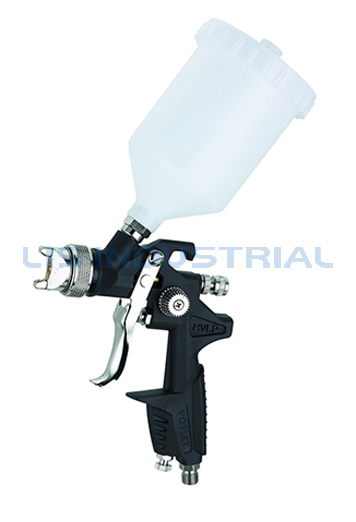
Small painting projects demand more than simply reducing the size of a conventional spray gun. They require accurate fluid delivery, controllable atomization, comfortable handling, dependable construction, and a design that can operate efficiently with suitable workshop air equipment. The M308 Pro Touch-Up Spray Gun is developed for this specialized role. It is a compact, air-operated, suction-feed spray gun intended for touch-up work, detail painting, small repair areas, woodworking applications, maintenance jobs, and other projects where control and accessibility are more important than covering a very large surface in a single pass.
With available 1.5 mm and 1.8 mm fluid nozzles, a 200 ml paint cup, a stated air pressure of 50 PSI, and a G1/4-inch air inlet, the M308 offers a practical configuration for users who need a small spray tool with familiar pneumatic connections. Its suction-feed design allows the coating material to be drawn from the attached cup, making the gun suitable for a broad range of workshop applications. The compact format also helps users reach narrow areas, edges, corners, small components, and localized imperfections that may be inconvenient to handle with a larger production spray gun.
The value of a touch-up spray gun is measured not only by its ability to spray. It must also help the operator avoid unnecessary overspray, excessive material consumption, uneven coverage, and fatigue caused by an oversized tool. The M308 addresses these needs through a focused design that combines small-batch capacity, useful nozzle options, straightforward pneumatic operation, and the manufacturing experience of Ningbo Lis Industrial Co., Ltd., an established Chinese producer of spray guns, mini compressors, air tools, and related spraying equipment.
This article examines the product’s operating concept, specifications, applications, practical advantages, maintenance requirements, quality considerations, and the manufacturing capabilities behind it. It also explains how the M308 compares with common alternatives and how buyers can select, use, and integrate this type of spray gun into a professional or semi-professional painting system.
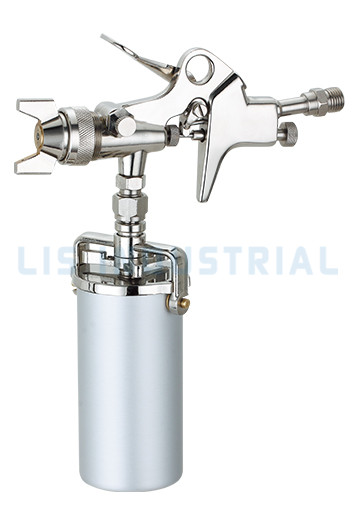
M308 Pro Touch-Up Spray Gun Siphon Feed Detail Spray Gun Small Air Operated Suction Paint Sprayer
Designed for Controlled Touch-Up Work
A touch-up spray gun occupies a distinct position between a full-size conventional spray gun and a very small airbrush. A full-size gun is often optimized for larger panels, doors, furniture surfaces, industrial parts, and high-output work. An airbrush is designed for extremely fine lines, miniature details, artistic effects, and very small quantities of material. The M308 is positioned between these two tool categories. It provides a more substantial spray pattern and fluid capacity than a typical airbrush while remaining more compact and localized than a full-size production gun.
This intermediate format is especially useful when the operator must repair or coat a limited area without disturbing the surrounding surface. Examples include spot repairs on vehicle components, small furniture parts, cabinet edges, trim pieces, metal fittings, machinery housings, craft items, and woodworking projects. In each case, a large gun may release more material and air than necessary. The M308 can provide a more proportionate solution, allowing the operator to concentrate the coating where it is needed.
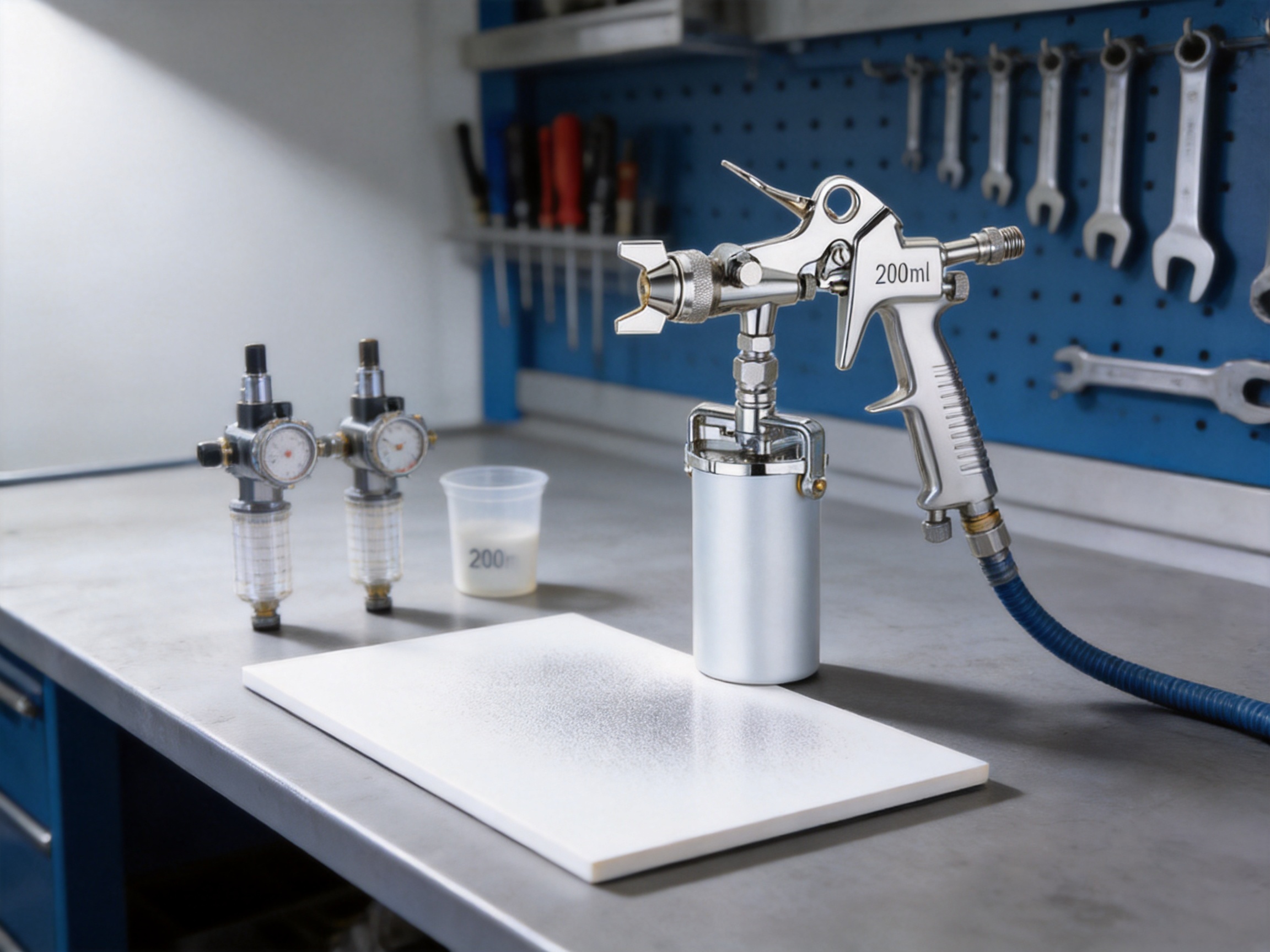
The gun’s 200 ml cup is large enough for many touch-up assignments while remaining small enough to keep the tool balanced and manageable. A smaller cup can also encourage the operator to mix only the amount of material required for the immediate task. This may reduce waste when working with coatings that have limited pot life or when several colors, primers, or finishes must be prepared separately.
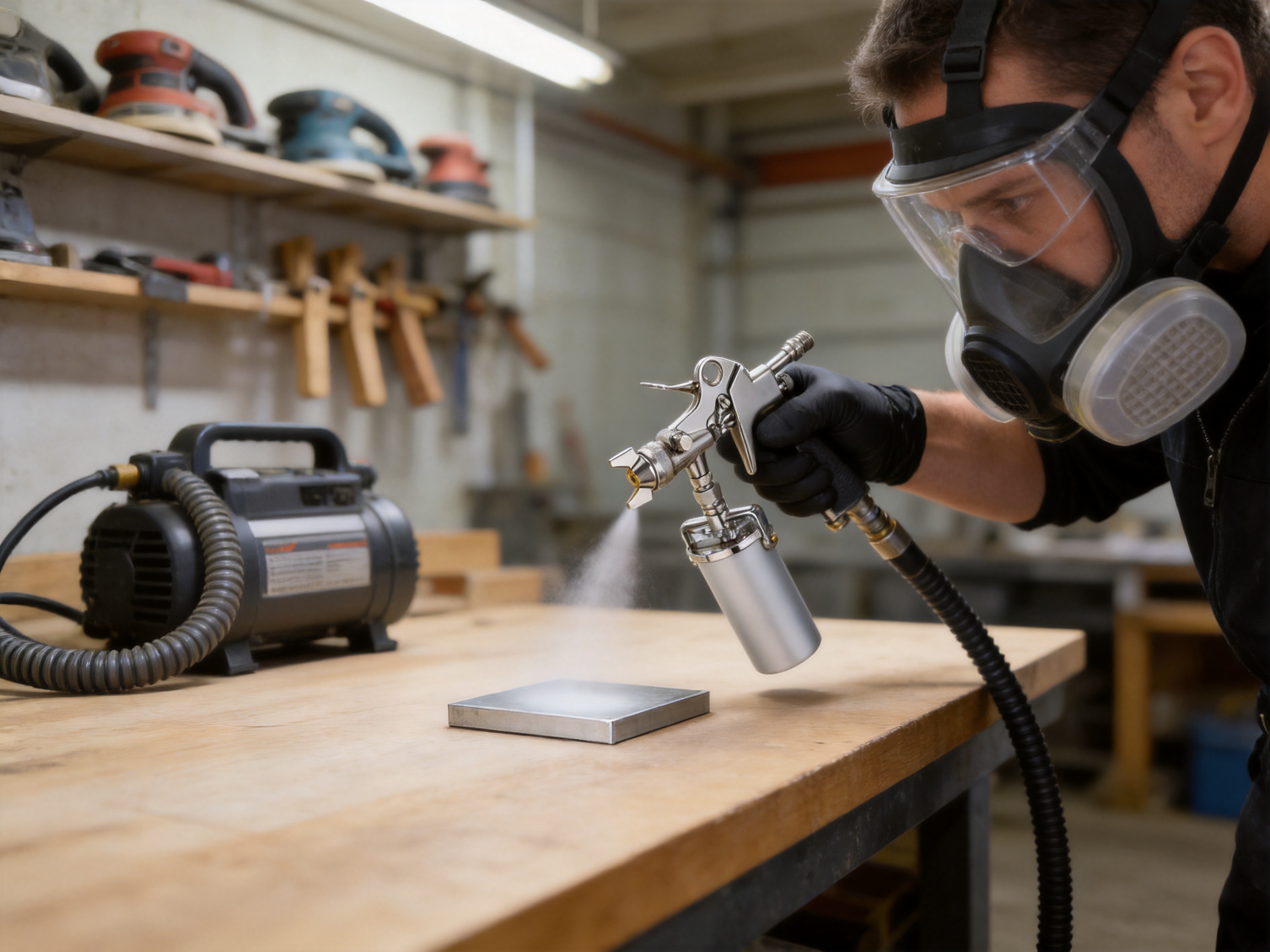
Because it is air operated, the M308 can be connected to a compatible compressor through its G1/4-inch air inlet. This standard-style connection is common in many pneumatic tool systems and can simplify installation for workshops that already use air hoses, regulators, filters, and quick couplers. The user should still verify the actual requirements of the complete system, including compressor capacity, hose size, regulator performance, and the coating manufacturer’s instructions.
Balanced Capacity for Small Projects
The 200 ml cup capacity represents a practical compromise. A cup that is too small may require frequent refilling, interrupting the spray process and increasing the chance of inconsistent color or viscosity between batches. A cup that is too large can add weight, encourage overfilling, and make the tool less comfortable during detailed work. The M308’s capacity is suitable for localized painting where the operator needs enough material for an efficient session without carrying the burden of a full-size container.
Suction-feed operation can also be useful for users who prefer a traditional and familiar spray gun arrangement. The coating is stored below the gun body and drawn upward through the fluid passage as air moves through the gun. This design is widely understood by repair technicians, maintenance personnel, woodworkers, and workshop operators. With appropriate adjustment of material viscosity and air supply, it can support repeatable application across many small surfaces.
Useful Nozzle Options
The M308 is specified with 1.5 mm and 1.8 mm fluid nozzle options. These sizes offer flexibility for different coating conditions and application objectives. The 1.5 mm option may be preferred for relatively refined atomization, thinner coatings, detail work, and situations where the operator wants a controlled application. The 1.8 mm option can be more suitable for somewhat heavier materials, primers, broader touch-up coverage, or coatings that require additional fluid passage.
Nozzle selection should always be matched to the coating manufacturer’s technical guidance. Paint chemistry, viscosity, solids content, temperature, reduction ratio, and desired finish all influence the correct setup. The nozzle alone does not determine the final result. Proper atomizing air, fluid adjustment, fan adjustment, gun distance, overlap, and operator technique are equally important. Nevertheless, having two useful nozzle sizes gives the M308 greater adaptability than a fixed-size detail gun.
Core Specifications at a Glance
| Specification | M308 Information | Practical Significance |
|---|---|---|
| Product type | Pro touch-up spray gun | Designed for localized, small-area, and detail painting |
| Feed type | Suction feed | Draws material from the attached lower cup |
| Fluid nozzle options | 1.5 mm and 1.8 mm | Supports different coating viscosities and coverage needs |
| Air pressure | 50 PSI stated specification | Provides a reference point for pneumatic setup |
| Cup capacity | 200 ml | Suitable for small-batch and touch-up work |
| Air inlet | G1/4 inch | Compatible with common workshop pneumatic connections |
| Packaging quantity | 20 pieces per carton | Convenient for distributors and commercial purchasing |
| Carton dimensions | 48 x 35.5 x 40 cm | Useful for logistics planning and warehouse organization |
The specifications show that the M308 is not intended to replace every other type of spray equipment. Its strength lies in being appropriately sized for detailed and localized work. Productive spraying depends on treating these specifications as part of a complete system rather than viewing them in isolation. The 50 PSI specification, for example, should be interpreted together with the compressor’s available airflow, the regulator setting, the air hose, the coating material, and the user’s selected spray pattern.
Buyers should also distinguish between static pressure shown on a regulator and operating pressure measured at the gun while spraying. Pressure can fall through restrictive hoses, undersized fittings, clogged filters, or inadequate compressor output. A clean, regulated air supply helps the gun atomize more consistently and reduces the possibility of water, oil, or dirt contaminating the finish.
Advantages of the Suction-Feed Configuration
Suction-feed spray guns have remained popular because they offer a straightforward relationship between the gun body, the fluid cup, and the air supply. The lower cup provides a visible reservoir and can be removed for cleaning or refilling. This makes the system familiar to many users and practical for workshops that regularly change colors or materials.
One advantage of suction feed is the ability to work with a manageable amount of paint. For touch-up applications, the operator may not need a large fluid reservoir. A 200 ml cup can be filled according to the job requirement, reducing unnecessary material preparation. The cup can also be separated from the gun for cleaning, provided the operator follows safe procedures and avoids damaging the fluid passages or sealing surfaces.
The configuration can be economical for users who already have compatible lower-cup accessories, air lines, filters, and pneumatic tools. It does not require an electrically driven motor in the spray gun itself. Instead, the air supply is provided by a separate compressor, allowing the same compressor to serve multiple workshop tools when its capacity is sufficient.
Compared with some larger spray guns, the M308’s smaller format can offer better access around obstructions and improved visibility of the target area. This can be valuable when repairing a small defect on a finished surface. The operator can position the gun carefully and maintain a controlled distance without handling a bulky body designed for high-volume production.
Material Control and Reduced Overspray Potential
A compact touch-up gun does not automatically eliminate overspray, but it can help the operator work with a smaller and more focused application area. Overspray is affected by pressure, nozzle size, fluid flow, fan width, gun distance, coating viscosity, and movement speed. When these factors are correctly adjusted, a smaller gun can help reduce the amount of material released outside the intended repair zone.
This potential benefit is important for repair shops and maintenance departments. A localized defect may require only a small amount of primer, color coat, or protective finish. Using an oversized gun can make it more difficult to avoid applying material beyond the repair area. The M308 allows the user to select a suitable nozzle and regulate the fluid supply according to the size and nature of the task.
Material efficiency also depends on preparation. Paint should be mixed accurately, filtered when appropriate, and adjusted to the correct viscosity. The operator should test the spray pattern on a suitable sample surface before applying material to the finished workpiece. These steps help prevent repeated passes, runs, dry spray, and unnecessary waste.
Applications Across Repair, Maintenance, and Woodworking
Automotive and Vehicle Touch-Up
The M308 can be used for small automotive repair areas, trim pieces, brackets, motorcycle parts, equipment panels, and other localized vehicle components. It is suitable for applications in which a full-size bodywork gun may be excessive, particularly when the repair zone is limited. The available nozzle sizes can support different stages of work, such as primer application, color coating, or compatible protective finishes.
Automotive coatings often require strict attention to mixing ratios, flash times, surface preparation, and compatibility between layers. The spray gun cannot compensate for poor preparation or incorrect material selection. However, its compact configuration can make it easier to control the edge of a repair area and apply light, even passes. The operator should use a suitable test panel and confirm the finish before working on a visible component.
Woodworking and Furniture Repair
Woodworkers can use a touch-up spray gun for cabinet components, drawer fronts, furniture edges, small doors, decorative parts, and repair work. The 1.5 mm and 1.8 mm nozzle options provide useful flexibility for stains, lacquers, primers, paints, and other compatible materials, subject to the coating supplier’s instructions.
In woodworking, surface quality is strongly influenced by sanding, dust removal, moisture control, and the condition of the substrate. A spray gun provides a consistent application method, but the work area must be clean and properly ventilated. The M308’s 200 ml capacity is convenient for small furniture pieces and replacement parts where a large cup would be unnecessary.
Equipment and Machinery Maintenance
Maintenance departments frequently need to repaint small metal components, machine covers, brackets, fixtures, and replacement parts. A compact gun can be stored as part of a general pneumatic tool system and brought into service when a localized coating repair is required. The operator can prepare a small quantity of material and avoid setting up a full production line for a minor task.
For industrial maintenance, coating compatibility is essential. Some materials may require specialized equipment, protective measures, or an alternative application method. Users should consult the safety data sheet and technical data sheet for every coating and should not assume that a material is suitable merely because it can pass through a nozzle.
Craft, Hobby, and General Workshop Projects
The M308 can also serve hobbyists and small workshops working on models, props, decorative objects, metal accessories, craft components, and restoration projects. It offers more fluid capacity and a broader application capability than many fine-detail airbrushes while remaining suitable for controlled work.
Users in this category often benefit from the gun’s uncomplicated pneumatic design. Once the compressor, regulator, filter, hose, and coating materials are correctly selected, the gun can become part of a repeatable workflow. Beginners should practice on scrap material and learn how changes in pressure, distance, movement, and viscosity affect the finish.
How the M308 Compares with Common Alternatives
Choosing a spray gun should begin with the work requirement rather than with a single specification. A large conventional spray gun may be better for high-output coating of broad surfaces. An airbrush may be better for extremely small details and artistic lines. An electric spray gun may be convenient where compressed air is unavailable. The M308 is advantageous when the user wants pneumatic control, a compact body, a moderate cup size, and nozzle options appropriate for touch-up work.
| Equipment type | Main strength | Typical limitation | Where the M308 may be preferable |
|---|---|---|---|
| Full-size conventional spray gun | High coverage and production output | May be oversized for small repairs | When controlled localized application is more important than maximum output |
| Airbrush | Very fine detail and low fluid volume | Limited coverage and material capacity | When a wider pattern and larger 200 ml cup are useful |
| Electric spray gun | Does not require a separate compressor | Motor weight, noise, and different airflow behavior | When the workshop already has a pneumatic air system |
| Gravity-feed detail gun | Efficient fluid delivery and low material volume | Different balance and cup arrangement | When a traditional suction-feed lower cup is preferred |
| M308 touch-up gun | Compact pneumatic operation and flexible nozzle selection | Not intended for very large production surfaces | Small-area repairs, woodworking, maintenance, and detail coating |
Compared with a full-size gun, the M308 can be easier to maneuver during a localized repair. Compared with an airbrush, it provides a more substantial fluid path and a 200 ml cup. Compared with an electric sprayer, it can integrate naturally into a workshop that already uses compressed air. Compared with other compact guns, its value depends on the consistency of manufacturing, the availability of support, the practical nozzle configuration, and the buyer’s ability to obtain a stable supply.
No spray gun is universally superior. The M308’s advantage is application-specific: it is designed to provide an efficient middle ground for users who need more capability than an airbrush but less bulk and output than a full-size spray gun. This focused purpose can make it a strong choice for distributors, repair shops, woodworking businesses, maintenance teams, and professional users who require a dedicated touch-up solution.
Manufacturing Strength Behind the Product
The quality of a spray gun depends on more than its external appearance. Fluid and air passages must be formed accurately. Threads and connection points must fit reliably. Moving components must operate smoothly. Seals must remain functional during repeated use. The cup and body must withstand normal workshop handling. Most importantly, the finished gun must produce a predictable spray when assembled with the correct nozzle, needle, air cap, and adjustment components.
Ningbo Lis Industrial Co., Ltd. has specialized in air painting spray guns, mini air compressors, and related air tools since its establishment in 1984. The company operates from Ningbo, China, and has developed a large manufacturing base serving customers in multiple international markets. Its reported facilities cover more than 400,000 square feet, with a workforce of over 400 employees and annual output valued at more than 40 million United States dollars.
This scale provides several potential advantages for a product such as the M308. A specialized factory can maintain dedicated production knowledge, organize component sourcing, support larger order volumes, and develop repeatable inspection procedures. For importers and distributors, manufacturing capacity is especially important because a product must be available not only for an initial order but also for replenishment, market expansion, replacement sales, and long-term customer support.
Research and Development Capability
The company reports a strong research and development team and the ability to provide both OEM and ODM services. OEM production can be arranged according to customer drawings or samples, while ODM support can be developed according to customer needs. This capability is relevant to professional buyers who may require private labeling, packaging adjustments, market-specific product configurations, or application-oriented modifications.
Research and development in spray equipment involves more than changing an external shape. Engineers must consider air balance, fluid delivery, atomization behavior, ergonomic handling, component compatibility, manufacturability, and cleaning access. A change to one component can influence the performance of the entire gun. For this reason, practical experience in spraying machinery can be a meaningful advantage when developing or refining compact products.
The company has also established a spraying machinery engineering technology center and has carried out technical cooperation with an American spraying technology company. Such technical collaboration indicates a focus on improving product design and manufacturing knowledge within the spraying machinery field. Buyers should still evaluate the particular model through samples, technical documentation, testing, and commercial verification, but a dedicated engineering foundation supports continued product development.
Production and Quality Control
The reported quality system covers multiple stages, including raw material control, incoming inspection, process quality control, functional testing, and final inspection of finished products. This layered approach is important for spray guns because defects can originate at different points in the supply chain. A component may have dimensional variation, a surface may be contaminated, an internal passage may be restricted, or an assembled adjustment mechanism may not operate correctly.
Incoming inspection helps prevent unsuitable raw materials or components from entering production. In-process inspection helps identify problems before a large batch is completed. Functional testing helps verify that the assembled product performs its basic intended operation. Final inspection provides another opportunity to identify visible, mechanical, or packaging issues before shipment.
The company states that it carries out 100 percent functional testing. For pneumatic spray equipment, functional verification may include checking air passage behavior, fluid delivery, trigger operation, leakage, adjustment movement, and spray performance. The exact internal test procedure should be confirmed with the supplier, but a complete functional testing policy demonstrates the importance placed on product operation rather than appearance alone.
The manufacturer also reports certification and management-system achievements including ISO9001 quality management certification, ISO14001 environmental management certification, OHSAS18001 occupational health and safety certification, European CE certification, and German GS certification. Certification scope and current validity should be verified for the specific product and purchase period, but these systems and certifications provide an important framework for organized production, safety management, environmental responsibility, and quality assurance.

Product Advantages for Professional Buyers
Practical Product Positioning
For distributors, the M308 has a clear product position. It is not presented as a general-purpose gun for every coating situation. Instead, it serves the growing need for compact, accessible, pneumatic touch-up equipment. A clearly defined application category can make product selection easier for end users and can complement a broader range of spray guns within a distributor’s catalog.
The model can be offered to automotive repair shops, furniture workshops, equipment maintenance departments, contractors, hobby retailers, and general hardware channels. Its nozzle choices, compact size, and 200 ml cup provide recognizable selling points that are easy to explain. A product with a clear use case may also reduce confusion when customers are comparing full-size guns, airbrushes, and electric sprayers.
Order and Packaging Support
The stated packaging configuration is 20 pieces per carton, with carton dimensions of 48 x 35.5 x 40 cm. These details are useful for wholesalers, importers, warehouse planners, and logistics coordinators. Buyers can estimate storage requirements, shipment volume, pallet planning, and replenishment schedules before placing an order.
A stable production base may also support private-label and large-volume programs. The company reports that production capacity could be increased by 30 percent within two months. Such a statement should be confirmed against the specific order, component availability, forecast accuracy, and agreed delivery terms. Nevertheless, the ability to scale production can be valuable for customers whose demand changes seasonally or grows after a successful market launch.
International Market Experience
The manufacturer reports sales across Europe, North America, the Middle East, South Africa, and East Asia. International distribution experience can help a supplier understand the practical needs of export customers, including packaging, documentation, product certification, communication, and shipment coordination.
For buyers, international experience does not replace product evaluation, but it can simplify cooperation. It may also help when a customer needs a combination of standard products, private-label items, related air tools, and technical support from one manufacturing source.
Recommended Air System and Operating Setup
The M308 should be used with a clean and stable compressed-air system. A typical setup includes a compressor, air receiver, regulator, moisture separator or filter, suitable hose, compatible couplers, and the spray gun. The air system should be capable of maintaining the required operating pressure while the trigger is engaged. A compressor that reaches the required pressure but cannot provide sufficient airflow may cause pressure fluctuation and inconsistent atomization.
The regulator should be adjusted gradually. The user can begin with the manufacturer’s stated reference pressure and then conduct a test spray using the selected coating. Pressure should not be increased simply to compensate for incorrect viscosity, an unsuitable nozzle, or a blocked passage. Excessive pressure can increase overspray, accelerate material loss, and produce a rough or dry finish.
Air quality is equally important. Moisture, oil, rust particles, and dust can enter the gun and contaminate the coating. A filter installed near the spray gun can help protect the finish, while regular draining of the compressor tank helps reduce moisture accumulation. The air hose should be clean and free from internal debris. Connections should be inspected for leaks, because leakage can reduce pressure and increase compressor workload.
Coating Preparation
Before filling the cup, the operator should read the coating supplier’s instructions and confirm that the product is appropriate for pneumatic spraying. The material may need to be mixed, filtered, reduced, or conditioned according to its technical requirements. Viscosity should be checked using an appropriate method rather than estimated only by appearance.
Overly thick material may produce poor atomization, restricted fluid flow, an uneven pattern, or excessive buildup. Overly thin material may run, sag, provide inadequate coverage, or require too many coats. The correct balance depends on the coating, nozzle, pressure, temperature, and desired finish. Because the M308 offers two nozzle sizes, the user can select a configuration that better matches the material rather than forcing every coating through one opening.
Spray Technique
The gun should generally be held perpendicular to the surface and moved at a consistent speed. Tilting the gun can alter the distribution of material across the spray pattern. The operator should begin moving before pulling the trigger and release the trigger before stopping the movement. This technique helps reduce heavy spots at the beginning and end of each pass.
Consistent overlap is important for uniform coverage. The correct overlap depends on the pattern width and coating, but even movement is more important than following a fixed number without testing. The gun should be kept at a steady distance from the workpiece. Holding it too far away can produce dry spray and wasted material; holding it too close can cause runs and excessive wetness.
For touch-up work, several light passes are often safer than one heavy pass. The operator should allow the required flash or drying time between coats. The surface should be inspected under appropriate lighting before additional material is applied.
Cleaning, Maintenance, and Service Life
Cleaning is one of the most important factors in maintaining a spray gun. Residual coating can dry inside the nozzle, air cap, needle passage, cup, or fluid channel. Even a small amount of hardened material can alter the spray pattern and make the gun appear defective. The M308 should be cleaned immediately after use according to the coating manufacturer’s solvent and safety instructions.
The general process normally includes emptying unused material, wiping the cup, flushing the fluid passage with a compatible cleaning solution, and carefully cleaning removable components. The air cap and nozzle should be handled with care. Sharp or unsuitable tools may damage small openings and permanently alter atomization. Components should not be forced apart if they are stuck; appropriate soaking and manufacturer-approved procedures are safer.
The needle and nozzle should be inspected for wear, scratches, buildup, or deformation. Seals should be checked for damage and replaced when necessary. Threads should remain clean and should not be overtightened. Excessive force can damage delicate components or make future disassembly difficult.
After cleaning, the gun should be dried and stored in a clean location. It should not be left with coating in the cup or fluid passage. If the workshop uses aggressive solvents, operators should confirm that the cleaning materials are compatible with the gun’s seals and other internal components.
Safety Considerations
Spraying coatings can create airborne particles, vapors, and flammable atmospheres. The operator must use suitable ventilation, personal protective equipment, eye protection, gloves, and respiratory protection appropriate to the material. Spraying should take place in a properly prepared area away from ignition sources. The coating’s safety data sheet should be reviewed before use.
Compressed air can cause injury if directed toward the body. The gun should never be pointed at people or animals. Air pressure should be released before disassembly or maintenance. Hoses and couplers should be inspected for damage, and the compressor should be operated according to its own safety instructions.
These measures are not optional accessories to good spraying practice. They protect the operator, improve the work environment, and help prevent contamination that can affect the finished surface.
Quality Consistency and Supplier Evaluation
When evaluating the M308 for commercial purchase, buyers should request a complete technical package. Useful documents may include product specifications, nozzle information, operating instructions, spare-parts information, packaging details, inspection records, certification documents, and recommended cleaning procedures. If the product is intended for a regulated market, the buyer should verify whether the available declarations and certificates apply to the exact model and configuration.
Sample testing is strongly recommended. A trial should examine trigger movement, cup connection, air inlet compatibility, fluid leakage, spray pattern, atomization, adjustment range, cleaning access, and repeatability across multiple units. The test coating should represent the customer’s real application rather than an unrelated material.
For larger orders, buyers may establish an agreed inspection standard covering appearance, dimensions, function, accessories, labeling, carton condition, and sampling levels. A clear standard helps both the supplier and the buyer understand what constitutes an acceptable shipment. It also supports more consistent quality as order quantities increase.
The manufacturing information supplied for Ningbo Lis Industrial Co., Ltd. indicates a quality-oriented production structure with raw-material inspection, in-process control, functional testing, and final inspection. These systems are valuable because they create a process for identifying variation. However, responsible buyers should combine supplier credentials with product-specific verification, incoming inspection, and field feedback.
Why Manufacturing Experience Matters in Spray Equipment
Spray guns are precision-oriented tools even when they are designed for general workshop use. The air cap, fluid nozzle, needle, and body passages must work together. If any one of these elements is inconsistent, the result may be an unstable pattern, uneven atomization, or leakage. Manufacturing experience allows a supplier to understand the relationship between machining, casting or forming, surface treatment, assembly, and testing.
A company that produces only one occasional spray tool may rely heavily on outsourced components and limited testing. A specialized manufacturer can develop internal knowledge across multiple models and product categories. Lessons learned from high-volume guns, mini compressors, automatic spray equipment, air brushes, air fittings, and related pneumatic tools can inform the design and production of a compact touch-up model.
Long-term industry participation can also support spare-parts planning and technical communication. Professional customers need more than an attractive product photograph. They need a supplier capable of answering questions about nozzle sizes, fluid compatibility, accessories, packaging, replacement components, production schedules, and application requirements.
The company’s history since 1984, its reported large factory footprint, engineering resources, international customer base, and broad air-tool portfolio provide a foundation for this kind of cooperation. Its established brands and OEM and ODM capabilities may be particularly relevant to distributors that want to build a complete spray-equipment range rather than purchase isolated products from unrelated sources.
Purchasing Guidance for Distributors and End Users
Distributors should first identify the customer segments for the M308. If the target market consists mainly of industrial plants coating large steel structures, a full-size production gun may be more appropriate as the primary product. If the target market includes repair shops, woodworking businesses, maintenance teams, and general workshops, the M308 can fill a useful compact-gun category.
Product training can improve customer satisfaction. Retailers and distributors should explain the purpose of the two nozzle sizes, the meaning of the stated pressure, the need for clean air, and the importance of immediate cleaning. Customers should understand that the gun is designed for touch-up and detail applications rather than unlimited high-volume production.
For end users, the purchase decision should consider the available compressor. A suitable spray gun connected to an inadequate compressor will not provide the expected performance. Buyers should also check whether the existing hose, regulator, filter, couplers, and cleaning equipment are compatible with the G1/4-inch air inlet and the intended coating.
The user should consider the workpiece size, coating type, frequency of use, need for color changes, access to spare parts, and expected service conditions. The M308 is particularly attractive when these factors point toward a compact, suction-fed pneumatic tool with moderate capacity and adaptable nozzle selection.
Frequently Asked Questions
What type of work is the M308 intended for?
The M308 is intended for touch-up, detail, small-area repair, woodworking, maintenance, craft, and other localized spraying applications. It is designed for situations where a full-size spray gun may be unnecessarily large and an airbrush may provide too little coverage or fluid capacity.
What are the available fluid nozzle sizes?
The specified nozzle options are 1.5 mm and 1.8 mm. The appropriate size depends on the coating viscosity, solids content, desired finish, and application area. Users should follow the coating manufacturer’s recommendations and test the selected setup before production work.
What is the cup capacity?
The cup capacity is 200 ml. This capacity is suitable for many small-batch jobs and can help users prepare a practical quantity of material without carrying the weight of a large reservoir.
Is the M308 gravity feed or suction feed?
The M308 uses a suction-feed configuration. The coating is held in the attached cup and drawn into the gun through the fluid passage during operation.
What air connection does it use?
The specified air inlet is G1/4 inch. Users should verify the compatibility of their hose, regulator, filter, and couplers before installation.
What air pressure is specified?
The listed air pressure is 50 PSI. Actual setup should be confirmed through testing and should consider the coating, nozzle, compressor, hose, regulator, and manufacturer instructions. Pressure should be measured and adjusted responsibly while the gun is operating.
Can it be used for automotive paint?
It may be suitable for compatible automotive primers, colors, and finishes when the coating manufacturer permits pneumatic spraying and the correct nozzle, viscosity, pressure, and safety procedures are used. Automotive coatings can have strict compatibility and safety requirements, so users should consult the relevant technical and safety documentation.
Can it be used for woodworking coatings?
It can be considered for compatible woodworking primers, paints, stains, lacquers, and finishes. Surface preparation, filtration, viscosity adjustment, ventilation, and cleaning are essential for good results.
Does the product include a compressor?
The M308 is an air-operated spray gun. The supplied product information identifies the gun and its specifications but does not state that a compressor is included. Buyers should confirm the exact package contents with the supplier before ordering.
How should the spray gun be cleaned?
It should be cleaned immediately after use. Remove unused material, flush the fluid passage with a compatible cleaning solution, clean the cup and removable components carefully, and avoid damaging the nozzle or air-cap openings. The cleaning method must be compatible with the coating and the gun’s materials.
Is it suitable for large surfaces?
The M308 is primarily a touch-up and detail gun. It can coat small and moderate areas, but a larger production spray gun may be more efficient for broad surfaces, high-volume work, and long continuous spraying.
What makes it different from an airbrush?
The M308 has a 200 ml cup and 1.5 mm or 1.8 mm nozzle options, giving it more capacity and broader application potential than many airbrushes. An airbrush may still be better for extremely fine lines and miniature artistic work.
What makes it different from a full-size conventional gun?
The M308 is more compact and intended for localized work. A full-size conventional gun generally provides higher output and broader coverage, but it may be less convenient for small repair areas and may consume more air and material than necessary.
Can businesses order it for private labeling?
The manufacturer reports OEM and ODM capabilities. Buyers interested in private labeling should discuss artwork, packaging, minimum order quantities, product configuration, inspections, documentation, and delivery schedules directly with the supplier.
What information should be requested before a bulk order?
Buyers should request current specifications, package contents, nozzle details, operating instructions, certification information, inspection standards, carton data, lead time, spare-parts availability, warranty terms, and sample-testing arrangements. The exact requirements depend on the destination market and intended application.
Overall Assessment
The M308 Pro Touch-Up Spray Gun is a focused pneumatic tool for users who need controlled coverage in a compact format. Its suction-feed design, 200 ml cup, 1.5 mm and 1.8 mm nozzle options, 50 PSI stated air-pressure specification, and G1/4-inch air inlet create a practical configuration for small repair, maintenance, woodworking, and detail-painting work.
Its principal advantage over larger competitors is not maximum production volume. Instead, it offers a more appropriate scale for localized tasks, where maneuverability, material control, and manageable preparation are important. Compared with an airbrush, it provides a larger cup and broader spraying capability. Compared with an electric sprayer, it can integrate with an existing compressed-air workshop. Compared with a full-size conventional gun, it can be easier to control around small or irregular workpieces.
The product is supported by the manufacturing resources of Ningbo Lis Industrial Co., Ltd., a long-established producer with reported engineering capability, international market experience, OEM and ODM services, large-scale production facilities, and a multi-stage quality-control system. Its reported approach includes incoming inspection, process control, functional testing, and final inspection, while its certifications and technical cooperation provide additional evidence of an organized manufacturing base.
For the best results, the M308 should be treated as part of a complete spraying system. Clean compressed air, suitable filtration, correct coating preparation, proper nozzle selection, controlled technique, immediate cleaning, and appropriate safety measures all contribute to final performance. When matched with the right application, the M308 can provide a dependable and economical solution for professional touch-up work and a wide range of small-scale coating requirements.
References
1. Product specification information supplied for the M308 Pro Touch-Up Spray Gun, including nozzle options, air pressure, cup capacity, feed type, air inlet, and packaging data.
2. Company information supplied for Ningbo Lis Industrial Co., Ltd., including manufacturing history, production capacity, research and development resources, quality-control procedures, certifications, and international market coverage.
3. General principles of pneumatic spray-gun operation, including suction-feed fluid delivery, nozzle selection, air regulation, coating preparation, and spray technique.
4. General workshop guidance for compressed-air filtration, moisture control, pneumatic-tool maintenance, and spray-equipment cleaning.
5. General coating-application safety practices, including ventilation, personal protective equipment, solvent handling, compressed-air safety, and consultation of coating safety data sheets.