 Search

 English
 中文简体
 Deutsch
 Español
Content
- 1 Understanding the Role of a Tyre Inflating Gun
- 2 Key Product Specifications
- 3 Portable Design for Everyday Service Work
- 4 Pressure Capability and Controlled Inflation
- 5 Air Inlet Compatibility and Workshop Integration
- 6 Advantages in Comparison with Basic Inflation Methods
- 7 Manufacturing Strength and Engineering Experience
- 8 Advanced Manufacturing and Quality Control Processes
- 9 Certification, Standards, and International Market Readiness
- 10 Applications for the TG5 Portable Inflating Gun
- 11 Recommended Operating Procedure
- 12 Safety Considerations
- 13 Maintenance and Service Recommendations
- 14 Purchasing Considerations for Distributors and Workshops
- 15 Why Manufacturing Reliability Matters to Product Performance
- 16 Environmental and Operational Efficiency
- 17 Q&A: Frequently Asked Questions
- 17.1 What is the TG5 used for?
- 17.2 What is the air inlet size?
- 17.3 What is the rated pressure of the TG5?
- 17.4 What is the maximum pressure?
- 17.5 Does the product replace a pressure gauge?
- 17.6 Can the TG5 be used with any compressor?
- 17.7 Is the tool suitable for professional workshops?
- 17.8 How many pieces are packed in one carton?
- 17.9 What should be checked before inflation?
- 17.10 Can the manufacturer provide OEM or ODM services?
- 17.11 What certifications does the company report?
- 17.12 How should the TG5 be stored?
- 18 Conclusion
- 19 References
- 20 Product: TG5 Portable Hand Tyre Inflating Gun Pressure
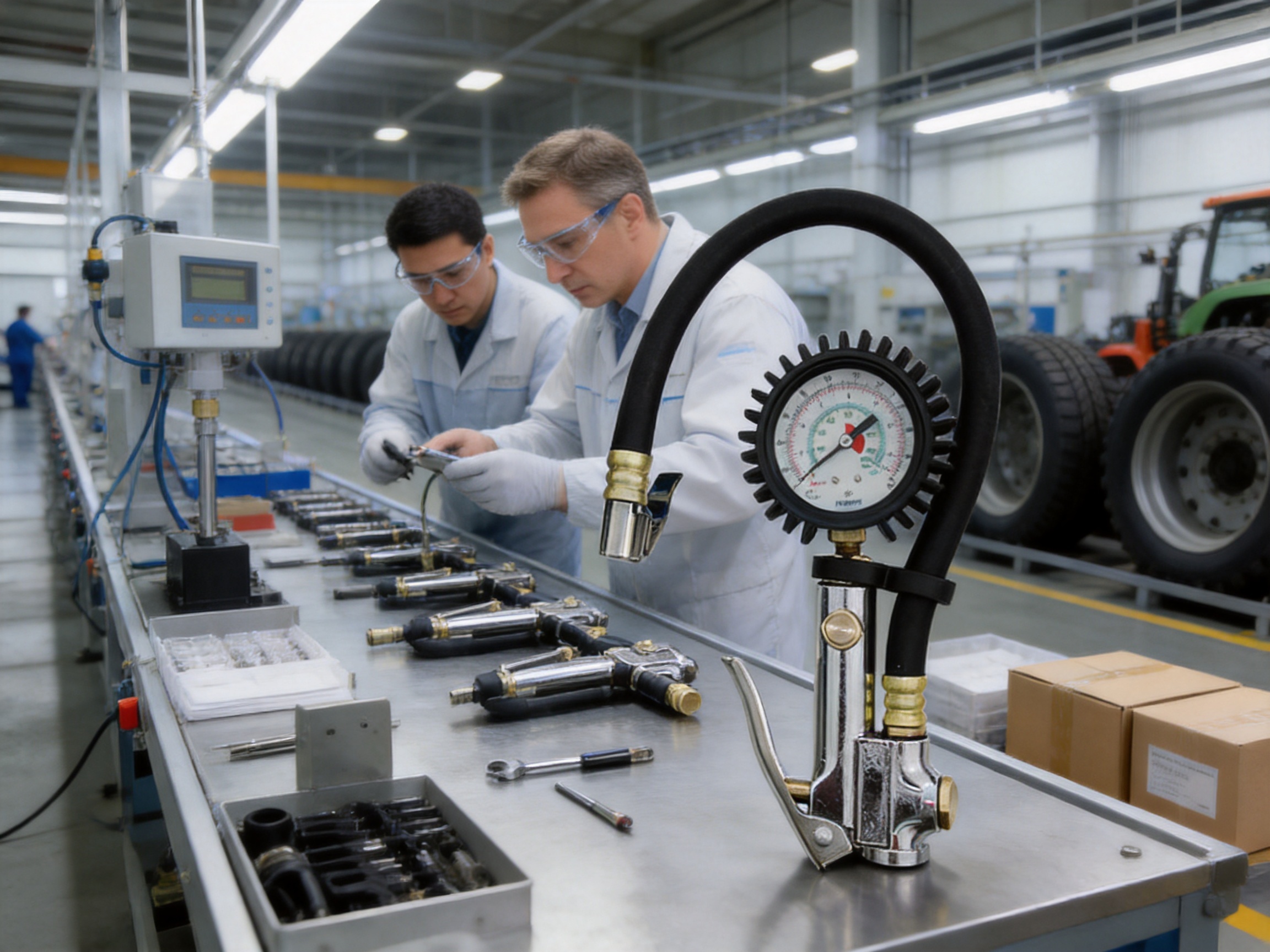
Tyre inflation is a routine maintenance task, but it has a direct effect on safety, fuel economy, handling, tyre life, and operating costs. A suitable inflating gun gives users better control than a basic air hose and provides a more convenient way to check and adjust pressure during vehicle servicing, workshop operations, equipment maintenance, and roadside support. The TG5 Portable Hand Tyre Inflating Gun Pressure is designed for these practical requirements, combining a compact hand-held format with a robust pressure rating and a standard air connection.
With an air inlet of G1/4’, a rated pressure of 150 PSI, and a maximum pressure of up to 220 PSI, the TG5 is suitable for a broad range of inflation applications. Its portable design allows the operator to move easily around a vehicle or workshop, while its simple operating concept supports fast connection, controlled air delivery, and straightforward daily maintenance. It is a useful tool for automotive workshops, tyre service centers, vehicle fleets, agricultural equipment operators, machinery repair businesses, and general industrial users.
The product is manufactured by Ningbo Lis Industrial Co., Ltd., an established Chinese producer of air painting spray guns, mini air compressors, air tools, and related spraying equipment. Although the company is widely associated with spray application technology, its manufacturing experience also supports the development of practical pneumatic tools such as tyre inflating guns. The company combines product research, engineering development, controlled production, quality inspection, certification experience, and international distribution capabilities.
Understanding the Role of a Tyre Inflating Gun
A tyre inflating gun is a hand-operated pneumatic tool used to introduce compressed air into a tyre. In many models, the tool can be connected to a compressor or air pipeline and then attached to a tyre valve through a suitable chuck or hose connection. Depending on the configuration, the gun may also include a pressure gauge, trigger, valve mechanism, or other control components. The TG5 is designed as a portable hand inflating gun for users who need a practical connection between a compressed-air source and a tyre.
Compared with inflating a tyre by holding a loose air hose against the valve, a dedicated gun provides better handling and a more organized workflow. The operator can hold the tool in one hand, position the connection correctly, and control the air supply according to the condition of the tyre. This reduces unnecessary air loss and helps make inflation more consistent.
Tyre pressure is not a minor adjustment. Under-inflated tyres can create excessive rolling resistance, increase heat generation, reduce steering response, and accelerate shoulder wear. Over-inflated tyres can reduce the contact area with the road, make the ride harsher, and contribute to irregular tread wear. Correct inflation supports the intended performance of the tyre and vehicle. A reliable inflating gun is therefore an important part of responsible vehicle maintenance.
The TG5 is particularly suitable for environments where equipment must be moved frequently. Its hand-held format is convenient for service bays, mobile maintenance teams, vehicle depots, and workshops with several inflation points. Instead of requiring a vehicle to be positioned beside a fixed inflation station, the operator can bring the tool and its air connection directly to the tyre.
Key Product Specifications
| Specification | TG5 Product Information | Practical Meaning |
|---|---|---|
| Product type | Portable hand tyre inflating gun | Designed for mobile and hand-operated inflation work |
| Air inlet | G1/4’ | Supports connection to compatible air hoses, couplers, or pipeline accessories |
| Rated pressure | 150 PSI | Provides a defined working pressure reference for normal operation |
| Maximum pressure | Up to 220 PSI | Offers additional pressure capability for suitable applications when used correctly |
| Carton size | 57 × 29 × 28 cm | Provides a compact shipping format for wholesale and distribution handling |
| Standard packing quantity | 10 pieces per carton | Convenient for inventory planning, retail supply, and workshop procurement |
The G1/4’ air inlet is a widely used pneumatic connection size. It makes the TG5 easier to integrate with compatible air hoses, couplers, regulators, air compressors, and workshop air pipeline accessories. Users should confirm the thread standard and fitting compatibility before installation, because nominal thread size alone does not always identify the complete thread specification. A correct connection reduces leakage and improves operational reliability.
The rated pressure of 150 PSI provides a practical operating reference for regular use. The maximum pressure of up to 220 PSI indicates the upper pressure capability specified for the product. Operators should always follow the instructions supplied with the tool, use a properly regulated air source, and observe the pressure limits of the tyre, hose, fittings, and other connected equipment. The lowest-rated component in the system determines the safe working limit of the complete setup.
The carton dimensions of 57 × 29 × 28 centimeters, with 10 pieces per carton, are also relevant to professional buyers. Distributors can plan warehouse space more efficiently, while workshops can order several units for multiple service bays. Compact packaging can help simplify transportation and reduce handling difficulty during receiving and stock movement.
Portable Design for Everyday Service Work
Portability is one of the most useful advantages of a hand tyre inflating gun. Vehicle maintenance does not always happen in a perfectly arranged service bay. A technician may need to work beside a parked vehicle, inside a fleet yard, near agricultural machinery, or at a temporary maintenance location. A portable tool allows the air connection to follow the operator rather than forcing the vehicle to be moved to a fixed station.
The TG5 hand-held format is intended to support this type of work. Its compact structure can be held comfortably while the operator checks the valve position and manages the air connection. A portable tool is also convenient when several tyres require service, because the operator can move around the vehicle without repeatedly returning to a compressor control panel.
For fleet operators, portability can improve the efficiency of routine inspections. Service personnel can carry the inflating gun with other maintenance equipment and address pressure issues during scheduled checks. This can help prevent small pressure deviations from developing into larger tyre performance or safety concerns.
Portability is also valuable in workshops that handle different vehicle types. Passenger cars, light commercial vehicles, motorcycles, trailers, agricultural machinery, and industrial equipment may have different valve positions and access conditions. A hand-operated tool can be positioned more easily than a rigid or permanently mounted inflation arrangement.
The portable design does not mean that the tool should be treated casually. The air hose should be routed so that it does not create a trip hazard, the tool should not be dragged by its connection, and the valve connection should be secured before air is introduced. Good handling practices protect both the operator and the equipment.
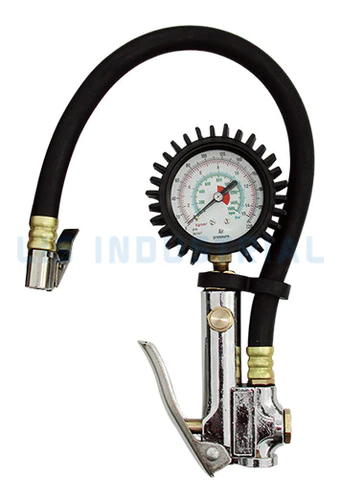
TG5 Portable Hand Tyre Inflating Gun Pressure
Pressure Capability and Controlled Inflation
The TG5 has a rated pressure of 150 PSI and a maximum pressure of up to 220 PSI. These specifications give the product a substantial operating range for many standard tyre service requirements. Most road vehicle tyres require pressures well below the maximum capability of the tool, but a higher tool capacity can provide flexibility when the equipment is used with specialty tyres, certain utility applications, or workshop testing procedures.
Pressure capability should always be understood in relation to the application. The tool does not determine the correct pressure for a tyre. The correct target pressure comes from the vehicle manufacturer, tyre manufacturer, equipment manual, or an approved maintenance procedure. The pressure marked on the tyre sidewall may represent a maximum limit rather than the recommended everyday inflation pressure.
During operation, the user should use an appropriate pressure gauge or a model configuration that includes a suitable pressure indication system. Pressure should be checked when the tyre is in the condition specified by the vehicle or tyre manufacturer, normally before significant driving has generated heat. If the tyre is hot, the measured pressure may not represent the cold inflation condition used for maintenance recommendations.
A controlled inflation process normally involves several steps. First, the operator inspects the tyre, valve, and surrounding area for visible damage. Second, the air source is checked to ensure that it is regulated and suitable for the task. Third, the inflating gun is connected securely to the tyre valve. Fourth, air is added in short, controlled intervals while pressure is monitored. Finally, the connection is removed carefully and the valve cap is replaced.
The TG5 can support this process by providing a dedicated tool body and a compatible air inlet for connection to a compressed-air system. Its value is not simply the ability to deliver air; it is the ability to make inflation more organized, repeatable, and manageable for the operator.
When the tool is used near its pressure limits, additional caution is required. Operators should inspect hoses, couplers, seals, and valve connections before use. Damaged or incorrectly rated components can fail even when the inflating gun itself is suitable. Pressure should never be applied to a tyre that shows serious structural damage, bead separation, exposed cords, or another condition requiring specialist assessment.
Air Inlet Compatibility and Workshop Integration
The G1/4’ air inlet helps the TG5 integrate with many workshop pneumatic systems. Air tools commonly depend on a chain of components, including a compressor, receiver tank, regulator, filter, hose, connector, and hand tool. The performance of the inflating gun depends on the condition and suitability of the complete air system.
A clean and stable air supply is important. Moisture, oil contamination, dust, and metal particles can affect pneumatic components over time. A suitable filter or water separator can help protect the air system, particularly in humid environments or in workshops where the compressor operates frequently. The regulator should be adjusted to a suitable working pressure rather than allowing uncontrolled pressure to reach the tool.
Before connecting the TG5, the user should compare the air inlet with the available hose and fitting. If the hose uses a different thread or connection type, a compatible adapter may be required. The adapter should be correctly rated, securely installed, and sealed according to accepted pneumatic installation practice. Excessive force should not be used when tightening threaded parts, because over-tightening can damage threads or distort sealing surfaces.
Air leakage can reduce inflation speed and increase compressor workload. A simple leak inspection can be performed by listening for escaping air and, where appropriate, applying a suitable leak-detection method to the connection area. Any damaged seal, loose fitting, cracked hose, or worn coupler should be replaced before regular operation.
For larger workshops, the G1/4’ inlet can be useful when standardizing accessories. A business may maintain a common selection of hoses, quick couplers, regulators, and replacement fittings for several pneumatic tools. Standardization reduces the number of specialized accessories that technicians need to keep available and can simplify maintenance training.
Advantages in Comparison with Basic Inflation Methods
Improved Handling Compared with a Loose Air Hose
A loose air hose can deliver compressed air, but it may be difficult to hold securely against a tyre valve. Air can escape around the connection, and the operator may need to use both hands to keep the hose in position while controlling the air supply elsewhere. A dedicated hand inflating gun creates a more practical interface between the air source and the tyre.
The TG5 gives the operator a defined tool body to hold and position. This can improve control during repeated service tasks and reduce the inconvenience associated with handling a bare hose. The result is a more professional workflow, especially when many tyres must be serviced during a working day.
More Flexible than a Fixed Inflation Station
A fixed station may be efficient in a dedicated service bay, but it can be less convenient when vehicles are parked in different locations. The TG5 can be carried to the vehicle, which is useful for fleet yards, outdoor equipment areas, agricultural sites, and mobile repair operations.
Greater Application Flexibility than a Single-Purpose Pump
Some small electric pumps are intended primarily for occasional consumer use and may have limited duty cycles, connection options, or pressure capabilities. A pneumatic inflating gun can be integrated with an existing workshop compressor, allowing businesses to use the air infrastructure already supporting other tools. This can make the gun a practical choice for professional environments where compressed air is already available.
Efficient Stocking for Professional Buyers
The TG5 is supplied in cartons of 10 pieces with a stated carton size of 57 × 29 × 28 centimeters. This packing arrangement is suitable for distributors and businesses that require multiple units. It can support planned purchasing, service-bay deployment, and replacement stock without requiring unusually large storage space.
Pressure Capability for Diverse Service Conditions
The 150 PSI rated pressure and up to 220 PSI maximum pressure give the tool a useful pressure range. This does not replace the need for correct application procedures, but it provides flexibility for professional users who may work with different vehicle and equipment categories. Buyers can select a tool with capacity suitable for their expected requirements rather than relying on a lower-capacity consumer product.
Manufacturing Strength and Engineering Experience
The manufacturer behind the TG5 has been engaged in air tool and spraying equipment production since 1984. Over more than four decades, Ningbo Lis Industrial Co., Ltd. has developed experience in product research, engineering, manufacturing, and international marketing. The company operates from Ningbo, China, and has built a substantial production base serving customers in Europe, North America, the Middle East, South Africa, East Asia, and other markets.
The company reports a production area of more than 400,000 square feet and a workforce of over 400 employees. Its annual output is stated to exceed 40 million United States dollars. These resources can support more than simple assembly. They can contribute to tooling development, production planning, incoming material control, process management, functional testing, packaging, and after-sales coordination.
Although the company’s product range includes spray guns, mini oil-free compressors, air fittings, paint tanks, air brushes, air polishers, airless spray guns, electric spray guns, and other air tools, the underlying manufacturing capabilities are relevant to the TG5. Pneumatic products require attention to air passages, sealing surfaces, threaded interfaces, valve operation, mechanical durability, and connection reliability. Experience in one category of air equipment can strengthen development and production discipline in another.
The company also maintains research and development capabilities. It has established a spraying machinery engineering technology center and has carried out technical cooperation with American spraying technology specialists. The company states that it can provide OEM production based on customer drawings or samples and ODM services based on customer requirements. For importers and distributors, this means that product development and private-label opportunities may be available subject to technical review and commercial agreement.
Manufacturing scale is valuable only when it is supported by process control. A large factory cannot compensate for inconsistent materials, uncontrolled assembly, or inadequate testing. The manufacturer’s stated quality approach includes raw material and incoming inspection, in-process quality control, 100 percent functional testing, and final quality inspection of finished products. This sequence is important because it addresses quality at multiple stages rather than relying only on a final visual check.
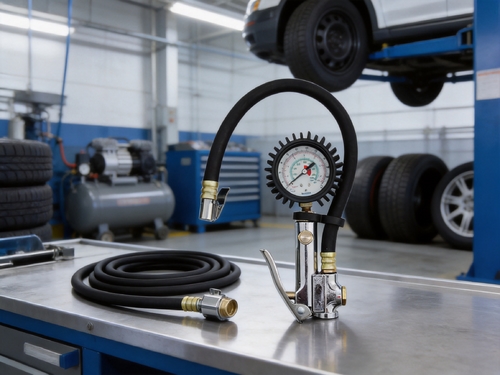
Advanced Manufacturing and Quality Control Processes
Research and Product Development
A dependable pneumatic tool begins with an appropriate design. Product development must consider the expected pressure range, air inlet structure, user handling, materials, sealing method, assembly sequence, packaging requirements, and intended working environment. The company’s research and engineering resources can support the evaluation of these factors before mass production begins.
For a tyre inflating gun, design review should consider the strength of the body, stability of the inlet connection, smooth operation of the internal air path, resistance to repeated use, and ease of maintenance. The tool must be practical for users while remaining compatible with the requirements of compressed-air operation.
Incoming Material Inspection
Incoming inspection is the first major manufacturing control after materials and components arrive at the factory. Depending on the product structure, inspection may include dimensional checks, visual examination, material verification, thread inspection, surface quality review, and testing of purchased components. Consistent incoming materials help reduce variation in later assembly operations.
For a pneumatic hand tool, small differences in threads, seals, springs, valves, or body components can affect air tightness and operating behavior. Careful receiving inspection helps identify nonconforming parts before they are introduced into production.
Controlled Assembly
Assembly quality directly influences product performance. Components must be installed in the correct order, with suitable tightening force and proper positioning of seals and moving parts. A controlled assembly process may include standardized work instructions, trained operators, approved tools, workstation checks, and traceable production records.
Threaded connections should be assembled without cross-threading, and sealing elements should be protected from cuts, contamination, or incorrect placement. Moving parts should be checked for smooth operation. These details are essential for a hand tool that may be connected and disconnected frequently during daily service work.
In-Process Quality Control
In-process quality control allows potential problems to be identified while production is still underway. Operators and inspectors can verify dimensions, assembly positions, connection quality, and functional behavior at defined stages. If a problem appears, corrective action can be taken before a large batch is completed.
This approach is more effective than discovering all defects at the end of the production line. It can reduce rework, improve consistency, and provide useful information for process improvement. For a product such as the TG5, in-process checks may focus on the air inlet, trigger or valve movement, body assembly, seal placement, and air passage integrity.
Full Functional Testing
The company states that it performs 100 percent functional testing. Functional testing is especially important for pneumatic products because a tool may appear visually correct but still leak, fail to control air properly, or operate inconsistently. A full test program can help verify that each unit performs its basic intended function before packaging.
Testing may include air connection checks, leak inspection, operating response, pressure-related performance, and general mechanical operation, according to the manufacturer’s defined specifications. Testing standards and procedures should be appropriate to the specific product and production stage. The objective is to ensure that the tool leaving the factory meets the required functional expectations.
Final Inspection and Packaging
Final inspection provides a last opportunity to verify the finished product, labeling, accessories, appearance, and packaging. Correct packing is important because pneumatic tools may experience vibration, impact, and changes in temperature during transportation. The carton configuration of 10 pieces helps organize shipment and inventory while providing a defined handling unit.
Clear product identification supports distributors and end users. Product name, model information, connection details, pressure specifications, and safety instructions should be retained and communicated through the supply chain. Proper documentation helps reduce installation errors and supports responsible operation.
Certification, Standards, and International Market Readiness
The company reports that its products have passed certifications including CE and GS, and that its management systems include ISO9001 quality certification, ISO14001 environmental management certification, and OHSAS18001 occupational health and safety certification. Certification requirements vary according to product type, market, and applicable regulations, so buyers should confirm the documentation relevant to the specific TG5 order and destination country.
Quality management certification indicates that an organization has established documented processes for managing production and quality-related activities. Environmental management certification reflects attention to environmental responsibilities and controlled operational practices. Occupational health and safety systems address workplace risks and employee protection. Together, these systems can contribute to a more structured manufacturing environment.
International market experience is another advantage for importers. A supplier familiar with export documentation, packaging, product identification, shipping coordination, and customer communication can help reduce the complexity of purchasing. Ningbo is a major port city with developed transportation infrastructure, which supports the movement of products to overseas markets.
Buyers should still perform their own due diligence. They should confirm technical data, required conformity documents, packaging marks, warranty conditions, replacement part availability, and any destination-specific regulations. A professional supplier should be able to discuss these requirements before order confirmation.
Applications for the TG5 Portable Inflating Gun
Automotive Workshops
Automotive service centers can use the TG5 during routine tyre pressure checks, service inspections, seasonal tyre changes, and vehicle preparation. Its hand-held format enables technicians to work efficiently around passenger vehicles and light commercial vehicles.
Tyre Retail and Service Centers
Tyre specialists often need to inflate multiple tyres in succession. A dedicated pneumatic gun can support a consistent workflow when connected to a suitable air compressor and hose system. The pressure rating gives the service center flexibility while the portable format allows technicians to reach different service positions.
Fleet Maintenance
Fleet operators have a strong interest in preventive maintenance because tyre problems can cause downtime, increased operating costs, and safety concerns. The TG5 can be included in a fleet maintenance kit or assigned to a workshop serving buses, delivery vehicles, utility vehicles, or company cars.
Agricultural and Utility Equipment
Agricultural machinery and utility equipment may be maintained outdoors or in large yards where fixed equipment is not always close to the vehicle. A portable inflating gun can make it easier to reach large equipment, trailers, and service vehicles, provided that the air source and pressure requirements are appropriate.
Motorcycle and Trailer Maintenance
Motorcycle and trailer tyres require careful inflation and pressure checking. The compact nature of a hand gun can be useful when valve access is limited or when the equipment is stored in a small workshop. Operators should use the correct chuck or connection arrangement for the valve configuration involved.
Industrial and Commercial Equipment
Some industrial carts, material-handling equipment, pneumatic-tired machinery, and other commercial products rely on properly inflated tyres. A professional air tool can be included in maintenance programs where compressed air is already available. The operator must verify that the tyre and equipment pressure requirements are within the approved working range.
Recommended Operating Procedure
Before using the TG5, inspect the tool body, air inlet, hose, coupler, valve connection, and pressure indication equipment. Do not use the tool if any component is cracked, visibly damaged, heavily worn, or contaminated in a way that could affect operation.
Confirm the recommended tyre pressure from an authoritative source. This may be the vehicle information label, service manual, tyre manufacturer data, or equipment manufacturer instructions. Do not assume that the pressure printed on the tyre sidewall is the correct everyday target.
Connect the air hose to the G1/4’ inlet using compatible fittings. Make sure the compressor or pipeline regulator is set appropriately. The pressure source should not exceed the limit of any component in the system. Check the connection for leakage before placing the tool into regular service.
Remove the valve cap and inspect the valve stem. Attach the tyre connection securely. If the connection is not seated correctly, air may escape and the pressure reading may be unreliable. Operate the inflating gun in short intervals, allowing the pressure to stabilize before taking a final reading.
Stop inflation when the recommended pressure is reached. Do not continue adding air simply because the tool has a higher maximum pressure capability. After disconnecting the gun, inspect the valve for leakage and reinstall the valve cap.
When the work is complete, disconnect the air supply if the tool will be stored. Keep the gun in a clean, dry location and protect it from impact, corrosive chemicals, excessive moisture, and unnecessary heat. Regularly inspect seals, fittings, and hoses as part of the workshop’s maintenance program.
Safety Considerations
Compressed air can cause serious injury when misused. Never direct the air stream toward a person, animal, or unprotected body area. Eye protection should be used during tyre service, particularly where dirt, dust, or damaged components may be displaced. Appropriate work clothing and footwear are also recommended.
Inflating a damaged tyre can be dangerous. A tyre with visible cracks, bulges, cuts, exposed cords, bead damage, or signs of separation should be assessed by a qualified tyre professional. Inflation should not be used as a way to conceal or temporarily ignore structural damage.
Operators should remain aware of the tyre’s condition and the pressure being applied. If a tyre behaves abnormally, produces unusual noise, or shows signs of deformation during inflation, stop immediately and move to a safe position. Follow established workshop procedures for high-pressure and specialty tyres.
Use only hoses, couplers, gauges, adapters, and other accessories that are compatible with the pressure requirements of the system. A tool’s maximum pressure rating does not make an incorrectly rated hose safe. The complete air path must be evaluated as a system.
Training is important when several people share pneumatic equipment. Staff should understand the air inlet connection, pressure limits, correct inflation targets, emergency shutoff procedures, and inspection requirements. Simple written instructions near the compressor or service area can support consistent operation.
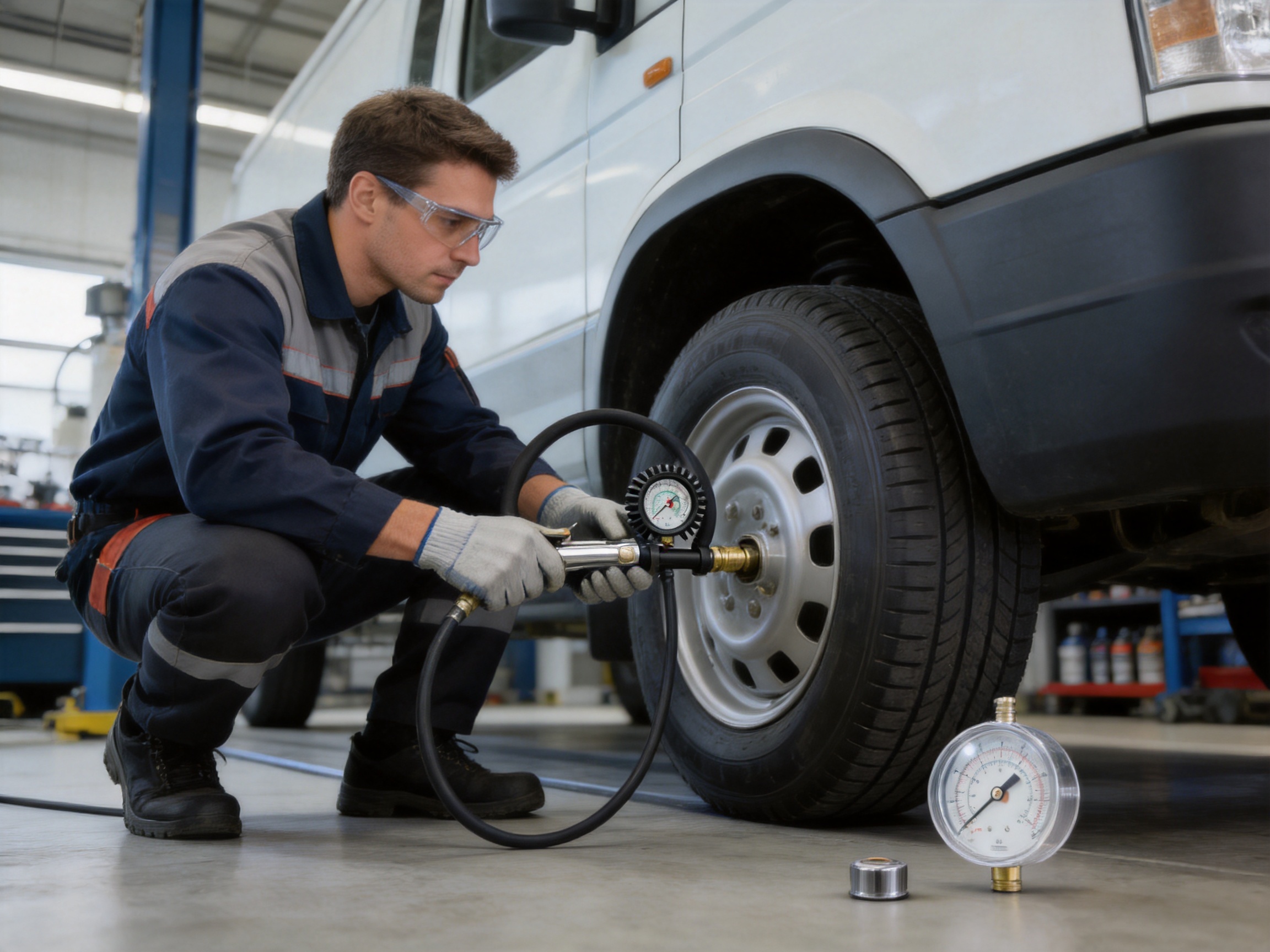
Maintenance and Service Recommendations
Routine maintenance helps preserve the performance of the TG5. After use, wipe the exterior with a clean cloth and remove dirt from the connection area. Do not allow debris to enter the air inlet or valve mechanism. If the tool is used in a dusty environment, more frequent cleaning may be necessary.
Inspect the air inlet threads periodically. Damaged threads can create poor engagement, leakage, or difficulty connecting the hose. Check the hose and coupler for cuts, abrasion, deformation, and loose components. Replace worn accessories rather than continuing to operate with a compromised connection.
Seals and internal moving components may wear over time, especially in high-use environments. If air leakage, delayed response, irregular operation, or reduced performance develops, remove the tool from service and arrange inspection or repair. Repairs should be carried out by qualified personnel using suitable replacement parts.
Compressed-air quality also affects service life. Moisture and contaminants can damage internal components or reduce the effectiveness of seals. A properly maintained compressor, filter, regulator, and water separator can help create a cleaner operating environment.
Do not modify the tool without approval from the manufacturer or a qualified technical specialist. Unauthorized drilling, machining, pressure changes, or replacement of components with unsuitable parts can compromise safety and may invalidate warranty support.
Purchasing Considerations for Distributors and Workshops
When purchasing the TG5 in quantity, buyers should evaluate more than the unit price. Important considerations include the intended application, air system compatibility, pressure requirements, operator training, replacement accessories, packaging, documentation, and after-sales service.
The 10-piece carton quantity is convenient for distributors, vehicle groups, and workshops with several service stations. A buyer may assign one tool to each bay, maintain a spare unit, or distribute products through a network of retail and professional customers. The carton size allows warehouse planners to estimate storage capacity and shipping requirements in advance.
Importers should request confirmation of the product specification, including the G1/4’ air inlet, 150 PSI rated pressure, and maximum pressure of up to 220 PSI. They should also verify whether the supplied configuration includes a hose, chuck, gauge, adapter, or other accessories, because product packages can vary by market or customer order.
Private-label buyers may also discuss OEM possibilities. The manufacturer states that it can support OEM production based on drawings or samples and ODM development based on customer needs. Such projects normally require technical review, sample approval, packaging confirmation, minimum order discussions, and agreement on quality standards.
Long-term supply is supported by the company’s production capacity and international marketing experience. The company states that production capacity can be increased by 30 percent within two months to meet different purchase quantities. Buyers should confirm the actual lead time, capacity allocation, raw material status, inspection plan, and shipping schedule for each order.
Why Manufacturing Reliability Matters to Product Performance
A hand inflating gun may appear to be a simple product, but reliable operation depends on many small details. An air inlet must maintain a secure connection. Internal passages must allow appropriate airflow. Seals must resist leakage. The body must tolerate repeated handling. Moving components must operate consistently. Packaging must protect the finished product during transport.
Manufacturing controls connect these details to the user’s experience. Consistent machining and molding support dimensional accuracy. Correct assembly protects air tightness and mechanical function. Functional testing identifies units that do not meet the intended behavior. Final inspection reduces the likelihood of packaging or identification errors.
The manufacturer’s long experience in pneumatic tools provides a foundation for these processes. Its product portfolio covers multiple categories that depend on compressed air, including spray equipment, air brushes, polishers, compressors, air fittings, and other tools. This broad experience can support a practical understanding of air-system integration and professional workshop requirements.
For customers, manufacturing reliability can reduce interruptions. A tool that connects securely, operates predictably, and withstands normal service handling is easier to include in standard maintenance procedures. Reliable equipment also reduces the time technicians spend troubleshooting avoidable leaks, connection problems, or inconsistent operation.
Environmental and Operational Efficiency
Correct tyre inflation can contribute to efficient vehicle operation. Tyres maintained at the recommended pressure can help reduce unnecessary rolling resistance and support more consistent tread wear. This may contribute to lower fuel or energy consumption over the operating life of a vehicle, although the actual result depends on vehicle type, load, road conditions, driving style, tyre design, and maintenance quality.
A pneumatic inflating gun can also make use of existing compressed-air infrastructure. In a workshop that already operates a compressor for spray guns, polishers, impact tools, or other equipment, the TG5 can be added without requiring a separate electrical pump for every inflation task. Efficient use of shared equipment may simplify the service area and reduce the number of individual devices requiring maintenance.
Environmental responsibility also includes product durability and responsible replacement. A tool that remains serviceable for a longer period can reduce the frequency of disposal and replacement. Proper maintenance, correct pressure operation, and suitable storage all help extend useful life.
The company’s reported ISO14001 environmental management certification indicates that environmental considerations are included in its management system. Buyers seeking detailed environmental information should request current documentation, material information, packaging data, and any market-specific compliance records relevant to their procurement program.
Q&A: Frequently Asked Questions
What is the TG5 used for?
The TG5 is a portable hand tyre inflating gun used to introduce compressed air into tyres. It is suitable for vehicle workshops, tyre service centers, fleet maintenance, equipment servicing, and other applications where a portable pneumatic inflation tool is required.
What is the air inlet size?
The air inlet is G1/4’. Users should confirm that their hose, coupler, adapter, and air pipeline accessories are compatible with this connection. Thread compatibility should be checked before installation.
What is the rated pressure of the TG5?
The rated pressure is 150 PSI. This is the stated pressure reference for normal product operation and should be considered together with the specifications of the connected hose, fittings, compressor, and tyre.
What is the maximum pressure?
The maximum pressure is up to 220 PSI. This indicates the product’s stated upper pressure capability, but it does not mean that every tyre should be inflated to that level. The correct tyre pressure must always come from the vehicle, tyre, or equipment manufacturer.
Does the product replace a pressure gauge?
Buyers should confirm the exact configuration supplied for their order. If a separate gauge or pressure indication device is required, it should be selected as a compatible accessory. Pressure should be checked with a suitable and accurate instrument.
Can the TG5 be used with any compressor?
The TG5 should be used with a compressor or air pipeline that provides suitable pressure, airflow, connection compatibility, and air quality. The compressor and all accessories must be rated appropriately for the complete application.
Is the tool suitable for professional workshops?
Its portable design, G1/4’ inlet, stated pressure capability, and 10-piece carton packing make it suitable for many professional environments. The exact suitability depends on the tyre types, daily usage level, air system, and maintenance procedures of the workshop.
How many pieces are packed in one carton?
The stated packing quantity is 10 pieces per carton. The carton size is 57 × 29 × 28 centimeters.
What should be checked before inflation?
Check the tyre condition, valve, hose, coupler, air inlet, pressure source, and pressure indication equipment. Confirm the recommended inflation pressure and make sure that all system components are correctly rated.
Can the manufacturer provide OEM or ODM services?
The company states that it can provide OEM production according to customer drawings or samples and ODM services according to customer requirements. Buyers should discuss technical specifications, samples, branding, packaging, minimum order quantities, testing, and delivery arrangements directly with the manufacturer.
What certifications does the company report?
The company reports ISO9001, ISO14001, and OHSAS18001 management system certifications, as well as CE and GS product certification experience. Buyers should request current and product-specific documents for the relevant destination market.
How should the TG5 be stored?
Store the tool in a clean, dry location away from impact, corrosive substances, excessive moisture, and extreme heat. Disconnect the air supply when the tool is not in use and protect the inlet and connection components from contamination.
Conclusion
The TG5 Portable Hand Tyre Inflating Gun Pressure is designed to provide a practical connection between compressed air and tyre maintenance work. Its portable hand-held format supports mobile operation, while the G1/4’ air inlet allows integration with compatible workshop hoses and air pipeline accessories. A rated pressure of 150 PSI and maximum pressure of up to 220 PSI provide useful capacity for a wide range of suitable applications.
Its advantages are most evident when compared with basic loose hoses, limited consumer pumps, or fixed inflation arrangements that restrict movement. The TG5 can help create a more organized workflow for automotive workshops, tyre service businesses, fleet maintenance teams, equipment operators, and distributors.
The product is supported by the manufacturing experience of Ningbo Lis Industrial Co., Ltd., a company with a long history in pneumatic tools and spraying equipment. Its reported research and development resources, large production base, international market experience, incoming inspection, in-process quality control, 100 percent functional testing, and final quality inspection demonstrate a structured approach to production.
Correct application remains essential. Users must follow the recommended tyre pressure, select compatible hoses and fittings, inspect equipment before use, and respect the hazards associated with compressed air and damaged tyres. When combined with suitable maintenance procedures and a properly regulated air system, the TG5 can be a dependable and flexible addition to professional tyre service equipment.
References
1. Ningbo Lis Industrial Co., Ltd. Product specification information for the TG5 Portable Hand Tyre Inflating Gun Pressure.
2. Ningbo Lis Industrial Co., Ltd. Corporate information concerning pneumatic tool manufacturing, research and development, quality control, certification, and international supply.
3. Vehicle and tyre maintenance principles concerning recommended inflation pressure, cold tyre measurement, tread wear, handling, and rolling resistance.
4. General compressed-air equipment safety practices for hoses, couplers, pressure regulators, pneumatic tools, and workshop operation.
5. Quality management principles associated with incoming inspection, in-process control, functional testing, final inspection, and traceable manufacturing processes.