 Search

 English
 中文简体
 Deutsch
 Español
Content
- 1 Introduction
- 2 Product Overview
- 3 Why a Dedicated Touch-Up Gun Matters
- 4 Key Product Advantages
- 5 Applications
- 6 Performance Compared with Less Specialized Alternatives
- 7 Manufacturing Expertise Behind the Product
- 8 Quality Assurance and Certification Background
- 9 Production Capacity and Supply Reliability
- 10 Recommended Operating Method
- 11 Cleaning and Maintenance
- 12 Safety Considerations
- 13 Value for Distributors and OEM Buyers
- 14 How the Product Supports Material Efficiency
- 15 Limitations and Selection Guidance
- 16 Quality, Responsibility, and Long-Term Development
- 17 Frequently Asked Questions
- 17.1 What type of work is the DK3 Pro Touch-Up Spray Gun designed for?
- 17.2 What is the nozzle size?
- 17.3 How much material does the cup hold?
- 17.4 What air pressure does the gun use?
- 17.5 What type of feed system does it use?
- 17.6 What air connection is required?
- 17.7 Can it be used for automotive paint?
- 17.8 Is it suitable for thick paint or texture coatings?
- 17.9 What type of compressor is needed?
- 17.10 How should the gun be cleaned?
- 17.11 What advantages does the DK3 have over a large conventional spray gun?
- 17.12 Can the manufacturer provide customized products?
- 17.13 How is the product quality controlled?
- 17.14 How is the product packed?
- 18 Conclusion
- 19 References
- 20 Product: DK3 Pro Touch-Up Spray Gun Small Range Paint Repair Fine Airbrush
Introduction
Small paint repairs demand a level of control that ordinary spray guns often cannot provide. When the work involves correcting a localized scratch, refinishing a narrow panel, blending a color transition, or applying a fine decorative finish, excessive paint output can create more problems than it solves. Overspray, uneven wetting, poor atomization, and difficult handling may force the operator to sand and repaint a much larger area than originally intended. A dedicated touch-up spray gun is designed to solve this challenge by delivering a controlled spray pattern and a measured quantity of coating material.
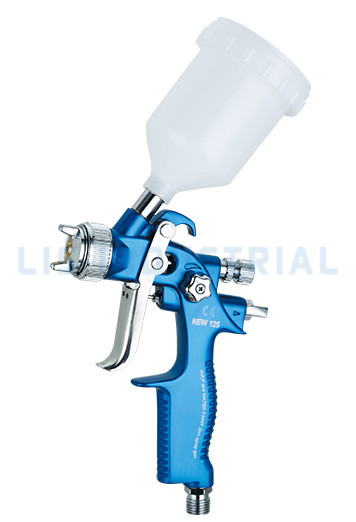
The DK3 Pro Touch-Up Spray Gun is a compact gravity-feed spray gun developed for small-range paint repair and fine airbrush-style applications. It uses a 0.5 mm fluid nozzle, operates at an air pressure of 50 PSI, and is equipped with a 125 ml paint cup. Its G1/4-inch air inlet supports connection with common compressed-air systems, while its compact structure is suited to detail work where precision, balance, and quick response are essential.
Although small in size, the DK3 is supported by the manufacturing capabilities of Ningbo Lis Industrial Co., Ltd., an established Chinese producer of spray guns, mini compressors, air tools, and spraying accessories. The company combines product development, tooling, controlled production, inspection, functional testing, and international quality management to create equipment for professional users, maintenance teams, workshops, retailers, and industrial customers.
This article examines the DK3 Pro Touch-Up Spray Gun in detail. It explains its operating characteristics, application advantages, design suitability, manufacturing background, quality-control procedures, and practical value compared with less specialized spray equipment.
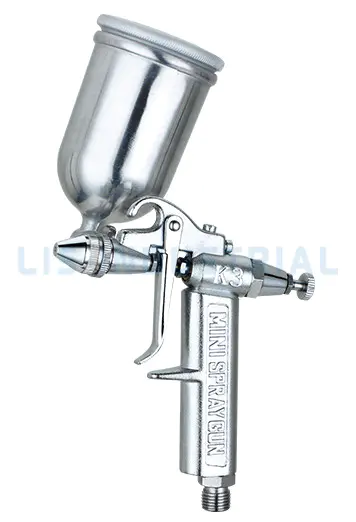
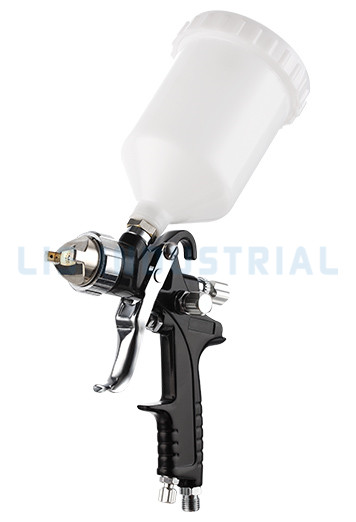
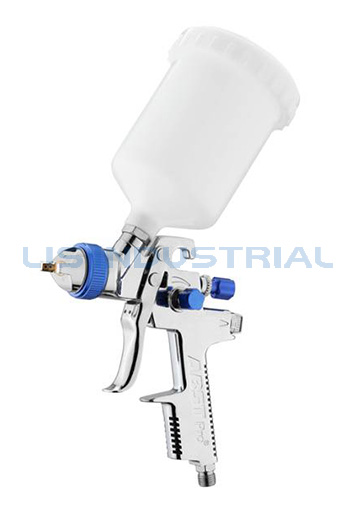
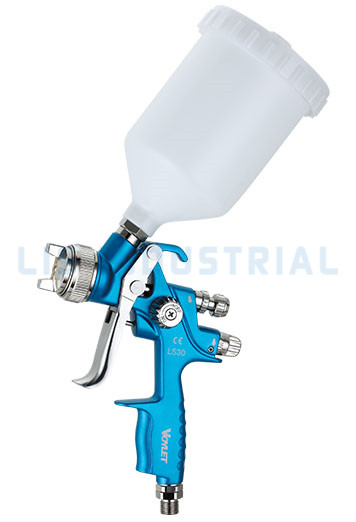
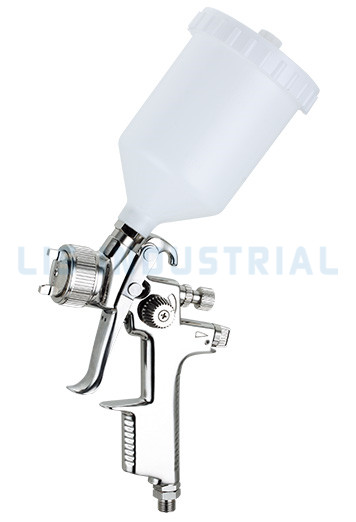
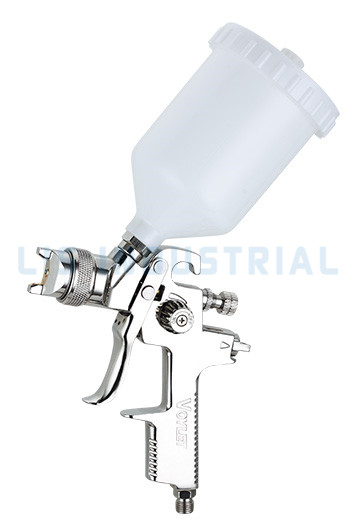
DK3 Pro Touch-Up Spray Gun Small Range Paint Repair Fine Airbrush
Product Overview
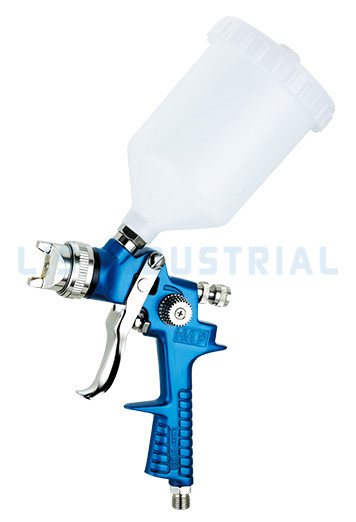
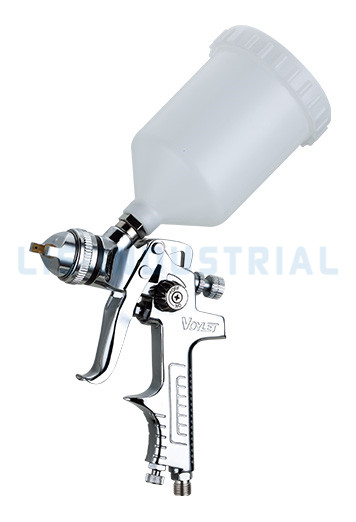
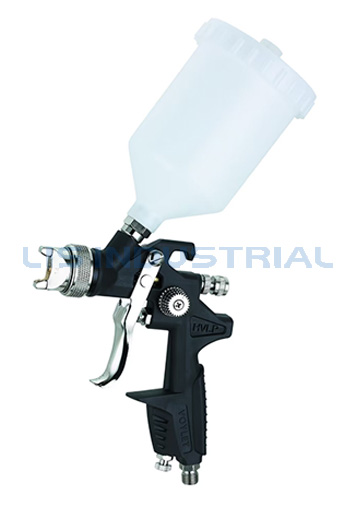
The DK3 Pro Touch-Up Spray Gun belongs to the Pro Touch-Up Spray Guns category. Its primary purpose is the accurate application of paint, primer, clear coat, dye, and other compatible liquid coatings over small or moderately sized areas. Unlike a large conventional spray gun intended for broad surface coverage, the DK3 is designed around economy of movement and material control.
The gun uses a gravity-feed configuration. In this arrangement, coating material is held in the upper cup and flows toward the nozzle under gravity, assisted by the air pressure generated by the connected compressor. Gravity feed generally allows the operator to work with comparatively lower material volume while maintaining a consistent supply to the fluid nozzle. It also makes the gun appropriate for short repair jobs where rapid color changes or small batches are common.
The 0.5 mm fluid nozzle is a central feature of the product. A nozzle of this size is suitable for fine spray work because it can produce a relatively narrow and controlled material flow when the coating viscosity is properly adjusted. It is particularly useful for detail repairs, small components, model work, hobby applications, spot finishing, and narrow blending areas. The nozzle specification also indicates that the gun is intended for precision rather than high-volume production coverage.
The 125 ml cup provides a practical balance between capacity and compactness. It is large enough for many touch-up operations without requiring frequent refilling, yet small enough to avoid the weight and handling fatigue associated with a full-size paint cup. For professional technicians, this capacity can support short repair cycles. For hobby users, it reduces unnecessary material preparation and limits leftover coating.
The stated operating air pressure is 50 PSI. Actual working conditions may vary according to coating type, viscosity, spray distance, desired pattern, and compressor performance. Operators should always follow the recommendations for the coating being used and confirm that the air supply is clean, dry, and stable. The G1/4-inch air inlet is a widely used connection size, making it easier to integrate the gun with compatible hoses, regulators, filters, and workshop air lines.
| Specification | DK3 Pro Touch-Up Spray Gun | Practical Significance |
|---|---|---|
| Product type | Pro touch-up spray gun | Designed for detailed repair and localized finishing |
| Fluid nozzle | 0.5 mm | Supports fine material control and narrow applications |
| Recommended air pressure | 50 PSI | Provides a defined operating reference for compressed-air use |
| Cup capacity | 125 ml | Balances working time, compactness, and reduced material waste |
| Feed type | Gravity | Suitable for small batches and controlled paint delivery |
| Air inlet | G1/4 inch | Compatible with common air hoses and workshop fittings |
| Carton packing | 20 pieces per carton | Convenient for distribution, wholesale, and inventory planning |
| Carton dimensions | 47 × 35.5 × 29 cm | Provides a defined shipping and storage reference |
Why a Dedicated Touch-Up Gun Matters
Not every spray application should be performed with a full-size automotive or industrial spray gun. Large spray guns can apply a broad pattern and a high material volume, which is beneficial for doors, panels, furniture surfaces, and other large workpieces. However, these characteristics can be inefficient for small corrections. A large gun may cover areas that do not require coating, increase masking requirements, and make it more difficult to achieve a smooth transition between repaired and original surfaces.
A touch-up gun is designed to limit the scale of the operation. The smaller nozzle and compact cup help the operator focus on the actual repair area. This can reduce overspray and simplify the preparation process, especially when the surrounding surface must remain untouched. The result is a more efficient workflow in which less time is spent on masking, cleaning, sanding, and correcting unintended coverage.
The DK3 is also advantageous when the coating quantity is limited. Color-matching work, custom finishes, sample preparation, and small-batch production may require only a small amount of material. A 125 ml cup allows the user to prepare a suitable quantity without filling a large reservoir. This is useful when several colors or coating formulations are handled during the same shift.
Precision is another major consideration. Fine repair work depends not only on the quality of the coating but also on how predictably the gun responds to the trigger and air supply. A compact gun with a small nozzle gives the operator greater opportunity to build coverage gradually. Instead of attempting to achieve complete opacity in one heavy pass, the user can apply several controlled passes and observe the developing finish.
This gradual approach can help reduce runs, sags, dry spray, and visible edges. It is especially valuable during blending operations, where the coating must transition smoothly from a repaired area into the surrounding finish. The operator can adjust distance, travel speed, overlap, and trigger control to create a more natural result.
Key Product Advantages
Fine Material Delivery
The 0.5 mm fluid nozzle gives the DK3 a clear identity as a detail-oriented spray tool. Compared with larger-nozzle guns, it is better suited to applications where the operator must limit the amount of material delivered at any one time. This does not mean that the gun is appropriate for every coating or every surface. Rather, it means that, with compatible low-to-medium viscosity materials and correct preparation, the gun can provide the precision expected in touch-up work.
Fine material delivery can be valuable for paint correction, decorative details, small metal parts, instrument panels, trim components, model surfaces, and localized woodworking repairs. The gun can also be used for test spraying before a larger application. By observing atomization and color development on a sample surface, the operator can adjust the coating before committing material to the finished workpiece.
Gravity-Feed Efficiency
The gravity-feed design contributes to efficient operation because the paint cup is positioned above the fluid nozzle. This arrangement helps maintain material flow without relying on a separate suction tube extending into a lower container. For small jobs, gravity feed can make the gun responsive and economical, particularly when the cup contains only a limited amount of coating.
Gravity-feed guns are also practical when changing materials or colors. The cup, fluid passage, and nozzle can be cleaned between applications, and the relatively small internal volume helps reduce the amount of solvent or cleaning solution required. Lower residual material can also make it easier to avoid accidental color contamination during sequential touch-up work.
Compact 125 ml Cup
A compact cup affects more than material capacity. It also influences balance, visibility, and operator comfort. A smaller reservoir is less likely to become excessively heavy during extended detail work. The user can position the gun more accurately and maintain a stable distance from the surface. This is important when following a narrow repair line or matching the edge of an existing finish.
The 125 ml capacity is appropriate for controlled work rather than continuous high-output spraying. It encourages the user to prepare only the material needed for the task, which can reduce waste and simplify leftover material management. For distributors and workshops, this cup size also makes the gun attractive to customers who need a specialized tool without the bulk of a general-purpose production gun.
Common G1/4-Inch Air Inlet
Air compatibility is an important factor in spray equipment selection. A gun may perform well in testing but become inconvenient if it requires unusual fittings or proprietary hoses. The DK3 uses a G1/4-inch air inlet, a common specification in air-tool and compressed-air equipment. This supports connection to many regulators, air hoses, quick couplers, and pipeline accessories available in professional workshops.
A common inlet size can simplify purchasing and maintenance. Users can select suitable fittings according to local standards and existing equipment. Distributors can also stock a wider range of compatible accessories without creating a separate supply chain for uncommon connection parts.
Controlled Air Requirement
The specified 50 PSI air pressure provides a clear starting point for setup. Correct air pressure supports atomization, but pressure alone does not determine spray quality. The condition of the compressor, the internal diameter and length of the hose, the presence of moisture or oil, the coating viscosity, and the distance from the surface all influence the final result.
When the air supply is properly regulated, the DK3 can be adjusted for a controlled spray pattern appropriate to small repairs. A stable supply is particularly important for fine work because pressure fluctuations may produce inconsistent atomization or uneven coating distribution. The product is therefore best used with a compressor and air-treatment system capable of maintaining clean, dry, regulated air.
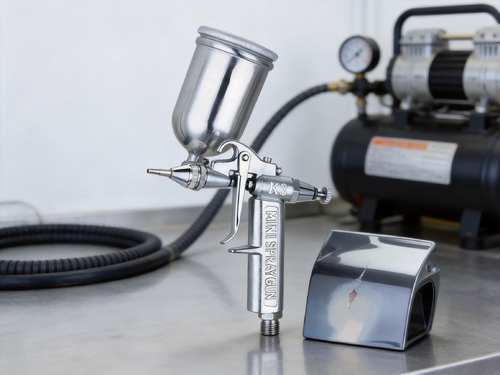
Applications
Automotive Spot Repair
Automotive repair is one of the most obvious application areas for a compact touch-up spray gun. Small scratches, chipped edges, localized corrosion treatment, bumper marks, mirror housings, wheel details, and trim components may not justify the use of a full-size spray gun. The DK3 can help the technician concentrate coating on the repair zone and build coverage progressively.
For blending work, the operator can begin with a narrow application and gradually expand the spray area as required. This approach may reduce the visible transition between the repaired section and the surrounding factory finish. Results depend on surface preparation, color formulation, flash time, clear-coat compatibility, and operator technique, but the gun’s compact format provides a suitable foundation for controlled application.
Woodworking and Furniture Repair
Woodworking projects often include small parts, edges, decorative profiles, cabinet details, and repaired sections that require localized finishing. A large spray gun can apply too much material to narrow surfaces, while a brush may leave visible marks or produce an inconsistent texture. A fine touch-up gun gives the operator another option for applying stain-compatible coatings, paint, lacquer, or other suitable finishes.
The user should verify that the selected coating is appropriate for the nozzle size and spray-gun configuration. Thick materials may require thinning, filtration, a different nozzle, or another spray system. When the material is properly prepared, the DK3 can support smooth, measured passes over small furniture components and repair areas.
Decorative and Model Work
Model makers, sign manufacturers, craft workers, and restoration specialists often need precise control over small surfaces. A 0.5 mm nozzle can be useful for base coats, shading, highlighting, color separation, and detail accents. The gravity-feed cup provides a practical way to load a small quantity of material without preparing a large reservoir.
For these applications, the operator can benefit from the gun’s compact size and controlled response. Fine work often requires frequent pauses to inspect the surface, change direction, or adjust the angle of application. A lightweight, detail-oriented tool can be easier to manage than a larger production gun.
Industrial Component Touch-Up
Manufacturing and maintenance departments may need to repair coatings on brackets, housings, frames, machine components, and fabricated assemblies. In these situations, the repair area may be too small for a conventional production gun, but too large or irregular for a brush. The DK3 can serve as a flexible intermediate tool for maintenance spraying and appearance correction.
Its standardized air connection and compact cup make it suitable for integration into a workshop environment containing compressors, regulators, filters, air lines, and other pneumatic equipment. Because it is packed at 20 pieces per carton, the model can also be considered for fleet purchasing, service-center distribution, or multi-station maintenance programs.
Sample Panels and Color Development
Paint suppliers, repair centers, and coating laboratories frequently prepare test panels before production or repair work. A fine spray gun can apply a controlled sample layer while using less coating than a larger gun. This can help technicians evaluate color, gloss, coverage, and compatibility before moving to the final workpiece.
Sample work also creates an opportunity to standardize application procedures. Operators can record pressure, coating reduction, spray distance, pass speed, and flash time. The DK3’s defined nozzle, cup, and air-inlet specifications provide a repeatable equipment reference for this type of process documentation.
Performance Compared with Less Specialized Alternatives
Product comparisons should be based on application requirements rather than size alone. A full-size conventional spray gun may be the better choice for broad coverage and high production volume. An airbrush may be better for extremely small artistic details. An electric sprayer may be more convenient where compressed air is unavailable. The DK3 occupies a practical position between these categories by providing pneumatic control in a compact touch-up format.
| Equipment Type | Primary Strength | Typical Limitation for Small Repairs | Position of the DK3 |
|---|---|---|---|
| Large conventional spray gun | Broad coverage and high output | May create excessive overspray and material use | More focused and easier to control for localized work |
| Airbrush | Very fine artistic detail | Limited material volume and slower coverage | Offers a larger 125 ml cup and workshop-oriented air connection |
| Suction-feed spray gun | Can draw material from a lower container | May require more material and a larger setup | Gravity feed is compact and efficient for small batches |
| Electric paint sprayer | Does not require an external compressor | May offer less pneumatic adjustment and a different spray feel | Uses regulated compressed air for familiar workshop control |
| Brush or aerosol can | Simple initial setup | May produce brush marks or less consistent atomization | Provides a reusable pneumatic application method |
One of the DK3’s principal advantages over generic large spray guns is application scale. The smaller nozzle and cup allow the operator to match the equipment to the repair rather than oversizing the tool. This can improve material economy and reduce the preparation burden. In comparison with very small airbrushes, the DK3 provides a more workshop-oriented design, a larger cup, and a standard G1/4-inch air inlet.
Compared with inexpensive, poorly specified touch-up guns, the DK3 benefits from a defined product configuration and the support of an established spray-equipment manufacturer. A clear specification helps buyers select suitable hoses, regulators, compressors, and coating materials. It also assists distributors in presenting a product with measurable technical characteristics rather than relying only on general claims.
It is important to understand that no spray gun automatically guarantees a perfect finish. Surface preparation, coating quality, ventilation, temperature, humidity, operator experience, and cleaning discipline remain decisive. The DK3’s advantage is that its design is aligned with the needs of controlled touch-up work, making it easier for a trained operator to achieve the intended result.
Manufacturing Expertise Behind the Product
The DK3 is produced by Ningbo Lis Industrial Co., Ltd., a company engaged in the research, development, manufacturing, and marketing of air painting spray guns, mini air compressors, and related air tools. The company has been developing products in the spraying-equipment field since 1984 and operates from Ningbo, China, a manufacturing and port city with established industrial infrastructure and convenient transportation links.
The company’s reported production site covers more than 400,000 square feet and employs more than 400 people. Its annual output is reported at more than 40 million US dollars. These figures indicate a manufacturing organization capable of supporting product development, production planning, quality management, packaging, export preparation, and customer service at an international scale.
Scale alone does not determine product quality, but it can provide important operational advantages. A larger organization may be able to maintain specialized engineering teams, dedicated inspection resources, better production scheduling, and a broader supplier-management system. It can also support multiple product families, allowing expertise from spray guns, compressors, fittings, and pneumatic tools to inform new product development.
The manufacturer has developed international brands including Voylet and Muzi, and also works with the Wagem product range. Its products are sold in Europe, North America, the Middle East, South Africa, East Asia, and other markets. International distribution requires attention to packaging, documentation, product consistency, regional standards, and after-sales communication.
Research and Development
Research and development is a significant strength in a product category where small changes can affect atomization, ergonomics, cleaning, and service life. The company maintains an R&D team capable of developing products according to customer drawings or samples. It also provides ODM services based on customer requirements.
For private-label distributors and equipment importers, this capability can be valuable. A customer may need a particular cup arrangement, fitting specification, package design, nozzle combination, surface treatment, or accessory set. The ability to work from drawings and samples can shorten the path from concept to production. ODM support also allows customers to develop a product solution that is more closely matched to their market rather than selecting only from standard catalog models.
The company has established a spraying machinery engineering technology center and has carried out technical cooperation with American Wagner Spraying Technology Co., Ltd. Such cooperation reflects an effort to improve engineering capability through technical exchange and specialized research. In practical terms, this type of background can support more systematic work on air passages, fluid delivery, component precision, ergonomics, and application consistency.
Tooling and Process Control
Spray-gun manufacturing requires attention to component dimensions, mating surfaces, seals, threads, fluid passages, air passages, and trigger mechanisms. If these elements are not controlled, the final product may suffer from leakage, unstable spraying, difficult adjustment, or premature wear.
An advanced manufacturing process typically begins with controlled raw-material selection and incoming inspection. Components and materials must be checked against defined requirements before entering production. During assembly, workers and equipment must follow consistent procedures so that critical parts are fitted correctly. In-process inspections can identify dimensional or functional problems before the product reaches final assembly.
For the DK3, consistent nozzle and fluid-path production is especially important because the 0.5 mm specification leaves relatively little room for contamination or dimensional variation. Clean passageways, accurate mating surfaces, and properly assembled seals help preserve the intended spray behavior. The final product must also be checked for air tightness, fluid delivery, trigger response, and general operating function.
Quality Assurance and Certification Background
The manufacturer states that its quality system follows ISO9000 requirements and includes control from raw-material and incoming inspection through in-process quality control, 100% functional testing, and final inspection of finished products. This full-process approach is important because a spray gun can pass a visual inspection while still having an air leak, an incorrectly fitted seal, or an inconsistent trigger action.
Incoming inspection helps prevent unsuitable components from entering the production line. In-process control allows problems to be identified while they can still be corrected efficiently. A 100% functional test provides an additional safeguard by requiring each finished unit to meet defined operating criteria rather than relying only on sample testing.
Final inspection supports packaging accuracy, appearance, component completeness, and shipment readiness. For international buyers, this is particularly important because returned or delayed products can create costs beyond the original purchase price. Consistency in carton quantity, product identification, and accessory inclusion helps distributors manage inventory and customer fulfillment.
The company reports certifications and compliance credentials including ISO9001, OHSAS18001, ISO14001, CE, and German GS certification. These certifications relate to quality management, occupational health and safety, environmental management, and product safety or conformity requirements. Buyers should confirm the specific certificate scope, model coverage, validity, and market requirements for their intended application before placing an order.
A structured certification environment also indicates that manufacturing is managed through documented systems rather than informal procedures alone. This can support repeatability across production batches and provide a foundation for corrective action when quality issues are identified.
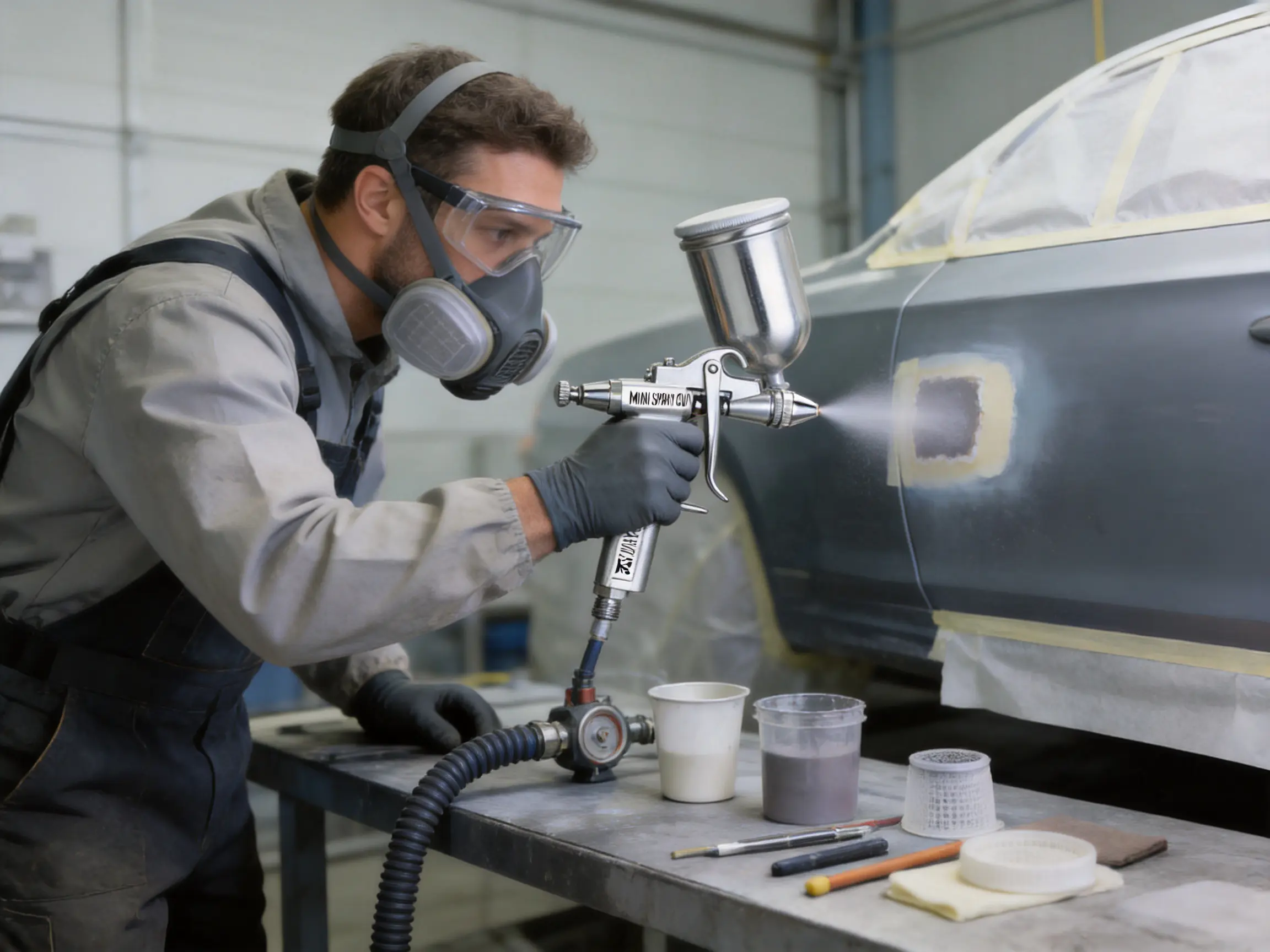
Production Capacity and Supply Reliability
Supply continuity is an important consideration for wholesalers, importers, repair-network operators, and industrial customers. A product may perform well, but inconsistent availability can make it difficult to support a market. The manufacturer reports the ability to increase production capacity by 30 percent within two months, subject to order planning and production conditions.
This stated flexibility can help address seasonal demand, promotional programs, new distributor appointments, and larger project orders. It also suggests that the company has experience coordinating production resources, materials, labor, and shipping requirements when demand changes.
The 20-piece carton configuration is suitable for wholesale distribution and inventory planning. The carton dimensions of 47 × 35.5 × 29 cm provide a reference for warehouse storage, freight calculation, and export packing arrangements. Distributors can use this information when planning pallet quantities, shelf space, container loading, and regional order sizes.
For buyers ordering customized versions, production planning should include time for technical confirmation, sample approval, packaging design, testing, and final inspection. Early communication of forecast volume and delivery requirements can help the manufacturer allocate capacity and identify any special component needs.
Recommended Operating Method
Prepare the Work Area
Before spraying, the operator should prepare a clean, ventilated work area with suitable lighting. Good lighting makes it easier to observe wetness, coverage, orange peel, dry spray, and edge blending. Adequate ventilation helps control airborne coating particles and solvent vapors. Appropriate personal protective equipment should be selected according to the coating and local safety requirements.
The workpiece should be cleaned, degreased, dried, and prepared according to the coating manufacturer’s instructions. Dust, wax, oil, silicone, loose material, and moisture can cause defects even when the spray gun is functioning correctly. Masking should be arranged so that the fine spray pattern remains within the intended zone.
Prepare the Coating
Coating viscosity has a direct influence on atomization. Material that is too thick may produce poor breakup, an irregular pattern, or excessive demands on the air supply. Material that is too thin may run, sag, or provide inadequate coverage. The coating supplier’s technical data should be used as the primary reference for reduction, filtration, pot life, and compatibility.
Before filling the 125 ml cup, the material should be mixed thoroughly and filtered when appropriate. The cup should not be overfilled. A reasonable fill level improves handling and reduces the likelihood of spills during movement or adjustment.
Set Up the Air Supply
The compressor should provide clean, dry air at a stable pressure. A regulator allows the operator to control pressure, while an air filter or water separator helps reduce moisture and contamination. The air hose and fittings should be checked for leaks, and the G1/4-inch connection should be tightened securely without damaging the threads.
The stated 50 PSI pressure is a reference point for setup. The operator should confirm the pressure at the gun or as close to the gun as practical, because pressure loss through a long or narrow hose can affect actual performance. Adjustments should be made gradually while observing the spray pattern on a test surface.
Test the Pattern
A test spray should be performed before applying material to the finished workpiece. The operator can evaluate whether the pattern is even, whether the material is atomizing correctly, and whether the coating is arriving too wet or too dry. Spray distance and travel speed should be adjusted together rather than changing several variables without observation.
For small repairs, the gun should generally be moved smoothly and consistently. Starting and stopping the spray at the edge of the work area or on a masked region can help reduce heavy buildup at the beginning and end of a pass. Several light, overlapping passes are often preferable to one heavy pass, although the correct method depends on the coating and desired finish.
Cleaning and Maintenance
Proper cleaning is essential for any fine-nozzle spray gun. Residual coating can dry inside the nozzle, fluid passage, air cap, or cup connection. Even a small amount of dried material may change the spray pattern or restrict flow. Cleaning should begin immediately after the application is complete and before the material hardens.
The operator should follow the coating manufacturer’s recommendations for cleaning agents. The cup should be emptied responsibly, and the remaining material should be handled according to local environmental and waste regulations. Suitable cleaning solution can then be used to flush the fluid passage. The air cap and nozzle should be removed and cleaned carefully with appropriate tools; hard or sharp objects that could damage precision openings should be avoided.
Seals, threads, and moving components should be inspected during routine maintenance. Any damaged or worn parts should be replaced with compatible components. The gun should be stored in a clean, dry location, protected from impact, dust, and unauthorized access. A consistent maintenance schedule can preserve spray quality and extend service life.
Because the DK3 is intended for fine work, maintenance discipline has an especially visible effect. A partially blocked 0.5 mm nozzle may produce an uneven fan, spitting, or asymmetrical atomization. Keeping the material path clean is therefore not merely a matter of appearance; it is part of maintaining the tool’s functional accuracy.
Safety Considerations
Compressed-air spraying requires responsible operation. The user should wear suitable eye protection, respiratory protection, gloves, and protective clothing according to the coating and workplace risk assessment. Spraying should take place only in an area with appropriate ventilation and ignition control. Many coatings and cleaning agents are flammable or hazardous when inhaled.
The air hose and fittings should be inspected before use. Damaged hoses, loose couplers, or leaking connections can create hazards and reduce performance. The operator should not exceed the recommended pressure range of the spray gun or connected accessories. The gun should never be directed toward people, animals, or exposed skin.
Material safety data and technical data should be reviewed before using a new coating. Some materials may be incompatible with seals, cups, or internal components. Operators should also be aware of curing times, solvent hazards, disposal requirements, and local workplace regulations.
Value for Distributors and OEM Buyers
The DK3 offers several commercial advantages for distributors serving repair, automotive, woodworking, craft, and general pneumatic-tool markets. Its product identity is easy to understand: it is a compact gun for fine touch-up work, with a 0.5 mm nozzle, 125 ml gravity cup, 50 PSI reference pressure, and G1/4-inch air inlet. These specifications can be used in product catalogs, packaging, training material, and sales comparisons.
The model can complement rather than replace larger spray guns. A distributor may offer it as part of a complete spraying range that includes conventional spray guns, HVLP models, texture guns, airbrushes, airless equipment, electric sprayers, compressors, fittings, and accessories. This allows customers to choose equipment based on the size, material, and precision requirements of each job.
For OEM customers, the manufacturer’s R&D and ODM capability can support customized versions. Potential areas for discussion may include branding, packaging, accessory combinations, regional fitting standards, nozzle options, color, user manuals, and order quantities. Any customization should be confirmed through engineering review and sample approval before mass production.
The manufacturer’s experience with international markets and its reported network across Europe, North America, the Middle East, South Africa, and East Asia can also support export-oriented business. Buyers should still conduct their own commercial, technical, regulatory, and quality evaluation, especially when products are intended for professional or regulated environments.
How the Product Supports Material Efficiency
Material efficiency is increasingly important because coatings can be expensive, hazardous, or difficult to dispose of. A smaller spray tool can help users match paint volume to repair size. The DK3’s 0.5 mm nozzle and 125 ml gravity cup are naturally aligned with applications where a limited amount of material is needed.
Reduced material use can produce several secondary benefits. There may be less overspray on masking materials, less cleaning solvent required after a short job, and less unused coating left in the cup. In a busy repair center, these savings may accumulate across many small operations. In a hobby or maintenance setting, the user can prepare a smaller quantity and avoid opening or mixing more material than necessary.
Efficiency does not mean applying too little coating. The final film thickness must still meet the requirements of the coating system. The best result comes from combining the appropriate nozzle, material preparation, air pressure, spray distance, and number of passes. The DK3 provides control, but the operator remains responsible for establishing the correct application method.
Limitations and Selection Guidance
The DK3 is not intended to replace every type of spray equipment. Its 0.5 mm nozzle is optimized for fine work and may not be the most efficient choice for thick texture coatings, heavy-bodied materials, large exterior surfaces, or very high production rates. Users should select a larger or specialized spray system when the coating or workpiece demands higher fluid output.
Likewise, the gun requires a suitable compressed-air source. Customers without a compressor may prefer an electric paint sprayer or a complete kit that includes a compatible mini compressor. The quality of the air supply remains important, so a regulator, moisture separator, and clean hose may be necessary for consistent results.
Buyers should also consider local connection standards, replacement parts, coating compatibility, operator training, and after-sales support. The G1/4-inch air inlet is widely used, but the complete air-line system may require adapters depending on the region. Before purchase, users should confirm that the product matches the intended material and application conditions.
Quality, Responsibility, and Long-Term Development
The company’s stated mission emphasizes continuous innovation, high-quality products, professional services, and value for customers. Its reported certifications in quality, environmental management, occupational health and safety, and product conformity show an effort to connect product manufacturing with broader operational responsibility.
For a spray-gun producer, environmental and safety management can influence factory practices, material handling, worker protection, waste control, and process improvement. These areas do not replace product testing, but they contribute to a more disciplined manufacturing environment.
The company’s long operating history, engineering cooperation, international customer base, and ability to provide OEM and ODM services create a foundation for continued product development. As users seek lower material consumption, improved ergonomics, better transfer efficiency, more durable components, and easier cleaning, manufacturers with integrated engineering and quality systems are better positioned to respond.

Frequently Asked Questions
What type of work is the DK3 Pro Touch-Up Spray Gun designed for?
The DK3 is designed for localized paint repair, small-component finishing, detail work, blending, sample spraying, woodworking repairs, model work, and other applications requiring controlled material delivery. It is best suited to small and medium touch-up areas rather than large-scale production coverage.
What is the nozzle size?
The specified fluid nozzle size is 0.5 mm. This fine nozzle supports controlled spraying when the coating viscosity and air settings are suitable for the application.
How much material does the cup hold?
The gravity-feed cup has a stated capacity of 125 ml. The user should avoid overfilling the cup and should prepare a quantity appropriate to the job and the coating’s working life.
What air pressure does the gun use?
The listed air pressure is 50 PSI. This should be treated as an operating reference. The final setting may need adjustment according to coating viscosity, spray distance, material requirements, compressor output, and desired atomization.
What type of feed system does it use?
The DK3 uses gravity feed. The cup is positioned above the fluid nozzle, allowing material to flow toward the nozzle with assistance from gravity and compressed air.
What air connection is required?
The gun uses a G1/4-inch air inlet. Users should select a compatible hose, regulator, filter, and coupler system and confirm regional fitting compatibility before installation.
Can it be used for automotive paint?
It can be considered for compatible automotive touch-up coatings, spot repairs, trim components, and blending work. The coating manufacturer’s instructions must be followed, including requirements for thinning, filtration, flash time, respiratory protection, and clear-coat application.
Is it suitable for thick paint or texture coatings?
The 0.5 mm nozzle is intended for fine application and may not be suitable for thick or heavily textured materials. Users should confirm viscosity and nozzle requirements before use. A specialized texture gun or larger spray system may be more appropriate for high-build materials.
What type of compressor is needed?
A compressor capable of delivering clean, dry, stable air at the required pressure should be used. The exact compressor capacity depends on the gun’s air consumption and the intended operating pattern. A regulator and moisture separator are recommended for controlled spraying.
How should the gun be cleaned?
The gun should be cleaned immediately after use with a cleaning agent compatible with the coating. The cup, fluid passage, nozzle, and air cap should be flushed and inspected. Precision openings should not be damaged with sharp tools, and worn seals or components should be replaced when necessary.
What advantages does the DK3 have over a large conventional spray gun?
Its compact format, fine 0.5 mm nozzle, and 125 ml gravity cup are better matched to localized work. These features can improve control, reduce unnecessary material use, simplify small-batch preparation, and make the tool easier to handle in narrow or detailed repair areas.
Can the manufacturer provide customized products?
The manufacturer reports OEM services based on customer drawings or samples and ODM services based on customer requirements. Customization should be discussed with the engineering and sales teams, followed by technical confirmation and sample approval.
How is the product quality controlled?
The company reports quality control from raw-material and incoming inspection through in-process inspection, 100% functional testing, and final finished-product inspection. It also reports management-system and product certifications, including ISO9001, ISO14001, OHSAS18001, CE, and German GS credentials. Buyers should confirm the relevant certificate scope for their order.
How is the product packed?
The stated packing arrangement is 20 pieces per carton. The carton size is 47 × 35.5 × 29 cm, which can assist with warehouse planning and shipping calculations.
Conclusion
The DK3 Pro Touch-Up Spray Gun is a specialized pneumatic tool for users who need accurate, economical, and manageable paint application over small areas. Its 0.5 mm fluid nozzle supports fine material control, its 125 ml gravity-feed cup is practical for short jobs and small batches, its 50 PSI specification provides a clear setup reference, and its G1/4-inch air inlet supports integration with common workshop air systems.
Compared with oversized conventional guns, the DK3 is better aligned with spot repair, detail finishing, blending, and localized coating. Compared with very small airbrushes, it offers a more substantial cup and a workshop-oriented pneumatic connection. These characteristics give it a useful position for automotive repair, woodworking, industrial maintenance, decorative work, model finishing, and sample preparation.
The product is further supported by the manufacturing resources of Ningbo Lis Industrial Co., Ltd. The company reports a long history in spray-equipment production, a large manufacturing site, an experienced workforce, international market coverage, dedicated R&D capabilities, OEM and ODM services, technical cooperation, structured quality control, and recognized management and product certifications.
For the best results, the DK3 should be treated as part of a complete application system. Correct coating preparation, clean and regulated air, suitable ventilation, careful testing, steady technique, and immediate cleaning are all essential. When these conditions are properly managed, the gun can provide an efficient and precise solution for fine repair and controlled paint application.
References
1. Product specification sheet for the DK3 Pro Touch-Up Spray Gun, including nozzle size, air pressure, cup capacity, feed type, air inlet, and carton information.
2. Ningbo Lis Industrial Co., Ltd. company information and manufacturing profile.
3. ISO 9001 quality management system principles and guidance for manufacturing organizations.
4. ISO 14001 environmental management system principles and implementation guidance.
5. Occupational health and safety management practices for compressed-air spraying and coating operations.
6. General technical guidance for spray-gun setup, coating viscosity, atomization, cleaning, and maintenance.
7. General workplace safety guidance for paint application, solvent handling, ventilation, and personal protective equipment.