 Search

 English
 中文简体
 Deutsch
 Español
Content
- 1 Product Overview
- 2 How HVLP Technology Supports Efficient Spraying
- 3 Key Technical Specifications
- 4 Nozzle Selection and Material Compatibility
- 5 Advantages of the 1000 ml Cup
- 6 Alloy Construction and Workshop Durability
- 7 Air Connection and Compressor Requirements
- 8 Spray Pattern Control
- 9 Applications Across Different Industries
- 10 Comparison with Conventional Spray Guns
- 11 Manufacturing Strengths and Quality Management
- 12 Why Manufacturing Scale Matters to Buyers
- 13 Maintenance and Cleaning Procedure
- 14 Safety and Workplace Practice
- 15 Practical Setup Guide
- 16 Purchasing Considerations for Distributors and OEM Customers
- 17 Limitations and Correct Use Expectations
- 18 Frequently Asked Questions
- 18.1 What type of work is the AB17S suitable for?
- 18.2 What nozzle sizes are available?
- 18.3 What is the capacity of the cup?
- 18.4 Is the gun gravity feed or suction feed?
- 18.5 What air pressure does the spray gun require?
- 18.6 What type of air connection does it use?
- 18.7 Can the gun spray thick coatings?
- 18.8 How can overspray be reduced?
- 18.9 What compressor is needed?
- 18.10 How often should the spray gun be cleaned?
- 18.11 Can the product be supplied for OEM projects?
- 18.12 What should buyers verify before placing an order?
- 19 Conclusion
- 20 References
- 21 Product: Voylet AB17S HVLP Spray Gun Gravity Feed Alloy with 1000ML Cup+
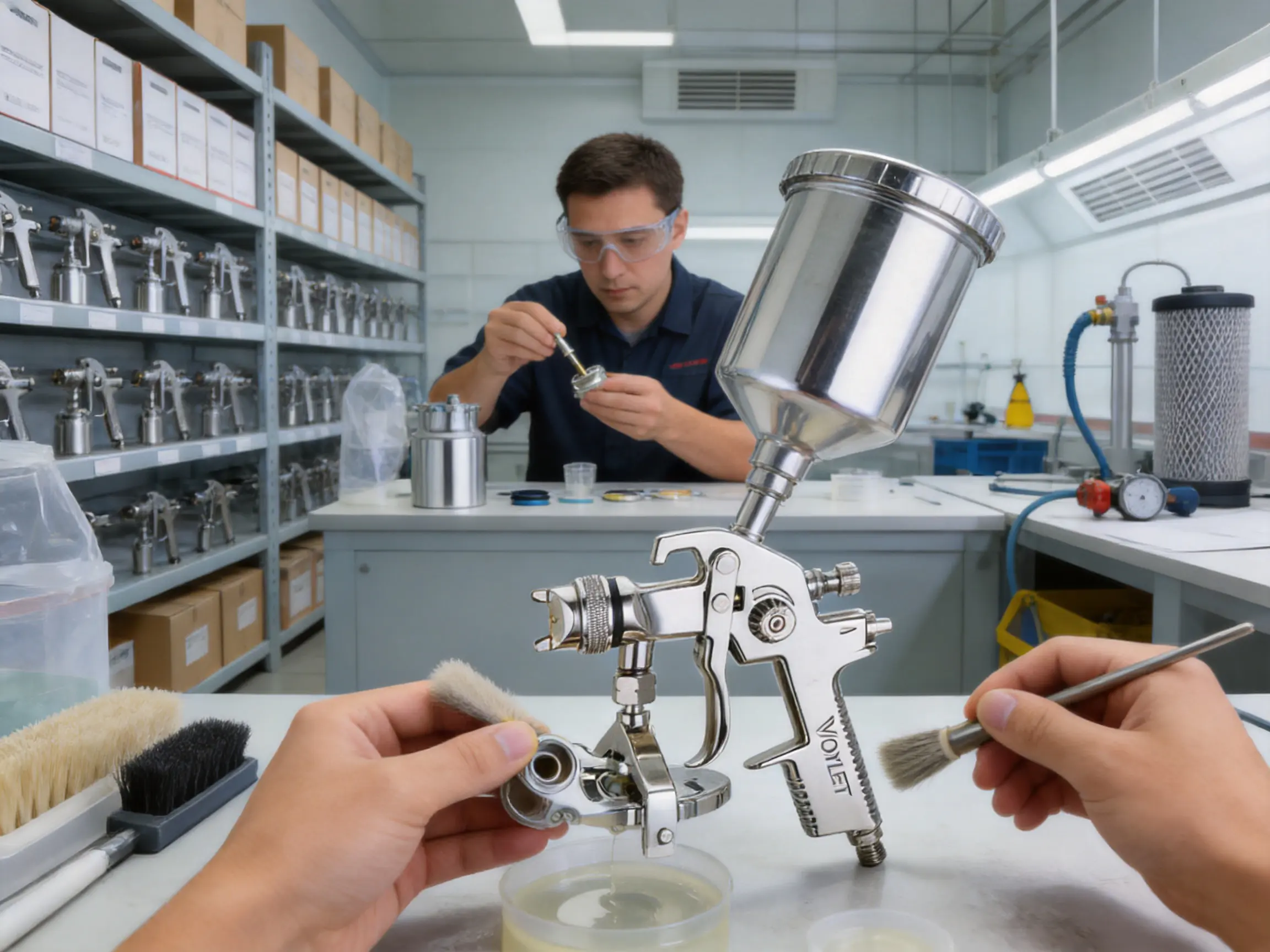
Modern paint application requires more than simply moving a spray gun across a surface. A professional result depends on atomization quality, fluid delivery, air management, operator control, equipment durability, maintenance, and compatibility with the coating being used. The AB17S HVLP spray gun is designed as a practical solution for users who need reliable coverage, efficient material transfer, and the flexibility to handle a broad range of finishing tasks.
Built with an alloy body and supplied with a 1000 ml cup, this spray gun is suitable for workshops, automotive refinishing, furniture production, woodworking, industrial maintenance, agricultural equipment repair, and general coating applications. Its available fluid nozzle sizes of 1.4 mm, 1.7 mm, and 2.0 mm allow users to select an appropriate setup for different materials and desired finishes. The stated operating air pressure is 50 PSI, while the air inlet uses the widely adopted G1/4-inch specification.
This article examines the product’s design, working principles, technical features, practical advantages, applications, maintenance requirements, and quality-control background. It also explains how a structured manufacturing system can contribute to consistent performance and why a professional spray gun should be evaluated as part of a complete finishing process rather than as an isolated hand tool.
Product Overview
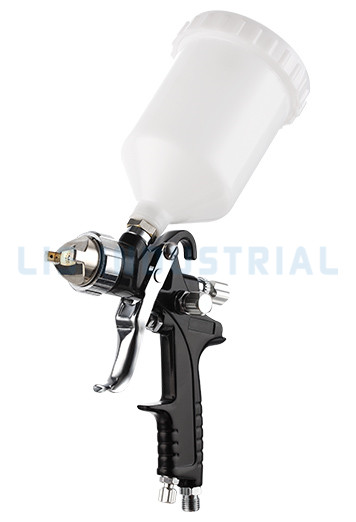
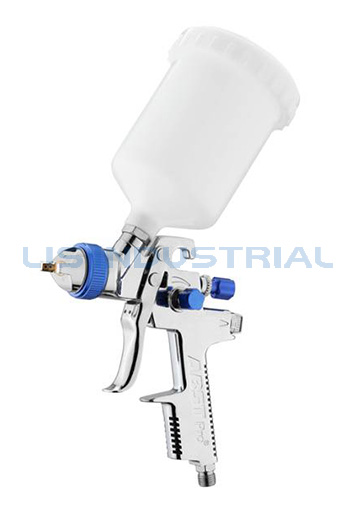
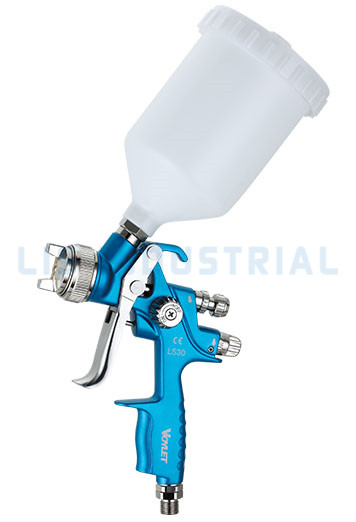
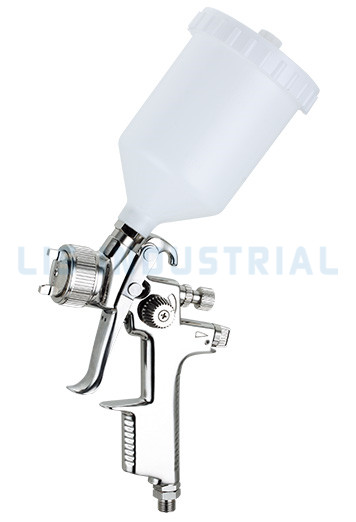
The AB17S is an HVLP spray gun intended for controlled paint and coating application. HVLP means “high volume, low pressure.” In general terms, an HVLP system uses a comparatively high volume of compressed air at a lower atomizing pressure than many conventional spray systems. The objective is to break liquid coating into fine droplets while reducing excessive overspray and unnecessary airborne material.
The product is supplied with a 1000 ml cup, making it suitable for jobs that require a useful working capacity without the weight and handling demands of a large remote pressure tank. The cup allows an operator to work continuously over practical areas while maintaining a relatively compact setup. This balance is particularly useful for vehicle panels, cabinets, doors, furniture components, machinery parts, and repair work.
The alloy construction contributes to a combination of strength, manageable weight, and resistance to the physical demands of workshop use. A metal spray gun body can provide a solid foundation for the air valve, fluid passage, trigger mechanism, nozzle assembly, and adjustment controls. The body must remain accurately aligned because even minor deviations in the nozzle, needle, or air cap can influence the spray pattern.
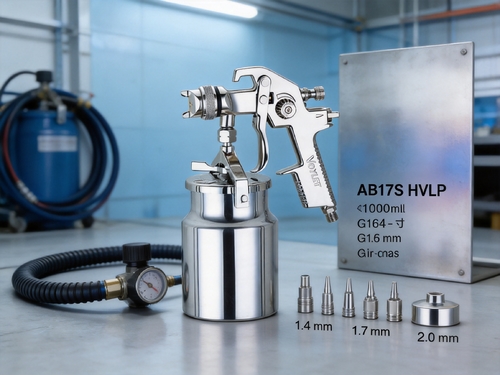
The listed fluid nozzle options are 1.4 mm, 1.7 mm, and 2.0 mm. These sizes create a useful range for adjusting fluid delivery according to coating viscosity and application requirements. Smaller nozzles are commonly selected for thinner materials, detail work, and finer finishes. Larger nozzles are generally more suitable for heavier coatings or applications where increased material delivery is desirable.
The product information identifies the feed specification as suction while the product title refers to a gravity-feed configuration. Because feed terminology affects cup position, fluid movement, and operating technique, buyers should confirm the exact supplied configuration, included cup arrangement, and nozzle package before placing an order. This confirmation is especially important for distributors, OEM customers, and users who need replacement parts to match an existing spray gun.
Regardless of the final feed configuration, the AB17S is positioned as a versatile air spray tool that combines practical capacity, multiple nozzle choices, a standard air connection, and a robust alloy body.
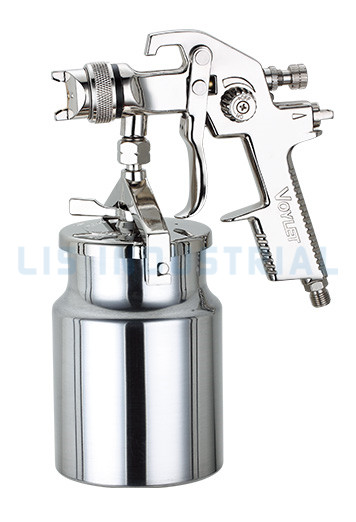
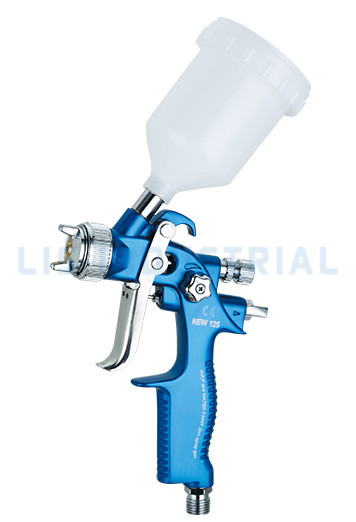
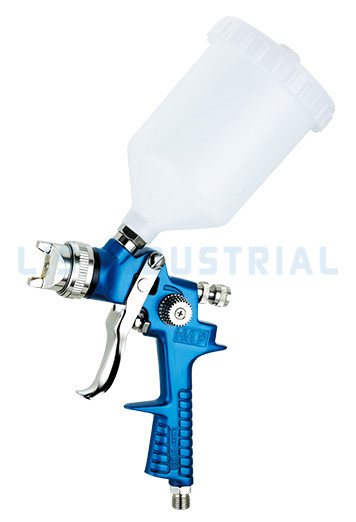
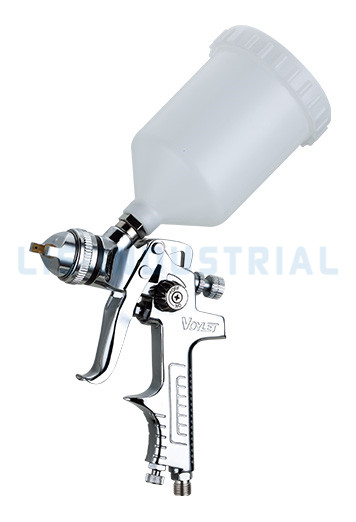
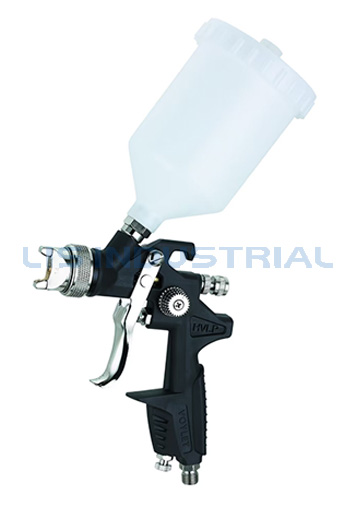
Voylet AB17S HVLP Spray Gun Gravity Feed Alloy with 1000ML Cup+
How HVLP Technology Supports Efficient Spraying
Atomization is the process of converting liquid coating into small droplets that can be transported through the air and deposited on a surface. The quality of atomization influences finish smoothness, transfer efficiency, coverage, overspray, and the amount of material required to complete a job.
In a conventional high-pressure spray system, a large amount of energy may be used to atomize the material. The resulting spray can be fast and productive, but it may also create more overspray if the equipment is not correctly adjusted. HVLP technology approaches the process through increased air volume and lower working pressure. This can provide more controlled droplet movement and help the operator place material more accurately on the workpiece.
A lower-pressure approach does not eliminate overspray, and it does not automatically guarantee a perfect finish. Gun distance, travel speed, fan width, material reduction, air supply, environmental conditions, and operator technique all remain important. However, an appropriately adjusted HVLP spray gun can help reduce wasted material and improve the user’s control over the wet film.
The AB17S is therefore suited to applications where a balance is required between production speed and finish control. It can support broad surface coverage while still allowing the operator to adjust fluid delivery and spray behavior. When used with the correct nozzle and properly prepared coating, the gun can produce an even application across many common substrates.
Another benefit of an HVLP format is its suitability for users who need a flexible workshop tool rather than a specialized automated system. A production line may use dedicated equipment with fixed settings, but repair shops, woodworking businesses, maintenance teams, and small manufacturers often need to change between materials and workpieces. A manual HVLP gun gives the operator direct control over the application process.
Key Technical Specifications
| Specification | Listed Information | Practical Significance |
|---|---|---|
| Product model | AB17S | Identifies the spray gun series and replacement-part family |
| Technology | HVLP | Supports controlled atomization using higher air volume and lower pressure |
| Body material | Alloy | Provides a durable structure for workshop and industrial use |
| Cup capacity | 1000 ml | Offers useful working capacity for many medium-sized tasks |
| Fluid nozzle options | 1.4 mm, 1.7 mm, 2.0 mm | Allows adjustment for different coatings and coverage requirements |
| Stated air pressure | 50 PSI | Provides a reference point for setup and testing |
| Feed information | Listed as suction; product title references gravity feed | Should be confirmed with the supplier before purchase |
| Air inlet | G1/4 inch | Uses a common connection standard for compressed-air equipment |
| Carton packing | 10 units per carton | Supports wholesale distribution and inventory planning |
| Carton dimensions | 84.5 × 49 × 16 cm | Useful for logistics, warehousing, and shipping calculations |
Specifications are most useful when they are interpreted in relation to the intended application. For example, a 1.4 mm nozzle may be suitable for a fine finish on prepared surfaces, while a 2.0 mm nozzle may be better when higher material flow is needed. The stated 50 PSI air pressure should be treated as a setup reference rather than a substitute for application testing. Actual results can vary according to the compressor, hose length, regulator accuracy, coating formulation, and selected adjustment settings.
Nozzle Selection and Material Compatibility
Nozzle selection has a direct effect on spray performance. The nozzle opening controls how much fluid can pass through the gun when the needle is withdrawn. A smaller nozzle generally restricts flow and can assist with controlled, fine application. A larger nozzle permits a greater volume of material to pass through and may be necessary for thicker coatings.
1.4 mm Nozzle
The 1.4 mm option is commonly associated with fine finishing work. It may be appropriate for properly reduced primers, basecoats, clearcoats, stains, lacquers, and other materials designed for controlled spray application. It is often selected when the operator wants to limit fluid delivery and maintain a relatively fine spray pattern.
Because a smaller nozzle provides less fluid flow, the coating must be sufficiently fluid to pass through the nozzle without excessive pressure or repeated adjustment. If the material is too viscous, the operator may experience poor atomization, dry spray, uneven coverage, or an irregular fan.
1.7 mm Nozzle
The 1.7 mm option provides a middle position between fine finishing and higher material delivery. It may be useful for general-purpose work, including primers, medium-viscosity topcoats, furniture finishes, machinery coatings, and repair applications. For many workshops, a mid-range nozzle can serve as a versatile starting point when the equipment must handle several coating types.
Users should still follow the coating manufacturer’s instructions concerning thinning, pot life, filtration, and application pressure. A spray gun cannot compensate for material that has been mixed incorrectly or stored beyond its usable life.
2.0 mm Nozzle
The 2.0 mm option allows increased fluid flow and may be selected for heavier materials or jobs where faster coverage is more important than extremely fine atomization. It can be useful for certain primers, sealers, protective coatings, textured materials, and other products that require a larger passage.
Heavier materials may require additional preparation, including thorough mixing, filtration, and viscosity adjustment. The operator should avoid forcing unsuitable material through the gun, because excessive strain can affect atomization, increase cleaning difficulty, and cause avoidable wear on the fluid components.
Advantages of the 1000 ml Cup
A 1000 ml cup provides a practical compromise between capacity and portability. A cup that is too small may require frequent refilling, interrupting the spray pattern and increasing the chance of inconsistent overlap. A cup that is too large may add unnecessary weight and make the gun more tiring to use, especially during overhead or vertical spraying.
The 1000 ml capacity is appropriate for many workshop tasks, including individual automotive panels, cabinet doors, furniture sections, equipment frames, and localized industrial repairs. The operator can prepare an adequate quantity of coating for a work session while keeping the gun relatively manageable.
Cup management also influences finish quality. The coating should be mixed in a clean container before being poured into the cup. Filtering the material can help remove skins, dried particles, or other contaminants that might obstruct the fluid nozzle. The cup should not normally be filled to the brim, because leaving space reduces the chance of spills during movement and allows safer handling.
When the gun is used in a suction-feed arrangement, the relationship between the cup and the fluid passage should be confirmed because suction-feed and gravity-feed systems operate differently. A buyer should verify whether the listed 1000 ml cup is positioned above or below the gun body and whether the product package includes the correct cup lid, tube, seal, and associated components.
Alloy Construction and Workshop Durability
A spray gun operates in an environment where it may be exposed to solvents, pigments, impact, vibration, repeated assembly, and frequent cleaning. The body must provide stable support for internal components while remaining comfortable enough for manual operation.
The alloy body of the AB17S is intended to provide a durable platform for repeated use. Alloy construction can also support accurate machining of important interfaces, including the air cap seat, fluid nozzle seat, cup connection, air inlet, and adjustment assemblies. These interfaces need to remain stable so that the gun can maintain predictable behavior after cleaning and reassembly.
Durability does not mean that the gun can be neglected. Solvent exposure should be managed according to the coating manufacturer’s recommendations and the spray gun’s maintenance instructions. Aggressive chemicals, prolonged soaking of seals, or the use of unsuitable tools may damage surfaces and consumable components. Careful handling is essential for preserving the benefits of the alloy body.
The operator should also avoid dropping the gun, striking the air cap, or using pliers on precision components. Damage to the air cap horns or nozzle seat can disturb the air pattern and cause an uneven fan. A durable body is valuable, but precision parts still require controlled maintenance.
Air Connection and Compressor Requirements
The AB17S uses a G1/4-inch air inlet, a common connection specification in compressed-air tools and accessories. This can simplify integration with workshop regulators, filters, hoses, quick couplers, and air pipelines. Even when the connection size is standard, the complete air supply system must be selected carefully.
A spray gun requires more than a compressor with a high peak pressure rating. The compressor must deliver sufficient air volume continuously for the selected gun settings. If the compressor cannot keep up, pressure may fall during spraying, causing changes in atomization and fan quality. This can produce a finish that varies from one pass to the next.
An air regulator should be installed where the operator can monitor the working pressure. A moisture separator or suitable air filter is also important because water, oil, and compressor debris can contaminate the coating. Moisture in the air line may create surface defects, while oil contamination can cause craters, fisheyes, or adhesion problems.
Hose selection matters as well. A hose that is too narrow, excessively long, or restricted by unsuitable couplers can reduce air delivery at the gun. The air supply should be tested under operating conditions rather than evaluated only when the trigger is released. Pressure should be checked while air is flowing through the gun.
Spray Pattern Control
Good spraying technique is based on a controlled combination of fluid flow, atomizing air, fan width, gun distance, and movement speed. The operator should begin with a test pattern on cardboard, masking paper, or a sample panel. This allows adjustments to be made before coating the finished workpiece.
The gun should normally be held perpendicular to the surface, with a consistent distance maintained throughout each pass. Tilting the gun can cause one side of the pattern to receive more material than the other. Moving too slowly can create runs or sags, while moving too quickly can result in dry spray and insufficient film build.
Each pass should overlap the previous pass by a consistent percentage. The exact overlap depends on the material, fan width, and desired film thickness, but consistency is more important than relying on a fixed number in every situation. The operator should begin moving the gun before pulling the trigger and release the trigger before stopping movement. This reduces heavy deposits at the beginning and end of each stroke.
Fan adjustment should be made gradually. A broad fan can improve productivity on large surfaces, while a narrower fan may provide better control on edges, narrow components, or small repair areas. The selected fluid nozzle should support the coating rather than being used to force an unsuitable material into a fine-finish setup.
Applications Across Different Industries
Automotive Refinishing
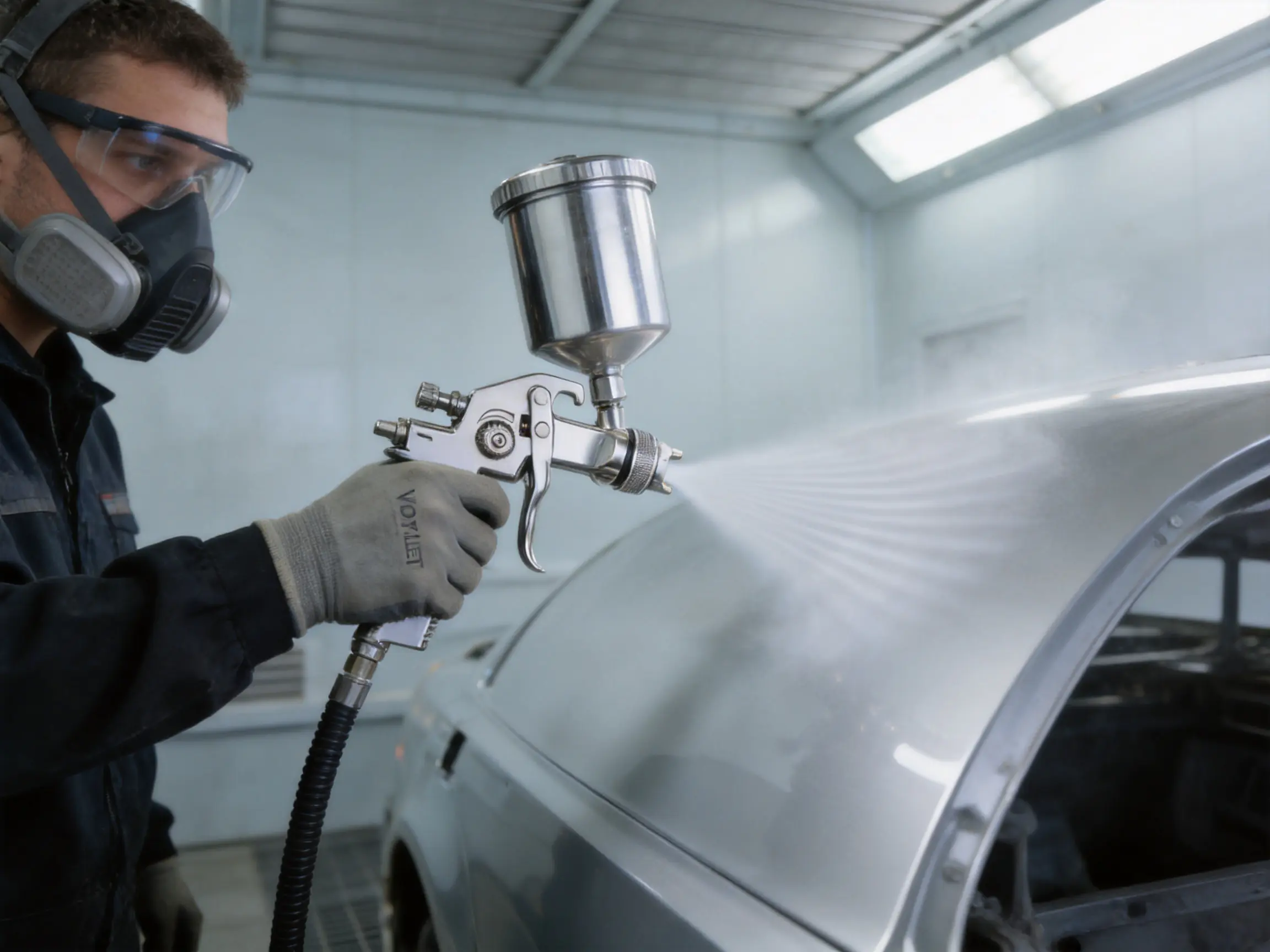
Automotive repair requires controlled application over surfaces that are highly visible and often require multiple coating stages. The AB17S can be used for suitable primers, basecoats, clear finishes, and selected repair materials, provided that the coating manufacturer approves spray application through the selected nozzle.
The 1.4 mm and 1.7 mm options may be useful for different stages of automotive finishing, while the 1000 ml cup can provide practical capacity for individual panels and components. Operators should pay close attention to surface preparation, masking, flash-off time, and booth ventilation. Spray equipment can support finish quality, but it cannot compensate for contamination, poor sanding, incorrect mixing, or inadequate curing conditions.
Woodworking and Furniture
Woodworkers often need to apply stains, sealers, lacquers, paints, and clear finishes to flat panels, shaped components, doors, cabinets, and furniture parts. The AB17S can provide a flexible manual solution for businesses that handle different product sizes and coating types.
Wood surfaces vary in porosity and grain structure, so the coating system must be selected carefully. A sealer may be needed before the final finish, and sanding between coats can influence smoothness. The spray gun should be cleaned thoroughly when changing from pigmented coatings to clear finishes, because small particles left in the fluid passage can affect appearance.
Industrial Maintenance
Factories, workshops, and maintenance departments often need to refinish machinery covers, brackets, frames, tools, storage equipment, and replacement parts. In these situations, a flexible spray gun can reduce dependence on external finishing services and help maintenance staff apply protective or decorative coatings on demand.
The nozzle options allow the user to select a setup according to coating thickness and required coverage. However, industrial coatings may contain aggressive solvents, abrasives, or specialized additives. The safety data sheet and coating manufacturer’s instructions should always be consulted before use.
Agricultural and Construction Equipment
Large equipment components may require durable protective coatings and efficient coverage. The AB17S can be used for suitable sections and repair work where manual spraying is practical. For very large structures, the operator may need multiple refills, a larger feed system, or an airless system depending on productivity requirements and coating viscosity.
The product is best viewed as a versatile air spray tool rather than a universal replacement for every coating method. Its strengths are control, portability, nozzle flexibility, and suitability for many medium-scale jobs.
Comparison with Conventional Spray Guns
Conventional spray guns and HVLP spray guns each have useful application areas. A conventional gun may operate at higher atomizing pressure and can provide rapid atomization, particularly in certain production environments. However, higher pressure can increase overspray and may demand greater attention to booth conditions and material usage.
An HVLP gun such as the AB17S is designed around a lower-pressure application approach. This can make it attractive to users who want better control over material placement and reduced waste. It may also be appropriate for businesses seeking a practical tool that can be used in smaller workshops and repair areas.
Compared with a basic low-cost spray gun, the AB17S offers a more structured selection of nozzle sizes, a substantial 1000 ml cup, a metal alloy body, and access to a manufacturer with established production and quality systems. The value is not limited to the visible gun body; it also includes the ability to support consistent parts, technical guidance, OEM development, and organized after-sales service.
Compared with an airless spray gun, the AB17S generally offers more direct control over atomization and may be better suited to finer finishes. Airless systems can deliver high productivity and handle some heavy coatings efficiently, but they may require different preparation, pressure management, and safety procedures. The correct choice depends on coating type, surface area, finish requirements, and production volume.
Compared with an electric paint sprayer, an air-powered HVLP gun can provide greater flexibility when a workshop already has a suitable compressor and air-treatment system. Electric units may be convenient for occasional users, while pneumatic equipment can be easier to integrate into a professional workshop with existing air tools.
Manufacturing Strengths and Quality Management
The performance of a spray gun depends heavily on manufacturing consistency. The nozzle, needle, air cap, trigger, seals, fluid passage, and adjustment components must work together within appropriate dimensional tolerances. If one component varies significantly, users may notice changes in spray pattern, leakage, fluid control, or cleaning behavior.
The manufacturer behind the product has extensive experience in the air-painting equipment field and operates a large-scale production facility in Ningbo, China. The supplied company information describes a workforce of more than 400 employees, a site covering over 400,000 square feet, and annual output exceeding 40 million US dollars. These figures indicate the resources to support product development, manufacturing, inspection, packaging, and international distribution.
The company’s manufacturing approach includes control from raw-material inspection through incoming inspection, in-process quality control, functional testing, and final inspection. This complete-process approach is important for spray guns because quality cannot be verified reliably by inspecting only the finished exterior. Internal air passages, fluid components, sealing surfaces, trigger action, and spray performance also need attention.
Functional testing is particularly relevant. A spray gun may appear visually acceptable while still having an air leak, an inconsistent needle seal, a blocked passage, or an irregular spray pattern. Testing helps identify these issues before products are packed and shipped. A reported 100 percent functional-test process reflects an emphasis on verifying operation rather than relying solely on appearance.
The company information also identifies research and development capabilities, an engineering technology center, technical cooperation, and the ability to provide OEM and ODM services. These capabilities can benefit distributors and professional buyers who require customized packaging, private labeling, product modifications, drawings, samples, or application-specific development.
Certification information supplied for the manufacturer includes ISO9001 quality management, ISO14001 environmental management, OHSAS18001 occupational health and safety, European CE, and German GS certification. Customers should confirm which certificates apply to the exact product, market, and current production version. Nevertheless, the presence of structured management systems indicates an organized approach to product quality, environmental responsibility, and workplace safety.
Why Manufacturing Scale Matters to Buyers
Manufacturing scale can provide practical advantages beyond production volume. A large and experienced supplier may have better access to tooling, testing equipment, engineering personnel, surface-treatment resources, spare-part systems, and export logistics. This can make it easier to maintain product continuity and respond to changing demand.
The listed carton configuration is 10 units per carton, with carton dimensions of 84.5 × 49 × 16 cm. These details are useful for wholesalers, distributors, and e-commerce sellers planning warehouse space and transport. Consistent packing also helps reduce handling uncertainty during export and regional distribution.
The supplied company information states that production capacity can be increased by 30 percent within two months. For customers with variable seasonal demand, this type of scalability can be valuable. It may reduce the risk of long delays when order quantities increase, although lead times, component availability, shipping conditions, and purchase forecasts should still be confirmed for each order.
International market experience can also support documentation and communication. Products sold into Europe, North America, the Middle East, South Africa, East Asia, and other markets may need different packaging, labeling, connection standards, manuals, and compliance documents. A supplier accustomed to international distribution is better positioned to discuss these requirements during the purchasing process.
Maintenance and Cleaning Procedure
Cleaning is one of the most important factors affecting spray gun life and finish consistency. Coating residue can dry inside the nozzle, air cap, needle passage, cup connection, or fluid tube. Even a small amount of dried material may distort the spray pattern or prevent the needle from closing correctly.
After spraying, the remaining coating should be removed from the cup in accordance with local waste-handling rules. The cup should be rinsed with a compatible cleaning material, and the gun should be operated briefly with the appropriate cleaning fluid if the equipment instructions permit. The air cap and nozzle should then be removed carefully and cleaned without damaging their precision openings.
Metal brushes, sharp wires, and aggressive scraping tools should be avoided unless specifically approved. A damaged air cap can produce irregular atomization, while an enlarged nozzle opening can alter fluid delivery. Soft brushes and suitable cleaning tools are generally safer for precision components.
Seals and packing components should be inspected for swelling, cracking, flattening, or leakage. Not every solvent is compatible with every seal material. If a coating system uses strong solvents, the user should confirm compatibility and replace affected parts promptly.
Before reassembly, components should be clean and free of lint or abrasive particles. The nozzle should be installed correctly, and the needle adjustment should not be forced. The air cap should be tightened securely but not over-tightened. After assembly, the operator should test the gun with a suitable cleaning fluid or approved material before beginning the next production task.
Safety and Workplace Practice
Spraying coatings can create inhalation, fire, skin-contact, and eye hazards. The operator should use appropriate personal protective equipment, including respiratory protection suitable for the coating, protective eyewear, gloves, and work clothing. The coating safety data sheet should be reviewed before use.
Ventilation is essential. Spraying should take place in a properly designed and ventilated area that controls vapors and airborne particles. Ignition sources, open flames, sparks, and unapproved electrical equipment should be kept away from flammable coatings and solvents.
Compressed air can cause injury if directed at the body or used to clean clothing. Hoses and fittings should be inspected regularly for damage, and the air supply should be isolated before dismantling components. The gun should never be modified in a way that bypasses pressure controls or safety procedures.
Waste solvent, contaminated rags, filters, and coating residue should be stored and disposed of according to local environmental requirements. A clean and organized spray area improves safety while also reducing the risk of dust and debris entering the finish.
Practical Setup Guide
Begin by identifying the coating, checking its recommended viscosity, and selecting the nozzle size that best matches the material. Confirm that the gun configuration, cup, nozzle, needle, and air cap are compatible. If the product title and technical listing describe different feed arrangements, obtain confirmation before assembly and use.
Install a clean air hose with suitable fittings. Connect the regulator and moisture filter, then check for leaks. Set the initial air pressure according to the product instructions and adjust it while the gun is operating. Pressure should not be increased unnecessarily, because excessive air can create dry spray and additional overspray.
Mix the coating thoroughly and filter it into the cup. Do not overfill the cup. Adjust fluid flow conservatively at first, then increase it only as needed. Test the spray pattern on a sample surface and examine the distribution from one side of the fan to the other.
If the center of the pattern is heavy, the material may be too thick, the fluid flow may be excessive, or the air adjustment may be unsuitable. If the pattern is dry or weak, the material may be too thin, the air pressure may be too high, the gun may be too far from the surface, or the fluid delivery may be insufficient. Make one adjustment at a time so that the effect can be understood.
Once the pattern is balanced, apply the coating using parallel passes and consistent overlap. Maintain a steady hand movement and avoid stopping directly over the workpiece. Inspect the wet film and allow the correct flash-off and curing time before applying additional coats.
Purchasing Considerations for Distributors and OEM Customers
Distributors should evaluate more than unit price. Important questions include the exact feed configuration, included nozzle sizes, replacement-part availability, cup material, packaging method, minimum order quantity, production lead time, warranty terms, and technical documentation.
OEM buyers may need a specific brand identity, handle design, color, label, carton, instruction manual, or accessory package. The manufacturer’s stated OEM and ODM capabilities can support these projects, but technical requirements should be documented in drawings, samples, inspection standards, and approved production references.
Buyers should also establish an incoming inspection plan. This may include visual inspection, cup and fitting verification, trigger operation, air leakage checks, nozzle identification, and spray testing using an agreed material or test fluid. A clear inspection standard helps ensure that suppliers and buyers evaluate the product in the same way.
For international sales, packaging must protect the gun and cup during transport while presenting the required regulatory and product information. Carton dimensions and ten-unit packing are useful starting points for logistics planning, but the final shipment configuration may vary according to accessories, manuals, protective materials, and customer requirements.
Limitations and Correct Use Expectations
No manual spray gun is ideal for every coating, surface, or production scale. The AB17S is a versatile air spray tool, but performance depends on proper material selection, compressor capacity, air treatment, surface preparation, and operator skill.
Users should not assume that the largest nozzle will automatically improve productivity. If the coating is not compatible, a larger nozzle may create excessive fluid delivery, runs, poor leveling, or extended drying time. Similarly, increasing air pressure is not a universal solution for poor atomization. Material viscosity, nozzle condition, fluid adjustment, and gun distance should be assessed systematically.
The gun should also be matched to the work environment. High-volume industrial production may require automatic guns, pressure tanks, plural-component equipment, or airless systems. Small repair work may benefit from a mini spray gun or touch-up gun. The AB17S occupies a useful middle position for users who need a robust, adjustable, general-purpose spray gun.
Correct expectations help protect the investment. The product offers a strong combination of capacity, nozzle flexibility, alloy construction, standard air connection, and manufacturer support. Its best performance will be achieved when the entire application system is designed around those strengths.
Frequently Asked Questions
What type of work is the AB17S suitable for?
The AB17S is suitable for many manual coating tasks, including automotive refinishing, woodworking, furniture finishing, equipment maintenance, machinery parts, protective coatings, and general workshop spraying. The exact application depends on the coating formulation and selected nozzle.
What nozzle sizes are available?
The listed nozzle sizes are 1.4 mm, 1.7 mm, and 2.0 mm. The smaller size is generally associated with finer application, the middle size with general-purpose work, and the larger size with higher material delivery or heavier coatings.
What is the capacity of the cup?
The listed cup capacity is 1000 ml. This provides practical capacity for many medium-sized tasks while keeping the spray gun more manageable than a much larger tank system.
Is the gun gravity feed or suction feed?
The product title refers to gravity feed, while the supplied technical information identifies the feed type as suction. Buyers should confirm the exact configuration, cup position, and included components with the supplier before ordering or replacing parts.
What air pressure does the spray gun require?
The listed air pressure is 50 PSI. This should be used as a reference for setup, while actual performance should be checked with a regulator during spraying. The required pressure can be influenced by the coating, nozzle, compressor, hose, and desired finish.
What type of air connection does it use?
The listed air inlet is G1/4 inch. This is a common connection size for pneumatic equipment, but the user should still verify thread compatibility and select suitable fittings, couplers, filters, and hoses.
Can the gun spray thick coatings?
The 2.0 mm nozzle can support higher fluid delivery than the smaller options, but the coating must be compatible with air spraying and properly prepared. Some thick or highly viscous materials may require specialized equipment, additional thinning, or a different application method.
How can overspray be reduced?
Overspray can be reduced through correct HVLP setup, appropriate air pressure, proper fluid adjustment, correct gun distance, consistent movement, suitable fan width, and adequate ventilation. HVLP technology can help with transfer efficiency, but it does not eliminate overspray entirely.
What compressor is needed?
The compressor should provide sufficient continuous air volume for the spray gun under working conditions. A regulator, moisture separator, and suitable hose are also recommended. The precise compressor requirement should be confirmed from current product documentation and tested with the selected setup.
How often should the spray gun be cleaned?
The gun should be cleaned immediately after each coating session and whenever the coating is changed. Delayed cleaning allows material to dry inside the fluid and air passages, making maintenance more difficult and potentially affecting the spray pattern.
Can the product be supplied for OEM projects?
The manufacturer’s information states that OEM and ODM services are available. Customers should provide drawings, samples, packaging requirements, performance expectations, and applicable market standards so that the proposed configuration can be evaluated accurately.
What should buyers verify before placing an order?
Buyers should verify the feed type, included nozzle and needle combinations, cup configuration, air inlet specification, packaging, certificates, replacement parts, order quantity, production lead time, warranty conditions, and application suitability for the intended coating.
Conclusion
The AB17S HVLP spray gun is designed for users who need a durable, adjustable, and practical tool for manual coating application. Its alloy body provides a solid foundation for workshop use, while the 1000 ml cup offers useful capacity for many automotive, woodworking, maintenance, and industrial tasks. The 1.4 mm, 1.7 mm, and 2.0 mm nozzle options allow the equipment to be adapted to different material viscosities and coverage requirements.
The stated 50 PSI air pressure and G1/4-inch air inlet provide clear starting points for system setup, although the final operating condition must be determined through testing with the selected coating, compressor, hose, and regulator. Because the supplied information describes the feed arrangement differently in the title and technical specification, confirming the exact configuration is an important purchasing step.
The product’s value is strengthened by the manufacturing capabilities behind it. A large production operation, research and development resources, OEM and ODM support, international experience, process inspection, functional testing, and quality-management systems can provide advantages over unstructured low-cost alternatives. These strengths support not only product consistency but also supply continuity, documentation, customization, and long-term customer service.
When paired with proper material preparation, clean compressed air, suitable personal protection, disciplined spraying technique, and immediate maintenance, the AB17S can serve as a dependable general-purpose spray gun. Its strongest competitive advantages are its combination of application flexibility, practical cup capacity, alloy construction, standard pneumatic connection, multiple nozzle choices, and support from an experienced spraying-equipment manufacturer.
References
1. Product specification sheet for the AB17S HVLP spray gun, including nozzle sizes, cup capacity, air pressure, feed information, air inlet, and carton details.
2. Manufacturer-provided company profile describing research and development, production capacity, quality control, certifications, OEM services, and international distribution.
3. General principles of high-volume, low-pressure atomization and pneumatic spray application.
4. Coating manufacturer guidance concerning viscosity, thinning, filtration, flash-off time, curing, and spray application.
5. Compressed-air equipment practice concerning regulators, moisture separation, hose selection, pressure testing, and pneumatic-tool safety.
6. Industrial spray-finishing practice covering surface preparation, fan adjustment, gun distance, overlap, cleaning, and personal protective equipment.