 Search
 English
 中文简体
中文简体 Deutsch
 Español
Content
- 1 Understanding the Function of a Quick Coupler Plug
- 2 Product Positioning and Typical Applications
- 3 Advantages of a US-Standard Connection Format
- 4 Design Qualities That Matter in Pneumatic Plugs
- 5 Manufacturing Strengths Behind the Product
- 6 How the Product Compares with Basic Competitor Fittings
- 7 Installation Guidance
- 8 Maintenance and Service Practices
- 9 Safety Considerations
- 10 Benefits for Distributors and Equipment Manufacturers
- 11 Benefits for Industrial End Users
- 12 Four-Stage Quality Approach
- 13 Purchasing Checklist
- 14 Storage and Transportation
- 15 Technical Communication and Custom Projects
- 16 Why Manufacturer Experience Matters
- 17 Environmental and Operational Responsibility
- 18 Q&A
- 18.1 What is the USH20 pneumatic fitting used for?
- 18.2 Is the USH20 suitable for US-standard pneumatic systems?
- 18.3 Can it be used with spray guns?
- 18.4 Can it be used with an air compressor hose?
- 18.5 Does the plug connect to every quick coupler?
- 18.6 How can a user prevent air leakage?
- 18.7 Does a quick coupler improve tool-changing speed?
- 18.8 What quality controls support the product?
- 18.9 Can the manufacturer provide OEM or ODM services?
- 18.10 How should the plug be maintained?
- 18.11 What should be checked before purchasing?
- 19 Conclusion
- 20 References
- 21 Product: USH20 Pneumatic fittings Air Compressor Hose Quick Coupler Plug+
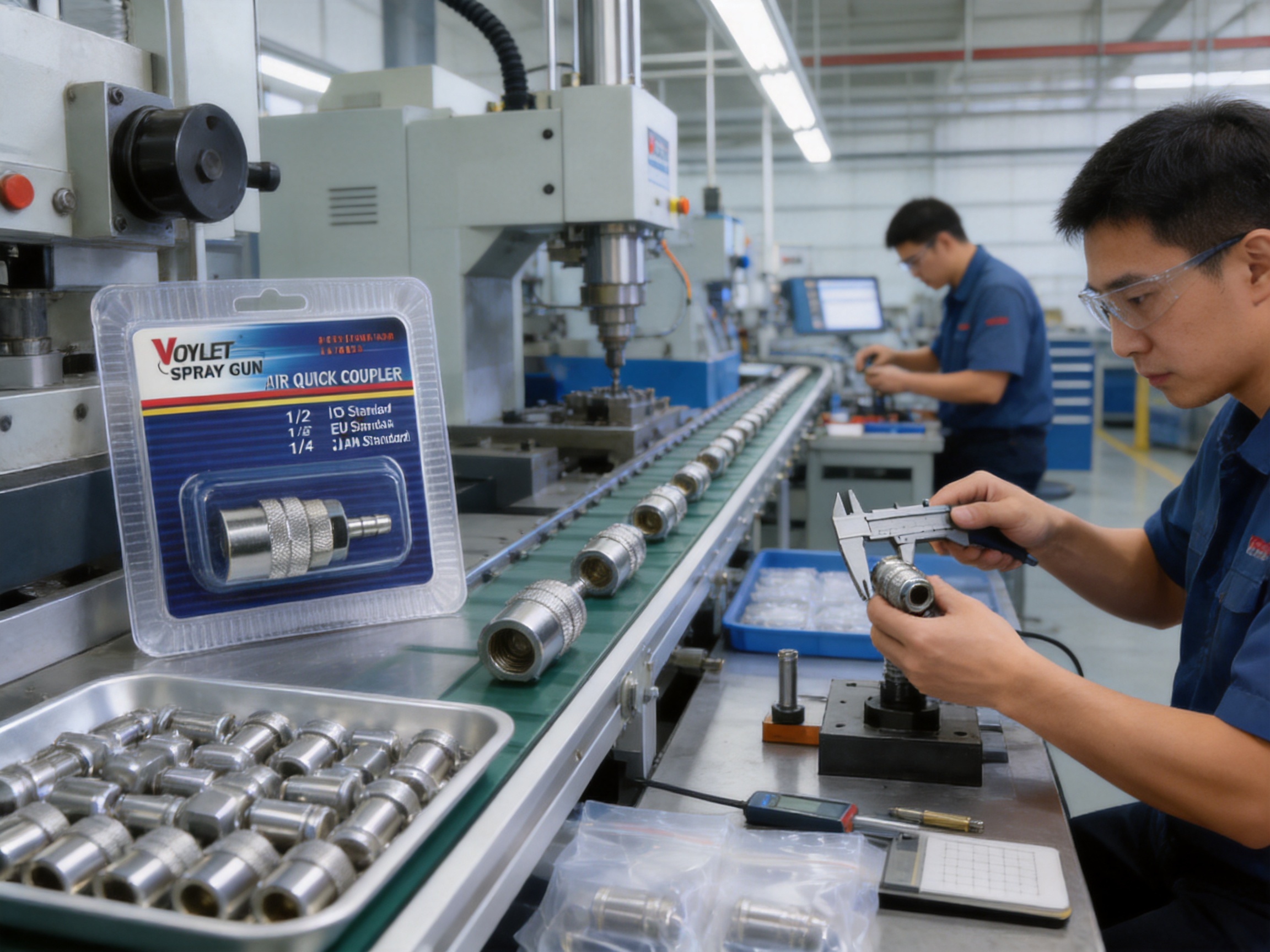
Efficient compressed-air equipment depends on more than the performance of an air compressor or pneumatic tool. The connection between the air hose and the tool must also be secure, compatible, easy to operate, and durable enough for repeated use. The USH20 pneumatic fitting air compressor hose quick coupler plug is designed for this essential role. Built for US-standard pneumatic systems, it provides a practical connection solution for workshops, maintenance departments, vehicle service centers, industrial production lines, painting operations, and general air-tool applications.
A quick coupler plug may appear to be a small component, but it has a direct influence on workflow, air efficiency, operator convenience, and equipment protection. A poorly matched or low-quality fitting can cause leakage, difficult tool changes, accidental disconnection, thread damage, or unnecessary downtime. A properly manufactured plug helps create a more dependable air circuit and allows operators to connect and disconnect compatible tools with speed and confidence.
The USH20 is part of a broad range of pneumatic fittings and air-compressor accessories developed for professional and general-purpose use. It is intended to work within US-standard connection systems and can support the practical requirements of spray guns, air blow guns, impact tools, air polishers, tire inflating guns, sandblasting equipment, and other compressed-air devices when the correct matching coupler and operating conditions are used.
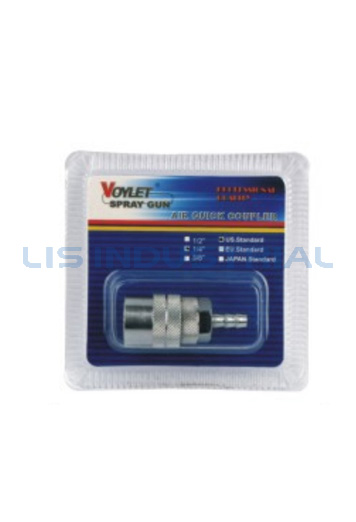
USH20 Pneumatic fittings Air Compressor Hose Quick Coupler Plug+
Understanding the Function of a Quick Coupler Plug
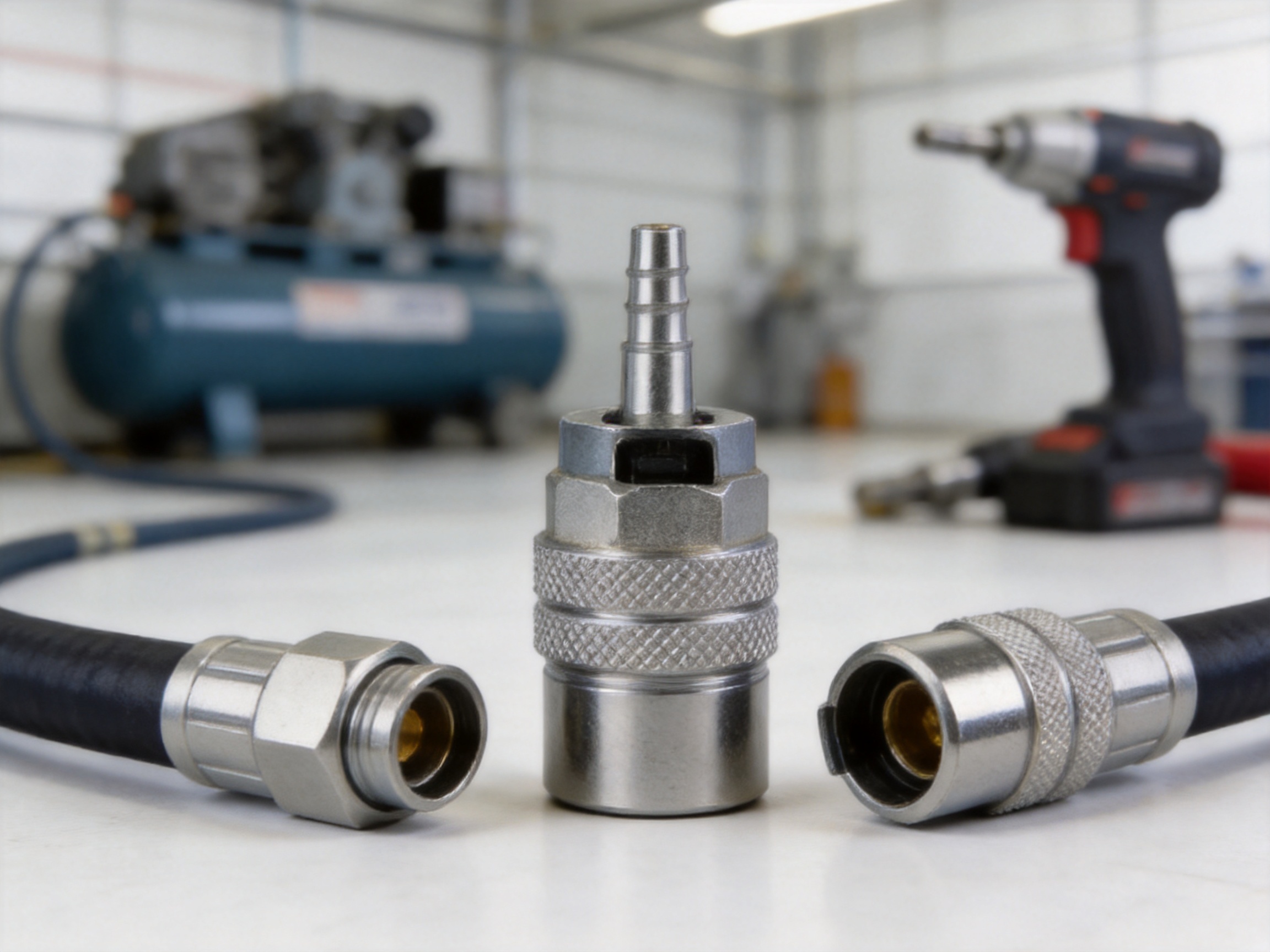
A pneumatic quick coupler system normally consists of two complementary parts: a plug and a coupler. The plug is installed on the air tool, hose, extension, or other equipment connection. The coupler receives the plug and locks it into position, creating an air passage between the compressed-air source and the connected device. When the operator needs to change tools, the connection can be released without removing a threaded fitting every time.
This arrangement improves productivity in environments where multiple air tools are used throughout the day. An operator can move from a blowing gun to a spray gun, or from an impact wrench to a tire inflating tool, without spending excessive time dismantling pipe connections. The quick-change format also reduces the repeated mechanical stress that can occur when threaded joints are frequently assembled and disassembled.
The plug must be manufactured accurately because its outer profile, sealing surfaces, locking area, and connection thread all affect the performance of the complete coupling. If the plug does not match the coupler standard, the connection may not engage correctly. If its surfaces are rough or dimensionally inconsistent, the seal may be unreliable. For this reason, precision production and inspection are especially important for seemingly simple fittings.
Connection Reliability
One of the most important characteristics of a pneumatic plug is its ability to remain securely connected during normal operation. Air tools can produce vibration, movement, and mechanical reaction forces. A properly matched quick coupler plug helps the locking mechanism maintain a stable connection while compressed air passes through the system.
Connection reliability is not determined by the plug alone. The user must select the correct coupler, hose, thread type, pressure rating, and sealing method. The plug should be installed correctly and inspected before use. Nevertheless, a precisely manufactured plug provides the foundation for a reliable connection and reduces the likelihood of poor engagement caused by inconsistent dimensions.
Fast Tool Changes
Traditional threaded connections can be dependable, but they are slower when tools need to be exchanged frequently. A quick coupler system provides a more efficient alternative. The operator can release one tool and connect another with a simple hand movement, helping reduce interruptions in production and maintenance work.
This advantage is valuable in automotive repair, furniture production, woodworking, metalworking, painting, equipment servicing, and assembly operations. In these environments, the compressed-air system may supply several tools with different functions. Fast tool changes make the work area more flexible and allow one compressor or air line to support a wider range of tasks.
Air-System Organization
A standardized fitting system also contributes to better organization. Hoses can be prepared with compatible plugs, while tools can be equipped with matching couplers or adapters. This makes it easier to identify compatible components and reduces the need for improvised connections.
Good organization is particularly important in workshops that use different air pressures, hose sizes, or tool categories. Separating compatible connection groups helps operators avoid incorrect installation and supports safer working practices. The USH20, being identified for US-standard use, can help users build a consistent connection arrangement when it is selected together with the appropriate mating components.
Product Positioning and Typical Applications
The USH20 pneumatic hose quick coupler plug is positioned as an air-line accessory for compressed-air equipment. It is suitable for applications where a removable air connection is preferred over a permanently threaded joint. Its compact format allows it to be integrated into hoses, air tools, extension lines, and connection points without adding unnecessary bulk to the working setup.
It can be considered for a wide range of environments, including professional workshops, industrial plants, repair garages, construction sites, agricultural maintenance areas, and home workshops. The final suitability depends on the complete air system, including the compatible coupler, hose material, working pressure, temperature, air quality, and application requirements.
| Application Area | Potential Use | Primary Benefit |
|---|---|---|
| Automotive service | Connecting impact tools, tire inflators, polishers, and blow guns | Faster tool replacement and improved workspace flexibility |
| Spray finishing | Connecting compatible spray equipment and air hoses | Convenient hose management and simplified equipment changes |
| Woodworking | Supplying air to nailers, blow guns, sanders, and cleaning tools | Practical connection support for multiple pneumatic devices |
| Industrial maintenance | Connecting portable air tools to fixed or mobile air lines | Reduced downtime during servicing and repair work |
| General workshop use | Creating removable hose-to-tool connections | Simple operation and easier equipment organization |
| Production environments | Supporting repeated connection cycles in pneumatic workstations | Consistent fitting performance when correctly maintained |
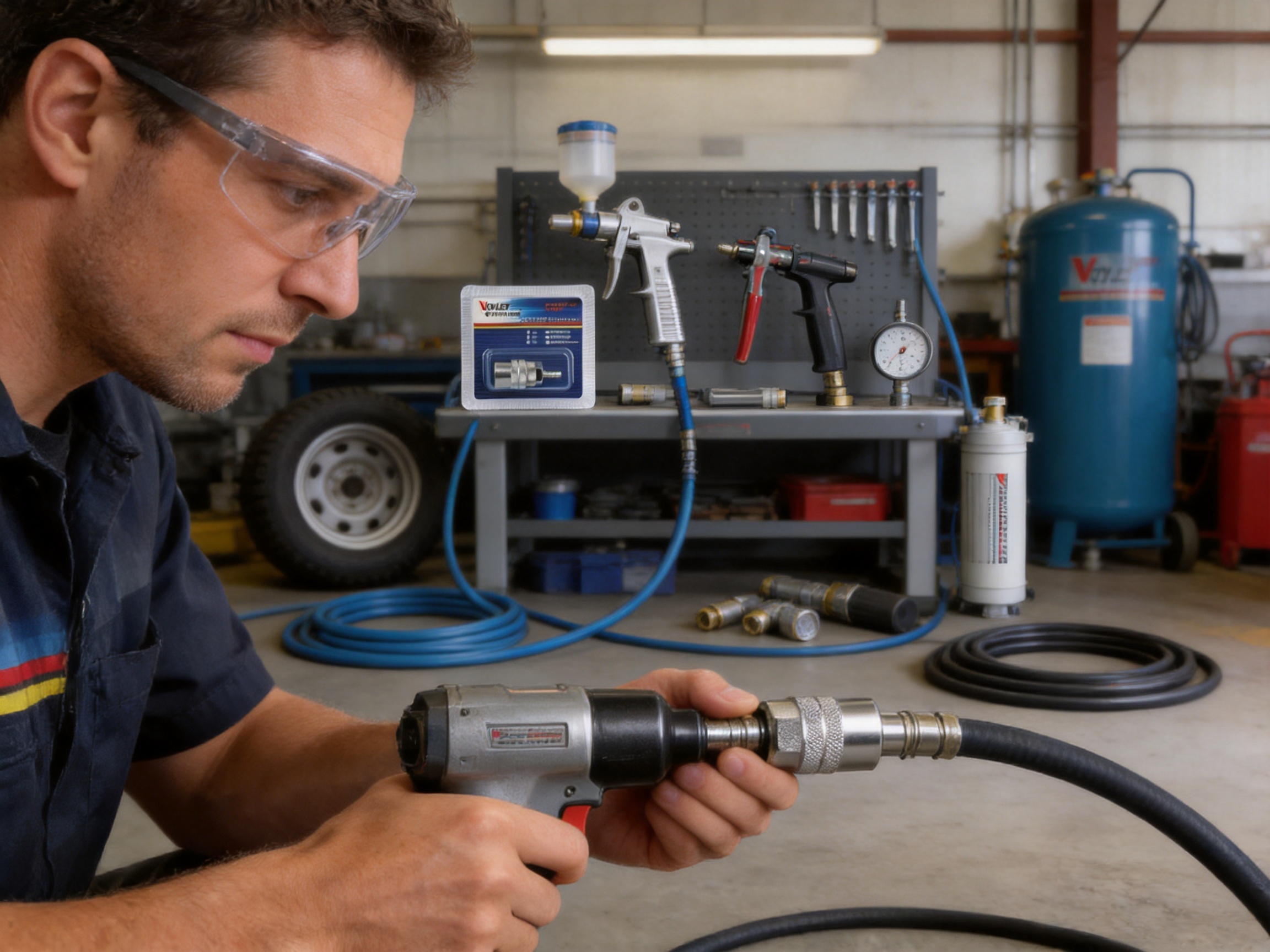
For spray applications, the fitting should be selected with particular care. Spray guns require a stable air supply, and air leakage can influence atomization, transfer efficiency, and coating consistency. The plug should therefore be used with a compatible coupler and a properly sized hose. The air line should be kept clean and dry, and the operator should confirm that the connection is fully locked before beginning spraying.
In automotive service, a quick coupler plug can make it easier to move between an air impact wrench, air ratchet, tire inflator, and blow gun. In woodworking, the same type of connection may help operators alternate between cleaning, fastening, and sanding tools. In industrial maintenance, removable air connections can make portable equipment easier to deploy across different workstations.
Advantages of a US-Standard Connection Format
Pneumatic fittings are not universally interchangeable. Different markets and equipment manufacturers may use different coupling profiles, thread forms, dimensions, or connection conventions. A fitting designed for one standard may not properly engage with a coupler from another standard, even when the components appear similar.
The USH20 is categorized for US-standard applications. This makes it a suitable choice for users who have installed a pneumatic system based on US-standard plugs and couplers. Selecting a fitting according to the correct regional or equipment standard helps reduce compatibility problems and makes purchasing, stocking, and maintenance more systematic.
Compatibility Management
Standardization makes it easier for a workshop to maintain a controlled inventory. Instead of keeping many unrelated connection types, users can select a consistent family of plugs and couplers for their main air tools. This can simplify replacement purchasing and reduce the risk of fitting an unsuitable component to a hose or tool.
Compatibility should always be verified by checking the actual mating profile, thread specification, hose connection, and equipment documentation. The term “US standard” should not be treated as permission to combine every fitting that is marketed for the same region. Different coupling series can still vary. A careful selection process protects the investment in both the fitting and the connected equipment.
Practical Replacement
When a plug becomes worn, bent, contaminated, or damaged, a matching replacement can restore the connection without replacing the complete hose or tool. This modular approach is useful for maintenance departments and professional workshops because fittings are exposed to repeated handling, dragging, impact, and contamination.
Keeping replacement plugs available can also shorten repair time. A damaged fitting can be removed and replaced during routine maintenance, allowing the air tool to return to service quickly. For businesses that depend on pneumatic equipment every day, this small inventory practice can contribute to better equipment availability.
Design Qualities That Matter in Pneumatic Plugs
The performance of a quick coupler plug is influenced by several design features. These include dimensional accuracy, surface finish, thread quality, resistance to wear, connection geometry, and the ability to withstand the operating environment. A quality product must perform consistently rather than merely connect once during an initial test.
Precision of the Mating Profile
The mating profile is the part of the plug that enters the coupler. Its dimensions must be controlled so that the locking mechanism can engage correctly and the sealing elements can contact the intended surfaces. Excessive variation may cause a loose connection, difficult insertion, or incomplete locking.
Precision is especially important when fittings are used repeatedly. Every connection cycle creates a small amount of mechanical wear. A well-made plug begins with a consistent shape and a suitable surface finish, helping it maintain functional contact over its service life when used under appropriate conditions.
Thread Quality
Many pneumatic plugs connect to a hose fitting, tool inlet, adapter, or pipe component through a threaded section. Clean, accurate threads help ensure smooth installation and reduce the possibility of cross-threading. Proper thread engagement also supports a stable mechanical connection and allows the user to apply sealing material correctly when required.
Thread quality is affected by machining, forming, finishing, and inspection. Poor threads may produce metal particles, bind during installation, or create an uneven sealing path. Controlled manufacturing helps reduce these risks and supports more reliable assembly.
Surface Protection
Air-line fittings may be exposed to humidity, workshop dust, oil mist, cleaning agents, and handling damage. A suitable surface treatment can help protect the fitting from corrosion and improve its appearance. The exact protection method depends on the material and production design, but the objective is to preserve functional surfaces and maintain product consistency.
Users should still avoid storing fittings in wet or chemically aggressive conditions. Surface protection is not a substitute for proper storage. Plugs should be kept clean, protected from impact, and capped or covered when they are not installed.
Compact Form
A compact plug is easier to install in crowded work areas and less likely to interfere with the movement of a hose or tool. This is useful when an operator must work close to a vehicle, machine, panel, cabinet, or workpiece. A practical form also helps reduce unnecessary leverage on the hose connection.
Compact design must be balanced with strength and ease of handling. The plug should have enough accessible surface for installation and removal while remaining small enough for routine use. The correct balance depends on the connection standard and intended application.
Manufacturing Strengths Behind the Product
The quality of a pneumatic fitting is closely connected to the manufacturing system used to produce it. Ningbo Lis Industrial Co., Ltd. has specialized in air painting spray guns, mini air compressors, pneumatic fittings, and related air tools since its establishment in 1984. This long-term focus provides an extensive foundation for developing and manufacturing products for compressed-air applications.
The company operates on a site covering more than 400,000 square feet and employs more than 400 people. Its broad production organization supports the manufacture of air tools and accessories at commercial scale. The company reports annual output exceeding 40 million US Dollars and states that its production capacity can be increased by 30 percent within two months to respond to different purchasing quantities.
For buyers of pneumatic fittings, production scale can provide several practical benefits. It may support more stable material purchasing, better equipment utilization, organized quality control, and the ability to handle repeat orders. Scale alone does not guarantee quality, but when combined with technical processes and inspection systems, it can help create a more dependable supply structure.
Research and Development Capability
The company maintains a strong research and development team and offers both OEM and ODM services. OEM production can be arranged according to customer drawings or samples, while ODM development can be based on customer requirements. This capability is useful for distributors, equipment manufacturers, and industrial users who need a fitting adapted to a specific hose, tool, packaging, or connection system.
R&D support may include product structure review, material selection, manufacturing feasibility, sample preparation, testing, and production transfer. A fitting is often installed as part of a larger air-tool system, so the ability to consider the surrounding equipment can be valuable. Customers may require a standard product for immediate purchasing or a customized solution for a particular application.
The company has also established a spraying machinery engineering technology center and has conducted technical cooperation with American Wagner Spraying Technology Co., Ltd. Its experience in spraying machinery is relevant to pneumatic fittings because spray equipment depends on controlled air delivery, reliable hose connections, and consistent accessory performance.
Process Control
A professional fitting manufacturer must control more than the final appearance of the product. Incoming materials, machining or forming operations, surface treatment, assembly, packaging, and final inspection can all influence performance. The company describes a quality process that includes raw material and incoming inspection, in-process quality control, 100 percent functional testing, and final quality inspection of finished products.
Incoming inspection helps confirm that materials and purchased components meet established requirements before they enter production. In-process control helps identify dimensional or process deviations while correction is still possible. Functional testing provides a direct check of product operation. Final inspection helps prevent visibly defective or incorrectly packaged products from reaching customers.
For quick coupler plugs, relevant controls may include checking dimensions, thread condition, mating accuracy, surface quality, and functional engagement with a corresponding coupler. The specific inspection plan can vary according to the product design and customer requirements, but the overall principle is consistent: quality must be built into each stage rather than assessed only after production is complete.
Quality-System Orientation
The company states that it follows ISO9000 quality-system requirements and has obtained ISO9001 international quality-system certification. It also reports certification related to occupational health and safety and environmental management, including OHSAS18001 and ISO14001. In addition, its products have passed European CE and German GS certifications for applicable product categories.
These certifications and reported qualifications indicate a structured approach to management, production, safety, and environmental responsibilities. Buyers should confirm the exact certificate scope and applicability for the specific fitting model and order. Even so, a documented quality-system framework is an important advantage when purchasing components for repeated commercial use.
How the Product Compares with Basic Competitor Fittings
Low-cost pneumatic plugs are available from many sources. Some may provide acceptable service in light-duty applications, but differences often appear in dimensional consistency, thread quality, material control, surface treatment, packaging, documentation, and production support. Comparing only the purchase price can overlook the cost of air leakage, tool downtime, replacement labor, and inconsistent performance.
The USH20 can offer a stronger value proposition when buyers need a fitting supported by an established air-tool manufacturer rather than an anonymous component supplier. The company’s experience in spray guns, compressors, air tools, and accessories gives it a broader understanding of the conditions in which pneumatic fittings are used.
| Evaluation Point | Basic Low-Cost Fitting | USH20 Purchasing Advantage |
|---|---|---|
| Product consistency | May vary between batches or suppliers | Supported by organized production and inspection procedures |
| Application knowledge | May be limited to the individual component | Backed by experience with spray equipment and air tools |
| Standard selection | Requires careful confirmation from uncertain descriptions | Identified for US-standard application and organized product categories |
| Functional testing | May be unclear or inconsistent | Manufacturer reports 100 percent functional testing within its quality process |
| Customization support | Often limited for small or medium buyers | OEM and ODM development capabilities are available |
| Supply capacity | May depend on trading inventory | Supported by an established factory and scalable production organization |
| Long-term sourcing | Supplier continuity may be uncertain | Long operating history and international distribution experience |
The comparison should not be interpreted as a claim that every competing fitting is unsuitable. Many manufacturers produce excellent pneumatic accessories. Instead, the key distinction is the combination of product function, manufacturing background, quality management, technical support, and supply capability. Buyers should assess the complete value of the sourcing relationship.
Reduced Risk of Mismatched Connections
Product categorization helps buyers begin with the correct regional standard. A fitting that is clearly identified for US-standard use is easier to evaluate than a generic product listing with incomplete technical information. The user must still confirm the mating coupler and thread details, but clear classification reduces confusion during the initial selection process.
Better Support for Professional Buyers
Professional distributors and equipment manufacturers often need more than a single shipment. They may require samples, repeat production, packaging support, technical communication, private labeling, or design adjustments. A company with OEM and ODM experience is better positioned to discuss these requirements than a supplier focused only on spot sales.
More Controlled Quality Expectations
Quality-system procedures help create a defined expectation for production. Although no manufacturing process eliminates every possible defect, incoming inspection, process control, functional testing, and final inspection provide multiple opportunities to identify problems. This layered approach is particularly valuable when fittings are purchased in larger quantities and installed across many tools or workstations.
Installation Guidance
Correct installation is essential for achieving reliable performance from any pneumatic fitting. Before installation, confirm that the plug, coupler, hose, and tool use compatible standards and connection dimensions. Do not force a plug into a coupler that does not engage smoothly. Forced assembly can damage the locking mechanism, deform the fitting, or create a dangerous connection.
Inspect the plug for visible damage, contamination, burrs, or thread defects. Check the hose end and tool inlet as well. The connecting surfaces should be clean and free from metal chips, dried sealant, paint residue, and heavy oil deposits. Contamination can interfere with sealing and may travel into downstream tools.
When installing a threaded connection, use the sealing method recommended for the thread type and application. Apply thread sealant carefully and keep it away from the internal air passage. Excessive tape or sealant can break loose and enter the pneumatic tool, valve, spray gun, or regulator.
Tighten the connection using appropriate tools and avoid applying force to delicate surfaces. Over-tightening can damage threads or distort the fitting. Under-tightening can cause leakage or loosening during use. If the manufacturer or equipment documentation specifies a tightening method, that instruction should take priority.
After installation, connect the plug to the matching coupler and confirm that it locks completely. Apply air gradually and inspect the connection for leakage. A leak may be detected by sound, pressure loss, or an approved leak-detection solution. Never place fingers near a suspected high-pressure leak, and never test a pneumatic connection against the skin.
Maintenance and Service Practices
Routine maintenance can extend the working life of a quick coupler plug and its mating component. Keep the plug clean and wipe away dust, paint, oil, and moisture after use. In spray-finishing environments, overspray can accumulate around air fittings and interfere with connection movement. Cleaning should be performed with a method compatible with the fitting material and surface treatment.
Do not drag a connected hose excessively across sharp edges or rough floors. Repeated pulling places stress on the plug, coupler, hose, and tool inlet. Where practical, use hose supports, swivels, reels, or strain-relief arrangements to reduce side loading at the connection point.
Inspect the plug regularly for bent sections, damaged threads, corrosion, worn contact areas, or unusual marks. Examine the coupler as well, since a defective mating component can damage a new plug. If the plug does not insert smoothly or the coupling does not lock positively, remove the component from service until the cause has been identified.
Air quality also affects fitting performance. Water and compressor oil can contaminate seals and downstream tools. A suitable filter, regulator, and moisture separator can help protect the air system. In painting applications, clean and properly regulated air is particularly important because contamination can affect coating quality as well as the life of the equipment.
Disconnect the air supply before replacing a plug or performing maintenance. Release residual pressure from the hose and tool. Store disconnected plugs in a clean container or protected location rather than allowing them to lie on the floor where they can collect abrasive particles.
Safety Considerations
Pneumatic energy can be hazardous when fittings are incorrectly selected, damaged, or disconnected under pressure. Operators should use the fitting within the pressure and temperature limits specified for the complete system. The lowest-rated component generally determines the safe operating limit of the assembly.
Always use a coupler designed to mate with the plug. Do not modify the plug, grind the mating profile, remove locking features, or combine components that only appear to be similar. Modifications can compromise the locking function and may cause unexpected separation.
Wear suitable eye protection when connecting or disconnecting air lines, especially where dust, chips, paint particles, or cleaning chemicals may be present. Direct compressed air away from people, skin, electrical components, and sensitive surfaces. Compressed air should never be used to clean clothing or the body.
In a professional workplace, operators should receive training in hose handling, pressure isolation, tool connection, and emergency shutdown procedures. A quick coupler is designed to improve convenience, but convenience must not replace safe work practices.
Benefits for Distributors and Equipment Manufacturers
Distributors need products that can be explained clearly, stocked efficiently, and supplied consistently. A US-standard pneumatic plug with a defined application category gives sales teams a straightforward product position. It can be offered to customers who already use compatible US-standard couplers or who are building a new air-tool system around that format.
Packaging and labeling should identify the model, connection standard, application, and any relevant technical information. Clear product information helps reduce returns caused by incorrect selection. Distributors should also communicate that the plug must be paired with a compatible coupler and used within the requirements of the complete air system.
Equipment manufacturers may use the product as part of a broader air-tool package. Spray gun kits, compressor accessories, maintenance sets, and workshop air-line assemblies can include or recommend suitable quick coupler components. The manufacturer’s OEM and ODM capability may support private-label programs or product configurations requiring customer-specific packaging and documentation.
For larger customers, supply continuity is often as important as unit price. An established production base, international customer experience, and scalable capacity can help support repeat orders. The company’s reported ability to increase production capacity within two months may be useful when demand changes, although specific capacity planning should be confirmed for each order and model.
Benefits for Industrial End Users
Industrial users typically evaluate fittings according to reliability, maintenance effort, availability, compatibility, and total operating cost. A quick coupler plug can contribute to each of these areas when correctly selected and maintained.
Reliable connections help reduce unplanned air loss. Lower leakage can support more stable pressure at the tool and may reduce the amount of time the compressor must run to maintain system pressure. The actual energy benefit depends on the size and location of the leak, system pressure, compressor efficiency, and operating schedule, but preventing avoidable leakage is a sensible maintenance objective.
Fast tool changes can reduce labor interruptions. In a workstation where several tools are used for different steps, operators can change equipment without repeatedly using wrenches on threaded joints. This can make the work process more convenient and reduce the likelihood of thread damage caused by frequent assembly.
Standardized replacement parts can simplify maintenance inventory. If several workstations use the same plug and coupler family, technicians can carry common spares and respond more quickly to worn fittings. Consistency also makes it easier to train new employees and establish inspection procedures.
Four-Stage Quality Approach
Stage One: Material and Incoming Inspection
Materials and purchased components should be checked before entering the production process. This helps confirm that the selected material, size, and condition are appropriate for the product design. Incoming inspection can identify surface damage, incorrect material, dimensional variation, or contamination at an early stage.
Stage Two: In-Process Control
During machining, forming, finishing, or assembly, process controls help maintain product consistency. Operators and quality personnel can monitor critical dimensions, thread condition, surface quality, and other characteristics. Detecting a deviation during production is generally more efficient than discovering it after a large batch has been completed.
Stage Three: Functional Testing
The company describes 100 percent functional testing as part of its quality-control approach. For a quick coupler plug, functional evaluation may involve checking engagement with a corresponding coupling component and confirming that the connection operates as intended. This type of testing complements dimensional inspection because a part can appear acceptable while still performing poorly in an actual connection.
Stage Four: Final Inspection
Final inspection provides a last review of finished products before shipment. Product appearance, quantity, packaging, labeling, and conformity to order requirements can be checked. Proper packaging is important because fittings can be damaged or contaminated during transportation if they are not protected from impact, moisture, and dirt.
Purchasing Checklist
Before ordering the USH20, buyers should identify the exact application and confirm the required connection details. The following questions can help create a more accurate purchasing specification:
- Is the air system based on the appropriate US-standard plug and coupler format?
- What coupler will be used as the mating component?
- What thread type and connection size are required by the hose or tool?
- What working pressure and temperature range apply to the system?
- Will the fitting be used with dry air, lubricated air, paint-related air, or another medium?
- How frequently will the plug be connected and disconnected?
- Does the application require standard packaging, bulk packaging, or private labeling?
- Are samples, drawings, inspection reports, or customized specifications required?
- What quantity is needed for the initial order and for repeat purchasing?
- What storage and transportation conditions should be considered?
These questions help separate a simple replacement purchase from a system-development project. For a routine workshop replacement, matching the existing plug and coupler may be sufficient. For a new industrial installation, the buyer should evaluate the complete air circuit and confirm pressure, flow, hose routing, safety, and maintenance requirements.
Storage and Transportation
Pneumatic plugs should be stored in a dry, clean environment away from corrosive substances, excessive heat, and direct exposure to moisture. Small fittings are easy to lose or mix with similar-looking components, so organized bins and clear labels are recommended. Products should remain in protective packaging until they are needed.
During transportation, fittings should be protected from heavy impact and loose movement. Contact with abrasive materials can scratch sealing or mating surfaces. If multiple standards are stocked in the same facility, each product family should be separated and clearly identified to prevent accidental mixing.
Before installation after long-term storage, inspect the plug for corrosion, dirt, packaging damage, and thread condition. Clean it if necessary using an approved method. Do not install a component whose mating profile has been damaged during storage or transport.
Technical Communication and Custom Projects
For customers with special requirements, effective technical communication is essential. Drawings, samples, photographs, application descriptions, working-pressure information, and mating-component details can help a manufacturer understand the requested solution. The more complete the information, the easier it is to evaluate feasibility and prepare accurate samples.
OEM customers may require a standard product under their own brand or packaging. ODM customers may need a modified structure, different connection arrangement, special surface treatment, or custom presentation. The company’s OEM and ODM services provide a foundation for discussing these possibilities.
Customized development should include confirmation of performance requirements, inspection criteria, packaging standards, and approval procedures. Prototype or sample testing should be completed before mass production. If the fitting will be used in a regulated or safety-sensitive system, the customer should also confirm the applicable certification and documentation requirements.
For international purchasers, communication should cover regional standards, labeling, export packaging, order quantities, production schedules, and quality records. A clear specification reduces uncertainty and helps both sides maintain consistent expectations over the life of the project.
Why Manufacturer Experience Matters
The company’s history in the spraying-equipment industry gives the product a relevant technical background. Air painting spray guns require fittings and hoses that support stable air delivery, practical handling, and efficient maintenance. Experience with spray guns and compressors can help a manufacturer understand how a fitting behaves in actual workshop conditions rather than viewing it as an isolated metal component.
The company’s product range includes new spray guns, heavy-duty spray guns, low-pressure woodworking spray guns, conventional spray guns, texture paint spray guns, air-blowing guns, sandblast guns, foam guns, tire inflating guns, automatic spray guns, airbrushes, mini oil-free compressors, air pipeline accessories, paint tanks, air fittings, air polishers, spray gun kits, airless spray guns, electric spray guns, and paint sprayers.
This product breadth creates opportunities for system-level support. A customer may purchase a spray gun, compressor, hose accessory, fitting, and related equipment from a supplier familiar with the interaction among these products. It can also make technical discussions more efficient when an application involves several parts of the pneumatic system.
The company reports international sales across Europe, North America, the Middle East, South Africa, and East Asia. Its brands have developed a global customer and agent network, and it has built long-term relationships with customers in the spraying-equipment sector. International experience can help support export-oriented distributors and users who require consistent product communication across different markets.
Environmental and Operational Responsibility
Modern buyers increasingly evaluate suppliers according to environmental management, occupational safety, and responsible production as well as product price. The company reports ISO14001 environmental management certification and OHSAS18001 occupational health and safety certification. These systems indicate attention to structured environmental and workplace practices.
Responsible manufacturing can contribute to a more stable supply chain. Organized processes may help reduce waste, manage materials, improve worker safety, and maintain production continuity. Buyers should request current certification information when documentation is required for a specific project, but the reported management framework is a positive factor in supplier evaluation.
Operational responsibility also applies to product use. A properly selected and maintained pneumatic fitting can help reduce compressed-air waste caused by leakage. Users should inspect air systems regularly, repair leaks promptly, and avoid operating equipment at pressures higher than necessary. Responsible use benefits both energy efficiency and equipment life.
Q&A
What is the USH20 pneumatic fitting used for?
The USH20 is a pneumatic hose quick coupler plug used to create a removable compressed-air connection. It can be installed on compatible air hoses, pneumatic tools, or other air-line components when the correct mating coupler and connection specifications are selected.
Is the USH20 suitable for US-standard pneumatic systems?
The product is categorized as US-standard. It is intended for systems using the corresponding US-standard coupling format. Users should verify the exact mating profile, thread, and equipment requirements before ordering because different coupling series may not be interchangeable.
Can it be used with spray guns?
It may be used with compatible spray-gun air systems when the plug, coupler, hose, pressure, and air-quality requirements are correctly matched. Spray applications require clean, stable air, so the system should include suitable filtration and moisture control where necessary.
Can it be used with an air compressor hose?
Yes, it is designed as an air-compressor hose quick coupler plug. The hose end must have the appropriate connection size and thread arrangement, and the complete assembly must be operated within the limits of the hose, coupler, compressor, and connected tool.
Does the plug connect to every quick coupler?
No. Quick couplers use different standards and profiles. The USH20 should be used with a compatible mating coupler. The appearance of two fittings may be similar even when their internal dimensions or locking arrangements differ.
How can a user prevent air leakage?
Use compatible components, inspect the sealing surfaces, install the thread correctly, avoid cross-threading, and confirm that the plug locks completely into the coupler. Regularly inspect the hose and coupler for wear, contamination, or damage. Leaks should be repaired before continued operation.
Does a quick coupler improve tool-changing speed?
Yes. A quick coupler system allows compatible tools or hoses to be connected and disconnected more quickly than repeatedly removing threaded joints. This can improve workflow in workshops and production areas where several pneumatic tools are used.
What quality controls support the product?
The manufacturer describes a quality process involving raw-material and incoming inspection, in-process quality control, 100 percent functional testing, and final inspection of finished products. Buyers with project-specific requirements should request the applicable inspection documents and acceptance criteria.
Can the manufacturer provide OEM or ODM services?
The company reports both OEM and ODM capabilities. OEM production may follow customer drawings or samples, while ODM development may be based on specific customer needs. Customized projects should be discussed with complete technical information before sampling and production.
How should the plug be maintained?
Keep it clean and dry, protect it from impact, and prevent paint, dust, metal chips, and other contamination from entering the connection. Inspect the plug and coupler regularly. Replace the component if the mating profile, threads, or locking function show damage or excessive wear.
What should be checked before purchasing?
Confirm the standard, mating coupler, thread type, connection size, operating pressure, temperature, air medium, application, order quantity, packaging needs, and any certification or documentation requirements. Providing a drawing, sample, or photograph can help prevent selection errors.
Conclusion
The USH20 pneumatic fittings air compressor hose quick coupler plug is a practical component for building efficient, removable, and organized compressed-air connections. Its US-standard positioning makes it relevant to users who operate compatible pneumatic systems, while its quick-change format supports faster tool replacement and more flexible workshop operation.
The product’s value extends beyond the fitting itself. It is supported by a manufacturer with long-standing experience in spray guns, compressors, pneumatic accessories, and air tools. The company’s reported production scale, R&D capability, OEM and ODM services, quality-system approach, functional testing, international market experience, and scalable capacity provide important advantages for distributors, equipment manufacturers, and industrial users.
As with any pneumatic component, correct matching and installation remain essential. Buyers should confirm the coupling standard, thread, pressure, temperature, air quality, and application requirements before ordering. When selected correctly and maintained properly, the USH20 can help reduce connection complexity, support efficient tool changes, improve air-line organization, and contribute to dependable daily operation.
For customers seeking a consistent US-standard air fitting from an experienced spraying-equipment manufacturer, the USH20 represents a useful combination of practical design, production capability, quality control, and application-oriented support.
References
1. ISO 9001, Quality Management Systems — Requirements.
2. ISO 14001, Environmental Management Systems — Requirements with Guidance for Use.
3. OHSAS 18001, Occupational Health and Safety Management Systems — Requirements.
4. General principles of compressed-air system design, pneumatic safety, and air-line maintenance.
5. Manufacturer-provided product information for the USH20 US-standard pneumatic hose quick coupler plug.
6. Manufacturer-provided information concerning air tools, spray equipment, pneumatic accessories, OEM services, ODM development, and quality-control procedures.