 Search
 English
 中文简体
中文简体 Deutsch
 Español
Content
- 1 Introduction
- 2 Product Overview
- 3 Why a Specialized Mini Spray Gun Matters
- 4 Design Advantages of the V-3 Configuration
- 5 Application Areas
- 6 Operating Principles and Spray Quality
- 7 Advantages Compared with General-Purpose Alternatives
- 8 Advanced Manufacturing and Engineering Strengths
- 9 Material Efficiency and Workshop Productivity
- 10 Setup Recommendations
- 11 Cleaning and Maintenance
- 12 Manufacturing Reliability for Importers and Distributors
- 13 Comparison of Use Cases
- 14 Purchasing Considerations
- 15 Company Manufacturing Capability
- 16 Best Practices for Consistent Results
- 17 Environmental and Workplace Considerations
- 18 Frequently Asked Questions
- 18.1 What type of spray gun is the V-3?
- 18.2 What nozzle sizes are available?
- 18.3 What is the cup capacity?
- 18.4 What air pressure does the gun use?
- 18.5 What type of feed system does it use?
- 18.6 What air connection is required?
- 18.7 Can the V-3 be used for automotive work?
- 18.8 Can it be used for woodworking?
- 18.9 Is the 0.5 mm nozzle always the better choice?
- 18.10 What compressor is needed?
- 18.11 How can material waste be reduced?
- 18.12 How should the gun be cleaned?
- 18.13 Does the manufacturer offer customization?
- 18.14 Is the product suitable for industrial purchasing?
- 19 Conclusion
- 20 References
- 21 Product: V-3 Mini spray gun Small Area Fine Paint Spraying Gun
Introduction
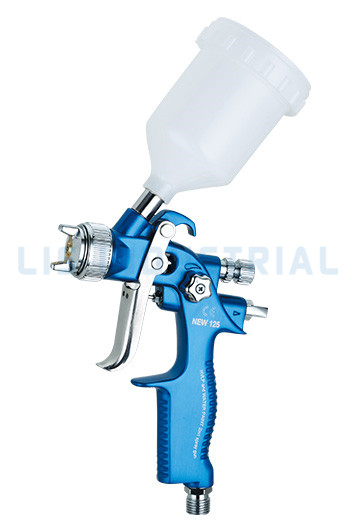
Small-area painting requires more than simply reducing the size of a conventional spray gun. Touch-up work demands accurate material control, a stable spray pattern, easy handling, and enough atomization quality to produce a smooth and professional finish. The V-3 Mini Spray Gun is designed specifically for these requirements. It is a compact gravity-feed spray gun intended for detailed refinishing, localized repairs, furniture work, woodworking, model finishing, automotive touch-ups, and other applications where control is more important than maximum coverage speed.
With a 125 ml cup, 0.5 mm or 0.8 mm fluid nozzle options, a recommended air pressure of 50 PSI, and a G1/4-inch air inlet, this small-area fine paint spraying gun offers a practical combination of compact design and professional functionality. Its configuration allows operators to work on narrow panels, edges, corners, decorative components, and repaired areas without using a larger spray gun that may waste material or become difficult to control.
The product is manufactured by Ningbo Lis Industrial Co., Ltd., an established Chinese producer of air painting spray guns, mini compressors, and related air tools. The company has developed extensive experience in spraying equipment since 1984 and operates a large manufacturing facility supported by research and development, quality management, testing, and international certification systems. This background gives the V-3 Mini Spray Gun a manufacturing foundation that extends beyond basic low-cost tool production.
This article examines the design, operating characteristics, application value, manufacturing strengths, quality-control procedures, and purchasing considerations associated with the V-3 Mini Spray Gun. It also explains why a specialized touch-up gun can provide advantages over larger general-purpose spray guns and less controlled low-cost alternatives.
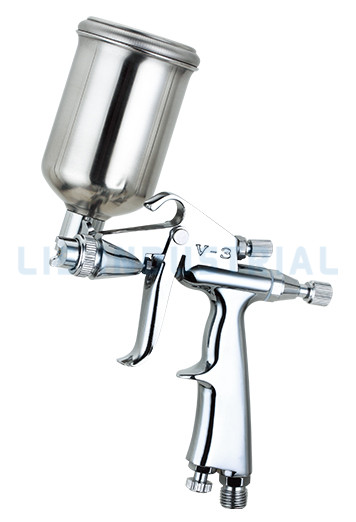
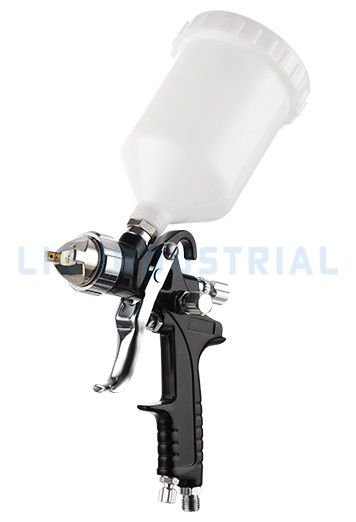
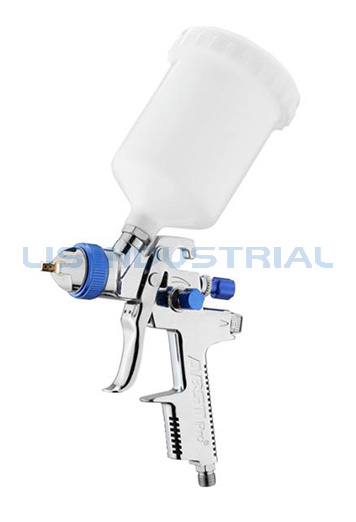
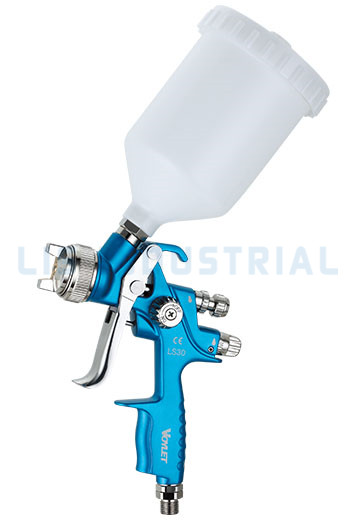
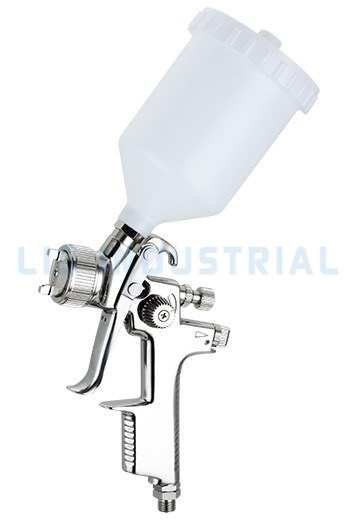
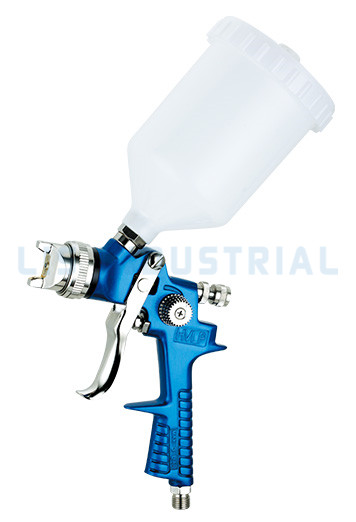
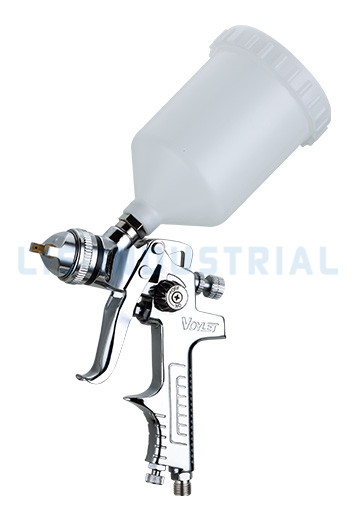
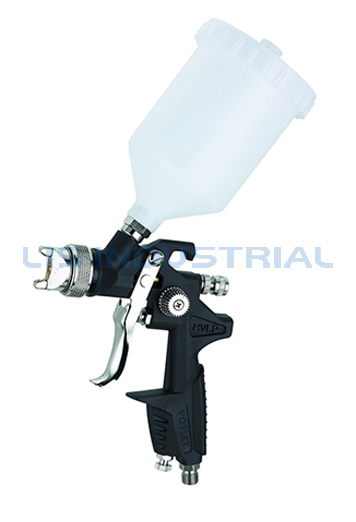
V-3 Mini spray gun Small Area Fine Paint Spraying Gun
Product Overview
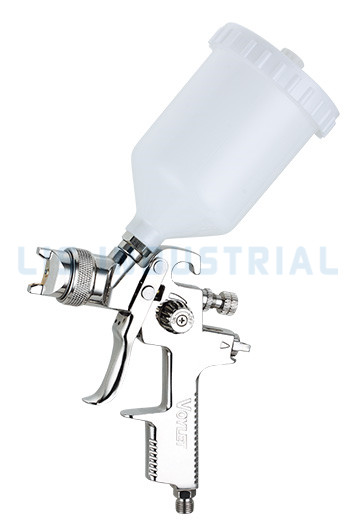
The V-3 Mini Spray Gun belongs to the Pro Touch-Up Spray Guns category. It is designed for users who need a manageable spray tool for small or medium localized surfaces rather than broad industrial coverage. The product uses a gravity-feed configuration, meaning that coating material is stored above the spray head and moves toward the nozzle with the assistance of gravity and the air pressure generated by the connected compressor.
Gravity-feed spray guns are widely used for precision applications because they can operate with relatively small quantities of coating material. The operator does not need to fill a large material reservoir, and the paint path can be designed to support efficient delivery to the nozzle. This is particularly useful when applying expensive coatings, custom colors, clear coats, primers, stains, or small quantities of repair material.
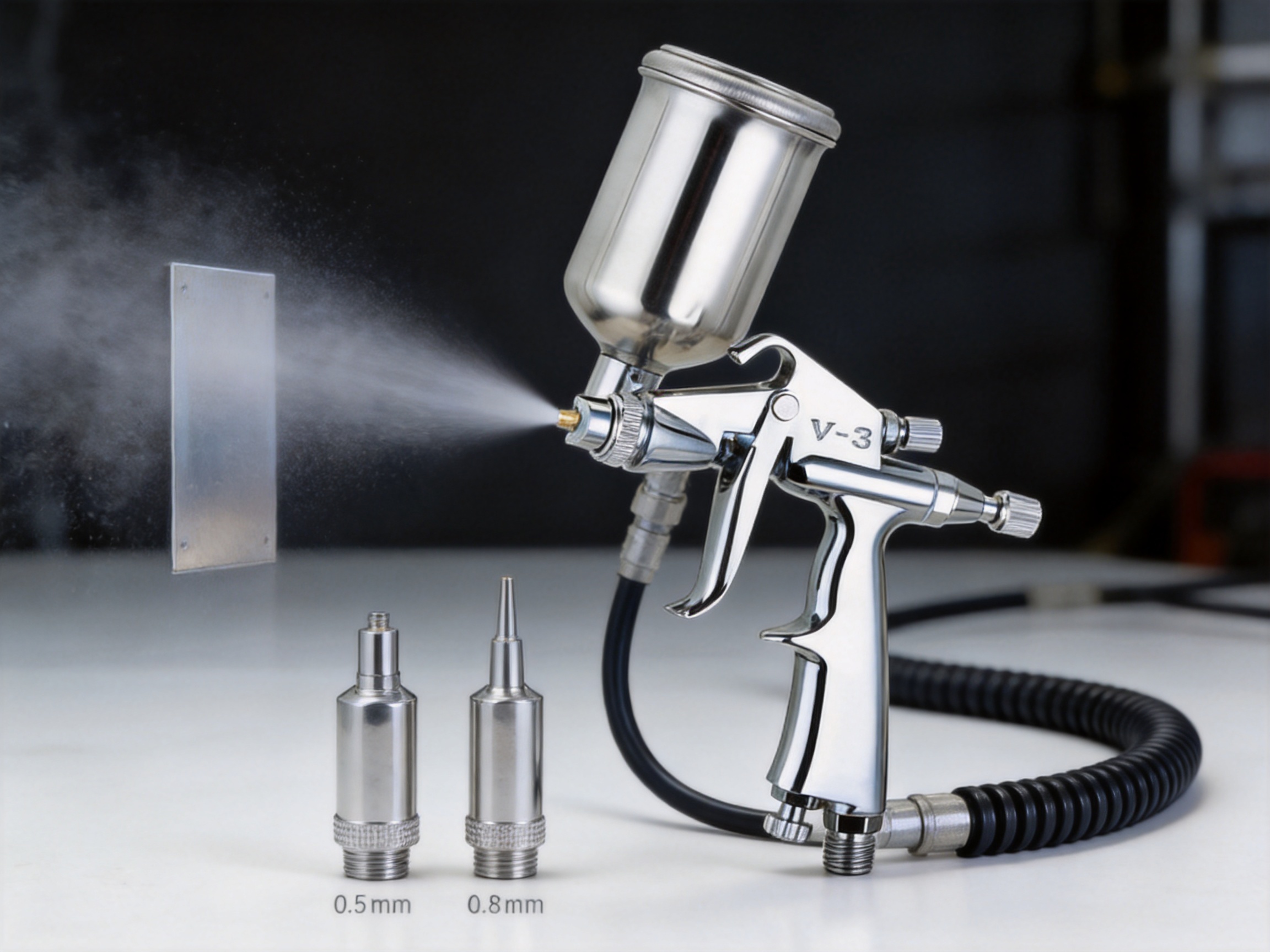
The V-3 model is equipped with fluid nozzle choices of 0.5 mm and 0.8 mm. These sizes are suitable for fine spraying and touch-up work. The smaller nozzle can support delicate applications and finer material control when the coating has been properly prepared. The larger nozzle can provide a little more material flow for coatings that require additional volume or for areas where faster coverage is useful.
The 125 ml cup is appropriately sized for localized work. It provides enough capacity for many touch-up jobs while keeping the overall weight of the tool low. A smaller cup also encourages operators to mix only the amount of coating required for the current job, helping reduce leftover material, unnecessary cleaning, and waste caused by paint that has exceeded its usable working time.
The gun operates at an air pressure specification of 50 PSI. Actual operating conditions may vary according to the coating, viscosity, nozzle selection, compressor performance, hose length, and desired finish. Nevertheless, the stated pressure provides a useful reference for setting up the tool and selecting compatible air equipment.
The air inlet is G1/4 inch, a common connection size for many compressed-air systems and air-tool accessories. This makes it easier to integrate the gun with suitable hoses, regulators, filters, quick couplers, and compact compressors. The connection standard also supports maintenance and replacement planning because compatible fittings are widely available in many markets.
| Specification | V-3 Mini Spray Gun Detail |
|---|---|
| Product type | Mini fine paint spraying gun |
| Application category | Pro touch-up spray gun |
| Feed type | Gravity feed |
| Fluid nozzle options | 0.5 mm and 0.8 mm |
| Air pressure reference | 50 PSI |
| Cup capacity | 125 ml |
| Air inlet | G1/4 inch |
| Packaging quantity | 20 pieces per carton |
| Carton dimensions | 47 × 35.5 × 29 cm |
Why a Specialized Mini Spray Gun Matters
A full-size spray gun is valuable for large surfaces, but it is not always the most effective choice for a small repair. Larger guns generally carry more material, require higher air volume, and produce a wider spray pattern. When the work area is small, these characteristics can create overspray, excessive material consumption, and difficulty maintaining a consistent wet edge.
A mini spray gun is designed around a different set of priorities. The operator can position the tool closer to the repair area, move it more easily around curves and details, and regulate the amount of material delivered with greater sensitivity. The narrower format is especially helpful when a repair must blend into an existing finish instead of covering an entire panel.
Small tools also reduce physical strain during repetitive detail work. A 125 ml cup does not add the same weight as a large paint reservoir, and the compact body can be easier to guide in multiple directions. This can be important for automotive technicians, furniture finishers, maintenance workers, and hobby users who spend considerable time working on edges or isolated defects.
Another benefit is material efficiency. Touch-up work often involves small quantities of expensive paint or coatings. A large cup may require the operator to mix more material than necessary, while a large spray pattern may distribute coating outside the intended area. The V-3’s compact reservoir and fine nozzle options help align the tool with the scale of the work.
A specialized touch-up gun can also improve process consistency. When the tool is selected according to the size and character of the job, operators are less likely to compensate with excessive trigger movement, unusual spray distance, or unstable hand speed. A purpose-designed tool makes it easier to establish a repeatable method.
Design Advantages of the V-3 Configuration
Compact Form for Controlled Movement
The compact structure of the V-3 Mini Spray Gun supports detailed work in spaces where a larger spray gun may be awkward. An operator can use shorter, more controlled passes and adjust the spray direction around corners, recesses, small panels, and decorative profiles. This makes the product suitable for both professional workshops and users who perform occasional repairs.
Compact size is not only a matter of convenience. It can influence the quality of a finish because the operator has more control over distance and angle. Maintaining a stable spray distance is essential for avoiding dry spray, runs, uneven coverage, and excessive buildup. A smaller tool is often easier to keep aligned with a small workpiece.
Gravity-Feed Material Delivery
The gravity-feed design allows material to move from the 125 ml cup toward the nozzle without relying on a separate suction tube extending into a lower container. This arrangement is well suited to small quantities and can support efficient use of material when the gun is correctly adjusted.
Gravity-feed equipment is also practical for color changes and short production runs. The operator can prepare a limited amount of coating, complete a repair, and clean the fluid path without handling a large reservoir. For workshops that process many different colors or finishes during the day, this can simplify workflow management.
Interchangeable Fine Nozzle Options
The 0.5 mm and 0.8 mm nozzle options provide flexibility within the touch-up category. The 0.5 mm configuration is appropriate when the user needs a more delicate spray and the coating is sufficiently fluid. It can be useful for fine lines, small components, detailed blending, model work, and controlled application of thin materials.
The 0.8 mm configuration allows a greater material flow than the 0.5 mm option. It may be preferred for slightly heavier coatings, primers prepared for fine spraying, small furniture sections, and repairs that need more efficient coverage. Selecting the correct nozzle helps prevent the operator from forcing an unsuitable coating through a very small opening or using excessive fluid adjustment with a larger opening.
125 ml Cup Capacity
The cup size balances working capacity with portability. It can accommodate enough material for many localized repair tasks without turning the gun into a heavy, cumbersome tool. The capacity is also useful when a project requires multiple colors or coatings because the operator can clean and refill the cup between stages without excessive material loss.
A practical workflow is to mix the coating in a separate clean container, filter it when required by the coating manufacturer, and then add only the amount needed for the immediate application. This supports better material management and reduces the chance of leaving unused coating in the cup for too long.
Common G1/4-Inch Air Connection
The G1/4-inch air inlet supports connection to common compressed-air accessories. A suitable installation may include a compressor, air hose, moisture separator, regulator, pressure gauge, and compatible coupler. Clean and appropriately regulated air is essential for spray quality, so the standardized inlet is an important practical feature rather than merely a dimensional specification.
Using a compatible air preparation system can help reduce water contamination, pressure fluctuation, and debris entering the gun. These conditions can negatively affect atomization and finish quality. The air inlet therefore forms part of a complete spraying system that includes the gun, compressor, hose, fittings, and maintenance routine.
Application Areas
Automotive Touch-Up and Refinishing
The V-3 Mini Spray Gun can be used for localized automotive work such as small scratches, repaired edges, mirror housings, trim pieces, brackets, motorcycle components, and narrow body sections. Its compact spray format is useful when a technician needs to blend or repair a limited area rather than repaint an entire vehicle panel.
Automotive coatings vary considerably, so the operator must follow the coating manufacturer’s instructions for reduction, filtration, flash time, nozzle choice, and curing. The gun itself provides the delivery platform, while the final result depends on correct surface preparation, compatible materials, controlled air pressure, and suitable technique.
Woodworking and Furniture Finishing
In woodworking, a mini spray gun can be useful for chairs, cabinet doors, drawer fronts, table edges, shelves, turned components, and decorative details. The ability to control the spray area is especially valuable when a finish must be applied around profiles or in sections that are difficult to reach with a brush or roller.
Wood stains, sealers, lacquers, paints, and clear finishes may require different nozzle and pressure settings. The 0.5 mm and 0.8 mm options allow users to select a configuration more appropriate to the viscosity and desired coverage. A test spray on scrap material should always be completed before applying a coating to the finished workpiece.
Metal Parts and Maintenance Work
Maintenance departments can use a small spray gun for brackets, machine components, equipment panels, repair patches, and protective coating applications. Its compact design allows the operator to work on components that have already been removed from a machine or on sections that would be inefficient to treat with a large industrial gun.
For corrosion-protection work, surface preparation remains critical. Oil, rust, dust, and loose coatings should be removed according to the selected coating system. The V-3 can help deliver the coating, but it cannot compensate for inadequate cleaning or poor substrate preparation.
Craft, Model, and Decorative Work
The fine nozzle configuration is suitable for hobby applications that require more coverage than a typical airbrush but more control than a general-purpose spray gun. Possible uses include model components, props, decorative items, small signs, craft pieces, and custom artwork on suitable surfaces.
The 125 ml cup can be convenient for short sessions because the user can prepare small batches of color. This reduces the need to store large amounts of mixed coating and helps make color changes more manageable.
Equipment Repair and Localized Recoating
Industrial and commercial users often encounter small areas where the original coating has been damaged during transport, installation, welding, or routine operation. A mini spray gun can be used to restore those areas without setting up a complete large-surface coating process. This can reduce downtime and help maintain a consistent appearance.
Operating Principles and Spray Quality
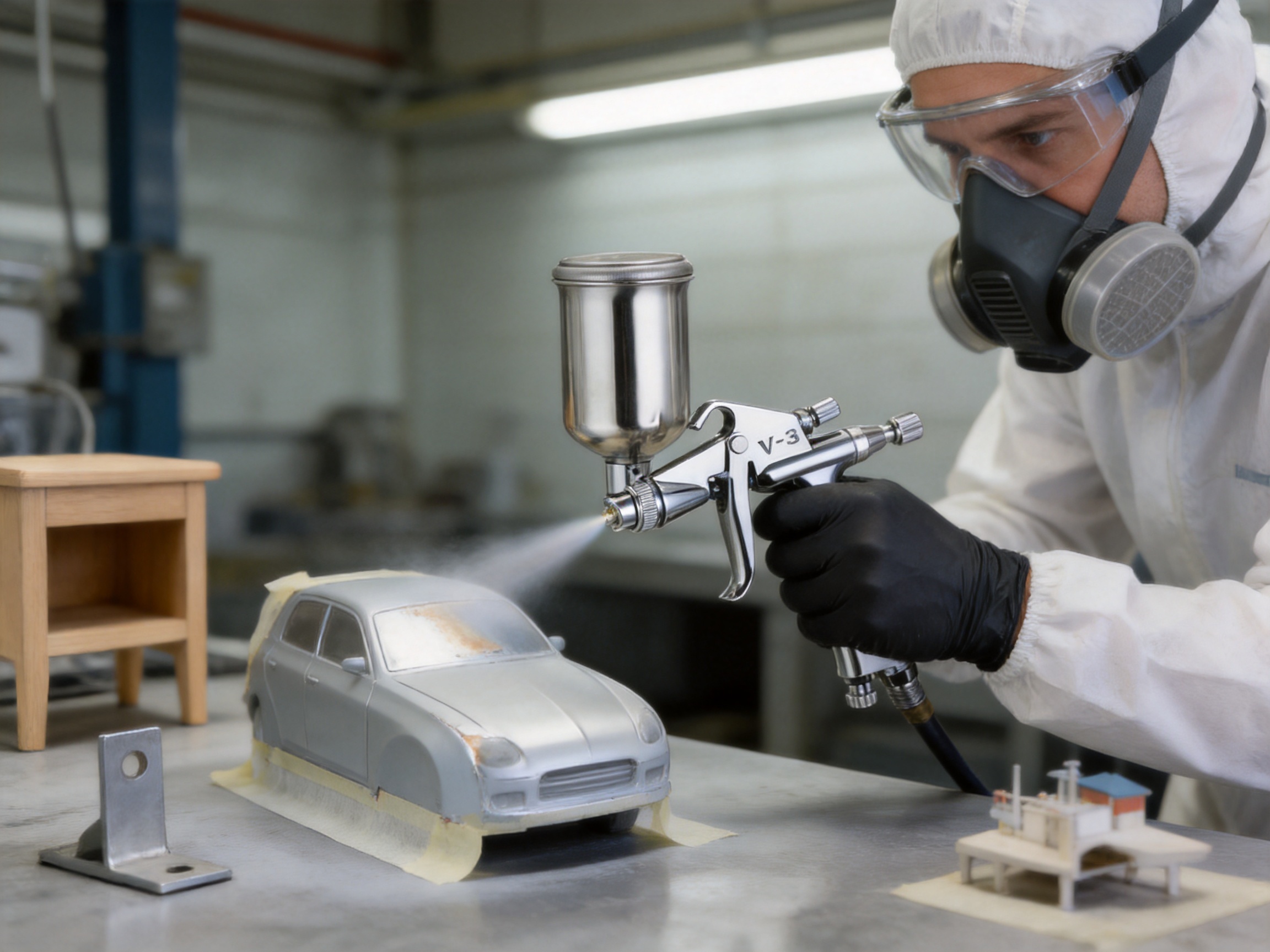
A spray gun works by combining liquid material with compressed air at the nozzle. The air breaks the liquid into droplets and distributes those droplets toward the target surface. The quality of atomization depends on several interacting factors, including nozzle size, air pressure, material viscosity, fluid adjustment, spray distance, gun speed, and the condition of the air supply.
With the V-3, the operator should begin with a clean gun, a properly prepared coating, and a stable air supply. The 0.5 mm nozzle can be tested first for thin materials and detailed work, while the 0.8 mm nozzle may be selected when a higher flow rate is needed. The correct choice should be based on the coating manufacturer’s guidance and the result of a controlled test spray.
Spray distance should be kept consistent. Holding the gun too far from the surface can cause dry particles and rough texture because the droplets begin to lose solvent before reaching the workpiece. Holding it too close can create wet buildup, runs, or uneven overlap. A steady hand speed and parallel movement help maintain uniform application.
The trigger commonly controls air and fluid functions through coordinated movement. Operators should avoid opening the fluid adjustment fully without testing the atomization pattern. It is generally better to begin with a conservative material flow, observe the pattern, and increase flow gradually until coverage and wetness are appropriate.
Overlapping passes can help prevent visible striping. The exact overlap percentage depends on the coating and application method, but consistent movement is more important than following a rigid number. The operator should release the trigger at the end of each pass when appropriate and avoid pivoting the wrist, which can change the distance between the nozzle and the surface.
Advantages Compared with General-Purpose Alternatives
Better Suitability for Small Work Areas
Compared with a full-size conventional spray gun, the V-3 is more appropriately scaled for localized surfaces. A smaller pattern and cup can help reduce overspray and make it easier to keep material within the repair area. This can be particularly advantageous when adjacent surfaces should remain untouched.
Lower Material Commitment per Job
A 125 ml cup does not require the operator to prepare a large quantity of coating. This is useful when the material is expensive, color matching is difficult, or the job is too small to justify a larger reservoir. Reduced material commitment can improve cost control, especially in maintenance and custom finishing environments.
More Convenient Handling
The mini format can be easier to hold during detailed work. Reduced cup size and compact dimensions may lessen fatigue and support more accurate movement. This advantage is important when the operator is working on vertical surfaces, edges, curved parts, or components that require frequent changes in spray direction.
Flexible Nozzle Selection
The availability of 0.5 mm and 0.8 mm fluid nozzle options gives the user more control than a single fixed configuration. The operator can select the finer option for delicate work or the larger option for a more substantial application. This flexibility increases the range of materials and tasks that can be approached with one basic gun platform.
Practical Integration with Air Systems
The G1/4-inch air inlet is compatible with many standard air-tool systems. Users can connect the gun to suitable air preparation equipment without relying on an unusual or difficult-to-source connection. This simplifies workshop setup and supports easier replacement of hoses and fittings.
Professional Manufacturing Background
One significant difference between an established industrial manufacturer and an anonymous low-cost supplier is the depth of the production system behind the product. The V-3 is supported by experience in air spray equipment, dedicated production facilities, quality systems, testing procedures, engineering resources, and international market requirements.
These advantages do not eliminate the need for correct operation or maintenance, but they provide a stronger foundation for consistent product supply, technical support, private-label cooperation, and long-term purchasing programs.
Advanced Manufacturing and Engineering Strengths
Ningbo Lis Industrial Co., Ltd. has been engaged in the development, manufacture, and marketing of air painting spray guns and related air tools since 1984. Over this period, the company has expanded from a specialized producer into a large enterprise serving customers in multiple international markets.
The company reports a production site covering more than 400,000 square feet, a workforce of more than 400 employees, and annual output exceeding 40 million US dollars. These resources support purchasing, machining, assembly, testing, packaging, product development, quality assurance, and customer service activities at a scale appropriate for both standard products and customized programs.
A large manufacturing base can offer several advantages to buyers. It may support better production scheduling, greater component availability, more structured process control, and improved capacity planning during periods of increased demand. The company also states that production capacity can be increased by approximately 30 percent within two months, providing additional flexibility for customers with changing order volumes.
Research and Development
The manufacturer maintains a strong research and development team focused on spraying machinery and air-tool technology. Engineering capability is important for a product such as the V-3 because atomization quality depends on the relationship between nozzle geometry, air channels, fluid passages, sealing components, trigger movement, and body design.
The company can provide OEM services based on customer drawings or samples. It also offers ODM services for customers requiring development according to particular market needs. This may include adjustments to appearance, packaging, configuration, accessories, labeling, or other approved product requirements.
Technical cooperation with an American spraying technology company has also contributed to the manufacturer’s development experience. Such cooperation can help expose engineering and production teams to international application expectations, product evaluation methods, and market-specific requirements.
Structured Production Processes
The manufacturing process for a spray gun requires accurate control of multiple components and assembly stages. The fluid nozzle and needle must work together correctly. Air passages must remain clear and properly aligned. Seals must be compatible with the intended materials. Threads and connection points must fit consistently. Trigger and adjustment mechanisms must operate smoothly.
A structured production system allows these requirements to be managed through defined procedures rather than relying solely on individual operator experience. Incoming material inspection, process checks, assembly verification, functional testing, and final inspection can each contribute to product reliability.
For an international buyer, process discipline is particularly important because products may be shipped across long distances and used in different climatic conditions. Consistency from batch to batch helps distributors, repair centers, and end users maintain predictable expectations.
Quality Assurance and Functional Testing
The company states that it controls quality from raw-material and incoming inspection through in-process quality control, 100 percent functional testing, and final inspection of finished products. This whole-process approach is valuable for spray guns because defects can appear at different stages. A component may meet a dimensional requirement but still fail during operation if it leaks, produces an irregular pattern, or does not respond correctly to adjustment.
Functional testing can verify important operating characteristics such as air passage performance, fluid delivery, trigger action, sealing, and spray behavior. Final inspection adds another opportunity to detect appearance issues, assembly problems, packaging errors, or missing components before shipment.
Quality assurance is most effective when supported by records, calibrated inspection equipment, trained personnel, traceable procedures, and corrective-action systems. These practices help manufacturers identify recurring problems and improve processes over time.
International Certifications
The company reports certification and compliance achievements including CE and GS product certifications, ISO 9001 quality-management certification, ISO 14001 environmental-management certification, and OHSAS 18001 occupational health and safety certification. These certifications indicate attention to organized management systems, environmental responsibilities, workplace safety, and product requirements applicable to international markets.
Certification does not replace product-specific evaluation by a buyer or end user. However, it can provide evidence that the manufacturer has established formal systems rather than operating only through informal production controls. For distributors and importers, this may simplify supplier assessment and support documentation requirements.

Material Efficiency and Workshop Productivity
The V-3 Mini Spray Gun can contribute to efficient workshop practice in several ways. First, its compact cup reduces the amount of coating that must be prepared for a small job. Second, the fine spray format may help keep coating closer to the intended work area. Third, the gravity-feed arrangement supports quick preparation for short runs and localized repairs.
Material efficiency depends on technique as well as equipment. Overspray, incorrect reduction, excessive fluid flow, poor distance control, and repeated test spraying can all increase consumption. Operators should therefore treat the gun as one part of a controlled application process that includes preparation, testing, application, drying, and cleaning.
Productivity also includes setup and cleanup time. A mini gun can be quicker to fill, empty, disassemble, and clean than a large spray gun, particularly when only a small amount of material has been used. Faster changes can be valuable in repair shops and small production environments where different colors or coatings are handled throughout the day.
For professional users, maintaining several guns or nozzle configurations may allow one tool to remain prepared for primer, another for color, and another for clear coating. The correct arrangement depends on the workshop’s processes, but the V-3’s compact design can make it practical to maintain dedicated touch-up equipment.
Setup Recommendations
Prepare the Air Supply
Use a compressor capable of delivering stable air for the selected pressure and spray pattern. The air line should be clean, dry, and free from excessive oil or moisture. A regulator helps control pressure, while a moisture separator can reduce the risk of water reaching the gun or painted surface.
Check the G1/4-inch connection before operation. The hose and coupler should be secure, and any leakage should be corrected. Pressure should be checked near the gun where possible because pressure at the compressor may not equal pressure at the spray tool after losses through the hose, filter, and fittings.
Prepare the Coating
Follow the coating supplier’s instructions for mixing, thinning, induction time, pot life, and filtration. A coating that is too thick may produce poor atomization or require excessive adjustment. A coating that is too thin may run, sag, or provide inadequate film thickness.
Use a clean mixing container and strain the material when recommended. Contamination or unmixed particles can block the nozzle and interfere with spray quality. Do not assume that every coating can be used with every seal or component; material compatibility should be confirmed before extended use.
Choose the Nozzle
Select the 0.5 mm nozzle for fine, controlled work when the coating can be atomized effectively through the smaller opening. Select the 0.8 mm nozzle when the material or application requires increased flow. Begin with a test pattern on masking paper, scrap material, or a sample panel.
The test should be used to evaluate pattern width, atomization, coverage, wetness, and edge definition. Make one adjustment at a time so that the effect of air pressure, fluid flow, or material viscosity can be understood.
Protect the Work Area
Even a mini spray gun produces airborne coating particles. Use appropriate ventilation, respiratory protection, eye protection, gloves, and protective clothing according to the coating’s safety data and local regulations. Mask adjacent surfaces and keep ignition sources away from flammable materials.
Cleaning and Maintenance
Cleaning should begin immediately after spraying. Coating residue can dry in the nozzle, fluid passage, cup, air cap, and needle area. Dried material may be difficult to remove and can damage components or cause an irregular spray pattern during later use.
Empty remaining material according to applicable waste procedures. Rinse the cup and fluid path with a compatible cleaning solution recommended for the coating. Never use a cleaning agent that can damage seals, finishes, or other gun components. If the coating system is water-based, water or an approved cleaner may be suitable; solvent-based materials require different handling.
Remove the air cap and nozzle carefully when required. Use the correct tools and avoid forcing parts. The nozzle opening is precise, so metal objects or excessive pressure can deform it. A soft brush and appropriate cleaning equipment are preferable to aggressive scraping.
Inspect the needle, nozzle, air cap, cup connection, threads, and seals periodically. Replace worn or damaged components with compatible parts. A small defect in the needle or nozzle can affect atomization, create leakage, or make adjustment difficult.
Store the gun clean and dry. Keep it protected from dust, impact, extreme temperatures, and unauthorized access. A dedicated storage location can reduce the risk of losing small components such as nozzle parts, seals, or adjustment elements.
Manufacturing Reliability for Importers and Distributors
For wholesale buyers, product performance is only one part of the purchasing decision. Supply stability, packaging, documentation, quality consistency, customization capability, and communication also influence the overall value of a spray gun program.
The V-3 is packed at 20 pieces per carton, with carton dimensions of 47 × 35.5 × 29 cm. These details help buyers estimate warehouse requirements, shipping arrangements, pallet planning, and distribution costs. Accurate packaging information is especially important when combining several air-tool products in a container or planning regional inventory.
An established manufacturer can also support more predictable replenishment. The company’s reported production scale and ability to increase capacity provide a foundation for serving distributors with recurring orders. Buyers should still confirm lead times, minimum order quantities, packaging requirements, spare-part availability, and inspection arrangements for each project.
OEM and ODM capabilities can be useful for distributors that need products adapted to a particular market. Possible project areas may include private labeling, carton design, instruction manuals, nozzle combinations, accessory kits, color schemes, or product positioning. Any modification should be evaluated for technical compatibility, regulatory requirements, and production feasibility.
Long-term cooperation may also benefit from pre-shipment inspection, sample approval, batch records, agreed acceptance criteria, and periodic product reviews. These procedures help align the supplier’s production system with the buyer’s commercial and technical expectations.
Comparison of Use Cases
| Work Requirement | Recommended V-3 Configuration or Practice | Expected Benefit |
|---|---|---|
| Very small repair area | 0.5 mm nozzle, controlled fluid flow, short passes | Fine application and reduced overspray |
| Small furniture component | 0.8 mm nozzle when coating requires more flow | Improved coverage efficiency |
| Automotive blending | Test pattern, stable pressure, consistent distance | Better control at the blend edge |
| Model or craft work | 0.5 mm nozzle with properly reduced material | Detailed spraying and manageable material use |
| Maintenance recoating | Choose nozzle according to coating viscosity | Localized restoration without a large gun setup |
| Frequent color changes | Small batches and immediate cleaning | Reduced leftover material and faster changeover |
Purchasing Considerations
Before purchasing the V-3 Mini Spray Gun, users should identify the coatings they expect to apply. The gun is a fine-spraying tool, but not every material is suitable for a 0.5 mm or 0.8 mm nozzle. High-solid, heavily filled, or unusually viscous coatings may require a different spray system, larger nozzle, or specialized equipment.
Buyers should also confirm compressor compatibility. The stated air pressure is 50 PSI, but compressor performance involves both pressure and air volume. A compressor must maintain a suitable supply during spraying rather than reaching the target pressure only when idle. A regulator, filter, appropriate hose, and compatible fittings should be considered part of the complete purchase.
For professional environments, ask about replacement nozzles, needles, seals, cups, air caps, and cleaning tools. The availability of service parts can influence the useful life of the equipment. A spray gun that can be maintained with compatible components may offer better long-term value than a tool that must be discarded after a minor wear issue.
Importers should request technical drawings, product samples, packaging specifications, certification documents, and inspection standards when required. If the gun will be sold under a private label, confirm artwork procedures, labeling rules, instruction requirements, and approval samples before mass production.
Company Manufacturing Capability
Ningbo Lis Industrial Co., Ltd. focuses on air painting spray guns, mini oil-free compressors, air pipeline accessories, air fittings, paint tanks, air brushes, polishing tools, airless spray equipment, electric sprayers, and related air tools. This product breadth provides useful knowledge of the wider compressed-air and spraying system rather than limiting production to one isolated tool.
The company’s location in Ningbo provides access to a major harbor, developed transportation infrastructure, industrial suppliers, and export services. These logistical conditions can support international shipment of finished products and components. The company reports customers in Europe, North America, the Middle East, South Africa, East Asia, and other regions.
The manufacturer has also developed international brands and maintains a worldwide marketing and service network. Its customer base includes long-term strategic partners, and its stated business objective is to provide high-quality products, professional services, and complete spraying solutions.
From an engineering standpoint, the ability to provide both OEM and ODM services is an important strength. OEM production allows a buyer to use established designs according to agreed specifications. ODM cooperation can support the development of products for a particular market segment or application. Both models require clear communication, sample evaluation, technical documentation, and reliable quality control.
The company’s reported national high-tech enterprise recognition, customs-related advanced certification, individual-item champion recognition in Ningbo, and provincial engineering and technology center status further indicate investment in technical development and industrial management. Buyers should verify current certificates and scope for their specific purchasing requirements, but these qualifications provide useful background when evaluating manufacturing capability.
Best Practices for Consistent Results
Consistent results begin with consistent preparation. Use the same mixing procedure, reduction ratio, pressure reference point, spray distance, and overlap method when repeating a job. Record successful settings for frequently used coatings. This can reduce trial-and-error and help different operators achieve more similar results.
Keep the gun perpendicular to the surface whenever possible. Tilting the gun can change the distribution of material across the spray pattern. On curved parts, use controlled wrist and arm movement while maintaining a reasonable distance from the surface.
Do not try to obtain full coverage in one excessively wet pass. Multiple controlled passes may provide a more uniform film and reduce runs. Allow the appropriate flash time between coats according to the coating manufacturer’s instructions.
Inspect the air cap and nozzle before each session. A small amount of dried material can distort the pattern. Confirm that the cup is secure and that no fluid is leaking around the connection. These quick checks can prevent defects and interruptions during the job.
Use masking and ventilation practices appropriate to the material. A clean booth, spray room, or protected work area can improve finish quality by reducing dust and controlling airborne particles. Safety procedures should always take priority over speed.
Environmental and Workplace Considerations
Efficient material use can reduce waste, but responsible spraying also requires attention to overspray collection, solvent handling, ventilation, and disposal. Users should follow local environmental regulations and the instructions provided by coating manufacturers.
The company reports an ISO 14001 environmental-management certification. This indicates that environmental management is included within its formal organizational systems. For buyers with supplier sustainability requirements, this certification may be relevant during vendor evaluation.
Workplace safety is equally important. The manufacturer reports OHSAS 18001 occupational health and safety certification. Although users remain responsible for safe operation in their own facilities, a supplier’s safety-management framework can demonstrate attention to controlled industrial practices.
Operators should never spray unknown materials without checking compatibility and hazards. Some coatings may contain flammable solvents, hazardous pigments, or chemicals requiring specialized respiratory protection. Safe spraying requires correct personal protective equipment, ventilation, grounding where applicable, and appropriate fire-prevention measures.
Frequently Asked Questions
What type of spray gun is the V-3?
The V-3 is a compact gravity-feed mini spray gun designed for fine paint spraying and professional touch-up applications. It is intended for localized work rather than large-scale high-volume coating.
What nozzle sizes are available?
The listed fluid nozzle options are 0.5 mm and 0.8 mm. The 0.5 mm option is generally suited to finer work and properly reduced materials, while the 0.8 mm option can provide greater material flow for suitable coatings.
What is the cup capacity?
The cup capacity is 125 ml. This size is suitable for many small-area repair, detailing, woodworking, craft, and maintenance applications.
What air pressure does the gun use?
The stated air pressure is 50 PSI. Actual settings should be adjusted according to the coating, nozzle, compressor, spray distance, and finish requirements. The pressure should be checked with suitable air regulation equipment.
What type of feed system does it use?
The V-3 uses a gravity-feed system. The material cup is positioned above the spray head, allowing coating to move toward the nozzle with the assistance of gravity and compressed air.
What air connection is required?
The gun has a G1/4-inch air inlet. Users should select a compatible hose, coupler, regulator, and filter for their compressed-air system.
Can the V-3 be used for automotive work?
Yes. It can be appropriate for localized automotive touch-ups, trim pieces, small panels, motorcycle parts, and blending work when the coating is compatible with the nozzle and spray system. Surface preparation and coating instructions must be followed carefully.
Can it be used for woodworking?
Yes. The gun can be used for suitable stains, sealers, paints, lacquers, and clear finishes on furniture and woodworking components. The correct nozzle, reduction, pressure, and test procedure should be selected for each material.
Is the 0.5 mm nozzle always the better choice?
No. The 0.5 mm nozzle provides finer control but may not be suitable for every coating. The 0.8 mm nozzle may be more practical when the material requires additional flow. The coating manufacturer’s recommendations and a test pattern should guide the selection.
What compressor is needed?
The compressor must provide stable air at the required pressure and sufficient air volume for the chosen spray pattern. Users should compare compressor output with the spray gun’s requirements and account for losses through hoses, filters, and fittings.
How can material waste be reduced?
Mix only the quantity needed, use the smallest suitable nozzle and spray pattern, maintain a consistent distance, avoid excessive fluid flow, and clean the gun promptly after use. Good masking and controlled passes also help reduce overspray.
How should the gun be cleaned?
Remove unused material, flush the fluid path with a compatible cleaning solution, clean the cup and air cap, and inspect the nozzle and needle. Avoid using sharp metal objects that could damage precision openings. Cleaning procedures must be compatible with the coating and gun materials.
Does the manufacturer offer customization?
The manufacturer reports both OEM and ODM capabilities. Buyers can discuss private labeling, packaging, configuration, documentation, and other project requirements with the sales and engineering teams.
Is the product suitable for industrial purchasing?
It can be suitable for distributors, repair workshops, woodworking suppliers, maintenance departments, and other professional users requiring a compact touch-up tool. Buyers should confirm order quantities, lead times, inspection requirements, spare parts, and certification documentation for their application.
Conclusion
The V-3 Mini Spray Gun is designed to address a clear need in the coating industry: controlled, economical, and convenient spraying for small areas. Its gravity-feed structure, 125 ml cup, 0.5 mm and 0.8 mm nozzle options, 50 PSI air-pressure reference, and G1/4-inch air inlet create a practical configuration for touch-up and fine finishing work.
Its main advantage over larger general-purpose spray guns is appropriate scale. The compact format can improve handling around narrow surfaces, reduce material commitment, support localized repairs, and make frequent color or coating changes easier. Compared with basic low-cost alternatives, its value is strengthened by the manufacturing resources, engineering experience, testing procedures, quality systems, certifications, and international supply capability behind the product.
The product is relevant to automotive repair, woodworking, furniture finishing, metal maintenance, decorative work, model making, craft applications, and equipment recoating. Its performance will depend on correct material preparation, nozzle selection, air regulation, spray technique, cleaning, and maintenance, but its design provides a sound platform for these processes.
For professional buyers, the manufacturer’s history, production scale, OEM and ODM capability, quality-control system, and worldwide service network add value beyond the individual spray gun. For end users, the V-3 offers a compact tool for achieving greater control when a full-size gun is excessive and a brush or roller cannot provide the desired finish.
When selected for suitable materials and operated according to safe spraying practices, the V-3 Mini Spray Gun can support efficient workflows, reliable touch-up results, and flexible small-area finishing across many professional and practical applications.
References
1. Product specification materials supplied for the V-3 Mini Spray Gun, including nozzle, pressure, cup capacity, feed type, air inlet, and packaging information.
2. Manufacturer information supplied for Ningbo Lis Industrial Co., Ltd., including company history, production capability, research and development, certifications, quality control, OEM services, and ODM services.
3. General principles of compressed-air spray application, including atomization, nozzle selection, air-pressure adjustment, material preparation, spray distance, and overlapping technique.
4. General guidance for gravity-feed spray-gun cleaning, inspection, storage, and replacement of wear components.
5. General occupational safety principles for paint spraying, including ventilation, respiratory protection, chemical handling, fire prevention, and waste management.
6. General quality-management principles relating to incoming inspection, in-process control, functional testing, final inspection, and production traceability.