 Search

 English
 中文简体
 Deutsch
 Español
Content
- 1 Introduction
- 2 Product Overview
- 3 How Conventional Atomization Works
- 4 Advantages of the W71S Design
- 5 Comparison with Less Capable Alternatives
- 6 Application Areas
- 7 Manufacturing Strength and Production Capability
- 8 Quality Assurance and Commercial Supply
- 9 Operating Recommendations
- 10 Safety Considerations
- 11 Maintenance and Service Life
- 12 Why Manufacturing Quality Matters to Users
- 13 Purchasing Guidance
- 14 Q&A
- 14.1 What type of product is the W71S?
- 14.2 What nozzle sizes are available?
- 14.3 What is the cup capacity?
- 14.4 What air pressure is specified?
- 14.5 What air inlet does the gun use?
- 14.6 Is the product gravity feed or suction feed?
- 14.7 What materials can be sprayed?
- 14.8 Is it appropriate for professional workshops?
- 14.9 How does it compare with a single-nozzle spray gun?
- 14.10 How should the spray gun be cleaned?
- 14.11 Can the manufacturer provide OEM or ODM services?
- 14.12 What quality systems does the manufacturer report?
- 14.13 Where is the manufacturer located?
- 15 Conclusion
- 16 References
- 17 Product: Voylet W71S Grativy Type Paint Sprayer High Atomizatio Spray Gun+

Introduction
Professional finishing work depends on more than the quality of the coating itself. The spray gun, air supply, fluid delivery system, operating technique, and production environment all influence the final result. A well-designed spray gun can help users apply paint, varnish, primer, stain, protective coating, and other liquid materials with greater consistency and control. It can also reduce overspray, improve transfer efficiency, shorten application time, and support a more comfortable working process.
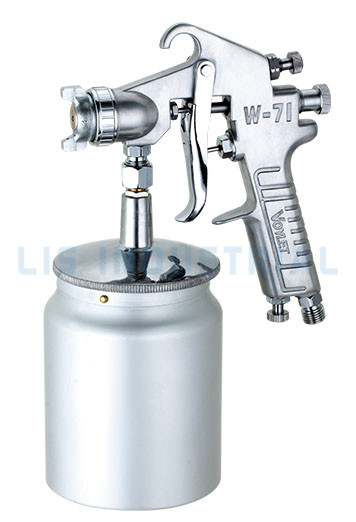
The W71S high-atomization conventional paint sprayer is designed for users who need a practical and economical solution for general-purpose coating work. It belongs to the economical conventional spray gun category and combines a 600 ml cup, selectable fluid nozzles, a 1/4-inch air inlet, and a working air pressure specification of 50 PSI. These features make it suitable for workshops, woodworking operations, automotive touch-up tasks, maintenance departments, agricultural equipment repair, furniture production, and many other applications where dependable pneumatic spraying is required.
Although economical spray guns are often associated with basic performance, a properly engineered conventional gun can provide valuable advantages when its components are correctly matched and its manufacturing quality is carefully controlled. The W71S is built around a straightforward operating concept, allowing users to adjust material flow and atomization according to the coating and workpiece. Its selectable nozzle sizes also make it more adaptable than a single-purpose sprayer.
This article examines the product’s construction, specifications, application value, operating principles, maintenance requirements, and advantages in comparison with less versatile or poorly manufactured alternatives. It also explains how controlled production processes, quality inspection, research and development, certification experience, and manufacturing capacity contribute to the reliability of the finished spray gun.
Voylet W71S Grativy Type Paint Sprayer High Atomizatio Spray Gun+
Product Overview
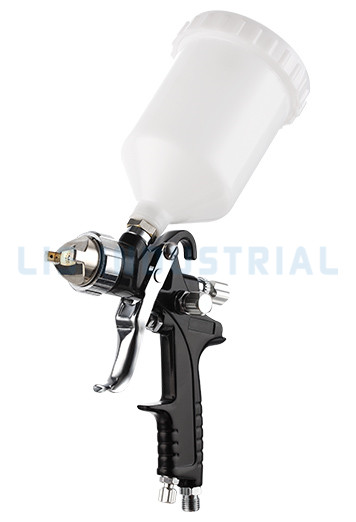
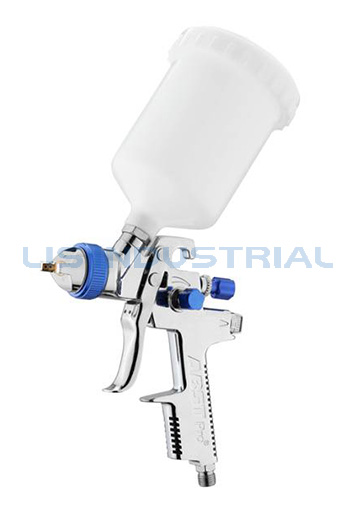
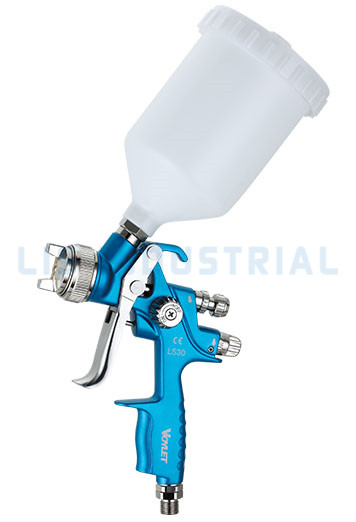
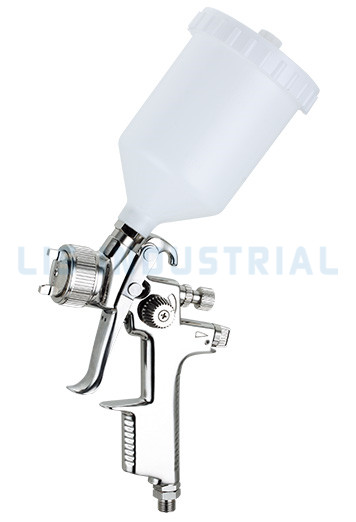
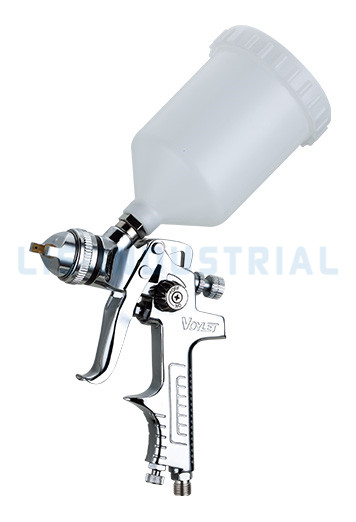
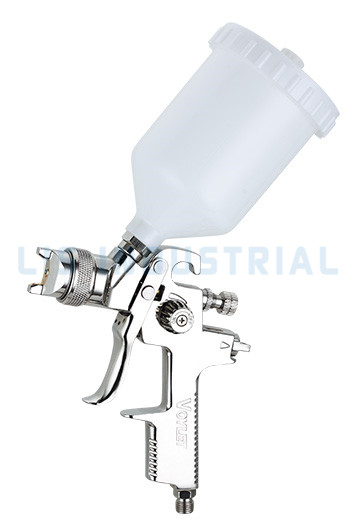
The W71S is a pneumatic conventional spray gun intended for the atomization and application of liquid coatings. It uses compressed air to break the coating into fine droplets and distribute them across a surface. The basic spray system consists of an air passage, fluid passage, nozzle, needle, air cap, trigger mechanism, adjustment components, and material cup. When the trigger is pulled, air and fluid are released in a controlled sequence, creating the spray pattern required for the job.
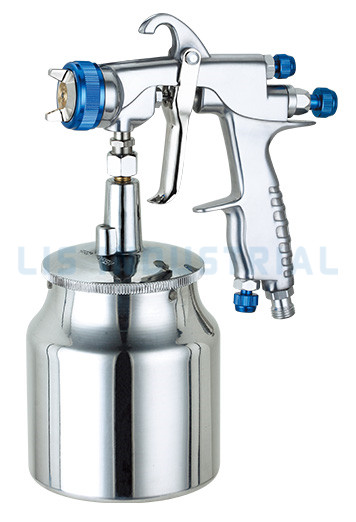
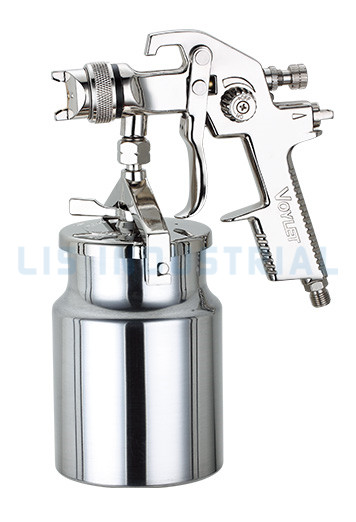
The supplied product information identifies the gun as a gravity-type paint sprayer in the product title while listing the feed type as suction. Because feed configuration is important to users, buyers should confirm the exact configuration required for their order, including the cup position, fluid delivery arrangement, and compatible replacement parts. Regardless of the selected configuration, the operating objective remains the same: provide a stable flow of coating material and effective atomization through compressed air.
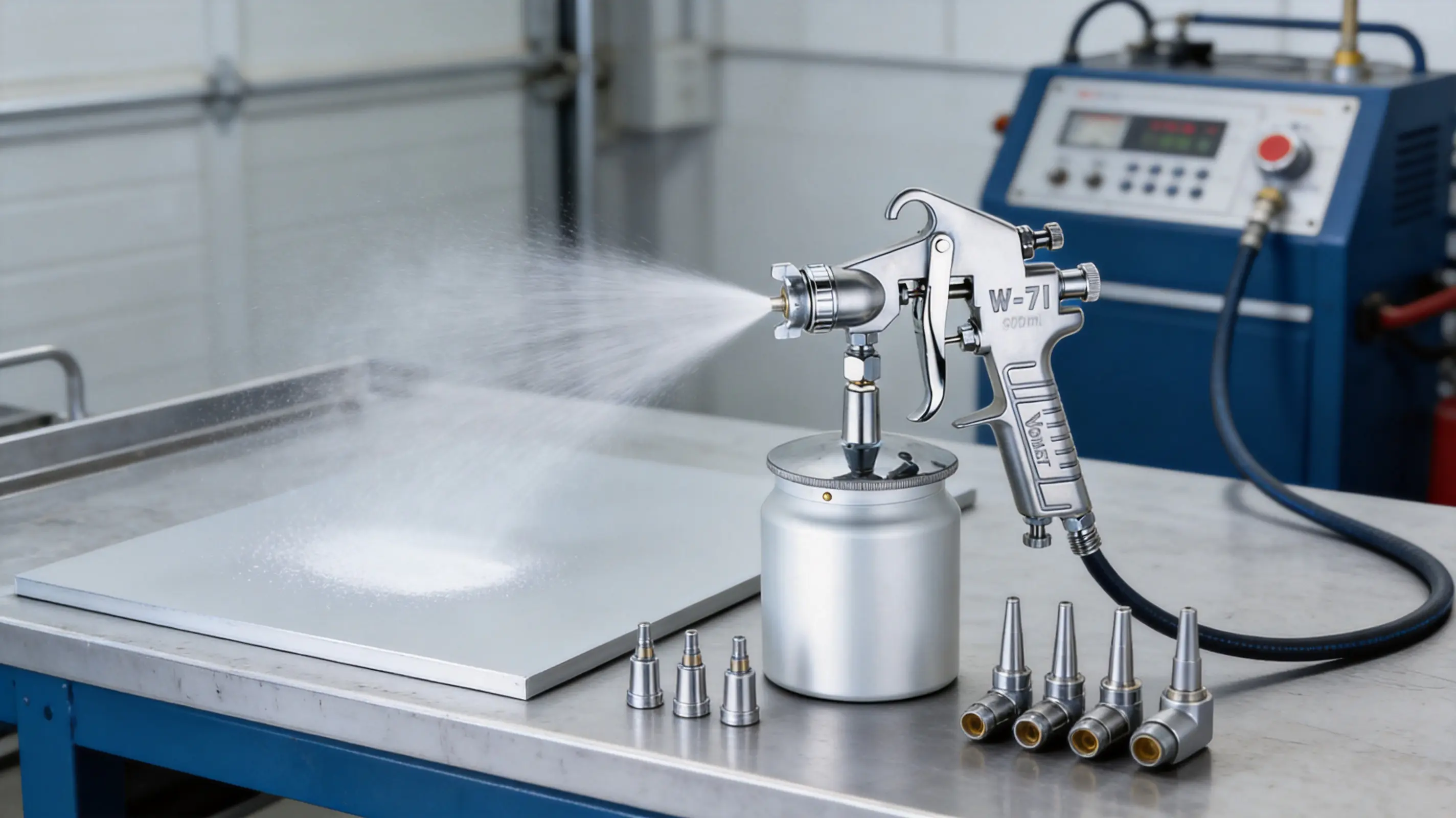
The gun is supplied with fluid nozzle options of 1.0 mm, 1.3 mm, 1.5 mm, and 1.8 mm. These sizes provide a useful range for different coating viscosities and application requirements. Smaller nozzles are generally appropriate for thinner materials, fine finishing, narrow areas, and controlled touch-up work. Larger nozzles can accommodate heavier materials and higher fluid output when the project requires faster coverage.
The 600 ml cup offers a practical balance between capacity and handling. It can hold enough material for many small and medium-sized jobs without making the gun unnecessarily heavy. A cup of this size can be useful for furniture panels, vehicle components, doors, cabinets, machinery parts, and localized repair work. Users can also fill the cup with a controlled quantity of material, helping limit waste when a complete container is not needed.
The specified air pressure is 50 PSI. Actual operating results may vary depending on material viscosity, nozzle size, air volume, hose length, regulator accuracy, and spray distance. For this reason, users should regard the stated pressure as an important reference point and adjust the system through a regulated, clean, and adequately sized air supply. Testing on a sample panel before production application remains an essential professional practice.
Main Specifications
| Item | Specification | Practical Significance |
|---|---|---|
| Product type | High-atomization conventional pneumatic spray gun | Suitable for general coating and finishing applications |
| Product category | Economical conventional spray guns | Designed to provide useful performance at an accessible cost |
| Fluid nozzle options | 1.0 mm, 1.3 mm, 1.5 mm, 1.8 mm | Supports different coating viscosities and application speeds |
| Specified air pressure | 50 PSI | Provides a reference for regulated air supply setup |
| Cup capacity | 600 ml | Balances material capacity with manageable tool weight |
| Feed information | Suction listed in the supplied specification | Buyers should confirm the exact feed configuration before ordering |
| Air inlet | G1/4 inch | Common pneumatic connection format for workshop equipment |
| Carton packing | 82 x 42 x 15 cm for 10 pieces | Supports organized commercial shipment and inventory planning |
How Conventional Atomization Works
A conventional spray gun uses compressed air to atomize liquid material. The coating travels through the fluid passage toward the nozzle, while compressed air moves through the air cap. At the front of the gun, the air stream interacts with the liquid and divides it into droplets. The resulting spray fan is directed toward the workpiece by the operator.
Atomization quality depends on the relationship between air pressure, air volume, material viscosity, fluid flow, nozzle diameter, and spray distance. If the material is too thick for the selected nozzle, the spray may become coarse or irregular. If the air pressure is too high, overspray and dry spray may increase. If the pressure is too low, the gun may produce spitting, poor breakup, or an uneven pattern.
The W71S nozzle range allows the user to create a more suitable combination for different materials. A 1.0 mm nozzle can help achieve controlled application with relatively thin coatings. A 1.3 mm nozzle is often a useful general-purpose choice for lighter finishing materials. A 1.5 mm nozzle can support broader workshop use, while a 1.8 mm nozzle is more appropriate when the coating requires greater fluid passage and higher output.
Users should not select a nozzle based only on the desired speed. Material compatibility is equally important. The coating manufacturer’s recommended viscosity, reducer or thinner ratio, and application pressure should be considered before spraying. A spray gun cannot compensate for improperly prepared coating material. Correct preparation helps the equipment produce a more uniform finish and reduces the need for repeated passes.
Spray Pattern Control
Effective spray pattern control is one of the most important features of a professional spray gun. A suitable pattern should be even from one side to the other, without excessive concentration at the center, heavy edges, or intermittent gaps. Before beginning the final application, users should spray onto masking paper or a test panel and observe the shape of the fan.
A pattern that is too narrow may result in stripes and require excessive overlapping. A pattern that is too wide may increase overspray and make it harder to control material placement. The operator should adjust the fan, fluid, and air controls gradually rather than making large changes at once. A consistent gun distance and parallel movement are also essential for a uniform finish.
The conventional operating method is familiar to many painters and technicians. This can reduce training time compared with unfamiliar application systems. Once the user understands the relationship between trigger movement, travel speed, spray distance, and overlap, the gun can be used for a wide range of everyday coating tasks.
Advantages of the W71S Design
Versatile Nozzle Selection
The four available nozzle sizes are a significant advantage over basic spray guns supplied with only one fixed nozzle. A single nozzle restricts the range of materials and may force the user to compromise between finish quality and application speed. With 1.0 mm, 1.3 mm, 1.5 mm, and 1.8 mm options, the W71S can be configured for lighter finishing work or more productive coverage.
This flexibility is valuable for workshops that handle different projects from day to day. A furniture manufacturer may need one setup for stain, another for primer, and another for topcoat. An automotive repair shop may perform both narrow touch-up work and larger component refinishing. A maintenance department may apply protective coatings to parts with different shapes and surface conditions. A configurable spray gun reduces the need to purchase multiple specialized tools.
Balanced Cup Capacity
The 600 ml cup is large enough for many practical jobs while remaining more manageable than a high-capacity container filled with heavy coating. A smaller and balanced cup can help reduce operator fatigue during detailed work, especially when the gun must be held at different angles or used for extended periods.
Capacity also affects workflow. If the cup is too small, the user must stop frequently to refill it. If it is excessively large, the added weight can make precise control more difficult. The selected capacity of the W71S is suited to a wide range of small and medium applications, making it a practical choice for general workshops and maintenance operations.
Common Air Connection
The G1/4-inch air inlet is a widely used pneumatic connection size. This can simplify integration with existing regulators, hoses, couplers, filters, and workshop air lines. A common connection standard also makes it easier for distributors and service departments to organize compatible accessories.
Connection compatibility does not eliminate the need for proper air preparation. The air supply should be dry and reasonably clean, with a regulator used to control pressure. Moisture, oil contamination, rust particles, and compressor debris can affect atomization and may damage internal components. A suitable filter and drain routine can improve both spray consistency and service life.
Accessible Conventional Operation
Conventional pneumatic spray guns remain popular because they are familiar, serviceable, and adaptable. Many operators already understand their control method, and replacement components can be organized through standard maintenance procedures. The W71S is not dependent on a complex electronic control system, which can be an advantage in workshops that value simple operation and straightforward troubleshooting.
The design is suitable for users who need dependable everyday performance without investing in a highly specialized industrial system. It can be used as a primary gun for general work, a backup unit for busy production periods, or a dedicated tool for a particular coating or nozzle size.
Economical Ownership
Purchase price is only one element of equipment cost. A spray gun’s total value also depends on versatility, maintenance requirements, replacement availability, material usage, training needs, and operating reliability. The W71S offers an economical route to pneumatic spraying while retaining interchangeable nozzle options and a practical cup capacity.
For distributors and professional buyers, this combination can support a competitive product range. For end users, it can provide a cost-effective tool for routine applications without requiring a separate gun for every material category. Proper maintenance is still necessary, but the conventional structure makes routine cleaning and inspection understandable for experienced operators.
Comparison with Less Capable Alternatives
Many low-cost spray guns appear similar at first glance, but their practical performance can differ considerably. The most important differences often involve machining accuracy, sealing quality, air passage design, trigger feel, nozzle consistency, surface treatment, and inspection standards. A poorly controlled spray gun may produce an irregular pattern even when the operator uses the correct pressure and material preparation.
Compared with a single-nozzle economical sprayer, the W71S provides more application flexibility. The ability to select four nozzle diameters makes it easier to adapt the tool to different coating requirements. This can reduce equipment duplication and help users maintain a more consistent process across varied jobs.
Compared with very small touch-up guns, the W71S provides a larger 600 ml material capacity and a broader range of potential applications. Touch-up guns are useful for narrow repair areas, but they may require frequent refilling when used on larger panels or components. The W71S can bridge the gap between a detail tool and a full-size production sprayer.
Compared with high-end specialized systems, the W71S may offer a simpler and more economical solution for general-purpose work. Specialized systems can provide advanced transfer efficiency, electronic monitoring, or application-specific optimization, but they may also involve higher purchase costs, more complex setup, and increased training requirements. For many workshops, a conventional gun remains an efficient choice when the material and application process are properly controlled.
Compared with electric handheld sprayers, a pneumatic spray gun can be integrated with an existing compressor and air pipeline. This is useful in facilities that already operate pneumatic tools. The air-powered format also allows the user to select a compressor and regulator suitable for the wider workshop, rather than relying on the fixed motor and pump configuration of a compact electric unit.
| Comparison Factor | W71S Conventional Spray Gun | Basic Single-Nozzle Gun | Specialized High-End System |
|---|---|---|---|
| Nozzle flexibility | Four listed sizes | Usually limited to one supplied size | Often application-specific and highly configurable |
| Material capacity | 600 ml | May vary, commonly limited | May use larger tanks or dedicated feed systems |
| Operating method | Familiar pneumatic trigger operation | Simple pneumatic operation | May include advanced controls and procedures |
| Investment level | Economical | Low initial cost | Higher initial and maintenance cost |
| Best use | General workshop and finishing tasks | Occasional basic spraying | High-volume or highly specialized production |
| Adaptability | Good for varied coating work | Limited by nozzle and component quality | Excellent, but often less simple to configure |
Application Areas
Woodworking and Furniture
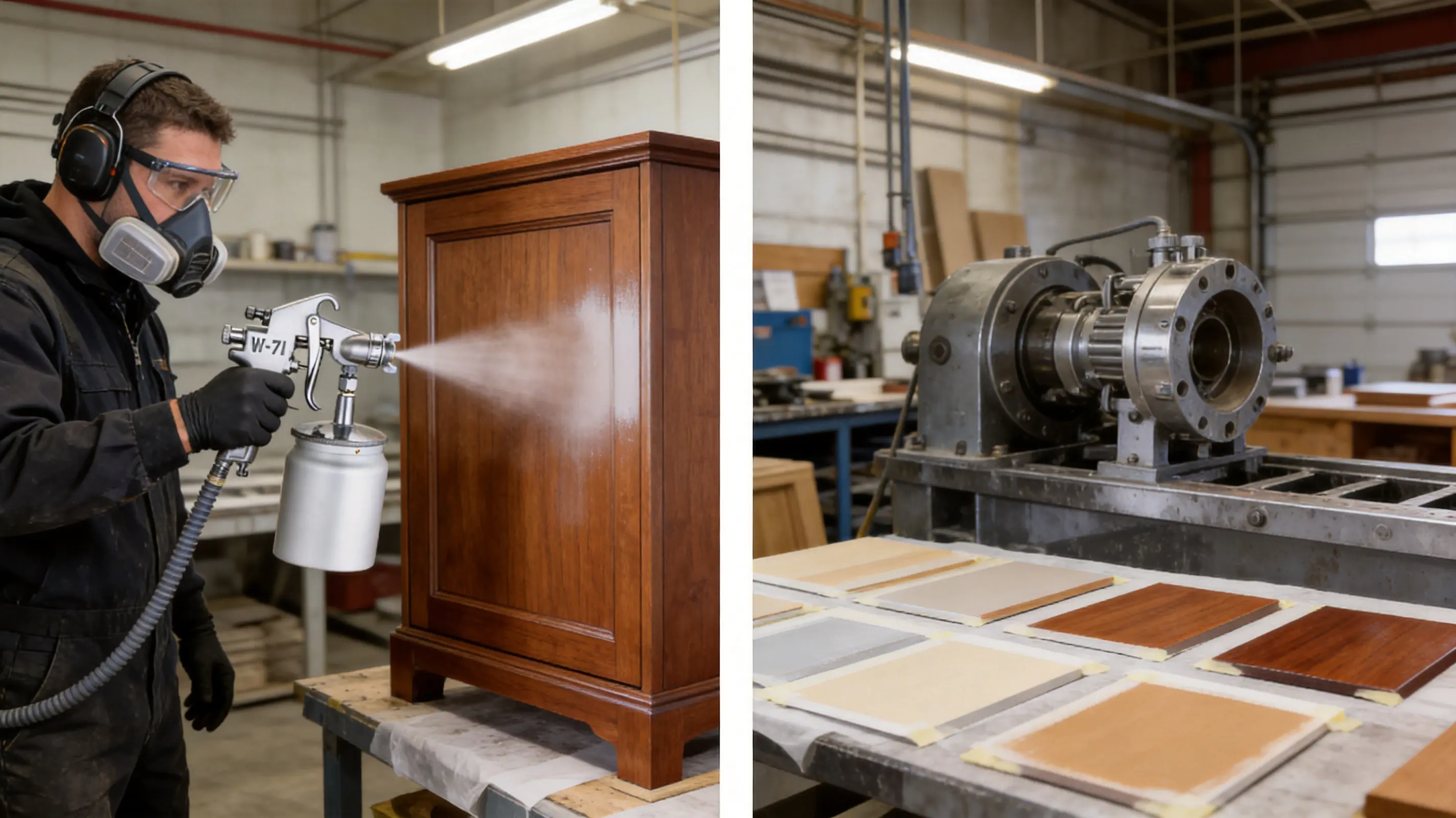
The W71S can be used for applying stains, primers, clear finishes, lacquers, and compatible protective coatings to wooden surfaces. Furniture production often requires a smooth appearance across broad panels, edges, doors, drawers, and shaped components. Different nozzle sizes can help the operator adapt the fluid output to the coating and the size of the workpiece.
Woodworking applications require careful surface preparation. Dust, loose fibers, oil, and moisture can affect adhesion and appearance. The work area should be clean, and the coating should be filtered before it is poured into the cup. The operator should maintain a steady movement and avoid stopping over the surface, since excessive material in one location can cause runs or uneven gloss.
Automotive Repair and Component Refinishing
Automotive technicians can use a conventional spray gun for compatible primers, color materials, clear coatings, and repair products, subject to the coating manufacturer’s instructions. The adjustable nozzle range may be useful when working on panels, brackets, wheels, engine components, or localized repair areas.
Automotive finishes are sensitive to contamination and application conditions. The gun must be thoroughly cleaned between compatible material changes, and the air supply should be filtered. The operator should also verify that the selected nozzle, reducer, pressure, and flash time are appropriate for the specific product being applied.
Machinery and Equipment Maintenance
Industrial and agricultural equipment often requires protective coatings to restore appearance and help protect metal surfaces. The W71S can support maintenance teams applying primers, enamel-type coatings, corrosion-resistant materials, or other compatible products. Its capacity is suitable for many repair jobs where a large industrial tank would be unnecessary.
Maintenance spraying may take place in different locations, so portability and simple setup are valuable. A compressor, hose, regulator, and spray gun can be moved between work areas when site conditions permit. The operator should always follow workplace safety procedures, especially when coatings contain flammable solvents or hazardous components.
DIY and General Workshop Projects
Experienced do-it-yourself users may employ the spray gun for cabinets, doors, metal furniture, decorative items, hobby projects, and small construction components. The nozzle options allow the user to learn and refine spraying technique gradually. However, beginners should practice on scrap material before spraying a finished surface.
A successful result depends on preparation as much as on the tool. Masking, sanding, cleaning, material reduction, air adjustment, and controlled movement all contribute to the final finish. The spray gun is an important part of the system, but it must be used within a complete and disciplined process.
Manufacturing Strength and Production Capability
The quality of a spray gun begins long before final assembly. Ningbo Lis Industrial Co., Ltd. has developed its business around the research, development, manufacturing, and marketing of air painting spray guns, mini air compressors, and related air tools. The company’s long operating history, engineering resources, production scale, and quality systems provide an important foundation for products in the economical conventional spray gun category.
The company was established in 1984 and operates from Ningbo, China. Its facility covers more than 400,000 square feet and employs more than 400 people. The reported annual output exceeds 40 million US dollars. These figures indicate a substantial manufacturing base capable of supporting product development, component production, assembly, inspection, packaging, and international distribution.
Production scale can provide practical advantages when it is supported by effective process control. Larger operations can maintain dedicated engineering teams, standardized work instructions, specialized production equipment, organized testing areas, and structured purchasing systems. They can also support more stable supply planning for distributors and original equipment customers.
Research and Development
Spray gun performance depends on engineering details that may not be visible from the outside. Air channel geometry, fluid passage dimensions, nozzle and needle fit, trigger movement, sealing surfaces, and component tolerances all influence the user experience. A strong research and development program helps manufacturers identify these relationships and improve product designs over time.
The company maintains a research and development team and provides both OEM and ODM services. OEM production can be completed according to customer drawings or samples, while ODM cooperation can support product development based on customer requirements. This capability is valuable for importers, distributors, and industrial buyers seeking private-label products, modified configurations, packaging changes, or application-specific solutions.
The company has also established a spraying machinery engineering technology center and has carried out technical cooperation with American spraying technology specialists. Such cooperation can contribute to knowledge exchange in atomization, spraying equipment design, manufacturing methods, and application engineering. The result is a stronger basis for developing tools that respond to professional market requirements.
Process Control from Materials to Finished Goods
Reliable spray gun production requires control at multiple stages. Incoming materials and components should be checked before they enter production. Machined parts must be produced within appropriate dimensional tolerances. Surface treatments should be consistent. Assembly workers need clear instructions, suitable tools, and inspection criteria. Finished products should be tested before shipment.
The company describes a quality system that includes raw material inspection, incoming inspection, in-process quality control, 100 percent functional testing, and final quality inspection. This type of staged control is especially important for pneumatic tools, because small defects in air passages, seals, threads, or fluid components can affect performance.
In-process inspection can identify problems before a complete spray gun is assembled. Final functional testing can verify trigger action, air delivery, fluid delivery, sealing behavior, and basic spray performance. Testing every unit provides a further opportunity to prevent products with obvious functional problems from entering the supply chain.
Manufacturing quality is also influenced by process consistency. Standardized assembly procedures help ensure that components are installed with suitable force and alignment. Controlled cleaning reduces the risk of particles entering fluid passages. Organized packaging protects the product during storage and transport. These details contribute to the product’s practical reliability when it reaches the customer.
Certifications and Management Systems
The company reports certification and compliance experience including CE and GS product certifications, ISO9001 quality system certification, ISO14001 environmental management system certification, and OHSAS18001 occupational health and safety system certification. Buyers should verify the specific certificate scope and validity for the exact product and current production batch when documentation is required.
Quality management certification can provide a structured framework for documenting procedures, monitoring corrective actions, managing records, and improving processes. Environmental management certification reflects attention to environmental responsibilities and operational controls. Occupational health and safety management supports a safer manufacturing environment for employees and visitors.
Certifications do not replace product evaluation, but they can strengthen confidence in the supplier’s organizational practices. For international buyers, documentation, traceability, inspection reports, packaging requirements, and technical communication are often as important as the physical product itself.
Quality Assurance and Commercial Supply
For professional buyers, a spray gun supplier must provide more than a product catalog. The supplier should be able to support technical questions, replacement parts, packaging requirements, order scheduling, quality documentation, and after-sales communication. A manufacturer with established export experience is better positioned to understand the needs of distributors and overseas customers.
The company’s products are reported to be sold in Europe, North America, the Middle East, South Africa, and East Asia. A worldwide customer base can encourage the development of consistent packaging, multilingual product information, standardized specifications, and international logistics procedures. Long-term customer relationships can also help the manufacturer identify recurring field requirements and improve future product versions.
The company reports that production capacity can be increased by 30 percent within two months. This provides potential support for customers whose demand changes rapidly. Buyers should still confirm actual lead times, order quantities, component availability, packaging specifications, and production schedules before placing an order.
For distributors, the product’s economical positioning and configurable nozzle range may support several market segments. It can be presented as a general workshop spray gun, a woodworking coating tool, an automotive maintenance sprayer, or a practical pneumatic unit for routine industrial finishing. Clear product positioning helps prevent users from expecting performance outside the intended application range.
Operating Recommendations
Preparing the Air Supply
The compressor should be capable of supplying stable air for the spray gun and the selected nozzle. A regulator should be installed so that pressure can be adjusted at the point of use. The air line should be checked for leaks, and the hose should not be unnecessarily restricted by an unsuitable connector or excessively small internal diameter.
Air filtration is important because moisture and oil can contaminate the coating. The compressor tank should be drained according to the equipment manufacturer’s instructions. Filters and separators should be maintained, and the air hose should be kept clean. A stable air supply helps the gun produce more consistent atomization and reduces interruptions during spraying.
Preparing the Coating
The material should be mixed thoroughly and filtered before it enters the cup. The user should follow the coating manufacturer’s recommendations for thinning, reduction, pot life, temperature, humidity, and safety. Over-thinning can reduce coverage and cause runs, while under-thinning can create poor atomization and excessive strain on the spray system.
When changing materials, the cup and fluid passages should be cleaned thoroughly. Incompatible residues may cause gelling, color contamination, blocked passages, or altered viscosity. A small test quantity can be used to confirm that the selected nozzle and adjustment settings are appropriate before the main application begins.
Setting the Gun
The nozzle should be selected according to material viscosity and desired output. The operator should begin with moderate fluid and air settings, then make small adjustments while observing the test pattern. A balanced fan should show an even distribution without heavy accumulation at the edges or center.
The gun should generally be held perpendicular to the surface and moved at a steady speed. Arcing the gun, changing distance during the stroke, or stopping over one area can create uneven thickness. Overlap should be consistent from pass to pass. The exact overlap depends on the coating and process, so users should follow the coating supplier’s recommendations and verify the result on a test surface.
Cleaning After Use
Cleaning should begin immediately after spraying. Dried coating can obstruct the nozzle, air cap, needle, or fluid passage and may be difficult to remove without damaging components. The remaining material should be handled according to local disposal rules, and the cup should be emptied before cleaning fluid is introduced.
The gun should be flushed with a compatible cleaning solution. External surfaces can be wiped carefully, while removable components should be handled with suitable tools. Sharp objects should not be forced through precision openings because they may enlarge or deform the passage. Seals and threaded parts should be inspected during cleaning and replaced when damaged.
Users should avoid immersing the entire spray gun in solvent unless the manufacturer specifically allows it. Solvent can enter areas that should remain protected, remove lubrication, damage seals, or affect surface finishes. Correct cleaning procedures preserve the gun’s performance and reduce long-term operating costs.
Safety Considerations
Spraying coatings can create airborne particles, vapors, and combustible atmospheres. Operators should use appropriate ventilation, respiratory protection, eye protection, gloves, and protective clothing according to the coating safety data sheet and local regulations. The work area should be arranged to prevent unnecessary exposure to other people.
Compressed air must never be directed toward the body or used to clean clothing. The operator should release pressure before disassembling components, changing accessories, or performing maintenance. Hoses and fittings should be inspected regularly for damage, and the air inlet should be connected securely.
Many coatings and cleaning solvents are flammable. Open flames, sparks, unapproved electrical equipment, and smoking materials should be kept away from the spraying area. Proper grounding and static-control procedures may be necessary depending on the coating and facility design. Users should consult the relevant safety documentation before beginning work.
A spray gun should be used only with materials that are compatible with its construction and intended application. Highly aggressive chemicals, abrasive materials, or products requiring specialized equipment may damage the gun or create unsafe conditions. When in doubt, the user should obtain technical guidance before spraying.
Maintenance and Service Life
Routine maintenance helps preserve atomization quality. Before each use, the operator should inspect the cup, lid, nozzle, air cap, needle, trigger, fluid adjustment, air adjustment, and air connection. Any loose or damaged component should be corrected before the gun is placed into service.
Wear is normal in parts that contact coating material or move repeatedly. Nozzles and needles may eventually lose precision, especially when abrasive coatings or aggressive cleaning methods are used. Replacing worn components as a matched set can help restore correct fluid control. Users should select genuine or approved replacement parts with the correct dimensions.
Storage conditions also matter. The gun should be cleaned, dried, and stored in a protected area away from dust, moisture, excessive heat, and corrosive chemicals. If the equipment will not be used for an extended period, the operator should follow the recommended storage procedure and protect exposed metal surfaces as appropriate.
Good maintenance can extend usable service life, but it cannot correct every performance issue. If the spray pattern remains uneven after cleaning and adjustment, possible causes may include damaged nozzle components, blocked air holes, incorrect material viscosity, inadequate air supply, or a leaking seal. Systematic troubleshooting is more effective than making random adjustments.
Why Manufacturing Quality Matters to Users
Manufacturing quality directly affects the consistency of daily work. A precisely formed nozzle can produce a more predictable fluid stream. A properly aligned needle can improve shutoff behavior. A well-fitted air cap can support a more balanced pattern. Reliable threads and seals can reduce air or material leakage. Smooth trigger movement can make it easier for the operator to control application.
These characteristics are especially important for economical products because customers expect a reasonable price without sacrificing basic functionality. The objective is not necessarily to replace every specialized high-end system. Instead, the objective is to provide a dependable and adaptable tool for the applications that match its design.
A manufacturer with engineering resources and controlled inspection can make practical improvements in these areas while maintaining efficient production. The company’s experience in spray machinery, international certification, OEM cooperation, ODM development, and large-scale manufacturing supports its ability to serve both standard product markets and customized commercial requirements.
Purchasing Guidance
Before purchasing, buyers should identify the coating materials, required output, expected working frequency, available compressor, preferred feed configuration, and replacement-part requirements. The four nozzle sizes should be reviewed in relation to the materials that will be used most often. If the product title and technical sheet describe different feed arrangements, the buyer should request confirmation from the supplier.
Commercial buyers should also confirm carton quantity, product labeling, instruction manuals, color requirements, spare parts, inspection documents, and packaging protection. Import regulations may require specific markings or technical files. The supplier should be asked to confirm whether the available certificates apply to the exact model and configuration being ordered.
For a workshop purchasing several units, it may be useful to standardize nozzle sizes and maintenance kits. Standardization can reduce training requirements and simplify inventory control. For a distributor, offering the spray gun with different nozzle packages may make it easier to serve woodworking, automotive, maintenance, and general-purpose customers without creating an overly complicated product range.
Q&A
What type of product is the W71S?
The W71S is a conventional pneumatic paint spray gun designed for liquid coating applications. It uses compressed air to atomize material and is positioned as an economical general-purpose spray gun.
What nozzle sizes are available?
The supplied specification lists 1.0 mm, 1.3 mm, 1.5 mm, and 1.8 mm fluid nozzles. The appropriate size depends on coating viscosity, desired output, surface size, and finish requirements.
What is the cup capacity?
The cup capacity is 600 ml. This provides a practical amount of material for many small and medium-sized projects while keeping the tool reasonably manageable for hand operation.
What air pressure is specified?
The listed air pressure is 50 PSI. The user should connect the gun to a regulated and adequately filtered air supply and should confirm the final operating setting through a test spray and the coating manufacturer’s instructions.
What air inlet does the gun use?
The specified air inlet is G1/4 inch. Buyers should verify that their hose, regulator, coupler, and other pneumatic accessories are compatible with this connection format.
Is the product gravity feed or suction feed?
The supplied product title refers to a gravity-type sprayer, while the technical information lists the feed type as suction. Because these descriptions differ, buyers should confirm the exact feed configuration, cup arrangement, and parts included in the intended order.
What materials can be sprayed?
The gun may be suitable for compatible paints, primers, stains, lacquers, varnishes, and protective coatings, depending on viscosity and chemical compatibility. Users should always follow the coating manufacturer’s technical and safety instructions before use.
Is it appropriate for professional workshops?
It can be appropriate for professional workshops that need an economical and adaptable pneumatic gun for general-purpose applications. Suitability depends on production volume, finish requirements, material compatibility, air supply, and the user’s maintenance practices.
How does it compare with a single-nozzle spray gun?
The W71S offers four listed nozzle options, giving it greater flexibility for different materials and application speeds. A single-nozzle gun may be adequate for one coating, but it can be less adaptable when the workshop handles varied projects.
How should the spray gun be cleaned?
The gun should be cleaned immediately after use with a compatible cleaning solution. The cup, nozzle, air cap, fluid passage, and other material-contact components should be cleaned carefully. Sharp tools should not be forced through precision openings, and the entire gun should not be immersed in solvent unless specifically permitted.
Can the manufacturer provide OEM or ODM services?
The company reports that it provides OEM services based on customer drawings or samples and ODM services according to customer requirements. Buyers should discuss design scope, minimum order quantities, testing, packaging, certification, and production schedules directly with the manufacturer.
What quality systems does the manufacturer report?
The company reports quality procedures covering raw material inspection, incoming inspection, in-process quality control, 100 percent functional testing, and final inspection. It also reports ISO9001, ISO14001, and OHSAS18001 management system certifications, along with CE and GS product certification experience. Specific documentation should be verified for the ordered model.
Where is the manufacturer located?
The manufacturer is located in Ningbo, China. Its facilities support the development and production of spray guns, mini air compressors, and related air tools for domestic and international markets.
Conclusion
The W71S high-atomization conventional paint sprayer is designed to provide a practical balance of adaptability, manageable capacity, familiar pneumatic operation, and economical ownership. Its four nozzle options allow users to select a configuration suited to different coating viscosities and application requirements. The 600 ml cup supports many small and medium projects, while the G1/4-inch air inlet simplifies connection to common workshop pneumatic equipment.
Its strongest value is versatility within a straightforward product format. The gun can support woodworking, furniture finishing, automotive repair, machinery maintenance, equipment restoration, and general workshop projects. It does not require the complexity of a specialized industrial system for routine applications, yet it offers more configuration flexibility than a basic single-nozzle sprayer.
The manufacturer’s capabilities add further value to the product. A long history in spray equipment, a substantial production facility, dedicated research and development resources, OEM and ODM experience, technical cooperation, reported international certifications, and staged quality control provide a strong foundation for commercial supply. The reported use of incoming inspection, in-process control, complete functional testing, and final inspection demonstrates the importance placed on product consistency.
As with any spray equipment, final performance depends on the entire application system. Correct material preparation, suitable nozzle selection, clean and stable compressed air, proper adjustment, consistent operator technique, immediate cleaning, and appropriate safety procedures are essential. When these conditions are managed correctly, the W71S can serve as a dependable and economical solution for a broad range of pneumatic coating tasks.
References
1. Product technical information supplied for the W71S conventional paint spray gun, including nozzle sizes, air pressure, cup capacity, feed information, air inlet, and carton dimensions.
2. Manufacturer information supplied for Ningbo Lis Industrial Co., Ltd., including company history, production capability, research and development, quality control, certifications, OEM and ODM services, and international market coverage.
3. General principles of pneumatic spray-gun atomization, fluid delivery, air-cap operation, nozzle selection, and coating application practice.
4. General workshop guidance for compressed-air preparation, coating filtration, spray-pattern testing, equipment cleaning, and pneumatic-tool maintenance.
5. General occupational safety principles for paint spraying, solvent handling, ventilation, respiratory protection, compressed air, and flammable coating materials.