 Search

 English
 中文简体
 Deutsch
 Español
Content
- 1 Product Overview
- 2 How the S590G Supports Efficient Spraying
- 3 Advantages Compared with Basic Alternative Spray Guns
- 4 Choosing the Correct Nozzle
- 5 Operating Procedure for Consistent Results
- 6 Applications Across Different Work Environments
- 7 Manufacturing Capabilities Behind the Product
- 8 Quality-Control Process
- 9 Production Scale and Supply Reliability
- 10 Design Value for Distributors and Professional Buyers
- 11 Maintenance and Service Life
- 12 Safety and Responsible Use
- 13 Installation and Setup Recommendations
- 14 Performance Factors Beyond the Spray Gun
- 15 Positioning the S590G in a Modern Product Portfolio
- 16 Frequently Asked Questions
- 16.1 What type of spray gun is the S590G?
- 16.2 What nozzle sizes are available?
- 16.3 What is the cup capacity?
- 16.4 What air pressure is specified for the product?
- 16.5 What does gravity feed mean?
- 16.6 What is the air inlet size?
- 16.7 Which nozzle should be used for fine finishing?
- 16.8 When might the 1.8 mm nozzle be useful?
- 16.9 Is the S590G suitable for professional workshops?
- 16.10 Can the product be used for every type of paint?
- 16.11 How can overspray be reduced?
- 16.12 How should the gun be cleaned?
- 16.13 Can the S590G be used as a backup gun?
- 16.14 Is the product available for OEM or customized programs?
- 16.15 What manufacturing experience supports the product?
- 17 Why the S590G Represents a Balanced Purchasing Decision
- 18 References
- 19 Product: S590G

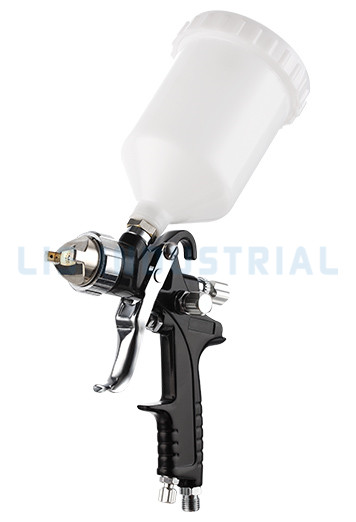
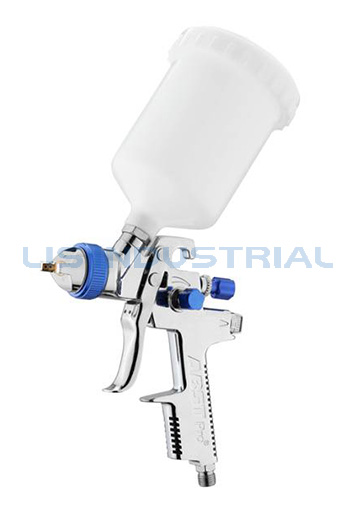
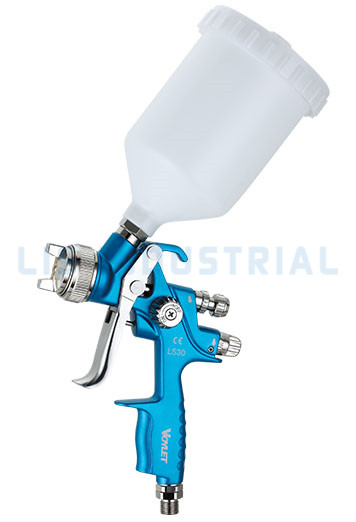
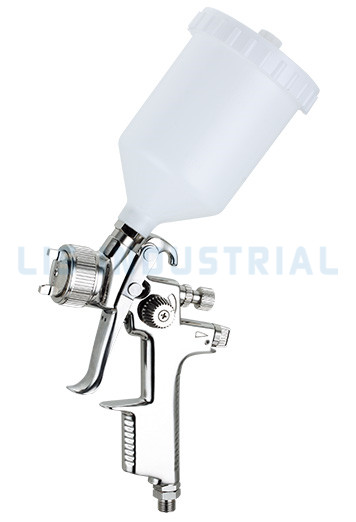
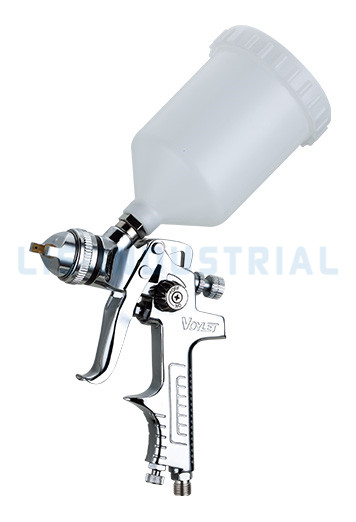
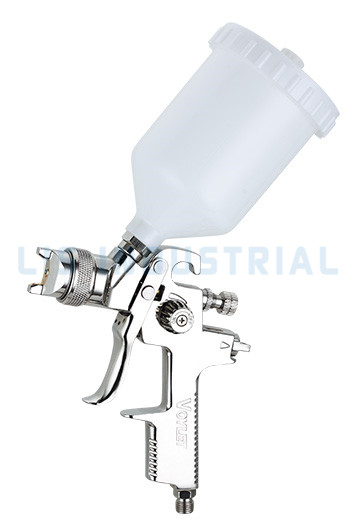
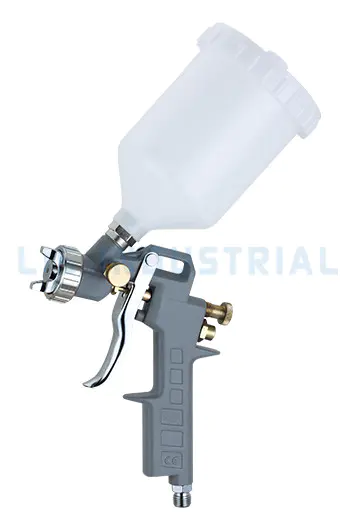
The S590G is an economical conventional spray gun designed for users who need dependable atomization, straightforward operation, and broad suitability across general painting and finishing tasks. Its gravity-feed structure, 600 ml cup, 50 PSI air-pressure specification, and interchangeable 1.3 mm, 1.5 mm, and 1.8 mm fluid nozzles make it a flexible choice for workshops, maintenance departments, woodworking applications, vehicle refinishing, equipment painting, and other everyday spraying operations.
Although the spray-gun market includes many highly specialized professional models, not every application requires an expensive premium gun with complex adjustment systems. Many users need a practical tool that is easy to understand, simple to maintain, economical to purchase, and capable of producing consistent results when correctly configured. The S590G is positioned for this important segment. It provides the basic functions required for conventional compressed-air spraying while keeping the configuration familiar and the operating process accessible.
This balance between useful performance and controlled cost is one of the principal advantages of the S590G. It can serve as a primary spray gun for routine work or as a reliable additional gun for coating changes, workshop backup, and separate material applications. Its standard air connection and available nozzle sizes also help users integrate it into existing compressed-air systems without requiring an unusual installation arrangement.
Product Overview
The S590G belongs to the economical conventional spray-gun category. Conventional spray guns use compressed air to atomize liquid coating material into a spray pattern. The air stream breaks the fluid into small droplets and carries those droplets toward the work surface. The operator controls the result through the gun trigger, fluid adjustment, air supply, spray distance, gun movement, and material preparation.
The S590G uses a gravity-feed design. In this arrangement, the cup is positioned above the gun body, allowing coating material to move toward the fluid passage through gravity. This configuration is familiar to many painters and is particularly convenient for general-purpose applications, intermittent work, and situations in which the operator wants to use relatively small or moderate quantities of material at a time.
The 600 ml cup offers a practical working capacity. It is large enough for many repair, maintenance, furniture, woodworking, and small-to-medium coating tasks while remaining more manageable than a much larger pressure pot or remote material system. The cup can be filled according to the requirements of the job, allowing the operator to avoid carrying more material than necessary.
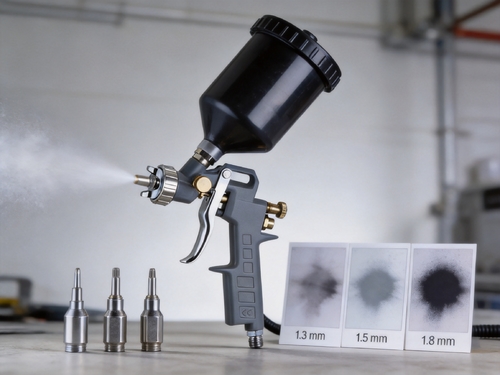
Three fluid nozzle options are available: 1.3 mm, 1.5 mm, and 1.8 mm. These sizes give the user a way to adapt the gun to different material viscosities, desired output levels, and finishing requirements. Smaller nozzles are generally associated with finer materials and controlled application, while larger nozzles can be more suitable for heavier materials or applications requiring increased fluid delivery. Final selection should always follow the coating manufacturer’s recommendations.
The listed air-pressure specification is 50 PSI. Actual operating conditions may vary according to the coating, hose arrangement, compressor performance, gun adjustment, and workplace requirements. The pressure should be controlled carefully because excessive air can create overspray and dry spray, while insufficient air may lead to poor atomization and an uneven finish.
| Specification | S590G Configuration | Practical Significance |
|---|---|---|
| Product model | S590G | Identifies the economical conventional spray-gun model |
| Feed type | Gravity | Supports familiar operation and convenient material access |
| Fluid nozzle options | 1.3 mm, 1.5 mm, 1.8 mm | Allows adaptation to different coatings and output requirements |
| Air-pressure specification | 50 PSI | Provides a reference point for setup and atomization adjustment |
| Cup capacity | 600 ml | Suitable for many general-purpose spraying tasks |
| Air inlet | G1/4 inch | Supports connection with commonly used compressed-air accessories |
| Carton packing | 20 pieces per carton | Suitable for distribution, stocking, and project purchasing |
| Carton size | 68.5 x 47.5 x 26 cm | Provides logistical information for storage and transportation |
How the S590G Supports Efficient Spraying
A spray gun’s value is not determined by specifications alone. Practical performance depends on how easily the tool can be prepared, adjusted, operated, cleaned, and returned to service. The S590G is designed around a conventional operating principle that many users already understand. This reduces the learning barrier for new operators and helps experienced painters transfer their existing setup knowledge to the gun.
The gravity-feed arrangement can support efficient material use because the coating is delivered from the upper cup into the fluid passage. For many general applications, this avoids the need for a separate pressure pot or extensive material-delivery equipment. The operator can prepare a suitable quantity of coating, attach the cup, connect the air hose, and begin the adjustment process.
The 600 ml capacity is also useful from a handling perspective. A cup that is too large can increase weight and fatigue, especially when the spray gun is used for extended periods or in overhead positions. A cup that is too small may require frequent refilling and interrupt the work cycle. The S590G occupies a practical middle position for users who need reasonable capacity without moving to a heavy industrial material system.
The interchangeable nozzle sizes provide another form of operational efficiency. A single gun can be configured for different tasks instead of requiring a separate complete gun for every coating type. A workshop may use a 1.3 mm nozzle for a finer finishing material, a 1.5 mm nozzle for a balanced general-purpose setup, and a 1.8 mm nozzle when greater fluid delivery is required. This approach can simplify equipment planning and reduce the number of tools needed for routine work.
The G1/4 inch air inlet is a practical connection specification for many compressed-air installations. Standardized connections make it easier to select compatible hoses, couplers, filters, regulators, and other air-line accessories. A compatible air supply should be clean, dry, and sufficiently stable. Moisture, oil contamination, pressure fluctuations, and restricted airflow can reduce the quality of any spray gun, regardless of its design.
Advantages Compared with Basic Alternative Spray Guns
The S590G offers several practical advantages when compared with very basic, single-configuration spray guns. First, its three available fluid nozzle sizes provide more flexibility than a model supplied with only one fixed nozzle. Users can adjust the configuration to better match the material and the required finish rather than attempting to force every coating through one opening.
Second, the gravity-feed structure is widely recognized and relatively easy to operate. Some alternative systems use more complicated material-delivery arrangements that may be appropriate for specialized production, but they can add equipment, cleaning requirements, and setup time. For repair shops, small manufacturers, maintenance teams, and individual users, the simpler gravity-feed method can be a more practical solution.
Third, the 600 ml cup offers a useful compromise between capacity and portability. A lightweight, manageable spray gun can be more comfortable in applications involving repeated passes, changing angles, detailed work, or extended operation. The cup can also be filled only to the level required for the current task, helping the operator control handling weight.
Fourth, the economical positioning of the S590G makes it suitable for users who need dependable general-purpose equipment without investing immediately in a premium specialized platform. Cost control can be especially important for workshops that need multiple guns, distributors building inventory, training centers, rental operations, and businesses that want separate equipment for different coating families.
Compared with some low-cost alternatives, the S590G also benefits from being part of a broader manufacturing and quality-control system. The manufacturer has described controlled processes covering raw-material inspection, incoming inspection, in-process control, functional testing, and final product inspection. A structured process can provide more consistency than relying solely on informal assembly or uncontrolled component sourcing.
It is important to understand that the S590G is not intended to replace every high-end application-specific spray gun. Specialized low-pressure systems, automatic spray guns, airless equipment, and advanced finishing guns each have their own operating advantages. The S590G’s strength is its balanced role: it offers useful conventional spraying capability for a wide range of ordinary applications while maintaining an economical and accessible format.
Choosing the Correct Nozzle
Nozzle selection has a direct influence on fluid delivery, atomization, spray pattern behavior, and finish quality. The S590G is available with 1.3 mm, 1.5 mm, and 1.8 mm fluid nozzles, allowing the user to select a setup appropriate to the material and the job.
1.3 mm Nozzle
The 1.3 mm nozzle is generally suited to thinner materials and applications where controlled delivery and a refined finish are important. It may be considered for suitable finishing coatings, detail-oriented work, and surfaces where the operator wants to limit the amount of material applied in each pass. Because material behavior differs between products, the coating supplier’s technical instructions should be followed before selecting this size.
When using a smaller nozzle, the material may need to be prepared carefully to achieve appropriate viscosity. If the coating is too thick, the gun may struggle to atomize it consistently. If the coating is excessively reduced, coverage and film performance may be affected. Proper filtering and mixing are also important because undissolved particles can obstruct a smaller fluid passage.
1.5 mm Nozzle
The 1.5 mm nozzle can provide a balanced general-purpose configuration. It may be suitable for users who want a middle setting between fine application and higher fluid delivery. For many workshops, this size can serve as a useful starting point because it offers flexibility across a range of compatible coatings.
A medium nozzle does not eliminate the need for correct technique. The operator must still adjust pressure, fluid flow, fan control, spray distance, and travel speed. A consistent hand movement is essential. The gun should normally be held perpendicular to the surface, and the trigger should be operated in a controlled manner to avoid heavier deposits at the beginning or end of each pass.
1.8 mm Nozzle
The 1.8 mm nozzle allows greater fluid passage and may be appropriate for heavier materials or applications where increased output is required. It can help reduce the need for excessive thinning when the coating manufacturer permits a larger nozzle. It may also be useful when the objective is efficient coverage rather than the finest possible finish.
Higher fluid delivery must be balanced with suitable air pressure and gun movement. If the operator moves too slowly, the larger nozzle can deposit excessive material and produce runs, sags, or uneven film thickness. If the air supply is inadequate, atomization may deteriorate. The correct setup should be established through a test spray on a suitable sample surface.
Operating Procedure for Consistent Results
Good spray performance begins before the trigger is pulled. The workpiece should be clean, dry, and properly prepared. Dust, oil, silicone, moisture, loose rust, and other contaminants can cause surface defects that may be incorrectly attributed to the spray gun. Masking should be completed before coating begins, and suitable ventilation should be provided.
The coating should be mixed thoroughly according to the coating manufacturer’s instructions. If thinning is permitted, the correct reducer or thinner should be used in the recommended amount. The material should be filtered before it enters the cup, particularly when using the 1.3 mm nozzle. Filtering helps remove particles that could obstruct the fluid passage or affect the spray pattern.
Before filling the cup, the operator should inspect the gun, nozzle, air cap, cup, gasket, and connection points. Components should be correctly seated and tightened without excessive force. The air hose should be connected to the G1/4 inch inlet through suitable clean and compatible fittings. A regulator and moisture-control device can help maintain more stable air conditions.
The initial spray test should be performed on cardboard, scrap material, or another approved test surface. The operator can observe the fan shape, fluid distribution, atomization, and coverage. Adjustments should be made gradually. Changing several settings at once makes it difficult to identify the cause of an unsatisfactory pattern.
The gun should be held at a consistent distance from the surface, generally with the air cap parallel to the workpiece. The exact distance depends on the coating and the selected setup. The operator should begin moving the gun before fully opening the fluid flow and release the trigger before stopping the hand movement. This technique helps reduce heavy spots at the ends of passes.
Overlapping passes in a consistent pattern can improve coverage. The required overlap depends on the coating, spray pattern, surface shape, and target film thickness. Edges, corners, recesses, and complex profiles may require a modified approach. The operator should avoid trying to cover the entire surface in one excessively wet pass.
When the work is complete, the gun should be cleaned promptly. Coating material left inside the air cap, fluid nozzle, needle area, or cup can dry and interfere with later operation. Cleaning procedures must be compatible with the material used and should follow workplace safety requirements. The gun should be depressurized before disassembly or maintenance.
S590G
Applications Across Different Work Environments
The S590G can be used in a range of environments where conventional compressed-air spraying is appropriate. Its economical configuration makes it relevant to small repair workshops, general manufacturing, maintenance departments, furniture operations, woodworking facilities, agricultural equipment service, and do-it-yourself projects requiring a more controlled finish than brushing or rolling can provide.
Automotive and Equipment Repair
In automotive and equipment repair, the spray gun can be used for compatible primers, base materials, topcoats, protective coatings, and localized refinishing work. The correct nozzle and material setup will depend on the coating system. The 600 ml cup may be convenient for panels, components, brackets, housings, and other repair-sized areas.
Repair work often involves changing colors or coatings during the day. An economical gun can be assigned to a particular material family or kept ready as a backup. This can reduce downtime when another gun requires cleaning or maintenance. Care must be taken to prevent cross-contamination between incompatible products.
Woodworking and Furniture
Woodworking users can benefit from the gravity-feed layout and nozzle flexibility when applying suitable stains, sealers, lacquers, paints, and protective finishes. The selected material must be compatible with the spray gun and used in accordance with its technical data. Surface preparation remains essential because wood grain, sanding quality, dust, and absorption can strongly influence the final appearance.
For furniture and cabinet work, controlled movement and correct overlap help produce a more uniform film. Edges and profiles may need separate attention. The operator should avoid excessive wetness on vertical surfaces, where runs can develop quickly if the material output is too high or the gun movement is too slow.
General Industrial Maintenance
Maintenance teams often require equipment that can be deployed quickly for touch-up painting, corrosion protection, machinery refurbishment, and component coating. The S590G’s standard air inlet and manageable cup size can support this type of flexible use. Its economical design may also make it practical to maintain several units for different work areas.
In industrial environments, air quality is particularly important. Compressed air should be free of excess moisture, oil, and solid contamination. The air line should be inspected regularly, and filters, separators, hoses, and couplings should be maintained according to the facility’s procedures.
Training and Workshop Instruction
The conventional operating principle of the S590G makes it suitable for demonstrations and practical training. Students can learn the relationship between viscosity, nozzle size, pressure, distance, movement, overlap, and film thickness through direct observation. Because the gun has a straightforward configuration, instructors can focus on technique and process control rather than an overly complicated control system.
Training environments also benefit from economical equipment because multiple learners can practice without waiting for a single premium gun to become available. Correct safety instruction must accompany all training, including ventilation, respiratory protection, eye protection, skin protection, ignition control, waste handling, and safe cleaning procedures.
Manufacturing Capabilities Behind the Product
Product performance is influenced by the quality of design, materials, machining, assembly, testing, and process management. The manufacturer of the S590G, Ningbo Lis Industrial Co., Ltd., has operated in the air-painting spray-gun and air-tool field since 1984. Its activities include research and development, manufacturing, marketing, and the provision of spraying solutions.
The company operates from Ningbo, China, and has developed a substantial production base serving customers in multiple international markets. The company information states that its facilities cover more than 400,000 square feet, with a workforce of more than 400 employees and annual output exceeding 40 million United States dollars. These resources provide a foundation for product development, production planning, component management, testing, packaging, and export support.
A significant manufacturing strength is the ability to support both standard products and customer-specific programs. The company reports that it can provide OEM production according to customer drawings or samples and ODM services based on customer requirements. For distributors and industrial customers, this capability may support customized packaging, product combinations, market-specific configurations, and private-label programs, subject to technical and commercial review.
The company also reports the establishment of a spraying machinery engineering technology center and technical cooperation with an American spraying-technology organization. Research and engineering activity in this field can support improvements in fluid passages, air distribution, spray performance, ergonomics, materials, and production methods. For an economical product, design discipline is especially important because the manufacturer must control cost without sacrificing essential function.
Quality-Control Process
A spray gun contains several components that must work together accurately. The fluid nozzle, needle, air cap, cup, seals, trigger mechanism, and air passages all contribute to the final result. Dimensional variation, surface defects, contamination, incorrect assembly, or leakage can affect atomization and user confidence. A structured quality system helps reduce these risks.
The manufacturer describes a quality-control process covering raw-material inspection, incoming inspection, in-process quality control, 100 percent functional testing, and final quality inspection of finished products. Each stage serves a different purpose. Raw-material inspection evaluates the condition and conformity of source materials. Incoming inspection checks purchased components. In-process control monitors manufacturing and assembly operations. Functional testing verifies operation, while final inspection provides a final release check.
One hundred percent functional testing is particularly relevant to spray guns because visual inspection alone cannot confirm every operating characteristic. A functional test may help identify leakage, incorrect trigger response, poor air passage behavior, assembly errors, or other issues before shipment. The exact test criteria may vary by product and production batch, but the principle is important: every unit should be evaluated as an operating tool rather than treated only as an assembled collection of parts.
The company states that its quality management follows ISO9000 requirements and that it has obtained ISO9001 international quality-system certification. It also reports OHSAS18001 occupational health and safety certification and ISO14001 environmental management certification. These certifications indicate organized management systems covering quality, workplace safety, and environmental practices, although users should request current certification documentation when specific compliance evidence is required for a project.
The company further reports CE and German GS product certifications for its products. Certification requirements depend on the specific product, market, and applicable version of the relevant standard. Importers and professional buyers should verify that the supplied S590G configuration carries the documentation required for the destination market.
Production Scale and Supply Reliability
For distributors and larger users, supply capability is an important consideration in addition to product design. A spray gun may perform well, but inconsistent availability can create difficulties for dealers, service centers, and industrial purchasing departments. The manufacturer states that its production capacity can be increased by 30 percent within two months to meet different purchasing volumes.
This stated flexibility can be useful for seasonal demand, new distribution programs, promotional campaigns, and project orders. A manufacturer with established production planning, component sourcing, assembly resources, inspection procedures, and export experience is generally better positioned to support repeated orders than a small operation with limited capacity.
The S590G is packed at 20 pieces per carton, with a listed carton size of 68.5 x 47.5 x 26 cm. This information assists buyers with warehouse planning, pallet configuration, freight estimation, and inventory management. Distributors may also use the carton quantity when organizing wholesale orders or preparing regional stock.
Supply reliability is not only a question of volume. It also includes communication, technical documentation, packaging control, replacement-part support, production consistency, and the ability to respond to quality feedback. A manufacturer that maintains a long-term relationship with customers can use field information to improve products and service procedures over time.
Design Value for Distributors and Professional Buyers
The S590G has several features that can make it attractive for distribution. Its product category is easy to understand, its operating principle is familiar, and its specifications are suitable for a broad group of users. These characteristics can reduce the explanation required at the point of sale and make it easier to position the product in a general air-tool or painting-equipment range.
The economical category also creates opportunities for tiered product offerings. A distributor may offer the S590G as an entry-level or general-purpose conventional gun while stocking more specialized models for high-volume production, fine finishing, automatic application, or airless spraying. This allows the distributor to serve customers with different budgets and technical requirements.
The three nozzle options can support accessory sales and application-specific packages. A kit may include the spray gun, selected nozzle sizes, cleaning tools, air-line components, filters, regulators, or protective accessories. Any package should clearly state what is included and should not imply performance beyond the tested configuration.
For private-label programs, the reported OEM and ODM capabilities may be valuable. Buyers can discuss branding, packaging, instruction manuals, nozzle combinations, quality requirements, inspection plans, and order quantities directly with the manufacturer. Clear technical communication is essential because changes to components or coatings may influence final performance and compliance documentation.
Maintenance and Service Life
Regular maintenance is essential for preserving spray quality. After use, the cup should be emptied safely, and residual material should be removed according to the coating supplier’s cleaning instructions. The fluid passage, nozzle, air cap, and needle area should receive particular attention because dried coating can disturb the spray pattern.
Cleaning tools should be selected carefully. Hard or sharp objects can damage the precision surfaces of the nozzle and air cap. Damaged openings may produce an irregular fan, uneven atomization, or unwanted spray direction. Components should be handled carefully during removal and reassembly, and seals should be inspected for swelling, cracking, flattening, or chemical damage.
The air cap should be kept free from blocked holes. Even a small obstruction can affect the balance of the air flow and change the pattern. The cup connection should also be kept clean and properly sealed. Any sign of air leakage, fluid leakage, abnormal trigger behavior, or inconsistent atomization should be investigated before continued use.
Storage should take place in a clean, dry location. The gun should not be left filled with coating material, and the air hose should be disconnected when the tool is not in service. Spare nozzles, needles, seals, and other service items should be stored in a way that prevents dust and mechanical damage.
Correct maintenance can reduce downtime and extend the useful life of the gun. It also improves safety because leaks, blocked passages, and damaged components can create unpredictable operating conditions. A maintenance schedule should reflect the coating type, frequency of use, cleaning chemicals, and workplace environment.
Safety and Responsible Use
Compressed-air spraying can generate airborne coating particles, vapors, and combustible atmospheres depending on the material. The S590G should be used only in a suitable, properly ventilated area and in accordance with the coating manufacturer’s safety data and workplace regulations.
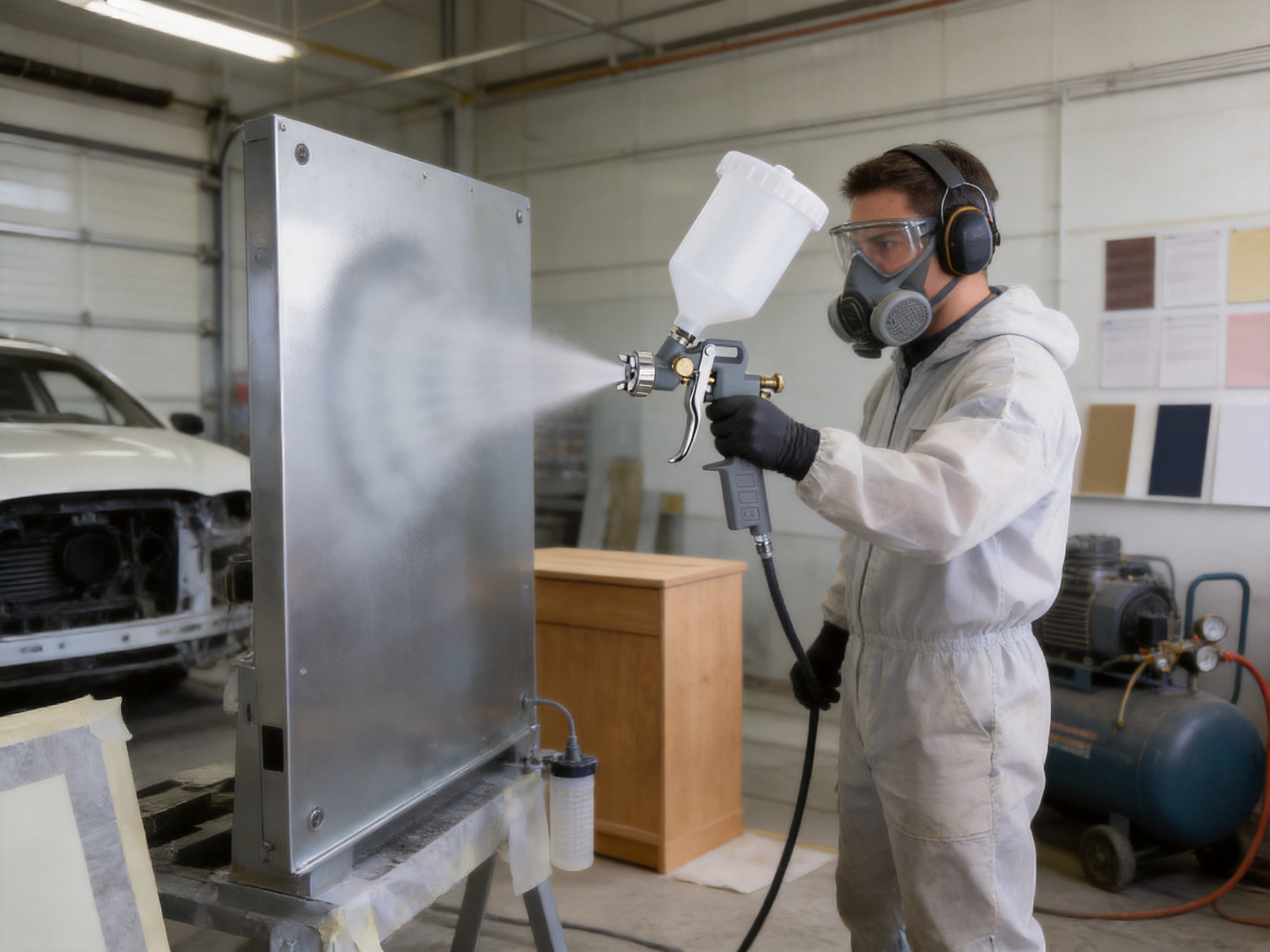
Operators should use appropriate respiratory protection, eye protection, gloves, protective clothing, and hearing protection where required. Ventilation should be sufficient to control airborne contaminants. Ignition sources must be controlled when flammable materials are present. Smoking, open flames, sparks, and unsuitable electrical equipment should be kept away from the spraying and cleaning area.
The operator should never direct the spray toward people, animals, energized electrical equipment, or unsafe surfaces. The gun should be depressurized before maintenance, disassembly, or cleaning. Hoses and couplings should be checked for damage and secure connection. A damaged hose can present a whipping hazard, while an unstable connection can interrupt work or cause injury.
Waste coating, solvent, contaminated filters, cleaning cloths, and empty containers should be handled according to local environmental and disposal requirements. The reported ISO14001 environmental-management certification of the manufacturer reflects an organized approach to environmental management at the company level, but safe disposal at the user’s facility remains the responsibility of the operator and site manager.
Installation and Setup Recommendations
The S590G should be connected to a clean compressed-air source capable of supplying stable pressure and adequate volume. The air line should be sized appropriately for the hose length and expected flow. Excessively long, narrow, damaged, or restricted hoses can reduce the pressure available at the gun.
A regulator enables the operator to control air pressure more accurately than relying on compressor settings alone. A filter or separator can help remove moisture and contaminants. In humid environments or during extended operation, additional air treatment may be necessary. The air system should be checked regularly because water and oil contamination can spoil the coating and affect the spray pattern.
The cup should not be overfilled. Leaving appropriate space allows the operator to move the gun with less risk of spilling and helps accommodate the working angle. The lid and gasket should be seated correctly. If the cup leaks, the operator should stop work and correct the problem before continuing.
The initial setup should use a moderate fluid setting and the stated 50 PSI reference as a starting point, followed by testing and adjustment for the specific material. The correct final setting depends on the coating, nozzle, temperature, humidity, gun distance, and desired finish. Operators should avoid assuming that one pressure or adjustment is correct for every material.
Performance Factors Beyond the Spray Gun
A high-quality finish depends on the complete spraying system, not solely on the gun. Material preparation, surface condition, air quality, operator technique, environmental conditions, and curing all contribute to the result. The S590G provides a practical application tool, but it cannot compensate for contaminated surfaces, incorrect viscosity, unstable air supply, or unsuitable coating conditions.
Temperature affects viscosity and drying behavior. Humidity can influence evaporation, surface appearance, and moisture contamination. Dust in the workspace can settle on wet coating. Poor lighting can make it difficult to identify dry spray, runs, missed areas, or uneven overlap. A controlled work area helps the operator use the gun more effectively.
The operator’s movement is equally important. A consistent speed and distance usually produce more uniform coverage than irregular hand motion. The spray pattern should be tested regularly, especially after changing the nozzle, cleaning the air cap, changing material, or adjusting pressure. Small corrections made during testing can prevent significant rework on the final surface.
For businesses, training and documented procedures can improve repeatability. A simple setup sheet may record the coating name, reduction ratio, nozzle size, air pressure, spray distance, number of coats, flash time, and cleaning method. This information helps different operators achieve more consistent results with the same equipment.
Positioning the S590G in a Modern Product Portfolio
The S590G complements rather than competes directly with every other type of painting equipment. Conventional spray guns remain useful because they are versatile, familiar, and capable of producing attractive finishes when properly adjusted. Airless spray guns are often selected for higher-output coverage and thicker materials, while electric sprayers may be preferred where a separate compressor is not available. Automatic spray guns are designed for integrated production systems, and air brushes serve small-scale detail work.
Within this broader portfolio, the S590G offers a practical manual solution. It is appropriate where the operator needs direct control over application and where a standard compressed-air system is already available. The design also allows businesses to maintain a manageable investment level while still offering customers the flexibility associated with multiple nozzle sizes.
The model can be particularly suitable for users who are upgrading from brushes, rollers, or very basic sprayers. It introduces conventional atomization without requiring the extensive infrastructure of a large production line. At the same time, experienced users can apply established spray techniques and integrate the gun into routine workshop procedures.
Its economical positioning may also be advantageous in high-use environments where tools require frequent cleaning, where several operators work simultaneously, or where separate guns are assigned to different materials. A sensible equipment policy may combine the S590G for general tasks with specialized equipment for applications that have unusual material, finish, speed, or automation requirements.
Frequently Asked Questions
What type of spray gun is the S590G?
The S590G is an economical conventional spray gun with a gravity-feed configuration. It uses compressed air to atomize liquid coating material and is intended for a broad range of general spraying applications.
What nozzle sizes are available?
The listed fluid nozzle options are 1.3 mm, 1.5 mm, and 1.8 mm. The correct selection depends on coating viscosity, material instructions, required output, and finish expectations.
What is the cup capacity?
The cup capacity is 600 ml. This capacity is suitable for many repair, maintenance, woodworking, furniture, and general coating tasks while keeping the gun relatively manageable to handle.
What air pressure is specified for the product?
The listed air-pressure specification is 50 PSI. This should be treated as a setup reference. The final operating pressure should be adjusted according to the coating, nozzle, compressor, hose, and application requirements.
What does gravity feed mean?
Gravity feed means that the coating cup is positioned above the gun body and the material moves into the fluid passage through gravity. This arrangement is familiar, convenient, and suitable for many general-purpose applications.
What is the air inlet size?
The S590G uses a G1/4 inch air inlet. Users should select compatible hoses, couplers, regulators, and air-treatment components to establish a secure and clean connection.
Which nozzle should be used for fine finishing?
The 1.3 mm nozzle may be considered for suitable thinner materials and controlled finishing work. However, the coating manufacturer’s technical instructions should take priority because different products require different nozzle and viscosity settings.
When might the 1.8 mm nozzle be useful?
The 1.8 mm nozzle may be useful for heavier materials or applications requiring greater fluid delivery. The operator must balance the higher output with appropriate gun movement and air supply to prevent runs or uneven coverage.
Is the S590G suitable for professional workshops?
It can be suitable for professional workshops that need an economical, general-purpose conventional gun for repair, maintenance, woodworking, furniture, equipment, or similar work. The suitability depends on the coating, production volume, finish requirements, and the workshop’s operating procedures.
Can the product be used for every type of paint?
No spray gun should be assumed to be compatible with every coating. Users must confirm chemical compatibility, viscosity requirements, nozzle recommendations, cleaning procedures, and safety instructions before application.
How can overspray be reduced?
Overspray can often be reduced through correct pressure adjustment, suitable viscosity, proper nozzle selection, controlled spray distance, appropriate fan adjustment, consistent movement, and adequate ventilation. The operator should test the setup before spraying the final surface.
How should the gun be cleaned?
The gun should be cleaned immediately after use using a method and cleaning agent compatible with the coating. Residual material should be removed from the cup, fluid passage, nozzle, air cap, and needle area. The gun must be depressurized before cleaning or disassembly.
Can the S590G be used as a backup gun?
Yes. Its economical configuration and flexible nozzle options can make it useful as a backup unit, a separate gun for another coating family, or an additional gun for workshops with multiple operators.
Is the product available for OEM or customized programs?
The manufacturer states that it provides OEM services based on customer drawings or samples and ODM services based on customer requirements. Buyers should discuss technical specifications, branding, packaging, inspection, certification, and order quantities directly with the supplier.
What manufacturing experience supports the product?
The manufacturer reports experience in the spray-gun and air-tool industry since 1984, a substantial production facility, a workforce of more than 400 employees, research and development resources, international certification experience, and a quality-control process that includes functional testing.
Why the S590G Represents a Balanced Purchasing Decision
The S590G is valuable because it addresses the practical requirements shared by many users: a familiar operating method, useful nozzle flexibility, a manageable cup, a standard air connection, and an economical product position. These features help it serve applications where the customer wants dependable conventional spraying without unnecessary complexity.
Its advantages over simpler alternatives come from the combination of configuration flexibility and manufacturing support. The three nozzle sizes allow the user to adapt the tool, while the gravity-feed layout keeps operation accessible. The 600 ml cup supports reasonable work capacity, and the G1/4 inch inlet simplifies connection to common air-line equipment.
The manufacturer’s reported production scale, research capability, quality systems, certifications, OEM and ODM services, and international market experience add value for professional buyers. These strengths can support consistent procurement, distributor development, private-label programs, and long-term customer relationships.
Correct use remains essential. The S590G will perform best when the coating is properly prepared, the nozzle is selected correctly, the air supply is clean and stable, the gun is adjusted through testing, the operator uses consistent technique, and cleaning is completed promptly. In this context, the product becomes more than a low-cost tool: it becomes a practical component of a controlled spraying process.
For workshops, distributors, maintenance teams, woodworking operations, and general coating users, the S590G offers an accessible route to compressed-air spray application. It is not defined by unnecessary complexity. Instead, its value lies in a straightforward design supported by a manufacturer with long-term industry experience and organized production capabilities.
References
1. Product specification sheet for the S590G economical conventional spray gun, including nozzle sizes, air-pressure specification, cup capacity, feed type, air inlet, and carton information.
2. Ningbo Lis Industrial Co., Ltd. company profile and manufacturing overview, including production history, research and development activities, OEM and ODM capabilities, and international market service.
3. ISO 9001 quality-management principles and guidance for controlled manufacturing processes.
4. ISO 14001 environmental-management principles for manufacturing organizations.
5. Occupational health and safety guidance for compressed-air spraying, coating preparation, ventilation, personal protective equipment, and equipment cleaning.
6. General technical guidance from coating manufacturers concerning viscosity, nozzle selection, spray pressure, surface preparation, application technique, and curing conditions.