 Search
 English
 中文简体
中文简体 Deutsch
 Español
Content
- 1 Understanding the Product Concept
- 2 Key Technical Specifications
- 3 Advantages of HVLP Technology
- 4 Fluid Nozzle Flexibility
- 5 Gravity Feed and Material Efficiency
- 6 Ergonomics and Practical Handling
- 7 Applications Across Several Industries
- 8 Comparison with Conventional and Basic Spray Guns
- 9 Manufacturing Experience and Industrial Capability
- 10 Advanced Quality Management
- 11 Research, Development, and Technical Cooperation
- 12 International Market Strength
- 13 Recommended Operating Practices
- 14 Maintenance and Service Life
- 15 Commercial Value for Distributors and OEM Buyers
- 16 How This Product Creates an Advantage over Competitors
- 17 Selection Guidance for Different Users
- 18 Q&A
- 18.1 What type of spray gun is the AB17G?
- 18.2 What nozzle sizes are available?
- 18.3 What is the stated air pressure?
- 18.4 What is the cup capacity?
- 18.5 What kind of air connection does the gun use?
- 18.6 Is the product suitable for every type of paint?
- 18.7 How does HVLP differ from conventional high-pressure spraying?
- 18.8 Why are multiple nozzle sizes useful?
- 18.9 What compressor is required?
- 18.10 Can the manufacturer provide customized products?
- 18.11 What quality systems does the manufacturer report?
- 18.12 Where can the spray gun be used?
- 18.13 How should the gun be cleaned?
- 19 Conclusion
- 20 References
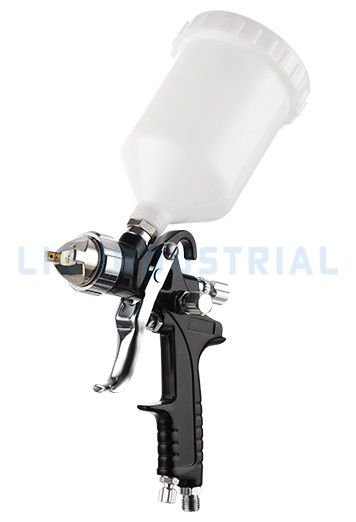
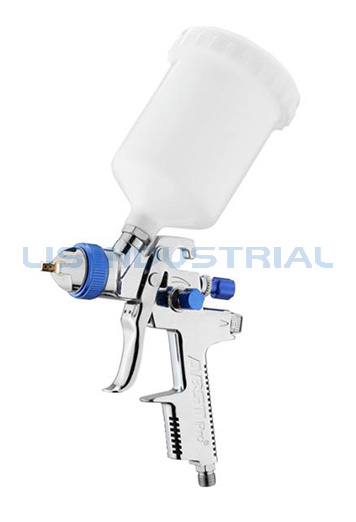
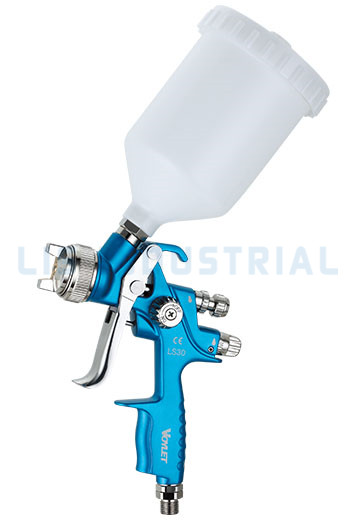
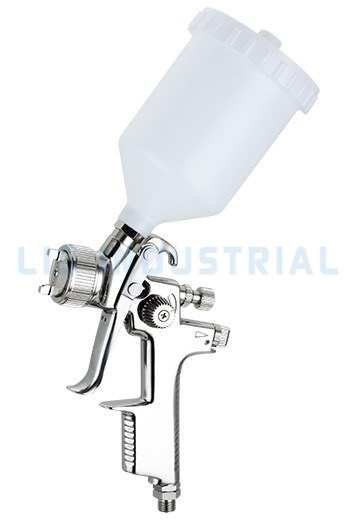
- 21 Product: Voylet AB17G HVLP Spray Paint Gun Alloy Airbrush Gravity Feed+
Professional painting depends on more than the quality of the coating itself. The spray gun, air supply, fluid delivery system, operator technique, and preparation of the workpiece all influence the final result. A suitable spray gun must deliver a consistent pattern, support efficient material transfer, withstand demanding working conditions, and remain comfortable enough for repeated use. For workshops, maintenance departments, woodworking operations, vehicle refinishing professionals, and general industrial users, a dependable gravity-feed HVLP spray gun can provide an effective balance between finish quality, productivity, and operating economy.
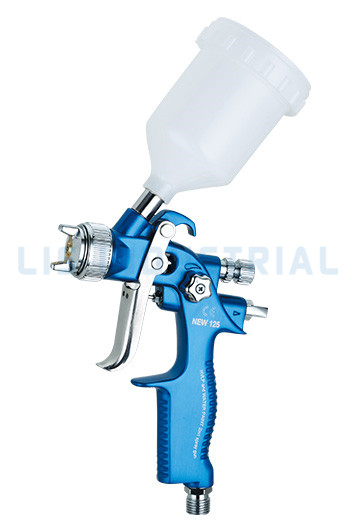
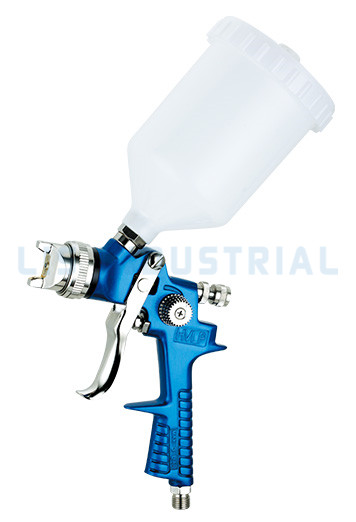
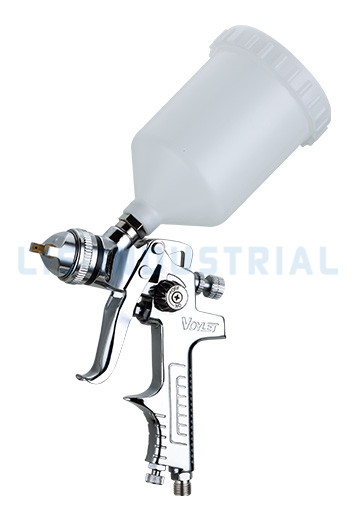
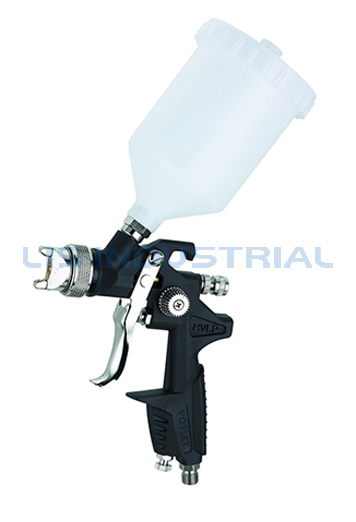
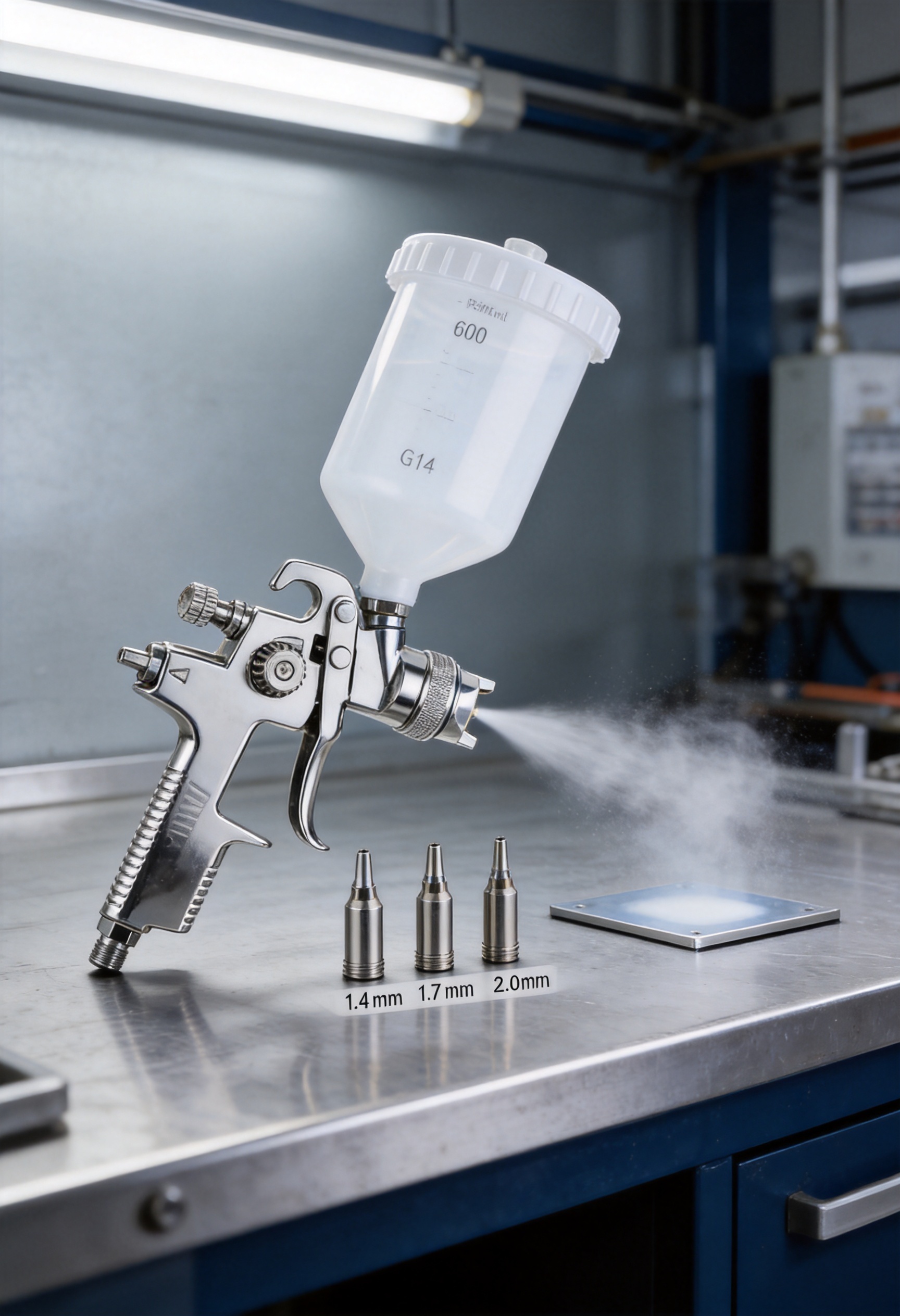
The Voylet AB17G HVLP Spray Paint Gun Alloy Airbrush Gravity Feed+ is designed for users who need a practical and adaptable tool for professional and semi-professional spraying applications. With interchangeable 1.4 mm, 1.7 mm, and 2.0 mm fluid nozzle options, a 600 ml gravity-feed cup, a G1/4-inch air inlet, and a rated air pressure of 43 PSI, the gun is suitable for a broad selection of coatings and surface preparation requirements.
Its HVLP design is especially valuable where controlled atomization and reduced overspray are important. HVLP, or High Volume Low Pressure, technology uses a relatively high volume of air at a lower pressure than many conventional spray systems. This arrangement helps transfer more coating toward the target surface while limiting unnecessary airborne material. When correctly adjusted, the result can be a smoother finish, less wasted paint, and a more controlled working environment.
Beyond the specifications of the individual product, the reliability of a spray gun is closely connected with the manufacturing capabilities of its producer. The manufacturer behind this model has developed extensive experience in spray equipment, air tools, mini compressors, air fittings, and related products. Its production systems, quality controls, technical resources, certification experience, and international service network provide important support for customers seeking a stable supply of professional spraying equipment.
Understanding the Product Concept
The AB17G is a gravity-feed HVLP spray gun. In a gravity-feed configuration, the coating cup is positioned above the gun body. Gravity assists the movement of material into the fluid passage, allowing the gun to operate with a relatively controlled and efficient fluid supply. This configuration is widely used for finishing work because it can support precise material delivery and reduce the amount of coating left in the cup compared with many suction-feed arrangements.
The gun is constructed around an alloy body concept intended to provide a practical combination of durability, manageable weight, and resistance to the demands of workshop use. An alloy body can help the tool withstand regular handling, contact with workbenches, and repeated cleaning when appropriate maintenance procedures are followed. The body also provides a stable platform for the air cap, fluid nozzle, needle assembly, adjustment controls, cup connection, and air inlet.
The product is supplied as a flexible spraying platform rather than a one-size-fits-all tool. Its three listed nozzle sizes allow users to select a fluid passage according to the coating, finish requirement, and application speed. The 1.4 mm nozzle is commonly associated with fine to medium finishing work. The 1.7 mm option provides a broader balance between atomization and material flow. The 2.0 mm option can accommodate coatings that require a higher delivery rate or somewhat greater fluid passage.
This flexibility is important for professional users. Different projects may involve primers, topcoats, clear finishes, stains, sealers, or other sprayable materials. Although every coating must be evaluated according to its technical data sheet, the availability of multiple nozzle sizes allows one gun platform to serve more than one task. Instead of purchasing a completely different spray gun for every material category, the operator can select a suitable nozzle and adjust the operating conditions.
The 600 ml cup provides a useful working capacity for many small and medium spraying jobs. It is large enough to reduce frequent refilling during routine work while remaining more manageable than an oversized container. The gravity-feed design also makes the cup position convenient for visual monitoring of material level. This can help operators plan refills and avoid unexpectedly running the cup dry during an application pass.
Key Technical Specifications
| Specification | Product Information | Practical Significance |
|---|---|---|
| Product type | HVLP spray paint gun | Supports controlled atomization and efficient coating transfer |
| Feed type | Gravity feed | Provides direct material delivery from the upper cup |
| Fluid nozzle options | 1.4 mm, 1.7 mm, and 2.0 mm | Allows adaptation to different coatings and application requirements |
| Air pressure | 43 PSI | Provides a reference operating pressure for atomization adjustment |
| Cup capacity | 600 ml | Supports practical working intervals without excessive bulk |
| Air inlet | G1/4 inch | Matches a widely used air connection format |
| Construction | Alloy spray gun body | Designed for regular workshop and professional use |
| Packaging information | 10 units per carton; carton size 84.5 × 49 × 16 cm | Supports organized shipment and commercial distribution |
These specifications should be considered together rather than individually. A nozzle size, air pressure, coating viscosity, fan adjustment, fluid adjustment, and spray distance all affect one another. For example, selecting a larger nozzle does not automatically guarantee a better result. The material must still be prepared correctly, the air supply must be adequate, and the operator must maintain a consistent movement speed and distance from the workpiece.
The listed 43 PSI air pressure provides an important reference point for setup. Users should always confirm the actual requirements of their coating and compressor system before beginning work. Pressure measured at the compressor may differ from pressure available at the gun because of hose length, fittings, filters, and air restrictions. A properly prepared air supply is therefore essential to achieving the expected performance from an HVLP spray gun.
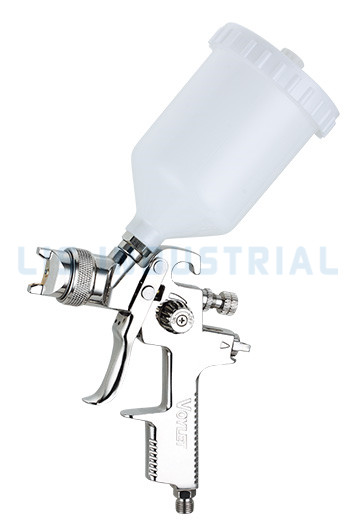
Voylet AB17G HVLP Spray Paint Gun Alloy Airbrush Gravity Feed+
Advantages of HVLP Technology
HVLP spraying is valued primarily for its balance between atomization and transfer efficiency. Conventional high-pressure spray equipment can create a large amount of overspray if it is not carefully controlled. Excessive overspray can increase material consumption, contaminate nearby surfaces, and make the work environment more difficult to manage. HVLP systems operate at lower pressure and are designed to direct a greater proportion of the material toward the target.
Reduced overspray can provide several practical benefits. First, it may lower coating waste, especially when the operator has developed consistent technique. Second, it can reduce the amount of airborne coating in the immediate work area, although suitable ventilation and personal protective equipment remain essential. Third, it can help produce a more predictable application pattern on appropriately prepared surfaces.
HVLP equipment is particularly useful where appearance matters. Automotive refinishing, furniture finishing, cabinet work, equipment maintenance, and decorative projects often require an even coating with limited runs, dry spray, or uneven coverage. A gravity-feed HVLP gun gives the operator direct control over fluid delivery and atomizing air, making it possible to fine-tune the pattern for the particular task.
Another advantage is the ability to apply coatings at a controlled pace. A professional operator can adjust fluid flow and fan width to match the size and shape of the workpiece. A narrow pattern may be useful around edges or on smaller components, while a wider pattern can improve coverage on broad panels. The appropriate setting depends on the coating and job, but the general design supports this type of adjustment.
HVLP technology does require an adequate volume of air. This is an important distinction when comparing HVLP guns with some low-volume systems. Users should select a compressor, hose, regulator, and filter combination capable of delivering stable air under working conditions. When the air supply is insufficient, atomization may become inconsistent and the coating may appear rough or uneven. Proper system matching is therefore part of achieving the gun's advantages.
Fluid Nozzle Flexibility
The interchangeable 1.4 mm, 1.7 mm, and 2.0 mm nozzle options are among the product's most useful features. Nozzle diameter affects the amount of material that can pass through the gun and influences the character of the spray pattern. A smaller nozzle generally supports finer material delivery, while a larger nozzle can accommodate heavier or more viscous materials when the coating manufacturer permits spraying.
A 1.4 mm nozzle is often appropriate for finishing applications where a controlled and relatively fine spray is desired. It may be suitable for many prepared topcoats, clear finishes, and thin-to-medium viscosity materials. The operator may choose this size when surface appearance is the primary concern and the coating can be properly atomized without excessive thinning.
The 1.7 mm nozzle offers a middle position. It can provide a useful compromise between finish control and application speed. For workshops that handle varied work, this size may be a practical general-purpose choice, provided that the coating viscosity and technical requirements are compatible with it.
The 2.0 mm nozzle can be useful when the material requires greater fluid passage. Primers, heavier coatings, sealers, and certain industrial materials may benefit from the larger opening, subject to the material manufacturer's recommendations. The larger nozzle can increase delivery, but the operator must make corresponding adjustments to air, fluid flow, and movement speed to avoid excessive application or uneven coverage.
The availability of three nozzle sizes gives distributors and end users a stronger value proposition than a fixed-nozzle gun. A fixed configuration may be adequate for one narrow application, but it can become limiting when the workshop handles different materials or changes its production requirements. A modular nozzle arrangement helps the same basic gun platform adapt to changing tasks.
It is important to clean the nozzle, needle, air cap, and fluid passages carefully after use. Dried coating residue can alter the spray pattern, restrict material flow, and increase wear on internal components. Cleaning should be performed with suitable materials and tools, while avoiding practices that damage precision surfaces. Proper maintenance allows the nozzle system to deliver more consistent results over its service life.
Gravity Feed and Material Efficiency
Gravity feed is a widely accepted configuration for controlled spray application. Because the cup is located above the gun, material can flow toward the nozzle through gravity-assisted delivery. This arrangement can reduce the need for the gun to draw material upward from a lower container. It is also convenient when working with smaller batches or changing colors and materials frequently.
The 600 ml cup capacity is suitable for a broad range of workshop operations. It provides enough material for many individual components, panels, furniture sections, and repair areas without creating the excessive weight associated with very large cups. A reasonably sized cup can help preserve operator control, particularly when the gun must be moved through precise passes.
Gravity-feed equipment can also help reduce residual material when the cup is managed correctly. Operators should avoid overfilling and should prepare only the amount needed for the immediate task when the coating has a limited pot life. This approach can reduce unnecessary disposal and simplify cleaning between jobs.
For commercial users, material efficiency can influence overall operating cost. Paint, primer, clearcoat, and other sprayable materials may represent a significant portion of project expense. A gun that supports controlled transfer and predictable delivery can contribute to better use of purchased material. Actual savings will depend on operator skill, coating formulation, workpiece shape, booth conditions, and setup accuracy, but the HVLP gravity-feed design provides a sound foundation.
Ergonomics and Practical Handling
Spray work often involves repetitive arm movement, extended periods of standing, and frequent changes in direction. Tool balance and control therefore matter as much as atomization performance. The upper-cup gravity-feed arrangement can provide a direct and familiar handling style for operators who need to monitor material usage and guide the gun across the surface.
A professional spray gun should allow the operator to maintain a consistent distance from the workpiece. If the tool is difficult to control, the distance may vary, producing heavy areas, light areas, runs, or dry spray. The AB17G format is intended to support controlled operation through a compact spray gun body, accessible material cup, and conventional air connection.
Operator comfort also affects productivity. When a gun is easy to hold and adjust, the user can concentrate more effectively on overlap, speed, angle, and surface coverage. This is especially important for detailed work, where small changes in hand position can influence the finish. While comfort is partly subjective, a balanced gravity-feed spray gun can be more practical than a larger, more cumbersome system for many small and medium jobs.
Users should still follow good ergonomic practices. The wrist should remain as neutral as possible, the gun should be moved with the arm rather than rotated excessively at the wrist, and the operator should avoid stopping directly over the surface. Consistent parallel passes and suitable overlap are key to professional results.
Applications Across Several Industries
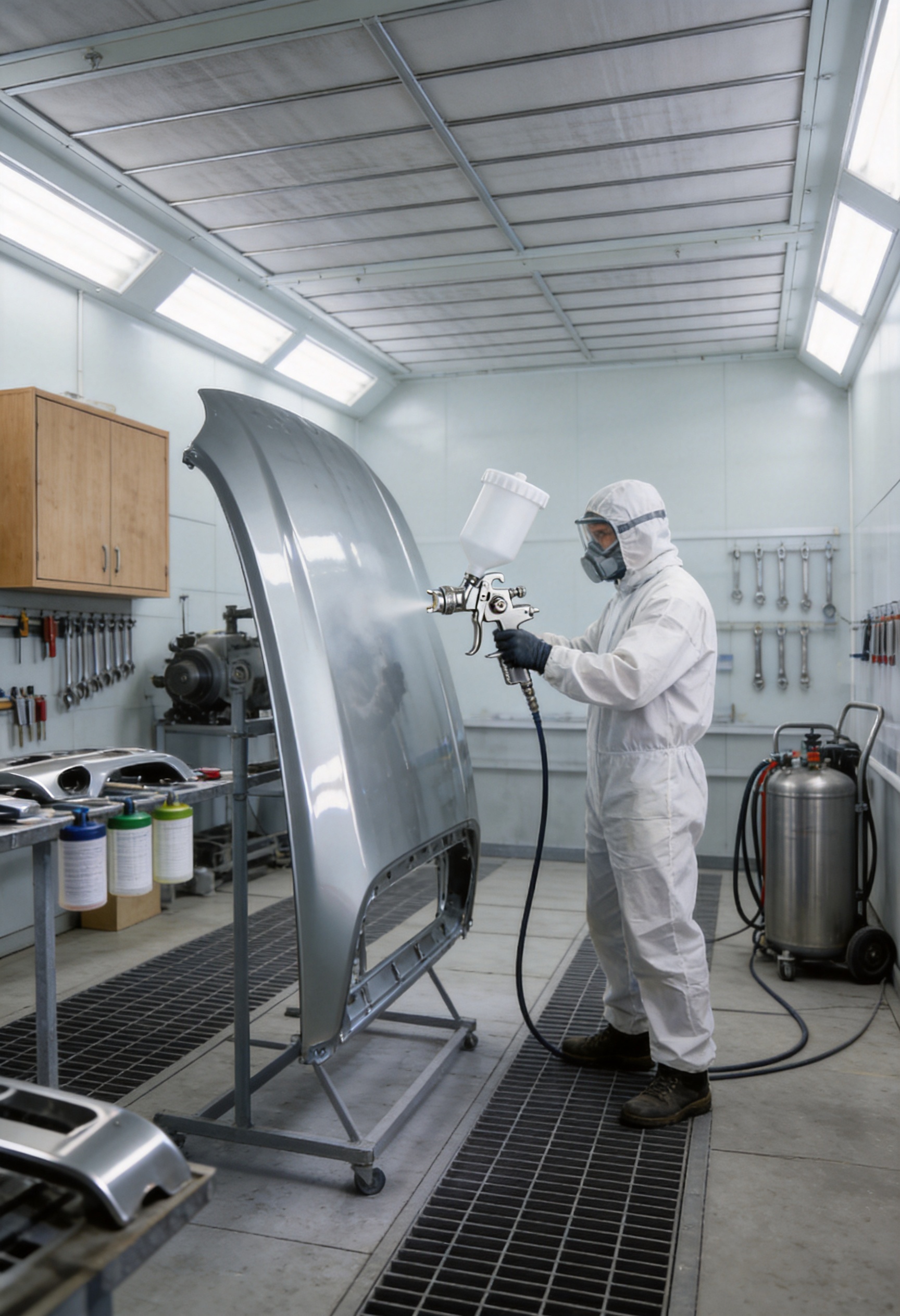
The product category and configuration make this spray gun suitable for a variety of applications. In vehicle refinishing, the different nozzle options can support preparation coats, color coats, and suitable finishing materials. The gun can also be useful for spot repairs, component refinishing, motorcycle parts, wheels, and equipment panels when the coating and setup are appropriate.
In woodworking, the gravity-feed HVLP design can support the application of stains, lacquers, sealers, paints, and other compatible finishes. Furniture makers and cabinet workshops often need a controlled spray pattern to cover edges, profiles, corners, and broad flat surfaces. The ability to choose different nozzle sizes can help accommodate both fine finishing products and materials with higher viscosity.
Maintenance departments may use the gun for machinery, metal structures, agricultural equipment, tools, fixtures, and general industrial components. In these settings, durability, adaptable fluid delivery, and straightforward air connection are important. A workshop may need to switch between small repair areas and larger components, making a versatile gun more useful than a tool designed for only one narrow task.
DIY and advanced home users can also benefit from the product when they have the appropriate compressor, ventilation, protective equipment, and coating knowledge. The gun is more capable than many entry-level consumer sprayers, but users should recognize that professional results depend on preparation and technique. Spraying is not simply a matter of pointing the gun at a surface; it requires correct mixing, filtration, test spraying, and controlled movement.
Commercial distributors can position this model as part of a broader spray equipment range. Because the manufacturer also offers related categories such as air brushes, mini oil-free compressors, air pipeline accessories, air fittings, paint tanks, spray gun kits, airless spray guns, electric spray guns, and paint sprayers, customers may be able to source complementary equipment from one experienced supplier.
Comparison with Conventional and Basic Spray Guns
Compared with many conventional high-pressure spray guns, an HVLP gun can offer better control of overspray and transfer efficiency when correctly adjusted. Conventional equipment may be highly productive in particular industrial settings, but it can require more careful overspray management. For workshops that value controlled application and reduced material loss, HVLP technology can provide a more suitable operating profile.
Compared with low-cost fixed-nozzle guns, the AB17G's multiple nozzle options provide greater application flexibility. A basic fixed-nozzle gun may be inexpensive at the time of purchase, but it can become less economical if the workshop later needs to spray materials with different viscosities. The ability to select among three nozzle diameters can extend the usefulness of the equipment and reduce the need for separate tools.
Compared with some electric sprayers, a pneumatic HVLP gun can offer greater compatibility with existing workshop air systems. Pneumatic tools are often familiar to professional users, and their operating characteristics can be adjusted through pressure regulation, fluid control, and nozzle selection. Electric sprayers may be convenient for certain users, but they do not always provide the same integration with an established compressor and air pipeline network.
Compared with very small detail guns, the 600 ml cup and three nozzle sizes make this model more appropriate for larger coverage and general-purpose work. Detail guns can be excellent for precision areas, but their smaller cups and limited delivery may reduce productivity on medium-sized surfaces. The AB17G is positioned as a more adaptable full-size solution for users who need both finish control and practical output.
No single spray gun is ideal for every coating or work environment. The advantage of this model is its balance. It combines HVLP operation, gravity feeding, multiple nozzle sizes, a useful cup capacity, and a conventional air inlet in one platform. This combination can make it easier for workshops to standardize equipment and train operators across a range of jobs.
Manufacturing Experience and Industrial Capability
The manufacturer, Ningbo Lis Industrial Co., Ltd., has been engaged in the research, development, manufacture, and marketing of spray guns, mini compressors, and related air tools since 1984. This long operating history is significant because spray equipment requires accumulated knowledge in air passage design, precision machining, surface treatment, assembly control, sealing, component compatibility, and final testing.
The company operates from Ningbo, China, in an industrial area with access to port transportation, technical resources, and established manufacturing networks. Its reported production site covers more than 400,000 square feet and employs more than 400 people. The company also reports annual output exceeding 40 million United States dollars, indicating a substantial manufacturing and commercial infrastructure.
Scale can provide several benefits to customers when it is supported by effective quality systems. A larger production organization may be better positioned to maintain dedicated engineering resources, establish repeatable assembly processes, invest in testing equipment, and support higher-volume orders. It can also provide greater continuity for distributors that need stable product supply across multiple markets.
The company reports that its production capacity can be increased by 30 percent within two months. This kind of capacity flexibility can be valuable for importers, wholesalers, private-label customers, and project buyers whose requirements may change quickly. Reliable capacity planning helps reduce the risk of extended lead times when seasonal demand or new contracts increase order volumes.
The manufacturer also supports OEM production based on customer drawings or samples and provides ODM services according to customer requirements. These capabilities can be important for customers who need customized packaging, product appearance, specifications, branding, or application-oriented modifications. A supplier with both OEM and ODM experience may be able to participate earlier in the product development process rather than only supplying standard catalog items.
Advanced Quality Management
Quality control is particularly important in spray guns because small variations in internal passages, nozzle geometry, air cap alignment, needle movement, or sealing surfaces can affect atomization and pattern consistency. A product may appear visually acceptable while still producing unstable results if these areas are not controlled carefully during manufacturing.
The manufacturer describes a quality process that covers raw material selection, incoming inspection, in-process quality control, functional testing, and final inspection of finished products. This staged approach is more reliable than depending only on a final visual check. Quality must be built into the process through controlled materials, repeatable machining, accurate assembly, and verification at multiple points.
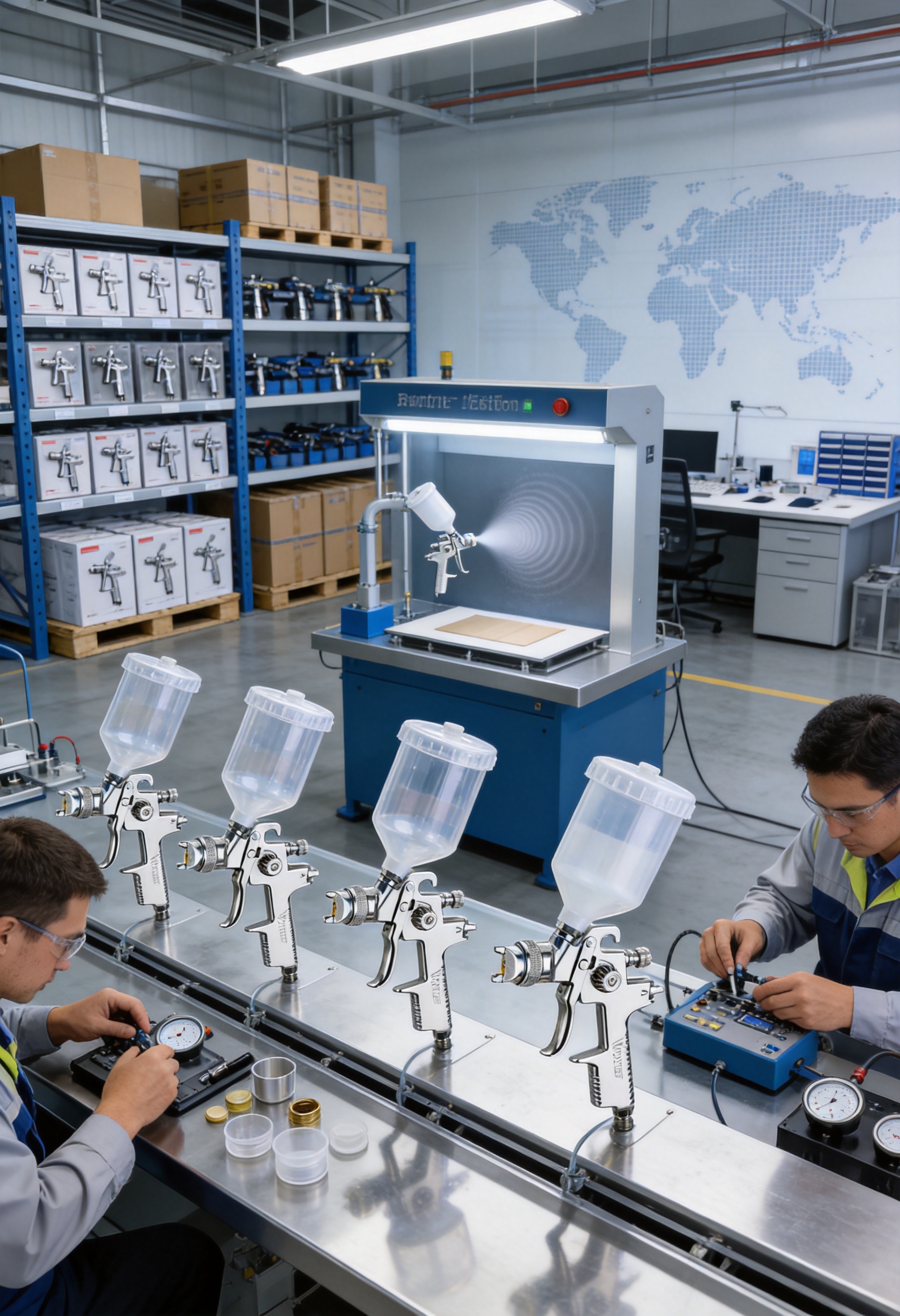
Incoming inspection helps ensure that supplied materials and components meet defined requirements before they enter production. In-process inspection can identify dimensional or assembly problems before a large batch is completed. Functional testing is especially relevant for spray guns because the tool must be evaluated as an operating pneumatic system rather than merely as a collection of parts.
The company reports the use of 100 percent functional testing. When consistently implemented, full functional testing can help identify problems related to air leakage, fluid flow, trigger action, pattern behavior, or assembly. It can also improve customer confidence by reducing the likelihood that nonfunctioning units will reach the distribution chain.
The manufacturer follows ISO9000 quality system requirements and reports certification to ISO9001, ISO14001 environmental management, and OHSAS18001 occupational health and safety standards. It also reports European CE and German GS product certifications. These certifications and compliance systems do not eliminate the need for appropriate product use, but they demonstrate an organized approach to quality, environmental responsibility, workplace safety, and market access.
A structured quality system is also beneficial for international customers because it creates a common framework for communication. Distributors can discuss inspection procedures, product specifications, corrective actions, and production requirements using documented processes. This is particularly useful when products are shipped across multiple markets and must satisfy different commercial or regulatory expectations.
Research, Development, and Technical Cooperation
Spray technology depends on continuous improvement. Coating formulations change, customers request lower material consumption, and industrial users seek improved productivity. Manufacturers that invest in research and development can respond more effectively to these requirements. The company reports having a strong research and development team and an engineering technology center specializing in spraying machinery.
The engineering focus includes spray gun development, air tool design, and related spraying solutions. This breadth can help the manufacturer understand the interaction between guns, compressors, air pipelines, fittings, paint tanks, and coating materials. A spray gun cannot be evaluated in isolation from the air and material delivery system that supports it.
The company also reports technical cooperation with American Wagner Spraying Technology Co., Ltd. Such cooperation can contribute to the exchange of engineering knowledge, manufacturing practices, testing methods, and market requirements. Collaboration with an established spraying technology organization can help strengthen product development and quality expectations.
For customers, a technically capable supplier offers more than a catalog item. It can provide guidance on product selection, nozzle configuration, air system matching, packaging, application requirements, and potential customization. This support can be particularly valuable for distributors that serve professional users and need dependable technical information for their own sales teams.
International Market Strength
The manufacturer reports that its spray products are sold in Europe, North America, the Middle East, South Africa, and East Asia. International distribution requires attention to packaging, documentation, quality consistency, shipping coordination, and customer service. It also requires the ability to understand the practical expectations of different user groups.
Established international sales relationships can help a manufacturer improve its product range. Feedback from professional users may reveal the need for alternative nozzle sizes, different fittings, improved packaging, replacement parts, or application-specific versions. Over time, this market feedback can contribute to more useful product development.
The company's product brands include Voylet and Muzi, and the supplied information states that Muzi has been recognized as a China Well-known Brand. The company also reports its own brand agents in many countries. A network of agents and distributors can support product availability, after-sales communication, and local market development.
For buyers evaluating a supplier, international experience is an important consideration. A product may be technically capable, but commercial success also depends on stable production, clear communication, export experience, and the ability to support repeated orders. The manufacturer's reported history with customers in multiple regions supports its position as a global spray equipment supplier.
Recommended Operating Practices
Before spraying, the workpiece should be cleaned, dried, and prepared according to the coating system. Oil, dust, silicone, wax, rust, loose coating, and moisture can interfere with adhesion and surface appearance. No spray gun can compensate for inadequate preparation, so the substrate should be inspected before material is loaded into the cup.
The coating should be mixed and filtered according to its technical data sheet. Correct viscosity is essential. If the material is too thick, atomization may be poor and the gun may produce a heavy or irregular pattern. If the material is over-thinned, coverage, color strength, drying behavior, and film performance may be affected. The correct nozzle and pressure settings depend on the coating manufacturer's instructions.
The air supply should be clean and dry. Moisture and oil in compressed air can contaminate the finish and cause defects. A suitable filter, regulator, and water separator should be installed in the air line. The G1/4-inch inlet should be connected using compatible fittings, and all connections should be checked for leaks before spraying.
Users should begin with a test pattern on cardboard, scrap material, or another suitable test surface. The spray pattern should be evaluated for uniformity, atomization, and material flow. Adjustments should be made gradually rather than changing several controls at once. This approach makes it easier to identify the cause of a problem and establish a repeatable setup.
During application, the gun should generally remain perpendicular to the surface and move at a steady speed. The operator should begin moving before pulling the trigger and release the trigger before stopping the stroke. Overlapping each pass consistently can help prevent striping and uneven coverage. Spray distance should remain stable, since moving too close can produce runs while moving too far can produce dry spray.
Ventilation and personal protection are essential. Operators should use appropriate respiratory protection, gloves, eye protection, protective clothing, and approved spray areas according to the coating's safety documentation and local requirements. HVLP technology can reduce overspray, but it does not make spraying risk-free.
Maintenance and Service Life
Maintenance should begin immediately after use. Coating should not be allowed to dry inside the cup, fluid passage, nozzle, or air cap. The cup should be emptied safely, and the appropriate cleaning procedure should be followed for the material used. Some coatings require specific solvents or cleaning agents, so users should consult the coating and equipment instructions.
The air cap and nozzle should be removed carefully and cleaned without damaging precision openings. Metal objects that scratch or distort the nozzle may permanently affect the spray pattern. Soft brushes and suitable cleaning tools are generally preferable. The needle and fluid control components should be inspected for residue, sticking, or unusual wear.
Seals and connections should be checked periodically. A damaged seal may allow air or material leakage and can reduce control. The trigger should move smoothly, and the cup connection should remain secure. Any component showing excessive wear should be replaced with a compatible part rather than forced back into service.
Proper storage is also important. The gun should be stored clean, dry, and protected from impact. The cup should not be left filled with coating, and the air inlet should be protected from contamination. When maintenance becomes a routine part of the workflow, the gun is more likely to deliver stable performance over a longer period.
Commercial Value for Distributors and OEM Buyers
For distributors, the AB17G provides a marketable combination of recognizable HVLP technology, flexible nozzle selection, gravity-feed convenience, and professional-oriented specifications. These features can support sales to automotive workshops, furniture manufacturers, maintenance contractors, equipment repair businesses, and advanced users.
The product can be offered as a standalone spray gun or as part of a broader equipment package. A distributor may combine it with a compatible mini compressor, regulator, air hose, filter, fittings, spare nozzles, cleaning tools, or protective accessories. This creates opportunities for complete spraying solutions rather than isolated product sales.
The 10-unit carton configuration and stated carton dimensions provide useful information for warehouse planning and shipment calculation. Buyers can evaluate storage requirements, palletization, freight arrangements, and order quantities before placing a commercial order. Clear packaging information helps simplify supply chain coordination.
OEM and private-label customers may benefit from the manufacturer's ability to produce according to drawings, samples, or specific requirements. Customization can include product appearance, packaging, instructions, branding, or selected specifications, subject to technical and commercial evaluation. The manufacturer's existing experience with international customers can help support these projects.
Supply stability is another important commercial advantage. A workshop or distributor may prefer to standardize on a model that can be reordered consistently. The company's reported production scale, manufacturing history, and expandable capacity provide a foundation for repeat purchasing. Stable supply can reduce the need to retrain operators or replace product lines frequently.
How This Product Creates an Advantage over Competitors
The product's competitive value comes from its balance of features rather than from one isolated specification. Many spray guns can claim professional construction, but users often need several benefits at the same time: adaptable nozzles, practical cup capacity, efficient material delivery, compatible air connection, reliable manufacturing, and accessible technical support.
The three nozzle options help the gun serve a wider application range than a fixed-size model. The gravity-feed configuration supports controlled material delivery and practical monitoring. The HVLP operating principle can help reduce overspray and improve transfer efficiency. The alloy body is intended for repeated workshop use, while the 600 ml cup provides useful capacity without making the gun unnecessarily cumbersome.
Another competitive advantage is the connection between product design and manufacturing depth. Customers are not purchasing from a supplier that only assembles a single spray gun model. The manufacturer has experience across spray guns, compressors, air tools, fittings, paint tanks, and spraying solutions. This broader technical background can improve system compatibility and customer support.
Quality assurance also contributes to competitiveness. Raw material inspection, process control, functional testing, and final inspection are important safeguards against inconsistent performance. Certification experience and an established international market presence further support the product's suitability for professional distribution.
Finally, OEM and ODM capability gives the supplier an advantage in customized projects. Competitors that only offer standard products may not be able to respond as effectively to special packaging, branding, or engineering requirements. For customers building a complete product range, this flexibility can be as important as the standard product specification.
Selection Guidance for Different Users
Automotive refinishing shops should evaluate the coating system, panel size, finish expectation, compressor output, and local ventilation arrangements before choosing a nozzle. The 1.4 mm option may be considered for finer finishing materials, while the 1.7 mm or 2.0 mm options may be more appropriate for materials requiring greater flow. Actual selection must follow the coating supplier's recommendations.
Woodworking shops should consider whether they are applying stains, sealers, lacquer, paint, or heavier protective finishes. Surface shape also matters. Cabinets, doors, furniture profiles, and flat panels may require different fan widths and fluid settings. The product's adaptable nozzle system can help a workshop establish different setup profiles for recurring materials.
Industrial maintenance teams should focus on durability, repeatability, cleaning requirements, and availability of replacement components. When equipment is sprayed regularly, the organization should document preferred pressure, nozzle, thinning, and application settings for each coating. Standardized procedures can improve consistency among multiple operators.
Distributors should evaluate market positioning, order volumes, packaging requirements, documentation, and after-sales support. The manufacturer can discuss OEM or ODM possibilities where customers require a customized product program. Buyers should also confirm current technical data, certification documentation, spare part availability, and commercial terms before final procurement.
Q&A
What type of spray gun is the AB17G?
It is an HVLP gravity-feed spray paint gun with an alloy body and a 600 ml cup. The cup is positioned above the gun, allowing gravity-assisted fluid delivery.
What nozzle sizes are available?
The listed fluid nozzle sizes are 1.4 mm, 1.7 mm, and 2.0 mm. The appropriate size depends on the coating viscosity, desired finish, application speed, and coating manufacturer's instructions.
What is the stated air pressure?
The listed air pressure is 43 PSI. Users should verify pressure at the gun while operating and should consider pressure losses caused by hoses, regulators, filters, fittings, and other air-line components.
What is the cup capacity?
The cup capacity is 600 ml. This provides a practical balance between working volume and manageable gun weight for many small and medium spraying jobs.
What kind of air connection does the gun use?
The air inlet is G1/4 inch. A compatible fitting and properly sized air hose should be used to maintain stable air delivery.
Is the product suitable for every type of paint?
No spray gun is automatically suitable for every coating. Users must check the coating manufacturer's instructions for viscosity, thinning, nozzle size, pressure, compatibility, ventilation, and cleaning requirements before spraying.
How does HVLP differ from conventional high-pressure spraying?
HVLP uses a relatively high volume of air at lower pressure to support controlled atomization and improved transfer efficiency. When correctly adjusted, it can reduce overspray and material waste compared with some conventional high-pressure arrangements.
Why are multiple nozzle sizes useful?
Different materials and applications require different fluid delivery rates. Multiple nozzle sizes allow the operator to adapt the gun to finer finishing materials, general-purpose coatings, or materials requiring greater fluid passage.
What compressor is required?
The compressor must provide sufficient air volume and stable pressure for the gun under actual operating conditions. Users should compare the gun's requirements with the compressor's delivered air capacity rather than relying only on the compressor's maximum pressure rating.
Can the manufacturer provide customized products?
The manufacturer reports OEM production based on customer drawings or samples and ODM services based on customer requirements. Specific customization options should be discussed and confirmed during technical and commercial evaluation.
What quality systems does the manufacturer report?
The company reports controls covering raw materials, incoming inspection, in-process quality, functional testing, and final inspection. It also reports ISO9001, ISO14001, and OHSAS18001 certifications, along with CE and German GS product certifications.
Where can the spray gun be used?
Potential applications include automotive refinishing, woodworking, furniture and cabinet finishing, equipment maintenance, industrial component coating, repair work, and other compatible spraying tasks.
How should the gun be cleaned?
The cup, fluid passage, nozzle, air cap, needle, and related components should be cleaned promptly after use with procedures and materials compatible with the coating. Dried residue and unsuitable cleaning tools can damage precision surfaces and affect the spray pattern.
Conclusion
The AB17G HVLP Spray Paint Gun Alloy Airbrush Gravity Feed+ is designed as a flexible professional spraying tool for users who require controlled coating application across several work categories. Its HVLP format supports efficient atomization, while the gravity-feed arrangement provides direct material delivery and convenient cup monitoring. The 600 ml cup is practical for many workshop jobs, and the 1.4 mm, 1.7 mm, and 2.0 mm nozzle options allow the gun to adapt to different materials and application demands.
Its advantages over more limited competitors include the combination of interchangeable nozzle sizes, practical capacity, alloy construction, standard G1/4-inch air connectivity, and professional-oriented operating characteristics. These benefits are strengthened by the manufacturer's broad experience in spray equipment, established production facilities, research and development resources, quality management systems, international certifications, and OEM and ODM capabilities.
For the best results, users must match the gun to a suitable compressor, prepare the coating correctly, maintain clean and dry air, test the spray pattern, apply consistent technique, and clean the equipment after every use. When these practices are followed, the product can help workshops improve finish consistency, reduce unnecessary material loss, and build a more efficient spraying process.
For distributors and industrial buyers, the product also represents more than a single spray gun. It can serve as part of a wider air-tool and spraying equipment program supported by an experienced manufacturer. Stable production, technical cooperation, documented quality procedures, international market experience, and customization services make the supply platform suitable for both standard purchasing and long-term product development.
References
1. Ningbo Lis Industrial Co., Ltd. Product specification information for the AB17G HVLP Spray Paint Gun.
2. Ningbo Lis Industrial Co., Ltd. Corporate information concerning manufacturing, quality management, research and development, certifications, and international distribution.
3. International Organization for Standardization. Quality management system principles and ISO 9001 guidance.
4. International Organization for Standardization. Environmental management system principles and ISO 14001 guidance.
5. Occupational health and safety management system guidance associated with OHSAS 18001.
6. General technical guidance for HVLP pneumatic spray equipment, compressed-air preparation, coating atomization, and spray application practices.
7. Coating manufacturers' technical data sheets concerning viscosity, thinning, nozzle selection, pressure, application technique, ventilation, and cleaning requirements.