 Search

 English
 中文简体
 Deutsch
 Español
Content
- 1 Why Air Regulation Matters in Compressed-Air Equipment
- 2 Key Specifications of the AR801
- 3 Compact Design for Flexible Installation
- 4 Pressure Adjustment for Spray Applications
- 5 Particle Filtration and Equipment Protection
- 6 Connection Options for Different Air Systems
- 7 Advantages Compared with Basic Unregulated Setups
- 8 Benefits for Workshops and Production Areas
- 9 Manufacturing Experience and Product Development
- 10 Quality-Control Approach
- 11 Advanced Manufacturing Strengths
- 12 Installation Recommendations
- 13 Maintenance and Service Practices
- 14 Selection Guide for Buyers
- 15 Applications Across Different Industries
- 16 Safety Considerations
- 17 Why the AR801 Is a Practical Choice
- 18 Frequently Asked Questions
- 18.1 What is the AR801?
- 18.2 What pressure range does the AR801 provide?
- 18.3 Which inlet sizes are available?
- 18.4 Is the AR801 suitable for spray guns?
- 18.5 Does the 40-micron filter remove moisture and oil?
- 18.6 Can the regulator be used with different air tools?
- 18.7 How should the AR801 be maintained?
- 18.8 Does the manufacturer support OEM and ODM projects?
- 18.9 What should buyers confirm before placing an order?
- 19 Conclusion
- 20 References
- 21 Product: AR801
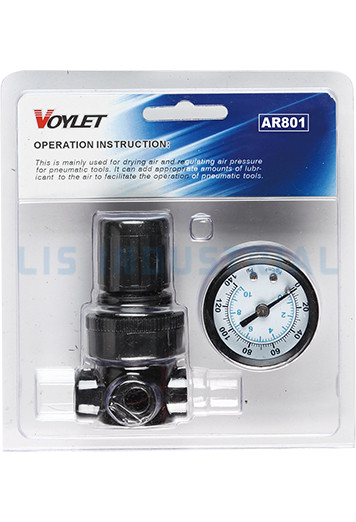
Reliable air control is essential wherever compressed air is used for spraying, painting, cleaning, inflation, or other workshop applications. A spray gun may have a precise nozzle and a high-quality air cap, but its performance can still be affected by unstable pressure, moisture, and airborne particles in the supply line. The Mini Air Regulator AR801 is designed to address these challenges in a compact and practical format. It provides adjustable pressure control, filtration, and flexible connection options for compressed-air systems used in workshops, production lines, maintenance areas, and professional spraying environments.
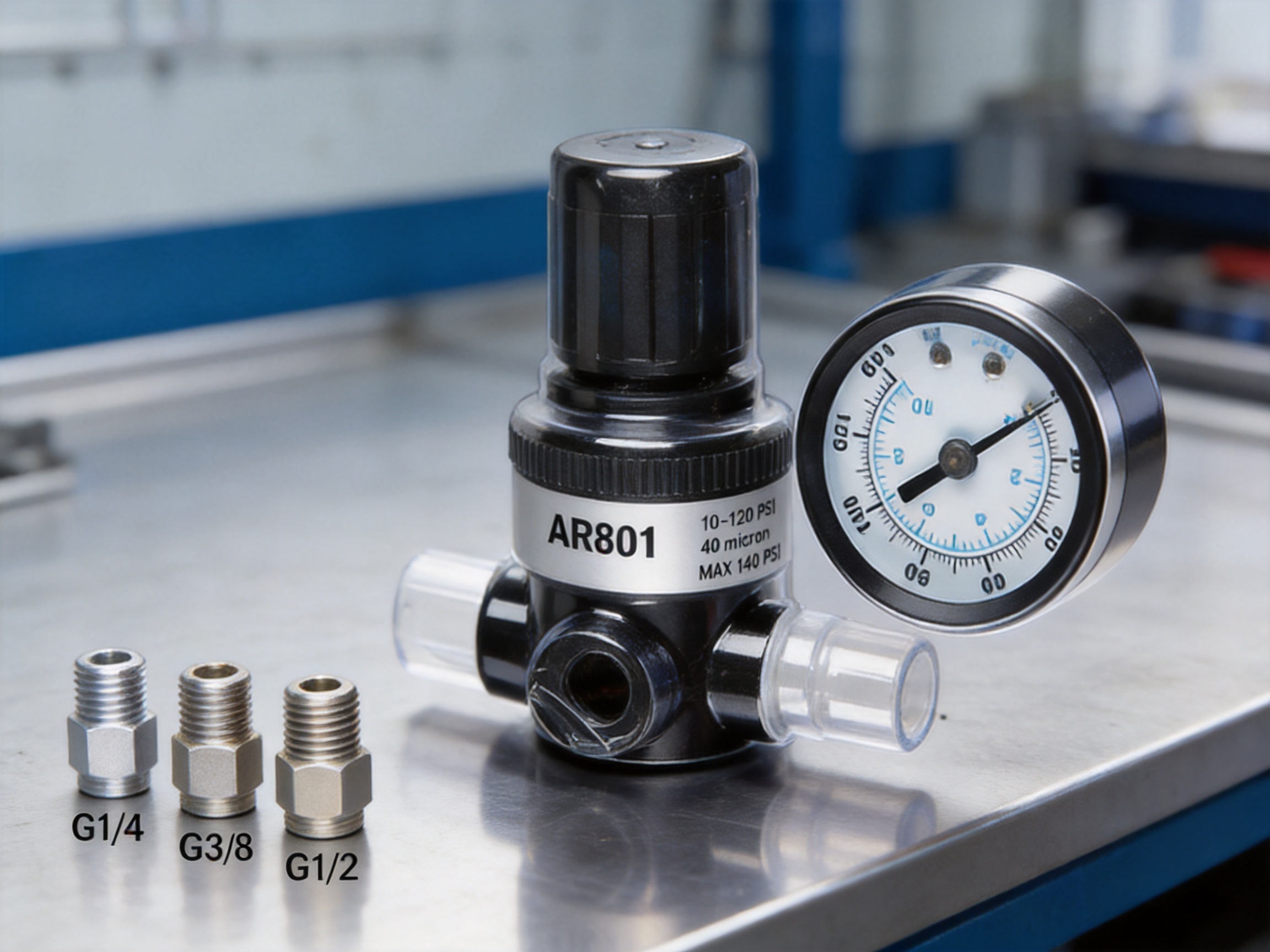
The AR801 belongs to the air pipeline accessories category and is intended to be installed between the air source and downstream pneumatic equipment. Its pressure range is 10–120 PSI, while its maximum pressure is listed as no more than 140 PSI. The unit supports G1/4, G3/8, and G1/2 air inlet options, and its filtration precision is 40 microns. These specifications make it suitable for many conventional compressed-air applications in which controlled air delivery and basic particle filtration are required.
Although the regulator has a small footprint, it performs an important role in the complete air system. It helps users set a consistent working pressure instead of relying on the potentially fluctuating output of a compressor. It can also help protect downstream tools from larger particulate contamination. For paint spraying in particular, stable air pressure contributes to a more uniform spray pattern, more predictable atomization, and better control over material transfer.
Manufactured by Ningbo Lis Industrial Co., Ltd., the AR801 benefits from the experience of a company focused on spray guns, mini compressors, air tools, and related equipment. The manufacturer has developed extensive capabilities in research, product development, production, inspection, and international distribution. Its operations include systematic quality control, functional testing, and support for original equipment manufacturing and original design manufacturing.
AR801
Why Air Regulation Matters in Compressed-Air Equipment
Compressed air is generated and stored at a pressure that is often higher than the pressure required by a spray gun or pneumatic tool. A compressor may also cycle between different pressure levels as it fills, unloads, or responds to changes in demand. Without a regulator, the air reaching the tool may be excessive, inconsistent, or unsuitable for the application.
Different tools require different working pressures. A spray gun may need a controlled pressure to achieve the correct atomization characteristics, while an air blow gun may be operated differently depending on the cleaning task. A tyre inflating gun, pneumatic polisher, or other air tool can also have its own recommended operating conditions. A pressure regulator allows the operator to adjust the air supply to match the tool rather than using one unrestricted pressure for every application.
Pressure control also supports process repeatability. When the air pressure changes during a spraying operation, the spray pattern can change with it. The volume of material delivered, the width of the fan, and the degree of atomization may all be affected. In a production environment, such variations can result in inconsistent coverage, uneven finish quality, or unnecessary material consumption. A regulator helps create a more stable operating point.
The AR801 is therefore more than a simple fitting. It is a control component that helps connect the output of an air source with the practical requirements of downstream equipment. Its adjustable pressure range from 10 to 120 PSI provides broad working flexibility for many light-duty and professional compressed-air applications.
Key Specifications of the AR801
| Specification | Details |
|---|---|
| Product model | AR801 |
| Product type | Mini air regulator |
| Pressure range | 10–120 PSI |
| Maximum pressure | ≤140 PSI |
| Air inlet options | G1/4, G3/8, or G1/2 |
| Filtration precision | 40 microns |
| Quantity per carton | 50 pieces |
| Carton size | 83 × 31.5 × 16 millimetres as supplied in the product information |
The pressure range is one of the most important features of the AR801. The lower setting of 10 PSI enables users to work with relatively gentle air delivery, while the upper adjustable setting of 120 PSI covers many higher-pressure applications within the stated maximum limit. The maximum pressure specification of no more than 140 PSI provides an important reference for system selection and safe installation.
Because the product information lists several inlet sizes, buyers can select the configuration that corresponds to their existing air pipeline or fitting arrangement. G1/4, G3/8, and G1/2 are common pipe-thread sizes in compressed-air systems. Correct thread matching is essential because it supports secure installation and helps reduce the risk of leakage.
The 40-micron filtration precision is intended to help remove particulate matter from the air stream before it reaches downstream equipment. This basic filtration function is valuable in workshops where the air supply may carry dust, rust particles, or other solid contamination. Users should remember that a regulator with particulate filtration is not automatically a complete moisture-separation or oil-removal system. Where the application requires especially clean, dry air, additional filtration and air treatment may be necessary.
Compact Design for Flexible Installation
A major advantage of a mini air regulator is its ability to provide essential control without taking up excessive space. Air pipelines are often installed in crowded areas around compressors, spray booths, workbenches, and production machinery. Large components may be difficult to position, particularly where the regulator must be located close to the spray gun or air tool.
The compact format of the AR801 helps installers integrate pressure control into small equipment assemblies. It may be used near a branch point, at the inlet of a tool, or within a compact air preparation arrangement, subject to the requirements of the complete system. This flexibility can simplify workshop organization and make operating adjustments easier for the user.
Compact size can also be beneficial when several air circuits are installed in parallel. Each branch may require a different working pressure, especially in a mixed-use workshop. A smaller regulator can help individualize each circuit without occupying unnecessary cabinet or wall space.
However, compact equipment should still be installed with sufficient clearance for adjustment, inspection, and maintenance. Operators should be able to access the pressure-control mechanism and observe the system condition. The unit should not be positioned where it can be struck by moving objects, exposed to unsuitable chemicals, or subjected to vibration beyond the limits of the air system.
Pressure Adjustment for Spray Applications
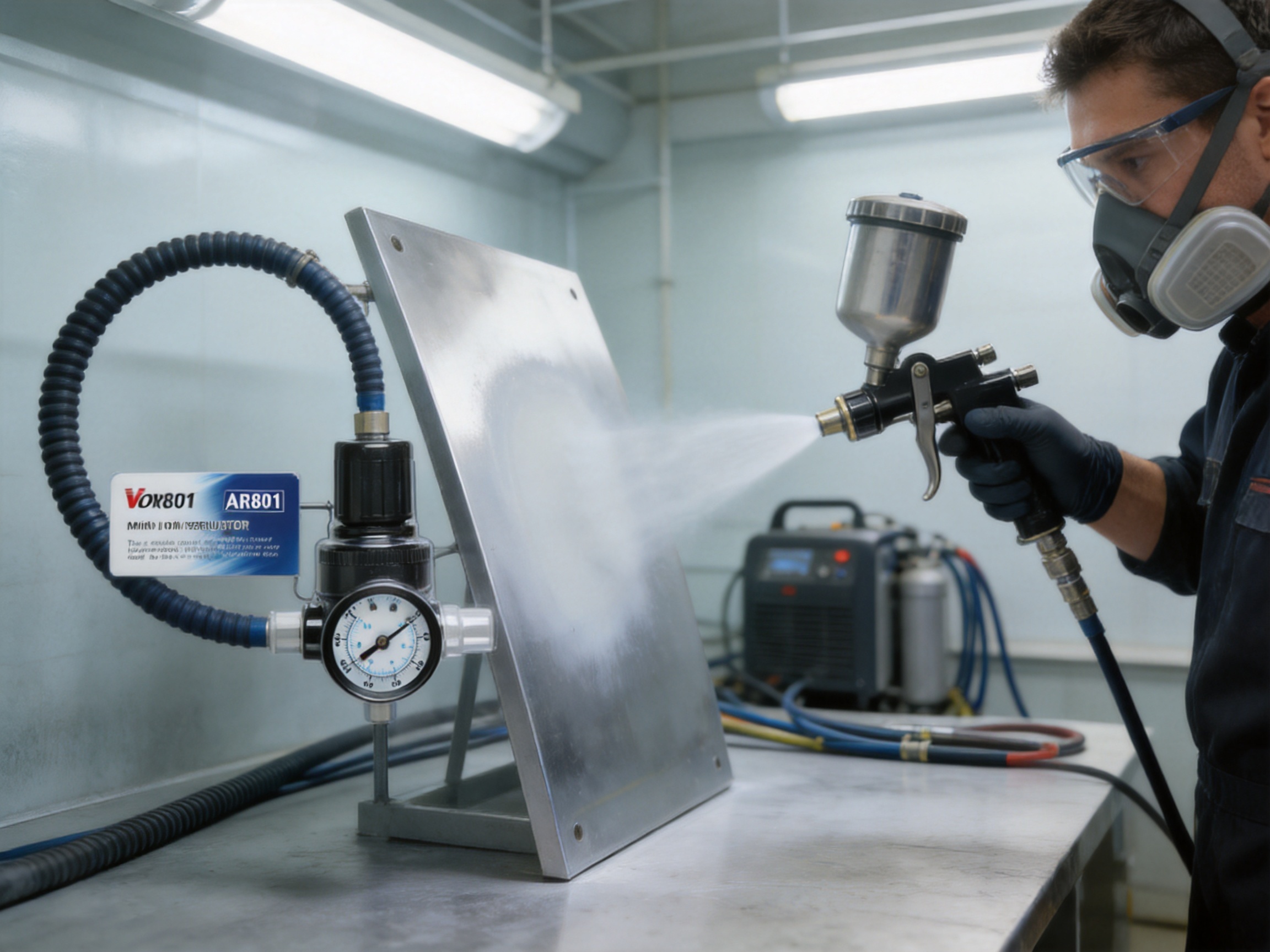
Spray equipment depends on a balanced relationship between air pressure, fluid viscosity, nozzle size, material flow, and spray distance. If the pressure is too low, the material may not atomize adequately, producing a coarse spray or an uneven pattern. If the pressure is too high, the process may create excessive overspray, faster solvent evaporation, unnecessary air consumption, or an undesirable finish.
The AR801 allows the operator to adjust the air supply within its specified range. This makes it useful for changing between materials, spray guns, and application conditions. For example, a user may select one pressure setting for a broad coating application and another for a smaller touch-up operation. The best setting should always be established according to the spray gun manufacturer’s instructions, the coating material, and the practical result on a test surface.
Stable pressure can also improve operator confidence. Instead of repeatedly compensating for an uncontrolled air supply, the user can establish a known operating condition and focus on gun distance, travel speed, overlap, and coating thickness. In a professional environment, this can contribute to more repeatable work across different operators and shifts.
The regulator should be installed in the correct direction, with attention to any airflow marking or connection guidance supplied with the product. Threaded connections should be clean and properly sealed using a suitable method. Excess sealing material should not be allowed to enter the air passage, because loose particles can travel downstream and affect the tool or finish.
Particle Filtration and Equipment Protection
Compressed air can carry particles originating from the compressor, storage tank, pipeline, fittings, or surrounding environment. Common contaminants may include dust, metal particles, pipe scale, and other solid debris. Even small particles can interfere with valves, damage sensitive components, or appear as defects during a painting operation.
The AR801 incorporates 40-micron filtration precision to provide basic particle control. This feature is particularly useful when the regulator is installed close to a spray gun or pneumatic tool. By reducing the amount of solid contamination entering the downstream circuit, the regulator can help support cleaner operation and reduce the likelihood of contamination-related interruptions.
Filtration performance depends on correct maintenance. As particles accumulate, the filter element can become restricted. A clogged filter may reduce airflow, create a pressure drop, or make the system appear less responsive. Operators should inspect the unit periodically and follow appropriate cleaning or replacement procedures for the specific configuration.
Paint spraying may require more than a 40-micron particle filter. Finishing applications can be sensitive to water, oil aerosols, and very fine contamination. In these cases, the AR801 can be used as one component within a broader air-treatment arrangement that may include a compressor tank drain, water separator, coalescing filter, desiccant dryer, or final filtration stage. Selecting the correct air-treatment sequence is important for demanding coating applications.
Connection Options for Different Air Systems
The availability of G1/4, G3/8, and G1/2 inlet options gives the AR801 practical versatility. Air systems are not always built with the same pipe size. Small spray guns and compact workshop tools often use smaller connections, while larger air lines may require a greater flow path. Offering several connection choices helps distributors and equipment integrators match the regulator to the intended system.
Thread selection should be based on the actual port specification, not only on the outside appearance of a fitting. Users should verify the thread standard, nominal size, connector type, and sealing method before installation. A G-thread connection should be paired with compatible components designed for the same thread system. Forced assembly between incompatible threads can damage the parts and create leakage.
Adapters may be used where necessary, but every additional connection can introduce another potential leak point and may affect the internal flow path. Where possible, selecting the correct inlet configuration from the beginning is preferable. Distributors can also simplify customer selection by clearly identifying the available inlet version in product listings and quotations.
When the regulator is installed in a permanent pipeline, the pipework should be supported independently. The regulator should not carry the weight of unsupported hoses or rigid tubing. Proper support reduces mechanical stress on threaded ports and can help maintain reliable connections during long-term use.
Advantages Compared with Basic Unregulated Setups
A basic unregulated setup may connect a compressor directly to a spray gun or pneumatic tool. Although this arrangement can appear simple, it provides limited control over operating pressure. Compressor output may be too high for the tool, and pressure may change as the compressor cycles. The absence of filtration also allows more contamination to reach the downstream equipment.
Adding the AR801 creates a more controlled connection between the air source and the tool. The operator gains adjustable pressure control and basic particle filtration in one compact component. This can be more practical than purchasing and installing separate basic control components, especially where workspace is limited.
Compared with a fixed-pressure arrangement, the adjustable design is more adaptable. A fixed regulator may be suitable for a single dedicated process, but it can become restrictive when the same air circuit is used for different tools. The AR801’s adjustment range supports a wider range of operating conditions, provided that the selected pressure remains suitable for the connected equipment.
Compared with an oversized air-treatment assembly, a mini regulator may offer a more economical and space-efficient solution for applications that do not require advanced drying or multi-stage filtration. It can be particularly appropriate for small workshops, service areas, maintenance stations, and individual tool connections.
These advantages do not mean that one regulator is suitable for every air system. Large automated installations, high-flow spray lines, and applications requiring exceptionally dry or oil-free air may need higher-capacity or specialized equipment. The strength of the AR801 is its practical balance of adjustability, filtration, connection flexibility, and compact size.
Benefits for Workshops and Production Areas
In a workshop, one compressor may supply many different tools. A technician may use an air blow gun for cleaning, a spray gun for coating, an inflating gun for tyres, and a pneumatic polisher for finishing work. Each device may perform best at a different pressure. A regulator installed at the relevant branch or tool allows the user to adapt the air supply without changing the compressor’s central setting every time.
In a production area, consistent process conditions are especially important. A pressure regulator can help standardize the air supply to a group of spray guns or stations. While pressure regulation alone cannot guarantee uniform coating quality, it removes one important source of variation from the process.
The AR801 can also be useful for equipment manufacturers that build compact air-powered machines. Its multiple inlet options and small format support integration into control panels, air preparation modules, and tool assemblies. Original equipment manufacturers may evaluate the regulator as part of a complete product design according to airflow, pressure, environmental, and maintenance requirements.
For distributors, the product is suitable for inclusion in a broader range of air-tool accessories. Its carton quantity of 50 pieces supports stock management for wholesalers, repair centers, and industrial supply channels. Packaging and logistics requirements should be confirmed with the supplier, especially because the stated carton dimensions should be checked against the final shipping documentation.
Manufacturing Experience and Product Development
The AR801 is supplied by Ningbo Lis Industrial Co., Ltd., a manufacturer engaged in the research, development, production, and marketing of air painting spray guns, mini air compressors, air tools, and related accessories. The company was established in 1984 and has developed substantial experience in the spraying-equipment industry.
The company reports a facility covering more than 400,000 square feet, a workforce of more than 400 employees, and annual output exceeding 40 million US dollars. These resources provide a foundation for production planning, tooling, assembly, inspection, packaging, and export service. A broad product portfolio also allows the manufacturer to understand how individual accessories function within complete spraying systems.
Product development is supported by a dedicated research and development team. The manufacturer states that it can provide OEM production based on customer drawings or samples and ODM services based on customer requirements. This is important for buyers that need a private-label version, a customized connection arrangement, product identification, or integration into a larger equipment package.
The company has also established a spraying machinery engineering technology center and has carried out technical cooperation with American spraying-technology organizations. Such technical activities support the improvement of product design, manufacturing methods, and application knowledge. For a compact regulator, engineering experience is valuable because reliable performance depends on the interaction of threads, seals, pressure-control components, filtration parts, and assembly tolerances.
Quality-Control Approach
Quality control for a pressure-regulation component should begin with incoming materials and continue through assembly and final inspection. Thread accuracy, sealing surfaces, internal passages, pressure-control components, and filter parts all influence the performance of the finished unit. A weakness in any one of these areas may result in leakage, unstable adjustment, or restricted airflow.
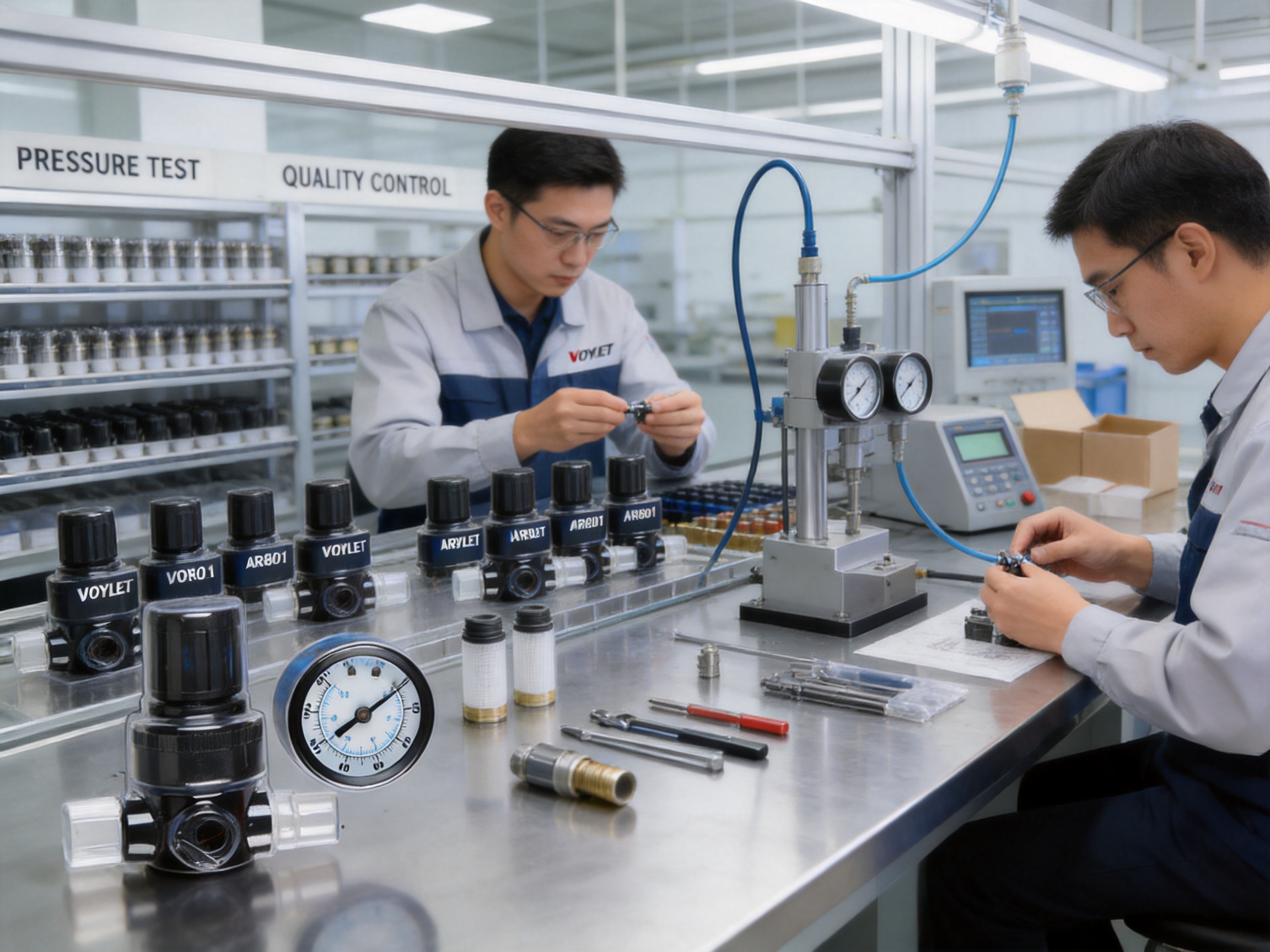
The manufacturer describes a quality system based on ISO 9000 requirements. Its stated process includes raw-material control, incoming inspection, in-process quality control, 100 percent functional testing, and final quality inspection. This type of staged control is more effective than relying only on a final visual check, because it gives production teams several opportunities to identify and correct problems.
Functional testing is especially significant for an air regulator. Visual appearance alone cannot confirm that the unit regulates pressure correctly or maintains an acceptable seal. Testing should be aligned with the product specification and may include pressure performance, leakage checks, connection integrity, adjustment response, and filtration-component verification.
The company also reports certifications and management systems including ISO9001 quality certification, ISO14001 environmental certification, and OHSAS18001 occupational health and safety certification. It further states that its products have passed CE and GS-related certification requirements. Buyers should request current certificates and confirm their applicability to the exact product model, configuration, and destination market.
Advanced Manufacturing Strengths
The production of a mini air regulator requires more than simple assembly. The component must maintain dimensional consistency across threaded ports, housing parts, seals, filter elements, and pressure-control mechanisms. Consistent machining, molding, finishing, cleaning, and assembly practices are necessary to produce reliable units in commercial quantities.
A large-scale manufacturer can use dedicated production resources for different stages of the process. These may include material preparation, component forming, machining, surface treatment, subassembly, pressure testing, final assembly, and packaging. The exact process depends on the design and materials used for the selected model, but disciplined process control remains essential throughout.
Manufacturing scale also supports supply continuity. The company states that production capacity can be increased by 30 percent within two months to meet changing purchase volumes. For importers, distributors, and equipment manufacturers, scalable production can reduce the risk of extended lead times when demand increases.
At the same time, capacity must be balanced with quality. Rapid production expansion should preserve inspection standards, traceability, operator training, and functional testing. The manufacturer’s stated emphasis on the complete quality system is therefore relevant to buyers evaluating long-term supply partnerships.
Another strength is product-family knowledge. A company that produces spray guns, compressors, air fittings, paint tanks, and other air tools can evaluate regulators in the context of complete spraying equipment. This broader understanding may help with compatibility advice, system design, replacement parts, and technical communication.
Installation Recommendations
Before installing the AR801, the air source should be switched off and the pipeline should be depressurized. The installer should confirm that the selected regulator version has the correct inlet size and that the working pressure requirements of the downstream equipment fall within the regulator’s stated range.
The air line should be cleaned before connection. Dirt, metal shavings, pipe sealant fragments, or other loose contamination can enter the regulator during installation and affect its operation. Hoses and pipes should be inspected for damage, and all fittings should be tightened according to appropriate installation practice without excessive force.
The regulator should be positioned so that the adjustment control can be reached safely. If the component includes a preferred installation orientation, that orientation should be followed. The air path should be checked to ensure that the inlet and outlet are not reversed. Any filter bowl, drain area, or service component should have enough clearance for inspection and maintenance.
After installation, the system should be pressurized gradually. The installer should check for audible leaks, observe the pressure indication if a gauge is included in the selected configuration, and confirm that the downstream tool receives air correctly. Pressure should be adjusted in small increments while the tool is operated under normal conditions.
Threaded connections should be checked again after initial operation. If a leak is found, the air must be shut off and the system depressurized before making corrections. Operators should never attempt to repair or tighten pressurized connections by hand.
Maintenance and Service Practices
Regular maintenance helps preserve the performance of any air-line accessory. The AR801 should be inspected for external damage, leakage, corrosion, contamination, and signs of abnormal pressure behavior. The inspection interval should reflect the working environment, operating hours, air quality, and consequences of failure.
The filter area should be checked for accumulated particles. If the filter becomes blocked, the air supply may become restricted. Cleaning or replacement should be carried out according to the product instructions and the design of the specific unit. Users should not use tools or cleaning chemicals that could damage seals, housing surfaces, or internal parts.
Compressed-air systems should be drained and maintained at the compressor side as well. Water and oil entering the air line can shorten the service life of filters and downstream tools. A regulator is not a substitute for proper compressor maintenance, tank drainage, or air drying where those measures are required.
Pressure settings should be reviewed when the connected tool or material changes. Operators should avoid setting the regulator unnecessarily high. Excessive pressure may increase air consumption and overspray, and it can place additional stress on equipment that is not designed for that operating condition.
When the unit is removed from service, the pipeline should be depressurized first. Replacement parts, seals, or complete replacement units should be selected according to the correct model and configuration. Unauthorized modifications can affect performance and may invalidate applicable product approvals or warranties.
Selection Guide for Buyers
Buyers should begin by identifying the intended application. A regulator for a small touch-up spray gun may have different flow requirements from a regulator for a continuous production spray line. The AR801 is a mini regulator, so users should confirm that its capacity and configuration match the expected airflow demand.
Next, check the required pressure. The application must fall within the 10–120 PSI adjustment range, and the upstream system must not exceed the listed maximum pressure of no more than 140 PSI. The pressure requirements of every connected component should also be reviewed, because the weakest component determines the safe operating limit of the complete system.
Connection size is another key consideration. Select G1/4, G3/8, or G1/2 according to the pipeline or tool interface. If an adapter is required, account for its effect on installation space and possible airflow restriction.
Air cleanliness requirements should be evaluated realistically. The integrated 40-micron filtration feature is useful for basic particle control, but highly sensitive finishing or industrial processes may require additional separation and drying. Buyers should consider whether the system needs protection from water, oil aerosols, fine particles, or all three.
Finally, evaluate supply and service requirements. Commercial buyers may need private labeling, packaging customization, technical documents, sample approval, shipment planning, and repeat-order capacity. A manufacturer with OEM, ODM, testing, and international service capabilities can be valuable for these programs.
Applications Across Different Industries
Automotive repair and refinishing workshops can use compact regulators to support spray guns, touch-up tools, air blow guns, and related equipment. The ability to adjust pressure helps technicians adapt the air supply to different coatings and tool sizes. Particle filtration also supports cleaner operation in areas where surface finish is important.
Furniture and woodworking operations may use spray equipment for stains, sealers, lacquers, and protective coatings. These applications can benefit from stable pressure and convenient air-line control. The appropriate air-treatment system should be selected based on the sensitivity of the coating and the required finish quality.
Maintenance departments can install regulators at individual workstations. This arrangement allows a shared compressor to supply different tools while each workstation receives a suitable pressure setting. The compact form is helpful where wall-mounted air points or mobile service carts have limited space.
Light industrial assembly lines may use the AR801 in pneumatic tool circuits, cleaning stations, or small spray modules. Its usefulness depends on airflow demand, duty cycle, environmental conditions, and the design of the complete system.
Equipment distributors can include the regulator in spray-gun kits, compressor accessory packages, air preparation assemblies, or replacement-parts programs. Its common thread options and broad adjustment range make it suitable for a variety of catalog arrangements.
Safety Considerations
Compressed air can cause serious injury if it is directed toward the skin, eyes, or other people. The AR801 should be used only by trained personnel who understand the risks associated with pressurized systems. Appropriate eye protection and other personal protective equipment should be used according to the application.
Never exceed the listed maximum pressure. The regulator should not be used with gases or fluids for which it was not designed. The surrounding environment must also be considered, including temperature, chemical exposure, dust, vibration, and the presence of flammable vapors.
Paint spraying introduces additional hazards related to solvents, coatings, ventilation, static electricity, and ignition sources. The regulator itself does not make a spray area safe. Users must follow the safety instructions for the coating material, spray gun, compressor, ventilation system, and workplace.
Before service, inspection, or disassembly, isolate the air supply and release stored pressure. If abnormal noise, uncontrolled pressure rise, leakage, or visible damage occurs, stop using the equipment until it has been inspected by a qualified person.
Why the AR801 Is a Practical Choice
The AR801 combines several useful functions in a compact air-line accessory. Its adjustable 10–120 PSI pressure range provides flexibility for different air tools and spraying conditions. The maximum pressure specification gives users a clear reference for system compatibility. The 40-micron filtration precision supports basic protection against solid particles, while the available G1/4, G3/8, and G1/2 inlet options simplify integration into different air systems.
Compared with an unregulated connection, it provides better control and a more disciplined operating arrangement. Compared with a larger air-preparation assembly, it can be easier to install where space and budget are limited. Compared with a fixed regulator, its adjustment range offers greater adaptability for workshops and mixed-use applications.
Its value is also supported by the manufacturer’s wider capabilities. Ningbo Lis Industrial Co., Ltd. has long-standing experience in spraying equipment, an established research and development team, quality-management systems, functional testing, OEM and ODM support, and international supply experience. These strengths are important for buyers seeking not only an individual accessory but also dependable technical and commercial support.
For the best results, the AR801 should be treated as part of a complete compressed-air system. Correct sizing, clean installation, suitable filtration, routine maintenance, and safe operating practices all contribute to performance. When properly selected and installed, the mini regulator can help create a more stable, efficient, and manageable air supply for professional spraying and general pneumatic work.
Frequently Asked Questions
What is the AR801?
The AR801 is a mini air regulator designed for compressed-air pipelines and downstream pneumatic equipment. It combines adjustable pressure control with 40-micron filtration precision in a compact format.
What pressure range does the AR801 provide?
The specified pressure range is 10–120 PSI. The listed maximum pressure is no more than 140 PSI. Users should always confirm the requirements and limitations of the complete air system before operation.
Which inlet sizes are available?
The product information lists G1/4, G3/8, and G1/2 inlet options. Buyers should select the appropriate version according to the pipeline, hose, or tool connection used in the intended installation.
Is the AR801 suitable for spray guns?
It can be suitable for many spray-gun applications when the pressure, airflow, filtration, and connection requirements are compatible. The regulator should be used together with the correct compressor, hose, spray gun, and additional air-treatment equipment where necessary.
Does the 40-micron filter remove moisture and oil?
The stated filtration precision refers to particle filtration. It should not be assumed to provide complete moisture separation, oil removal, or drying. Applications requiring very clean and dry air may need additional filters, separators, or dryers.
Can the regulator be used with different air tools?
Its adjustable pressure range makes it potentially useful with different air tools, including spray equipment and general pneumatic devices. Each tool must be checked for its required operating pressure, airflow, connection size, and air-quality requirements.
How should the AR801 be maintained?
Inspect it regularly for leakage, damage, contamination, and restricted airflow. The filter should be cleaned or replaced according to the applicable product instructions. The compressor and air pipeline should also be maintained to limit water, oil, and particle contamination.
Does the manufacturer support OEM and ODM projects?
The manufacturer states that it provides OEM services based on customer drawings or samples and ODM services according to customer requirements. Project details, customization limits, testing, packaging, and certification should be confirmed directly during technical discussions.
What should buyers confirm before placing an order?
Buyers should confirm the inlet size, pressure range, maximum system pressure, filtration requirement, airflow demand, packaging details, documentation, certification applicability, order quantity, delivery schedule, and any private-label or customization requirements.
Conclusion
The Mini Air Regulator AR801 is a compact solution for users who need adjustable pressure and basic particle filtration in a compressed-air line. Its 10–120 PSI pressure range, maximum pressure specification of no more than 140 PSI, 40-micron filtration precision, and three inlet-size options provide practical flexibility for workshops, spray systems, maintenance stations, and equipment integration.
Its advantages are strengthened by the manufacturing capabilities behind it. The supplier’s long experience in spraying equipment, research and development resources, quality-control procedures, functional testing, certification experience, and OEM and ODM support provide a solid foundation for commercial buyers and system integrators.
When matched correctly to the air source and downstream equipment, installed with compatible fittings, and maintained properly, the AR801 can help improve air-system control, protect pneumatic equipment from solid contamination, and support more consistent spraying and tool operation.
References
1. Product specification information for Mini Air Regulator AR801, including pressure range, maximum pressure, inlet options, filtration precision, and packaging data.
2. General compressed-air system design principles concerning pressure regulation, filtration, pipeline installation, and pneumatic equipment maintenance.
3. General spray-application engineering principles concerning atomization, operating pressure, airflow stability, coating consistency, and overspray control.
4. ISO 9001 quality-management principles for manufacturing and process control.
5. ISO 14001 environmental-management principles applicable to industrial production.
6. Occupational health and safety management principles for compressed-air equipment and industrial workplaces.
7. Manufacturer-provided company information concerning research and development, production capabilities, quality control, certifications, OEM services, ODM services, and international supply.