 Search

 English
 中文简体
 Deutsch
 Español
Content
- 1 Product Overview
- 2 Advantages of the Gravity-Feed Design
- 3 Fluid Nozzle Options and Application Flexibility
- 4 Performance Advantages in Routine Workshop Use
- 5 Recommended Applications
- 6 Operating Procedure for Consistent Results
- 7 Manufacturing Strength and Quality Management
- 8 Research, Development, and Engineering Capability
- 9 Certifications and International Market Experience
- 10 Comparison with Other Spray Gun Categories
- 11 Cleaning and Maintenance
- 12 Safety Considerations
- 13 Packaging, Supply, and Commercial Value
- 14 How to Select the Right Configuration
- 15 Q&A
- 15.1 What type of spray gun is the F100G?
- 15.2 What is the cup capacity?
- 15.3 What nozzle sizes are available?
- 15.4 What air pressure is specified?
- 15.5 What air connection does the gun use?
- 15.6 Can it be used for woodworking?
- 15.7 Is it suitable for automotive work?
- 15.8 Which nozzle should be selected for thick paint?
- 15.9 Does the gun require a compressor?
- 15.10 What is the main advantage of a gravity-feed cup?
- 15.11 How should the spray gun be cleaned?
- 15.12 Is the product suitable for professional users?
- 15.13 Does the manufacturer support OEM and ODM projects?
- 15.14 What certifications and management systems are reported?
- 15.15 How many units are packed in one carton?
- 16 Conclusion
- 17 References
- 18 Product: F100G Spray Gun Gravity Feed Airbrush Paint Sprayer

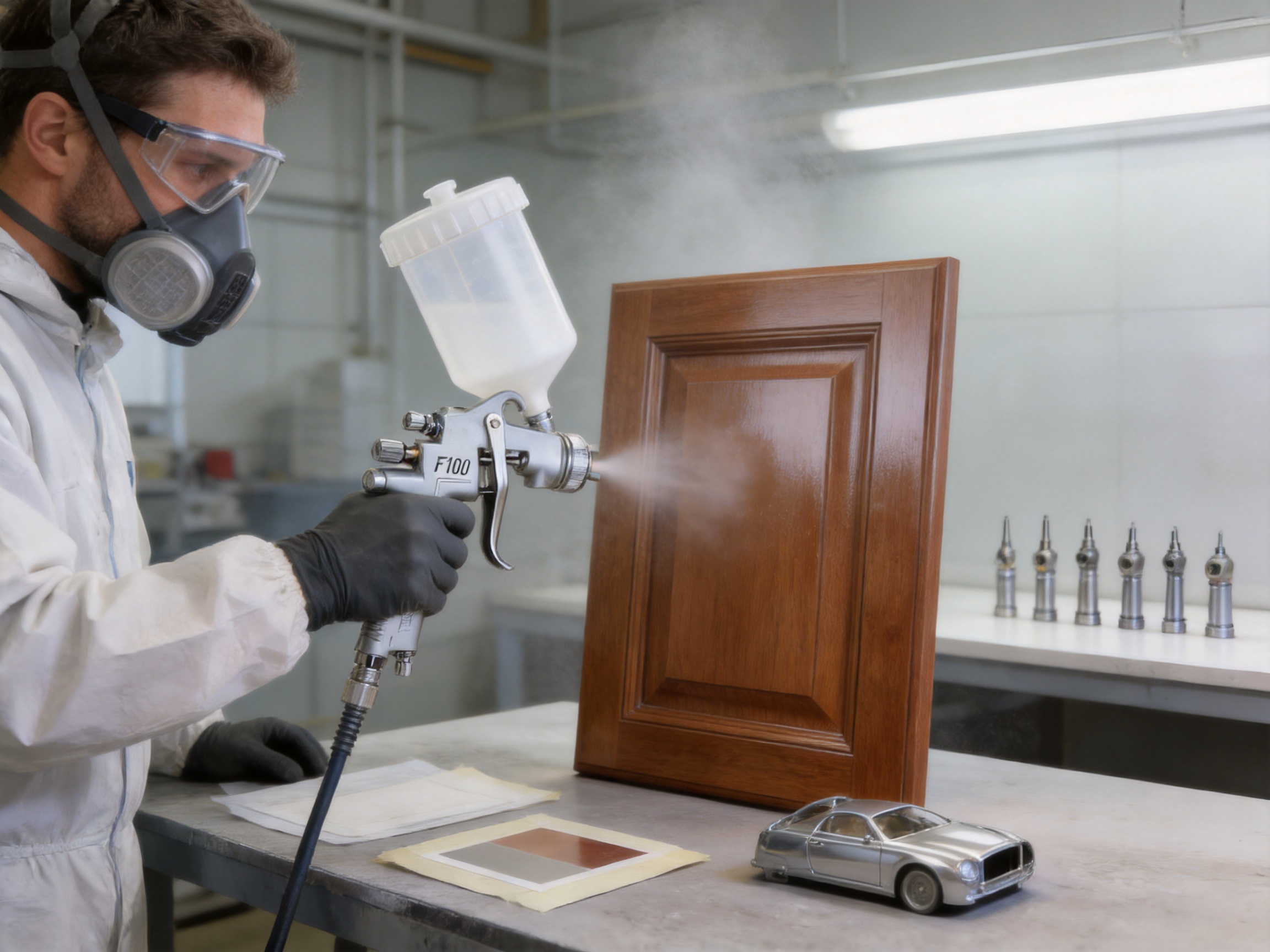
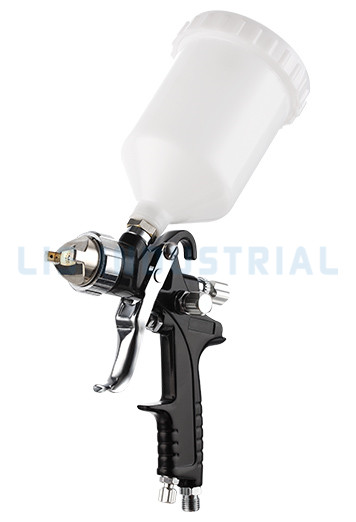
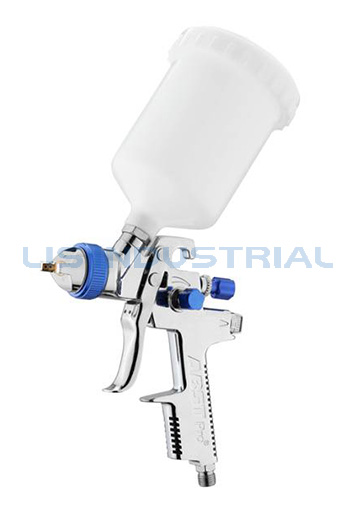
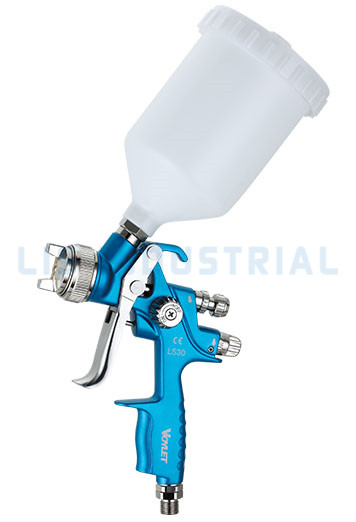
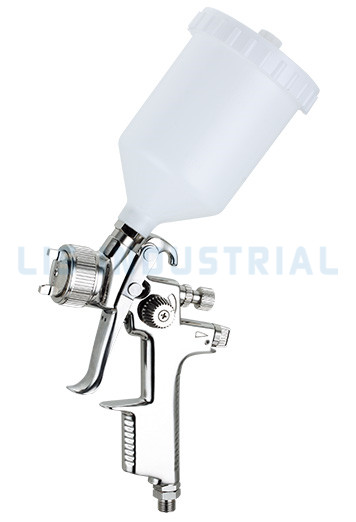
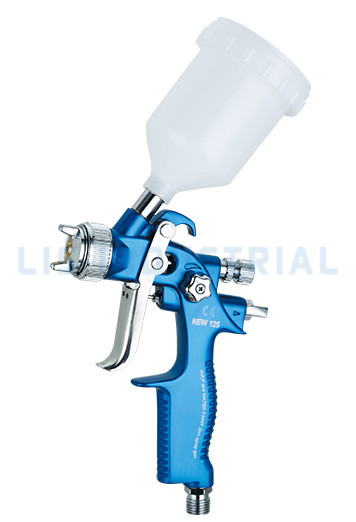
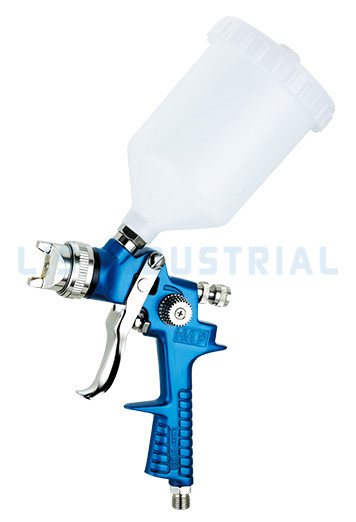
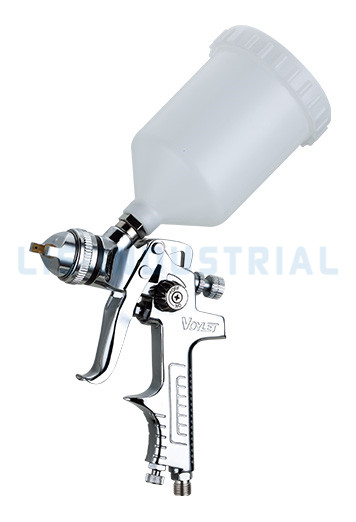
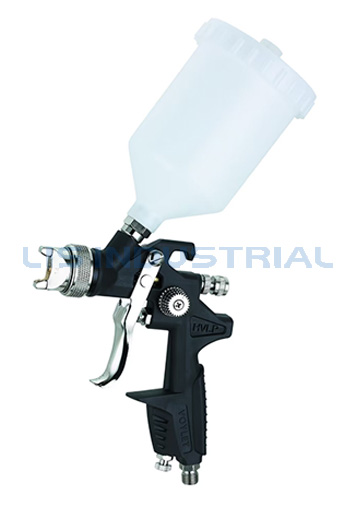
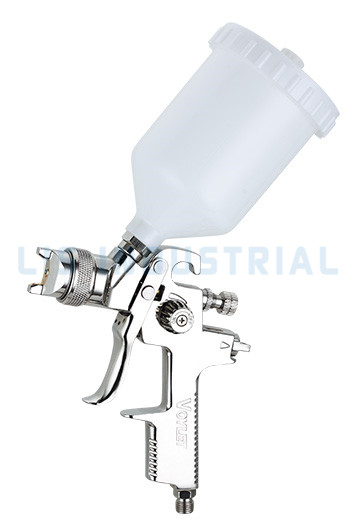
Choosing the right spray gun has a direct effect on coating quality, working speed, material consumption, and operator comfort. The F100G gravity-feed airbrush paint sprayer is designed for users who need a practical and economical conventional spray gun for general painting work. With interchangeable fluid nozzles, a 400 ml gravity cup, a 50 PSI working pressure, and a standard G1/4-inch air inlet, it provides a balanced combination of flexibility, straightforward operation, and dependable workshop performance.
The gun belongs to the economical conventional spray gun category, but economical does not mean unsuitable for demanding routine work. Its design focuses on the functions that matter most in day-to-day spraying: stable gravity feeding, accessible controls, replaceable nozzle sizes, compatibility with standard air connections, and a format that is easy to clean and maintain. These qualities make it appropriate for maintenance workshops, small production facilities, woodworking operations, vehicle repair areas, craft applications, and general finishing tasks.
Manufactured by Ningbo Lis Industrial Co., Ltd., the product benefits from the experience of a company that has specialized in air painting spray guns, mini compressors, and related air tools since 1984. The manufacturer combines product development, organized production, quality inspection, certification management, and international supply experience to serve customers in multiple markets. The result is a spray gun that is positioned as a practical solution for users who want consistent conventional spraying without the complexity or cost associated with more specialized systems.
Product Overview
The F100G uses a gravity-feed configuration. Paint or other suitable coating material is stored in the upper cup and moves toward the fluid nozzle under gravity, assisted by the air stream passing through the gun. This arrangement is widely used because it can operate efficiently with relatively modest material quantities and provides good visibility of the remaining coating in the cup.
The 400 ml cup offers a useful working capacity for touch-up jobs, furniture components, repair tasks, small panels, and other applications where a compact spray gun is more convenient than a large industrial unit. It also helps reduce unnecessary material preparation when the operator is working on a limited area. The cup can be filled with the amount required for the job rather than requiring a large reservoir.
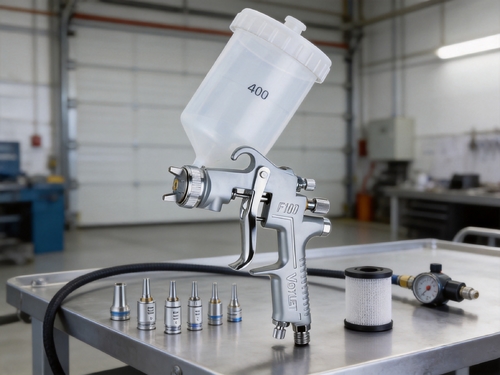
Four fluid nozzle options are available: 1.0 mm, 1.3 mm, 1.5 mm, and 1.8 mm. This range allows the user to adapt the spray gun to different material viscosities, coating requirements, and desired application speeds. A smaller nozzle is generally suitable for finer materials and controlled detail work, while a larger nozzle can support heavier coatings when the material and application require greater fluid delivery.
The specified air pressure is 50 PSI. This pressure provides a clear operating reference for users setting up their compressed-air system. Correct pressure adjustment remains important because excessive pressure may increase overspray and material waste, while insufficient pressure may produce poor atomization or an uneven pattern. Operators should always confirm the coating manufacturer’s recommendations and adjust the air supply according to the material, nozzle, and desired finish.
The G1/4-inch air inlet is a widely used connection size for air tools and spray equipment. A standard inlet simplifies integration with common hoses, regulators, filters, and workshop air lines. It also makes replacement components and connection accessories easier to source in many regions.
| Specification | F100G Information |
|---|---|
| Product type | Gravity-feed conventional spray gun |
| Fluid nozzle options | 1.0 mm, 1.3 mm, 1.5 mm, and 1.8 mm |
| Recommended air pressure | 50 PSI |
| Cup capacity | 400 ml |
| Feed type | Gravity |
| Air inlet | G1/4 inch |
| Carton packing | 10 pieces per carton |
| Carton dimensions | 62 × 22 × 26 cm |
The specifications present a compact and versatile tool rather than an oversized production spray gun. This makes the F100G suitable for users who value manageable size, convenient handling, and flexible nozzle selection. It can also serve as an accessible entry point for operators who are learning conventional spray techniques.
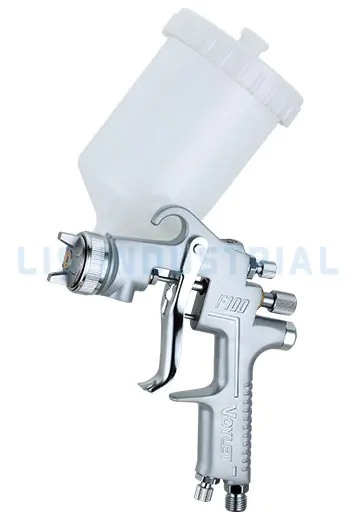
F100G Spray Gun Gravity Feed Airbrush Paint Sprayer
Advantages of the Gravity-Feed Design
Gravity feeding is one of the most widely understood spray gun configurations because it is simple to set up and easy to monitor during operation. The coating is placed above the gun body, allowing gravity to help deliver the fluid to the nozzle. This reduces dependence on suction created by the air stream and can make the gun responsive when working with smaller quantities of material.
One important advantage is efficient use of coating. Since the cup is positioned close to the fluid passage, the operator can often work with a smaller amount of paint than would be practical with a larger remote tank or suction-feed container. This is particularly helpful for color changes, repair work, sample production, and applications where only a limited quantity of material is required.
The upper cup also gives the operator a direct view of the remaining paint. This can help with job planning and reduce the chance of unexpectedly running out of material in the middle of a pass. A visible cup makes it easier to determine when a refill is required and supports more consistent workflow management.
Gravity-feed guns are also valued for their versatility. The F100G can be used with different fluid nozzle sizes, allowing one gun body to support a range of tasks. Instead of purchasing a completely different spray gun for every coating requirement, a user may select the nozzle size that matches the material and finish objective.
Another benefit is the gun’s suitability for controlled work. The compact cup and conventional layout allow the operator to position the gun accurately around edges, corners, small parts, and irregular surfaces. For woodworking, repair work, and general maintenance, this control can be more important than maximum production output.
Fluid Nozzle Options and Application Flexibility
The available 1.0 mm, 1.3 mm, 1.5 mm, and 1.8 mm nozzle sizes give the F100G a useful operating range. Nozzle selection should be based on the coating’s viscosity, solids content, desired film thickness, and the size of the surface being sprayed.
1.0 mm Nozzle
The 1.0 mm nozzle is suited to fine application requirements and materials that flow readily. It may be selected for detailed work, small components, controlled touch-up, and situations where the operator wants to limit fluid delivery. Because the opening is relatively small, the material usually needs to be properly filtered and mixed to prevent blockage.
1.3 mm Nozzle
The 1.3 mm nozzle provides a balance between control and coverage. It may be useful for general-purpose finishing tasks where the operator wants a reasonably fine pattern without restricting fluid delivery too much. This size is often a practical choice for users who want one nozzle for a variety of routine jobs.
1.5 mm Nozzle
The 1.5 mm nozzle can support broader general-purpose applications and somewhat heavier materials, depending on the coating formulation. It provides increased fluid capacity compared with smaller nozzles and may help the operator cover larger surfaces more efficiently while maintaining a manageable spray pattern.
1.8 mm Nozzle
The 1.8 mm nozzle is intended for coatings that require greater fluid passage. It may be selected for thicker materials or applications where a heavier wet film is needed. Users should ensure that the material is compatible with the nozzle, properly mixed, and filtered before spraying. The air supply and application technique may also need adjustment when using the larger opening.
| Nozzle size | Typical operating emphasis | Important preparation point |
|---|---|---|
| 1.0 mm | Fine control and detail work | Use well-filtered, suitably fluid material |
| 1.3 mm | Balanced general-purpose spraying | Adjust pressure and fluid flow for the coating |
| 1.5 mm | General finishing and wider coverage | Confirm material viscosity and desired film build |
| 1.8 mm | Higher fluid delivery and heavier coatings | Use appropriate thinning, mixing, and filtration |
These descriptions are general guidelines rather than fixed limitations. Actual results depend on the material, ambient temperature, humidity, surface, operator technique, air hose configuration, and preparation procedure. The correct nozzle is the one that provides the desired atomization and coverage without forcing the operator to use excessive pressure or repeated passes.
Performance Advantages in Routine Workshop Use
The F100G is designed around a practical balance rather than a single specialized application. This can offer several advantages over narrowly configured spray guns. A user working on different projects can change nozzle sizes and adjust material preparation instead of maintaining several separate tools.
Its 400 ml gravity cup is large enough for many small and medium tasks while remaining more manageable than a large-capacity tank. A smaller cup can reduce the physical burden of carrying excessive material, especially during overhead work or when the operator must frequently change position. It can also reduce the amount of unused coating left after a job.
The conventional spray format is familiar to many painters and maintenance technicians. Operators who already understand basic spray-gun principles can generally adapt quickly to the F100G. The standard air inlet also helps workshops use existing hoses and compressed-air accessories, subject to proper compatibility and air-quality requirements.
For small businesses, the value proposition is especially important. A spray gun must be affordable to purchase, practical to operate, and straightforward to service. Excessively complex equipment can increase training demands and maintenance costs. The F100G emphasizes accessible operation while retaining the flexibility needed for different coating jobs.
Compared with basic low-cost guns that may offer only one nozzle configuration, the F100G’s selection of four nozzle sizes provides greater adaptability. Compared with larger professional production systems, it may be easier to handle for intermittent work and less demanding in terms of material preparation volume. It occupies a useful middle ground for users who need more flexibility than a single-purpose entry-level product but do not require a high-output industrial setup.
Recommended Applications
The spray gun can be used in many environments where conventional compressed-air application is appropriate. Its compact gravity-feed construction makes it suitable for repair, maintenance, finishing, and general-purpose painting operations.
Automotive and Vehicle Repair
The F100G may be used for selected vehicle repair and refinishing tasks when the coating system, nozzle, and working conditions are appropriate. It can support primer, color, clear, or touch-up applications according to the coating supplier’s instructions. Vehicle work requires careful surface preparation, masking, ventilation, and compatibility testing, but the gun’s nozzle range gives the operator flexibility for different coating stages.
Woodworking and Furniture Finishing
Woodworking professionals and hobbyists can use the gun for stains, sealers, lacquers, paints, and other compatible finishing materials. The gravity-feed cup is convenient for furniture components, cabinet doors, trim, and decorative pieces. Selecting the correct nozzle and preparing the material thoroughly can help produce an even surface while reducing brush marks and roller texture.
Maintenance and General Repair
Workshops often need to apply protective or decorative coatings to brackets, frames, tools, equipment housings, and fabricated parts. The F100G offers a practical option for these jobs, particularly when the quantity of work does not justify a large automated system.
Craft and Small-Scale Production
Artists, model makers, sign producers, and small manufacturers may benefit from the gun’s controllable format and interchangeable nozzles. It can support repeatable application on small batches while allowing the operator to change material quantities and nozzle sizes as the project develops.
Maintenance Painting and Property Work
Facilities and property-maintenance teams may use the spray gun for selected doors, fixtures, furniture, panels, and other surfaces. As with all compressed-air spraying, the area must be suitably ventilated and protected from overspray, and the material must be approved for the intended substrate.
Operating Procedure for Consistent Results
Good spray results depend on the entire process, not only the spray gun. Surface preparation, material mixing, air quality, gun adjustment, distance, speed, overlap, and cleaning all influence the final finish.
Prepare the Surface
The surface should be clean, dry, and free from oil, dust, wax, loose particles, and other contaminants. Defects such as dents, scratches, rough welds, or uneven filler should be corrected before spraying. A coating cannot reliably hide poor preparation, and surface defects may become more visible after the finish is applied.
Prepare and Filter the Material
Mix the coating according to the coating manufacturer’s instructions. If thinning is required, use only the recommended thinner and follow the specified ratio. Material that is too thick may atomize poorly, while material that is too thin may sag, run, or provide insufficient coverage. Filtering the prepared material helps protect the fluid nozzle and reduces the risk of particles affecting the finish.
Check the Air Supply
The compressed-air source should be clean and dry. Moisture, oil, or particles in the air line may contaminate the coating and damage the appearance of the work. A suitable regulator and filter should be installed where needed. Set the air pressure near the specified 50 PSI reference, then make controlled adjustments based on the coating and spray pattern.
Test the Pattern
Before spraying the final surface, test the gun on cardboard, scrap material, or a sample panel. Observe the spray shape, atomization, fluid volume, and edge distribution. A properly adjusted pattern should be reasonably even and should not show excessive concentration at one side, large droplets, or irregular interruptions.
Maintain Correct Distance and Movement
Hold the gun perpendicular to the surface and move it at a steady speed. Tilting the gun or swinging it in an arc can produce uneven film thickness. The operator should begin moving before opening the fluid flow and release the trigger before stopping the movement. Overlapping each pass consistently helps produce uniform coverage.
Build the Finish Gradually
Several controlled coats are generally preferable to one excessively heavy coat. Allow suitable flash-off or drying time between coats according to the material instructions. Heavy application can cause runs, sags, solvent retention, or extended drying time. Thin, even passes provide the operator with more control over the final film.
Manufacturing Strength and Quality Management
The performance of a spray gun depends on manufacturing consistency. Small variations in nozzle geometry, air passage, fluid passage, seals, threads, or trigger components can affect atomization and operating feel. For this reason, the manufacturer’s production capabilities and quality-management practices are important considerations when purchasing spray equipment.
Ningbo Lis Industrial Co., Ltd. has been engaged in the research, development, manufacturing, and marketing of air painting spray guns, mini air compressors, and related air tools since 1984. The company operates from Ningbo, China, and has developed a substantial manufacturing base serving domestic and international customers.
The company reports a production site covering more than 400,000 square feet, a workforce of more than 400 employees, and annual output exceeding 40 million US dollars. These resources support product development, component production, assembly, testing, packaging, logistics, and customer service. A broad manufacturing structure can be particularly valuable for buyers seeking stable supply and repeatable product specifications.
The company’s manufacturing approach includes control of incoming raw materials, in-process quality checks, functional testing, and final inspection. The stated process includes 100% functional testing of products. For spray guns, functional testing is important because visual inspection alone cannot confirm correct air passage, fluid delivery, trigger operation, or assembly performance.
Quality control begins with materials and components. Incoming inspection helps ensure that supplied parts conform to the required specifications before entering production. During assembly, process controls help reduce variation in fit, alignment, sealing, and adjustment. Finished-product inspection provides another opportunity to identify issues before products are packed and shipped.
This layered approach is more reliable than depending on a single final inspection. It helps manufacturers identify process problems earlier, limit rework, and maintain more consistent output. It also supports customers who need repeat purchases with similar operating characteristics across different production batches.
Research, Development, and Engineering Capability
Product development is another important strength. The manufacturer maintains a research and development team and provides both OEM and ODM services. OEM production can be arranged according to customer drawings or samples, while ODM support can address customer requirements through product development and design cooperation.
This capability is useful for distributors, importers, professional equipment suppliers, and private-label customers. Different markets may require variations in connection standards, packaging, nozzle combinations, accessories, labeling, or operating instructions. An experienced manufacturer can help translate these requirements into a practical product program.
The company has established a spraying machinery engineering technology center and has conducted technical cooperation with American spraying technology specialists. Such cooperation can contribute to the development of improved spraying equipment and a stronger understanding of application requirements. It also demonstrates a commitment to engineering beyond basic assembly.
Technology development is important in conventional spray guns because effective atomization depends on the relationship between air passages, fluid passages, nozzle geometry, cap design, and material behavior. Improvements in any of these areas may influence transfer efficiency, pattern stability, operator control, and cleaning requirements.
For customers, engineering capability also improves communication. A supplier that understands both the product and the application can assist with nozzle selection, system matching, packaging requirements, and product customization. This is especially valuable when a buyer is developing a complete spraying solution rather than purchasing a single replacement tool.
Certifications and International Market Experience
The manufacturer states that its products have passed CE and GS certifications and that its management systems include ISO9001 quality certification, ISO14001 environmental management certification, and OHSAS18001 occupational health and safety certification. These certifications indicate that the company has established formal systems for quality, environmental management, and workplace safety.
Certification does not replace correct product selection or proper operation, but it can provide additional confidence when evaluating an overseas supplier. International buyers often need documentation, traceability, consistent packaging, and clear conformity information. A supplier with experience in certification processes is better positioned to support these requirements.
The company has developed customers and market relationships in Europe, North America, the Middle East, South Africa, and East Asia. International experience can help with shipping documentation, regional expectations, standard air connections, product labeling, and after-sales communication.
A broad distribution network may also support spare-parts availability and long-term product continuity. Buyers should still confirm the exact parts policy, nozzle availability, warranty terms, and technical support arrangements before placing a large order. However, an established international presence is a positive indicator for customers seeking a stable supply partner.
Comparison with Other Spray Gun Categories
Every spray gun category has a suitable purpose. The F100G should be evaluated according to the work it is intended to perform rather than compared with every type of spraying equipment as if all products served the same function.
Compared with Suction-Feed Guns
Suction-feed guns place the material container below the gun and use the air stream to draw coating upward. They can be useful in certain conditions, but gravity-feed guns are often more convenient when working with smaller material quantities. The upper cup on the F100G allows the operator to monitor the material and may reduce the amount left in the system after spraying.
Compared with High-Volume Low-Pressure Equipment
HVLP systems are designed to operate with higher air volume and lower pressure, often with an emphasis on reducing overspray and improving transfer efficiency. The F100G is a conventional spray gun specified at 50 PSI, so it belongs to a different operating category. Conventional spraying may offer a familiar feel and useful atomization for many routine applications, while HVLP may be preferred where regulations, coating efficiency, or overspray control are primary concerns.
Compared with Airless Sprayers
Airless sprayers use high fluid pressure and are often selected for large surfaces, heavy materials, or high-production work. They can apply coating rapidly, but they may be less convenient for small detailed jobs and may require different preparation and safety procedures. The F100G is better suited to controlled conventional spraying, smaller areas, and applications where compressed air is already available.
Compared with Electric Paint Sprayers
Electric sprayers can be convenient where a compressor is not available. However, pneumatic spray guns offer a different level of system flexibility because the operator can use an existing compressor, regulator, filter, and air line. The F100G is a practical choice for workshops that already use compressed air for other tools.
Compared with Dedicated Detail Guns
Dedicated detail guns may be optimized for extremely small components or specialized finishing. The F100G provides a broader nozzle range, which can make it more versatile for users who perform both detail work and general finishing. Its 400 ml cup also gives it more working capacity than some very small detail tools.
| Equipment type | Main strength | Where the F100G may be preferable |
|---|---|---|
| Gravity-feed conventional gun | Flexible, familiar, and suitable for general compressed-air spraying | Small and medium jobs requiring several nozzle options |
| Suction-feed gun | Lower container position and traditional material delivery | When visible upper-cup material control is useful |
| HVLP gun | Lower-pressure spraying and potential overspray reduction | When conventional atomization and a 50 PSI reference are suitable |
| Airless sprayer | Fast application and high fluid delivery | When controlled, pneumatic application is more appropriate |
| Electric sprayer | Operation without a separate compressor | When a workshop already has compressed air available |
The best choice depends on the coating, surface area, production volume, workplace regulations, and operator preference. The F100G’s main competitive advantage is not that it replaces every other system, but that it offers a flexible and economical solution for a broad range of conventional spraying tasks.
Cleaning and Maintenance
Cleaning should begin immediately after spraying. Coating material left inside the cup, fluid passage, nozzle, or air cap can dry and restrict flow. Delayed cleaning may make disassembly more difficult and may affect the next spraying session.
Empty unused material from the cup according to the coating manufacturer’s waste-disposal requirements. Rinse the cup with a compatible cleaning solution, then flush the fluid passage. Remove the appropriate components carefully and clean them with suitable tools. Avoid damaging nozzle openings, threads, seals, or mating surfaces.
Do not immerse the entire spray gun in solvent unless the manufacturer specifically permits it. Solvent can damage seals, lubricants, surface finishes, or internal components. The air cap and fluid nozzle should be handled carefully because small changes in their openings can influence the spray pattern.
After cleaning, inspect the gun for worn seals, damaged threads, blocked passages, loose components, or unusual trigger movement. Replace damaged or worn parts with compatible components. A maintenance schedule is especially helpful for workshops that use the spray gun frequently.
Store the gun in a clean, dry location. Protect the nozzle, air cap, and cup from impact. Keep the tool away from excessive heat, corrosive chemicals, and uncontrolled moisture. Proper storage reduces the likelihood of contamination and helps extend service life.
Safety Considerations
Compressed-air spraying requires appropriate safety controls. Operators should wear suitable eye protection, gloves, protective clothing, and respiratory protection selected for the coating being used. Many paints, primers, thinners, and cleaning solvents produce vapors or aerosols that can be harmful if inhaled or allowed to contact the skin.
Work in a properly ventilated area designed for the coating process. Keep ignition sources away from flammable materials and follow the safety data sheet for each product. Do not spray near open flames, hot surfaces, sparks, or equipment that can ignite vapors.
Release air pressure before disconnecting hoses or servicing the spray gun. Inspect hoses and fittings for damage, and make sure connections are secure. Never point the gun at people or animals, even when it appears to be empty. Follow local regulations regarding ventilation, emissions, waste material, and solvent disposal.
Safety is part of product performance. A technically capable spray gun cannot compensate for poor ventilation, incorrect protective equipment, or careless handling. Proper training and disciplined procedures protect the operator, the surrounding workplace, and the quality of the finished product.
Packaging, Supply, and Commercial Value
The stated carton configuration is 10 pieces per carton, with carton dimensions of 62 × 22 × 26 cm. This packing arrangement is useful for distributors and wholesalers planning inventory, warehouse space, and shipping quantities. Buyers can use the carton information when estimating freight volume and preparing purchase orders.
For commercial customers, the product’s value extends beyond the individual tool. A manufacturer with substantial production capacity can support repeat orders and larger programs. The company reports that production capacity can be increased by 30 percent within two months, allowing it to respond to changes in customer demand.
Supply flexibility is important for distributors because demand can change with seasonal work, construction activity, automotive repair volume, and promotional campaigns. A supplier able to scale output can reduce the risk of extended lead times, although buyers should confirm current schedules, minimum order quantities, and component availability for each project.
OEM and ODM support can also create commercial advantages. Customers may request customized packaging, branding, instruction materials, nozzle combinations, or product configurations. Such options should be discussed in detail before production, including artwork approval, testing requirements, certification responsibilities, and forecast quantities.
How to Select the Right Configuration
Begin by identifying the material to be sprayed. Consider viscosity, solids content, drying behavior, chemical compatibility, and recommended application equipment. The coating supplier’s technical data sheet should be treated as the primary reference.
Next, consider the surface and production volume. A 400 ml cup is suitable for many small and medium tasks, but a larger tank or different spray system may be more efficient for continuous large-area production. For repair, furniture components, small parts, and intermittent work, the F100G’s capacity can be practical.
Choose the nozzle based on the material and desired finish. Start with the smallest suitable nozzle that can provide adequate fluid delivery, then move to a larger option if the material is heavier or greater coverage is required. Avoid selecting a nozzle solely because it is larger; excessive fluid delivery can make control more difficult.
Confirm that the workshop has an adequate compressor and clean air supply. The specified 50 PSI pressure is only one part of the system requirement. The compressor must also provide sufficient air volume for the selected nozzle and operating pattern. Long, narrow, restrictive, or poorly maintained hoses can reduce performance at the gun.
Finally, consider service and supply. Ask about replacement nozzles, air caps, seals, cups, cleaning tools, documentation, warranty coverage, and technical support. A spray gun is more valuable when the user can maintain it and obtain compatible components over time.
Q&A
What type of spray gun is the F100G?
It is a gravity-feed conventional spray gun designed for compressed-air painting applications. The coating cup is positioned above the gun, and the material is delivered toward the nozzle by gravity and the spraying air stream.
What is the cup capacity?
The cup capacity is 400 ml. This capacity is suitable for many small and medium painting, repair, woodworking, and maintenance jobs.
What nozzle sizes are available?
The available fluid nozzle sizes are 1.0 mm, 1.3 mm, 1.5 mm, and 1.8 mm. The appropriate choice depends on material viscosity, desired coverage, and film thickness.
What air pressure is specified?
The specified air pressure is 50 PSI. The operator should use this as a reference and confirm the final setting according to the coating, nozzle, air line, and spray pattern.
What air connection does the gun use?
The air inlet is G1/4 inch, a common connection size for pneumatic tools and air-supply accessories.
Can it be used for woodworking?
Yes. It may be used for compatible woodworking finishes such as suitable stains, sealers, lacquers, and paints. The coating manufacturer’s instructions should always be followed, and the material must be properly mixed and filtered.
Is it suitable for automotive work?
It can be suitable for selected automotive repair and refinishing applications when the coating system, nozzle, air pressure, ventilation, and protective equipment are appropriate. Users should test the setup on a sample panel before spraying the final surface.
Which nozzle should be selected for thick paint?
A larger nozzle may provide better fluid delivery for heavier materials, but nozzle selection must follow the coating supplier’s recommendations. The 1.5 mm or 1.8 mm options may be considered when compatible, while correct thinning and filtration remain essential.
Does the gun require a compressor?
Yes. It is a pneumatic spray gun and requires a suitable compressed-air source. The system should include appropriate regulation and filtration so that the air reaching the gun is clean, dry, and stable.
What is the main advantage of a gravity-feed cup?
A gravity-feed cup allows the operator to see the remaining material and can work efficiently with relatively small quantities. It is convenient for controlled application, color changes, repair jobs, and small-batch finishing.
How should the spray gun be cleaned?
Clean it immediately after use. Empty the cup, flush the fluid passage with a compatible cleaning solution, carefully clean the nozzle and air cap, inspect seals and threads, and store the gun in a dry, protected location.
Is the product suitable for professional users?
It can serve professional workshops, maintenance teams, woodworking businesses, repair operators, and small production facilities whose applications match the capacity and conventional operating format. Large automated production lines may require a different equipment class.
Does the manufacturer support OEM and ODM projects?
According to the provided company information, the manufacturer offers OEM production based on customer drawings or samples and ODM services developed according to customer requirements.
What certifications and management systems are reported?
The company reports CE and GS product certifications, as well as ISO9001, ISO14001, and OHSAS18001 management-system certifications. Customers should request current documentation applicable to the specific product and market.
How many units are packed in one carton?
The stated packing quantity is 10 pieces per carton. The carton dimensions are 62 × 22 × 26 cm.
Conclusion
The F100G gravity-feed conventional spray gun is a practical choice for users who need flexible compressed-air spraying in a manageable and economical format. Its 400 ml cup supports controlled work, while the 1.0 mm, 1.3 mm, 1.5 mm, and 1.8 mm nozzle options allow the tool to adapt to different materials and application requirements. The G1/4-inch inlet supports connection with common air accessories, and the 50 PSI specification provides a clear operating reference.
Its strongest advantages are versatility, accessible operation, convenient gravity feeding, manageable capacity, and compatibility with a wide range of routine painting tasks. It can be used in automotive repair, woodworking, furniture finishing, general maintenance, small production, and craft applications when the coating and working conditions are suitable.
The product is supported by a manufacturer with long-term experience in spray guns and air tools, an established research and development capability, OEM and ODM services, international market experience, reported certification achievements, and a structured quality-control process. Incoming inspection, in-process control, functional testing, and final inspection help support consistent manufacturing.
For the best results, users should match the nozzle to the material, maintain clean and dry compressed air, prepare the surface carefully, test the spray pattern, apply controlled overlapping passes, and clean the gun immediately after use. When these practices are followed, the F100G can provide a dependable and adaptable solution for everyday conventional spraying.
References
1. Product specification information for the F100G Gravity-Feed Conventional Spray Gun, including nozzle sizes, air pressure, cup capacity, feed type, air inlet, and packaging data.
2. Ningbo Lis Industrial Co., Ltd. company profile and manufacturing information, including research and development, production capacity, quality inspection, certification, OEM, and ODM capabilities.
3. General principles of compressed-air spray-gun operation, including nozzle selection, material preparation, air-pressure adjustment, spray-pattern testing, and cleaning procedures.
4. General workplace safety guidance for paint spraying, compressed air, coating vapors, solvents, ventilation, personal protective equipment, and waste handling.
5. General coating-application practice for automotive repair, woodworking, furniture finishing, maintenance painting, and small-batch production.